☕ Support Us
[🇧🇩] - Everything about Hasina's misrule/Laundered Money etc. | Page 15 | PKDefense

[🇧🇩] Everything about Hasina's misrule/Laundered Money etc.

Reply (Scroll)
Press space to scroll through posts
G Bangladesh Defense
[🇧🇩] Everything about Hasina's misrule/Laundered Money etc.
259
7K
More threads by Saif

টিউলিপ ও তার পরিবারের বিরুদ্ধে ৫৯ হাজার কোটি টাকা দুর্নীতির অভিযোগ


More damning evidence. The scale of the theft boggles the mind.

I believe Hasina's contemporaries' allegations that she wanted to destroy our nation, because we killed her family.

So plain in front of our eyes, but so easy to fool the people of Bangladesh. They keep getting fooled again and again.


Making and unmaking Hasina
Dismantling the systemic corruption

Mohammad Enamul Hoque
Published :
Dec 31, 2024 21:21
Updated :
Dec 31, 2024 21:21

1735693330727.png


The political journey of Sheikh Hasina, one of Bangladesh's most polarising leaders, was deeply intertwined with allegations of corruption, authoritarianism, and misuse of state resources. Her tenure has been marred by systemic complicity and unchecked power, sustained by a network of enablers across various sectors of society. The complicity of her allies, who have personally or professionally benefited from unethical practices, highlights a broader issue within Bangladesh's institutions. While some have faced consequences, many remain entrenched in positions of influence, continuing to erode public trust and reinforce corrupt systems.

To dismantle this entrenched network of complicity, several commissions have been established to investigate Hasina's and her collaborators' alleged misdeeds. Numerous committee reports have already been published, shedding light on corruption within the Hasina regime. These commissions must operate with transparency and impartiality while identifying the individuals and groups responsible for undermining democratic principles and economic stability. The task is immense, requiring a thorough examination of years of systemic corruption and collusion. Addressing this entrenched culture demands innovative and decisive measures that go beyond traditional accountability mechanisms.

One innovative solution to address systemic corruption is the introduction of the "Dalal Tax." The term "Dalal" refers to individuals who actively supported or benefited from corrupt practices. This concept, derived from the Bengali term for brokers or intermediaries who enable corrupt practices, seeks to impose lifelong penalties on individuals who have directly or indirectly facilitated corruption.

The Dalal Tax aims to address the pervasive issue of political corruption by establishing clear objectives.

First, it seeks to enforce accountability by holding individuals responsible for their involvement in enabling corrupt practices. By targeting enablers, the policy emphasises the importance of individual roles in upholding integrity and discourages the normalisation of unethical behaviour.

Second, it serves as a deterrent, sending a strong warning against future complicity in political corruption. The tax is designed to create significant consequences for those who engage in or facilitate dishonest activities, making such actions less appealing.

Third, it holds symbolic value, signalling a decisive stand against corruption and collusion. This public declaration reinforces the idea that malfeasance will not be tolerated, fostering trust in governance and rule of law.

Last but not the least, the tax seeks to exclude individuals subjected to its penalties from participating in public life, including elections or influential roles. This measure reduces their ability to further harm the country's institutions and ensures that key positions are held by individuals committed to ethical governance.

Together, these objectives form a comprehensive framework for combating corruption and promoting a culture of transparency and accountability.

For the Dalal Tax to work effectively, it is essential to identify those who supported or benefited from corruption. This includes government officials, bureaucrats, and judiciary members involved in unethical policymaking and administration; corrupt bankers involved in illicit money transfers; and share market players accused of fraud; academics who sided with political groups to influence decisions; and civil society members who endorsed corrupt actions for personal gain.

Business leaders who profited from favourable policies or contracts and media figures who protected corrupt regimes through biased reporting must also be investigated.

Establishing responsibility requires thorough investigations using financial audits, document reviews, and interviews. Transparency and fairness in this process are vital to building and maintaining public trust.

Implementing the Dalal Tax effectively requires careful planning and a strong legal foundation. The first step is to establish laws that formalise the tax while ensuring they align with constitutional standards and include necessary safeguards. It is important to clearly define who will be subject to the tax, using specific criteria and solid evidence to support these decisions. The tax rates should be proportional, taking into account the individual's income and their role in corrupt activities. Transparency is key, with the names of those taxed and the evidence of their involvement made public. To ensure fairness, a process must be in place for individuals to appeal their inclusion and contest the evidence against them.

The Dalal Tax is more than a punitive measure; it represents a commitment to meaningful reform and sustainable change. Its primary objective is to rebuild public trust by affirming that no one is beyond accountability and that justice will prevail. By curbing the influence of corrupt individuals in governance, it aims to fortify institutions and foster a culture where accountability is the norm.

The tax also seeks to inspire ethical governance, encouraging leaders and officials to prioritise transparency and integrity in their actions. Beyond its practical effects, it carries a powerful symbolic message, demonstrating a decisive stand against corruption. Penalising those involved in malfeasance emphasises the importance of justice and strengthens confidence in public administration. Furthermore, by barring those penalised from holding influential positions or participating in elections, the tax ensures that leadership is entrusted to individuals who value ethical conduct and good governance.

While the Dalal Tax is an ambitious proposal, it is not without potential drawbacks. Critics may argue that it could be used as a tool for political retribution or infringe on individual rights. To address these concerns, independent oversight bodies must monitor the implementation process. Transparency, fairness, and adherence to due process are crucial to preserving the policy's legitimacy.

Another challenge is ensuring that the tax does not disproportionately affect certain groups or become a political weapon. Clear guidelines, robust evidence, and impartial investigations are essential to maintaining credibility and fairness.

This lament for Sheikh Hasina's legacy is, at its heart, a lament for Bangladesh-a country whose aspirations for democracy and integrity have been undermined by systemic complicity. The Dalal Tax, ambitious and fraught with challenges, represents a cry for change, a call to reckon with the failures of the past, and a striving for a more just future. It offers a path, however imperfect, to reaffirm the principles of transparency, equity, and ethical governance.

By implementing this tax, Bangladesh may send a powerful message that collusion and corruption have lasting consequences. This step can pave the way for a more transparent, accountable, and equitable future, where public trust in institutions is restored and ethical governance becomes the norm.

Dr Mohammad Enamul Hoque is Senior Lecturer, University of Western Australia, Australia.​
 

Tulip given London flat by developer with links to AL: FT report

1735971577887.png


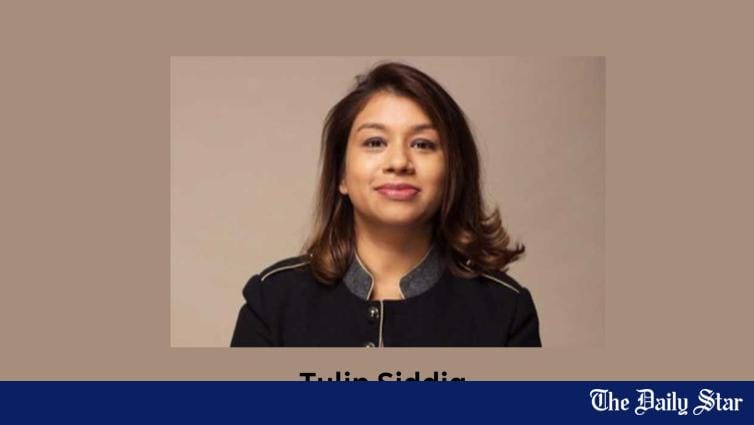
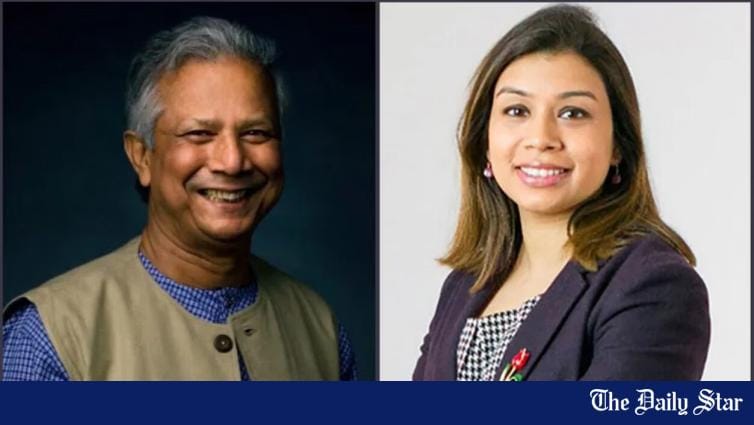
Tulip Siddiq, Sheikh Hasina's niece and currently the UK's city minister and economic secretary to the treasury, was gifted a two-bedroom apartment in central London by a person connected to the recently ousted Bangladeshi government, reports the Financial Times.

According to UK-based news outlet, the property near King's Cross, was transferred to Tulip in 2004 for free. Land Registry records, reviewed by the Financial Times, reveal that the property was purchased in January 2001 for £195,000. A neighbouring flat in the same building sold for £650,000 (around Tk 9.8 crore) in August 2023.

Tulip's mother, Sheikh Rehana, Hasina's younger sister, had been dubbed as the heir apparent after Sheikh Hasina. Rehana is reported to be the only other politician who fled Bangladesh with Hasina August 5, 2024 faced with a public uprising. Tulip's brother, Radwan Mujib, was also closely involved with Awami League, and acted as a spokesperson of sorts during visits of foreign dignitaries to Bangladesh.

The FT report said that the donor, Abdul Motalif, is a developer and an associate of figures linked to Tulip Siddiq's aunt, Sheikh Hasina, former prime minister of Bangladesh and leader of the Awami League party. Sheikh Hasina's government was ousted on August 5 last year.

"Any suggestion that Tulip Siddiq's ownership of this property, or any other property is in any way linked to support for the Awami League, would be categorically wrong," a spokesperson for the minister said.

Abdul Motalif confirmed to the Financial Times in a phone call that he bought the King's Cross property but declined to comment on what he did with it. "Following financial support provided by Tulip's parents to an acquaintance during a challenging time in his life, he subsequently transferred a property he then owned into Tulip's ownership as an act of gratitude for her parents' support," said a person familiar with the matter.

Electoral roll data cited by the Financial Times shows that Siddiq lived in the property during the early 2000s, and her siblings resided there for several years afterward. Tulip has declared rental income from two properties, including the King's Cross flat, in her parliamentary financial interests.

The Financial Times report added that the timing of the gift has drawn scrutiny due to Tulip Siddiq's ties to the Awami League, whose members face multiple corruption allegations. Bangladesh's Anti-Corruption Commission launched an inquiry recently after a political rival of Sheikh Hasina accused her family, including Tulip Siddiq, of receiving funds from a Russia-backed nuclear power project. Both Tulip Siddiq and Sheikh Hasina deny these allegations.

The report further highlights that Abdul Motalif, now 70, resides in south-east London. Electoral roll data shows that he previously allowed Moin Ghani, a lawyer who later represented the Awami League government, to live in the King's Cross flat. Additionally, he shared a south-east London address with Mojibul Islam, the son of a former Awami League MP, from 2014 to 2024. Both Motalif and Mojibul confirmed that they were registered at the address.

The flat's transfer occurred before Tulip Siddiq became an MP in 2015, meaning she was not obligated to disclose it at the time. Records indicate that in 2018, Tulip Siddiq extended the lease on the property for £90,000. The Financial Times also reports that Siddiq and her husband jointly purchased another flat in her Hampstead and Highgate constituency for £865,000, which is now mortgage-free.

Tulip Siddiq faced a reprimand from the parliamentary standards commissioner last year for failing to declare rental income on the Hampstead flat. Meanwhile, since 2022, Tulip Siddiq has been living in a £2.1 million London home owned by Abdul Karim, an executive member of the UK Awami League. The Financial Times report mentioned that Tulip Siddiq pays market rates for the property and has declared her relationship with Abdul Karim to parliamentary authorities.

Sheikh Hasina and the Awami League have been accused of corruption, rigging elections, and suppressing dissent, with rival parties and human rights groups calling her government authoritarian. In contrast, UK Prime Minister Sir Keir Starmer has expressed confidence in Tulip Siddiq, with Downing Street stating last month that it had seen no evidence of wrongdoing on her part.

The Financial Times report also points out Tulip Siddiq's past involvement with the Awami League, including her work within its EU and UK lobbying unit and election strategy team. UK-based affiliates of the Awami League campaigned alongside Tulip during several British general elections, including the 2022 vote that brought the Labour Party to power.

"Had it not been for your help, I would never have been able to stand here as a British MP," Tulip Siddiq said at a 2015 London event honouring Sheikh Hasina, as quoted by the Financial Times.​
 

BFIU seeks bank account details of 21 more journalists


1736123055179.png


The Bangladesh Financial Intelligence Unit (BFIU) today sought the bank account details of 21 more journalists.

A senior official of BFIU confirmed the matter to The Daily Star.

The 21 journalists are -- Saiful Alam, editor of the Daily Jugantor; Pranab Saha, sacked editor of DBC News, Hasan Zahid Tusher, former deputy press secretary to ousted prime minister Sheikh Hasina, M Shamsur Rahman, editor-in-chief and CEO of Independent TV; Mamun Abdullah, head of news at Independent TV; Animesh Kar, special correspondent of Independent TV; Md Ruhul Amin Russell, managing editor of Bangladesh Pratidin; and Mahmud Hasan, deputy editor of Bangladesh Pratidin.

The rest journalists are -- Daily Khola Kagoj senior reporter Zafar Ahmed, who is now working at BanglaNews, Daily Jatiya Orthoniti Editor MG Kibria Chowdhury, Amader Somoy and Amader Orthoniti Chief Reporter Deepak Chowdhury, Ekushey TV's Head of Input Akhil Kumar Poddar, Ekattor TV journalist Jhumur Bari, Ekushey Sangbad Editor Ziadur Rahman, Daily Kalbela special correspondent Angur Nahar Monty, My TV Chairman Nasir Uddin Sathi, SA TV journalist Rashed Kanjan, BSS Senior Reporter Shahnaz Siddiqui, Ekushey TV journalist Rashed Chaudhry, SA TV Head of News Mahmud Al Faisal, and Samakal journalist Rama Prasad.

Earlier, the BFIU summoned the bank account details of 12 journalists.​
 

BFIU seeks bank account info of Tulip, family

1736293650022.png


The Bangladesh Financial Intelligence Unit (BFIU) yesterday sought information on the bank accounts of Tulip Siddiq, niece of ousted prime minister Sheikh Hasina and UK city minister, and her family members.

The anti-money laundering agency has also asked for details of the accounts of Azmina Siddique, Tulip's sister, her brother Radwan Mujib Siddiq, and mother Sheikh Rehana.

Banks have been instructed to submit all the relevant information, including transaction records, account opening forms, and other related information.

Earlier, the BFIU sought information on the bank accounts of Hasina, her son Sajeeb Wazed, and daughter Saima Wazed.

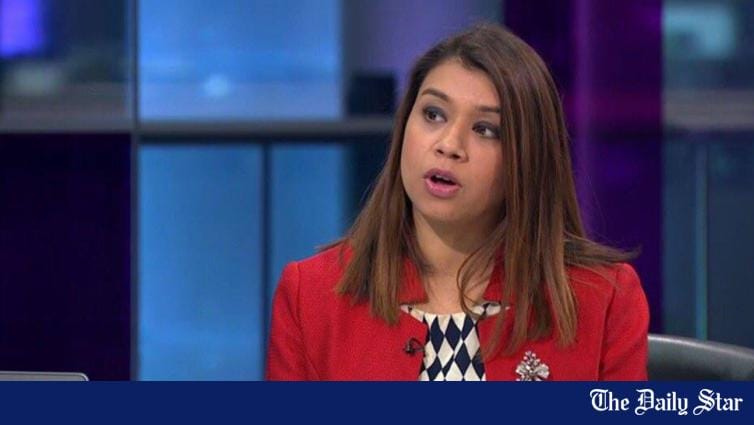
Tulip recently made headlines in international media as she is now under increasing pressure to resign due to her ties with the fallen Awami League government.

Tulip, who is responsible for anti-corruption efforts, has been linked to multiple properties associated with Hasina and her party. The AL has been accused of siphoning funds from Bangladesh's banking system, although they deny the allegations, reports British daily Financial Times (FT).

The FT disclosed last Friday that Tulip became the owner of a two-bedroom flat near King's Cross in London in 2004 without making any payment for it. The flat had been purchased three years earlier for £195,000 by Abdul Motalif, a developer connected to senior AL figures.​
 

Bangladesh orders banks to assist UK minister graft probe
AFP
Dhaka
Published: 09 Jan 2025, 10: 58

1736470988929.png


Bangladesh money laundering investigators have ordered the country’s big banks to hand over details of transactions relating to British anti-corruption minister Tulip Siddiq in an ongoing graft probe, officers told AFP.

Siddiq is the niece of former Bangladeshi premier Sheikh Hasina, who fled abroad last August after a student-led uprising against her iron-fisted tenure.

Last month the national anti-corruption commission launched a probe into the alleged embezzlement by Hasina’s family of $5 billion connected to a Russian-funded nuclear power plant.

Two officials from the Bangladesh Financial Intelligence Unit (BFIU), speaking to AFP on condition of anonymity, confirmed that Bangladeshi banks had been instructed to furnish any financial records relating to Siddiq.

A BFIU document issued Tuesday and seen by AFP showed that banks had also been told to provide transaction records for Hasina, her son and daughter, Siddiq’s two siblings and her mother Sheikh Rehana.

The kickback allegations relate to the $12.65 billion Rooppur nuclear plant, which was bankrolled by Moscow with a 90 per cent loan.

“The claims of kickbacks, mismanagement, money laundering, and potential abuse of power raise significant concerns about the integrity of the project and the use of public funds”, the anti-corruption commission said last month when announcing the probe.

The order came a day after British Prime Minister Keir Starmer revealed that Siddiq had referred herself to his standards adviser.

Siddiq insists she has done nothing wrong and a spokesman for Starmer said he retains “full confidence” in her.

The referral came after the Sunday Times and Financial Times newspapers reported that she had lived in properties linked to her aunt Sheikh Hasina’s administration.

“In recent weeks I have been the subject of media reporting, much of it inaccurate, about my financial affairs and my family’s links to the former government of Bangladesh,” Siddiq wrote in her letter to ministerial standards watchdog Laurie Magnus.

“I am clear that I have done nothing wrong,” she added. “However, for the avoidance of doubt, I would like you to independently establish the facts about these matters.”

Her aunt Hasina, 77, fled Bangladesh by helicopter on 5 August, shortly before protesters stormed her palace in the capital Dhaka.

She remains in neighbouring India but the interim government that replaced her has demanded her extradition to face trial for the police killing of protesters during the revolt against her regime.​
 

UK PM's allies mulling options to replace Tulip Siddiq: report

1736551555501.png

Photo: Facebook/Tulip Siddiq

Senior allies of UK Prime Minister Keir Starmer are considering candidates to replace Tulip Siddiq if she is forced to quit over links to her aunt's ousted Bangladeshi regime, reports the Times.

Officials reportedly identified candidates to succeed the Treasury minister over the weekend, before the public announcement made on Monday that Siddiq had referred herself to the prime minister's ethics watchdog, it adds.

Starmer has said he has full confidence in Siddiq, and a No 10 spokesman said it was "completely untrue" to suggest the party had drawn up a shortlist.

The Times has been told some of those close to the prime minister are at least informally considering who could succeed her.

Siddiq referred herself to Sir Laurie Magnus, the independent adviser on ministers' interests, amid questions about her use of several properties linked to the government of her aunt, Sheikh Hasina, who was ousted as Bangladesh's prime minister following widespread protests in August, last year.

Financial-crime officials at Bangladesh's central bank have demanded bank-account details for Siddiq and seven of her family members, and the country's anti-corruption commission is investigating whether she helped embezzle billions of pounds in a deal for a Russian-funded nuclear-power plant.

Among the candidates who may be considered by No 10 are the two ministerial aides to Rachel Reeves, Alistair Strathern and Imogen Walker, reports The Times.

Others who could be considered for the role include Callum Anderson, a parliamentary private secretary (PPS) to the technology secretary, as well as Kanishka Narayan, PPS to the environment secretary, Josh Simons, PPS to the justice secretary, and Rachel Blake, whose constituency covers the City.

Lucy Rigby, the attorney general, and Torsten Bell, an economist who is also a ministerial aide, may also be considered strong options.

Quoting a Labour source the report said Siddiq's referral "suggests that she's willing to fall on her sword" and that she was "on the way out".

Siddiq has come under increasing pressure after it was revealed she was given a £700,000 London flat by a supporter of her aunt's Awami League party and her sister received a £650,000 property from one of Hasina's advisers, according to the report.

A spokesman for the minister has said it was "categorically wrong" to suggest the properties were linked to her support for the Awami League.

In her referral to Magnus, Siddiq said: "I am clear that I have done nothing wrong. However, for the avoidance of doubt, I would like you to independently establish the facts about these matters. I will obviously ensure you have all the information you need to do this."​
 

ACC continues investigation against Javed, Rukhmila owning 580 flats in 3 countries
BSS
Published :
Jan 10, 2025 22:28
Updated :
Jan 10, 2025 22:28

1736554259987.png


Former land minister Saifuzzaman Chowdhury Javed and his wife Rukhmila Zaman have 580 apartments in the UK, the UAE and the USA.

A team of the Anti Corruption Commission (ACC) has started investigation suspecting that the former lawmaker could have more illegal assets at home and abroad.

According to ACC sources, in response to the ACC's application the court ordered attachment and freeze of those assets and money, laundered abroad by Javed and prevent those from transferring to others.

It said the ACC has so far got information about 343 apartments in the United Kingdom (UK), 228 in the United Arab Emirates (UAE) and nine in the United States of America (USA).

The ACC has also been carrying out investigation for his more assets and sought information from other countries about their assets, the ACC source said.

The ACC has already received information of financial irregularities, including maintaining accounts in different countries, transferring money abroad without approval of Bangladesh Bank (BB), and concealment of asset information in the income tax documents.

The ACC’s preliminary investigation revealed this information against Saifuzzaman Chowdhury Javed and his wife Rukhmila Zaman.

Javed and his wife acquired these immovable assets by laundering money just in nine years from 2015 to 2024, the ACC source said.

According to the information of the Land Registry Department of concerned countries, the ACC received information about acquiring apartments and other assets in favour of Javed and his wife by laundering thousands of crores of taka.

“There was no prior approval from the BB for sending such a huge amount of money abroad. There was no information about acquiring assets abroad in his income tax documents,” the ACC said.

Apart from this, it is also being investigated whether there are any assets in the names of his other family members or close relatives and his wife.

“If any such assets are found, those will also be included in the ACC’s investigation,” the source added.

Earlier, the ACC applied to the Metropolitan Senior Special Judge's Court in Dhaka to attach or freeze immovable and movable properties acquired in different countries in the names of Javed and his wife Rukhmila Zaman and investigate allegations of illegal wealth acquisition abroad.

The ACC also applied to the court seeking order to freeze accounts opened in the names of Saifuzzaman and Rukhmila or their institutions.

An officer of ACC investigation team told BSS on condition of anonymity, “We are getting information about corruption. We are hopeful that we will be able to unearth everything and bring them under the law.”

The ACC formed a three-member investigation team with ACC Deputy Director Ram Prasad Mandal as team leader to investigate immovable and movable properties owned by former Land Minister Saifuzzaman Chowdhury and his wife Rukhmila Zaman abroad.

Other members of the committee are ACC Assistant Director Md Mainuddin and Deputy Assistant Director Md Jewel Rana.

On October 14, 2024, the commission also approved permission to seek a court order to freeze immovable and movable assets acquired abroad by Saifuzzaman and Rukhmila.

In line with the ACC’s application, the court ordered the Ministry of Home Affairs to take necessary measures to inform the HM Land Registry Department of England and Wales of the UK, Dubai Land Department of the UAE, and the State Register of New York and Florida of the USA.

The court also directed the ACC investigation team to take necessary action regarding the four bank accounts opened in three branches in the UAE along with other accounts.

The court also directed the ACC team to inform the Money Laundering Department of BB, Bangladesh Financial Intelligence Unit and concerned parties about matter.

The ACC found four bank accounts of Saifuzzaman Chowdhury in Dubai Islamic Bank and Fast Abu Dhabi Bank, Janata Bank, UAE branch and TD Bank in the USA.

According to information received by Bangladesh Sangbad Sangstha (BSS), it was found that an account bearing no. 065580072906301) was opened in Dubai Islamic Bank on January 8, 2015.

Besides, two accounts were opened in Fast Abu Dhabi Bank (One account number is 1611003934358010), which was opened on January 31, 2017. Later, another account (No-1651003934358025) was opened in the same bank on August 24, 2017.

Another account bearing no-AE170319331001010002599 was opened with Janata Bank, UAE branch on August 3, 2023.

Besides, a beneficiary account (no-4372295810 named ZTS properties LLC) was opened in the American TD Bank. The account made transactions of US$ 200,206.72 in four months from April 2, 2021 to July 29, 2021. The dollars were transferred through Capital World Maritime Ltd account with Hongkong and Shanghai Banking Corporation (HSBC) and another account with First Abu Dhabi Bank.

The information was found that US$ 50,910.18 was transferred to USA TD Bank from accounts of Capital World Maritime Ltd of HSBC and First Abu Dhabi Bank on July 29, 2021, while US$ 8960 was transferred from First Abu Dhabi Bank account on July 26, 2021.

In line with the transactions, US$ 34,650.87, US$5683.72 and US$48,851.95 were deposited to TD Bank from HSBC on July 1, April 2 and April 19, 2021 respectively.

The ACC also received information about 10 commercial establishments set up in the names of Saifuzzaman Chowdhury Javed and Rukhmila Zaman.

Of which, eight are in the name of Saifuzzaman Chowdhury and two are in the name of his wife Rukhmila Zaman. The companies of Saifuzzaman are ZTS Properties Ltd. (License No. 10010608, dated 17-02-2016), Zeba Trading FZE (License No. 5011567, dated 18-02-2015), New Venture (London) Ltd. (License No. 07312257, dated 31-07-2010), Sadaqat Properties Ltd. (License No. 13525107, dated 22-07-2021), Zeba Properties Ltd. (License No. 13467172, dated 21-06-2021), Aramit Properties Ltd. (License No. 12589869, dated 06-05-2020), Zaria Properties Ltd.

(License No. 13467532, dated 21-07-2020) and ZTZ Property Ventures Ltd. (License No. 1270118, dated 30-07-2020). Rukhmila Zaman has two companies - Rukhmila Properties Ltd. (License No. 12089564, dated 06-07-2019) and RF Acquisitions Ltd. (License No. 15819589, dated 04-07-2024).

Former Land Minister Saifuzzaman Chowdhury and his wife Rukhmila Zaman have been accused of laundering money abroad and amassing huge illegal wealth abroad through money laundering during the Awami League regime.

Saifuzzaman Chowdhury is the son of Akhtaruzzaman Chowdhury Babu, a Chattogram Awami League leader and a close political associate of Sheikh Mujibur Rahman.

Saifuzzaman Chowdhury, is also known as Javed in his family and constituency. Javed, a businessman, became known by focusing on business with his father and was elected as the leader of a business organization.

He also served as the president of the Chattogram Chamber of Commerce and Industry (CCCI). In absence of his father, Javed was the chairman of United Commercial Bank (UCB). After demise of his father, his aunt Sheikh Hasina gave Javed party nomination for Anwara parliamentary constituency of Chattogram-14.

Akhtaruzzaman Chowdhury Babu, a long-time political associate of Sheikh Mujibur Rahman and Sheikh Hasina. Sheikh Hasina used to address Akhtaruzzaman as ‘Babu Bhai’. So, Sheikh Hasina became Saifuzzaman’s aunt.

In the constituency, he put on Mujib coat and started party work as his father's legacy. Javed also won the election and became first State Minister for Land and later he also became MP in a farcical election and became land minister.

He became greedy for land after taking the charge of the land ministry. He became desperate for acquiring land and apartments in various lucrative places in the UK, the USA and the UAE.
After taking charge as the Minister of State for Land, Javed resigned from the post of chairman of UCB and his wife Rukhmila Zaman replaced her husband as the chairman of the bank.

The ACC's preliminary investigation, which was obtained by BSS, showed that there are 15 apartments in the Burj Khalifa in the UAE, a popular place in the world. Of these, eight are in the City Center Residence and seven were purchased and registered on June 22, 2022.

Forty-one apartments were found at Aldalus in the UAE, of which 33 were registered in January 2022. Thirty-one apartments are in the Pulu Residences - Building A2 at Nad Al Sabah, which were registered on February 8, 2022. Twenty apartments were located at Premium Residences at Jebel Ali area, of which 17 were registered on January 27, 2022.

He has 20 apartments in Peninsula and Urban Oasis of Gulf Commercial, 15 at Sunrise Legend and 228 properties in various important locations in the UAE, including Esmana Waves, Himalaya Tower and Meudon Views in Barsha South.

In the UK, 343 apartments were identified in various elite areas around the city of London. In the USA, there are nine apartments, of which eight are in New York and another in Florida.

Dr Qazi Akhtar Hamid, Senior Advocate of the Supreme Court, said Section 8 of the Mutual Assistance in Criminal Matters Act 2012 stated that a country can request another country to investigate a crime.

“If there is no bilateral agreement between the two countries, if a foreign country requests assistance in judicial and other proceedings and the crime is punishable under the law of that country, the best possible mutual cooperation will have to be provided in that matter,” he said.

Akhtar Hamid said section 9 of the said act stated that the central authorities of the countries with which Bangladesh has bilateral agreements can request it according to the Rules of Business.

“If there is no bilateral agreement, then this request can be made through diplomatic channels,” he added.

Regarding the return of assets acquired abroad and money laundered, Barrister Ruhul Quddus Kajal, a senior lawyer of the Supreme Court, said, “Money laundering is a problem all over the world. Money laundering is a criminal offense in the state structures of the whole world. Every country is against money laundering.”

He, however, said that there is no strong application of the law to discourage money laundering of one country with another internationally.

As a result, there is uncertainty in bringing back the laundered money, he added.

Barrister Kajal said, “If you request the countries with which the Bangladesh government has bilateral agreements, results can come. The solution of many problems depends on mutual trust and relations beyond the agreement. However, it will depend on the goodwill of the governments of both countries.”​
 

Money launderers spreading propaganda abroad: Shafiqul

1736638217484.png

Shafiqul Alam

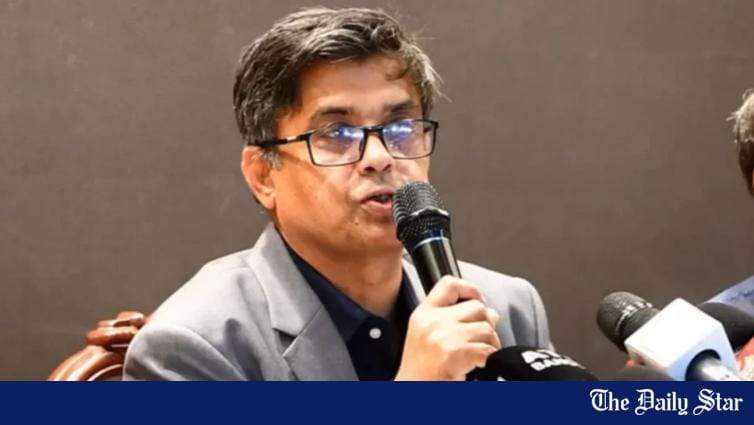
Chief Adviser's Press Secretary Shafiqul Alam today said money launderers are still spreading propaganda abroad.

He said during the ousted Awami League era, the biggest looting in the world history took place in Bangladesh.

"Sheikh Hasina established a system of thievery in the country... Her job was to provide work orders to big companies in exchange of money," Alam alleged saying that those who laundered money abroad are now spreading propaganda spending the ill-gotten money.

Shafiqul made the remarks at a discussion titled, 'The Role of the Media in the July Revolution and Future Expectations", at Jagannath University in the capital.

The press secretary said through propaganda, they want to establish the narrative that a fundamentalist force has emerged here now and there was no mass uprising.

"The defeated force wants to turn you into militant again," he told the audience.

About the role of the media in the July revolution, he alleged that many media outlets portrayed the protesters as "enemies of the nation".

Using the language of the media, the message was being sent to the rulers that these protesters should be suppressed, Alam said.

"If the fascist forces had won, two lakh people would have gone to jail, and then the narrative would have been that some miscreants had created anarchy across the country," he added.

Noting that journalism is not just a profession but a responsibility too, Shafiqul said, "We will analyse better who played what role in the July Revolution."

He urged all to write down their experiences and observations to this end.

Press Institute Bangladesh (PIB) Director General Faruk Wasif also spoke on the occasion.​
 

Members Online

Latest Posts

Latest Posts