New Tweets

[🇧🇩] Everything about the interim government and its actions

G Bangladesh Defense
[🇧🇩] Everything about the interim government and its actions
213
7K
More threads by Saif


Hasina’s agents still active in administration: BNP
Staff Correspondent 06 October, 2024, 23:51

The Bangladesh Nationalist Party on Sunday said that ousted prime minister Sheikh Hasina’s agents, who smuggled thousands of crores of taka were still active in the administration.

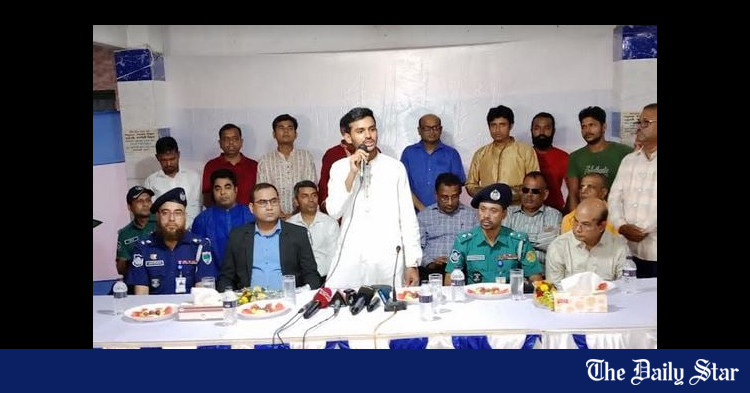
The BNP senior joint secretary general, Ruhul Kabir Rizvi, addressing a meeting in Moulvibazar, said that the agents of Hasina would not allow the Muhammad Yunus-led interim government to succeed in their targeted works.

‘The current foreign secretary was an ambassador to Qatar [during the AL regime]. He did not renew the passports of those involved in BNP politics then. Many Bangladeshis had to return home because of his controversial role,’ the BNP leader alleged.

The meeting was organised following an event of providing financial assistants to the family of Swarna Das, a 16-year-old school girl, killed by the Border Security Force of India along the Bangladesh-India border in Kulaura upazila of Moulvibazar on September 1.

At the meeting, Rizvi said that the foreign secretary was an agent of dictator Sheikh Hasina.

‘How did he become the secretary of the Ministry of Foreign Affairs? They never want your (Yunus) success. Agents of authoritarian governments like these will constantly challenge you,’ he said.

Rizvi alleged that the number of incidents of killing Bangladesh nationals by BSF had been increasing since the fall of the Hasina regime.

‘Their (India) slave Sheikh Hasina has fled the country. That is why, the Indian BSF is now more aggressive. Professor Yunus came to power with people’s confidence after the people’s revolution on August 5. We also have confidence in this government,’ he said.

The BNP leader, drawing the interim government’s attention, however, said that early elections should be held keeping the practice of democracy in mind.

He said that BSF shot Swarna to death along the border in the way they had killed Felani Khatun on January 7, 2011.

Qatar BNP general secretary and Moulvibazar District unit BNP adviser Shariful Haque Saju also spoke.​
 
Analyze

Analyze Post

Add your ideas here:
Highlight Cite Respond
  • Like (+1)
Reactions: Bilal9

Yunus’ economic gambit paying off
Interim govt has made progress in beleaguered financial sector

1728347824972.webp

Two months ago, as Professor Muhammad Yunus waded into Bangladesh's unprecedented political turmoil, he inherited economic chaos by default.

The interim government led by the Nobel Peace Prize winner stared into an economic outlook darkened by double-digit inflation, massive capital flight, shrinking reserves and a heavily strained banking system – a legacy left behind by Sheikh Hasina's regime. Prof Yunus' team wasted no time and took swift steps to rebuild reserves, reform the banking sector and retrieve bad loans. It strived to balance immediate interventions with long-term plans to ensure economic recovery and stability.

1728347874414.webp


As reserves dwindled to a dangerous level, Bangladesh appealed to global lenders for help, securing a clear commitment from the International Monetary Fund to stand by the nation and fast-track fresh loans. The authorities now expect as much as $6 billion in new funds from global lenders, a badly needed lifeline that will ease pressure on reserves.

Bangladesh has been grappling with persistently high inflation for years, consistently exceeding 10 percent. This prolonged inflationary pressure is placing a significant burden on middle- and low-income groups, as well as marginalised communities. In response, Bangladesh Bank Governor Ahsan H Mansur, appointed by Yunus, implemented a series of policy measures aimed at tackling inflation. These actions included halting the printing of money for government loans, raising the policy interest rate, and rationalising public spending to create a balance between fiscal and monetary policies.

While these measures are timely, it will take some time for inflationary pressures to ease, according to Abdur Razzaque, chairman of Research and Policy Integration for Development (RAPID).

The banking sector is facing a critical liquidity crisis, exacerbated by bad loans resulting from politically motivated lending and the looting that occurred when state-backed individuals took control of banks. This situation poses a significant challenge for the new government.

At the end of 2023, the country's distressed loans, a sum of non-performing loans, rescheduled loans and restructured write-offs, stood over Tk 4.75 lakh crore, which was 32 percent of the total outstanding bank loans and close to the operating expenditure of the 2023-24 national budget.

The actual amount of such loans will be much more if the latest situations are considered, said Selim Raihan, executive director of the South Asian Network on Economic Modeling (SANEM). He also feared that a large portion of these distressed loans may not be recoverable. "This is the biggest concern," he said.

Since Mansur took over as the chief of Bangladesh Bank, the central bank reconstituted the boards of 11 beleaguered banks, mostly controlled by S Alam Group owner Mohammed Saiful Alam, who took away more than Tk 1 lakh crore from various lenders. Bangladesh Bank has also taken a stance not to provide direct liquidity support to the crisis-hit banks and facilitated interbank liquidity support from wealthy banks to ill lenders.

The new central bank governor moved to correct the corrupted banking sector and went after some financial hooligans who were closely pampered and indulged by the Awami League regime for doing any misdeeds they wished for, said Biru Paksha Paul, professor of economics at the State University of New York.

In addition, Bangladesh Bank has formed several task forces to assess the financial health of banks, find ways to resolve their crises, recover bad loans, and repatriate laundered money.

However, Paul said the central bank governor does not have the magisterial powers to punish the wrongdoers. "Similar efforts from the law and home ministries are missing. Now economic reforms do not mean academic discourse on economic laws because this is not a decent economy."

Khondaker Golam Moazzem, research director at the Centre for Policy Dialogue (CPD), thinks more dynamic reforms are needed considering the gravity of challenges in recovering bad loans. Even though taskforces have been formed, it is not clear yet what types of initiatives have been taken to recover these loans, he added.

While banking sector reform, bad loan recovery, and inflation control depend on the government's strength and capability, increasing eroding reserves—crucial for covering import bills—requires effective policy measures. The central bank has already implemented strategies to encourage remittance inflows by providing incentives for remittance earners to use formal channels and halting dollar lending from reserves. This approach has resulted in an impressive 80 percent year-on-year increase in remittances for September, with receipts reaching $2.4 billion, up from $2.2 billion in August.

According to RAPID Chairman Abdur Razzaque, noteworthy efforts are being made to address the foreign reserve crisis, including discontinuing the sale of dollars from reserves, reducing the exchange rate gap between banks and curbing markets—likely exacerbated by money laundering linked to corruption—encouraging migrants to send remittances through formal channels, and securing soft loans and budget support from bilateral and multilateral partners. "Export performance has been sluggish due to weak demand for apparel in key markets such as the US and Germany. However, as exports recover and mirror the dynamism seen in remittances, the reserve situation should improve," he added.

CPD Research Director Moazzem noted that while the outcomes of many initiatives have yet to become evident, there are positive signs, such as a degree of stability in the exchange rate and growth in remittance receipts. "However, we have yet to see any sign of increasing foreign exchange reserve, which is hovering near $20 billion," he added.

The central bank has planned to establish a banking commission to establish good governance in the banking sector and oversee reforms, but it could not make it happen in the last two months of its journey. According to Moazzem, the government should take immediate steps to this end.

Despite all efforts, regaining depositors' trust—the most critical asset for lenders—will be challenging for the central bank. This trust has been severely eroded by rampant corruption in the sector, which has put at least 10 banks on the brink of collapse. However, Abdur Razzaque hopes that with the current high interest rates, savers are being encouraged to deposit more, as reflected in the growth of deposits. This should help restore much-needed confidence in the system, especially in the aftermath of the massive mismanagement at several banks, he added.

Moazzem further said despite those initiatives in the banking sector, no step has been taken for the liquidation of some crisis-hit banks as the excessive number of banks is hampering the market competitiveness.

Selim Raihan hoped that those who were given the responsibility to oversee the banking sector would find a way out to create a pathway for the banking sector. However, it is not possible to bring a positive change by the only efforts of a few individuals like Mansur, if the whole bureaucratic system of the government mechanism is not functional, Raihan said.

While multiple measures have been initiated in the banking sector, the efforts in other sectors remain largely invisible. However, the formation of a committee led by renowned economist Debapriya Bhattacharya to prepare a white paper assessing the economic damage of the past 15 years is a significant step forward.

The country's stock market has been severely affected by rampant corruption during Hasina's regime. Its regulator, the Bangladesh Securities and Exchange Commission, is slowly waking up. It formed a five-member task force mainly to increase the confidence of investors and ensure good governance in the stock market. The SEC imposed a fine of Tk 428.52 crore on five companies and four individuals for manipulating the prices of Beximco shares, an unprecedented penalty in the country's capital market.

In an effort to ensure tax compliance, the government blocked the transfer of shares of seven corporate giants that thrived under the Awami League government. The companies are Bashundhara Group, Orion Group, Summit Group, Beximco Group, S Alam Group, Nassa Group, and Third Wave Technologies, now Nagad Ltd.

But the interim government seems to be falling short of public expectations on broader economic reforms. It has formed six reform commissions which are focused on having an acceptable election, but strong reforms for the economy are required, Birupaksha Paul said.

He said the government's first job will be to correct the cancer and bring all financial hooligans to justice. And its next steps will follow academic exercises on the economy such as -- fair competition, job creation for the youths who are at the root of this change, controlling inflation, making market-based interest and exchange rates, recovery of defaulted loans, imposing taxes on those who can pay to improve revenues, correct the capital market and finally bring the semblance of speedy governance in the financial sector, Paul also said.

"As challenges in revenue collection persist, we've seen some initiatives from NBR, such as automation. However, major initiatives, like strengthening the financial audit system, are still lacking," said Moazzem. He noted that the finance adviser has suggested revising the budget to reduce the allocation of Tk 1 lakh crore for the less import-dependent sector, but this has not yet been implemented. Moazzem believes that more dynamic reforms are necessary given the severity of challenges in these areas.

However, according to Moazzem, initiatives in the financial sector are adequate, compared to other sectors, but the results of those initiatives have not been visible till now as they require more time.

"We want to measure the success of these initiatives using three indicators: reducing inflation to 5-6 percent, achieving an exchange rate of Tk 90 per dollar, and lowering interest rates to single digits. Additionally, a significant reduction in defaulted loans is essential," he added.

Zahid Hussain, former lead economist at the World Bank's Dhaka office, commented that it is too early to assess the initiatives of the current interim government, noting that more time is needed to evaluate their outcomes.​
 
Analyze

Analyze Post

Add your ideas here:
Highlight Cite Respond
  • Love (+3)
Reactions: Bilal9

Interim govt to continue the Japan funded project

1728348485118.webp


The interim government will undertake a lone mega project during its tenure, namely the Matarbari deep-sea port, according to Planning and Education Adviser Prof Wahiduddin Mahmud.

"This will be the sole mega project during the interim government's tenure. It may be completed by 2030," he said yesterday at a press briefing in the capital's Agargaon.

In this regard, the Executive Committee of the National Economic Council (Ecnec) approved the "Matarbari Port Development Project", which was revised for the second time.

"This deep-sea port has geopolitical significance. Many countries, including China and India, want to build this port," the adviser said.

However, the government has selected Japan as the development partner considering it charges lower interest and offers a longer repayment period, he said.

He added that once the deep-sea port comes into operation, trade and commerce in the country will be boosted while the importance of this route will increase.

"Existing ports will not meet the demands of the future," he said.

Matarbari deep-sea port has geopolitical significance. Many countries, including China and India, want to build this port— Wahiduddin Mahmud Planning adviser.

After revising the project, the overall cost now stands at Tk 24,381 crore with an additional cost of Tk 6,574 crore. The project was taken in 2020 and was supposed to be completed by 2026.

However, the deadline was later extended to December 2029.

Prof Mahmud said a new road would be built under this project, which will raise the overall cost.

He also opined that the level of corruption and waste of resources had now reduced to some extent.

"But the magnitude of extortion has probably not decreased so much," he said.

Besides, Prof Mahmud said the pace of investment in the country is slow. Although the private sector is the engine of the economy, many private sector entrepreneurs and bank owners are missing,

"After such a big political change, such a slowdown in investment is normal," he said.

Given this context, Prof Mahmud also said increasing public expenditure to some extent is necessary to spur job creation and ensure smooth functioning of the economy.

Prof Mahmud also said there was undue political influence on the growth and inflation figures that were presented in the past.

He added that the Bangladesh Bureau of Statistics (BBS) lacks capacity.

"I'm not reprimanding them for that. The situation is the same in all developing countries."

The adviser further said the government will prepare a report on the vehicles owned by the government throughout the country.

"Different government projects use vehicles but what happens to those once the projects end will be assessed in the report. Besides, for what purposes the vehicles are used will also be assessed," he added.

"We will know the condition of these cars. Road Transport and Bridges Affairs Adviser Muhammad Fouzul Kabir Khan will submit the report to the Advisory Council soon."​
 
Analyze

Analyze Post

Add your ideas here:
Highlight Cite Respond
  • Love (+3)
Reactions: Bilal9

Interim govt struggling on many fronts
Backtracks on its decisions on multiple occasions

The government on around a dozen occasions has backtracked on its decisions during its two months in office, casting doubts about its resolve.

Political analysts interpret this as signs of inconsistency, a lack of experience and determination, and the uncertainty troubling the government as it struggles to strike a balance between diverse demands.

But according to highly placed sources in the interim government, the main reason behind the backpedalling was a result of pressure created by social media outcry and public perception amid a shifting political landscape.

The government's U-turns sometimes appeared to be a result of it having to navigate diverse pressure groups and manoeuvre around different preferences of the political forces.

For several weeks after taking oath, Prof Muhammad Yunus faced an almost unrelenting wave of agitation from different quarters who had finally found an empathetic figure at the helm of the government.

Whether it is the appointment of a senior secretary or a deputy commissioner, the constitutional reform commission head or a public prosecutor, the government has backed down from its initial decisions time and again to balance practicality and public desire.

Prof Al Masud Hasanuzzaman, who teaches government and politics at Jahangirnagar University, thinks turning back from its position is nothing but a sign of "indecision".

"The government had to take many quick decisions because time was of the essence and thus some mistakes were made," he said.

He told The Daily Star that the government needed capable people to run the administration but had to give in to people's demands.

"The government had to take many quick decisions because time was of the essence and thus some mistakes were made."— Prof Al Masud Hasanuzzaman
Masud said he believed that the government was not acting on the right kind of information all the time.

Speaking about the appointments of DCs last month, a top official close to the council of advisers said the order was made after proper verifications. But the Secretariat witnessed an unprecedented scene and later the government had to cancel the appointments of eight DCs due to protests.

The official said personal secretary to a minister is just another bureaucratic post, but most bureaucrats consider holders of these posts as loyal to the party in power.

This perception caused the interim government to backpedal from its decision to appoint some of these officials.

The missteps in appointments are pretty significant and frequent.

AKM Matiur Rahman was promoted to secretary to the shipping ministry on September 30 only to be made an officer on special duty (OSD) within three days. OSD is considered a punishment post.

Immediately after his appointment, his books on Bangabandhu Sheikh Mujibur Rahman went viral on social media and many raised questions over his appointment that compelled the interim government to change its decision, according to sources.

But according to the top official, this bureaucrat was a brilliant officer.

In another case, the interim government appointed retired officer Ilahi D Khan as the secretary to the food ministry on September 30 on a two-year contract only to cancel the deal within nine hours.

Although the government did not mention any reasons for scrapping the contract, sources said it was because of corruption charges against him by the Anti-Corruption Commission.

Mohammad Khorshed Alam Khastagir, a career diplomat of the 20th BCS batch, was promoted to ambassador for Poland on September 25. But his appointment was cancelled within 10 days reportedly for his role during the uprising.

The interim government replaced head of the Constitutional Reform Commission Shahdeen Malik with Prof Ali Riaz within a week of his appointment.

Economist and public policy expert Masrur Reaz was appointed as the chairman of the Bangladesh Securities and Exchange Commission (BSEC) on August 13, but he regretted his inability to take the job four days later.

Lawyer Ehsanul Haque Samaji was appointed as the new public prosecutor of the Dhaka Metropolitan Sessions Judge's Court on August 27. A day after his appointment, pro-BNP lawyers staged a protest in front of the Dhaka Bar Association, demanding its cancellation.

The next day, Samaji declined to accept the appointment.

On September 1, BSEC appointed seven independent directors to the board of Dhaka Stock Exchange (DSE). One of them, Majedur Rahman, chairman of Maldives Islami Bank, declined to take the charge.

Last month, filmmaker Ashfaque Nipun was appointed to the censor board. He not only declined but also advocated abolishing the board system altogether.

On September 22, the government abolished the Bangladesh Film Censor Board and announced that it would constitute the "Bangladesh Film Certification Board".​
 
Analyze

Analyze Post

Add your ideas here:
Highlight Cite Respond
  • Like (+1)
Reactions: Bilal9

Reinvigorating the interim government: Challenges and the path forward
CAF Dowlah
Published :
Oct 08, 2024 21:29
Updated :
Oct 08, 2024 21:35

1728439309551.webp


Exactly two months have passed since the interim government assumed office on August 8. Although it may be premature to fully assess its performance, it is worth reflecting on its progress and the challenges it faces. The “July Revolution” — led by the heroic student movement that overthrew one of the most oppressive regimes in recent history — continues to resonate throughout the country. The people, still relishing the freedom they fought so hard for, remain inspired by the overthrow of autocracy.

However, the initial euphoria that followed the revolution is beginning to fade. Tangible progress toward achieving the revolution’s goals has been slow, and the interim government’s disorganised decision-making has raised doubts about its capacity to navigate the complex political landscape. This threatens to dampen the optimism that surged across the nation just weeks ago.

While we wish the interim government’s success, some hard but necessary questions must be asked: Has the government adequately clarified its constitutional mandate? Has it laid out clear goals and provided a roadmap to achieve them? Most critically, does the government appear capable of fulfilling its primary responsibility — ensuring a smooth transition to a democratically elected government? The answers to these questions will determine whether the interim government’s legacy will be one of realized potential or missed opportunities.

Symbolism vs. Substance: Let us start by examining the composition of the government. The appointment of Nobel laureate Professor M. Yunus as the head of the interim administration was widely praised at home and abroad. At 84, Yunus remains a symbol of moral authority, offering a sense of stability and ethical leadership as the nation recovers from the shackles of autocracy. His presence reassures many that the country is in safe hands, at least symbolically.

However, the same level of confidence does not extend to many of Yunus’ advisors. Tasked with guiding the country through this critical transition, several advisors appear to lack the vigor and dynamism required for such a monumental responsibility. As the administration works to rebuild after the fall of the autocratic regime, serious questions arise about whether Yunus’ inner circle has the drive and competence needed to lead the country effectively. More importantly, do they inspire the confidence of the people that they are the right individuals for the job?

This is a pivotal issue because Yunus’ symbolic leadership alone is not enough to ensure the success of the interim government. The people are not just looking for symbols of change; they want tangible results. The success of this administration depends not only on Yunus’ ability to inspire but also on the competence and action-oriented mindset of those who surround him.

Reform commissions: One of the clearest signs of disorganization within the government has been the creation of six separate reform commissions. Was it truly necessary to establish so many? Wouldn’t a single commission with multiple subcommittees have been more efficient? Instead, this approach has led to confusion and overlapping mandates, creating uncertainty about the commissions’ roles and objectives.

For instance, the commissions on constitutional reform and electoral reform have been set up as separate entities, despite these two areas are deeply interconnected. How can one realistically address electoral reform without tackling constitutional issues, and vice versa? The separation of these commissions seems not only impractical but also counterproductive.

Concerns also arise regarding the leadership of these commissions. One chairperson was replaced almost immediately after being appointed, while another declined the role altogether, suggesting a lack of proper consultation before these appointments were made. Such hasty and poorly thought-out decisions do little to inspire confidence in the government’s planning and organizational capabilities.

Particularly troubling is the case of the constitutional reform commission. Initially headed by a legal scholar, the leadership was quickly shifted to a political scientist. While political science certainly has relevance to constitutional reform, shouldn’t the country’s highest legal framework be overseen by an eminent legal expert? Are we to believe that there are no qualified legal minds in the nation capable of steering this commission?

The delays in the commissions beginning their work further highlight the lack of preparation. Scheduled to start on October 1, their work was postponed because the government realized at the last minute that political parties needed to be consulted on potential reforms. This lack of foresight raises concerns about the government’s ability to handle complex reforms within the constraints of political realities.

The identity crisis: This brings us to a larger, more pressing question: What is the nature of this interim government? Is it a revolutionary government, tasked with implementing fundamental reforms as demanded by the student movement? Or is it simply a caretaker administration whose primary responsibility is to organize free and fair elections?

The student leaders installed the interim government through the presidential office without abrogating the constitution, choosing instead to work within its framework. A truly revolutionary government might have rewritten the constitution to chart a new direction for the nation. However, by choosing not to do so, the interim government has limited its ability to introduce sweeping changes.

Given these constraints, the government should focus on the most urgent reforms needed to ensure a free and fair election, leaving broader reforms for the next elected government to handle. Attempting to reform every area of governance may prove too ambitious and could lead to failure on all fronts.

Administrative missteps: The interim government has also made several poor administrative decisions, including reinstating civil servants dismissed by the previous regime for political reasons. While compensating these individuals for lost job and income may be fair, reappointing them to key positions after such long absences could disrupt the smooth functioning of the civil service. A more measured approach, such as creating an administrative commission to address their grievances, would have been a more effective solution.

In addition, the government canceled contractual appointments and forced many senior civil servants into compulsory retirement, leaving top-tier officials, especially those aligned with the former regime, feeling demoralized. To address the leadership gap, the government could consider a bold move: hiring a special batch of senior civil servants on an emergency basis through lateral entry. This would involve recruiting skilled individuals from outside the civil service — business leaders, civic society members, and others — for a temporary period, perhaps two years. Such an approach could bring fresh energy and ideas into the civil service, giving the government the strong leadership it currently lacks.

The dysfunction within the administration became further evident with the appointment of 59 deputy commissioners, eight of whom had their appointments revoked the following day due to external pressure. Scapples by disgruntled officers, coupled with allegations of corruption surrounding these appointments, have raised serious concerns about the government’s competence. The lack of swift action to address these issues sends mixed signals about the government’s ability to manage effectively.

The police force, deeply demoralized and corrupted under the previous regime, remains in complete disarray. Instead of attempting to reintegrate compromised officials, the government could consider recruiting a special batch of officers to restore the force’s integrity. This move would likely be seen as a positive step by the students who fought for quota reform and as an effort by the interim government to involve them in shaping the post-autocratic governance of the country. It would also inject fresh, reform-minded individuals into the much-criticized police force, helping to revitalize it.

The way forward: In conclusion, the interim government faces an urgent need to define its course. It must decide whether to embrace a bold, revolutionary path that fulfills the student movement’s aspirations or to act solely as a caretaker focused on organising elections. To move forward, the government must make critical choices: replace weak advisors with capable and courageous leaders, clarify its constitutional authority, and present a clear plan for the reforms it seeks to implement.

The government must also reinvigorate the civil and police administrations to restore public confidence and ensure stability during this crucial transition. The stakes are too high for indecision or half-hearted measures. The interim government must seize this revolutionary moment or risk letting a rare opportunity for transformative change slip away in vain.

Dr. Dowlah is a retired Professor of Economics and Law in the United States. Currently, he serves as the Chairperson of the Bangladesh Institute of Policy Studies.​
 
Analyze

Analyze Post

Add your ideas here:
Highlight Cite Respond
  • Like (+1)
Reactions: Bilal9

Govt won't allow anyone to benefit from religious sentiment: Asif

1728693482707.webp

Photo: BSS

Youth and Sports Adviser Asif Mahmud Sazeeb Bhuiyan today said many political parties have taken advantage in the past by using religious sentiments, but the interim government will not allow anyone to benefit from it.

He made the remarks while exchanging greetings with members of the Hindu community at the puja mandaps at Gallamari Harichand Tagore Temple and Bagmara Gavinda Temple in Khulna marking the Durga Puja celebration.

The interim government, he said, is committed to protecting the constitutional rights of all religions and maintaining communal harmony in the country.

"The rights of every individual are enshrined by the constitution and the government is dedicated to upholding these rights," he said.

Referring to the untoward incidents that took place at cultural event in Chattogram puja mandap and theft of goddess Kali's crown from Jashoreshori temple in Satkhira, the adviser said that the administration has already arrested the culprits and they will be brought to justice.

He warned against any sort of religious persecution or violence, saying all citizens, regardless of their religious beliefs, are equal under the constitution.

Asif said that no one would be allowed to inflict harm on any community based on religion.

"If such incidents occur, the government will bring the perpetrators to justice. I assure you, on behalf of the government, that offenders will be held accountable," he said.

Khulna Deputy Commissioner Mohammad Saiful Islam, Superintendent of Police TM Mossarraf Hossain and General Secretary of City Unit Puja Udjapon Parishad Proshanta Kumar Kundu, among others, were present.​
 
Analyze

Analyze Post

Add your ideas here:
Highlight Cite Respond
  • Love (+3)
Reactions: Bilal9

Govt forms 4 more commissions
They will work on reforms to mass media, health, labour rights and women affairs

1729211089440.webp


The government has announced the formation of four new commissions to carry out reforms in the areas of mass media, health, labour rights, and women affairs.

Journalist and columnist Kamal Ahmed will head the commission on mass media while National Professor Dr AK Azad Khan will lead the commission on health affairs.

Syed Sultan Uddin Ahmed, executive director of Bangladesh Institute of Labour Studies, will oversee the commission on labour rights, and Shireen Parveen Haque, executive council member of Nari Paksha, will head the commission on women affairs.

Environment, Forest and Climate Change Adviser Syeda Rizwana Hasan shared the decision of the advisory council at a briefing at the Foreign Service Academy yesterday.

"We hope we will be able to inform you [journalists] about all the members of the four commissions within the next seven to 10 days," she said.

The commission chiefs have been tasked with preparing the lists of the members, the adviser added.

With these four new commissions, the interim government has so far formed 10 to carry out reforms to different sectors.

Talking about the issues discussed in yesterday's advisory council meeting, Rizwana said the list of martyrs of the July-August uprising came up for discussion.

"A verified list of the martyrs has already been prepared. We are facing difficulties in preparing the lists of the martyrs and the injured as instructions were given to remove documents [of the dead and injured] from hospitals. Despite having information [about the dead and the injured] from many places, we cannot cross-check those with the information at hospitals."

Apart from the verified list, the government has another list and the names included in it are currently being scrutinised, the adviser said.

Investigations into removal of documents from hospitals are underway, Rizwana said, adding that those responsible for removing documents will be brought to book.

Speaking at the briefing, Chief Adviser's Special Assistant Mahfuj Alam said the advisory council has decided to provide Tk 30 lakh to each of the families of those martyred in the uprising.

"In the first phase, the government will provide Tk 30 lakh to the families of the martyred. Similar arrangements will be made for those who will be added to the list [of martyrs] after scrutiny."

The list of martyrs is being verified by the July Memorial Foundation, Mahfuj said.

He said the government will take initiatives next week to rehabilitate the injured.

Talking about media freedom, Rizwana said the government believes in freedom of the media. She, however, said the media should avoid spreading fake news or disinformation.

"We are not interfering in the freedom of speech in any way. This is our principle. You [journalists] are saying and writing whatever you want to say or write. However, some information is being distorted on social media with the aim to spread propaganda. Some false information is also being presented and boosted."

Asked whether a commission on reforms to education will be formed, the environment adviser said discussions on education reforms are going on to make the education system modern, effective, and time-befitting.

"Once a decision is reached, we will make an announcement," she said.

About the government's response to demonstrations by teachers to press home various demands, Rizwana said, "Those who are protesting have spokespersons. The government never closed its doors. The doors are open for those who are protesting."​
 
Analyze

Analyze Post

Add your ideas here:
Highlight Cite Respond
  • Like (+1)
Reactions: Bilal9

Asif Nazrul seeks apology for price hike of essentials

1729296868139.webp

Law, Justice and Parliamentary Affairs Adviser Asif Nazrul. Star file photo.

Apologising to the people for the price hike of essential commodities, Law Adviser Asif Nazrul has said the government is working hard and making joint efforts to improve the situation.

"We are working very hard [to resolve the issue]. We are working together," he said.

The law adviser made the remarks when Daily Manabzamin Chief Editor Matiur Rahman Chowdhury wanted to know about the issue during a programme titled "Ajker Songbadpotro" hosted by Channel I late last night.

Asif Nazrul said the impact of the floods is reducing and the winter is approaching. "We expect the situation will improve to a great extent. In some areas, the situation has already started improving," he added.

The law adviser said it was a syndicate involved in importing commodities during the previous government.

He acknowledged that the syndicate is very powerful, noting that it is not that much easy.

The government is trying its best to deal with the issues of essential commodities, he said.

He also highlighted the steps taken so far to cool down the market, Asif said.​
 
Analyze

Analyze Post

Add your ideas here:
Highlight Cite Respond
  • Like (+1)
Reactions: Bilal9

Posts you haven't read yet..

Members Online

No members online now.

Latest Posts

Back
PKDefense - Recommended Toggle