New Tweets

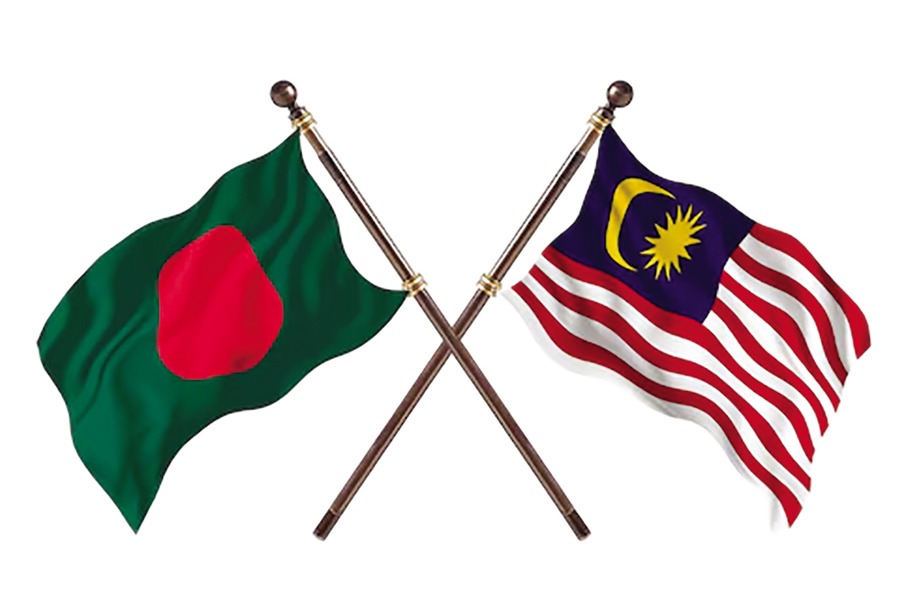
[🇧🇩] Evolving partnership between Bangladesh and Malaysia

G Bangladesh Defense
[🇧🇩] Evolving partnership between Bangladesh and Malaysia
46
2K
More threads by Saif


Scaling up Bangladesh-Malaysia relations

FE
Published :
Aug 15, 2025 01:30
Updated :
Aug 15, 2025 01:30

1755217424204.webp


The recent three-day state visit of Bangladesh's Chief Adviser to Malaysia appears to be more than a ceremonial goodwill tour. The signing of eight collaborative instruments by the two heads of government signals the prospect of a deeper and more strategic partnership-addressing long-standing issues such as the welfare of Bangladeshi migrant workers in Malaysia, while opening new avenues for economic and diplomatic engagement. The eight instruments include five Memoranda of Understanding (MoUs) and three Exchange of Notes covering a wide range of areas: defence cooperation, LNG and petroleum infrastructure, strategic and international studies, collaboration between apex chambers of commerce, higher education, halal food ecosystem development, and training for diplomats. In addition, both sides held substantive discussions on labour migration, the Rohingya crisis, trade, investment, blue economy, and cultural exchanges.

During a one-to-one meeting with the Malaysian Prime Minister, the Chief Adviser expressed gratitude for Malaysia's recent measures to facilitate the entry of nearly 8,000 stranded Bangladeshi workers through a simplified protocol, the introduction of multiple-entry visas, and the provision allowing workers to return home during emergencies without risking their jobs. Both leaders agreed on the need for transparent and fair recruitment processes to lower migration costs and protect worker welfare.

On economic matters, the two countries resolved to expedite negotiations for a Bangladesh-Malaysia Free Trade Agreement, strengthen investment cooperation through Special Economic Zones, and operationalise the Malaysia-Bangladesh Joint Business Council. Recognising the current trade imbalance, Bangladesh urged Malaysia to expand market access for products such as medicines, batteries, footwear, ceramics, and jute goods. The Chief Adviser also sought Malaysia's support in developing the halal industry, including the establishment of a Halal Economic Zone near Dhaka, and reiterated Bangladesh's interest in joining the Regional Comprehensive Economic Partnership (RCEP). The Rohingya crisis featured prominently in the talks. Bangladesh, Malaysia, and other Southeast Asian nations are planning to dispatch a joint peace mission to Myanmar in the coming weeks to advocate for peace and humanitarian assistance for the Rohingya and other affected communities. Bangladesh currently hosts around 1.2 million Rohingya refugees, most of whom fled Myanmar's Rakhine State during the 2017 military crackdown. Since 2023, a further 200,000 have sought refuge in Bangladesh. Malaysia, which shelters over 100,000 Rohingyas, also grapples with trafficking networks exploiting refugees attempting dangerous sea crossings. In an effort to restore global attention to the Rohingya crisis, the United Nations-at Bangladesh's request-will convene a high-level conference on September 30 in New York. A preparatory meeting is scheduled for August 25 in Cox's Bazar, marking the eighth anniversary of the mass influx. Bangladesh has invited Malaysia to participate in both events.

The prospects for improved Bangladesh-Malaysia relations appear highly promising. While labour migration remains the most visible and immediate concern, the potential for broader economic cooperation-through expanded trade, joint investments, and strategic sectoral collaboration-holds the promise of sustainable, mutually beneficial outcomes for both nations.​
 

A strategic reset for Bangladesh's future

Serajul I Bhuiyan
Published :
Aug 15, 2025 01:00
Updated :
Aug 15, 2025 01:00

1755217653920.webp

Malaysian PM Anwar Ibrahim and Bangladesh Chief Adviser Muhammad Yunus in Putrajaya, Malaysia

When Nobel laureate and Chief Adviser Dr Muhammad Yunus arrived at Putrajaya on August 12, 2025, it was far from a courtesy call-it was a game-changer in rewriting the world position of Bangladesh. His visit carried the entire weight of the nation's hopes in a time when the world order is undergoing change, being driven by post-pandemic recovery, supply chain restructurings, and rising geopolitical rivalries. For Bangladesh, the challenge is two-fold: how to maintain its high growth trajectory and how to diversify its partners away from old friends.

This visit to Malaysia was planned with an articulated and multifaceted aim-to develop new economic horizons, to forge long-term strategic ties, to solidify cultural and educational links, and to provide Bangladesh with a more powerful voice in regional security and humanitarian issues.

The welcome at Perdana Putra Complex was full of diplomatic symbolism. The red-carpet reception, the guard of honour by the Royal Ranger Regiment, and the full military salute were not ceremonial niceties; they reflected Malaysia's respect for Bangladesh as a friend that had special geopolitical weight. Prime Minister Anwar Ibrahim's message underscored Kuala Lumpur's importance placed on Dhaka's role in regional and bilateral cooperation. It is a landmark development in the relationship. The engagement was traditionally transactional-focused-Bangladeshi workforce exports and imports of Malaysian palm oil-for decades. Today, Malaysia is also expressing a desire to engage equally with Bangladesh in fields like security, high-value trade, advanced-level education, and technology. The vision of the welcome also conveyed a message beyond Malaysia, projecting Bangladesh's growing presence in ASEAN and the broader Asia-Pacific community.

The visit's most tangible result was the signing of five Memoranda of Understanding (MoUs) and three Exchange of Notes. The agreements are a deliberate expansion of the Bangladesh-Malaysia agenda beyond its traditional parameters.

The defence cooperation agreement opens the way for joint naval and air training exercises, technology transfers, and officer training courses. Malaysia's rich experience in regional maritime surveillance and anti-piracy patrols of the Strait of Malacca can most advantage Bangladesh as it guards the Bay of Bengal-a burgeoning region of energy shipping lanes and blue economy activities.

Energy partnership is also significant. Malaysia's Petronas, with its modern LNG facilities and experience in developing offshore energy, will partner with Bangladesh to modernise terminals, add storage capacity, and even invest in renewable energy projects such as offshore wind and solar farms. Bangladesh wants this because it is seeking to de-risk its high-tariff spot-market LNG imports and cushion its energy prices against global market volatility.

ISIS Malaysia's strategic research MoU with BIISS will give Bangladeshi policy analysts a seat at ASEAN's strategic tables. This offers Dhaka the chance to influence policy discourse on matters of life-and-death importance to Bangladesh's national interests, including regional connectivity, digital trade corridors, adaptation to climate change, and maritime law-fields in which Bangladesh's national interests become increasingly directly involved.

Halal ecosystem agreement is a gateway to a rapidly growing $5 trillion global market by the year 2030. By synchronizing Malaysia's globally renowned halal certification system, Bangladeshi industries can enter upscale export markets of the Middle East, Europe, and North America, not only for food but also for halal pharmaceuticals, cosmetics, fashion apparel, and tourism services.

In the education field, a higher education and diplomatic training agreement is an added-value investment in Bangladesh's human resources. Academic level joint programs, inter-country faculty exchange, and specialized training for diplomats will produce a batch of professionals who can better represent Bangladesh in global circles.

The two private sector pacts-between NCCIM and FBCCI, and between MIMOS and BMCCI-establish business-to-business partnership institutional channels. These can fuel joint ventures in high-tech manufacturing, chip fabrication, ICT innovation parks, and agritech sectors, with the potential to diversify the export basket of Bangladesh away from the readymade garment industry.

Moreover, Yunus's private encounter with Malaysian billionaires was as significant as the diplomatic signing of treaties.

Labour migration has been the economic lifeblood of Bangladesh-Malaysia ties, as nearly a million Bangladeshi migrants in Malaysia remit billions of dollars annually. The sector, however, has been plagued by chronic issues: illegal recruitment channels, middleman exploitation, underemployment, and weak protection for workers.

This journey shifted the focus towards enhancing the quality of the labour relationship. Adviser Asif Nazrul advocated a government-to-government recruitment process focusing on skilled professional engineers, physicians, and ICT professionals, along with traditional semi-skilled roles. This shift would not only boost remittance values but also Bangladesh's reputation as a supplier of high-quality human resources.

Both deliberated mechanisms aim to regularise the status of illegal workers, increase social security allowances, and introduce Bangla-language complaint and support services. All of these reforms, if implemented, will increase workers' welfare, reduce exploitation, and enhance the contribution of migration to Bangladesh's economy.

This initiative to participate in a regional peace mission to Myanmar alongside Malaysia, Indonesia, the Philippines, and Thailand reflects Bangladesh's development as a constructive regional actor. The mission will call for a ceasefire and relief for Rohingya refugees-a priority concern for Bangladesh that is sheltering over one million displaced Rohingya in Cox's Bazar.

Malaysian chairmanship of ASEAN for this mission provides Dhaka with the stage to internationalize the crisis, secure broader humanitarian responsibility-sharing, and exercise diplomatic leverage on Myanmar's military junta. Besides the Rohingya situation, participation in such regional tasks assigns Bangladesh more credibility in peace building and humanitarian diplomacy-the key that can open doors to other multilateral endeavours.

Two-way trade, which stood at RM13.35 billion in 2024 (5.1 per cent higher than 2023), may double if the scheme projects are agreed upon. Malaysian contributions to ASEAN can also help Bangladesh become more integrated into Southeast Asian economic corridors and thus qualify to benefit from the world's fastest-growing regional market. Academic and social business collaboration enhances Bangladesh's soft power to project a progressive national image across the globe.

The real challenge is to transform signatures into measurable outcomes. All MoUs need to be backed by a shared implementation task force with quarterly report cards. An annual Bangladesh-Malaysia Investment Forum, alternatively between Kuala Lumpur and Dhaka, can sustain business momentum and ensure ongoing stakeholder dialogue.

Yunus's diplomacy is a further expression of his life-long commitment to the principles of social sustainability, inclusion, and innovation-applied at the statecraft level. His Universiti Kebangsaan Malaysia keynote, which followed an honorary doctorate in Social Business, confirmed that economic partnerships must be sensitive to social needs while driving growth.

Finally, this trip was not about ritual photos; it was about the bricks of a new chapter in Bangladesh's rise. With discipline and enforcement of the commitments, Bangladesh was poised, over the next five years, to achieve energy security, make a mark in the precious halal economy, double two-way trade to $6 billion by 2030, transition to a high-skill migration profile, and increase its regional voice in humanitarian and peace diplomacy.​
 
A few videos (in Bengali but with CC) about Dr. Yunus' trip to Malaysia and the MOU's signed, presentations given


Bangladeshi Workers
Dhaka, KL push for transparent hiring process

1755223891129.webp

Representational image/STAR file

Malaysia and Bangladesh have agreed to work towards establishing a more transparent recruitment process for Bangladeshi workers, Chief Adviser Prof Muhammad Yunus told Malaysia's state news agency Bernama in an interview published yesterday.

He said the matter was discussed in depth during his meeting with Prime Minister Datuk Seri Anwar Ibrahim in Putrajaya on August 12.

Prof Yunus also acknowledged flaws in the current process and stressed the need to "clean it up" to avoid problems for either side.

Malaysia froze recruitment of foreign workers on May 13 last year following massive irregularities involving a syndicate of 101 recruiting agents, who were accused of charging each worker between Tk 450,000 and Tk 600,000. There were numerous reports of joblessness, non-payment of wages and other forms of exploitation.

"We had a very elaborate discussion on how to proceed without having trouble for the Malaysian government. We both promised ourselves to clean up the system and to make it easier and transparent," Prof Yunus told Bernama.

The Nobel laureate said while Malaysia needs foreign workers, Bangladesh seeks to ensure that the recruitment of its citizens is transparent, allowing them to work abroad with dignity, proper rights and benefits.

"Malaysia needs people, and we need to have these people come here to make a living for themselves and their families. So both sides need each other. There is no shortage of goodwill. It's a question of putting together and seeing where things go wrong, and then we track and clean it up."

As of February 2025, Bangladeshi nationals form the largest group of foreign workers in Malaysia, numbering 898,970, working primarily in the construction, manufacturing, plantation and service sectors. Around 400,000 Bangladeshis are estimated to be irregular due to malpractices by agents and employers.

Meanwhile, Malaysian Interior Minister Saifuddin Nasution bin Ismail described Prof Yunus's visit as a very positive development in Malaysia-Bangladesh bilateral relations, particularly in strengthening strategic and high-impact multi-sector cooperation.

In a Facebook post yesterday, he said the Malaysian home ministry (KDN) believes that regional peace can only be achieved through close ASEAN cooperation and support from the international community.​
 
Wow - His Excellency Datu Seri Anwar Ibrahim laid out the red carpet for Dr. Yunus with Durian delicacy. Much Respect.


Bangladesh-Malaysia labour route rife with corruption: Bloomberg report

Investigation finds cartelised recruitment and political links driving migrant exploitation


By Star Online Report

1769217285680.webp

Representational image of Bangladeshi migrant workers. File Photo: Reuters

Endemic corruption in the Bangladesh-Malaysia migrant worker recruitment system has enriched politically connected businesses while trapping workers in cycles of debt, exploitation and forced labour, according to a Bloomberg investigative report published on January 23.

The report, titled “Everyone gets a cut, and migrant workers pay the price,” is based on months-long investigations and interviews with more than 100 people, including current and former government officials, labour analysts, recruitment agents and Bangladeshi migrants.

It describes a recruitment process designed to extract maximum fees from workers, often on the promise of jobs that do not exist.

Bloomberg opens its report with the case of Shofiqul Islam, a Bangladeshi migrant who borrowed $4,400 to secure a construction job in Malaysia.

Instead of employment, he was left stranded in a dilapidated building outside Kuala Lumpur after his employer disappeared. His visa expired, his debt accumulated interest daily and he remained jobless.

In February 2024, Shofiqul died after suffering convulsions in his dormitory.

Former Malaysian Anti-Corruption Commission chief Latheefa Koya said Shofiqul “clearly is a victim of human trafficking,” describing his death as an extreme consequence of institutional corruption in Malaysia’s migrant recruitment system.

Over the past decade, more than 800,000 Bangladeshis have migrated to Malaysia, often paying significantly higher recruitment fees than workers from other countries, Bloomberg reported.

The investigation found that recruitment fees have contributed to debt bondage, forced labour and, in some cases, human trafficking.

“This involves so many layers of people,” said Mahathir Mohamad, former Malaysian prime minister who sought to reform the system.

Bloomberg reported that figures within Malaysia’s ruling elite were aware of the systemic abuses but failed to address them because recruitment fees benefited all parties involved.

A representative for Malaysian Prime Minister Anwar Ibrahim referred Bloomberg to the Ministry of Home Affairs, which did not respond to repeated requests for comment. Bangladesh’s government also did not respond, Bloomberg says.

The report traces the system’s evolution to Aminul Islam, commonly known as Amin, a Malaysian businessman of Bangladeshi origin and founder of Bestinet, a company that digitised Malaysia’s recruitment process.

Amin has denied responsibility for abuses, saying he devoted his career to helping migrant workers and had “never heard of syndicate fees.”

Malaysia adopted Bestinet’s system in 2015, when the then-home affairs minister Ahmad Zahid Hamidi announced plans to recruit up to 1.5 million Bangladeshi workers.

Recruitment was restricted to 10 Bangladeshi agencies, a move former officials described as unprecedented. Zahid has denied involvement, and Amin said Malaysia selected the agencies.

According to Bloomberg, these agencies later charged workers an additional “syndicate fee” of around $1,350, pushing total recruitment costs to as much as $6,600 per worker. The fees are disputed, and several agencies denied collecting unlawful payments.

Bloomberg found no evidence that the money went to Amin.

Bangladesh police arrested dozens of recruitment agents in 2024 over alleged money laundering, extortion and trafficking.

Interpol Bangladesh branch accused key figures of “fraudulently extorting money” that caused workers “physical and mental torture.” Amin denied the allegations and has not been extradited.

Despite discussions within Malaysia’s cabinet to cut ties with Bestinet after Anwar took office in 2022, Bloomberg reported that the company’s contract was extended in early 2024.

Meanwhile, Shofiqul’s widow received only a partial refund of his recruitment fee and remains burdened by debt, Bloomberg reported.​
 

Bangladesh-Malaysia trade set for high-tech boost as exports near $300m

Star Business Desk

1772327777967.webp

Mohd Shuhada Othman, high commissioner of Malaysia to Bangladesh, inaugurates the Silver Jubilee celebration marking the 25th anniversary of the Bangladesh-Malaysia Chamber of Commerce and Industry (BMCCI), at the Sheraton Dhaka yesterday. Photo: BMCCI

Bangladesh’s exports to Malaysia have surged more than fivefold over the past decade, climbing from $56 million to nearly $300 million, reflecting deepening bilateral trade ties, said Mohd Shuhada Othman, high commissioner of Malaysia to Bangladesh.

He said the next phase of cooperation would centre on high-tech collaboration in the semiconductor industry and stronger engagement in the global Halal economy.

The envoy made the remarks at the Silver Jubilee celebration marking the 25th anniversary of the Bangladesh-Malaysia Chamber of Commerce and Industry (BMCCI), held yesterday at the Sheraton Dhaka, according to a press release.

In his address, Othman commended BMCCI for supporting Malaysia’s position as the ninth-largest investor in Bangladesh. He also unveiled the chamber’s new logo as chief guest at the event.

Shabbir A Khan, president of BMCCI, expressed pride in the chamber’s journey since its inception in 2001, describing the Silver Jubilee logo as a symbol of resilience, collaboration and forward-looking momentum for the next 25 years.

He paid tribute to the 12 founding members whose foresight laid the foundation of the chamber and acknowledged the contributions of past presidents and members to its steady growth. Looking ahead, Khan reaffirmed BMCCI’s commitment to diversifying business engagement and strengthening the longstanding ties between the two countries.

Over the past 25 years, BMCCI has worked to enhance strategic capabilities among business communities by organising investment forums, trade fairs, business delegation exchanges, seminars and symposiums between Bangladesh and Malaysia.

Salahuddin Kasem Khan, former president and founding director of the chamber, was also present, alongside senior officials, business leaders and executives from various sectors.​
 

Members Online

Latest Posts

Back
PKDefense - Recommended Toggle