[🇧🇩] Extradition of Hasina, Awami Leaders/Beneficiaries and Related News.

[🇧🇩] Extradition of Hasina, Awami Leaders/Beneficiaries and Related News.
135
5K
More threads by Saif

G Bangladesh Defense

No positive response from India yet over Hasina return: adviser
Our Correspondent . Rangpur 06 December, 2025, 00:47

1764984504478.webp

Sheikh Hasina. | File photo

Foreign affairs adviser Md Touhid Hossain on Friday said that the government of India had not given yet any positive response to Bangladesh’s request to extradite deposed prime minister Sheikh Hasina.Travel guide book

Sheikh Hasina has been convicted through a verdict delivered by the International Crimes Tribunal and Dhaka has sent a formal letter to India to return her following the verdict, he said.

‘But we have not received any positive response yet,’ the adviser said.

Touhid came up with the remarks while talking to journalists at Rangpur Circuit House on Friday morning during his visit to the district.

The International Crimes Tribunal-1 on November 17 sentenced deposed prime minister and Awami League president Sheikh Hasina and former home minister Asaduzzaman Khan Kamal to death for committing crimes against humanity during the July–August 2024 mass uprising.

Noting that extradition matters take time, he said, ‘In these cases, changes don’t happen overnight. We will wait and see what response we receive from the Indian authorities.’

The Bangladesh foreign ministry on November 21 sent a letter to the Indian external affairs ministry through its mission in New Delhi to extradite Sheikh Hasina and Asaduzzaman, mentioning the ICT verdict.

Earlier, on December 23, 2024, the foreign ministry sent a note verbale to its Indian counterpart, requesting the extradition of Sheikh Hasina who is facing charges of crimes against humanity committed during the July uprising, including scores of murder cases.

‘As a close neighbour, India remains committed to the best interests of the people of Bangladesh, including in peace, democracy, inclusion and stability in that country. We will always engage constructively with all stakeholders to that end,’ said the Indian external affairs ministry in a statement posted on its web site on November 17, the day the ICT pronounced the verdict in Dhaka.

Sheikh Hasina has been sheltered in India since August 5 past year after her ouster in the mass uprising.

On the return of Bangladesh Nationalist Party acting chairman Tarique Rahman from the United Kingdom to see her ailing mother and BNP chairperson Khaleda Zia, Touhid Hossain on Friday also said, ‘I have no information about his return to the country. His wife, Zubaida Rahman, has arrived in Dhaka. Begum Khaleda Zia is not being taken to London today [Friday], as I’ve been informed that there is a technical glitch with the aircraft [which is scheduled to carry her to the UK].’

Regarding the detention of Bangladeshi fishermen by Arakan Army troops, he said that the group is not a state actor, so, making bilateral engagement became impossible.

‘As the country’s interests are involved, we have to look into the matter. Everything cannot be disclosed, steps are being taken to stop further recurrence of such incidents,’ he said.

Referring to the interim government’s plan to hold elections in February 2026, Touhid said, ‘Our time is very limited. We hope the elections will be conducted properly in February, and we will step aside after handing over responsibility to the elected representatives.’

‘Over the past one year and a half, we have been working to develop a road map that will help the next government take the country to the desired positon. We are moving forward with that objective,’ he said.

‘People have huge expectations on us for finalising all reforms, but that is a long-term process. Those who will come to the government next must reflect the people’s will,’ he said.​
 

Hasina’s stay in India hinges on ‘certain circumstance’, says Jaishankar
New Age Desk 06 December, 2025, 21:10

1765072177129.webp

S Jaishankar | UNB file photo

India’s external affairs minister S Jaishankar on Saturday said that ousted Bangladesh prime minister Sheikh Hasina’s continued stay in India depends on the ‘certain circumstance’ under which she arrived in New Delhi in August in the past year, following the violent student protests that toppled her government, reports the Indian newspaper Hindustan Times.

Jaishankar made the remark at the 23rd Hindustan Times Leadership Summit, responding to a question on whether Hasina could stay in India for as long as she wants. He said, ‘That’s a different issue, isn’t it?’ reads the report published online on Saturday.

According to the report, Jaishankar said that Hasina came to New Delhi under a ‘certain circumstance’ in the past year.

‘And, you know, I think that circumstance clearly sort of is a factor in what happens to her. But again, that is something which she has to make up her mind,’ Jaishankar added, the report reads.

Sheikh Hasina fled to India on August 5 in the past year, ending her 15-year rule amid a student-led mass uprising.

On November 17, Dhaka-based International Crimes Tribunal-1 sentenced the deposed prime minister and Awami League president Sheikh Hasina and former home minister Asaduzzaman Khan Kamal to death for committing crimes against humanity during the July–August 2024 mass uprising.

India noted the verdict announced by the International Crimes Tribunal of Bangladesh concerning Sheikh Hasina in a statement on the website of the external affairs ministry issued later on the day.Travel guide book

The statement read, ‘As a close neighbour, India remains committed to the best interests of the people of Bangladesh, including in peace, democracy, inclusion and stability in that country. We will always engage constructively with all stakeholders to that end,’ said the statement.

The Bangladesh government on November 21 sent a letter to the Indian government to extradite Sheikh Hasina and Asaduzzaman, mentioning the recent International Crimes Tribunal verdict sentencing both of them to death for committing crimes against humanity.​
 

'Hasina’s stay in India her personal decision'
Says Indian foreign minister; stresses on democratic process in Bangladesh

1765156805518.webp

File photo

Indian External Affairs Minister S Jaishankar has said that ousted Bangladeshi prime minister Sheikh Hasina's stay in India is her personal decision influenced by the circumstances that led her to the country.

While speaking to NDTV's CEO and Editor-in-Chief Rahul Kanwal at the HT Leadership Summit on Saturday, he was asked if Hasina was welcome in India for as long as she wanted. Jaishankar replied, "Well, that's a different issue, isn't it? She came here in a certain circumstance." Jaishankar continued saying that he thought this circumstance was a factor in what happened to her.

"But again, that is something in which she has to make up her mind."

Hasina fled to India in August last year following the mass uprising that led to the end of her 15-year rule.

Bangladesh's International Crimes Tribunal sentenced her to death in absentia for "crimes against humanity" committed during the July uprising.

Bangladesh government wrote to India seeking the extradition of Hasina -- once in December last year and then after the verdict last month. India said it would consider the request.

On the relationship between Bangladesh and India that remains strained since the ouster of Awami League government, Jaishankar emphasised on India's stance on the need for a credible democratic process in the neighbouring country, reports NDTV.

Referring to past political issues in Bangladesh, Jaishankar said, "What we heard was that people in Bangladesh, particularly those who are now in power, had an issue with how the elections were conducted earlier. Now, if the issue was the election, the first order of business would be to do a fair election."

"As far as we are concerned, we wish Bangladesh well. We think as a democratic country, any democratic country likes to see the will of the people ascertained through a democratic process," he told NDTV.

He expressed optimism for the future of the bilateral ties, stressing India's democratic preference for its neighbour.

"And I am quite confident that whatever comes out of the democratic process would have a balanced and mature view about the relationship and hopefully things would improve."​
 

Hasina’s stay in India no barrier to Bangladesh ties, says Fakhrul

bdnews24.com
Published :
Feb 16, 2026 18:51
Updated :
Feb 16, 2026 18:51

1771374325246.webp


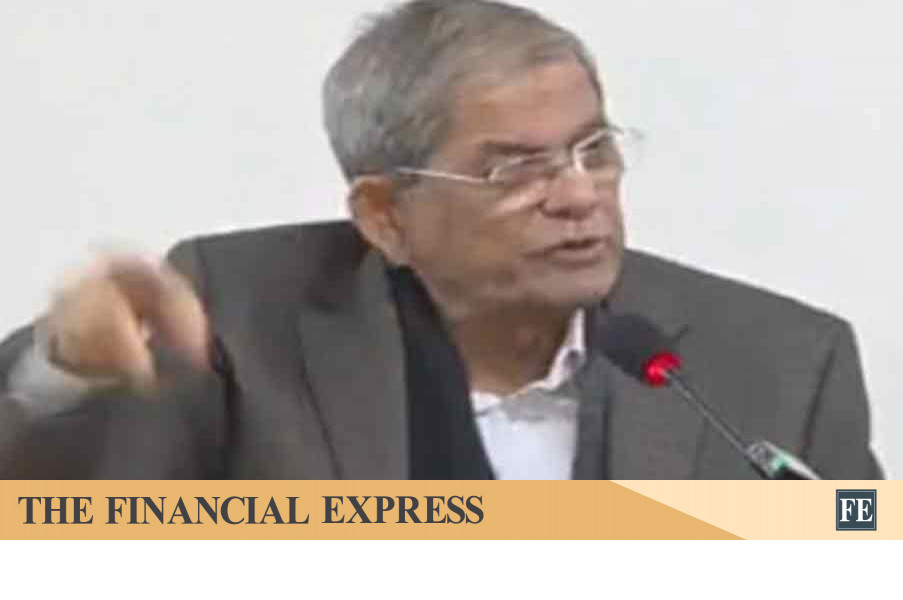
As Bangladesh stands on the brink of a political transition, senior BNP leader Mirza Fakhrul Islam Alamgir has sought to decouple bilateral diplomacy from domestic reckoning, saying India-Bangladesh relations will not be “held hostage” by the presence of Sheikh Hasina in New Delhi.

He made the remarks in an interview with The Hindu published, a day before the BNP is set to form the government after securing an absolute majority in the national election.

The Indian English daily said BNP’s secretary general gave the interview in Dhaka at the party headquarters in Gulshan.

Fakhrul said Dhaka would pursue the legal process against the deposed prime minister over alleged human rights violations during the July Uprising and reiterated the demand for her extradition, but added that the issue should not hinder trade and development cooperation.

“We believe India should hand her over to us. But not doing so will not be a deterrent to building broader relations, including trade and commercial ties,” he was quoted as saying.

Fakhrul said projects that serve Bangladesh’s interests would be expedited and development partnerships with India strengthened.

He acknowledged “difficult issues” in bilateral ties -- including the renewal of the Ganges Water Treaty, border killings and water sharing -- but stressed the need for dialogue.

“We can’t fight a war with India. We need to talk,” he said.

“We believe that Hasina has really committed serious human rights violations. There is a popular demand to punish her and we believe that India should hand her over to us. But not handing over Sheikh Hasina to Bangladesh will not be a deterrent to building broader relations, including trade and commercial ties. We want to build even better ties,” Mirza Fakhrul was quoted as saying by the Hindu.​
 

Bangladesh reiterates call for Hasina’s extradition during Delhi talks

bdnews24.com
Published :
Apr 08, 2026 21:38
Updated :
Apr 08, 2026 21:38

1775692888551.webp


Bangladesh has renewed its request for the extradition of ousted prime minister Sheikh Hasina during high-level talks in New Delhi.

The issue was raised during Foreign Minister Khalilur Rahman’s official visit to India, the foreign ministry said on Wednesday.

Hasina has been sentenced to death for crimes against humanity linked to the July Uprising.

During the visit, Khalilur also held meetings with Indian External Affairs Minister S Jaishankar and National Security Advisor Ajit Doval.​
 

Hasina’s extradition request being 'examined:' India

UNB

Published :
Apr 17, 2026 22:32
Updated :
Apr 17, 2026 23:13

1776469859687.webp


Reiterating its desire to engage constructively, India on Friday said they are examining the request for former Prime Minister Sheikh Hasina’s extradition as part of ongoing judicial and internal legal processes.

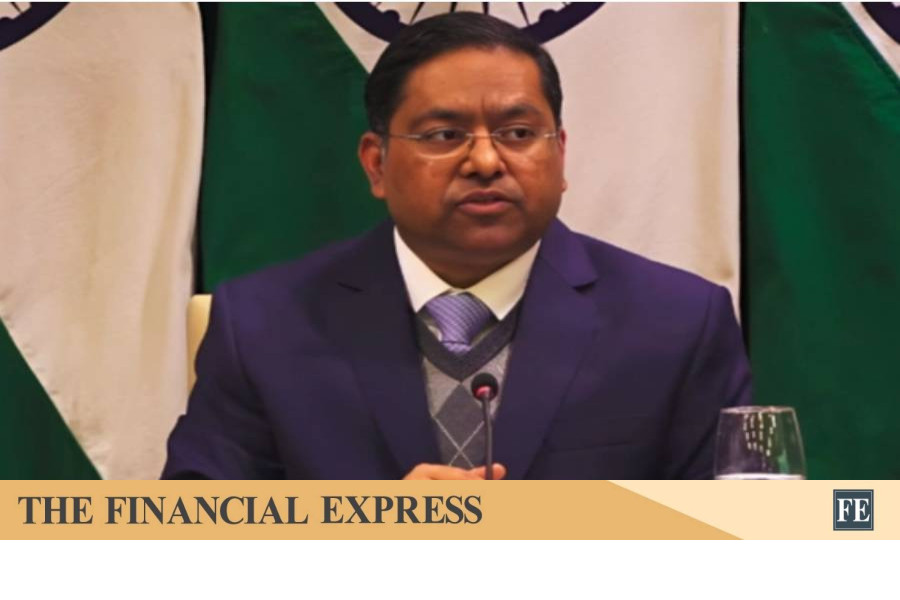
"There is a request.....the request is being examined as part of ongoing judicial and internal legal processes," the Indian Ministry of External Affairs (MEA) spokesperson Randhir Jaiswal told reporters in New Delhi, noting that they will continue to engage constructively on the issue with all the stakeholders.

Responding to a question at the weekly media briefing, Jaiswal said they follow all the developments very closely.

Bangladesh, on April 8, reiterated its request to extradite Hasina and former Home Minister Asaduzzaman Khan Kamal to Bangladesh, who have been awarded death penalty by the International Crimes Tribunal.

"We will continue to seek her extradition through a transparent judicial process. It (the extradition request) has been discussed. It will be dealt with through a transparent judicial process," Prime Minister's Foreign Affairs Adviser Humaiun Kobir told reporters recently in Dhaka.

He said there would be some challenges as Hasina is still staying there.

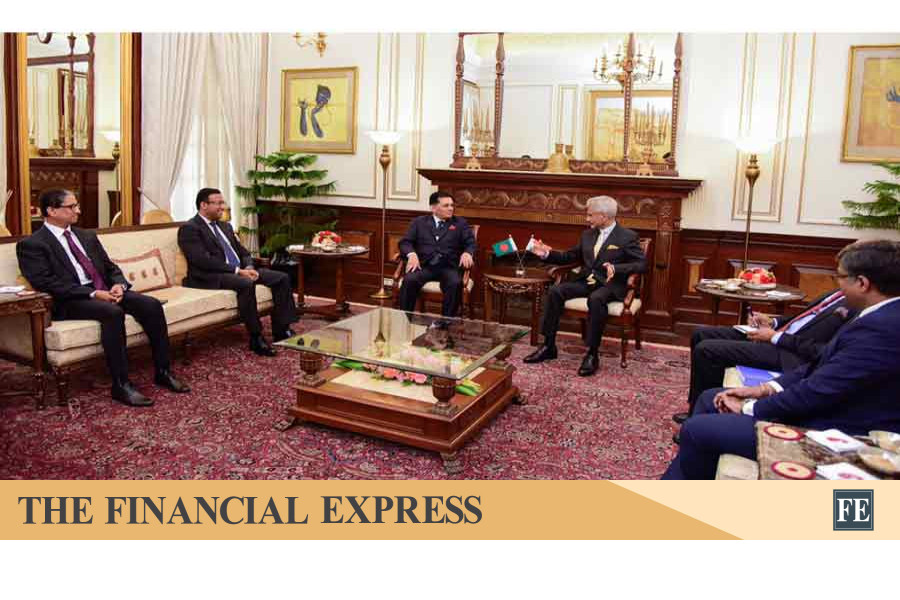
Indian External Affairs Minister Dr S Jaishankar met with Foreign Minister Dr Khalilur Rahman in New Delhi. Adviser on Foreign Affairs to Prime Minister of Bangladesh, Humaiun Kobir was also present at the meeting.

The External Affairs Minister reiterated India's desire to engage constructively with the new government and further strengthen bilateral ties, said the MEA spokesperson on Friday.

The two sides agreed to explore proposals for deepening the partnership through the relevant bilateral mechanisms.

Follow-on official meetings are expected to take place at an early date. Both sides exchanged views on regional and global issues of mutual interest.

During the visit, Foreign Minister Dr Khalilur also met National Security Adviser Ajit Doval and Minister of Petroleum and Natural Gas Hardeep Singh Puri.

Prime Minister’s Foreign Affairs Adviser Humaiun Kobir recently said the challenges that exist in the Bangladesh-India relationship can be resolved if both sides remain engaged in dialogue.

"Challenges are there. I am telling you repeatedly. You can address the challenges if you are engaged in dialogue. You must not give up the path of dialogue," he told reporters at the Ministry of Foreign Affairs on Monday evening.

Adviser Humaiun said the chances of resolving issues will be greater if the door to dialogue and discussion remains open.

"It was our first visit to India. Let us utilise this as a stepping stone to start dialogue and discussion for moving forward positively," said Adviser Humaiun, while responding to a question.

He said it is a very good start to working together positively.

Describing Sheikh Hasina as a terrorist and killer, he said she is staying in India after 'killing 1,500 people' in Bangladesh.

"It's a must to restrain her. She (ex-PM Hasina) should not be allowed to utilise Indian soil to destabilise Bangladesh in any way," he said.

The adviser said there are some issues that can be resolved immediately while others may take a little longer to resolve.​
 

Will India hand over Hasina?

All you need to know about the legal process of extradition and the caveats

Tanim Ahmed

1776818464145.webp

Photo: Reuters/File

New Delhi’s latest remarks about former premier Sheikh Hasina’s extradition being under review led to some speculation whether its stance has changed.

Although still non-committal, the Indian foreign ministry spokesperson, Randhir Jaiswal, said on April 17, the request was being “examined as part of ongoing judicial and internal legal processes”.

Bangladesh had previously raised the issue at several bilateral meetings and requested for Hasina’s extradition. Foreign Minister Khalilur Rahman reportedly discussed it with his Indian counterpart S Jaishankar during a visit to Delhi. Given the sensitivity of the matter, it is widely held that the extradition will be more a matter for political settlement than a legal debate.

Prima facie case

While there is an extradition treaty between Bangladesh and India, the legal process that Jaiswal mentioned also relates to India’s Extradition Act of 1962. “The legal steps would have to adhere to this law,” says Ujjaini Chatterjee, an independent lawyer noted for her work in human rights and constitutional law.

She explains that upon receiving an extradition request, India would appoint a magistrate to examine whether the case against Hasina holds water.

But before that, the magistrate is expected to issue a warrant of arrest for the “fugitive criminal”, as the law puts it. That may not be necessary in this case since Hasina is living under the protection of the Indian government.

The law stipulates that once she appears before the court, “the magistrate shall inquire into the case in the same manner and shall have the same jurisdiction and powers” as if it were a case being tried in India.

The magistrate would essentially see if there is a prima facie case based on the evidence, that is, whether the evidence stands up to the allegations on the face of it, if the case were being tried in India. If so, the magistrate may send Hasina to jail in India to await further orders and “report the result of his inquiry to the Central Government, and shall forward together with such report, and written statement which the fugitive criminal may desire to submit for the consideration of the Central Government”.

Exceptions and exemptions

While the extradition treaty exempts the requesting party from providing proof of guilt stipulating that a warrant of arrest and a proof of identity would suffice, Chatterji says that this particular case is more nuanced. “One should provide documents to establish that the allegations and evidence make for a viable on the face of it.”

There are two caveats that could become potential hurdles. Chatterji explains that the law (as well as the treaty) provides for an exception if the allegations are of a political nature, or if the accused person, in this case Hasina, proves that she will not get fair trial in Bangladesh. “In these cases, India may refuse to extradite her.”

Both the law and the treaty, however, stipulate that murder, abduction and enforced disappearance do not count as offence of political nature.

The lawyer also points out that Hasina has been accused, tried and convicted for crimes against humanity under the International Crimes (Tribunal) Act of Bangladesh. “Such crimes, have a far higher threshold for evidence than a plain murder case.”

Although, India does not have such a law, similar crimes could still be prosecuted in India as its domestic laws do provide protection from crimes like mass murder, incitement to murder, abduction, and so forth, she says. “So, in that respect, you still get protection from those crimes.”

She says the main consideration, however, would be if the request is being made in good faith and whether Hasina would receive a fair trial.

“Despite the exceptions, I feel what shall mainly be under legal scrutiny is the context, motive and whether the prosecution is a pretext of retribution,” says Chatterji adding that examination of Hasina’s extradition case shall primarily be on these lines. “So, the authorities ought to look at fairness and due process, which shall be the deciding factor.”

She further points out that whether the request is being made in good faith and whether Hasina will receive fair trial will be determined by the Indian government, not the magistrate.

Hasina's status

India has not yet clarified Hasina’s status and whether she has been provided with asylum or whether she is a refugee in New Delhi. India has only gone so far as to say that Bangladesh’s ousted premier is living under special arrangement.

The laws regarding refugee protection bar repatriation to a country where their life, liberty, body, dignity, etc. may be under threat. Although India is not a signatory to the Refugee Convention, its own regulations, and practices do provide for refugee protection which it is known to have applied selectively.

When asked whether there are legal obligations for India to protect individuals it has given asylum to, Chatterji says there has not been any such commitment from India’s part, in writing, at least in the public domain. “But even if there were, that commitment could be revoked to send someone back to their home country in the interest of justice.”

Previously documented cases of Indian nationals being extradited to UK and US have taken up to five years before the entire legal process was exhausted.​
 

Discussion, controversy surrounding Mahfuj’s post on return of Awami League

Staff Correspondent

1779331917525.webp


Mahfuj Alam Acreengrab of YouTube video

A Facebook post by former interim government adviser Mahfuj Alam claiming that the Awami League—which had its activities banned after the July mass uprising—has effectively “come back” into Bangladeshi politics has sparked wide discussion and criticism.

Some people, centering on the post, have brought up allegations of financial scandals involving certain former advisers of the interim government. Others have questioned why Mahfuj Alam did not resign from the interim government at the time if he is now criticising that same government.

Mahfuj Alam made the Facebook post about the return of the Awami League at a time when leaders and activists of the party and its affiliated organisations have been discussing the “Return 2.0” of former prime minister Sheikh Hasina, who was ousted from power during the July uprising, on social media. In addition, some Indian media outlets have recently published interviews with Sheikh Hasina.

On the same day Mahfuj Alam made the Facebook post about the Awami League’s return, adviser on Information and Broadcasting Affairs to Prime Minister Tarique Rahman, Zahed Ur Rahman, said during a regular press briefing organised by the Ministry of Information at the Secretariat, “We will also ensure justice for Sheikh Hasina. If Sheikh Hasina returns to Bangladesh, we will not subject her to any extrajudicial action.”

Following Mahfuj Alam’s post last night, senior leaders of the National Citizen Party (NCP), who were once his political allies, have been trying to understand his current position. Mahfuj, a former member of the liaison committee of the Anti-Discrimination Student Movement that led the July mass uprising, did not join the NCP. Instead, he formed a new political platform called “Alternatives.” He has been trying to organise this platform since its launch last March.


In the Awami League-related post published on Facebook after 10:00 pm yesterday Wednesday, Mahfuj Alam wrote, “The League is not merely a political party; it is a theology, and faith in that theology has returned. Today I will tell the story of how it returned.” He then presented a long list describing how the Awami League had returned. The post went viral on Facebook. By 6 pm today Wednesday, more than 17,000 Facebook users had reacted to it. Many others also posted responses discussing Mahfuj’s arguments.

Several people also commented directly beneath Mahfuj’s post. Sheikh Tasnim Afroze (Emi), recently released after spending two months in jail over a program to play the 7 March speech on loudspeakers in front of Shahbagh Police Station, wrote in the comments: “The League came back the day you went to demolish House 32. The League came back the day five people were killed in Gopalganj because of the NCP. These two points were left out.”

Former coordinator of the Anti-Discrimination Student Movement and current leader of the Jatiya Chhatra Shakti, Abu Bakar Majumder, wrote, “The issue of financial scandals involving some advisers was missed, brother. You could have added that.”

Member of the Gonotantrik Odhikar Committee, Mahtab Uddin Ahmed, commented on Mahfuj’s post, “You yourself were part of that the interim government you are criticising now. Why did you not resign? When you saw the interim government patronising extreme right-wing forces, you could at least have honestly stepped down, acknowledging your failure to stop it. You lost your credibility by not doing that.”

Mahfuj Alam did not respond to these comments. However, he did reply to a comment by Numan Ahmad Chowdhury, a central council member of the Network for Peoples Action (NPA).

Numan had written, “The League came back the day a vague concept was called Mujib-bad Mujibism and then the word ‘murdabad’ was added afterward. The League came back the day people who spoke truth against power were labeled as Mujib-badi leftists and made targets for elimination.”

In response, Mahfuj said, “No brother, Mujibism is real, not vague. And Mujibist left means BAKSAL-style leftists—that is also reality. If the League returns, it will return through the alliance between Mujibist leftists and the far right.”

After Mahfuj’s post, many others also wrote on Facebook about the return of the Awami League. Former interim government law adviser Asif Nazrul wrote, “The Awami League has not come back; they were already there. What has come back is their arrogance, falsehoods, and audacity to mislead people.”

Former member of the Constitution Reform Commission Firoz Ahmed wrote in a lengthy post: “The League will not return. But the old arrangement that made people desperate to remove the League has returned. The old arrangement has returned by turning into pawns those through whom people took over the streets in July.”

Mahfuj Alam’s explanation
After the Facebook post about the Awami League’s return went viral, Mahfuj Alam provided an explanation in another post late last night.

In the second post, he wrote, “For those who have read the previous post as an analysis, I want to say this: our current task is to stand against all oppression and on the side of the oppressed. To stand for the human rights of all Bangladeshi citizens regardless of party, opinion, or religion. To defeat reckless, extremist, and sabotage-oriented politics.”

Mahfuj Alam said demands for justice over attacks on minorities and followers of shrines must continue. He also emphasised prioritising justice for the July massacre while simultaneously opposing human rights violations in the process of ensuring justice.

Mahfuj Alam supports compelling the current government to implement institutional reforms. He said, “We must practice and celebrate Bengal’s many languages and cultures and refuse to give space to regressive and defeatist cultural struggles. We must embrace those who stood with July from various intellectual and cultural backgrounds. These are the people targeted by the League’s fascists.”

On the same issue, Mahfuj further wrote, “Everyone should build as many democratic institutions and organisations as possible from their own positions. A common space or language of anti-fascist struggle must be created among all forces supporting July. The history of sabotage must be kept in mind. The narrative of July and the democratic struggles of the past 16 years must be made central against attempts to normalise the League’s theology and discourse. Those League fascists who are trying to make the last one and a half years appear worse than the 16 years of fascism in order to make people forget the crimes of fascist Hasina must be resisted.”

Mahfuj Alam also called for compelling the government to resolve the livelihood crises of farmers, workers, the lower middle class, and the middle class through economic reform and reconstruction. At the same time, he urged people to speak out against the deterioration of law and order.

He further said the fight must continue for affordable healthcare for all citizens by abandoning blame politics and avoiding disorder and lack of coordination in the healthcare system. He also noted that all efforts to monopolise and divide the spirit of July under the banner of a single ideology must be defeated.​
 

Latest Posts

Back