[🇧🇩] Extradition of Hasina, Awami Leaders/Beneficiaries and Related News.

Afghanistan Albania Algeria Andorra Angola Antigua Austria Azerbaijan Bahamas Bahrain Bangladesh Barbados Canada China Egypt Finland Germany India Iran Israel Japan Lebanon North Macedonia Pakistan Palestine Qatar Russia Syria Turkey Ukraine United Kingdom United States Yemen
[🇧🇩] Extradition of Hasina, Awami Leaders/Beneficiaries and Related News.
155
6K
More threads by Saif

G Bangladesh Defense

Hasina to face legal action if she returns to Bangladesh: Law Minister
1785452963072.webp


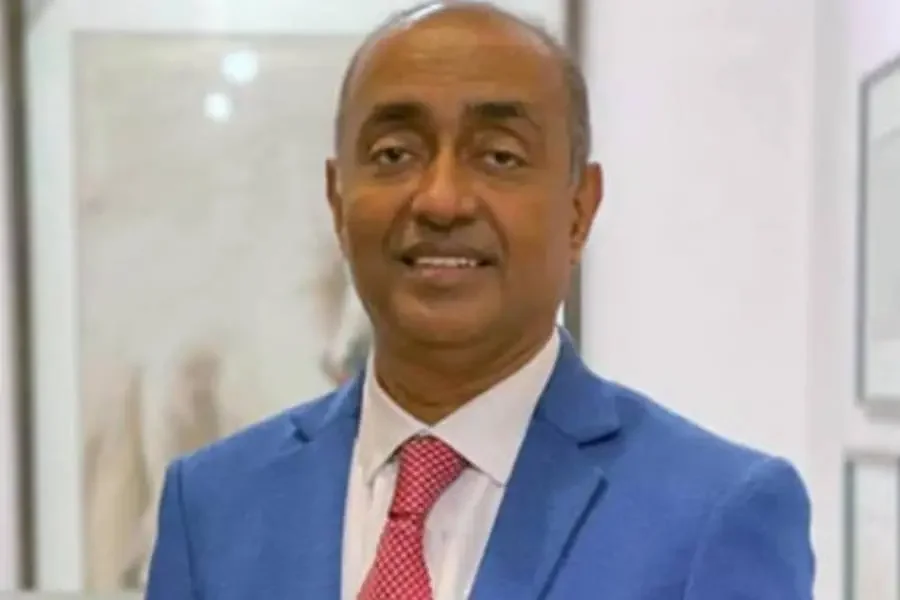
Law, Justice and Parliamentary Affairs Minister Md Asaduzzaman on Thursday said former prime minister and condemned convict Sheikh Hasina will face legal action in accordance with the law if she returns to Bangladesh.

He made the remarks while responding to questions from reporters at a ceremony for signing a Memorandum of Understanding between the National Legal Aid Services Organization and non-governmental organisations BRAC and BLAST on legal aid at the Secretariat.

Asked about a recent interview in which Hasina said she plans to return to Bangladesh in December, the law minister said the Home Ministry is making efforts for her extradition.

"If she comes, the law will take its own course. We will not do anything in violation of the law. We will exercise the authority that the law gives us," Asaduzzaman said.

Asked how Hasina could return as she does not have a passport, the minister said, "How she will come is her problem. It is not our problem."

"When she enters our jurisdiction, I will exercise the authority given to me by law and enforce the law. That's as simple as it is," he said.​
 

Indian authorities examining Bangladesh's request to extradite Sheikh Hasina

Prothom Alo English Desk

1785541405258.webp

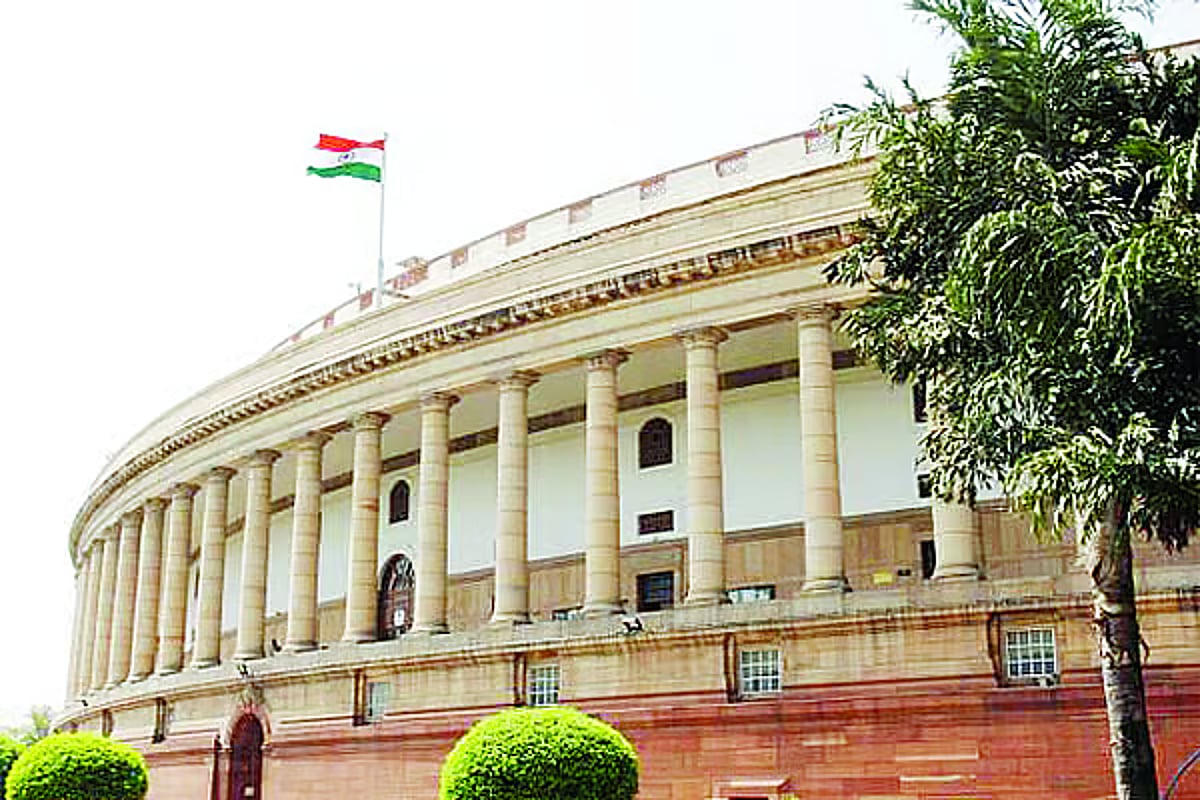
Indian parliament building File Photo

India's relevant authorities are reviewing Dhaka's request for the extradition of former Bangladesh Prime Minister Sheikh Hasina, who was ousted from power following the student-led mass uprising in Bangladesh.

According to a Times of India report, the Indian central government conveyed this information to the Parliamentary Standing Committee on External Affairs.

The report stated that, on Thursday the committee presented its report to the Lok Sabha, outlining the steps taken by the government based on the recommendations and observations concerning the future of India–Bangladesh relations, contained in the committee's ninth report on external affairs. The committee is chaired by Congress Member of Parliament Shashi Tharoor.

The Parliamentary Standing Committee had asked the government for an update on the progress of its review after learning of Bangladesh's request for Sheikh Hasina's extradition following her sentencing to death in absentia.

After being ousted from power during the student-led mass uprising in August 2024, Sheikh Hasina fled to India, where she has remained ever since.

Relations between India and Bangladesh deteriorated after the interim government led by Professor Muhammad Yunus assumed office following Sheikh Hasina's removal from power. The interim government formally requested New Delhi to extradite Sheikh Hasina to Bangladesh.

After BNP, led by Tarique Rahman, formed the government following the parliamentary elections held in February this year, the new government also renewed the same request to New Delhi.

1785541441155.webp

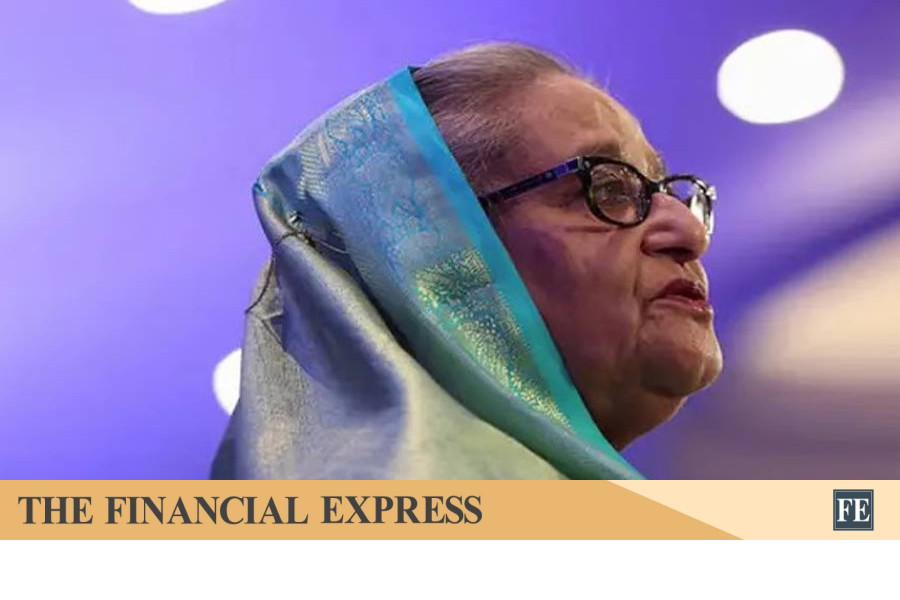
Sheikh Hasina File Photo

Sheikh Hasina, who is currently staying in India, has been holding virtual discussions with leaders of her party, and statements have also been issued in her name. She has also given interviews to various media outlets. However, the Indian government maintains that she has not been permitted to engage in any political activities while in India.

The Lok Sabha's Parliamentary Standing Committee on External Affairs stated that Sheikh Hasina has been allowed to remain in India as part of the country's humanitarian tradition and civilizational values of providing refuge to individuals facing extreme crises or threats to their lives, reports the Times of India.

The standing committee report further stated that the Indian government has made it clear that Sheikh Hasina has not been allowed to use any political platform or Indian territory to carry out political activities.

It highlighted India's long-standing policy of not allowing its territory to be used for political activities directed against another country. At the same time, the committee recommended that the Indian government continue to uphold this principled and humanitarian approach while handling such situations with appropriate sensitivity and in accordance with India's international obligations.​
 

Hasina to make first public appearance on Aug 5 in India: Report

1785711476798.webp


Sheikh Hasina is set to make her first major public appearance in India since her ouster in August 2024, according to reports.

The former prime minister will address a virtual programme hosted by the Foreign Correspondents’ Club of South Asia (FCC South Asia) in New Delhi on the second anniversary of her exile, Aug 5, bdnews24.com reports citing India Today.

She is expected to discuss her political roadmap and proposed return to Bangladesh.

The event will run from 6pm to 7:30pm at the Sir Mark Tully Auditorium on Mathura Road, with the session also streamed live on the club’s social media platforms.

The programme falls on the second anniversary of the collapse of Hasina’s 15-year rule.

On Aug 5, 2024, student protests over Bangladesh’s quota system escalated into a nationwide movement that ultimately forced her from office.

Hasina fled to India after protesters stormed and vandalised government buildings in Dhaka, bringing her long tenure to an abrupt end.

She has largely remained out of the public eye since arriving in India, avoiding public events and formal media engagements.

The International Crimes Tribunal (ICT) sentenced her to death in absentia in November 2025 for crimes against humanity over her government’s violent suppression of the 2024 protests.

Despite the verdict, Hasina has said she plans to return voluntarily to Bangladesh around December, surrender before the courts and seek to revive the Awami League, while dismissing the tribunal’s ruling as politically motivated.

Dhaka has warned that she would be arrested immediately upon entering Bangladesh and face execution under Bangladeshi law, while the government has continued to demand her extradition from India.

Several prominent Bangladeshi political figures, diplomats and public personalities are listed among the participants in the programme, including Hasina’s son Sajeeb Wazed Joy, former education minister Mohibul Hasan Chowdhury Nowfel and Bangladesh Human Rights Watch General Secretary Mohammed Ali Siddiqui.

Former cricketer and MP Shakib Al Hasan, ex-diplomat Aminul Hoque, analyst Abu Obaidha Arin and Bangladesh Human Rights Watch USA director Shah Md Bakhtiar are also expected to join.

The event will be chaired by FCC South Asia President Dr Waiel Awwad.​
 

What are the legal aspects Sheikh Hasina's extradition process ?
Bangladesh's former prime minister Sheikh Hasina, ousted in the mass uprising of 2024, recently announced her intention to return to the country from India. This announcement has two aspects: legal and political. Ali Riaz writes about this in two parts. The first part was published on Saturday.

Ali Riaz

1785712805083.webp

July uprising graffiti, Mirpur, Dhaka. File photo

In a Reuters interview on 10 July, Sheikh Hasina, convicted of crimes against humanity and in hiding, expressed her interest in ‘returning’ to Bangladesh in December. Although Sheikh Hasina described this as 'returning home' and said she would 'return to surrender,' neither the legal nor the real situation applies in this case.

Since she has been sheltered in India since her flight from Bangladesh on on 5 August 2024, and due to the prisoner exchange and extradition agreement between Bangladesh and India regarding convicted criminals, Hasina’s 'arrival' in Bangladesh is supposed to be determined by that law.

Secondly, since she has already been convicted by the court, she did not appeal, and she has not been granted any kind of bail, the law enforcement agencies are obligated to arrest her if found within the country.

What the legal system says
There are two aspects to discussing Sheikh Hasina's announcement—legal and political. The legal aspect involves the extradition agreement signed between Bangladesh and India in 2013 and amended in 2016. Referring to this agreement, the interim government of Bangladesh has repeatedly requested Hasina’s extradition since 2024, and in December 2024, the government sent a note verbale to this effect. While India acknowledged receipt of that note verbale, it did not make any comment on the matter.

After the International Crimes Tribunal awarded the death penalty to Hasina on 17 November 2025, Bangladesh officially requested India for extradition. It is worth recalling that after the tribunal’s verdict, the Indian Ministry of External Affairs stated in a notice that they were aware of the verdict. However, it was notable that the statement contained quotation marks around the International Crimes Tribunal, indicating India's stance.

In April of this year, after forming a new government, Bangladesh’s Foreign Minister Khalilur Rahman raised the matter during his visit to New Delhi. Subsequently, on 17 April, during the weekly briefing of the Indian Ministry of External Affairs, spokesperson Randhir Jaiswal said, "The request is being reviewed as part of the ongoing judicial and domestic legal process" (Bdnews24, 17 April 2026).

Although Jaiswal did not give a direct answer regarding Hasina's recent statement, he said that India’s attitude towards Sheikh Hasina has not changed. He stated, "Any extradition is a legal matter. It will be resolved through the legal process" (Prothom Alo, 14 July 2026). This indicates that what will happen with Sheikh Hasina, who is sheltered in India, is not dependent on her personal will. India has repeatedly stated it has provided 'temporary' asylum to the former prime minister of Bangladesh considering her protection and security in a specific situation.

Therefore, there is no rationale to think that Hasina will be able to decide on this matter alone. Notably, both Bangladesh and India agree that the law will take precedence in this matter. The relevant legal provisions are the extradition treaty between Bangladesh and India and India’s 1962 Extradition Act. For extradition under this treaty, there is a need to advance step by step, and broadly, there are six key steps:

1. Establishing the legal basis for extradition

The extradition process begins with the requesting state proving that the committed crime is an 'extraditable offence' under the treaty. According to Article 2(1) of the treaty, the offence must fulfill the 'dual criminality' principle, meaning the criminal conduct for which extradition is requested must be considered a crime under the laws of both Bangladesh and India, and each must prescribe at least a one-year jail term. Any linguistic or statutory classification differences will not bar extradition [Article 2(3)].

In cases where the individual is already convicted, Bangladesh must have a valid sentence and evidence of conviction by a competent court. In Hasina’s case, the International Crimes Tribunal has issued an arrest warrant and subsequently conducted a trial in absentia, sentencing her to death.

2. Preparation of the extradition request


Once the legal basis is established, Bangladesh must prepare a formal extradition request in accordance with the provisions of Article 10 of the treaty. This request will be sent by the Bangladesh Ministry of Home Affairs to the Indian Ministry of External Affairs via diplomatic channels. According to Article 4 and Article 10(1) of the treaty, the Indian Ministry of External Affairs is the ''central authority'' responsible for processing this extradition request.

The request must include the following documents as stipulated by Article 10(2) of the treaty:

*An accurate description and identification-related information of Sheikh Hasina;

*Description of the material facts of the alleged offences;

*Statutory legal provisions that constituted the said offences; and prescriptions of applicable penalties.

Since the purpose of extradition here is not for trial but rather to execute an existing judgment, Bangladesh is also required to provide the following documents under Article 10(4):

*A certified copy or certificate of conviction and imposed punishment;

*A clear declaration that the judgment and punishment remain legally enforceable under Bangladesh law, specifying how much of the sentence remains to be served.

1785712887310.webp


Protesters shouting slogans against then-prime minister Sheikh Hasina on 3 August 2024, Dhaka.Reuters

3. Verification of documents

Before advancing to the next step, the attached judicial documents must be properly authenticated according to Article 13 of the treaty. The Indian Ministry of External Affairs will review whether the judgment, punishment, arrest warrant, and accompanying certificates have been properly authenticated and whether all procedural requirements under the treaty have been fulfilled.

Although the 2016 amendment abolished the requirement to establish a ''prima facie case'' through evidence submission under Article 10(3), this amendment principally applies to requests brought for trial. When extradition is requested to enforce a sentence, the obligation for additional supporting documents imposed by Article 10(4) does not fall away due to the amendment.

If the documents are incomplete or insufficient, India may seek supplementary information from Bangladesh under Article 10(5) before taking further action.

4. Potential grounds for rejection
India must then determine whether there is any legal impediment to extradition:

*Political Offence: According to Article 6(1), if the offence is considered of a 'political nature,' extradition may be denied. However, Article 6(2) explicitly mentions that murder, culpable homicide, kidnapping, explosive offences, and serious terrorism-related offences cannot be classified as political offences.

*Good Faith: Pursuant to Article 8(1) of the treaty, if it appears that the prosecution was not initiated in good faith and in the interest of justice, India may refuse extradition.

*Constitutional and human rights obligations: Beyond the treaty, India has constitutional obligations under Article 21 of the Indian Constitution. It has to consider whether extradition would result in torture, arbitrary deprivation of life, execution of the death sentence, or fundamentally unfair trials for the requested person.


Thus, before making any final decision, factors such as the imposition of the death penalty, conducting trials in absentia, and adherence to internationally accepted due process standards may be closely scrutinised.

1785712942110.webp

Scene of Sheikh Hasina’s escape via helicopter. 5 August 2024.

5. Review under the Extradition Act, 1962

Once the procedural requirements have been satisfied, the Indian government conducts a ‘substantive review’ in light of its internal Extradition Act, 1962, and the relevant treaty. The Indian Ministry of External Affairs considers whether the request fulfills India's internal legal criteria and whether there are any statutory or treaty-based grounds for denying extradition.

This step does not determine the guilt or innocence of the requested individual. Instead, the focus of the review remains on whether the treaty's procedural requirements have been met and whether extradition is legally permissible under Indian law.

6. Decision and transfer

Upon concluding the legal review, the Indian government will decide on whether to approve the extradition request.

If extradition is approved, under Article 16(1) of the treaty, Sheikh Hasina will be handed over to the Bangladeshi authorities at a mutually agreed-upon location within one month of receiving formal notification of the extradition being granted. If Bangladesh fails to remove her from India within this period without sufficient cause, India reserves the right to deny future extradition requests for the same offence (Article 16(2)).

After the transfer, Bangladesh is bound to adhere to the ‘principle of specialty’ under Article 12 of the treaty. This means Hasina can only be tried or punished for the offences for which extradition was granted, unless India later consents to additional offences. Additionally, except under circumstances expressly allowed by the treaty, Bangladesh cannot re-extradite her to a third country without India’s consent.

India shall follow the Extradition Act, 1962, when considering extradition. According to it, if India receives an extradition request for any person, the government shall appoint a magistrate who will examine the allegations, evidence, and related matters. In that case, Hasina will have to appear before the magistrate.

Since it is not mandatory for this to take place in an open court, how the magistrate will obtain her statement is not predetermined. If, upon considering the documents, the magistrate decides that the allegations would have been acceptable to an Indian court, he will issue a report to the central government. If the accused has any written statement, he may also attach it. Based on this, the Indian government will decide on extradition.

Bangladesh has followed the first two steps. How the other steps of the treaty will be followed is practically dependent on the will of the Indian government. Consequently, the timing and manner of implementing these specific procedural steps remain uncertain. These steps, under the Indian government’s discretion, also depend on politics and India-Bangladesh relations. India may refuse the request if it feels it was not initiated in the spirit of good faith or in the interest of justice, as described in Article 8(1) of the extradition treaty.

India is unlikely to make any decision in the near future. Doing so would not be politically favourable for India and would pose a direct and severe threat to the relationship between the two countries. It is also observed in cases involving other countries that the entire process often takes several years to complete. Therefore, India’s argument would be that it is doing nothing exceptional by taking its time on Hasina’s extradition.

#Ali Riaz is a former vice-chairman of the Interim Government’s National Consensus Commission and a Distinguished Professor in the Department of Politics and Government at Illinois State University, USA.​
 

Latest Posts

Back