[🇧🇩] Extradition of Hasina, Awami Leaders/Beneficiaries and Related News.

Afghanistan Albania Algeria Andorra Angola Antigua Austria Azerbaijan Bahamas Bahrain Bangladesh Barbados Canada China Egypt Finland Germany India Iran Israel Japan Lebanon North Macedonia Pakistan Palestine Qatar Russia Syria Turkey Ukraine United Kingdom United States Yemen
[🇧🇩] Extradition of Hasina, Awami Leaders/Beneficiaries and Related News.
159
6K
More threads by Saif

G Bangladesh Defense

Hasina to face legal action if she returns to Bangladesh: Law Minister
1785452963072.webp


Law, Justice and Parliamentary Affairs Minister Md Asaduzzaman on Thursday said former prime minister and condemned convict Sheikh Hasina will face legal action in accordance with the law if she returns to Bangladesh.

He made the remarks while responding to questions from reporters at a ceremony for signing a Memorandum of Understanding between the National Legal Aid Services Organization and non-governmental organisations BRAC and BLAST on legal aid at the Secretariat.

Asked about a recent interview in which Hasina said she plans to return to Bangladesh in December, the law minister said the Home Ministry is making efforts for her extradition.

"If she comes, the law will take its own course. We will not do anything in violation of the law. We will exercise the authority that the law gives us," Asaduzzaman said.

Asked how Hasina could return as she does not have a passport, the minister said, "How she will come is her problem. It is not our problem."

"When she enters our jurisdiction, I will exercise the authority given to me by law and enforce the law. That's as simple as it is," he said.​
 

Indian authorities examining Bangladesh's request to extradite Sheikh Hasina

Prothom Alo English Desk

1785541405258.webp

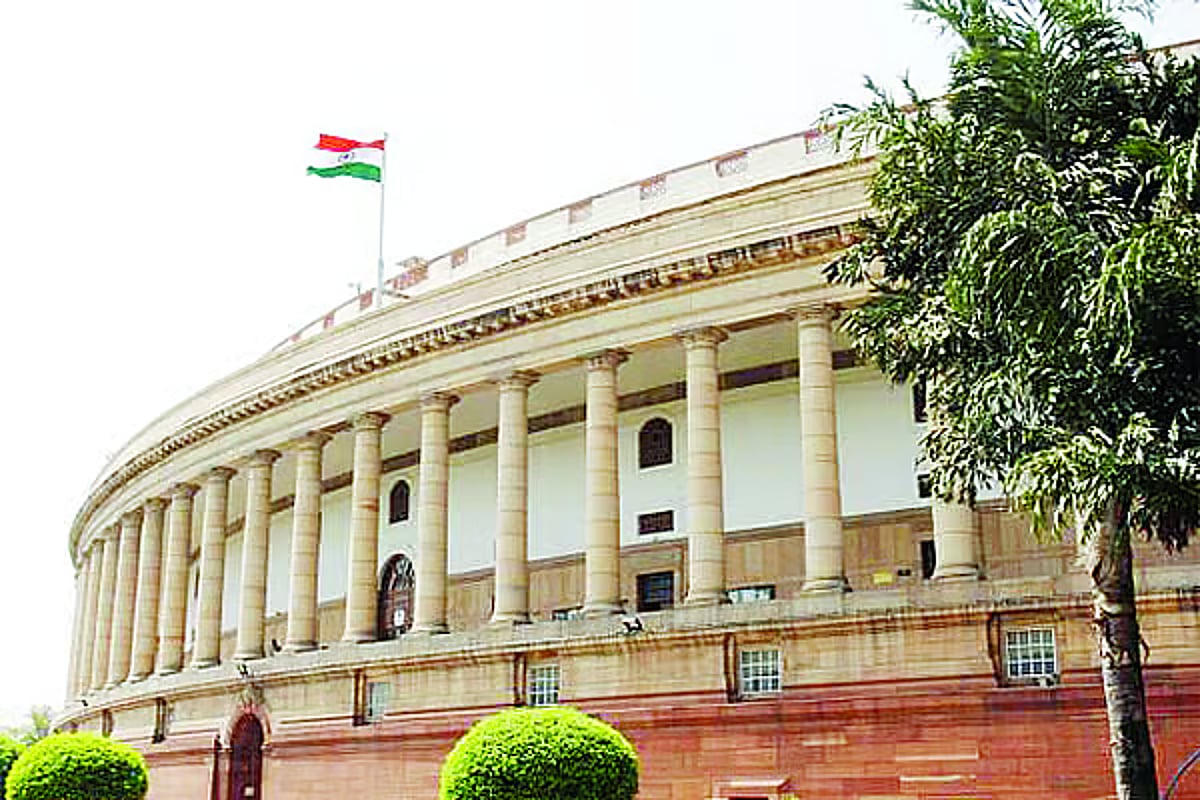
Indian parliament building File Photo

India's relevant authorities are reviewing Dhaka's request for the extradition of former Bangladesh Prime Minister Sheikh Hasina, who was ousted from power following the student-led mass uprising in Bangladesh.

According to a Times of India report, the Indian central government conveyed this information to the Parliamentary Standing Committee on External Affairs.

The report stated that, on Thursday the committee presented its report to the Lok Sabha, outlining the steps taken by the government based on the recommendations and observations concerning the future of India–Bangladesh relations, contained in the committee's ninth report on external affairs. The committee is chaired by Congress Member of Parliament Shashi Tharoor.

The Parliamentary Standing Committee had asked the government for an update on the progress of its review after learning of Bangladesh's request for Sheikh Hasina's extradition following her sentencing to death in absentia.

After being ousted from power during the student-led mass uprising in August 2024, Sheikh Hasina fled to India, where she has remained ever since.

Relations between India and Bangladesh deteriorated after the interim government led by Professor Muhammad Yunus assumed office following Sheikh Hasina's removal from power. The interim government formally requested New Delhi to extradite Sheikh Hasina to Bangladesh.

After BNP, led by Tarique Rahman, formed the government following the parliamentary elections held in February this year, the new government also renewed the same request to New Delhi.

1785541441155.webp

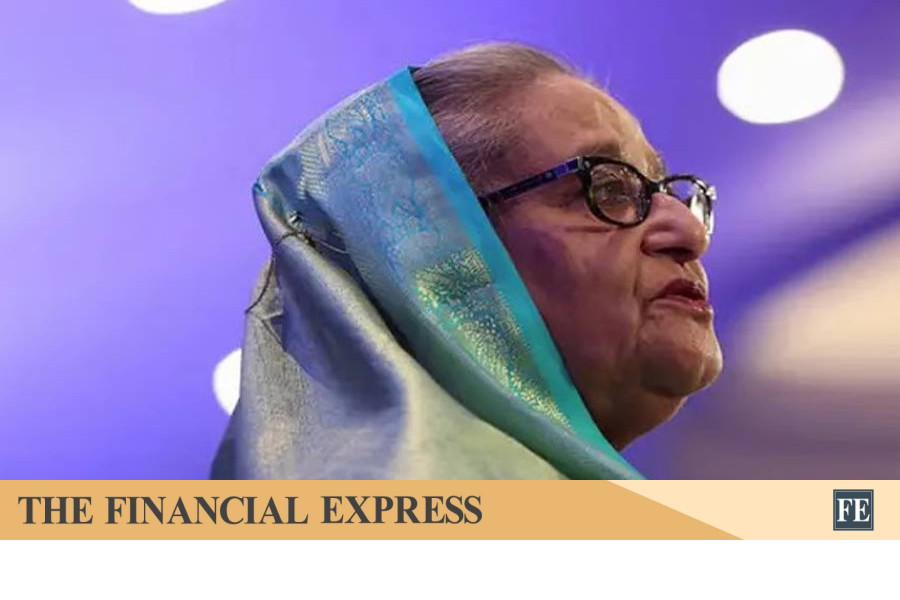
Sheikh Hasina File Photo

Sheikh Hasina, who is currently staying in India, has been holding virtual discussions with leaders of her party, and statements have also been issued in her name. She has also given interviews to various media outlets. However, the Indian government maintains that she has not been permitted to engage in any political activities while in India.

The Lok Sabha's Parliamentary Standing Committee on External Affairs stated that Sheikh Hasina has been allowed to remain in India as part of the country's humanitarian tradition and civilizational values of providing refuge to individuals facing extreme crises or threats to their lives, reports the Times of India.

The standing committee report further stated that the Indian government has made it clear that Sheikh Hasina has not been allowed to use any political platform or Indian territory to carry out political activities.

It highlighted India's long-standing policy of not allowing its territory to be used for political activities directed against another country. At the same time, the committee recommended that the Indian government continue to uphold this principled and humanitarian approach while handling such situations with appropriate sensitivity and in accordance with India's international obligations.​
 

Hasina to make first public appearance on Aug 5 in India: Report

1785711476798.webp


Sheikh Hasina is set to make her first major public appearance in India since her ouster in August 2024, according to reports.

The former prime minister will address a virtual programme hosted by the Foreign Correspondents’ Club of South Asia (FCC South Asia) in New Delhi on the second anniversary of her exile, Aug 5, bdnews24.com reports citing India Today.

She is expected to discuss her political roadmap and proposed return to Bangladesh.

The event will run from 6pm to 7:30pm at the Sir Mark Tully Auditorium on Mathura Road, with the session also streamed live on the club’s social media platforms.

The programme falls on the second anniversary of the collapse of Hasina’s 15-year rule.

On Aug 5, 2024, student protests over Bangladesh’s quota system escalated into a nationwide movement that ultimately forced her from office.

Hasina fled to India after protesters stormed and vandalised government buildings in Dhaka, bringing her long tenure to an abrupt end.

She has largely remained out of the public eye since arriving in India, avoiding public events and formal media engagements.

The International Crimes Tribunal (ICT) sentenced her to death in absentia in November 2025 for crimes against humanity over her government’s violent suppression of the 2024 protests.

Despite the verdict, Hasina has said she plans to return voluntarily to Bangladesh around December, surrender before the courts and seek to revive the Awami League, while dismissing the tribunal’s ruling as politically motivated.

Dhaka has warned that she would be arrested immediately upon entering Bangladesh and face execution under Bangladeshi law, while the government has continued to demand her extradition from India.

Several prominent Bangladeshi political figures, diplomats and public personalities are listed among the participants in the programme, including Hasina’s son Sajeeb Wazed Joy, former education minister Mohibul Hasan Chowdhury Nowfel and Bangladesh Human Rights Watch General Secretary Mohammed Ali Siddiqui.

Former cricketer and MP Shakib Al Hasan, ex-diplomat Aminul Hoque, analyst Abu Obaidha Arin and Bangladesh Human Rights Watch USA director Shah Md Bakhtiar are also expected to join.

The event will be chaired by FCC South Asia President Dr Waiel Awwad.​
 

What are the legal aspects Sheikh Hasina's extradition process ?
Bangladesh's former prime minister Sheikh Hasina, ousted in the mass uprising of 2024, recently announced her intention to return to the country from India. This announcement has two aspects: legal and political. Ali Riaz writes about this in two parts. The first part was published on Saturday.

Ali Riaz

1785712805083.webp

July uprising graffiti, Mirpur, Dhaka. File photo

In a Reuters interview on 10 July, Sheikh Hasina, convicted of crimes against humanity and in hiding, expressed her interest in ‘returning’ to Bangladesh in December. Although Sheikh Hasina described this as 'returning home' and said she would 'return to surrender,' neither the legal nor the real situation applies in this case.

Since she has been sheltered in India since her flight from Bangladesh on on 5 August 2024, and due to the prisoner exchange and extradition agreement between Bangladesh and India regarding convicted criminals, Hasina’s 'arrival' in Bangladesh is supposed to be determined by that law.

Secondly, since she has already been convicted by the court, she did not appeal, and she has not been granted any kind of bail, the law enforcement agencies are obligated to arrest her if found within the country.

What the legal system says
There are two aspects to discussing Sheikh Hasina's announcement—legal and political. The legal aspect involves the extradition agreement signed between Bangladesh and India in 2013 and amended in 2016. Referring to this agreement, the interim government of Bangladesh has repeatedly requested Hasina’s extradition since 2024, and in December 2024, the government sent a note verbale to this effect. While India acknowledged receipt of that note verbale, it did not make any comment on the matter.

After the International Crimes Tribunal awarded the death penalty to Hasina on 17 November 2025, Bangladesh officially requested India for extradition. It is worth recalling that after the tribunal’s verdict, the Indian Ministry of External Affairs stated in a notice that they were aware of the verdict. However, it was notable that the statement contained quotation marks around the International Crimes Tribunal, indicating India's stance.

In April of this year, after forming a new government, Bangladesh’s Foreign Minister Khalilur Rahman raised the matter during his visit to New Delhi. Subsequently, on 17 April, during the weekly briefing of the Indian Ministry of External Affairs, spokesperson Randhir Jaiswal said, "The request is being reviewed as part of the ongoing judicial and domestic legal process" (Bdnews24, 17 April 2026).

Although Jaiswal did not give a direct answer regarding Hasina's recent statement, he said that India’s attitude towards Sheikh Hasina has not changed. He stated, "Any extradition is a legal matter. It will be resolved through the legal process" (Prothom Alo, 14 July 2026). This indicates that what will happen with Sheikh Hasina, who is sheltered in India, is not dependent on her personal will. India has repeatedly stated it has provided 'temporary' asylum to the former prime minister of Bangladesh considering her protection and security in a specific situation.

Therefore, there is no rationale to think that Hasina will be able to decide on this matter alone. Notably, both Bangladesh and India agree that the law will take precedence in this matter. The relevant legal provisions are the extradition treaty between Bangladesh and India and India’s 1962 Extradition Act. For extradition under this treaty, there is a need to advance step by step, and broadly, there are six key steps:

1. Establishing the legal basis for extradition

The extradition process begins with the requesting state proving that the committed crime is an 'extraditable offence' under the treaty. According to Article 2(1) of the treaty, the offence must fulfill the 'dual criminality' principle, meaning the criminal conduct for which extradition is requested must be considered a crime under the laws of both Bangladesh and India, and each must prescribe at least a one-year jail term. Any linguistic or statutory classification differences will not bar extradition [Article 2(3)].

In cases where the individual is already convicted, Bangladesh must have a valid sentence and evidence of conviction by a competent court. In Hasina’s case, the International Crimes Tribunal has issued an arrest warrant and subsequently conducted a trial in absentia, sentencing her to death.

2. Preparation of the extradition request


Once the legal basis is established, Bangladesh must prepare a formal extradition request in accordance with the provisions of Article 10 of the treaty. This request will be sent by the Bangladesh Ministry of Home Affairs to the Indian Ministry of External Affairs via diplomatic channels. According to Article 4 and Article 10(1) of the treaty, the Indian Ministry of External Affairs is the ''central authority'' responsible for processing this extradition request.

The request must include the following documents as stipulated by Article 10(2) of the treaty:

*An accurate description and identification-related information of Sheikh Hasina;

*Description of the material facts of the alleged offences;

*Statutory legal provisions that constituted the said offences; and prescriptions of applicable penalties.

Since the purpose of extradition here is not for trial but rather to execute an existing judgment, Bangladesh is also required to provide the following documents under Article 10(4):

*A certified copy or certificate of conviction and imposed punishment;

*A clear declaration that the judgment and punishment remain legally enforceable under Bangladesh law, specifying how much of the sentence remains to be served.

1785712887310.webp


Protesters shouting slogans against then-prime minister Sheikh Hasina on 3 August 2024, Dhaka.Reuters

3. Verification of documents

Before advancing to the next step, the attached judicial documents must be properly authenticated according to Article 13 of the treaty. The Indian Ministry of External Affairs will review whether the judgment, punishment, arrest warrant, and accompanying certificates have been properly authenticated and whether all procedural requirements under the treaty have been fulfilled.

Although the 2016 amendment abolished the requirement to establish a ''prima facie case'' through evidence submission under Article 10(3), this amendment principally applies to requests brought for trial. When extradition is requested to enforce a sentence, the obligation for additional supporting documents imposed by Article 10(4) does not fall away due to the amendment.

If the documents are incomplete or insufficient, India may seek supplementary information from Bangladesh under Article 10(5) before taking further action.

4. Potential grounds for rejection
India must then determine whether there is any legal impediment to extradition:

*Political Offence: According to Article 6(1), if the offence is considered of a 'political nature,' extradition may be denied. However, Article 6(2) explicitly mentions that murder, culpable homicide, kidnapping, explosive offences, and serious terrorism-related offences cannot be classified as political offences.

*Good Faith: Pursuant to Article 8(1) of the treaty, if it appears that the prosecution was not initiated in good faith and in the interest of justice, India may refuse extradition.

*Constitutional and human rights obligations: Beyond the treaty, India has constitutional obligations under Article 21 of the Indian Constitution. It has to consider whether extradition would result in torture, arbitrary deprivation of life, execution of the death sentence, or fundamentally unfair trials for the requested person.


Thus, before making any final decision, factors such as the imposition of the death penalty, conducting trials in absentia, and adherence to internationally accepted due process standards may be closely scrutinised.

1785712942110.webp

Scene of Sheikh Hasina’s escape via helicopter. 5 August 2024.

5. Review under the Extradition Act, 1962

Once the procedural requirements have been satisfied, the Indian government conducts a ‘substantive review’ in light of its internal Extradition Act, 1962, and the relevant treaty. The Indian Ministry of External Affairs considers whether the request fulfills India's internal legal criteria and whether there are any statutory or treaty-based grounds for denying extradition.

This step does not determine the guilt or innocence of the requested individual. Instead, the focus of the review remains on whether the treaty's procedural requirements have been met and whether extradition is legally permissible under Indian law.

6. Decision and transfer

Upon concluding the legal review, the Indian government will decide on whether to approve the extradition request.

If extradition is approved, under Article 16(1) of the treaty, Sheikh Hasina will be handed over to the Bangladeshi authorities at a mutually agreed-upon location within one month of receiving formal notification of the extradition being granted. If Bangladesh fails to remove her from India within this period without sufficient cause, India reserves the right to deny future extradition requests for the same offence (Article 16(2)).

After the transfer, Bangladesh is bound to adhere to the ‘principle of specialty’ under Article 12 of the treaty. This means Hasina can only be tried or punished for the offences for which extradition was granted, unless India later consents to additional offences. Additionally, except under circumstances expressly allowed by the treaty, Bangladesh cannot re-extradite her to a third country without India’s consent.

India shall follow the Extradition Act, 1962, when considering extradition. According to it, if India receives an extradition request for any person, the government shall appoint a magistrate who will examine the allegations, evidence, and related matters. In that case, Hasina will have to appear before the magistrate.

Since it is not mandatory for this to take place in an open court, how the magistrate will obtain her statement is not predetermined. If, upon considering the documents, the magistrate decides that the allegations would have been acceptable to an Indian court, he will issue a report to the central government. If the accused has any written statement, he may also attach it. Based on this, the Indian government will decide on extradition.

Bangladesh has followed the first two steps. How the other steps of the treaty will be followed is practically dependent on the will of the Indian government. Consequently, the timing and manner of implementing these specific procedural steps remain uncertain. These steps, under the Indian government’s discretion, also depend on politics and India-Bangladesh relations. India may refuse the request if it feels it was not initiated in the spirit of good faith or in the interest of justice, as described in Article 8(1) of the extradition treaty.

India is unlikely to make any decision in the near future. Doing so would not be politically favourable for India and would pose a direct and severe threat to the relationship between the two countries. It is also observed in cases involving other countries that the entire process often takes several years to complete. Therefore, India’s argument would be that it is doing nothing exceptional by taking its time on Hasina’s extradition.

#Ali Riaz is a former vice-chairman of the Interim Government’s National Consensus Commission and a Distinguished Professor in the Department of Politics and Government at Illinois State University, USA.​
 

Hasina will be taken straight from airport to gallows upon return: Nahid

1785798466270.webp


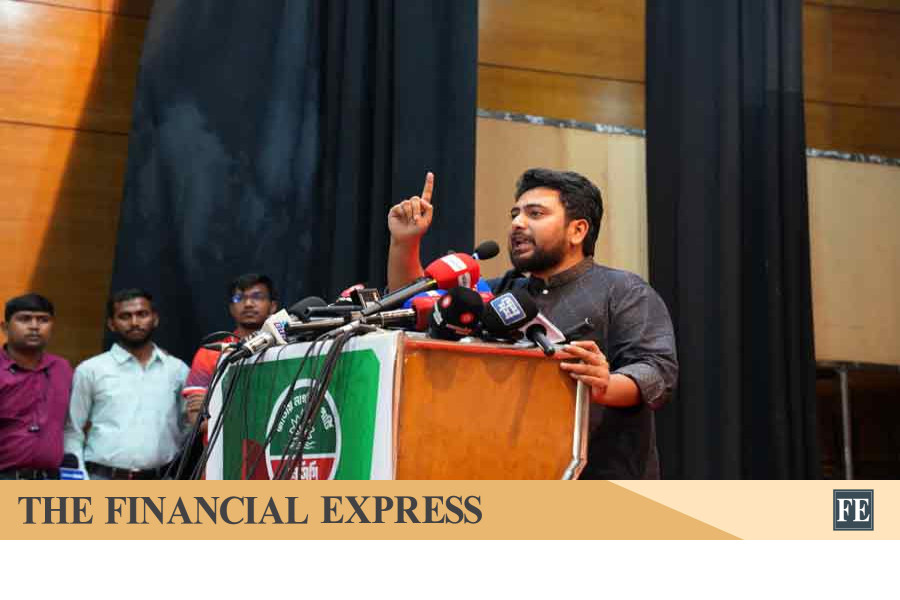
National Citizen Party (NCP) Convener and Opposition Chief Whip Nahid Islam on Monday said whenever ousted Prime Minister Sheikh Hasina returns to Bangladesh from India, students and the public will take her directly from the airport to the gallows.

“Sheikh Hasina will be taken straight from the airport to the gallows. If Tarique Rahman [Prime Minister] strikes a deal with Delhi to arrange her return, we are ready to carry out Hasina's execution,” he said while addressing a discussion titled “One-Point Demand in the Voice of Martyrs’ Families and the Injured”, organised by the NCP at the Institution of Diploma Engineers, Bangladesh auditorium in Kakrail.

Nahid said families of 1,400 martyrs and 30,000 injured fighters of the July uprising will take to the streets and remain there until Hasina's execution is carried out, if she returns to Bangladesh.

Accusing the BNP government of shielding its own wrongdoing in the same manner as the Awami League once did, he said BNP leaders themselves have admitted that nothing has changed in the past five months, with bribery and corruption continuing as before.

The NCP leader alleged that a narrative is being pushed portraying Prime Minister Tarique Rahman as good while blaming others, similar to the propaganda once used to defend Hasina.

He alleged that the public continues to suffer due to gas shortages in households and lack of electricity, while politicisation persists across institutions, including the police.

Nahid alleged widespread extortion and corruption, claiming the only change over the past two years is that Tarique Rahman returned from London to become prime minister.

Expressing disappointment over the lack of government initiatives for the families of martyrs, he said BNP has yet to take any steps for the martyrs and the injured, stressing that martyrs’ families are a national asset who gave their lives for the liberation of the people, not to install anyone in power.

“We did not launch this movement to attain power. We declared the abolition of the fascist system. We will not allow this country to become a haven for autocracy, corruption and extortion again,” the opposition chief whip said.

Among others, NCP Member Secretary Akhter Hossen, Chief Organiser for Chief Coordinator Nasiruddin Patwary, Northern Region Sarjis Alam, Jatiya Nari Shakti Member Secretary Mahmuda Mitu, its Chief Organiser Nusrat Tabassum, and members of martyrs’ families were present at the discussion.​
 

Politics of Hasina’s extradition and Bangladesh–India relations

Bangladesh's former prime minister Sheikh Hasina, who was ousted in the July 2024 mass uprising, recently declared that she intends to return to Bangladesh from India. This article, published in two parts, examines the legal and political dimensions of that announcement. This is the concluding installment.

Ali Riaz

1785799479932.webp


Bangladesh's former prime minister Sheikh Hasina, who is living in India as a fugitive after being convicted in Bangladesh, has repeatedly stated in recent weeks that she wants to "return" to Bangladesh. She made the remarks in interviews with Reuters on 10 July and AFP on 29 July. However, she is undoubtedly aware that any return would have to proceed under the Bangladesh-India Extradition Treaty and India's Extradition Act of 1962, mechanisms that Bangladesh has repeatedly invoked in seeking her extradition.

There is little reason to believe that Hasina or her advisers are unaware of the legal framework. Consequently, politics—not law—appears to be the principal motivation behind her statements.

Nor is it likely that Hasina would make such declarations without at least the knowledge of, and perhaps some indication from, sections of the Indian authorities. The politics behind her remarks has two dimensions: one related to Hasina and the now-banned Awami League, and another concerning Bangladesh-India relations.

Hasina's immediate objective appears to be energising the Awami League activists inside Bangladesh. Her supporters have already been carrying out limited political activities, and she seems eager to encourage them to become more active. The apparent calculation is that sustained activism could increase pressure on the Bangladeshi government.

For nearly two years, Hasina has used social media to provoke tensions and encourage violence. These efforts have failed to restore her political legitimacy, and her latest declaration is, in effect, an acknowledgment of that failure. By presenting supporters with a clear objective—her return—she also seeks to give them a rallying point.

Another purpose of her announcement is to discourage any attempt to reorganise the Awami League without her leadership, particularly from within Bangladesh. As long as legal proceedings continue, she can claim that she wishes to return but is prevented from doing so because of legal complications, placing the blame on the Bangladesh government.

Observers of Indian foreign and regional policy have warned that such an approach would be counterproductive. It is understandable that India wants to keep Hasina politically relevant in Bangladesh. From India, she has continued political activities and allegedly encouraged violence inside Bangladesh.

The timing of her announcement is also significant. She chose July so that she could remain a central topic of discussion during the second anniversary of the mass uprising that ousted her from power. It is reasonable to assume that she hoped political parties in Bangladesh would disagree over how to respond.

Despite differences among political parties over elections and post-election issues, they remain united on the questions of Hasina's trial and extradition. Only those who helped legitimise her authoritarian rule have voiced dissent. It is also plausible that she chose this timing to create uncertainty around Victory Day celebrations in December and reinforce the Awami League's long-standing claim to exclusive ownership of the legacy of the Liberation War.

These considerations are not necessarily decisive for India, but they are useful to Indian policymakers. There has been no visible shift in India's broader approach toward Bangladesh or in its longstanding policy of keeping Bangladesh within India's sphere of influence. Following Bangladesh's February 2026 election, the BNP-led government has taken concrete steps to improve relations with India, and India has signaled a positive response.

However, the substance of India's actions remains open to question. Continued allegations of "push-ins" across the border, ongoing border killings, land allocation in West Bengal for new border fencing, statements by BJP leaders and their allies in neighbouring Indian states, the announcement of plans to implement the National Register of Citizens (NRC) in West Bengal, and slow progress in addressing Bangladesh's trade deficit all send less encouraging signals.

Another important issue is the Ganges Water Sharing Treaty, which expires in December this year. For years, the Teesta water-sharing agreement has been the principal unresolved issue in water relations between the two countries. But unless a new Ganges agreement acceptable to Bangladesh is reached before the current treaty expires, it could become a new source of difficult negotiations.

There has been little sign of any change in this thinking. Regardless of what the law may require, political considerations make India unlikely to support Hasina's extradition. The question is whether its role will remain limited to offering her refuge.

Meanwhile, discussions are underway on implementing the Teesta project with Chinese assistance. Prime Minister Tarique Rahman's visit to China has also raised the prospect of closer Bangladesh-China ties, including a comprehensive strategic cooperative partnership and consideration of a China-Bangladesh economic corridor through Myanmar. At the same time, India's concerns over Bangladesh's improving relations with Pakistan are understandable. Bangladesh also has new opportunities to expand its trade relationship with the United States. Together, these developments provide the BNP government with greater room to pursue a foreign policy that is less dependent on India.

After India's unwavering support for Hasina's government during its 14 years in power, and its decision to shelter her after the 2024 uprising while allowing anti-Bangladesh propaganda to operate from Indian territory, considerable public resentment toward India has emerged in Bangladesh. The BNP government cannot easily ignore this sentiment.

In an interview with BBC Bangla in October 2025, Prime Minister Tarique Rahman remarked, "If India gives shelter to an autocrat and becomes unpopular among the people of Bangladesh, there is nothing we can do. The people have decided to keep their distance from them. So, I must stay with my people."

India's continued sheltering of Hasina, its protection of fugitive Awami League leaders, and its failure to take meaningful action after reports emerged in August 2025 that the Awami League had opened an office in Kolkata all suggest that New Delhi's Awami League-centered policy remains unchanged. Some in India appear to hope for the Awami League's return to Bangladeshi politics. Whether India will actively facilitate such a return remains an open question.

Observers of Indian foreign and regional policy have warned that such an approach would be counterproductive. It is understandable that India wants to keep Hasina politically relevant in Bangladesh. From India, she has continued political activities and allegedly encouraged violence inside Bangladesh.

However, a report presented by the Indian government in the Lok Sabha on 30 July stated that India's policy of not allowing its territory to be used for political activities directed against another country also applies to Hasina. This should be regarded as a positive step. India should make it clear that this policy will be consistently enforced. Whether that happens should become evident in the near future.

Recent discussions in Dhaka between India's ambassador, Dinesh Trivedi, and Bangladesh's Foreign Minister Khalilur Rahman also produced agreement that bilateral relations need a "reset." (Prothom Alo, 29 July, 2026)

It is also worth recalling how Indian policymakers viewed the situation after Hasina took refuge in India in August 2024. Former senior Indian diplomat TCA Raghavan told the BBC that providing Hasina refuge during a moment of danger was consistent with India's principles, and that exposing her to greater danger was "not an option." He also argued, "If we do not stand by Sheikh Hasina now, no friendly leader anywhere in the world will be able to trust India." (BBC Bangla, 24 August, 2024)

There has been little sign of any change in this thinking. Regardless of what the law may require, political considerations make India unlikely to support Hasina's extradition. The question is whether its role will remain limited to offering her refuge.

India may also use Hasina as a source of diplomatic leverage in its dealings with Bangladesh. One method has been allowing her to make statements capable of creating instability inside Bangladesh, thereby placing pressure on the government. Her recent remarks suggest such a strategy may continue. There is little reason to think Hasina would object, since her main goal is to remain politically relevant.

During her years in India between 1975 and 1980, Hasina also prioritised her own political future. But Bangladesh-India relations were very different then. India had not yet developed today's regional ambitions, and its leaders were more preoccupied with domestic political challenges. Hasina was therefore not viewed as a strategic asset in Indian policymaking.

India's political and economic interests in Bangladesh were also much more limited. It is natural that India would seek to preserve the asymmetrical relationship it established between 2009 and 2024. Given India's role in sustaining Hasina's government during that period, it would not be surprising if it now expected her to continue serving its interests. As long as she remains abroad, Hasina is likely to reappear periodically as a source of tension, irritation, and political division in Bangladesh. Indian policymakers, however, should recognise that such a role ultimately harms diplomatic relations between the two countries.

One hopes that Bangladesh's government, policymakers, and political parties will carefully consider these realities when formulating their positions, public statements, and strategies. At the same time, they should continue to apply united pressure on India for Hasina's extradition to ensure justice and fulfill the commitments made to those killed and injured during the July 2024 movement.

* Ali Riaz is a Distinguished Professor in the Department of Politics and Government at Illinois State University and former vice-chair of Bangladesh's National Consensus Commission under the interim government.​
 

What analysts say on Hasina’s Delhi press conference and declaration to return home

Sheikh Hasina’s declaration comes at a time when Bangladesh and India are striving to normalise strained bilateral ties. However, her presence remains a major point of contention in bilateral relations.

Prothom Alo Desk
Published: 07 Aug 2026, 19: 25

1786147864466.webp

Screengrab of The Diplomat report

Former Prime Minister Sheikh Hasina, who was ousted following a student-led mass uprising, addressed a virtual press conference from New Delhi, India, on Wednesday. The Bangladesh government has expressed a strong reaction to the Indian government for permitting her to hold the media conference from New Delhi.

The 78-year-old Sheikh Hasina has been convicted of crimes against humanity in attempts to suppress the student-led uprising in 2024. She is an absconding convict sentenced to death, and her party, the Awami League, has been banned from political activities in the country.

On Wednesday, on the second anniversary of the fall of the Awami League government in the July Uprising, Sheikh Hasina joined online to deliver a speech at a press conference organised by the Foreign Correspondents’ Club of South Asia (FCC South Asia) in New Delhi. She subsequently fielded several questions.

Residing in Delhi for two years, Sheikh Hasina has periodically released audio messages via social media and granted interviews through email to various media outlets. However, this marks the first instance of her joining an event in Delhi online to deliver a direct address.

Analysts’ views on Sheikh Hasina’s announcement

During the press conference, Sheikh Hasina announced her intention to return home in December this year, a declaration made two years after fleeing to India.

According to analysts, her statement reflects a desperate bid to maintain her political relevance, retain her supporters, and reactivate Awami League, whose activities remain banned in the country.

A report published on Thursday by the influential Japanese news outlet, Nikkei Asia, cited Michael Kugelman, a South Asia analyst at the US-based think tank Atlantic Council, who outlined three possible motivations behind Sheikh Hasina’s announcement to return:

Kugelman told Nikkei Asia that should Sheikh Hasina return, she would almost certainly be arrested at the airport. Furthermore, her return could mobilise both her supporters and detractors, raising the risk of violent clashes and placing pressure on the government regarding the conduct of her judicial process.

First, she may perceive the current political environment under the government led by the BNP (Bangladesh Nationalist Party) to be more favourable to her than during the interim administration’s tenure. This is because the interim government had banned the political activities of the Awami League, and the judicial proceedings resulting in her death sentence were conducted during its rule.

Second, Sheikh Hasina has claimed that the charges brought against her in court were politically motivated. Consequently, she may wish to present her stance before the court to clear her name.

Third, according to Kugelman, the simplest explanation is that she wishes to retire from politics, return to Bangladesh to spend her remaining days, and ultimately pass away there.

Speaking on the condition of anonymity, a senior Awami League leader expressed belief that Sheikh Hasina genuinely intends to return to the country.

The leader noted that returning home serves as a way to reward the loyalty of party leaders and activists.

Meanwhile, Mahmudur Rahman Manna, a former senior Awami League leader and now a staunch critic of Sheikh Hasina, characterised her announcement as self-serving.

“There are certain leaders within Awami League who possess public support and acceptability. Sheikh Hasina could have provided them with space to help the party regain its footing after the ban, but she did not do so,” Manna stated.

Mahmudur Rahman Manna added that the idea of her returning home for the greater interest of the party is unfounded.

The Diplomat report highlighted that the Ganges Water Sharing Treaty could play a pivotal role in determining the future trajectory of Bangladesh-India relations. The 30-year treaty is set to expire in December this year.
According to Professor Mohammad Jalal Uddin Sikder of the Department of Political Science at North South University in Dhaka, Sheikh Hasina also aims to exert political pressure on Prime Minister Tarique Rahman by threatening to return.

What could happen if Hasina returns?

Analysts contend that even if Sheikh Hasina returns, her immediate scope for political activity will remain severely constrained. Nevertheless, her presence could significantly impact the current political landscape in Bangladesh.

Kugelman told Nikkei Asia that should Sheikh Hasina return, she would almost certainly be arrested at the airport. Furthermore, her return could mobilise both her supporters and detractors, raising the risk of violent clashes and placing pressure on the government regarding the conduct of her judicial process.

In Kugelman’s assessment, “Her mere return would be destabilising.”

Professor Mohammad Jalal Uddin Sikder told AFP, “Even if she were taken directly to prison upon her return from India, the Bangladesh government is not prepared to receive Sheikh Hasina. Her return would generate political turmoil.”

Zahed Ur Rahman, an adviser to the Prime Minister of Bangladesh, stated that the Bangladesh government has sent a letter to the Indian government requesting her extradition, emphasising that the government is fully prepared to ensure justice.

“The individual whom we seek to extradite is herself speaking of returning home. We are prepared. Let her come, and we will ensure justice,” Zahed Ur Rahman added.

Sheikh Hasina’s declaration comes at a time when Bangladesh and India are striving to normalise strained bilateral ties. However, her presence remains a major point of contention in bilateral relations.

On 3 August, prime minister’s Foreign Affairs Adviser Humayun Kabir sought the cooperation of the Indian government to ensure that no individuals from the banned Awami League, including Sheikh Hasina, use Indian territory to deliver political statements.

The Bangladesh government has repeatedly requested India to extradite Sheikh Hasina, while India has stated that the request is being evaluated through legal channels. Nevertheless, relations between the two nations have improved following the election of BNP leader Tarique Rahman as Prime Minister of Bangladesh. India has extended an invitation to him to attend the BRICS summit scheduled for September.

Prior to Sheikh Hasina’s press conference, Randhir Jaiswal, spokesperson for India’s Ministry of External Affairs, clarified during a press briefing that New Delhi had no involvement in the event.

The government has no involvement in this matter, nor does it endorse any views expressed at the event, Jaiswal stated.

Bangladesh’s strong reaction

On 3 August, prime minister’s Foreign Affairs Adviser Humayun Kabir sought the cooperation of the Indian government to ensure that no individuals from the banned Awami League, including Sheikh Hasina, use Indian territory to deliver political statements.

He warned that such activities could undermine positive momentum in Bangladesh-India bilateral relations. Adviser Humayun Kabir conveyed this message to the High Commissioner of India to Bangladesh, Dinesh Trivedi, during a courtesy call in Dhaka.

Following Sheikh Hasina’s address, Bangladesh’s Ministry of Foreign Affairs issued a statement on Wednesday night conveying a sharp reaction to the Indian government.

The statement read, “Bangladesh is outraged that the absconding convicted genocider Sheikh Hasina was allowed this evening to engage in live interaction with the media in New Delhi where she and her henchmen launched venomous vitriol against the State of Bangladesh and her people.”

The government noted that concerns regarding the potential negative impact of such an event on renewed bilateral efforts had been communicated to the Indian government in advance. Dhaka expressed deep disappointment that the event was nevertheless allowed on Indian soil.

The foreign ministry’s statement further asserted that holding such an interaction on the second anniversary of the July Revolution—a day observed by the people of Bangladesh—constitutes an affront to Bangladesh’s sovereignty and a grave insult to the martyrs of the uprising.

‘India could have prevented the press conference’

Michael Kugelman remarked to Nikkei Asia, “India has taken a middle-ground approach with this press conference. I don’t think that explanation will play well in Dhaka.”

According to Kugelman, India could have prevented the press conference had it chosen to do so. Consequently, Bangladesh is likely to view the incident as another instance of New Delhi indulging its long-standing political ally, Sheikh Hasina.

Sreeradha Datta, Professor of International Relations at OP Jindal Global University, told Nikkei Asia that the incident occurred just as Bangladesh and India were gradually attempting to normalise ties after nearly two years of strain.

“While there has been a resumption of tourist visas, the bilateral relationship hasn’t yet normalised,” she said. “It is still moving at a very slow pace,” Professor Datta added.

However, she advised against viewing this as a long-term setback, noting: “Both India and Bangladesh stand to gain by working with each other.”

Trajectory of Bangladesh–India relations

According to a report by The Diplomat, forcibly deporting Sheikh Hasina to Bangladesh is not a realistic option for India. However, if she returns voluntarily, current bilateral tensions may ease to some extent.

Speculation suggests that India is liaising covertly with several European nations to guarantee her safety upon return, though the Indian Ministry of External Affairs has refrained from commenting on the matter.

The Diplomat noted that bilateral relations were warm during Sheikh Hasina’s tenure, but the dynamic shifted after her removal. New Delhi maintained that the interim government, led by Professor Muhammad Yunus, tilted towards China while failing to adequately address India’s core concerns.

The election of the BNP-led government in February raised hopes for rebuilding ties. In this context, Foreign Minister Khalilur Rahman’s visit to New Delhi in April was regarded as an initiative to restore mutual trust.

Maintaining a stable relationship with Bangladesh is crucial for India due to their shared border spanning nearly 4,100 kilometres. Additionally, India seeks Dhaka’s cooperation to bolster connectivity with its landlocked northeastern region and to suppress insurgencies in that territory.

In light of these strategic imperatives, India has taken several positive steps towards Bangladesh in recent months. In February, India dispatched Foreign Secretary Vikram Misri and Lok Sabha Speaker Om Birla to attend Prime Minister Tarique Rahman’s swearing-in ceremony.

In April this year, during an energy crisis, India supplied over 45,000 tonnes of diesel to Bangladesh. Furthermore, Dinesh Trivedi was appointed as the new High Commissioner to Dhaka to rebuild bilateral relations, receiving the status of a minister to facilitate direct communication with the Prime Minister of Bangladesh.

India has also extended an invitation to Prime Minister Tarique Rahman to attend the BRICS summit in Delhi in September (in his capacity as BIMSTEC Chair), although the Prime Minister of Bangladesh is yet to accept the invitation.

The Diplomat report highlighted that the Ganges Water Sharing Treaty could play a pivotal role in determining the future trajectory of Bangladesh-India relations. The 30-year treaty is set to expire in December this year.

The renewal process must account for current Ganges water flow levels and the impact of climate change on both nations. Analysts suggest that a timely renewal would place Dhaka-New Delhi ties on a far firmer footing.

The report further noted that with the Bharatiya Janata Party (BJP) currently in power in both India’s central government and West Bengal, favourable conditions exist for concluding the Teesta Water Sharing Treaty, an agreement previously opposed by West Bengal Chief Minister Mamata Banerjee.

The Diplomat concluded that normalising Bangladesh-India relations is now an urgent priority. However, New Delhi must first take measures to mitigate the diplomatic fallout surrounding Sheikh Hasina’s online press conference.​
 

Hasina becoming a liability for Delhi: BBC commentary
Staff Correspondent 07 August, 2026, 14:18

1786149137771.webp

Sheikh Hasina | File photo

Bangladesh’s ousted prime minister Sheikh Hasina may be increasingly becoming a liability for India as New Delhi’s discomfort over her continued presence in the country grows, according to a BBC Bangla commentary.

Hasina fled to India on August 5, 2024, amid student-mass uprising that brought an end to her 15-year rule. She has since remained in India, while Dhaka has repeatedly sought her return.

The BBC commentary, published on its Bengali YouTube channel on Thursday, revisited Hasina’s arrival in India and examined whether New Delhi’s approach towards her has changed over the past two years.

‘This Hindon Airport in Ghaziabad, on the outskirts of Delhi, rarely sees commercial flights, but mostly military aircraft. Exactly two years ago, on an August afternoon, Sheikh Hasina landed here on a Bangladeshi military aircraft. She was welcomed on the tarmac by India’s National Security Advisor Ajit Doval. India had given a warm welcome to a foreign friend in danger that day. But is Delhi’s view of her slowly changing today?’ the report said.

The commentary said Bangladesh was angered by Hasina’s participation in a live online press conference from Delhi on the second anniversary of August 5.

‘Yes, it is true, Bangladesh is very angry with the way Sheikh Hasina joined the live online press conference at Delhi’s Apex on the second anniversary of August 5,’ it said.

While India has officially denied having any involvement in the episode, the BBC commentary said Bangladesh believes New Delhi permitted Hasina to interact in that manner and that her remarks, particularly those directed at Indian media, could not have been made without tacit Indian support.

‘Although Delhi has officially claimed that they have nothing to do with this incident, Bangladesh assumes from the course of events that the Indian government has allowed her to interact in this way and that what she said, mainly aimed at the Indian media, she did not say without India’s tacit support,’ the report said.

According to the commentary, the central source of India’s growing discomfort is Hasina’s legal status in Bangladesh.

‘The main reason is that Sheikh Hasina is currently a death row convict in a Bangladeshi court, whom the government of that country wants back. India is sitting quietly without responding to that request. And it is casting a shadow on every aspect of bilateral relations—be it the Ganges Treaty or trade restrictions. India-Bangladesh diplomatic relations are not able to return to normal. A big reason for that is Sheikh Hasina herself,’ it said.

The report also pointed to what it described as a change in the way Indian authorities have handled Hasina since her arrival.

It said foreign guests who take shelter in India are customarily debriefed by Indian authorities, noting that Tibetan spiritual leader the Dalai Lama had also been subject to such a process.

‘In the case of Sheikh Hasina, Ajit Doval himself played this role for several months at first,’ the commentary said.

But, citing information obtained by the BBC, it said the responsibility later shifted from Doval to senior intelligence officials.

‘But the BBC has learned that he later stepped down and the responsibility fell on the shoulders of Intelligence Bureau chief Tapan Deka or, after his retirement, current chief Mahesh Dixit. Many say that this is proof that Sheikh Hasina’s importance in Delhi is no longer what it used to be,’ it said.

The BBC commentary also claimed that Hasina had expected India to help restore the Awami League to Bangladeshi politics following her arrival in Delhi.

‘Informed sources also say that from the first day after landing in Delhi, Sheikh Hasina expected that India would help her rehabilitate the Awami League in Bangladeshi politics,’ it said.

However, citing sources in India’s home and foreign ministries, the report said Hasina had rejected proposals made by New Delhi over the past two years aimed at achieving that objective.

‘But sources in the Indian Home or Foreign Ministry indicate that she did not want to accept any proposal made by Delhi in the last two years to that end. She has even firmly rejected the proposal for a minor or temporary change in the party leadership,’ the commentary said.

It further suggested that Hasina’s refusal to compromise had caused irritation among Indian officials.

‘This stubbornness and stubborn attitude, denial of reality - these have also irritated Indian officials as usual,’ it said.

‘Liability factor’ growing

The report acknowledged India’s long-standing practice of providing shelter to foreign allies and political figures facing danger.

‘It is a long-standing Indian tradition to provide shelter to trusted foreign friends when they are in danger or their lives are in crisis. The same was followed in the case of Sheikh Hasina,’ it said.

However, according to observers cited by the BBC, Hasina’s continued stay in India may now be creating a growing political burden for New Delhi.

‘But observers in Delhi believe that the ‘liability factor’ has become even greater in the case of Sheikh Hasina, as she has been given the status of hospitality by accommodating all the demands of India, such as the Dalai Lama or the family of former Afghan President Najibullah. There are real obstacles in regional geo-politics and Delhi’s discomfort with Sheikh Hasina is growing,’ the commentary said.

The report also noted that Hasina’s exact location in India has not been publicly confirmed.

‘It is not possible to say for sure where exactly Sheikh Hasina has been kept in India. Maybe in the heart of Delhi, in this Lutyens’ Zone, or some other place in the city,’ it said.

The BBC commentary concluded that while Hasina continues to be treated with respect in India, the prospects for her continued stay may be diminishing.

‘Wherever she is, she is in honor. But one thing can be said for sure. The chances have become slim for now.’

It added: ‘If she can really return to Bangladesh in December, or go to a third country like Europe and America, then the Indian government will be holding its breath.’​
 

Latest Posts

Back