New Tweets

[🇧🇩] Family, Farmer & e-Health Cards

G Bangladesh Defense
[🇧🇩] Family, Farmer & e-Health Cards
13
166
More threads by Saif


The slippery slope of power

SYED MUHAMMED SHOWAIB
Published :
Mar 06, 2026 22:49
Updated :
Mar 06, 2026 22:49

1772842822589.webp


The first steps of any new government are often taken under the weight of expectation. As the administration under Tarique Rahman begins to implement its electoral promises, particularly through the rollout of family cards and the waiver of agricultural loans, it suggests an effort to respond quickly to those expectations. However, governing is an exercise in resource management and the simple truth is that delivering on promises costs money. While these initiatives may provide immediate relief to certain sections of the population, they also add to the strain on public finances. Once a government shows it is willing to spend, the list of demands only grows. Every section of society comes forward with its own asks, from higher allowances to calls for nationalised employment and better pay scales, all hoping for a share of the budget. Realistically, a government, much like a household, cannot spend endlessly without a corresponding inflow of revenue. Stability requires that expenditure move in step with income. The experience of Mike Tyson shows how quickly things can fall apart when financial discipline is absent. Despite earning close to $400 million during his boxing career, he ended up filing for bankruptcy within a few years burdened by debt. His failure to manage resources, to save and to separate necessary spending from excess led to that outcome. A state is not an individual, yet the basic principles of financial management remain the same and ignoring them carries consequences. That is why the government must devote as much attention to strengthening revenue as it does to expanding spending.

Such caution, however necessary, does not insulate a government from the impatience of the electorate. The honeymoon period for any new administration rarely lasts long. At the outset there is usually a measure of public patience, as people wait to see how promises translate into action, but that patience does not last indefinitely. Citizens expect visible progress and they expect it within a reasonable span of time. The mandate for change that brought the government to power also creates a benchmark against which it will be judged. It is also worth recalling that this is not the first time the BNP has governed the country. That history naturally invites reflection on whether its earlier tenures created a legacy that still resonates with admiration. This is not a question directed solely at the party. One might ask how many individuals who have held the highest offices of state, from Mizanur Rahman Chowdhury to Shah Azizur Rahman, are truly remembered for their contributions today. Their time in power has passed, and with it, the memory of their work has faded. In this context, the ruling party now possesses a fresh opportunity to shape how its time in office will ultimately be recalled. That opportunity, however, carries with it the heavy responsibility of avoiding the missteps that have proven costly for so many predecessors including the party's own previous governments.

Alongside this pursuit of a lasting legacy, the administration has already set in motion a series of visible institutional changes. Adjustments have occurred in the military, the police, the civil administration, the judiciary and the education sector. Such moves are not unusual when a new government assumes office since it often aims to align the state machinery with its policy direction. However, the early actions of this government also serve as a crucial litmus test, revealing the character and intent of the rule to come. For the BNP government, the termination of Dr Ahsan H Mansur's contract as Governor of Bangladesh Bank has come to occupy a central place in this early assessment. He had come to be regarded as one of the more effective policymakers of the interim period, and his work resonated positively with the public. It is deeply unfortunate that he was the one to depart in such an undignified manner. Leadership transitions are to be expected, but removing a figure of such standing through a process widely described as politically driven and humiliating sends an unsettling signal across public service and beyond. Such treatment of skilled professionals can make others reluctant to serve when the nation most needs them.

These concerns inevitably lead to the broader question of economic stability which must remain at the centre of the government's agenda. The new government inherited an economy grappling with persistent inflation, a looming crisis of youth unemployment and a mountain of non-performing loans that continues to cripple the banking sector. These are not problems that can be addressed through rhetoric or short-term gestures. What is required instead is a sustained commitment to the long and arduous task of strengthening fiscal discipline and supporting growth in productive sectors. Without steady progress in these areas, both economic recovery and social stability will remain at risk.

Winning an election is only the beginning of governance. The real test comes in determining whether the practices that led to the rejection of earlier administrations are genuinely set aside. Early indications, however, show that entrenched habits are not easily discarded. Reports of extortion, intimidation and politically motivated actions continue to surface, some even appearing to intensify. On top of that, statements from some members of the cabinet have also raised concerns about the seriousness with which responsibilities are being approached. People expected real policy and firm action. Instead, they get grandstanding and shows of force. That is when the hope that came with the uprising starts turning into disappointment.

Beyond domestic challenges, the external environment presents an additional layer of complexity. Ongoing wars in the Middle East and other global conflicts continue to threaten supply chains, food security and energy flows, creating pressures that are proving increasingly difficult to manage. How the government responds to these challenges will reveal whether it possesses the foresight and steady judgment required to navigate a rapidly changing global order. In the end, the administration will be judged not only by the promises it keeps, but also by the stability it preserves when forces beyond its control threaten to disrupt it.​
 
Analyze

Analyze Post

Add your ideas here:
Highlight Cite Respond

PM to launch ‘Family Card’ Tuesday

BSS
Dhaka
Updated: 09 Mar 2026, 20: 33

1773103291145.webp

Prime minister Tarique Rahman BSS file photo

Prime Minister Tarique Rahman will inaugurate the government’s landmark “Family Card” programme tomorrow aimed at strengthening women’s empowerment, ensuring their rights, dignity and economic independence.

The inauguration ceremony will be held at T&T playground in Banani (adjacent to Karail slum) at 10:00 am tomorrow, Tuesday.

The initiative is part of the government’s commitment to achieving national development and social justice by empowering women and recognising them as the heads of families in social protection programmes.

Under the pilot phase, the programme is being implemented in 15 wards of 13 city corporations/unions across 13 districts of the country, said Social Welfare Minister Abu Zafar Md Zahid Hossain, MP, at a press conference at the Multipurpose Hall of the Ministry of Finance today convened on the eve of the launching of this epoch-making programme.

Finance minister Amir Khosru Mahmud Chowdhury, adviser to the prime minister Rashed Al Mahmud Titumir, state minister for Social Welfare Farzana Sharmin, state minister for LGRD Mir Shahe Alam and secretaries concerned were present, among others.

The ward committees conducted door-to-door surveys collecting data on the socio-economic conditions of households, including family size, education, housing conditions, household assets (such as television, refrigerator, computer and mobile phone), and remittance flow.

The collected data were verified by union and upazila committees before finalising the beneficiary list.

During the pilot phase, information of 67,854 women-headed households was collected across the country, he added.

Zahid said using a software-based Proxy Means Test (PMT), households were classified into categories such as extreme poor, poor, lower-middle-income, middle-income and affluent groups.

Out of 51,805 households initially identified as extreme poor, poor and lower-middle-income, verification found 47,777 households with valid data. After removing cases involving multiple benefits, government employment or pension entitlements, 37,567 women-headed households were finally selected for assistance.

Officials said the automated PMT-based system minimises the possibility of corruption, nepotism or manual interference in selecting beneficiaries.

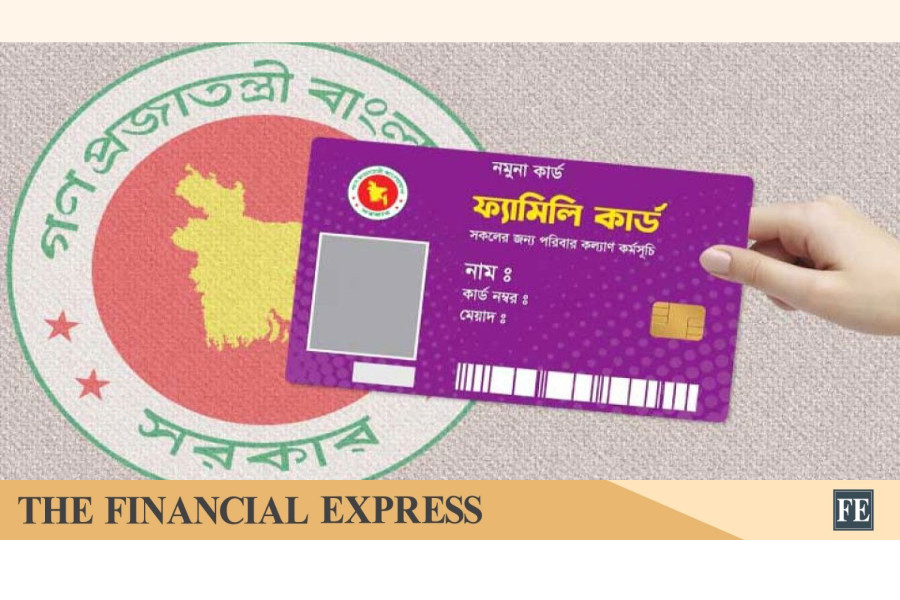
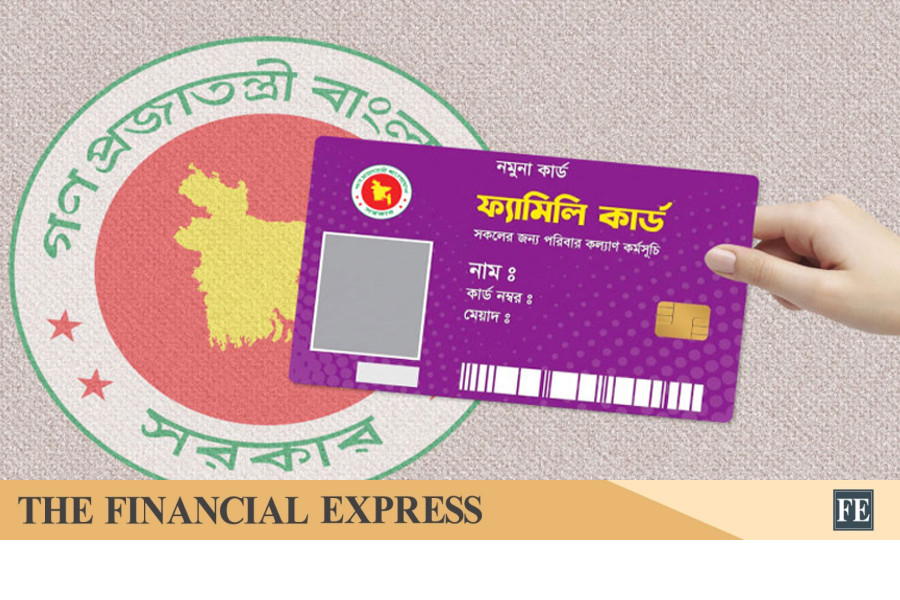
Under the programme, each eligible household will receive a modern “Family Card” equipped with a contactless chip, QR code and NFC (Near Field Communication) technology, ensuring security, durability and ease of use.

Each card will cover up to five members of a household, while larger joint families may receive multiple cards proportionately.

During the pilot phase, selected beneficiaries will receive a monthly allowance of Tk 2,500, and the government may later consider providing equivalent food assistance.

However, families will not be eligible if any member receives salary, allowance or pension from government, autonomous or state-owned institutions. Households with commercial licences, large businesses, luxury assets such as cars or air conditioners, or savings certificates worth Tk 500,000 or more will also be excluded.

The allowance will be transferred directly to beneficiaries through the Government-to-Person (G2P) digital payment system, credited to the women’s mobile wallets or bank accounts, enabling them to receive support without delay or intermediaries.

For the pilot implementation up to June 2026, the government has allocated Tk 38.07 crore, of which Tk 25.15 crore (66.06%) will be distributed as direct cash support and Tk 12.92 crore (33.94%) will be used for programme implementation, including data collection, development of the online system and card production.

The Family Card Pilot Implementation Guideline-2026 has already been prepared and uploaded on the website of the Ministry of Social Welfare.

The Social Welfare Minister said the government’s new “Family Card” programme will be provided completely free of cost and will not involve any financial transaction.

Zahid Hossain said the Family Card programme will initially be launched on a pilot basis. The government will review the programme every month, with the Ministry of Finance and the Ministry of Social Welfare jointly conducting the evaluation process.

He said the government has set a three-month period for “lesson learning”, which will continue until June 30. During this period, the authorities will assess the strengths and weaknesses of the programme and take corrective measures where necessary before expanding it further.

He also clarified that beneficiaries will not have to collect the cards from any office. Instead, government officials will deliver the cards directly to the beneficiaries at their homes.

He said the data collection process began on February 23 and officials from the concerned departments have been working tirelessly to ensure successful implementation of the programme. The initiative has been given priority by the government so that the pilot launch can be conducted smoothly.

Zahid Hossain also thanked members of the media for raising public awareness about the programme and urged them to continue their cooperation.

He requested journalists to bring any irregularities or anomalies to light so that authorities can address them promptly and prevent misuse.

He said beneficiaries will be able to lodge complaints both online and offline if they face any problems, such as delays in receiving funds or other service-related issues, as the programme’s software system includes a complaint management facility.

The data has been carefully analysed to avoid duplication and prevent any misuse, manipulation or irregularities in the programme, he said.

Zahid Hossain expressed hope that with the continued cooperation of the media and other stakeholders, the programme will be implemented in a transparent manner to successfully reach marginalised families across the country.​
 
Analyze

Analyze Post

Add your ideas here:
Highlight Cite Respond

Family Card: A test of overcoming design deficiencies in social safety net
Social protection is not charity. It is economic policy. When well managed, it strengthens resilience, builds human capital and reduces inequalities that growth alone cannot address. When poorly managed, it becomes a source of waste and political conflict.

Selim Raihan

Published: 10 Mar 2026, 08: 27

1773190126058.webp

An official collects data Monoj Kumar Dey

Bangladesh’s social safety net has always carried two truths at once. On paper, it is large, diverse and politically significant. In practice, however, it is often complex, fragmented and at times inequitable. The government’s new Family Card initiative has once again brought that long-standing tension to the centre of debate. It is being launched as a four-month pilot programme. In the first phase, 6,500 families in 14 upazilas will be included, and each family will receive Tk 2,500 per month through a mobile wallet or bank account.

Supporters see this as a bold, even historic, step. Critics fear it may simply add another large programme to an already crowded social safety net. The core question is not whether the Family Card is inherently good or bad in policy terms. The question is whether Bangladesh can use this opportunity to address the long-standing design and governance weaknesses that characterise its social safety sector.

Two aspects make the initiative politically and economically significant. First, the proposed scale is unprecedented. If the government eventually brings 20 million families under monthly assistance, the potential cost would reach roughly Tk 50 billion per month, or nearly Tk 600 billion annually. This is not an ordinary budget item. It is a macroeconomic commitment that will shape revenue and expenditure priorities for many years.

Second, the proposed framework goes beyond cash transfers alone. According to the draft guidelines, there are plans to establish a dynamic social registry, integrate the existing TCB (Trading Corporation Bangladesh) cards and eventually transform the Family Card into a universal social identity by 2030. At the same time, there is an ambition to raise the social protection budget to 3 per cent of GDP by 2028. If implemented in a realistic and well-governed manner, these goals could offer Bangladesh a way out of a long-standing problem: a social protection system that has grown in fragments and lacks coherence.

At present, Bangladesh operates more than 100 social safety net programmes under roughly 25 ministries. Budget allocations are estimated at about 1.9 per cent of GDP. Such breadth is not automatically a strength. More often, it results in duplication, inconsistent eligibility rules, administrative waste and opportunities for manipulation of benefits at the local level.

Large cash programmes should not overshadow initiatives such as maternal nutrition, disability assistance or child-focused services. The Family Card should therefore be viewed as infrastructure.

The outcomes are familiar too. Some households receive multiple benefits, while others of similar poverty receive none. Although draft guidelines cited in the media suggest that 22 to 25 per cent of the truly poor are excluded, various studies indicate that exclusion errors may be more than double that figure. When exclusion errors are so high, the ethical case for reform becomes as strong as the technical one.

Three aspects of the Family Card deserve recognition because they align with the need for serious reform. First, the use of the household as the unit. Risks such as food insecurity, health shocks, rent pressures or job loss are shared within families. A household-based structure can reduce the limitations of “one person, one benefit” schemes.

Second, making women the primary beneficiaries. Under the plan, the card will be issued in the name of the mother or the female head of the household. International evidence suggests that when money is placed in women’s hands, it is more likely to be spent on food, health and the wellbeing of children. It can also strengthen bargaining power within households.

Third, a data-driven targeting process. The proposed proxy means testing score, door-to-door data collection, verification by social service workers and the use of QR-coded cards signal an attempt to reduce patronage-based allocation.

Yet design intentions do not automatically translate into real outcomes. That is where the real test lies.

Three risks are particularly relevant here. First, the targeting risk. The Family Card is not a magic solution. It can help, but it can also misclassify households, especially in urban areas where incomes are irregular and assets are informally shared. Bangladesh’s urban poor are often the “working poor”. The inclusion of large slums in Dhaka within the pilot areas is a positive step. However, strong grievance and appeals mechanisms, along with periodic recertification, are essential. If poor households cannot challenge their exclusion, the registry may become another instrument of inequality.

Second, the fragmentation risk. A new programme may deepen disorder. If the Family Card merely adds another cash transfer without integrating older programmes, duplication will grow. The commitment to integrate TCB cards is therefore important. Here lies a clear reform opportunity—to use the Family Card as the “front door” of social protection and gradually rationalise overlapping benefits behind it. This will require political courage, because consolidation often disadvantages intermediaries rather than the poor.

Third, the fiscal risk. An annual expenditure of Tk 600 billion must be financed sustainably. Well-targeted, regular social spending linked to human development can stabilise an economy. It helps sustain consumption, protect nutrition and reduce the pressure to sell assets during shocks. But if expansion outpaces revenue capacity, it may turn into a fiscal trap. A transparent medium-term financing plan is therefore essential, clarifying how much will come from reallocations, how much from new revenues and how much from efficiency gains.

The National Social Security Strategy (NSSS) is built on a life-cycle approach. Different stages of life require different forms of support. A single card can be a powerful delivery platform, but it is not a strategy in itself. Large cash programmes should not overshadow initiatives such as maternal nutrition, disability assistance or child-focused services. The Family Card should therefore be viewed as infrastructure: build the registry, strengthen payment systems and improve verification, and then attach benefits—such as nutrition support, education stipends, climate-sensitive assistance or portable benefits for migrant workers—according to need.

If the Family Card is to become a genuine instrument of reform, five commitments may serve as benchmarks of success. First, a single dynamic social registry used by all ministries, with clear rules on data protection and access; second, a consolidation roadmap—announcing at the outset which programmes will merge, which will be phased out and how current beneficiaries will be protected during the transition; third, independent monitoring and open dashboards showing inclusion and exclusion errors, payment regularity and grievance resolution; fourth, urban portability, so that families moving in search of work do not lose benefits simply by changing address; and, fifth, a credible financing plan linked to domestic resource mobilisation and expenditure reallocation.

Social protection is not charity. It is economic policy. When well managed, it strengthens resilience, builds human capital and reduces inequalities that growth alone cannot address. When poorly managed, it becomes a source of waste and political conflict.

* Selim Raihan is a professor of Economics at Dhaka University and executive director of SANEM.​
 
Analyze

Analyze Post

Add your ideas here:
Highlight Cite Respond

‘e-Health Card’ to be launched by June, hopes health minister

UNB
Published :
Mar 11, 2026 23:02
Updated :
Mar 11, 2026 23:02

1773275162434.webp


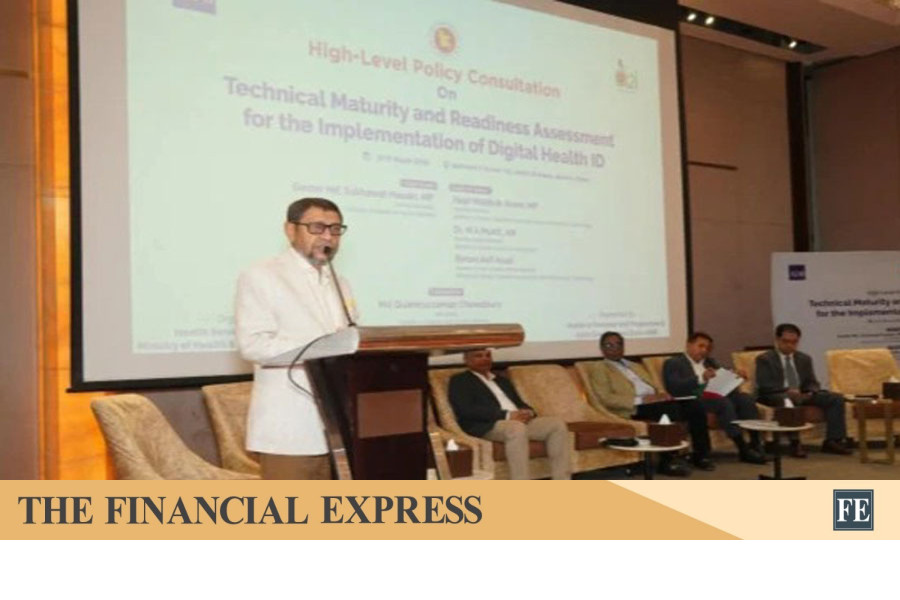
Health Minister Sardar Md Sakhawat Husain on Wednesday expressed hope that the national e-Health Card would be launched by June, aiming to make the country’s healthcare system stronger, more integrated, and effective.

The minister said Prime Minister Tarique Rahman has directed the implementation of the card as a priority initiative to strengthen public service delivery.

He made the remarks while speaking at the closing session of a two-day high-level policymaking workshop reviewing preparations for the implementation of the e-Health Card, held at a hotel in the capital’s Banani.

Sakhawat Husain said the e-Health Card would benefit the overall healthcare system. Wherever a patient — from village to city — receives treatment, physicians would be able to access essential health-related information through the card, enabling more accurate diagnosis and effective treatment.

He added that the card would serve as a foundational identity framework in the health sector. Individuals could be correctly identified across different healthcare systems, while hospitals, clinics, and other service providers could securely exchange medical information.

The workshop was jointly organised by the Aspire to Innovate (a2i) programme, the Health Services Division, and the Asian Development Bank.

The programme was presided over by the Health Ministry’s Secretary, Md Kamruzzaman Chowdhury, with State Minister M.A. Muhith also present.​
 
Analyze

Analyze Post

Add your ideas here:
Highlight Cite Respond

The many benefits Family Card can bring

Atiqul Kabir Tuhin
Published :
Mar 11, 2026 23:42
Updated :
Mar 11, 2026 23:42

1773275508164.webp


Slum dwellers of the country are a community time forgot. They are among the poorest of this poor country. They live in close proximity to the city centres, yet they are so far away from the amenities that city dwellers are entitled to. All developments, all movements for change pass them by. In this dismal backdrop, it was heartwarming to see the slums in the capital recently undergoing an unusual surge of activity surrounding the introduction of the Family Card programme. When Prime Minister Tarique Rahman formally inaugurated the countrywide distribution of the scheme on Tuesday from a ceremony near Korail slum, thousands of the urban poor were overwhelmed with delight and hope. Many were even seen breaking down in tears as they collected their cards.

On the first day, 37,567 women across 14 locations in various districts received the cards, including 15,000 women from Bhasantek, Sat Tola and Korail slums in the capital. The government is set to roll out the programme nationwide in phases, targeting the female head of each household. According to official estimates, 40.01 million families will be brought under the scheme. The beneficiaries will receive a monthly cash support of Tk2,500 or food assistance of equivalent value.

Launching the Family Card was one of the key election pledges of the Bangladesh Nationalist Party (BNP). The prime minister indeed set an admirable example by fulfilling the promise in less than a month of assuming power.

If it can be implemented at the projected scale and successfully delivered to the true beneficiaries, it will bring multifarious benefits. At its core, the card has the potential to empower women, even if partially, by ensuring their financial freedom. When resources are placed directly in women's hands, they often translate into better spending on health, nutrition and the welfare of children.

The true impact of such support can be best understood when viewed through the experiences of the recipients themselves. Hasen Banu, an octogenarian resident of Korail slum, expressed quiet relief upon receiving her card. With the money, she said, she would be able to buy her medicines regularly. Occasionally, she might even afford to buy milk, eggs or fruit, and perhaps treat her grandchildren.

"If this had come earlier, I could have lived a little better," she said.

Like her, for millions of people living on the margins, this modest financial assistance under the government's social safety net can mean a world of difference. It offers a ray of hope to those trapped in a life of constant deprivation.

Over the decades, Bangladesh has made notable progress in poverty reduction. Yet poverty, food insecurity and malnutrition remain among the country's key national challenges. Nearly 18-19 per cent of the population still lives below the poverty line, with around 5-6 per cent trapped in extreme poverty.

Numerous studies have shown that poverty does not affect every member of a household in the same way. Women and children are the worst sufferers. It is because in times of income crisis, it is the mother who first reduces her own meals, leading to a silent but profound crisis of malnutrition among the pregnant and breastfeeding women, which in turn affect the newborns.

According to UNICEF, Bangladesh is among the 20 countries that together account for almost two-thirds (65 per cent) of the total number of children suffering from severe childhood malnutrition globally. Childhood malnutrition has severe lifelong consequences, as it stunts growth, impairs cognitive development, and increases vulnerability to disease. Against this backdrop, the Family Card is not merely a social safety net initiative; it can also be a potent tool in tackling poverty, food insecurity and malnutrition.

The war against poverty, however, is far more complex and cannot be won merely by providing a small amount of cash or a few food items at subsidised rates. While such measures offer temporary relief and help vulnerable families cope with immediate hardships, they do not address the deeper structural causes of poverty. Real change, and true empowerment will come only when poor and underprivileged women in the backwater of society are enabled to become financially self-reliant.

If women can save a portion of their monthly cash allowance and channel it into income-generating activities such as small-scale trading, livestock rearing, or handicrafts, it can gradually transform the economic prospects of their households. And once families become economically self-supporting, it will have a ripple effect on society and the wider economy. Higher household incomes can lead to better nutrition, improved access to education and healthcare, and greater financial stability for future generations.

Over time, such empowerment can reduce dependency on state assistance and foster a culture of entrepreneurship at the grassroots level. When women become active participants in local economic activities, communities grow more resilient and inclusive. In this way, targeted social support combined with opportunities for financial independence can pave the way for sustainable poverty reduction and socio-economic development.

Moreover, as the government is delivering resources directly into the hands of the female head of each family, it is likely to enhance women's self-esteem and strengthen their decision-making power within the household. For all these reasons, the Family Card programme can be a major thrust towards women empowerment and development. It is hoped that the government will take all-out measures to ensure its effective implementation, while opposition parties will also come forward to extend their support in making this initiative a success.​
 
Analyze

Analyze Post

Add your ideas here:
Highlight Cite Respond

Family Card launch signals a positive start

Government must not allow partisan influence, scammers to undermine its impact

11 March 2026, 19:00 PM
UPDATED 8 hour(s) ago

1773277941180.webp

VISUAL: STAR

We laud the pilot launch of the BNP government’s promised Family Card programme within less than a month of assuming office, even before the first session of parliament. During the first phase of the pilot between March and June this year, 37,567 women-headed households in 14 upazilas across the country, including several urban slums, will receive Tk 2,500 in their bank accounts or mobile wallets. A part of BNP’s election manifesto, this initiative aims to gradually bring two crore families under the social safety net programme and turn the card into a universal social identity instrument by 2030, with a plan to allocate three percent of GDP for social security by 2028. So far, the launch of the pilot phase—from household selection to data verification—has been positive, without any major complaints. However, the government must be vigilant about partisan influence and scammers that could undermine this initiative.

This daily has found at least 31 Facebook pages and groups that are phishing for users’ personal data by using deepfake videos of the prime minister and his family members in which they appear to offer Family Cards or cash rewards. What is concerning is that some of these videos have been shared many times, and social media users have left their bKash numbers and even addresses in the comment sections of some of these videos. Not all are harvesting personal data, however; some pages are uploading and sharing these deepfake videos only to increase followers rapidly and subsequently sell their pages, as revealed by fact-checking organisation Dismislab. Whatever the case may be, cybercrime units must identify these pages and take necessary action before more people fall prey to these scammers. At the same time, the government must run countrywide awareness campaigns to educate people about the selection and cash disbursement process under Family Cards, and make them aware of social media scams.

As for partisan influence, we have seen in the past how such influences led to huge inclusion and exclusion errors in social safety net programmes. That is why experts suggest incorporating a strong grievance and appeals mechanism as well as routine recertification into the Family Card programme. Also, a single dynamic registry used across ministries can mitigate the problem of “double-dipping.” The government should also be cautious about merging all social safety net programmes as the Family Card may not necessarily fulfil the goals of some specific programmes.

While targeting women-headed households at the pilot phase has been a good decision, once the fully fledged programme is launched, the government should allow for more flexibility and also take into account gender diversity in the selection process. Above all, the BNP leadership must remain steadfast about the proper functioning of this initiative and not allow corruption to seep into this programme, like we have seen in the past.​
 
Analyze

Analyze Post

Add your ideas here:
Highlight Cite Respond

Members Online

Latest Posts

Back
PKDefense - Recommended Toggle