New Tweets

[πŸ‡§πŸ‡©] Foreign policy of the new government after the election

G Bangladesh Defense
[πŸ‡§πŸ‡©] Foreign policy of the new government after the election
12
144
More threads by Saif


Issues with other countries to be resolved on mutual respect: FM

EU for continuation of reforms, China invites Tarique


Staff Correspondent 23 February, 2026, 16:44

1771894978246.webp

A European Union delegation, led by EU Ambassador to Bangladesh Michael Miller, pays a courtesy call on foreign minister Khalilur Rahman at the foreign ministry in Dhaka on Monday. | PID photo

Foreign affairs minister Khalilur Rahman said on Monday that Bangladesh’s issues with other countries would be resolved on the basis of mutual respect as well as mutual benefit.

β€˜Our issues with other countries will be resolved on the basis of mutual respect and mutual benefit as well,’ he said, adding that the new government led by Tarique Rahman would always follow the policy of non-interference in internal affairs, freedom and sovereignty of other states.

He was talking to reporters at his ministry after separate meetings with several European diplomats and the United States ambassador to Bangladesh.

Meanwhile, Chinese ambassador to Bangladesh Yao Wen paid a courtesy call on prime minister Tarique Rahman at his Cabinet Division office at the secretariat.

1771895021217.webp

Chinese ambassador to Bangladesh Yao Wen pays a call on prime minister Tarique Rahman at his Cabinet Division office at secretariat in Dhaka on Monday. β€” PID photo

Yao Wen invited prime minister Tarique Rahman to visit China and conveyed warm congratulations and greetings from Chinese president Xi Jinping and premier Li Qiang, according to a Bangladesh Sangbad Sangstha report.

Prime Minister’s Foreign Affairs Adviser Humayun Kabir disclosed this while briefing the journalists at the Secretariat after the meeting.

The Chinese envoy assured that his country would continue all kinds of cooperation to safeguard Bangladesh’s sovereignty,

During the meeting, the two sides discussed Bangladesh-China relations and the Rohingya crisis, BSS reported quoting the prime minister’s additional press secretary Atikur Rahman Ruman as saying.

The foreign minister said that they wanted to build mutually beneficial relations with foreign countries as co-equals.

He further said that all the friendly countries were expressing their intent to work closely with the Bangladesh Nationalist Party-led government formed on February 17 following the party’s victory in the February 12 parliamentary polls.

β€˜We are sharing our foreign policy outline with the Bangladesh First motto as we began meetings with foreign diplomats on Sunday... We want to build mutually beneficial relations with other countries as co-equals,’ stated Khalilur, a former diplomat, who worked as national security adviser for the immediate past interim government.

Diplomats from the Kingdom of Saudi Arabia, China, India and Pakistan also paid courtesy call on him on Sunday, he further said.

His government would establish a dynamic foreign policy upholding the β€˜national dignity’, he added.

Asked about government measures to stop border killings along the Bangladesh-India frontiers, the foreign minister said that they were currently holding courtesy meetings and would discuss specific issues later.

After his courtesy meeting with foreign minister Khalilur and state minister for foreign affairs Shama Obaed Islam, European Union ambassador to Bangladesh Michael Miller said that the European Union being the country’s most reliable and largest commercial partner expected that the new government would carry on the reforms initiated by the interim government in various sectors, including judiciary and administration.

Responding to a question, the envoy said that the finalisation of the Partnership Cooperation Agreement with Bangladesh was near.

Earlier on the day, US ambassador Brent Christensen also called on the foreign minister at his ministry office.

β€˜Congratulations to Khalil Rahman on his new role as minister of foreign affairs. So pleased to continue working together to make both of our countries safer, stronger, and more prosperous,’ Christensen said in a statement shared on the US Embassy Dhaka official Facebook page.​
 
Analyze

Analyze Post

Add your ideas here:
Highlight Cite Respond

BD for mutually beneficial, forward-looking ties with neighbours
Importance of revitalising SAARC stressed

FE REPORT
Published :
Mar 09, 2026 11:55
Updated :
Mar 09, 2026 11:55

1773189027636.webp


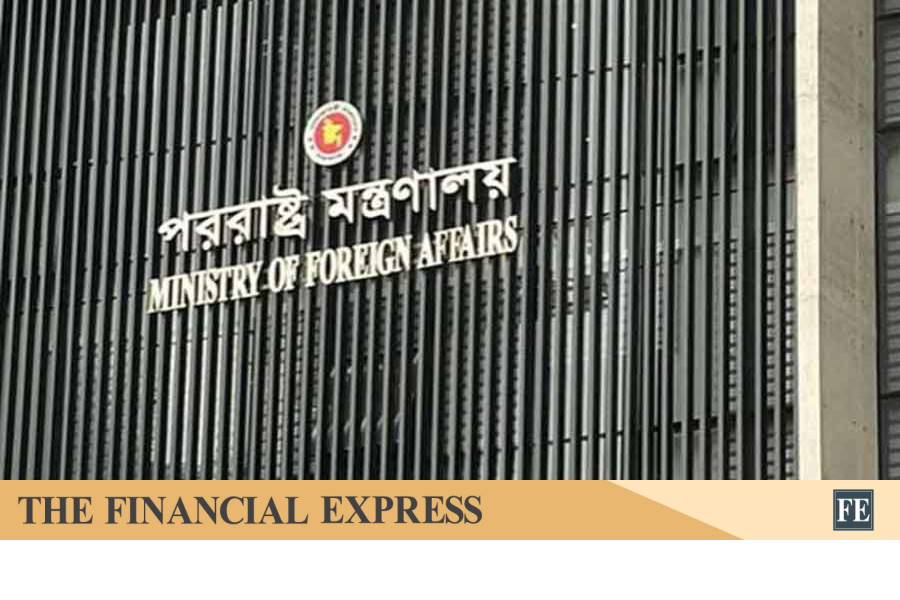
Bangladesh has reiterated its commitment to strengthening mutually beneficial and forward-looking relations with neighbouring countries in order to promote regional peace and prosperity.

The message was conveyed by State Minister for Foreign Affairs Shama Obaed Islam when the ambassadors of Bhutan and Nepal paid separate courtesy calls on her at the Ministry of Foreign Affairs in Dhaka on Sunday.

According to the ministry, Dasho Karma Hamu Dorjee, Ambassador of Bhutan to Bangladesh, and Ghanshyam Bhandari, Ambassador of Nepal, congratulated the State Minister on assuming office and conveyed their governments' interest in working closely with the new government of Bangladesh.

During the meeting with the Bhutanese envoy, the two sides reviewed the overall state of Bangladesh-Bhutan relations and expressed interest in further strengthening cooperation in areas such as trade and commerce, energy, connectivity, education and people-to-people contacts.

The State Minister also recalled Bhutan's historic recognition of Bangladesh following its independence in 1971 during the Bangladesh Liberation War.

Discussions also covered ongoing engagements between the two countries, including expansion of bilateral trade and the proposed establishment of a Bhutanese Special Economic Zone in Kurigram.

In a separate meeting with the Nepalese envoy, the State Minister congratulated the government and people of Nepal on the successful conduct of the country's recent parliamentary election.

Both sides discussed a range of issues of mutual interest, including trade, energy cooperation, connectivity, education, tourism, cultural exchanges and people-to-people contacts, and reaffirmed their commitment to deepening bilateral cooperation.

They also exchanged views on strengthening regional cooperation. The State Minister recalled the vision of former president Ziaur Rahman in establishing the South Asian Association for Regional Cooperation (SAARC) and stressed the importance of revitalising the regional body to enhance collaboration among South Asian countries.

Officials said the meetings reflected Bangladesh's continued emphasis on building stronger partnerships with neighbouring countries and promoting regional cooperation.​
 
Analyze

Analyze Post

Add your ideas here:
Highlight Cite Respond

Why Bangladesh should use FDI as a foreign policy strategy

15 March 2026, 03:42 AM
Rahat Ahmed

Bangladesh spends a lot of energy explaining itself, to investors, multilateral lenders, and regional partners. The pitch is always the same: young population, low labour costs, strong export fundamentals. It is accurate and it is almost entirely besides the point. The countries that command respect in economic negotiations are not the ones with the best PowerPoint decks. They are the ones whose absence would cost someone else money.

Consider how leverage actually works in geopolitical and economic negotiations. When Vietnam pushed back on US trade conditions in the mid-2010s, it had something concrete behind it: billions in manufacturing exposure from US and Asian multinationals who needed Vietnamese supply chains to remain stable and open. When India negotiates with the IMF, it does so as a country where global capital has made substantial, illiquid bets. Leverage in diplomacy increasingly follows capital. Countries that have attracted deep, sticky foreign investment β€” the kind embedded in factories, financial investments, and supply chains with cascading effects β€” negotiate from a fundamentally different position than countries that are still an after-thought.

1773621777046.webp

Rahat Ahmed

Bangladesh is still fighting to get on the radar, not because the opportunities are weak, but because the country’s playbook is outdated. Bangladesh attracted FDI equivalent to roughly 0.3 percent of its GDP in 2024, against Vietnam’s 4.2 percent and Indonesia’s 1.7 percent. The difference reflects a failure of narrative, coordinated outreach, and the feedback loops needed to translate strong fundamentals into opportunities that, over time, compound into policy reform and industrial development.

Bangladesh has largely assumed the fundamentals speak for themselves. They don’t. This matters beyond economics. Foreign investment creates stakeholders. Foreign investment is how smaller economies build the relationships that protect them, the leverage that gives them options, and the presence in global supply chains that makes them too costly to ignore. What Bangladesh has lacked is the recognition that attracting investment is not an economic priority with diplomatic benefits.

When a Malaysian conglomerate has a major manufacturing footprint in Bangladesh, the Malaysian government has a direct interest in Bangladesh’s political stability and market access. When European investors hold exposure to Bangladeshi bonds or equity, London becomes more attentive to Bangladesh’s interests in trade negotiations. Capital does not just flow into a country β€” it creates relationships and incentives that reshape how counterparties engage.

Bangladesh’s diplomatic relationships have historically been underutilised. The relationship with Malaysia is instructive: Bangladesh supplies nearly 40 percent of Malaysia’s foreign workforce and received $3.03 billion in remittances from Malaysia in 2024 alone, according to The Daily Star. Yet, Malaysia’s cumulative investment position in Bangladesh amounts to roughly $820 million built up over decades. Malaysia extracts labour; Bangladesh extracts remittances. Deepening Malaysian investment in manufacturing, infrastructure, halal supply chains would give Kuala Lumpur a reason to treat Dhaka as a partner rather than a labour supplier.

1773621802561.webp

Visual: Anwar Sohel

Bangladesh sits at one of the most strategically significant geographic intersections in Asia between South Asia and Southeast Asia. China, India, Japan, and the United States all have reasons to care about which direction Bangladesh chooses to face. That is genuine leverage. But leverage is only real when activated. Attracting capital from multiple competing powers creates the balanced exposure that gives a small country room to manoeuvre. Dependency on any single partner erodes that room. Diversified investment builds it.

The US tariff episode last year illustrated this gap in real time. When Bangladesh faced significant new tariffs on garment exports, what went unmobilised were the US corporate interests that stood to lose alongside it. Walmart, Target, and Gap source billions from Bangladeshi factories, and each has Washington lobbying operations that Bangladesh cannot match. BGMEA and the government had a ready-made coalition of US companies whose interests aligned precisely with Bangladesh’s. That coalition was barely activated. Bangladesh negotiated virtually alone.

Foreign corporate presence is not just an economic input. It is a political asset and countries that understand this build their investment strategies accordingly.

The BNP government’s 10 million jobs mandate creates a political opening to make this case domestically. Jobs require capital, capital requires foreign investment, and foreign investment requires institutional reforms that have been deferred for too long. What has been missing is the urgency to match the rhetoric.

Capital that does not come to Bangladesh goes somewhere else. To Vietnam. To Indonesia. To Pakistan. Every dollar that builds a factory elsewhere is a dollar that does not create a stakeholder in Bangladesh’s stability. The competition for foreign investment is not abstract. It is a competition for geopolitical relevance. FDI is a seat at the table, side by side with the countries that set the terms.

Rahat Ahmed is the founder and managing partner of Anchorless Bangladesh. He is also the co-founder of B/deshi, a global diaspora network connecting Bangladeshi professionals.​
 
Analyze

Analyze Post

Add your ideas here:
Highlight Cite Respond

Our diplomats must be adept at economic diplomacy

Mir Mostafizur Rahaman
Published :
Mar 16, 2026 23:21
Updated :
Mar 16, 2026 23:21


The global context in which Bangladesh conducts its foreign policy is becoming increasingly uncertain. The international system that for decades rested on widely accepted rules and institutions is facing serious strain. Strategic rivalries among major powers, economic sanctions, and military conflicts are reshaping the landscape of global trade and diplomacy. The ongoing war between Iran and the US-Israel, Russia and Ukraine, illustrate how geopolitical disputes can quickly disrupt energy markets, shipping routes and investment flows.

In such circumstances, the ability of states to protect their economic interests through diplomacy becomes more important than ever. For developing countries that rely heavily on exports, remittances and foreign investment, economic diplomacy is no longer merely a policy choice; it is a strategic necessity. Bangladesh, whose growth over the past decades has been closely linked with integration into the global economy, must therefore approach economic diplomacy with renewed seriousness and creativity.

In such an environment, economic diplomacy is no longer merely an option; it has become a necessity. Countries that are able to skilfully navigate geopolitical tensions while safeguarding trade and investment flows will be better positioned to sustain growth. For a developing economy like Bangladesh, which depends heavily on global markets for exports, remittances and foreign investment, the stakes are particularly high.

Yet in Bangladesh the phrase economic diplomacy has often been invoked more frequently than it has been practised. Successive governments have pledged to place economic interests at the centre of foreign policy. Policy papers have been written and ambitious plans announced. In reality, however, much of this vision has remained confined to official documents, with only limited progress on the ground.

The new political government that has taken office after more than a year and a half of an interim administration therefore faces both an opportunity and a challenge. The restoration of an elected government has attracted significant attention not only among citizens but also within the international community and regional partners. Expectations are high that foreign policy will be aligned more effectively with the country's economic aspirations.

History offers an important reminder that diplomacy has always been closely connected with commerce. Long before the emergence of modern nation-states, diplomatic missions were often inseparable from trade negotiations. Ancient envoys frequently served as merchants, negotiators and political emissaries at the same time.

The earliest recorded diplomatic exchanges in civilisations such as Mesopotamia and ancient India frequently revolved around trade privileges and commercial access. The prosperity of kingdoms depended heavily on securing markets, safe passage for caravans and stable trading routes.

One of the most remarkable examples of this fusion between diplomacy and commerce was the Silk Road. For centuries, this vast network of routes linking East Asia, Central Asia, the Middle East and Europe thrived not merely because of merchants but also because rulers maintained diplomatic understandings that enabled the movement of goods across territories.

In classical antiquity, Greek city-states and later the Roman Empire frequently sent envoys to neighbouring regions to secure favourable trading conditions and protect commercial interests. Diplomacy was not simply about political alliances; it was equally about ensuring economic prosperity.

During the medieval period, merchant republics such as Republic of Venice and Republic of Genoa developed sophisticated diplomatic networks primarily to safeguard their trading empires. Consuls and envoys stationed in foreign ports negotiated tariffs, mediated commercial disputes and secured privileges for merchants.

South Asia too has a long tradition of economic diplomacy. Historical records indicate that emissaries during the Mauryan Empire and later the Mughal Empire negotiated commercial arrangements alongside political agreements. Maritime trade across the Indian Ocean depended heavily on diplomatic engagement among kingdoms to maintain open ports and safe navigation.

The modern diplomatic system that emerged in Europe after the Peace of Westphalia formalised many of these practices. By the nineteenth century, consulates had become key instruments for promoting trade and assisting merchants abroad. Their primary task was not only political representation but also the expansion of commercial interests.

Bangladesh has long recognised the importance of this approach but has struggled to translate ambition into measurable outcomes. Diplomatic missions abroad often lack clear performance indicators linked to economic objectives. As a result, the country's extensive diplomatic network remains underutilised in advancing economic interests.

A practical reform would be the introduction of a performance index for diplomats serving overseas. Such an index should evaluate their contributions in promoting exports, attracting investment, facilitating technology transfer and enhancing the international image of Bangladesh.

Embassies should be judged not merely by their ceremonial activities or reporting duties but by tangible economic achievements. How many trade partnerships have been facilitated? How many investment leads have been generated? What initiatives have been undertaken to promote Bangladeshi products and services?

Linking promotions and rewards to these outcomes would encourage diplomats to focus on economic engagement. When loyalty or administrative seniority becomes the primary basis for career advancement, the incentive to innovate diminishes.

Training is another critical area. Economic diplomacy requires expertise in international trade, finance, industrial policy and global supply chains. Diplomats must be equipped with the analytical skills needed to engage effectively with multinational corporations, investors and trade organisations.

The foreign policy framework articulated by Tarique Rahman has emphasised national interest and economic diplomacy as central guiding principles. Translating this vision into reality will require institutional reforms and strategic coordination across government agencies.

The geopolitical landscape also presents several challenges. Bangladesh must carefully balance its relations with major powers including India, China, United States and Russia. Each of these relationships carries significant economic implications.

Maintaining constructive ties with India is crucial for regional stability and connectivity. At the same time, China remains a major development partner and investor in infrastructure. Engagement with the United States is vital for trade access and technological cooperation, while Russia continues to play an important role in energy and strategic projects.

Navigating these relationships requires careful diplomacy to ensure that cooperation with one partner does not undermine relations with another. The guiding principle should remain clear: safeguarding Bangladesh's economic interests while maintaining strategic autonomy.

Another major challenge lies ahead with Bangladesh's scheduled graduation from the Least Developed Countries category in November 2026. While this milestone represents a significant development achievement, it will also lead to the gradual loss of preferential trade benefits in international markets.

Without the cushion of duty-free and quota-free access in some markets, Bangladeshi exports will face tougher competition. Economic diplomacy will therefore become even more important in negotiating favourable trade arrangements and identifying new export destinations.

The government could consider establishing specialised committees that bring together economists, diplomats and trade experts to coordinate strategies. Such bodies would help ensure that foreign policy decisions are aligned with economic objectives.

Equally important is engagement with the private sector and civil society. Regular dialogues involving business leaders, economists and policy experts could help shape a more responsive and inclusive foreign policy.

Bangladesh's economic achievements over the past decades have been remarkable. The country has emerged as one of the world's leading exporters of ready-made garments and has lifted millions of people out of poverty. Yet sustaining this progress in an increasingly uncertain world will require a more sophisticated approach to diplomacy.

The lesson from history is clear: diplomacy has always been about prosperity as much as politics. From the caravans of the Silk Road to the complex supply chains of today's global economy, nations have relied on diplomatic engagement to secure trade, investment and economic opportunity.

For Bangladesh, the task now is to transform economic diplomacy from a familiar slogan into a concrete and measurable strategy. If embassies abroad can truly function as ambassadors of trade, investment and innovation, the country will be better positioned to navigate the shifting currents of the global economy and sustain its path toward prosperity.​
 

Attachments

  • 1773707539966.webp
    1773707539966.webp
    16.2 KB · Views: 1
Analyze

Analyze Post

Add your ideas here:
Highlight Cite Respond

Our diplomats must be adept at economic diplomacy

Mir Mostafizur Rahaman
Published :
Mar 16, 2026 23:21
Updated :
Mar 16, 2026 23:21

1773707682499.webp


The global context in which Bangladesh conducts its foreign policy is becoming increasingly uncertain. The international system that for decades rested on widely accepted rules and institutions is facing serious strain. Strategic rivalries among major powers, economic sanctions, and military conflicts are reshaping the landscape of global trade and diplomacy. The ongoing war between Iran and the US-Israel, Russia and Ukraine, illustrate how geopolitical disputes can quickly disrupt energy markets, shipping routes and investment flows.

In such circumstances, the ability of states to protect their economic interests through diplomacy becomes more important than ever. For developing countries that rely heavily on exports, remittances and foreign investment, economic diplomacy is no longer merely a policy choice; it is a strategic necessity. Bangladesh, whose growth over the past decades has been closely linked with integration into the global economy, must therefore approach economic diplomacy with renewed seriousness and creativity.

In such an environment, economic diplomacy is no longer merely an option; it has become a necessity. Countries that are able to skilfully navigate geopolitical tensions while safeguarding trade and investment flows will be better positioned to sustain growth. For a developing economy like Bangladesh, which depends heavily on global markets for exports, remittances and foreign investment, the stakes are particularly high.

Yet in Bangladesh the phrase economic diplomacy has often been invoked more frequently than it has been practised. Successive governments have pledged to place economic interests at the centre of foreign policy. Policy papers have been written and ambitious plans announced. In reality, however, much of this vision has remained confined to official documents, with only limited progress on the ground.

The new political government that has taken office after more than a year and a half of an interim administration therefore faces both an opportunity and a challenge. The restoration of an elected government has attracted significant attention not only among citizens but also within the international community and regional partners. Expectations are high that foreign policy will be aligned more effectively with the country's economic aspirations.

History offers an important reminder that diplomacy has always been closely connected with commerce. Long before the emergence of modern nation-states, diplomatic missions were often inseparable from trade negotiations. Ancient envoys frequently served as merchants, negotiators and political emissaries at the same time.

The earliest recorded diplomatic exchanges in civilisations such as Mesopotamia and ancient India frequently revolved around trade privileges and commercial access. The prosperity of kingdoms depended heavily on securing markets, safe passage for caravans and stable trading routes.

One of the most remarkable examples of this fusion between diplomacy and commerce was the Silk Road. For centuries, this vast network of routes linking East Asia, Central Asia, the Middle East and Europe thrived not merely because of merchants but also because rulers maintained diplomatic understandings that enabled the movement of goods across territories.

In classical antiquity, Greek city-states and later the Roman Empire frequently sent envoys to neighbouring regions to secure favourable trading conditions and protect commercial interests. Diplomacy was not simply about political alliances; it was equally about ensuring economic prosperity.

During the medieval period, merchant republics such as Republic of Venice and Republic of Genoa developed sophisticated diplomatic networks primarily to safeguard their trading empires. Consuls and envoys stationed in foreign ports negotiated tariffs, mediated commercial disputes and secured privileges for merchants.

South Asia too has a long tradition of economic diplomacy. Historical records indicate that emissaries during the Mauryan Empire and later the Mughal Empire negotiated commercial arrangements alongside political agreements. Maritime trade across the Indian Ocean depended heavily on diplomatic engagement among kingdoms to maintain open ports and safe navigation.

The modern diplomatic system that emerged in Europe after the Peace of Westphalia formalised many of these practices. By the nineteenth century, consulates had become key instruments for promoting trade and assisting merchants abroad. Their primary task was not only political representation but also the expansion of commercial interests.

Bangladesh has long recognised the importance of this approach but has struggled to translate ambition into measurable outcomes. Diplomatic missions abroad often lack clear performance indicators linked to economic objectives. As a result, the country's extensive diplomatic network remains underutilised in advancing economic interests.

A practical reform would be the introduction of a performance index for diplomats serving overseas. Such an index should evaluate their contributions in promoting exports, attracting investment, facilitating technology transfer and enhancing the international image of Bangladesh.

Embassies should be judged not merely by their ceremonial activities or reporting duties but by tangible economic achievements. How many trade partnerships have been facilitated? How many investment leads have been generated? What initiatives have been undertaken to promote Bangladeshi products and services?

Linking promotions and rewards to these outcomes would encourage diplomats to focus on economic engagement. When loyalty or administrative seniority becomes the primary basis for career advancement, the incentive to innovate diminishes.

Training is another critical area. Economic diplomacy requires expertise in international trade, finance, industrial policy and global supply chains. Diplomats must be equipped with the analytical skills needed to engage effectively with multinational corporations, investors and trade organisations.

The foreign policy framework articulated by Tarique Rahman has emphasised national interest and economic diplomacy as central guiding principles. Translating this vision into reality will require institutional reforms and strategic coordination across government agencies.

The geopolitical landscape also presents several challenges. Bangladesh must carefully balance its relations with major powers including India, China, United States and Russia. Each of these relationships carries significant economic implications.

Maintaining constructive ties with India is crucial for regional stability and connectivity. At the same time, China remains a major development partner and investor in infrastructure. Engagement with the United States is vital for trade access and technological cooperation, while Russia continues to play an important role in energy and strategic projects.

Navigating these relationships requires careful diplomacy to ensure that cooperation with one partner does not undermine relations with another. The guiding principle should remain clear: safeguarding Bangladesh's economic interests while maintaining strategic autonomy.

Another major challenge lies ahead with Bangladesh's scheduled graduation from the Least Developed Countries category in November 2026. While this milestone represents a significant development achievement, it will also lead to the gradual loss of preferential trade benefits in international markets.

Without the cushion of duty-free and quota-free access in some markets, Bangladeshi exports will face tougher competition. Economic diplomacy will therefore become even more important in negotiating favourable trade arrangements and identifying new export destinations.

The government could consider establishing specialised committees that bring together economists, diplomats and trade experts to coordinate strategies. Such bodies would help ensure that foreign policy decisions are aligned with economic objectives.

Equally important is engagement with the private sector and civil society. Regular dialogues involving business leaders, economists and policy experts could help shape a more responsive and inclusive foreign policy.

Bangladesh's economic achievements over the past decades have been remarkable. The country has emerged as one of the world's leading exporters of ready-made garments and has lifted millions of people out of poverty. Yet sustaining this progress in an increasingly uncertain world will require a more sophisticated approach to diplomacy.

The lesson from history is clear: diplomacy has always been about prosperity as much as politics. From the caravans of the Silk Road to the complex supply chains of today's global economy, nations have relied on diplomatic engagement to secure trade, investment and economic opportunity.

For Bangladesh, the task now is to transform economic diplomacy from a familiar slogan into a concrete and measurable strategy. If embassies abroad can truly function as ambassadors of trade, investment and innovation, the country will be better positioned to navigate the shifting currents of the global economy and sustain its path toward prosperity.​
 
Analyze

Analyze Post

Add your ideas here:
Highlight Cite Respond

Latest Posts

Back
PKDefense - Recommended Toggle