โ˜• Support Us โ˜•
[๐Ÿ‡ง๐Ÿ‡ฉ] - Forming Election Commission/Conducting Elections | Page 24 | PKDefense

[๐Ÿ‡ง๐Ÿ‡ฉ] Forming Election Commission/Conducting Elections

Reply (Scroll)
Press space to scroll through posts
G Bangladesh Defense
[๐Ÿ‡ง๐Ÿ‡ฉ] Forming Election Commission/Conducting Elections
234
4K
More threads by Saif


Where has law and order deteriorated? Only one or two murders occur occasionally, says CEC

Staff Correspondent Dhaka
Published: 15 Dec 2025, 18: 38

1765846914047.webp

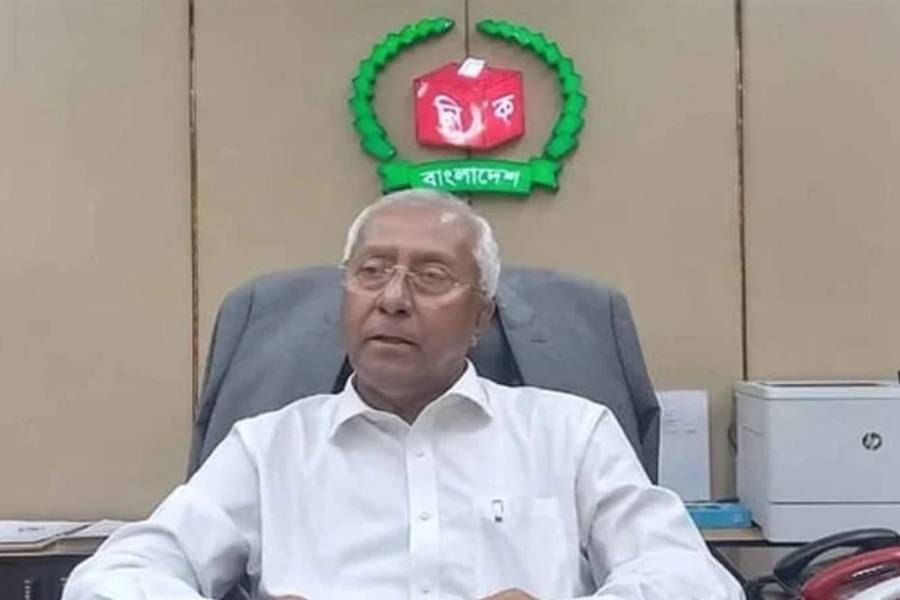
Chief Election Commissioner AMM Nasir Uddin File Photo

Chief Election Commissioner (CEC) AMM Nasir Uddin has said the law and order situation has not deteriorated, and one or two incidents of murder occur occasionally.

The shooting of Sharif Osman Hadi is an isolated incident, and such incidents tend to happen when elections approach.

He made these remarks at an event in Gulshan, Dhaka Monday morning while replying to queries from journalists about whether the deterioration of law and order poses an obstacle to holding a fair election.

The event was organised to encourage young voters to participate in the upcoming election.

AMM Nasir Uddin said, โ€œWhere did the law and order situation deteriorate? Occasionally one or two murders happen. This incident involving Hadiโ€”we consider these to be isolated incidents. Such incidents have always existed. Didnโ€™t Ahsanullah Master get killed before? Didnโ€™t former Finance Minister Kibria get killed? When elections come, such incidents tend to occur. These are not new in Bangladesh. Therefore, the law and order situation has improved rather than deteriorating.โ€

Regarding this, the ECE further said, โ€œCompare it with 5 August 2024. At that time, police stations were non-functional, and police stations were not even moving. Compared to that period, the law and order situation has improved significantly. Now we can move around peacefully, travel on the roads, and sleep peacefully.โ€

Replying to a question about whether there are any concerns regarding the election, AMM Nasir Uddin said, โ€œThere is no concern about the election. We are fully prepared. Insha Allah, the election will be held, and it will be held with everyone, with the cooperation of all. No matter what kinds of worries arise regarding this, shake those worries out of your head. Let us all prepare together so that we can conduct a fair election.โ€

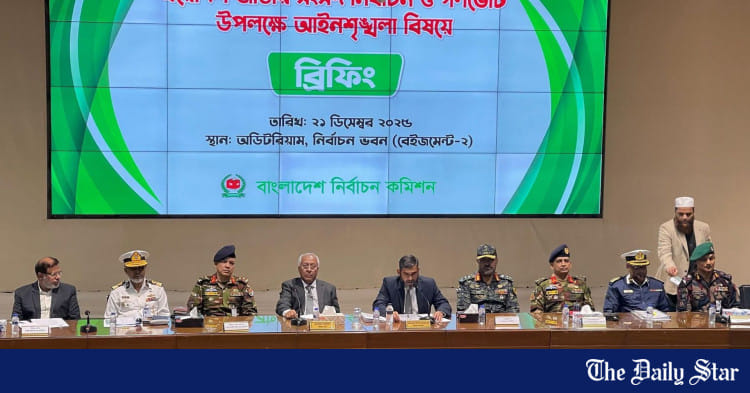
Stating that the Election Commission is committed to fulfilling its promise to the nation, the CEC said, โ€œJust yesterday, we held a meeting with the top officials of the law enforcement agencies and issued the necessary instructions. Insha Allah, our forces are fully prepared. You can be assured that the election will be held on time, properly, and in a fair, beautiful, and competitive environment. The promise we made to the nationโ€”the Election Commission is committed to fulfilling that promise. Together with everyone, we will present a beautiful election.โ€

AMM Nasir Uddin said, โ€œI repeatedly say that this election is a historic election. Because for the first time in this election, we are bringing expatriate Bangladeshis under the voting system through postal ballots, which did not happen for 54 years, we are doing this time. This time, nearly one million officials and employees, including members of the law enforcement agencies who are involved in the electoral process, were never able to vote, but this time, we are arranging voting for them as well through postal ballots. Voting arrangements are being made for prisoners, for expatriates, and for government employees who are outside their own constituencies.โ€

The CEC further said, โ€œAbove all, a referendum will also have to be held at the same time. From all these aspects, this is undoubtedly historic. If all of you, especially the young generation, stand with our courageous step of venturing down this path, Insha Allah we will succeed. The Election Commission alone cannot succeed in delivering a free, fair, and credible election. We will do this together with everyone.โ€​
 

February election to lay strong foundation for democracy: Rizwana

UNB
Published :
Dec 16, 2025 14:33
Updated :
Dec 16, 2025 14:35

1765930520170.webp


Environment adviser Syeda Rizwana Hasan on Tuesday said the election scheduled for February would lay a strong foundation for democracy by strengthening accountability to people.

โ€œThe election would help solidify democracy and bring the government under public scrutiny. The journey toward building a discrimination-free and exploitation-free society, a dream yet to be fully realised, could begin from here,โ€ she while talking to reporters after paying tributes to the martyrs at the National Memorial in Savar.

Calling the upcoming polls more than just an election, Rizwana said it would also serve as a kind of referendum where people would be able to express their views on key reform issues.

Based on that mandate, she said, the democratic journey could begin anew in a refreshed form.

She termed attempts to suppress political opponents through violence, including assassination attempts, as unfortunate, condemnable and cowardly.

โ€œThere is no heroism in such acts. If one has strength, one must face the people,โ€ she said adding that in a democratic state, the path to the people is well known.

The adviser said the culture of targeting opponents has no place in a New Bangladesh.

She said the government would be considered successful only if it could deliver on its commitments to free and fair elections, justice and reforms.

Rizwana Hasan said the governmentโ€™s goal is to ensure a peaceful and fair election so that people can vote without fear.

She said certain forces are active in trying to disrupt the process, stressing the need to counter them alongside building social resistance.​
 

Defeated fascist forces plotting comeback before election: Yunus
Chief adviser warns of violence and harsher plans, vows to thwart all conspiracies

1765932992295.webp

Photo: Collected from chief adviser's Facebook profile

Chief Adviser Prof Muhammad Yunus today said the defeated fascist forces are trying to ensure their return before the election and are attempting to do so through various means, including covert killings.

"This covert killing initiative is one such manifestation. They have preparations for even harsher plans," he said.

The chief adviser made the remarks while addressing the nation on the occasion of Victory Day.

Referring to the recent attack on Sharif Osman Hadi, Prof Yunus said, "The government is treating the incident with the utmost seriousness. Those involved have been preliminary identified. I want to assure the people of the country that no one involved in this conspiracy will be spared, wherever they may be."

In his 17-minute address, Yunus said, "I want to state clearly that this attempt by the defeated fascist terrorists will be completely thwarted. No one will be able to stop the democratic march of this country through intimidation, terrorism, or bloodshed."

He urged all to maintain restraint.

"Do not listen to propaganda or rumours. We will certainly confront in unity the fascist terrorists who are trying to create instability. We will not fall into their trap. The defeated fascist forces will never again return to the sacred soil of this country," he said.

The chief adviser further said, "Protect our youth. Then we all, and our beloved motherland, will be protected. Those who have fled the country have realised that the young fighters are a formidable obstacle to their resurgence."

He went on to say, "They are gripped by a deep fear of these unarmed, fearless young men and women -- completely indifferent to personal interests in their everyday lives. Their objective is to remove these obstacles from the streets before the election and re-establish their rule."

The chief adviser also expressed concern over the health of BNP Chairperson Begum Khaleda Zia.

"You are aware that the national leader, the country's three-time former prime minister, one of the foremost figures in democratic politics and BNP chairperson Begum Khaleda Zia is currently hospitalised due to illness. This is a matter of concern for us all," he said.

Yunus said the interim government has been giving the highest priority to her medical condition from the very beginning.

"Begum Khaleda Zia is an inseparable part of an important chapter in the history of Bangladesh. Considering her unwavering commitment to the country's independence, sovereignty and democracy, her contributions to national development, and the people's deep respect and emotion for her, the government has already declared her a very important person of the state," he said.

He added that the government is providing all necessary cooperation to ensure her treatment, respecting the wishes of her family.

"Alongside treatment at home, all aspects, including arrangements for advanced medical care abroad if required, are under consideration," he said.

Marking Victory Day, Prof Yunus extended warm greetings to all Bangladeshis living at home and abroad.

"Today is an unforgettable and glorious day in the history of Bangladesh. On this day in 1971, after nine months of a bloody Liberation War, we achieved the long-cherished victory. Through immense sacrifice, endurance and the blood of countless martyrs, we attained an independent country and our red-green flag," he said.

He paid tribute to the brave warriors and martyrs who sacrificed their lives in the Liberation War and in the struggles for independence over generations.

"Their contributions inspire us to stand against injustice and oppression and show us the path to liberation in every crisis and struggle," he said.

Prof Yunus said the new sun of independence that rose through victory in the Liberation War had been dimmed in recent years by autocracy and fascism.

"Through the July mass uprising, we have once again gained the opportunity to establish a discrimination-free, corruption-free, independent and sovereign democratic state system," he said.

He added that the interim government has undertaken an extensive reform programme to build a strong foundation for a developed and well-governed Bangladesh.​
 

EU to send 175-200 observers during February-12 election: EC Secretary

UNB
Published :
Dec 17, 2025 17:39
Updated :
Dec 17, 2025 17:39

1766020375032.webp


The European Union (EU) will send some 175-200 observers to watch the upcoming parliamentary election and the referendum on the July National Charter, scheduled to be held on February 12, 2026, said EC Senior Secretary Akhtar Ahmed on Wednesday.

โ€œThe EU has confirmed that it will deploy an observer mission during our electionโ€ฆ.Some 175-200 EU observers will arrive here at different times to observe the polls,โ€ he said while briefing reporters at Nirbachan Bhaban in the city.

Ivars Ijabs, a member of the EU Parliament, would lead the EU election observation mission in Bangladesh, he said.

The EC Secretary, however, said he would not be able to say further details about when they start arriving here.

He said the EU observers would come here to watch the election following a tripartite agreement signed among the Election Commission, the Foreign Ministry of Bangladesh and the EU on Monday last.

Akhtar Ahmed said the EU observers would follow the local necessity protocols particularly in Chittagong hilly area.

He said so far two-three international organisations and countries confirmed that they would send their observer missions to Bangladesh.

In response to a formal invitation by Bangladesh authorities, the High Representative/Vice President of the European Commission Kaja Kallas has decided to deploy an EU Election Observation Mission (EOM) to observe the parliamentary elections scheduled for 12 February 2026.

The High Representative has appointed Ivars Ijabs, Member of the European Parliament, as its chief observer.

โ€œI am honoured to lead this EU Election Observation Mission to Bangladesh, which will deliver an independent and impartial assessment of the electoral process,โ€ Chief Observer Ijabs said on Tuesday.

This mission, Ijabs said, is a tangible example of the EU support to the people of Bangladesh and their aspiration for stronger democratic institutions, the rule of law and human rights.

The EU said they are supporting the conduct of โ€œfree and fair, participatoryโ€ elections.

Chief Election Commissioner AMM Nasir Uddin on December 11 announced the schedule to arrange the 13th parliamentary election and the referendum on the July National Charter (Constitutional Reform) Implementation Order simultaneously on February 12 next.

According to the election schedule, the deadline for the submission of nomination paper is December 29, while the scrutiny of nomination paper is on December 30-January 4 and the last date for the withdrawal of candidature is January 20. The election campaign will start on January 22 and continue till 48 hours before the balloting period (7:30am on February 10).​
 

Is Bangladesh at risk of a hung parliament?

Helal Mohiuddin
Published: 17 Dec 2025, 08: 00

1766021742737.webp


An atmosphere of uncertainty has emerged around the upcoming national parliamentary election. At the heart of this uncertainty is the unusual rise of โ€œundecidedโ€ or swing voters. Various pre-election surveys are being conducted, and an Innovation survey has found that nearly 49 per cent of voters are swing voters. These voters have said they have not made a final decision about which party to support or may change their choice at the last moment.

In democratic societies, the presence of swing voters is nothing new. However, when their share approaches nearly half of the electorate, political outcomes can become highly unpredictable. In the language of political science, such a situation is described as โ€œcritical volatility,โ€ a condition of unstable equilibrium. It often signals the possibility of a hung parliament, fragile coalition governments, and short-term political stability.

When public opinion is neither fixed nor predictable, election results depend on small shifts, last-minute emotions, strategic alliances, covert campaigning, and various other factors.

There is extensive research in political science explaining the behaviour of swing voters. They were once considered apolitical or uninformed. Newer theories, however, suggest that swing voters are actually โ€œinformation maximizersโ€ who gather information until the very last moment before making a decision. They wait as long as possible, analyze diverse sources of information, and then decide.

According to behavioural theorists, voters make decisions under the combined influence of identity, group affiliation, emotions, economic expectations, and trust in leadership. Prospect theory offers a different explanation. It explains why people tend to weigh losses more heavily than gains when making decisions. This theory helps explain why voters sometimes avoid risk and at other times are willing to take it. When the economy performs poorly, swing voters may engage in last-minute โ€œpunishment votingโ€ against the government or the dominant party. Punishment voting refers to using the ballot to penalise a party or ruler for perceived failures. Beyond punishment voting, swing voters may also gravitate toward the likely winning party in search of stability. Predicting their behaviour remains one of the most difficult tasks in political analysis.

Countries where swing voters have become the most influential factor include the United Kingdom, the United States, Australia, New Zealand, Canada, Brazil, Germany, Norway, Sweden, Poland, and South Korea. Analysis of elections in these countries shows that swing voters have repeatedly defied predictions and, in many cases, led to the formation of unexpected coalition governments.

In Italy, the elections of 2013 and 2018 produced such severe hung parliaments due to swing voters that new governments had to be formed multiple times. In Spain, four national elections were held between 2015 and 2019, each marked by hung parliaments and weak coalitions that failed to endure. Israel has held five national elections in the past six years, largely because of swing voters and the inability of small parties to form stable coalitions. Similar situations have been observed in Nepal and Thailand.

This unusual volatility among swing voters has transformed elections in many countries, proving experts, media forecasts, and opinion polls wrong. In the 2016 US presidential election, national polls showed Hillary Clinton in the lead, but small shifts in swing states such as Michigan, Wisconsin, and Pennsylvania reversed the outcome. In Australiaโ€™s 2019 election, all polls pointed to a Labour Party victory, yet swing voters unexpectedly shifted toward the conservatives.

Where a hung parliament emerges, the likelihood of forming a coalition government increases. However, in most countries of South Asia, Latin America, Eastern Europe, and Africa, coalition governments tend to be short-lived. In Pakistan, no coalition government since 1988 has lasted more than two years. In Sri Lanka, the United National Front coalition government formed in 2002 collapsed within just two years. In Nepal, at least eight governments changed between 2008 and 2018, most of them fragile coalitions. These examples show that where political parties fail to build lasting consensus, swing voters create an unstable situation that results in fragile governments and premature collapses.

In Bangladesh, pre-election surveys indicate that nearly half of voters remain undecided. The larger this proportion becomes, the greater the likelihood of a hung parliament. This is because voter loyalties are not fixed; they can be influenced by emotions, grievances, expectations, and last-minute campaigning. In such a context, even a slight increase in the popularity of small and mid-sized parties can turn them into key players in coalition politics. This is a clear warning sign for Bangladeshโ€™s upcoming election, suggesting that instead of a strong single-party majority government, a fragile, multi-partyโ€“dependent government may emerge.

And if a coalition government is weak, its durability will naturally be limited.
Another factor must also be taken into account. The power structure of the ousted Awami League remains active in the countryโ€™s political arena. They know that a strong majority government would make their resurgence difficult. However, in the event of a hung parliament and a weak coalition government, they are likely to exploit internal conflicts, divisions, and inefficiencies to regain influence. The history of South Asian politics shows that ousted parties often seek a path back to power through weak coalitions. This has happened in Pakistan, Nepal, Sri Lanka, and India alike. The same possibility cannot be ruled out in Bangladesh.

This election stands at a critical juncture where the outcome will be determined not by a single-party majority, but by the small yet decisive choices of swing voters. On the one hand, they will seek stability; on the other, they will weigh the balance of political competition. Which emotions, messages, or strategies will influence them at the last moment remains unclear. What is clear, however, is that the attitudes of this 49 per cent of voters will shape the long-term future of political parties. The result will be either a stable government or a short-lived administration with a hung mandate.

If the situation moves toward the latter, it would indeed be a cause for serious concern. Bangladesh already faces multiple forms of political and non-political instability, factional divisions, administrative shocks, and the possibility of renewed and unexpected power realignments. Whether the countryโ€™s democracy can withstand such turbulence is now the central question. Political parties must take this potential unpredictability into account when designing their electoral strategies and plans for forming a government.

#Helal Mohiuddin is Professor of Sociology at Mayville State University, North Dakota, USA​
 

Members Online

Latest Posts

Latest Posts