New Tweets

[πŸ‡§πŸ‡©] Handloom Industry in Bangladesh: Prospects & Challenges

G Bangladesh Defense
[πŸ‡§πŸ‡©] Handloom Industry in Bangladesh: Prospects & Challenges
3
260
More threads by Saif

Saif

Senior Member
Messages
17,729
Likes
8,502
Nation

Residence

Axis Group

Profiteers hurt handloom industry: Bashir
Bangladesh Sangbad Sangstha . Dhaka 26 February, 2025, 22:53

Textiles and jute adviser Sk Bashir Uddin on Wednesday said that some profit-mongers hampered the normal pace of country’s handloom industry misusing the government facilities given to this industry for its development.

β€˜The government has made arrangements to import some materials with duty concessions to develop the weaving industry but some people have misused it. Some miscreants have unfortunately fulfilled their lust here in search of profit,’ he said.

The adviser said these while speaking as chief guest at a workshop on β€˜Reform and development of the conventional methods of supplying yarn, dyes and chemicals to weavers at fair prices’ organized by the Bangladesh Handloom Board under the National Integrity Strategy at the Jute Diversification Promotion Centre in the capital’s Tejgaon.

Bashir said that the sincere cooperation of the government for the development of the weaving industry had been misused by some miscreants in this sector.

As a result, not only the government has been deprived of customs benefits, the weavers have also been deprived of its benefits, he added.

He said that if any proposal came from this workshop that would benefit the weavers, the government would consider it.

He said, β€˜The government is providing products to 63 lakh people at subsidized prices through the Trading Corporation of Bangladesh. This will be gradually increased to one crore. We will think about including the marginal weavers of the country in this process.’

Textiles And jute secretary Md Abdur Rauf presided over the programme while BHB chairman (additional secretary) Abu Ahmed Siddique, textiles and jute additional secretary Arifur Rahman Khan and Bangladesh Textile Mills Corporation chairman Brigadier General SM Zahid Hassan were present, among others.

Representatives of the National Board of Revenue, handloom entrepreneurs and handloom associations of various districts were also present.​
 
Analyze

Analyze Post

Add your ideas here:
Highlight Cite Respond

Tarique pledges to export handloom goods worldwide if elected

Published :
Jan 31, 2026 18:01
Updated :
Jan 31, 2026 18:24

1769905764973.webp


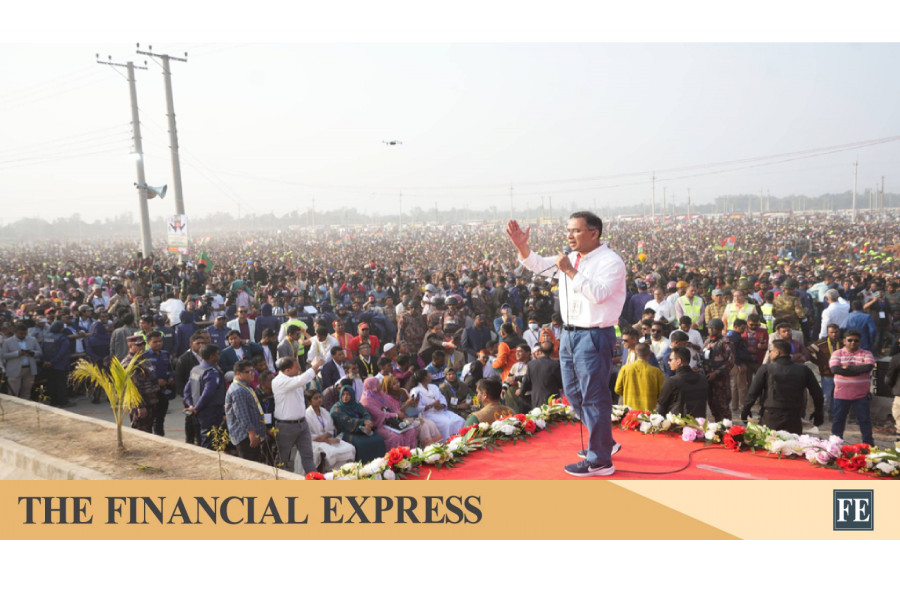
BNP Chairman Tarique Rahman has pledged to take Bangladesh’s handloom products to global markets, saying his party would launch export initiatives for the sector if it forms the government.

Speaking at an election rally at the Bangladesh Small and Cottage Industries Corporation (BSCIC) Industrial Park in Sirajganj on Saturday afternoon, Tarique said Sirajganj and Pabna naturally come to mind when people think of handloom fabrics, lungis and colours, as a large number of residents in the region are directly involved in the industry, bdnews24.com reports.

β€œWe talk about handloom, we talk about lungis, we talk about colours -- and immediately Sirajganj and Pabna come before our eyes. Many people in this area are involved in the handloom industry,” he said.

β€œIf we can undertake proper plans for this handloom industry, then, God willing, we will be able to spread the products made here across the globe,” he said.

β€œGoing forward, that is what we want to do -- we want to export handloom products produced in Sirajganj and Pabna to the entire world,” Tarique added.

He said he could have criticised political rivals during the rally, which would have drawn applause, but questioned whether that would benefit people.

β€œBangladeshis now want to know which political party has what plans for the country and its people, so the nation can move forward,” he said.

Referring to recent political change, he said: β€œWe have protested, we have struggled, our leaders, activists and the people of Bangladesh have sacrificed their lives, and autocracy has fallen.

β€œNow we must build the country -- everyone must work together.”

He also promised to establish new industrial parks across Sirajganj, Pabna and nationwide to tackle unemployment, set up agriculture-based industries in the region, and establish vocational institutes.

The rally began at 3pm with Quran recitation. Tarique reached Sirajganj by road from Bogura around 3:30pm.​
 
Analyze

Analyze Post

Add your ideas here:
Highlight Cite Respond

Threads that refuse to fade

1773104004941.webp
 
Analyze

Analyze Post

Add your ideas here:
Highlight Cite Respond

Weaving craft under spotlight at handloom exhibition
17 March, 2026, 00:00

1773711623406.webp

Dhakai muslin artisans sit at a loom set up for exhibition at β€˜The Handloom Tradition of Bangladesh’ at Bengal Shilpalay at Dhanmondi in the capital on Monday. | New Age photo

A colourful exhibition and fair celebrating Bangladesh’s rich handloom heritage concluded on Monday in the capital, drawing large crowds of visitors eager to explore the country’s traditional weaving industry and handcrafted textiles.

The exhibition titled β€˜The Handloom Tradition of Bangladesh’ was organised by the Bangladesh Handloom Board under the Ministry of Textiles and Jute with support from the Bengal Foundation at Bengal Shilpalay at Dhanmondi in the capital.

Running from March 8 to 16, the event highlighted Bangladesh’s centuries-old weaving tradition and provided insights into the production of the historic Dhakai muslin.Bangladesh travel guide

Demonstrations showed how yarn is prepared from Phuti cotton through hand spinning, followed by reeling and weaving muslin fabric.

Restored Dhakai muslin sharis and scarves were displayed alongside the rare raw material Phuti cotton, its seeds and plants.

Visitors also got to view a wide range of historical and cultural materials related to the weaving industry, including about 150-year-old Jamdani and Tangail sharis, Bangladesh’s Geographical Indication handloom products, life cycle of silk, archaeological artefacts, historical documents and various types of yarn and traditional looms.

Alongside the exhibition, a small fair featuring 15 stalls allowed marginal weavers and small entrepreneurs to sell their products directly to customers.

The stalls displayed a diverse range of handloom products, including Jamdani, Katan, Manipuri, Tangail sharis, Sirajganj lungis and towels, Cumilla khadi, Kumarkhali bed sheets, Rajshahi silk and clothing from the hill districts.

According to the Bangladesh Handloom Board, handloom products are vital to the country’s export economy, with weavers’ cooperatives producing under 36 product categories.

From 2012-13 to 2024-25, 2,726 certificates of origin were issued for exports valued at approximately $91.5 million.

Bengal Foundation director general Luva Nahid Choudhury said that the strong public response to the event was encouraging for the traditional craft sector.

β€˜The large turnout at the handloom fair and exhibition shows that people still appreciate handmade crafts,’ she said.Health and wellness

Participants at the fair discussed the industry’s opportunities and challenges.

Traders hoped for stronger policy support, easier financing and more promotion of handmade products to preserve Bangladesh’s weaving tradition and enhance artisans’ livelihoods.

At Lucky Jamdani House stall, Jisan, son of the owner of the Narayanganj-based company, told New Age that their factory in Jamdani Palli produced Jamdani sharis priced between Tk 6,000 and Tk 1.10,000.

According to him, producing handcrafted 100-count cotton Jamdani shari priced at Tk 1.10,000 required two to two and a half months of work by two skilled artisans, while an 84-count Jamdani took at least 15 to 20 days to complete.

Their factory operates about 300 handlooms and provides employment for nearly 600 families.

The factory produces various items, including half-silk and cotton Jamdani sharis, three-piece suits, punjabi and ornas.

Jisan called for interest-free loans for Jamdani traders, pension facilities for weavers and export incentives to strengthen the sector.

Sultan Bashtro Bitan and Textiles, owned by Md Rubel Rana, specialises in Tangail sharis, offering mercerised cotton, cotton half-silk sharis and three-piece outfits.

Most products are exported to India, for which traders visit Tangail to place custom orders.

Raw materials are sourced locally, with some chemicals imported from countries like India and Germany.

Rubel noted that producing a shari took about two days, with prices ranging from Tk 800 to Tk 5,000.

During the fair, he sold about 200 sharis and suggested extending the event throughout Ramadan to attract more buyers.

Md Touhid Hasan from Touhid Textile from Sirajganj showcased handloom lungis and towels made from yarn counts of 80 to 100.

His factory also produces specialised items for the Manipuri community in Sylhet, traditional clothing for the hill tracts, and Burmese lungis for Rohingya communities.

He mentioned a monthly turnover of around Tk 8 lakh, but highlighted challenges like rising raw material costs and dwindling interest among the younger generation in handloom work.

Urmila Chakma from Urmila Fashion from Rangamati presented handmade sharis, scarves, shawls, lungis and children’s dresses.

A Pinan Hadi shari takes about a month to create and sells for Tk 7,000–35,000.

They also sell shirts for Tk 500 and children’s wear for Tk 300, calling for government support to enhance production.

At Rana Textile, marketing manager Shafiq reported that the Kumarkhali Company in Kushtia offered striped and chequered bed sheets priced between Tk 950-1,800 and towels at Tk 160-300, with daily sales over Tk 7,000.​
 
Analyze

Analyze Post

Add your ideas here:
Highlight Cite Respond

Latest Posts

Back
PKDefense - Recommended Toggle