New Tweets

[πŸ‡§πŸ‡©] Textile & RMG Industry of Bangladesh

G Bangladesh Defense
[πŸ‡§πŸ‡©] Textile & RMG Industry of Bangladesh
451
19K
More threads by Saif


RMG products fetch higher prices in EU than US

FE ONLINE REPORT
Published :
Mar 14, 2026 16:30
Updated :
Mar 14, 2026 16:30

1773533992286.webp


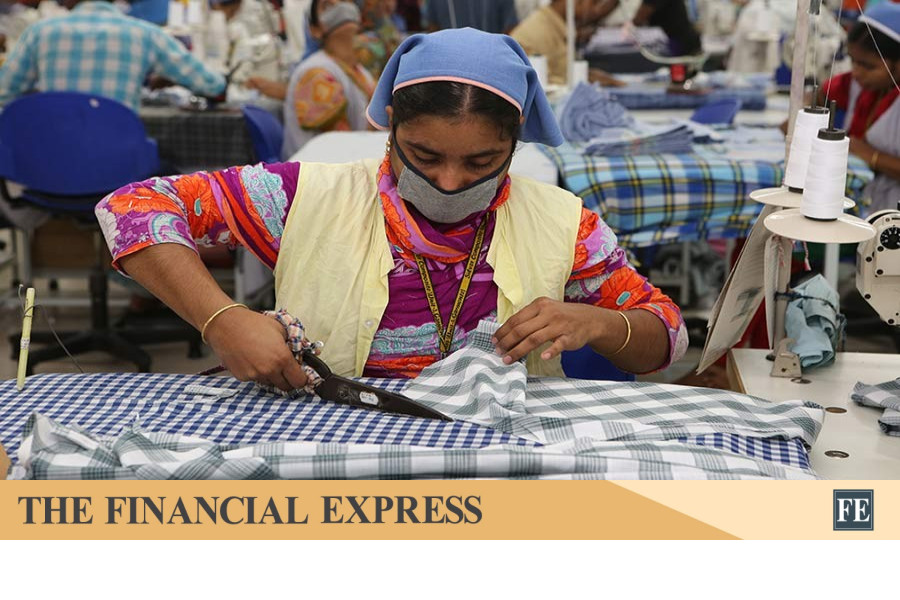
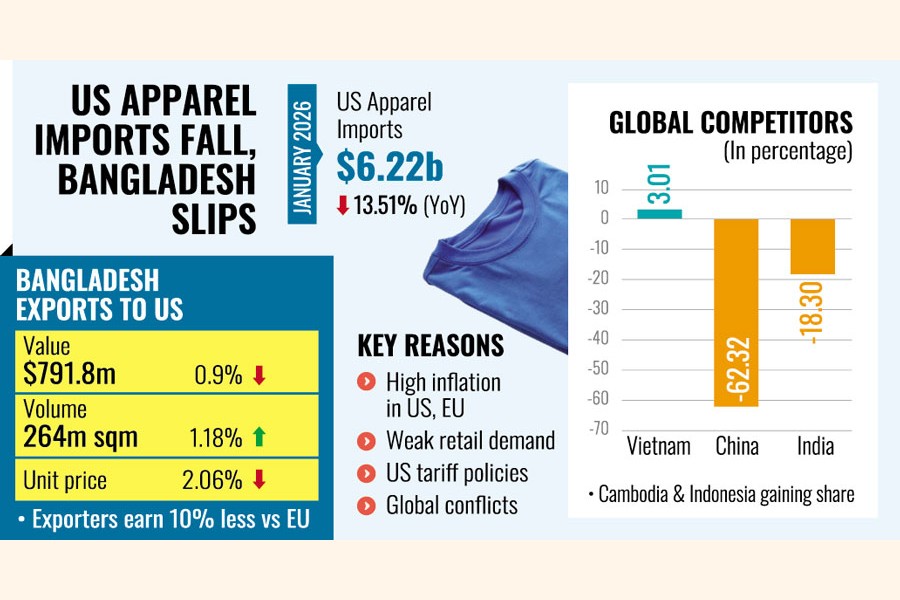
Bangladeshi-made major garment items get higher prices in the European Union (EU) market compared to the US due to different pricing and margin strategies based on preferential market access, according to a RAPID study.

"On average, firms foroprop ten apparel products obtain 5.0 per cent to 18 per cent higher prices in the EU than in the US market," said Jillur Rahman, lecturer of the Department of Development Studies at Dhaka University.

Citing an example, he, also deputy director of Research and Policy Integration for Development (RAPID), said exporters receive about 20 per cent to 27 per cent higher prices for T-shirts in Germany than in the US, while trousers command a 9.0 per cent to 15 per cent price premium in the German market.

He attributed a systematic price differential between preferential (EU) and non-preferential (US) markets, consistent with destination-specific pricing behaviour.

Mr Rahman was presenting the findings at a consultation event held on Saturday at the conference room of the Department of Development Studies at the DU in the city.

Moderated by RAPID executive director Dr Muhammad Abu Eusuf, Commerce Additional Secretary Abdur Rahim Khan, DU faculty of social sciences Dean Dr Taiabur Rahman and Economic Reporters' Forum president Doulot Akter Mala, spoke, among others.

Bangladeshi apparel exporters pursue markedly different pricing strategies across preferential and non-preferential markets, Mr Jillur Rahman said, adding that on average, firms charge more than 10 per cent lower prices in the US market than in the EU.

"High US tariffs compel exporters to absorb a significant share of the tax burden within their own margins in order to remain price-competitive at the border," he explained.

The results also reveal incomplete exchange rate pass-through, with exporters absorbing about 55 per cent of currency depreciation when exporting to the US, compared with around 40per cent for the EU, suggesting that firms operating in the non-preferential US market have stronger incentives to retain exchange rate gains in local-currency margins rather than fully transmit them into lower export prices.​
 
Analyze

Analyze Post

Add your ideas here:
Highlight Cite Respond
Correct. I think demand for cotton will fall even further due to Iran war. The middle class of the USA is paying for the USA's war against Iran. So, they are spending less on apparel.

They (lower middle class MAGAs) voted this guy in.

Their decision - which they will now be faced with.
 
Analyze

Analyze Post

Add your ideas here:
Highlight Cite Respond

Bangladesh's apparel industry in shifting global trade landscape

Ashikur Rahman Tuhin
Published :
Mar 16, 2026 23:18
Updated :
Mar 16, 2026 23:18

1773708331736.webp


US President Donald Trump announced a flat 10 per cent tariff on all countries for 150 days effective from 24 February 2026, following the country's Supreme Court verdict that scrapped reciprocal tariffs for different countries, including Bangladesh. Bangladesh's last negotiated reciprocal tariff with the US was 19 per cent.

This reduced levy might give temporary relief to Bangladesh but may dampen its longer-term gains. The reciprocal tariffs actually allowed Bangladesh favourable conditions for exporting to the US since the same tariffs imposed on other major apparel producing countries were higher than ours. For instance, the US reciprocal tariff for China, the world's largest apparel exporter with about a 31 per cent global share, was 34 per cent. It was 20 per cent for Vietnam, the world's third largest apparel exporter having about 6 per cent global share. So, it was an opportunity in disguise for Bangladesh, the world's 2nd largest apparel exporter having about 7 per cent global share.

Bangladesh's apparel export also witnessed steady growth in the US market after the reciprocal tariffs were announced. According to the Office of Textiles and Apparel (OTEXA) of the USA, Bangladesh's share in the US apparel market increased to 10.53 per cent in 2025 from 9.26 per cent in 2024, as China lost market share due to the burden of the reciprocal tariffs it faced last year.

Now the reduction in the tariffs may lower commodity prices in the US market, encouraging buyers to put more orders to manufacturing countries. But at present as the US tariffs are equal for all, Bangladesh has lost the competitive edge over China and Vietnam which the country enjoyed under the reciprocal tariff regime. However, Bangladesh should continue its dialogue with its US counterparts to ensure that the duty-free export opportunity for Bangladeshi apparel to USA using US cotton, which it secured during the reciprocal tariff trade negotiations, remain unchanged.

The USA is the largest single market for Bangladesh's apparel export. About 18 per cent of our total apparel export is concentrated in the US market. But as a region, the European Union is our largest apparel export destination. More than 50 per cent of Bangladesh's apparel export is destined to the EU.

India and the European Union (EU) recently announced conclusion of a Free Trade Agreement (FTA). Through this FTA, India gained zero-duty access to the EU for sectors which include its apparel and textiles. The agreement, announced on 27th January, is expected to come into force in 2027, meaning apparel exports from India to the EU will enjoy duty-free access, overcoming previous tariff barriers that ranged from 0-12 per cent.

Trade agreements of other countries are beyond our control. However, this EU-India FTA will have implications for Bangladesh's apparel exports to Europe.

India, the world's 6th largest apparel exporter, counts the EU as its second-largest export destination for textiles and apparel, after the USA. With the FTA between India and the EU, India has now gained a 12 per cent competitive advantage over Bangladesh. This 12 per cent competitive advantage of India may increase to 24 per cent under the combined effect of Bangladesh's LDC graduation and the India-EU FTA after 2029 when our export will be subject to 12 per cent duty.

Though Bangladesh may continue to enjoy duty-free access even after the graduation if the country attains GSP Plus, its apparel export would still face full MFN tariffs under current EU GSP Plus provisions. Under the current GSP Plus provisions, Bangladesh would have to comply with two-stage rules of origin. Moreover, Article 29 of the GSP Plus scheme outlines safeguard measures for textile, agriculture, and fisheries industries. The safeguard measure states that if any of these three individual sectors exceeds the product graduation threshold -- which is 37 per cent for textiles -- that sector will fall outside the purview of GSP Plus duty-free access. Bangladesh has already crossed the threshold in textile.

It is also relevant to mention that Vietnam, the world's third-largest apparel exporting country after China and Bangladesh, signed an FTA with the EU in 2020. Vietnam's apparel export is currently subject to average 9.6 per cent duty on the EU market that will fall to zero duty by 2027 by virtue of the FTA.

Therefore, making all-out efforts to maintain zero-duty access through a similar FTA with the EU or pursue GSP Plus with relaxed rules of origin and safeguard provisions to retain apparel-sector preferences should be now the topmost priority in Bangladesh's diplomatic agenda.

The new government in Bangladesh just took charge after a free and fair election widely praised by the international community. It has given a positive signal to countries across the world. The government just after taking the oath applied for deferred LDC graduation which is a prudent decision. It is high time during this shifting global trade scenario, the government also started fresh economic diplomacy with our export partners. This underscores the need for seriousness, proper collaboration between government, industry associations, and major brands and retailers who source from Bangladesh, as well as immediate policy-level dialogues between the government of Bangladesh and the governments of the developed countries. We believe that our new charismatic Prime Minister and his deserving cabinet through smart diplomacy could secure an enabling international trade landscape that will take the country's apparel industry to a new height and flourish our economy.

Ashikur Rahman Tuhin is the Managing Director of TAD Group. He is a Director of Exporters Association of Bangladesh (EAB) and a former Director of Bangladesh Garment Manufacturers and Exporters Association (BGMEA).​
 
Analyze

Analyze Post

Add your ideas here:
Highlight Cite Respond

Why Bangladesh needs a brand reset

16 March 2026, 00:23 AM

Mostafiz Uddin

1773710784750.webp

'Today, Bangladesh is home to one of the world’s largest concentrations of green RMG factories.' FILE PHOTO: STAR

For decades, the international image of Bangladesh has been shaped by a narrow and increasingly outdated narrative. Far too often, the country has been reduced to being a low-cost sourcing destination, associated mainly with labour exploitation, industrial accidents, and relentless price pressure. That was never the full picture, and it is even less so now. With a new government in place, we have a rare opportunity to rethink not just industrial policies but how the outside world perceives us. This is the right moment for a full branding reset.

Branding is more than a superficial side issue. The way a country is perceived affects investment decisions, buyer confidence, tourism, diplomatic influence, and the willingness of international companies to make long-term commitments. Countries that present a clear and credible story about who they are and where they are going tend to attract stronger partnerships. The good news is that we already have the substance to support a far stronger identity. What we have been lacking is a confident, coordinated and strategic effort to tell that story properly.

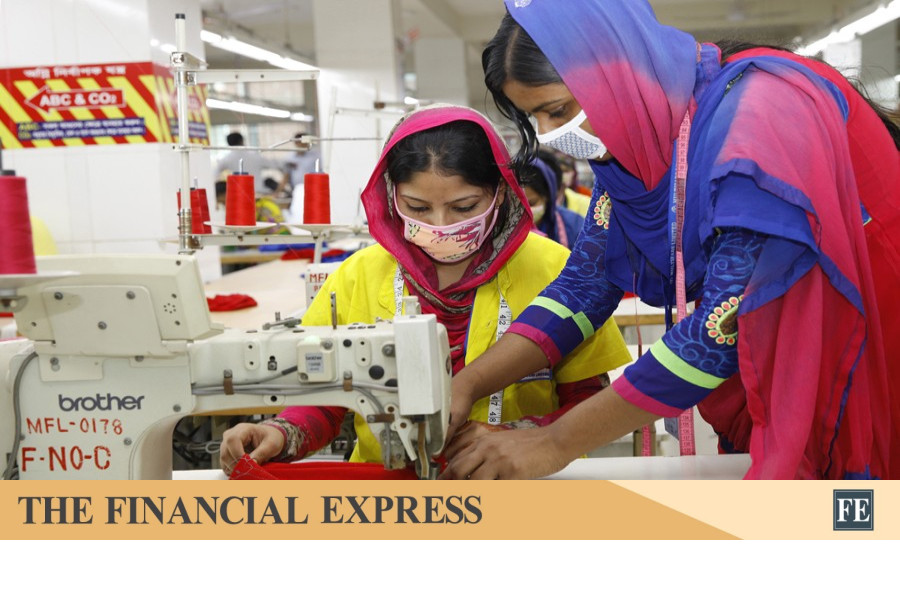
We should begin with the RMG sector, because it remains our industrial calling card to the world. Our export growth over the last two decades has been remarkable. Bangladesh has become one of the most important RMG manufacturing countries in the world. But we need to stop presenting our success only in terms of low cost and scale. A much more powerful argument is that our industry is already evolving into something much more capable and forward-looking. Today, Bangladesh is home to one of the world’s largest concentrations of green RMG factories. This is clear, undisputed evidence that our manufacturing base is upgrading. It shows we are investing in better buildings, stronger systems, more efficient operations, and a more credible industrial futureβ€”we are building modern industrial capacity.

The same is true for energy. More and more RMG factories are adopting rooftop solar power systems and looking seriously at renewables as a long-term strategy. Besides being important for cost and resilience, this also adds to our international brand. When buyers, investors and regulators are paying much closer attention to carbon, energy and supply chain performance, we should make it clear that our country wants to be seen as part of the solution, not the problem.

This is where our branding reset should begin. We should position Bangladesh as the world’s most serious platform for responsible, scalable apparel manufacturing. That message would be credible because it would be built on real strengths. We have a large workforce, a growing industrial base and a generation of young people who want jobs, skills and opportunity. We should present Bangladesh as a young, energetic manufacturing nation with the potential to move up the value chain not just in apparel but also in textiles, logistics, engineering, digital services, and green industry. We need that broader vision because if we define ourselves only through RMG manufacturing, we risk being trapped by it. If we have built one of the world’s largest apparel industries, we can also build strength in technical textiles, man-made fibres, recycling, renewables, logistics, and higher-value manufacturing.

However, any branding reset must be backed by practical action. To make the world see Bangladesh differently, we must make it easier for the world to experience the unseen side of the country.

First, we should decide exactly what we want Bangladesh to be known for over the next decade. In my view, our new identity should rest on five pillars: competitive manufacturing, verified sustainability, young talent, renewable energy transition, and reliability. Once that is decided, every ministry, agency, embassy, investment body and trade mission should use the same language.


Second, we need a much stronger evidence-based branding platform. We should not rely on vague claims. We should back up our message with hard data, case studies, factory examples, energy metrics, workforce statistics, export performance, and investment reforms. Bangladesh should publish an annual competitiveness and branding report aimed at global buyers, investors and policymakers.

Third, we need to market the success stories that challenge old assumptions. That Bangladesh has one of the world’s largest clusters of green RMG factories should be central to every trade mission and investment pitch. That our factories are installing solar panels, improving water use, upgrading machinery, and building stronger compliance systems should be documented and promoted internationally.

Fourth, we must match branding with a better business environment. To project an image of modernity, investors and buyers must findβ€”or buildβ€”an upgraded system. That means faster approvals, greater transparency, more efficient customs, better infrastructure planning, easier access to land, and fewer administrative bottlenecks. A branding reset cannot succeed if the experience of doing business does not improve alongside the message.

Fifth, we should align our national branding with green industrial strategy. The global sourcing model is changing. Decarbonisation, traceability, and environmental performance are becoming more important every year. The government should support rooftop solar, energy efficiency finance, wastewater treatment, grid reform and textile recycling infrastructure. To create a strong, resilient brand, we must make green industrialisation visible and measurable.

Finally, we need to tell our story more effectively across the world. Brand Bangladesh should not live only in official speeches or policy papers but be carried by ambassadors, trade commissioners, business leaders, universities and entrepreneurs. It should be visible at trade fairs, in global media, across digital channels, and in every major international forum where sourcing and investment decisions are shaped. This is about discipline, clarity, and consistency.

For too long, Bangladesh’s image has been shaped by outsiders and by the worst chapters in our history. The next chapter should be written by us.

Mostafiz Uddin is managing director of Denim Expert Limited. He is also the founder and CEO of Bangladesh Denim Expo and Bangladesh Apparel Exchange (BAE).​
 
Analyze

Analyze Post

Add your ideas here:
Highlight Cite Respond

Latest Posts

Back
PKDefense - Recommended Toggle