Home Watch Videos Wars Movies Login

[🇮🇳] India---News & Views

[🇮🇳] India---News & Views
83
4K
More threads by Saif

G   Indian Defense

India PM Modi to visit Indonesia, Australia, New Zealand next week
Agence France – Presse . New Delhi, India 03 July, 2026, 17:51
1783135440482.webp

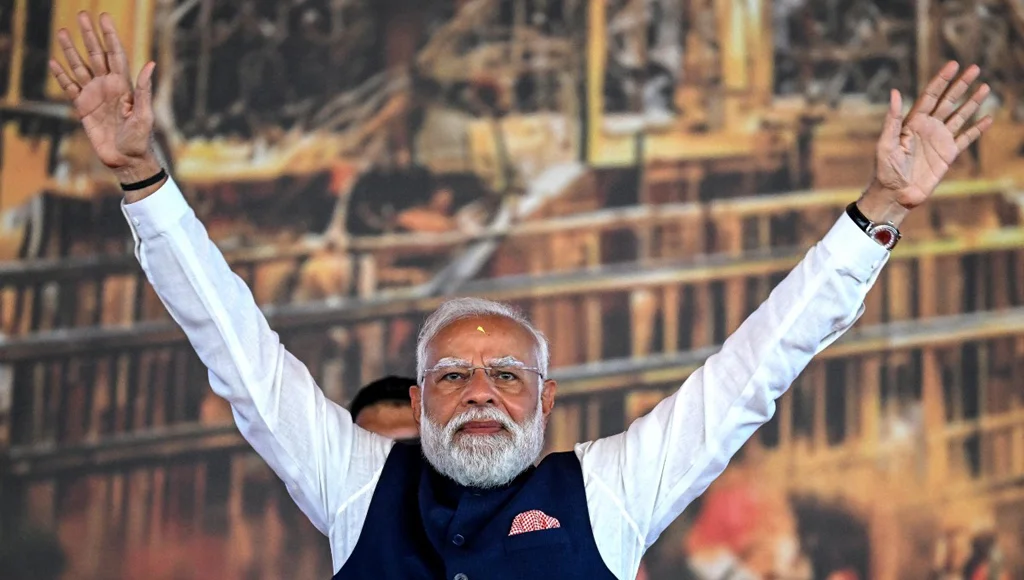
Indian prime minister Narendra Modi | AFP file photo

Indian prime minister Narendra Modi is scheduled to visit Indonesia, Australia and New Zealand next week, as New Delhi seeks to strengthen strategic ties in the region.

The July 8-11 tour comes after Modi’s visits to Mauritius March last year and Seychelles last month, reflecting what India’s external affairs ministry described as a shift in diplomatic focus to the eastern maritime region under its ‘Act East’ policy.

‘The focus has shifted to the eastern maritime zones of the Indian Ocean and our Act East engagement,’ senior Indian foreign ministry official Rudrendra Tandon, told reporters at a news briefing on Friday.

Modi will visit Indonesia on July 8 and 9, where he is scheduled to hold talks in Jakarta before travelling to the historic city of Yogyakarta and the UNESCO-listed Prambanan Temple complex, where India and Indonesia are planning to collaborate on conservation work.

Modi will review cooperation across a range of sectors during his visit to Indonesia, including maritime security, defence, trade and cultural ties, Tandon said.

It’s hoped this will build on talks held during Indonesian President Prabowo Subianto’s visit to India during Republic Day celebrations last year, Tandon added.

Modi will then travel to Melbourne on July 10 for the third India-Australia Annual Summit, an institutional dialogue established under the two countries’ Comprehensive Strategic Partnership launched in 2020.

Tandon said discussions would review cooperation across defence, foreign policy and trade while also focusing on newer areas including critical minerals, cybersecurity, supply chain resilience and emerging technologies.

Modi will finish the tour in New Zealand on July 11, where he will hold talks with Prime Minister Christopher Luxon.

Tandon said bilateral ties had gathered momentum since Luxon’s visit to India in 2025, describing it as ‘a kind of inflection in our relationship’.

‘This culminated in the signing of New Zealand FTA in a fairly short period of time,’ he said.

The India–New Zealand Free Trade Agreement (FTA), signed on April 27 this year, eliminated duties on 100 percent of Indian exports to New Zealand while securing a $20 billion investment commitment from New Zealand over the next 15 years.​
 
Analyze

Analyze Post

Add your ideas here:
Highlight Cite Respond

India Cabinet approves $9.6bn offshore oil and gas exploration scheme

1785540027071.webp


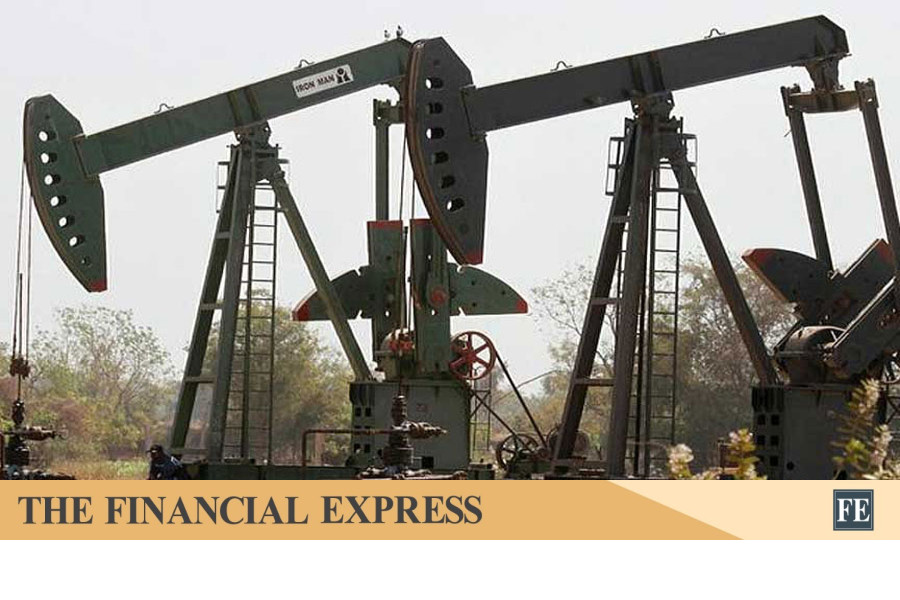
India has approved “Samudra Manthan”, the National Offshore Exploration Scheme, allocating Rs 84,084 crore or $9.6 billion for its implementation through FY2030-31.

Chaired by Prime Minister Narendra Modi, the decision of the Inion cabinet came on Friday as countries seek to strengthen energy security amid global supply uncertainties driven by geopolitical conflicts.

The initiative is designed to reduce India's dependence on imported hydrocarbons by expanding offshore exploration, increasing domestic production, and encouraging the use of advanced technologies, the Indo-Asian News Service (IANS) reports.

A statement says the government expects the programme to help discover more than 600 million metric tonnes of oil equivalent (MMTOE) in additional reserves.

It also aims to boost offshore exploration and production, create jobs, attract fresh investments across the energy value chain, strengthen domestic manufacturing under the Make in India and Atmanirbhar Bharat initiatives, and develop a globally competitive offshore services industry.

IANS reported that the scheme covers multiple stages of offshore exploration, including nationwide acquisition and interpretation of high-quality seismic data, faster drilling in deepwater and ultra-deepwater blocks, scientific exploration in frontier basins, construction of shared offshore production and evacuation facilities, and the creation of an integrated Oil and Gas Manufacturing and Services Zone.

Beyond exploration activities, the programme sets aside funding for digital project management, workforce training, technology deployment, stakeholder coordination and international collaboration.

Together, these measures are intended to create a more efficient ecosystem for offshore oil and gas development while improving the sector's long-term competitiveness, according to IANS.

The cabinet said the programme builds on a series of upstream sector reforms introduced over the past decade, including opening nearly all offshore areas for exploration, updating the legal and contractual framework, and strengthening the National Data Repository.

IANS cited the statement as saying, “Building on these reforms, Samudra Manthan will usher in a new era of accelerated offshore exploration through strategic public investment, cutting-edge technologies and world-class infrastructure.”​
 
Analyze

Analyze Post

Add your ideas here:
Highlight Cite Respond

Indian researchers working on using dogs’ sense of smell in detecting cancer

1789194485053.webp

This photograph taken on July 28, 2026 shows co-founder of the Dognosis Itamar Bitan holding a beagle inside a kennel at his facility in Kempohalli village on the outskirts of Bengaluru. | AFP photo.

Agence France-Presse . Dogs’ extraordinary sense of smell may be useful in detecting cancer 09 September, 2026, 10:45

When rescue dog Chloe is not tumbling across the grass on a farm outside India’s tech capital Bengaluru, she is learning to sniff human breath for cancer with a little help from AI.

Fitted with a 3D-printed helmet and harness packed with sensors, Chloe is part of experimental efforts to use dogs’ extraordinary sense of smell to develop a non-invasive test for the disease.

A growing body of global research suggests dogs can be trained to detect cancer and other human illnesses, from Parkinson’s to Covid-19.

The Bengaluru-based startup Dognosis is using AI to analyse dogs’ brain activity, respiration and body language — turning their reaction to scent into data.

‘In an hour, they can do thousands of sniffs,’ co-founder Akash Kulgod, 26, told AFP. ‘Each sniff can evaluate a sample.’

Dognosis hopes to launch commercially next year, which it says would make it the third company of its kind, after firms from Germany and Israel.

Early detection can make a crucial difference to cancer survival rates, but in India many patients are diagnosed only after the disease has advanced.

Dog sniffs could provide an easy and affordable first layer of screening to be deployed at scale, finding potential cases for further testing.

As it chases commercial approval, Dognosis — backed by venture-capital firms including Accel India — is collaborating with government medical institutions for its research.

Chloe, a Labrador mix, is one of 15 dogs being coached by the startup, clad in customised data-gathering helmets.

‘It’s like a doggy ‘Iron Man’ suit,’ said Kulgod, who comes from a family of doctors and studied cognitive science at the University of California, Berkeley.

Research suggests diseases can alter the chemicals released by the body, creating distinctive odours.

Dogs have around 300 million scent receptors, compared to about five million in humans.

The testing method is simple: a patient breathes into a cotton mask for about 10 minutes, and the mask is then sealed in a bag and taken to the lab. Patients do not meet the dogs.

A recent Dognosis study of more than 1,500 participants, involving six hospitals in Karnataka state, was published in the Journal of Clinical Oncology.

The company said it achieved an accuracy rate of more than 90 per cent across seven major types of cancer, and now plans to test in real-world programmes.

Cancer specialists in Bengaluru independent of the project voiced cautious optimism.

‘The study is promising, as an early signal,’ said Santhosh Kumar Devadas, head of oncology at Ramaiah Memorial Hospital.

‘But they need to do the study with a much larger group before we make any definitive conclusions.’

Neelesh Reddy, a senior consultant oncologist at Manipal Hospitals, told AFP that ‘only time will tell how this technology will be useful to the actual patients’.

India has described cancer as a major public health concern, saying one in nine of its 1.4 billion people are likely to develop the disease.

Dognosis says it aims to improve ‘proactive and preventative medicine’ while boosting ‘human-canine communication’.

Most of the dogs are beagles, along with some Malinois and Shepherd mixes, brought on board through adoption or legal breeders.

But only the best are selected, said Kulgod. The dog team individually lists each animal on the company website as an official ‘sniffer’, alongside their photographs.

All have a great ‘work-life balance’, with work time limited to around 30-45 minutes a day, he added.

At a centre called ‘Sniffspace’, dogs test human samples on platforms equipped with automatic feeders dispensing dog treats.

Kulgod’s co-founder Itamar Bitan, 28, who spent four years in an Israeli special-forces canine unit, said the dogs were trained using ‘positive reinforcement’ to detect a ‘specific funky smell’ for a reward.

‘Some of the dogs run directly to the feeder expecting rewards, some dogs freeze, some dogs will scratch the sample with excitement,’ Bitan said.

‘But as long as the machine that learns how the dogs react to the sample is very consistent, we don’t really mind.’​
 
Analyze

Analyze Post

Add your ideas here:
Highlight Cite Respond

India to get 100pc duty-free export access to New Zealand as FTA to come into force on 20 Oct

Reuters
New Delhi

1790057070497.webp

A mobile crane carries a container to stack at Thar Dry Port in Sanand in the western state of Gujarat, India, Reuters

A free trade agreement between India and New Zealand, signed in April, will come into force on October 20, Indian trade minister Piyush Goyal said on Monday, as New Delhi seeks to boost exports and attract investment amid shifts in global trade.

Both countries ratified the pact on Monday, with New Zealand Trade and Investment Minister Todd McClay exchanging documents with India's High Commissioner to New Zealand, Muanpuii Saiawi, at Parliament.

The deal comes as US President Donald Trump has signed a lawallowing tariffs of up to 100 per cent on countries such as India for buying Russian oil.

India has accelerated efforts to diversify export markets away from the US, its biggest market, through trade agreements with major economies, including Britain and the European Union.

New Zealand's parliament last week passed legislationneeded to implement the agreement.

"The New Zealand-India FTA will level the playing field and unlock access for Kiwi businesses in one of the fastest growing markets in the world," McClay said in a statement.

1790057112825.webp

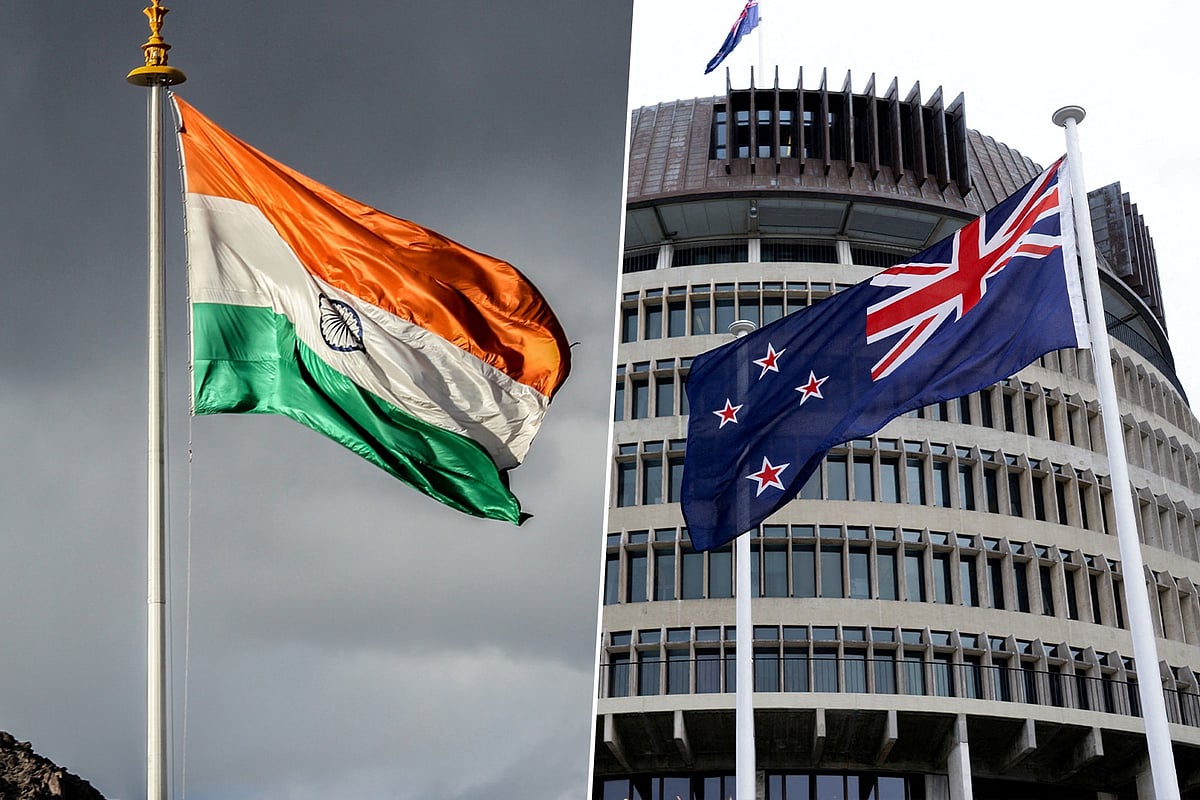
A combination of photos shows the flags of India (left) and New Zealand (right).

Under the agreement, tariffs on about 95 per cent of New Zealand exports to India will be eliminated or reduced when the deal is fully implemented.

McClay said 57 per cent of New Zealand exports will be tariff-free from day one, including sheep meat, wool and coal, and more than 95 per cent of forestry and wood exports. Duty-free coverage will later rise to 82 per cent, while the remaining 13 per cent will face steep tariff cuts.

The agreement gives all Indian goods duty-free access to New Zealand and eases mobility rules for students and workers. Wellington has also agreed to invest $20 billion in India over the next ⁠15 years.

New Zealand exporters will receive preferential quota access for apples, kiwifruit and albumins. Wine tariffs will fall from 150 per cent to either 25 per cent or 50 per cent over 10 years, depending on product value.

Prime Ministers Christopher Luxon and Narendra Modi have committed to doubling bilateral trade by 2030, from about $2.3 billion in the 12 months through June.

"India and New Zealand show that we can agree to terms that are beneficial for trade and businesses," McClay said via video conference, citing rising tariffs and global business uncertainty.

India said last week that the new measures to levy tariffs over the purchase of Russian oil could impact bilateral ties with the United States, in a sharp response to the passing of the law.​
 
Analyze

Analyze Post

Add your ideas here:
Highlight Cite Respond

Latest Posts

Back
 
G
O
 
H
O
M
E