[🇧🇩] City Buses, Metro Rail, Urban Transport & City Road Infra

Post a Reply — Share your thoughts or reply to this thread...
Reply
Quick Reply ✓ Posted!
[🇧🇩] City Buses, Metro Rail, Urban Transport & City Road Infra
194
13K
More threads by Bilal9

G Bangladesh Defense

Metro Rail: Is there no way out of the trap of overpriced projects?

Md Touhid Hossain

1789108534863.webp


On 30 August, I saw a report in Prothom Alo that stated the cost for two new metro lines would be Tk 2,140 billion. A few other newspapers reported on this too, and the tone of all the reports was that this cost is excessive. The initial estimate of the project was Tk 938 billion. Even before the work began, the cost increased by over 100 per cent. A government-formed technical committee reported this cost increase as logical!

Over the 16 years of the Awami League government, we have become somewhat accustomed to overpriced projects. Our elevated MRT Line 6 cost Tk 1 5.74 billion per kilometer. Around the same time, the Delhi Metro was constructed at roughly Tk 3 billion per kilometer. The initially estimated Tk 100 billion for the Padma Bridge ended up at Tk 310 billion. Even more surprising is the railway connection of the Padma Bridge. Building a 172-kilometer railroad cost around Tk 400 billion or Tk 2.32 billion per kilometer.

In Europe, high-speed train lines are built roughly at this cost. This railway line was constructed with Chinese loans, and the Chinese build rail lines capable of running at 250 km/h at this rate in their own country. The revenue from the railway will never be able to repay this loan interest. Overall, it was a completely unnecessary project. Perhaps a market will develop for its services in 15 years, but the burden of the loan has started today.

Another unnecessary project saw massive spending. There was an excellent road from Kuril to Kanchan with four lanes in the middle and four lanes on each side, known colloquially as the 300-foot road. Making U-turns under the bridges would have sufficed, and there would have been no fear of traffic jams. There was no need to touch it for at least the next 10 years.

However, within a few months of the road's completion, it was being torn up to make the 14-lane Purbachal Expressway. After three years of suffering, the beautiful road has emerged. It feels great to drive on. However, every expenditure has an alternative use. I could not ascertain the actual cost of this project despite trying. I've heard Tk 200-220 billion were spent on this approximately unnecessary 12.5-kilometer path.

Back to the metro rail. Why does everything cost us so much more to accomplish? All metro rail projects have JICA as the lender. During my 33 years at the foreign ministry, I always heard that Japanese loans are very good, with very soft terms, etc. I have rarely had the chance to see up close; because these matters were handled by ERD, which likes to keep the foreign ministry as much in the dark as possible about their activities.

During my special duty of one and a half years, some related information came to my notice. In projects financed by JICA, the consultants are Japanese, and the contractors are Japanese too. There is a type of collusion among the contractors. Then there's the cost increase due to design changes.

The Prothom Alo report mentions two things about JICA's loans from ministry sources. One, various conditions are imposed on project financing. Two, the tender documents contain such methods and technologies that no one but Japanese companies can fulfill. In the third terminal project at the airport, a relatively expensive technology was said to be used for piling to complete the work quickly. After work began, it was said that this technology could not be used in the soil there, so a different technology had to be employed. Fair enough. But meanwhile, a company has already been given mobilisation money for piling with the former technology. So, pay damages! The same story has reportedly been used in the MRT-6 project to recover damages.

Now, with JICA financing, two metro lines are being proposed at a cost per kilometer at least three to four times higher than other ongoing metro projects worldwide. Running the metro rail won't generate any operational profit, and that isn't the target either. Then how will this illogical, huge loan be repaid?

Minister Sheikh Rabiul Alam has said that metro rail is necessary. Otherwise, Dhaka cannot be saved. It is understood that metro rail is needed, but the full meaning of the next sentence is unclear. What exactly does he mean by 'saving'? As per livability measures, Dhaka ranks among the worst in the world. One of the major problems of this city is severe traffic congestion. The average speed on roads is laughable, 4.8 to 7 kilometers per hour. Metro rail quickly gets passengers to their destinations in the city, but it serves only a very limited number of people.

Currently, the daily users of the MRT-6 line are only 382,000, while there are ten million bus users in the city. Then there are Uber, rickshaws, scooters, motorcycles, private cars. The two main components of Dhaka's traffic jam are one, the anarchy among bus drivers and owners, and two, the completely unruly behaviour of a vast number of rickshaws (a large portion of which are now battery-powered). And leaving out motorcycles altogether. Without addressing these issues, starting some metro rail at sky-high costs cannot 'save' Dhaka city.

What can be done then

1. Clearly, JICA has seized Bangladesh. Cancel the metro rail project at the current stage it is in. Tell JICA that when they can make a metro in Bangladesh at a cost comparable to or slightly higher than other countries in the world, then bring the project—we will welcome it. They may offer some lower-cost proposals, but agreeing to them would be foolish.

2. Urban transport should not be any profit-making business. Tell the bus owners to gradually wrap up this business over the next five years and focus on inter-district transportation. Some non-profit entity—government, private, or mixed—should take charge of urban transport. Bring in five thousand electric buses. The cost would be only Tk 250 billion. The buses would arrive gradually over three to four years. Charging a bus to run 250 kilometers would take 5 hours, doable between midnight and 5 am. It would require roughly 1,500 megawatts of capacity to charge 5,000 buses at once. Electricity demand drops more than this late at night.

3. Then there's the rickshaw. No one knows the true numbers, but over the last two years, all roads in Dhaka city have been covered with battery-powered rickshaws. Additionally, many pedal-powered rickshaws remain. Due to excessive numbers, these vehicles gather at street corners waiting for passengers, creating a nightmare for other vehicles. They go the wrong way wherever they like, creating dangerous situations for themselves and others. I saw in the newspaper that there is a policy being made for motor rickshaws. Limiting the number and mandating licences should be part of this policy. Training for drivers should also be included. Measures for traffic law violations should apply to rickshaws too.

4. If the city is to be saved, there is yet another aspect to concentrate on. Footpaths are for people to walk, roads are for vehicle movement, not for running shops, operating food hotels, or even for greening. Encroachment under local political leadership has now exceeded all limits. Pull its reins.

#Md Touhid Hossain is former foreign advisor​
 

Gabtoli-Dasherkandi metro rail project to go before ECNEC Wednesday, cost estimated at Tk455.03 billion

Staff Correspondent
Dhaka

1789428393152.webp

Metro rail Prothom Alo file photo

The government has taken an initiative to build a new metro rail route from Gabtoli to Dasherkandi in Dhaka. The project, titled the “Dhaka Mass Rapid Transit Development Project (Line-5): Southern Route”, is estimated to cost Tk455.03 billion (45,503 crore).

Of this amount, Tk151.97 billion will be financed by the government. The remaining Tk303.06 billion will be secured as project loans from the Asian Development Bank (ADB) and South Korea.

According to the Planning Commission, the project is scheduled to be implemented from September 2026 to August 2033. It may be placed before the Executive Committee of the National Economic Council (ECNEC) on Wednesday for approval.

Speaking about this, transport infrastructure expert and Bangladesh University of Engineering and Technology (BUET) professor Md Hadiuzzaman told Prothom Alo, “The tendering process for the new metro project has created an opportunity for open competition. That opportunity did not exist in the projects financed by Japanese loans. The tenders were designed in such a way that no companies other than Japanese ones could participate.”

He believes that moving away from dependence on a single source of financing will also help reduce costs. However, the expert said the project cost could rise or fall after companies participate in the tender process. Experts have also stressed the need to remain vigilant about quality.

Metro rail route

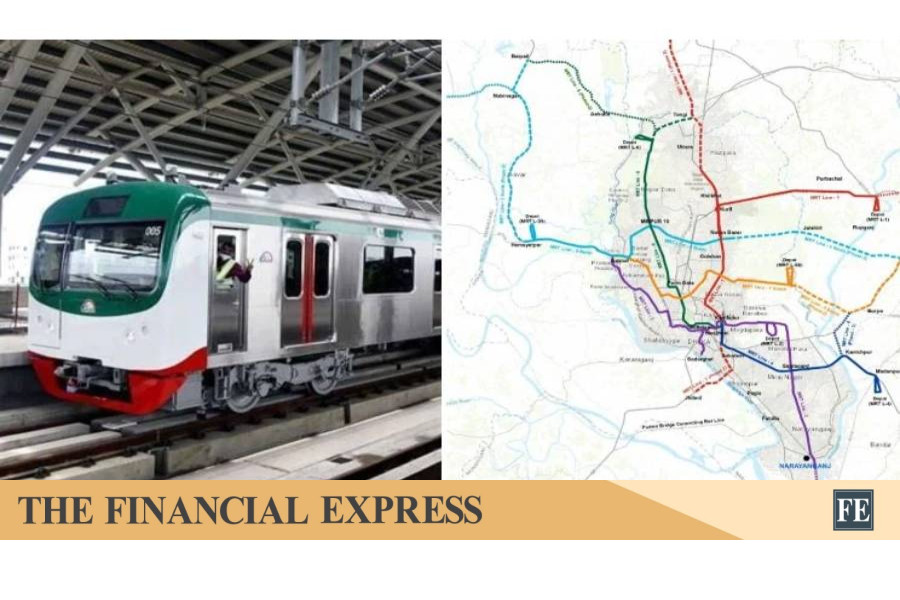
The proposed new metro route will begin at Gabtoli and run through Technical Mor (Intersection), Kalyanpur, Shyamoli, College Gate, Asad Gate, Sukrabad, Karwan Bazar, Hatirjheel, Tejgaon, Aftabnagar, Aftabnagar Centre, Aftabnagar East and Nasirabad before reaching Dasherkandi.

A depot will be built at Dasherkandi under the project. The metro line will run underground from Gabtoli to Aftabnagar and on an elevated viaduct from Aftabnagar to Dasherkandi. Of the total route, 13 kilometres will be underground and the remaining four kilometres elevated.

How much will it cost?

The largest share of the project cost will go towards constructing the main line, stations and depot. An estimated Tk177.37 billion has been allocated for this, accounting for 39 per cent of the total cost.

Another Tk132.58 crore, or 29 per cent of the total, will be spent on electrical and mechanical equipment and the rail system. A further Tk48.21 billion will be spent on procuring trains and depot equipment.

The proposal also includes Tk49.79 billion for land acquisition and rehabilitation and Tk16.26 billion for consultancy services. Another Tk9.31 billion has been allocated for utility relocation. Around 134 hectares of land will need to be acquired and people rehabilitated for the project.

According to Planning Commission documents, the estimated cost of the project has been revised several times. It was initially set at Tk546.19 billion, before being reduced to Tk477.21 billion and then to Tk476.45 billion.

Following the latest review held on 16 July 2026, the project cost was reduced further to Tk455.03 billion. This is Tk21.41 billion lower than the previous proposal.

The project documents state that tunnel boring technology will be used to construct the underground section. The feasibility study was completed in October 2022.

The project has been included in the Annual Development Programme (ADP) for the 2026–27 fiscal year as a new, unapproved project for foreign financing. The Planning Commission has recommended that the project be approved.​
 

Tk 126b cut from costs of 3 metro rail projects


1789532673644.webp


A prolonged uncertainty over the costs of three major metro-rail projects is nearing an end, with their revised development proposals set to receive approval soon after the government cut more than Tk 126 billion from their projected costs.

However, even after the reductions, the combined estimated cost of MRT-1, MRT-5 North and MRT-5 South will remain over Tk 2.5 trillion.

Of the three projects, MRT-1 is now proposed to cost around Tk 1.20 trillion, MRT-5 North Tk 899 billion and MRT-5 South Tk 455.03 billion, according to project and Planning Commission officials.

1789532695663.webp


MRT-5 South is set to be placed before the Executive Committee of the National Economic Council (ECNEC) at its meeting on Wednesday, officials said. The project cost has been reduced by Tk 91.15 billion from the original development project proposal (DPP) prepared in 2023 and by Tk 22.18 billion from the estimate made later because of delays in approving the DPP.

The DPPs of MRT-1 and MRT-5 North have also been revised and sent to the Planning Commission, with their costs reduced by Tk 40 billion and Tk 63.99 billion respectively.

Project Evaluation Committee meetings on the two projects were held on 30 August, and Planning Commission officials said they may be placed before the next ECNEC meeting.

The three metro rail projects had remained stalled for nearly two years, mainly over contract packages for MRT-1 and MRT-5 North, after unusually high financial proposals were submitted. The Dhaka Mass Transit Company Limited (DMTCL) had alleged that the high bids resulted from a lack of competition, with a limited number of companies participating in the tenders.

MRT-5 South, meanwhile, remained pending despite its DPP being sent to the Planning Commission first in July 2024 and again towards the end of 2025. The interim government declined to approve the proposal amid concerns over its high estimated cost, leaving the decision for the elected government.

According to DMTCL, MRT-5 South, planned from Gabtoli to Dasherkandi, was initially estimated at Tk 546.18 billion at the design stage in 2023. The estimate was later revised to Tk 477.21 billion when the DPP was submitted for approval during the interim government's tenure. The project is now proposed at Tk 455.03 billion for ECNEC approval.

Meanwhile, Japan International Cooperation Agency (JICA) is financing MRT-1 and MRT-5 North. MRT-1 will connect Hazrat Shahjalal International Airport with Kamalapur, with a branch linking Purbachal and Notun Bazar. The 31.24-kilometre MRT-1 will include both elevated and underground sections.

The MRT-1 project, originally approved in 2019 at Tk 525.61 billion, was sent to the Planning Commission with a revised estimate of Tk 1.14 trillion. It is now proposed at around Tk 1.20 trillion.

MRT-5 North, planned from Hemayetpur to Bhatara, was originally approved in 2019 at Tk 422.34 billion. DMTCL had projected its revised cost at around Tk 930 billion after reviewing unusually high quotations for some contract packages. The revised proposal now puts the cost at Tk 899 billion.

Project officials said the reductions in all three projects were achieved mainly by adjusting internal project components rather than through negotiations with financiers or changes resulting from contract evaluations.​
 

How high will fares be on such costly metro rail projects?

Anowar Hossain

1789703154326.webp

Construction works of metro rail project in DhakaProthom Alo file photo

After the government decided to implement three metro rail projects at a cost of Tk 2.5 trillion (Tk 250,000 crore), one question has come to the fore: how high will fares have to be on such an expensive metro rail system? Will the revenue generated by the projects be enough to repay the loans?

At its meeting yesterday, Wednesday, the Executive Committee of the National Economic Council (ECNEC) approved cost increases for two metro rail projects and a new project covering three routes: Hemayetpur to Bhatara, Airport to Kamalapur, and Gabtali to Dasherkandi in Dhaka.

The total cost of the three projects has reached Tk 2.5 trillion. Metro rail revenue comes primarily from fares. To recover such a huge investment, fares would have to be set at a very high level.

Otherwise, the government would have to provide substantial subsidies to repay the loans. That, in turn, would put further pressure on the overall economy.

The Metro Rail Act 2015 states that the purpose of the public transport system is to “provide the public with fast and improved public transport services at low cost”. One provision of the law says that operating costs and people’s ability to pay must be taken into account when setting fares.

The fare set for the Uttara–Motijheel route under the Awami League government, which was ousted in the July mass uprising, is higher than fares on metro systems in neighbouring countries. The government at the time said the metro rail was for both the rich and the poor. Yet poor people are rarely seen using the metro.

The minimum fare on the Uttara–Motijheel route is currently Tk 20. A journey from one end to the other costs Tk 90. The distance is 20 kilometres. No bus in Dhaka charges as much for that distance. The government-set bus fare for travelling the same distance is Tk 50, while the minimum bus fare in Dhaka is Tk 10. The metro, of course, is air-conditioned, whereas most buses in Dhaka are not.

The picture that emerges is that Dhaka is getting a modern public transport system, but not one that is low-cost. Nor is it fully in line with the affordability expected of public transport.

Of the three metro rail projects approved by ECNEC yesterday, one is new and two involve revised proposals. At a total cost of Tk 2.5 trillion, the three projects will build 64.44 kilometres of metro rail, combining underground and elevated sections.

Across the three projects, the average cost of constructing the metro lines and putting the trains into operation will be Tk 38.76 billion per kilometre. The cost on the Uttara–Motijheel route is Tk 15.84 billion per kilometre. The project was taken up in 2012, but its cost has increased several times. The entire route is elevated.

Dhaka Mass Transit Company Limited (DMTCL) is responsible for constructing and operating metro rail in Dhaka. During the interim government’s tenure, DMTCL analysed the costs of metro rail projects being implemented in various Asian countries. The analysis found that, excluding land acquisition and salaries and allowances, metro rail construction in India cost Tk 1.5 billion to Tk 4.5 billion per kilometre.

Two of the projects are being implemented with loans from Japan’s development cooperation agency JICA. Their combined cost is around Tk 2.04 trillion. The other project is being financed by the Asian Development Bank (ADB), with a projected cost of Tk 455 billion.

Government sources said the two JICA-funded projects—MRT Line-1 and MRT Line-5 North—were not initially on the agenda of yesterday’s ECNEC meeting. The plan had been to approve only the new project, Line-5 South, financed by loans from the ADB and South Korea.

The two projects involving proposed cost increases were added at the last moment. The reason, according to the sources, was that the per-kilometre cost of Line-5 South is comparatively low. If that project had been approved first, questions could have been raised about revising the costs of the more expensive projects. The three projects were therefore approved together.

Impossible to repay loans from revenue

Metro rail services began in Dhaka on 29 December 2022. An analysis of revenue shows that ticket sales on the Uttara–Motijheel route generated around Tk 4 billion in the last financial year (2024–25), based on provisional figures.

Ticket revenue was around Tk 2.44 billion in 2023–24. After partial operations began in 2022, revenue from ticket sales was more than Tk 220 million in 2022–23.

In total, passenger fares generated Tk 666 crore up to the end of the latest financial year. In addition, the metro earns around Tk 20 crore a year from shop rentals, advertising and other sources.

According to DMTCL sources, more than Tk 1 billion was spent last financial year on salaries and allowances, electricity and other expenses alone. Initially, when maintenance and equipment were required, the contractors bore the costs under the project. That period ended in January. DMTCL now has to bear the costs of maintenance and equipment purchases itself. As a result, expenditure in this area is expected to rise further in the future.

A loan of Tk 197.18 billion was taken from JICA to build the metro rail from Uttara to Kamalapur. The loan, including interest and principal, has to be repaid over 30 years in two instalments each year. If the value of foreign currencies rises, the amount Bangladesh has to pay in taka will also increase.

According to DMTCL sources, repayment of the principal on the JICA loan was deferred for the first 10 years of construction, known as the grace period. Limited loan repayments began in June 2023.

Around Tk 4.65 billion will have to be repaid this year. More than Tk 37 billion will have to be paid in instalments through 2030–31. The current revenue from the Uttara–Motijheel route will not be enough to cover the instalments.

DMTCL officials said JICA is providing loans of around Tk 1.5 trillion for two new projects being implemented with Japanese financing. These loans, including interest, will have to be repaid over the next 40 years. For the other metro rail project, around Tk 350 billion is being borrowed from the ADB and South Korea.

Why are costs rising?

Officials of the Road Transport and Highways Division and DMTCL said the terms attached to JICA loans give Japanese contractors additional advantages. Japanese companies also play major roles at various stages of the projects, including feasibility studies, design, tender preparation and implementation. JICA approval is required for various tender-related decisions, making it difficult to create genuinely open international competition.

There are also allegations that technical conditions in the tenders are limiting competition. One example is the requirement to use the “one-pass joint” method in the construction of the underground section of MRT Line-1, a technology developed in Japan.

Government sources said the current BNP government had been somewhat concerned about the high cost of metro rail construction after taking office. It held several rounds of discussions with JICA in an effort to reduce the increased costs. But JICA did not agree to reduce costs by opening up the tendering process or through negotiations, the sources said.

Experts and the government agree that Dhaka needs public transport systems such as metro rail. There has also been discussion that the government could face criticism if it does not build the new metro rail projects because of their higher costs.

Professor Shamsul Hoque of the Department of Civil Engineering at Bangladesh University of Engineering and Technology (BUET) told Prothom Alo that the proposed expenditure was undoubtedly a risky investment. “The country is already carrying a heavy debt burden. That burden has now increased further. The question is how the people of the country will be able to bear it,” he said. He added that feasibility studies had shown the Uttara–Kamalapur metro route to be the most financially viable. “Even there, the costs cannot be recovered.”

The professor further said that JICA had conducted the metro rail feasibility study. “The contractor is Japanese, the technology is theirs, and the supervision is also in their hands. They provide the loans in the Japanese currency, the yen. The products are purchased from that country. Bangladesh then has to repay the loans in dollars. With so many weaknesses, it is not possible to implement the projects at competitive prices,” he said.​
 

Metro Rail: Nearly 500,000 passengers a day, how much revenue generated?

1789859697214.webp
 

DMTCL faces capacity challenge with three new metro projects
Limited manpower and technical expertise raise concerns over simultaneous implementation


1789962229549.webp


Dhaka Mass Transit Company Limited (DMTCL) faces a major institutional capacity challenge as it prepares to implement three metro rail projects simultaneously, with limited manpower and technical expertise raising concerns over its ability to manage the massive workload.

The Executive Committee of the National Economic Council (ECNEC) approved the Mass Rapid Transit (MRT) Line-1, MRT-5 North and MRT-5 South at its meeting on Wednesday, involving a combined estimated cost of about Tk 2.5 trillion.

The projects are scheduled for completion between 2033 and 2035, putting additional pressure on the state-owned metro rail company, which is still grappling with operational and maintenance challenges in the country's first metro rail, MRT-6.

Sources said DMTCL had been struggling with a shortage of skilled manpower and technical expertise in operating and maintaining MRT-6. Against this backdrop, they said, implementing three more projects simultaneously would be a major challenge.

They said the more than two-year delay in approving the three projects had also affected DMTCL's manpower structure, as a number of officials had either moved to other projects under the company or been transferred elsewhere.

Except for MRT-5 South, the project directors of the three projects have been changed.

According to data on the DMTCL website, MRT-6, which is in the final stage of work on its extension, has 55 staff members, while MRT-1 and MRT-5 North have 71 and 66, respectively. MRT-5 South currently has 33 staff members.

"DMTCL's limited capacity has already been reflected in the first metro rail project, MRT-6, as whatever flaws are being faced during its operation and maintenance stage are due to faults at the construction level," said a source, requesting anonymity.

The company's readiness needs to be ensured first before awarding the contracts, as its recruitment and training were also not carried out accordingly since its inception, the source added.

DMTCL's managing director did not respond to the FE's request for comment. The FE also contacted the secretary of the Road Transport and Highways Division, who declined to comment. Additional Secretary Anisur Rahman, however, said DMTCL had the capacity, but declined to elaborate.

Two project directors acknowledged the challenges, saying all necessary steps were being taken to overcome them.

"We have learned from our past experiences and will learn more over the next seven to eight years of the implementation stage," said one of the project directors.

Experts, however, said failure to address the problems and establish accountability for the issues encountered in MRT-6 - including fallen and damaged bearing pads, operating in lower speed, dislocation and cracks in piers - could lead to similar problems in the upcoming projects.

"There is no learning culture in DMTCL due to a lack of good governance, as DMTCL has become a bureaucratic hub like other institutions," said BUET Professor Mohammad Shamsul Hoque.

He said that due to a lack of homegrown expertise, the dedicated metro rail company had to seek assistance from BUET on various technical issues, which was undesirable for a specialised institution.

Sector analysts said that as MRT-5 North and MRT-1 are now at the contract-awarding stage, the project offices must have sufficient capacity to negotiate with contractors and ensure that problems encountered in the first project are not repeated.

They also said weak leadership had contributed to project cost increases running into trillions of taka, resulting in some of the highest construction costs per kilometre.

They argued that transferring MRT-6 officials to the other three projects might help carry forward their experience, but it would be difficult to expect good results from officials who, they alleged, had enjoyed impunity for many of their past wrongdoings.​
 

Should construction costs of metro-rail be so high?


1789962827793.webp


The approval of three metro-rail megaprojects at a combined cost of Tk2.5 trillion marks the record high investment in communication in the country's history. Of these three mass rapid transit (MRT) projects, two were approved in 2019 and the third one is new. Revisions of costs and deadline for completion of the two stalled projects MRT-1 and MRT-5 (northern route) had to be made before the approval. The cost of MRT-1, the country's first underground rail tracks, has shot up from Tk618.33 billion to Tk1.14 trillion and its construction has been scheduled for completion in 2033. Similarly, the northern route of the MRT-5 has its budget revised upward to Tk898.48 billion from Tk412.38. The cost escalation is more than double in both cases. Then the MRT-5 (southern route) with 13.10 kilometre underground and 4.10 kilometre overhead will cost Tk455.04 billion.

Here the stated purpose is to jumpstart the city's commute free of long tailbacks as experienced on the city roads on a regular basis. Metro rail will connect the east with the west and the north with the south of the megacity. But before rushing head over heels, there is a need for an objective review of the situation. First comes the question of abnormal costs and their snowballing effects on ticket pricing. When investment on each kilometre is more than double, the commute for the same distance is likely to be costlier too ---if not double the rate of the MRT line-6, at least significantly higher than that. There is every chance that the rate will be beyond affordability of low-income people. This again will contribute to greater social disparities in terms of daily commute.

Other prospects also do not look bright. In an unplanned city with roads and footpaths encroached upon haphazardly, the intra-city metro passengers need feeder roads to move quickly to their destinations. Even if their destinations are at a walking distance, they cannot walk with ease because of the illegal occupation of footpaths and parts of the roads. The traffic anarchy created due to mismanagement of buses mostly unfit and ramshackle with the latest addition of unlimited proliferation of battery-driven three-wheelers is simply nightmarish.

Without addressing the unregulated traffic on the city roads, metro-rail cannot be a panacea for movement of people and vehicles in the capital or other cities. The Strategic Transport Plan-2005 envisioned an integrated system of transportation. There was recommendation for improving the quality of buses, bus route franchising, bus rapid transit etc. Later, bus route franchising was also experimentally introduced but it did not work because of the cosmetic surgery while there was a need for a major reconstructive one. Although announcements for removing unfit or lifespan-completed vehicles off the road were made several times by successive administrations, political clouts have always prevailed to frustrate any such initiative.

Then comes the financial burden of the proposed metro-rail expansion. Although the Asian Development Bank (ADB) and South Korea are expected to finance the MRT-5 (southern route) and the Japan International Cooperation Agency (JAICA) as usual provides the fund for the MRT-1 and MRT-5 (northern route), there are a few unanswered questions. The agreements on construction of the two routes were signed in 2019 and should the revised expenditure on those routes be more than double? Negotiations should have focused on the earlier agreements.

The state minister for planning has tried to justify that cost escalation is due to pricey dollar, extended works and rising costs of construction materials. Well, all these are unlikely to justify the more than double expenditure. Megaprojects need mega-investment but these look far too much. More, the debt payment will as well soar sky-high. In 2024-25 fiscal year, Bangladesh had to repay US$4.09 billion in loan, of which principal repayment was US$2.595 billion and the rest US$1.491 in interest payment. The loan payment obligation may increase to a staggering level, further eroding the country's capacity to finance development programmes. Certainly, not a savouring prospect!​
 

2 more metro rail lines planned, Tk 585b procurement proposal approved

Special Correspondent
Dhaka
Published: 01 Oct 2026, 20: 12

1790896511022.webp

Metro rail File photo

Two more metro rail lines are being developed. The Cabinet Committee on Government Purchase has approved a procurement proposal worth Tk 585 billion for the projects.

The money will be spent on constructing various infrastructure under Lines 1 and 5 of the Dhaka Mass Rapid Transit Development Project.

In a meeting held today, Thursday, at the Secretariat presided over by Finance Minister Amir Khosru Mahmud Chowdhury, eight related proposals were approved.

Of them, purchase proposals for four packages of Line-1 and one package of Line-5 civil works were approved. Additionally, purchase proposals for two more packages of Line-1 and one package of Line-5 northern route were recommended for approval.

Tk 115.90 billion for underground path

Under Package CP-06 of Line-1, an underground path of 5.182 kilometers will be constructed from the northern end of Badda Station to the Airport Station. This includes two tunnels each 4.15 kilometers long and three underground stations.

The three stations are Airport, Airport Terminal-3, and Khilkhet Stations. Additionally, a shaft will be constructed to launch the TBM.

The cost, including VAT and tax, for this work is Tk 115.91 billion. Out of seven pre-qualified companies, two submitted bids, both technically acceptable. Later, the joint venture of Nishimatsu, TPL, and Toda from Japan was recommended as the lowest bidder. However, the recommended bid excluding VAT and tax is 32.05 per cent higher than the government estimate.

Higher than estimation for electricity and signals

Package CP-09 of Line-1 will involve track construction and installation of electrical facilities. This will include rail, turnout, points and crossings, in addition to a 132 kV primary feeder, receiving substation, auxiliary substations, 33/0. 415 kV power distribution network, and a 1,500-volt overhead power system.

The expenditure for this work will be Tk 110.66 billion. Out of the two pre-qualified organisations, one bid was submitted. Later, the joint venture of L&T of India and Sumitomo was recommended. Their bid is 49. 92 per cent higher than the government estimate.

Package CP-10 will have signals and telecommunication systems, platform screen doors, and asset management systems, including communication-based automatic train control, an optical fiber network, and LTE-based radio communication systems.

The cost for this work is Tk 6 4.47 billion. Larsen & Toubro of India has been recommended as the lowest bidder. Their bid is 50. 89 per cent higher than the government estimate.

Billions in depot and viaduct

Package CP-02 of Line-1 will include the construction of depot workshops, stabling sheds, an operations management centre, a technical management centre, and various substations and tracks. This will cost Tk 42.85 billion including VAT and tax. The joint venture of Sinohydro and SEBCAL has been proposed to be awarded the work.

Package CP-03 of Line-5 will involve the construction of a viaduct path of 6.50 kilometers in total from Hemayetpur to Aminbazar spanning 5.6 km and an additional 0. 9 km after Natunbazar to Bhatara. Five elevated stations are planned at Hemayetpur, Baliarpur, Bilamalia, Aminbazar, and Bhatara.

This work will cost Tk 2 6.71 billion. The joint venture of CREC, MIL, and MBEL of China has been recommended as the lowest bidder. Their bid is 0. 69 per cent higher than the government estimate.

Another 3 packages

Package CP-04 of Line-1 will involve constructing the main line and station from the northern end of Rampura Station to Natunbazar Station. The main contract value is Tk 180.37 billion. The joint venture of Tokyu-Mil from Japan has been recommended as the bidder.

Package CP-07 will see the construction of a 5.007 km main line and station from the transition to the start of the Balu River. The main contract value is Tk 25.34 billion. The joint venture of CREC-MIL-MBEL might get this work.

For Package CP-02 of the northern route of Line-5, the depot building and civil structures will be constructed. The main contract value is Tk 18.48 billion. The joint venture of Concord Pragati Consortium and Hanil Engineering & Construction has been recommended as the bidder.

Project-related personnel mentioned that the first revised project for Line-1 and Line-5 was approved by ECNEC on 16 September. The projects are scheduled to operate from 1 September 2019, to 31 December 2033, implemented by Dhaka Mass Transit Company Limited (DMTCL). The Government of Bangladesh and Japan International Cooperation Agency (JICA) are jointly financing these projects.

The route for metro rail Line-5 starts from Gabtoli and traverses through Technical Mor, Kalyanpur, Shyamoli, College Gate, Asad Gate, Shukrabad, Karwan Bazar, Hatirjheel, Tejgaon, Aftabnagar, Aftabnagar Centre, Aftabnagar East, and Nasirabad up to Daserkandi.

On the other hand, Line-1 of the metro rail is being constructed in two routes, one from the Airport to Kamalapur and another from Natunbazar to Purbachal.​
 

Building infrastructure with costly borrowed money


1791414156162.webp


In a country where the budget size is Tk 9.38 trillion and the Annual Development Programme (ADP) is Tk3.16 trillion, an expenditure of more than Tk2.0 trillion on two metro rail projects can hardly be defended. But at the time of their original agreement in 2019, the total cost was estimated at Tk937.99 billion---Tk525.61 billion for the MRT Line-1 and Tk412.38 for the MRT line-5. Why the incumbent government is rushing for this unfavourable agreement is not clear. The official version claims that the rush was for sealing the deal before the interest rates on loans went further up from the already revised rate of 3.50 per cent. In 2019, the credit was granted at a fixed interest rate of only 0.9 per cent at the highest with Japanese financing then carrying interest rates in between 0.6 and 0.9 per cent depending on agreements with extended periods for repayment.

Involved here are two important issues: catapulted costs more than double the original estimates and revision of the interest rate from the original 0.9 per cent to 3.50 per cent---around four times the previous rate. Now a comparison with metro rail projects in India and other Asian countries reveals that the expenditure on Dhaka metro rail is atrociously high. Metro rails in Patna, Delhi, Kolkata, Mumbai and Chennai in India generally cost between $40 million and $50 million per kilometre, while MRT Line-6 (Uttara to Motijheel) costs ranged between $226.74 and $253.63 million. The cost here was more than five times higher than in India. Alarmingly, the freshly proposed costs for the MRT Line-1 and MRT Line-5 are likely to go through the roof to more than $360 million per kilometre. In Pakistan, the construction cost per kilometre is a little over $60 million. In Bangkok, Thailand, this cost for a kilometre of metro rail is also $60 million, in South Korea this cost is $63.79 million and in Vietnam it is 0.126 billion.

Accepted that Bangladesh, unlike its bigger neighbour India which manufactures or sources construction materials such as cement, rods and stones locally, has to import all such materials and this pushes the construction costs up. But incorporation of extensive underground sections and customised station designs cannot be an excuse for double the cost escalation. The underground sections were also incorporated at the time of devising the original plan. Five times higher cost is most likely related to the tied funding from the Japan International Cooperation Agency (JAICA) --- a condition that restricts open bidding. Japan has been particularly generous in supporting infrastructure development in Bangladesh. The latest moves look like a departure from the earlier stance.

At a time when Bangladesh economy is in the doldrums, the country's repayment obligations cannot be sidestepped. Its public debt-to-GDP ratio has shot up to as high as 45 per cent. With big borrowings, the obligation for interest repayment will add to the burden. It is exactly here, the rationality of undertaking mega projects should be meticulously analysed. Higher costs will call for higher fare for metro rail commute. Will people of lower socio-economic strata be able to afford the fare? Large investment with borrowed money is justified by tangible and intangible returns or benefits. This may not be the case with the two metro rail projects.​
 

Dhaka needs a consolidated transport system


1792105399849.webp


For millions who depend on public transport every day, travelling through Dhaka can feel like an exercise in uncertainty. Which bus should I take? Where will it stop? How much will I pay? When will it arrive? What happens if it takes another route? Late at night, safety concerns add another layer of anxiety to an already unpredictable commute.

The problem isn't that Dhaka has too many buses; it's that the city's public transport system is fragmented.

Numerous operators, inconsistent bus standards, overlapping routes, varying fares and inadequate passenger information make commuting complicated. Dhaka doesn't necessarily need fewer private operators; it needs a consolidated system where passengers experience public transport as a single, coordinated network.

Singapore offers an instructive example, and I experienced its integrated transport system myself last year. The country, one-third the size of Dhaka, retains multiple bus operators, but passengers do not need to understand their ownership structures to use the network. Under its Bus Contracting Model, the Land Transport Authority (LTA) plans bus services, owns the buses and supporting infrastructure, and sets service standards. The LTA selects operators through competitive tendering and pays them to deliver specified services. Singapore's four public bus operators manage 14 bus packages.

The lesson is straightforward: operators can compete while passengers experience one transport system. Dhaka could adopt the same principle, adapted to its own circumstances.

Imagine an official Dhaka Transport app. A commuter enters a destination and sees the available options: which bus to take, where to board, where to transfer, the expected journey time and the total fare. If the journey includes Metro Rail, the app incorporates it into the itinerary. Passengers would no longer need to navigate a maze of company names and disconnected routes to reach their destinations.

The same platform could integrate ticketing, payments and journey records. Passengers could pay through Rapid Pass, bank cards, mobile financial services or other approved digital channels. A journey involving two buses and Metro Rail could be treated as one connected trip, with coordinated fares and transfers under clearly defined rules.

Bangladesh has already established part of the foundation. Rapid Pass is the Dhaka Transport Coordination Authority's integrated e-ticketing initiative, designed around the principle of one card for multiple transport modes. It currently works on Metro Rail and selected bus services, with wider integration planned. The priority should now be to connect existing investments rather than create another disconnected digital system.

A consolidated Dhaka Transport platform could combine route information, real-time bus locations, Metro Rail schedules, fares, ticketing, digital payments, service alerts, accessibility information, lost-and-found services and complaints. Its value, however, would extend well beyond convenience.

Consider passenger grievances. When a bus ignores a designated stop, deviates from its route, demands an arbitrary fare or puts passengers at risk, people often have little practical recourse. Under an integrated system, every bus would have a unique digital identity. Passengers could report incidents against a specific vehicle, route, time and location, then track complaints until they are resolved. Authorities could identify repeat violations and hold operators accountable.

The same data could improve network planning. Actual operating records, rather than occasional surveys alone, could identify persistent overcrowding, excessive waiting times, underused routes, and repeated deviations.

The need is evident in Dhaka's ongoing route-rationalisation efforts. In July 2026, Dhaka Transport Coordination Authority (DTCA) reported that its survey identified 418 approved bus routes, of which only 98 were operating. The authority said around 60 routes could meet commuter demand and discussed assigning designated companies a fixed number of buses for individual routes. Previous initiatives, including Nagar Paribahan and the pink-bus project, have also faced implementation difficulties, highlighting the gap between policy ambitions and operational realities.

This is why an app alone cannot solve Dhaka's transport problem. Digital integration must go hand in hand with regulatory and operational reform.

Private bus companies can continue to own or lease vehicles, employ drivers and manage fleets. But they should operate within clearly defined routes, schedules, safety requirements, vehicle standards and service-quality targets. Authorities could gradually introduce performance-based contracts that reward punctuality, route adherence, safe driving and passenger satisfaction.

Such a model could also change the economics of driving. When earnings depend heavily on the number of passengers collected, competition can encourage buses to race, stop indiscriminately and fight for passengers. Contracts based on delivering scheduled services could reduce these incentives while making operators more accountable for service quality.

The city already has several pieces of the puzzle-Metro Rail, Rapid Pass, transport authorities, digital payment services and route-rationalisation initiatives. What is missing is a unified architecture connecting them, backed by an authority capable of enforcing common standards.

Dhaka doesn't need another standalone app that shows where buses are. It needs a Dhaka Transport system with one trusted digital interface through which people can plan, pay, travel, receive updates and seek redress.

If the city can make public transport predictable, safe and understandable, it will achieve something far more consequential than digitising commuting. It will take a meaningful step towards building a transport system worthy of a modern megacity.​
 

Bridge Authority flags 14 factors behind Karnaphuli Tunnel’s losses

Special Correspondent

1792367248804.webp

Karnaphuli Tunnel. Prothom Alo

A feasibility study for the Karnaphuli Tunnel project in Chattogram projected that an average of 28,305 vehicles would use the tunnel every day in 2025. However, only 4.172 million vehicles have used it in total since it opened. This translates to an average of just 3,865 vehicles crossing the tunnel each day.

The figures are presented in a report by the Bangladesh Bridge Authority. At the current level of traffic, toll revenue is insufficient even to cover the tunnel’s daily operating expenses. Operations and maintenance now cost an average of Tk 2.3 million a day, while daily revenue averages Tk 1.1 million.

The report identifies 14 reasons for the tunnel’s financial losses and outlines several measures to increase toll revenue.

Titled ‘Feasibility Study, Implementation and Current Financial Status of the Karnaphuli Tunnel,’ the report was submitted to the parliamentary standing committee on the Ministry of Planning on Saturday. The committee has decided to examine the implementation of projects related to the tunnel and investigate the causes of its financial losses.

The Karnaphuli Tunnel was built at a cost of Tk 100 billion during the Awami League government. Vehicle movement through the tunnel began on 29 October 2023.

According to sources concerned, the report submitted to the parliamentary committee identifies the main reasons for the losses. These include inadequate road connectivity, limited capacity and insufficient development of connecting roads, failure to build the proposed deep-sea port at Sonadia in Cox’s Bazar, lack of a connection through the Marine Drive, failure to achieve planned urban development on the southern bank of the Karnaphuli River, industrialisation in Anwara falling short of expectations, and delays in implementing investments.

As a result, the expected volume of traffic has not materialised.

The report also cites several other factors: tourism facilities in Anwara have not developed as expected; the service area is not being used to its anticipated capacity; connections with the port and industrial zones remain inadequate; restrictions have been imposed on the movement of heavy-load vehicles; and drivers are apprehensive about the scanning process.
The report says several measures are being taken to increase the tunnel’s revenue. These include leasing out the service area, reducing operating costs and directing long-distance vehicles to use the Karnaphuli Tunnel instead of entering Chattogram city.

Construction is underway on seven jetties by Karnaphuli Dry Dock Limited as part of efforts to expand the operations of Chattogram Port. Three of the jetties are already operational. Once all seven are in service, they are expected to handle 10–12 million tonnes of cargo annually. This could increase the tunnel’s annual toll revenue by Tk 2–2.4 billion.

Construction of the China Economic and Industrial Zone was inaugurated on 27 July. Its first factory is expected to begin production within 18 months. This, too, is expected to increase vehicle traffic through the tunnel.

The committee meeting discussed the Karnaphuli Tunnel’s feasibility study, implementation and the reasons behind its current financial losses. The matter will be discussed in greater detail at the committee’s next meeting. It was decided that the parliamentary standing committee on the Ministry of Planning would work towards a proper investigation into the implementation of tunnel-related projects and the causes of the current financial losses.

ADP implementation: 26 ministries and divs lag behind

At the meeting, a report by the Implementation Monitoring and Evaluation Division (IMED) of the Ministry of Planning showed that the national average rate of implementation of the Annual Development Programme (ADP) in the last fiscal year was 67.52 per cent.

Of the 56 ministries and divisions, 26 recorded implementation rates below the national average, while the remaining 30 performed above it.
The ministries and divisions that fell behind were Public Administration; Liberation War Affairs; Land; Cultural Affairs; Information; Primary and Mass Education; Youth and Sports; Environment; Religious Affairs; and Women and Children Affairs.

The list also included the Information and Communication Technology Division, Election Commission Secretariat, Economic Relations Division, Parliament Secretariat, Anti-Corruption Commission, Internal Resources Division, Health Services Division, Health Education and Family Welfare Division, Secondary and Higher Education Division, Technical and Madrasah Education Division, Prime Minister’s Office, IMED and Planning Division.

A list of projects whose completion deadlines were extended in the last fiscal year was also presented at the meeting. Members were informed that, at the previous meeting on 8 September, the committee had been told that extensions had been recommended for 256 projects in fiscal year 2025–26. The number subsequently rose to 288.

According to a press release from the Parliament Secretariat, the meeting discussed the reasons for extending the deadlines of 256 projects in fiscal year 2025–26. These included complications in land acquisition, dependence on imports, difficulties in appointing project directors, inadequate feasibility studies in many cases, delays in releasing funds for some projects, and conflicts between ministries.

The committee recommended that the relevant authorities take effective steps to address delays in implementing these projects.

Sources concerned said the Ministry of Planning informed the committee that a draft of a new policy on appointing project directors for government projects had been prepared. Once the policy takes effect, former officials and experts with relevant experience could be appointed as project directors.

The Parliament Secretariat’s press release said the ministry had informed the committee that work on the new policy was underway. It expressed hope that finalising the policy would help resolve persistent difficulties in appointing project directors.

Committee chairman Zahir Uddin Swapan chaired the meeting. Committee members, including State Minister for Planning Zonayed Saki, Kazi Rafiqul Islam, Moinul Islam Khan, Md Saiful Alam and Rashedul Islam, attended.​
 

Govt to scrap Gazipur-Dhaka airport BRT project

Shahin Akhter . Dhaka

1792541506503.webp


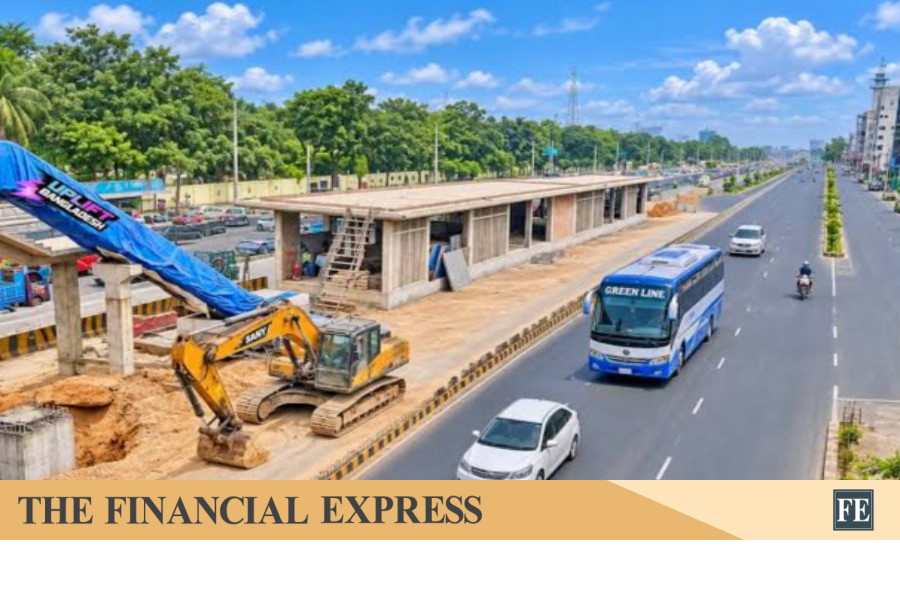
The government has decided to scrap the country’s first bus rapid transit project on the Gazipur–airport corridor, demolishing all its infrastructure except two overpasses and converting the corridor into a general highway.

It has also decided to dissolve Dhaka Bus Rapid Transit PLC – a state-owned company responsible for implementing and managing the BRT project – and bring its responsibilities under the Road Transport and Highways Division of the Ministry of Road Transport and Bridges.

The cabinet took the decisions at its meeting on Sunday, but they were not disclosed at the subsequent press briefing.

The cabinet also directed the authorities concerned to take necessary action in this regard on an urgent basis. They are to send a progress report on the implementation to the Road Transport and Highways Division within 15 days and by the third of every month thereafter until the work is completed.

The Road Transport and Highways Division issued an official letter, signed by division Deputy Secretary Taslima Ahmed Poly, on Monday outlining the future course of action for the project. A copy of the letter was obtained by New Age.

Both Taslima Ahmed Poly and the Dhaka BRT PLC Managing Director Muhammad Nurul Amin Khan confirmed the decisions to New Age on Monday night.

Launched 14 years ago, the Tk 4,268.32 crore project had completed 97 per cent of its infrastructure work, spending Tk 2,810 crore, by its December 2024 deadline. Overall physical progress stood at 77.48 per cent. The deadline has not been extended since.

The dedicated BRT lanes on the busy Dhaka-Mymensingh Highway are now open to all vehicles. The BRT service itself, the main feature of the corridor, has yet to be launched after two failed attempts to procure buses.

Four options proposed by experts had recently been under consideration: completing the BRT, franchising routes, turning the corridor into an expressway, or demolishing the BRT infrastructure and converting it into a highway, which would effectively mean scrapping the project.

According to the letter, the division’s summary proposal on the future of the project was reviewed at the cabinet meeting.

It said that, following an overall review, it was appropriate to convert the corridor into a general highway with three lanes in each direction by removing the BRT stations, lane dividers and other structures. It added that the two two-lane overpasses could be widened to four lanes.

The letter also said the project would have to be closed after the existing legal complications were resolved through discussions with the development partners concerned.

‘In addition, it is appropriate to close Dhaka BRT PLC and bring the related activities under the purview of the Road Transport and Highways Division,’ it said.

The cabinet also decided that the division would take further action in line with its discussions.​
 

BRT project scrapped to avoid additional Tk 6,000cr cost: govt

Shahin Akhter . Dhaka

1792630895950.webp

Habibur Rashid. | BSS file photo.

State Minister for Road Transport and Highways Division Habibur Rashid said the government had decided to scrap the country’s first bus rapid transit project on the Gazipur-Airport corridor, as completing it would require an additional Tk 6,000 crore.

He told New Age that the government was not removing the entire project.

‘What is actually being done is stepping back from the dedicated BRT bus lane concept because multiple operational issues and risks were identified at this location,’ he said, adding that the corridor would be converted into a six-lane highway with a central divider.

Chief engineer of Roads and Highways Department under the road transport and bridges ministry Md Moniruzzaman said it was unfortunate that public money was spent because of faulty initial planning.

‘But we are removing them to lay new pavement and central dividers so traffic can flow smoothly without bottlenecks,’ he added.

Launched 14 years ago, the Tk 4,268.32 crore project had completed 97 per cent of its infrastructure work, with Tk 2,810 crore spent.

The cabinet decided at its meeting on Sunday to scrap the project, demolish some major parts of its infrastructure and turn the corridor into a general highway.

It also decided to dissolve Dhaka Bus Rapid Transit PLC, the state-owned company responsible for implementing and managing the project, and bring its responsibilities under the RHD.

The cabinet, however, did not disclose the decisions at the subsequent press briefing.

The RTHD issued an official letter on Monday outlining the RHD’s course of action.

Habibur Rashid said the project’s eight flyovers, two overpasses, drainage systems and footbridges would remain in use, while the central counters and bus stops in the middle of the road would be removed.

‘The government is simply moving away from operating dedicated lanes because it is unwilling to invest thousands of crores of taka anew,’ he.

He said removing the bus stops and installing central dividers would cost at most Tk 80 crore to Tk 85 crore, while completing the original project would require thousands of crores of taka in new investment.

RHD Chief Engineer Md Moniruzzaman, however, put the cost of demolition at an estimated Tk 25 crore to Tk 30 crore and new pavement works at Tk 20 crore to Tk 25 crore.

He said the scrap materials could be sold for around Tk 7 crore, and all work would be done through tendering where cost would vary.

Moniruzzaman said building the 20 bus stations under the project, which remained incomplete, had cost around Tk 80 crore to Tk 100 crore.

Professional and civil society organisations on Tuesday protested the decision to scrap the project, urging the government to reverse it and complete the project.​
 

Lesson from Dhaka-Gazipur BRT fiasco


1792797130071.webp


The decision to abandon the Dhaka Airport-Gazipur Bus Rapid Transit (BRT) project, 14 years after it was undertaken, is an example of how public money can be wasted through flawed development planning. The cabinet at its meeting on October 18, with Prime Minister Tarique Rahman in the chair, reportedly decided to convert the 20-kilometre corridor into an ordinary six-lane highway. The decision followed a technical review by experts from Bangladesh University of Engineering and Technology (BUET), who identified critical faults in the BRT's design and questioned its operational viability. Notably, the project originally approved in 2012 at an estimated cost of Tk20.38 billion, saw its cost more than doubled to Tk42.86 billion following repeated revisions. And, after spending over Tk28 billion, those in charge could complete 97 per cent of the civil works without a single BRT bus beginning operation. One wonders what purpose such massive spending has served other than making life miserable for the thousands of daily commuters.

The project's fate, however, cannot be explained away merely as an engineering blunder. As reports go, inadequate feasibility studies, faulty design, poor coordination among implementing agencies and questionable procurement decisions continued to plague the work from the beginning. Worse yet, construction proceeded without even ensuring the minimum safety of people travelling along this important national highway. In one horrific accident at Uttara, a girder falling from a crane crushed a car, killing five people. But those behind such tragedies were never made accountable. The project's repeated delays and cost escalations under the previous Sheikh Hasina-led Awami League regime speak volumes about the culture of impunity and corruption of that period. The extent of plundering project resources by implementing officials, contractors and their political patrons during that period would require an independent investigation rather than being left to speculation.

Against this backdrop, the BUET team's recommendation to stop spending more money on a defective BRT system makes economic sense. For demolishing all the structures and building a new highway would require yet more billions of taka from an already hard-pressed exchequer. In that case, retaining the usable parts of the existing infrastructure, removing BRT stations and lane dividers and upgrading the two-lane overpasses to four lanes may be the more pragmatic option. Accordingly, Dhaka Bus Rapid Transit PLC is to be closed and the corridor handed to the Roads and Highways Division. However, one cannot claim that the decision has satisfied every concerned quarter. Some professional and academic bodies, however, have protested against scrapping the BRT project arguing that it could still be made operational with a relatively modest additional investment. Their concern is that opening dedicated lanes to ordinary traffic might eventually worsen congestion and pollution.

The disagreement, seemingly, is not just about saving a failed project or building a wider road. It rather concerns the future of public transport for the industrial city of Gazipur and the many low- and fixed-income commuters who cannot afford private cars. So, before proceeding with the conversion, the government might well make public the BUET review and a comparative assessment of the alternatives. In a similar vein, the question of developing a commuter rail service between Gazipur and central Dhaka deserves serious consideration. However, no technical solution can compensate for absence of accountability in handling public resources. The departments responsible for approving, designing and executing the BRT owe the nation an explanation why such serious flaws were allowed to dog the project for more than a decade. Any corruption, including political patronage, should invite legal action and recovery of misappropriated funds. The government must ensure that the new highway does not become another monument to the country's notoriously wasteful project implementation culture.​
 

Cancellation of BRT project needs scrutiny

The government must weigh all options and ensure accountability


1792800788641.webp

VISUAL: STAR

After 14 years of construction and spending Tk 2,810 crore, the government has decided to scrap the country’s first Bus Rapid Transit (BRT) project. It has planned to convert the Gazipur-Airport corridor into a conventional six-lane road instead, which appears to offer a way out of this prolonged failure. While an expert team of Bangladesh University of Engineering and Technology (Buet) suggested abandoning the BRT project, many believe that dismantling infrastructure that is largely complete could bring further costs and disruption. Before proceeding, the government must carefully assess whether cancellation is truly in the public interest.

Approved in November 2012, the 20.5 km project was initially scheduled for completion by December 2016 at a cost of Tk 2,038 crore. Repeated delays and three revisions increased the estimated cost to Tk 4,268 crore, while a proposed fourth revision would have raised it to Tk 6,598 crore and extended the deadline to 2029. The proposal was rejected by the Executive Committee of the National Economic Council in July 2025, which instead ordered an investigation into the project’s design and feasibility study. By December 2024, around 97 percent of the infrastructure work had been completed, although overall physical progress stood at 77.48 percent. But the dedicated buses were never procured despite two attempts, and the service never began.

In meantime, commuters suffered for more than a decade as construction along the busy Dhaka-Mymensingh Highway aggravated traffic congestion and disrupted journeys between Dhaka, Gazipur and other parts of the country. At least six people have died in accidents at the construction site during this time, while structures intended to facilitate the BRT service have remained incomplete or unusable. The project meant to improve mobility instead caused years of hardship without delivering its promised benefits.

The Buet team has identified design flaws, inadequate technical assessments, poor coordination among implementing agencies, and a lack of accountability. It recommended abandoning the BRT service and adapting the existing infrastructure for general traffic. Experts have also suggested commuter rail services between Gazipur and Dhaka. However, the Bangladesh Institute of Planners (BIP), the Institute for Planning and Development (IPD) and Gazipur residents oppose the cancellation. BIP argues that congestion, pedestrian safety and bus operations could be addressed through better traffic management and appropriate infrastructure, while demolition, road reconstruction and traffic management could add substantially to public expenditure and prolong commuters’ suffering. It has cited an estimate of Tk 45 crore for demolition, cautioning that the final cost could be considerably higher. Gazipur residents have also argued that the service could be launched within three to four months with additional investment, including the procurement of 187 buses. These concerns and arguments deserve serious consideration.

Under the circumstances, the government should conduct a transparent, independent cost-benefit assessment comparing the available options: completing the BRT system, modifying it to address operational and safety concerns, or converting the corridor into a conventional highway. Any decision must be consistent with long-term transport planning and prioritise affordable, reliable mass transit for the public. At the same time, the government must hold those responsible for the failure of such an important and expensive project accountable.​
 

Contracts for four MRT Line-1, Line-5 packages signed


1793143409948.webp


Construction contracts for four packages under the MRT Line-1 and MRT Line-5 (Northern Route) projects were signed on Tuesday to accelerate the expansion of Dhaka's metro rail network.

The Dhaka Mass Transit Company Limited (DMTCL) signed the agreements with the selected contractors at a ceremony held in the conference room of the MRT Line-6 depot in Diabari, Uttara.

The projects are being implemented with joint financing from the Government of Bangladesh and the Japan International Cooperation Agency (JICA).

Secretary of the Road Transport and Highways Division Dr Mohammad Ziaul Haque attended the ceremony as the chief guest.

Speaking on the occasion, Dr Ziaul Haque said easing traffic congestion and reducing travel time in the capital were among the government's major priorities.

He said the expansion of the metro rail network was aimed at developing a modern, safe and environment-friendly public transport system.

One of the contracts covers depot civil and building works under MRT Line-1, involving the construction of 49 modern facilities, including a workshop, shed and Operations Management Centre. The contract was awarded to SINOHYDRO-SEBCL JV.

Another agreement, signed with CREC-MIL-MBEC JV, covers the construction of a 5.007-kilometre viaduct and three elevated stations at Joar Sahara, Boalia and Mastul under Package 7. The work also includes a transition point between the underground and elevated sections near the Balu River.

The third contract, awarded to CPC-HANIL JV, covers civil and building works at the MRT Line-5 (Northern Route) depot. The facilities will include administrative buildings housing the Operations Control Centre (OCC) and Depot Control Centre (DCC), a stabling yard, warehouse and workshop shed.

The fourth agreement, signed with CREC-MIL-MBEC JV, involves the construction of 6.50 kilometres of elevated railway along the Hemayetpur-Amin Bazar and Notun Bazar-Bhatara sections. The package also includes five elevated stations at Hemayetpur, Baliarpur, Bilamalia, Amin Bazar and Bhatara.

The implementation of the four packages is expected to advance the development of Dhaka's mass transit infrastructure and improve public transport connectivity in the capital.

DMTCL Managing Director Md Shauogatul Alam delivered the welcome address, while Planning Commission Member Kabir Ahmed attended the ceremony as a special guest.

Representatives of the Japanese Embassy, JICA, project officials, consultants and contracting companies were also present at the event.​
 

Unsurprising BRT fiasco


1793402447014.webp

Illustrative image


The government's decision to scrap the country's first Bus Rapid Transit (BRT) project has surprised many. After 14 years of suffering for millions and spending around Tk 30 billion, abandonment of the costly project reflects a gross flaw in the country's development process. The government has also decided to convert the 20km corridor into a six-lane highway. Initiated in 2012 at a preliminary cost of Tk 20.40 billion, construction of the Dhaka-Gazipur BRT corridor, spanning from Hazrat Shahjalal International Airport to Shibbari in Gazipur, remains incomplete. Fifteen kilometres of the corridor is at ground level, while the rest is elevated.

The basic idea behind introducing the BRT was to provide dedicated bus service on the route. From the very beginning, a few questions surfaced about the feasibility of the large infrastructure. But the Hasina-led government ignored those. Instead, it even raised valid concern about the project as an anti-development attitude.

Seven years ago this scribe in this column had categorically noted: "The decision to introduce Bus Rapid Transit (BRT) system in Dhaka is one of the wrong steps to streamline the chaotic public transport in the capital city. " (BRT unlikely to deliver the optimal, P5, FE, April 27, 2019) In the end note, the scribe also hinted that the fate of BRT may be similar to Delhi BRT. The Indian capital city launched its first and only BRT in 2008 and dismantled it in 2016 because of poor planning.

The argument was clear: the concept of BRT was not properly understood and other countries' experiences were not duly reviewed. Because BRT requires a dedicated corridor within existing roads, it reduces space for other vehicles. Moreover, Dhaka-bound commuters from Gazipur have to disembark at the airport station and find another public transport to reach their final destinations.

Now, it is no longer a matter of pleasure that the prediction made seven years ago has proved real. Instead, it is sad to see that predictable misuse and misappropriation of public resources could not be curbed initially. Of course, vested interests have extracted benefits from the now-abandoned project.

Demolishing all infrastructures except two overpasses and converting the corridor into a highway will require a significant amount of money. The question is who will bear the expense? Before we get a reply, it is important to know about the person/s responsible for this costly and flawed project. There is no doubt that the ousted regime of Hasina can be held responsible for it, as BRT was part of the schemes designed to plunder resources by the beneficiaries of her autocratic regime. But putting wholesale blame on her will not expose the real actors.

A mega infrastructure project proposal requires going through a series of stages before the final approval. Several agencies and individuals are involved in these stages to design, scrutinise, re-examine, revise and finalise a project. All these are also documented. So, it is not difficult to identify the role of the different agencies and responsible persons. For greater transparency in public expenditure, it is necessary to disclose the names and responsibilities of the BRT project team. Once revealed, they should also be asked to explain their positions and the reasons behind their actions. The whole process should be an exercise in accountability, not a way to penalise anyone. If the current government can take this bold move, it will set an example and serve as an alarm bell for others.

The government also needs to disclose the total BRT spending in detail publicly. Citizens and taxpayers have every right to know the project's financing sources. The Asian Development Bank (ADB), the French Development Agency (AFD), and the Global Environment Facility (GEF) are the co-financiers of the project. The government should disclose the exact loan amounts received from the agencies and the detailed repayment schedule so that people can understand the financial burden without ambiguity. Finally, demolishing the entire BRT corridor requires planned spending with proper monitoring. Otherwise, it might end up in another fiasco.​
 

‘Bureaucratic obstinacy is the root cause of the BRT failure’

Monorom Polok

1793405587837.webp


Dr Md Shamsul Hoque, professor of civil engineering at the Bangladesh University of Engineering and Technology (Buet), talks to Monorom Polok of The Daily Star about the failure of Dhaka’s first dedicated Bus Rapid Transit (BRT) project, the flaws in its planning and design, and the lessons to be learned from this experience to design better public transport.

The cabinet has recently scrapped the country’s first dedicated Bus Rapid Transit (BRT) project after 14 years and with Tk 2,810 crore already spent. We have since witnessed various reactions from experts and even street protests in Gazipur. What is your view?

I must say the BNP government, and the interim government previously, made the right decision in this regard, much like a surgeon performing a necessary amputation to prevent greater harm. I understand the public’s emotional attachment. People endured prolonged disruption believing the project would provide them with a direct route from Gazipur to Motijheel. If Gazipur residents think BRT offered them a dream, they saw only half the picture. The question that should be asked is: what would they do if they get dropped off at Dhaka airport when their destination is Motijheel?

A BRT that stops short of the built-up city cannot sustain itself. The idea of getting off at the airport to hunt for another bus is impractical, especially when parallel intercity buses already offer curb-to-curb pickups and drop-offs along the highway. A local bus lets you board and get off wherever you like, but this system would have required you to walk to a distant station, climb a footbridge, queue, ride to the airport, climb another footbridge, and hunt for a second bus. By contrast, commuters can now simply stay on direct local buses. Even if completed, the BRT would never have fulfilled its original objective.

The only reason highway traffic moves today is that the BRT lane was opened to general traffic over the past year and a half. Squeezing long-haul and industrial freight into two lanes to reserve the middle one for a low-utility bus service is the very definition of congestion.

The government has reportedly opted to convert the Gazipur-Airport corridor into a six-lane road. Is this the most sensible option, given the infrastructure already built and the needs of commuters?

Yes. The cabinet resisted political pressure and made a strictly technical decision. A four-member Buet committee submitted an 86-page report confirming that the project lacked merit, worsened congestion, and conflicted with the industrial zoning in Dhaka’s Detailed Area Plan. The contractor was also facing insolvency and litigation; appointing a replacement would have meant two more years of legal delays. The Roads and Highways Department (RHD) has proposed an expressway with flanking service roads.

The narrative that Tk 2,810 crore was “wasted” is factually incorrect. The actual sunk cost is about 4 percent of the total, or roughly Tk 99–100 crore spent on the stations. Demolishing the stations will cost Tk 45 crore, while installing barriers will cost Tk 27 crore. Salvaging the steel, however, will recover Tk 7 crore. The other 96 percent of the investment—including the 10-lane Tongi Bridge, flyovers, drainage, footpaths, and service roads—is in public use. Converting the corridor into an expressway with flanking service roads would ensure a consistent geometric configuration and save Tk 2,000 crore in future waste.

Some media outlets claimed that 97 percent of the BRT infrastructure work was complete, which is incorrect. Project authorities had earlier sought a revision that would have extended the deadline to 2029 and raised the overall budget to Tk 6,598 crore, only to deliver a fragmented bus service that few people would have possibly used.

The real high-capacity solution for Gazipur is already built: the third and fourth railway tracks, conceived to serve commuter trains between Gazipur and Narayanganj. It is congestion-free and free of level crossings, running straight into Motijheel and Kamalapur.

What were the fundamental planning and design flaws that led to the BRT project’s failure? How could they remain unresolved for so long?

The project began with good intentions. The 2004 Strategic Transport Plan proposed three BRT lines, with BRT-3 running from Motijheel to the airport. The World Bank showed interest, and the ADB then proposed extending a line from Gazipur, but its feasibility hinged entirely on that anchor carrying passengers all the way to Motijheel. But then, the World Bank section was scrapped around 2018-19, and the project’s whole purpose vanished.

The ADB advised converting the corridor into a metro and offered to finance it. It had initiated a logical project designed to integrate with an anchor corridor, but once that anchor disappeared, the donor rightly saw that a fragmented BRT had no utility. Non-technical bureaucrats at the ministry refused to accept this and ordered the project to proceed unchanged. This obstinacy is the root cause of every failure since.

The second flaw was a rushed desktop feasibility study. It skipped drainage, footpaths, and land for stations. To make the proposal look lucrative, the consultants bypassed these expensive engineering challenges on paper, claiming the project could be completed in 1.5 years. Fourteen years later, it remains incomplete. Independent investigations by my team and two separate RHD committees revealed monumental blunders. Rather than hiring independent international specialists, the donor relied on in-house consultants who rushed through a desktop design. It was not a genuine BRT project but an unplanned corridor redevelopment, and it ignored the fact that the N3 is a heavy industrial artery. A six-lane highway cannot accommodate a 10-to-12-lane BRT footprint. The RHD, which builds highways but has never operated public transport, then took on the mega-project, succumbing to the allure of managing such a high-profile initiative. When buses could not cross truck routes at grade, eight flyovers were bolted on. These additions inflated the budget, extended the timelines, and turned the BRT into an ad hoc civil infrastructure initiative that abandoned its original transit mission.

How did it last so long? From the departments to the ministry, the Planning Commission, and IMED, there was not a single transit professional who understood BRT. The RHD lacked transport planners, the ministry blindly pushed files forwarded by departments, and the Planning Commission operated without qualified planners. Non-technical officials approved massive budgets without evaluating whether the project was still fit for purpose. Working with the Dhaka Bus Rapid Transit PLC, the operating company, was one of the most frustrating experiences of my professional life. It functioned largely as a rehabilitation centre for bureaucrats, who cared about bus procurement schedules, not technical modelling. Seeing expert advice ignored, Buet and four professors from CEPT University in Ahmedabad withdrew around late 2022.

What lessons should the government draw from this failure when planning and implementing other major transport infrastructure projects?

Test technical feasibility before building, and entrust the work to people who actually understand transit: independent specialists rather than rushed in-house consultants, and agencies with real operating experience. And listen when a donor tells you that the premise of a project has collapsed.

A BRT should ideally take nine months to two years to build at modest cost, but ours set records for cost overruns and delays. After its mayor visited Brazil’s Curitiba, Jakarta built around 14 BRT lines without foreign consultants or external borrowing, funding dividers and stations domestically. We are taking on foreign debt to build ours. Experienced transit leaders in Malaysia or Indonesia would have conducted a proper feasibility study before undertaking a project.

Where a corridor is constrained, Jakarta, Kuala Lumpur, and Chinese cities build low-cost elevated viaducts for BRT, which is what ITDP guidelines would have recommended here. After all, on our industrial corridor, about 88 percent of garment workers must cross the highway on foot. An at-grade barrier creates a social divide, and workers will breach it out of sheer necessity.

Over the past two decades or so, transport infrastructure development has often prioritised major roads and projects that primarily benefit higher-income groups, rather than affordable and accessible public transport. What should the government’s priorities be to ensure that the urban poor, too, have access to reliable and affordable transport?

BRT’s original promise was exactly this: a sustainable, reliable system accessible even to low-income commuters, at a fraction of a metro’s cost. Curitiba functioned without a metro and built multiple BRT lines for the cost of a single one. Metros are fast, but they require enormous capital investment. Reliability is what daily riders value most. Even at 30 km/h, arriving and departing on time is preferable to most commuters.

Our priorities should follow that logic: low-cost, dependable systems that connect places people actually need to reach, designed around how low-income workers really travel, including on foot. For Gazipur, the place to start is the rail infrastructure already built. Connecting commuters to it is the most reliable, rapid, and sustainable strategy available.​
 

India’s Tata Projects gets Dhaka metro contract

Staff Correspondent . Dhaka


1794529206919.webp


India’s Tata Projects Ltd has secured a contract to construct a 5.182-kilometre underground section of the country’s first underground metro rail, MRT Line-1, in a joint venture with Japanese companies Nishimatsu Construction and Toda Corporation.

The contract, package CP-06, was awarded to the Nishimatsu-TPL-Toda joint venture by Dhaka Mass Transit Company Limited, Tata Projects said in a statement on Thursday.

DMTCL (Line-1) Project Director Md Sarwar Uddin Khan also confirmed the contract award to New Age.

The package covers civil works, architectural finishes and mechanical, electrical and plumbing works on the underground section from the northern end of Nadda Underground Station to Airport Station.

It also includes three underground stations at Khilkhet, Airport Terminal-3 and the airport, as well as a shaft at the northern endpoint.

Rajiv Menon, president and chief growth and strategy officer of Tata Projects, said the contract marked a significant milestone in the company’s international growth.

‘It demonstrates Tata Projects’ ability to work seamlessly within global consortium structures and deliver large-scale mass transit infrastructure to international standards,’ he said.

The project is being jointly financed by the Bangladesh government and the Japan International Cooperation Agency.

On November 5, DMTCL signed contracts with Japanese and Indian companies for four packages of MRT Line-1, which will run along the Airport-Kamalapur corridor.

The other packages cover construction of a 4.447-kilometre underground section from Rampura to Notun Bazar, installation of tracks and electrical systems, and signalling and telecommunication systems, including platform screen doors.

The government expects the project to improve connectivity, reduce travel time and ease traffic congestion in the capital.​
 
Back
Top