Donate ☕
201 Military Defense Forums
[🇮🇳] - India-USA friendship | Page 5 | PKDefense
Home Login Forums Wars Movies Watch Videos
Serious discussion on defense, geopolitics, and global security.

[🇮🇳] India-USA friendship

Reply (Scroll)
Press space to scroll through posts
G   Indian Defense
[🇮🇳] India-USA friendship
39
896
More threads by Saif

Trump offers top-end jets, trade deal to India in Modi bromance

1739577944230.webp

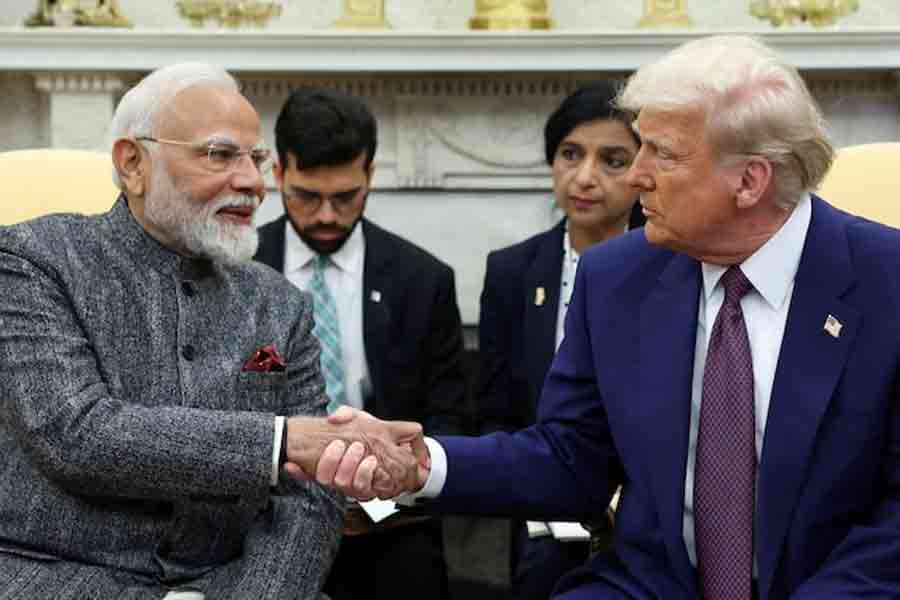
US President Donald Trump shakes hands with Indian Prime Minister Narendra Modi during a joint press conference in the East Room of the White House in Washington, DC, on February 13, 2025. Photo: AFP

US President Donald Trump on Thursday offered to sell state-of-the-art fighter jets to India as he and Prime Minister Narendra Modi vowed to ramp up trade, rekindling a bond that defies the new US administration's punitive approach to much of the world.

Modi, only the fourth world leader to visit the White House since Trump's return, described the fellow nationalist as a friend and told him he was adopting a take on his "Make America Great Again" slogan.

Trump said that he found a "special bond" with Modi and India and, in an uncharacteristic if ironic show of humility, complimented Modi as being a "much tougher negotiator" than he is.

Successive US administrations have seen India as a key partner with like-minded interests in the face of a rising China, and Trump announced that the new administration was ready to sell one of the top US military prizes -- F-35s.

"Starting this year, we'll be increasing military sales to India by many billions of dollars," Trump told a joint news conference with Modi.

"We're also paving the way to ultimately provide India with the F-35 stealth fighters," Trump said.

India would join an elite club of countries that include NATO allies, Israel and Japan that would be allowed to buy the F-35, which can operate without detection at supersonic speeds.

Continuing a push from his predecessor Joe Biden, Trump said that the two countries also planned investment in ports, railways and underseas cable to "build one of the greatest trade routes in all of history," running from India to Israel to Europe and beyond.

Dangling tariffs

Trump has dueled with both friends and foes on economic issues. Hours before meeting, Trump announced reciprocal tariffs on all countries, including India.

Speaking next to Modi, Trump called India's "unfair, very strong tariffs" a "big problem" but said that the two countries would hold negotiations to close a trade deficit in India's favor.

Modi said that the world's largest and fifth-largest countries would work on a "mutually beneficial trade agreement" to be sealed "very soon," with a focus on oil and gas.

Joining Trump's meeting with Modi was SpaceX and Tesla tycoon Elon Musk, who has launched an aggressive effort as Trump's right-hand man to overhaul the US bureaucracy.

Modi also met one-on-one with Musk, raising questions over whether the world's richest man was meeting the Indian leader in an official or business capacity.

The Indian premier posted pictures of himself shaking hands with the beaming Musk, with several children on Musk's side of the room, and Indian officials on the other.

Modi, a prolific user of Musk-owned social media platform X, said later that he has known Musk since before he became prime minister.

Courting Trump

Modi offered quick tariff concessions ahead of his visit, with New Delhi slashing duties on high-end motorcycles -- a boost to Harley-Davidson, the iconic US manufacturer whose struggles in India have irked Trump.

India has already accepted a US military flight carrying 100 shackled migrants last week as part of Trump's immigration crackdown. The treatment drew protests from India's opposition which accused Modi of sacrificing the dignity of citizens to please Trump.

Modi at the news conference vowed to keep cooperating, saying that undocumented Indians are being lured by human traffickers.

"Any verified Indian who is in the US illegally, we are fully prepared to take them back to India," Modi said.

Trump in turn announced the United States would extradite to India a suspect in the bloody 2008 siege of Mumbai, whom he called "one of the very evil people in the world."

Tahawwur Hussain Rana, a Canadian citizen of Pakistani origin who was based in Chicago, was convicted in 2011 and later sentenced to 13 years in prison.

His extradition was expected after he lost an appeal to the US Supreme Court.

Modi and Trump share much in common, with both campaigning on promises to promote majority communities over minorities and both doggedly quashing dissent.

In 2020, Modi delighted Trump by inviting him before a cheering crowd of more than 100,000 people to inaugurate the world's largest cricket stadium in his home state of Gujarat.

Trump could visit India later this year for a summit of the Quad -- a four-way grouping of Australia, India, Japan and the United States.​
 
Analyze

Analyze Post

Add your ideas here:
Highlight Cite Fact Check Respond
US was told clearly, Dairy and Agriculture sector is not negotiable. US feeds its cows with meat mixed with grass to increase weight. We can not consume that milk. Their genetically modified food is not acceptable to India. India will not even discuss that. For the rest fo the things, negotiation can be made if US is ready. Go to hell otherwise. India does not want any trade pact with any nation at the conditions of other nation. If trade pact is to be done, it will happen at our terms and conditions.
 
Analyze

Analyze Post

Add your ideas here:
Highlight Cite Fact Check Respond
  • Yogi (+2)
Reactions: Sharma Ji

Trump order imposes additional 25 per cent tariff on goods from India

REUTERS
Published :
Aug 06, 2025 22:38
Updated :
Aug 06, 2025 22:38

1754526938058.webp


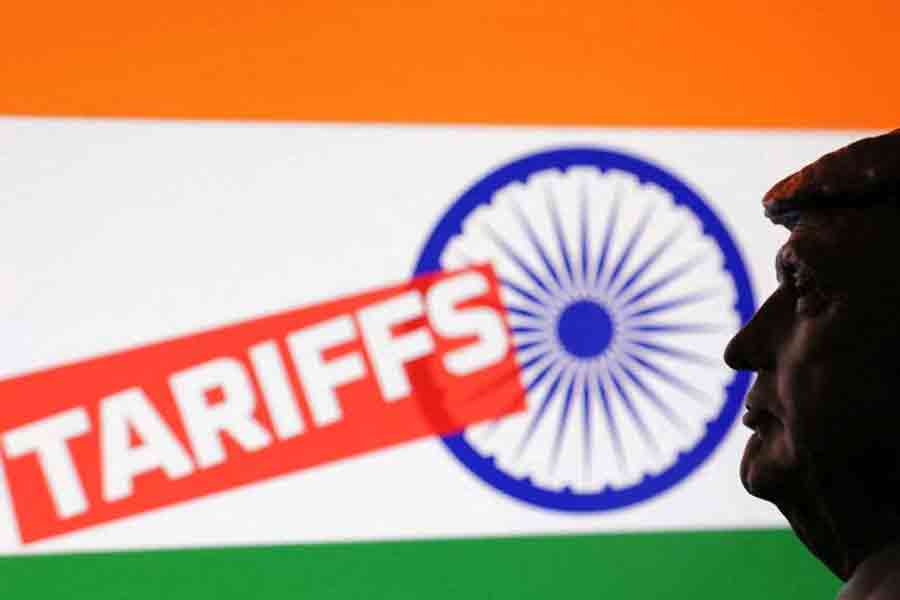
A 3D-printed miniature model of US President Donald Trump, the Indian flag and the word "Tariffs" are seen in this illustration taken Jul 23, 2025. Photo : REUTERS/Dado Ruvic

US President Donald Trump on Wednesday issued an executive order imposing an additional 25 per cent tariff on Indian goods citing New Delhi's continued imports of Russian oil, sharply escalating tensions between the two countries after trade talks collapsed.

The new measure raises tariffs on some Indian goods to as high as 50 per cent — among the steepest faced by any US trading partner.

The move is expected to hit key Indian export sectors including textiles, footwear, and gems and jewellery and marks the most serious downturn in US-India relations since Trump returned to office in January.

It also comes as Indian Prime Minister Narendra Modi prepares for his first visit to China in over seven years, suggesting a potential realignment in alliances as ties with Washington fray.

"India will take all actions necessary to protect its national interests," India's external affairs ministry said in a statement, saying it was "extremely unfortunate that the US should choose to impose additional tariffs on India for actions that several other countries are also taking in their own national interest."

It said India's imports were based on market factors and aimed at energy security for its population of 1.4 billion.

Trade analysts warned the tariffs could severely disrupt Indian exports. The additional 25 percent tariff comes into effect 21 days after Aug 7, the order said.

“With such obnoxious tariff rates, trade between the two nations would be practically dead,” said Madhavi Arora, economist at Emkay Global.

Indian officials have privately acknowledged growing pressure to return to the negotiating table. A potential compromise could involve a phased reduction in Russian oil imports and diversification of energy sources.

A senior Indian official said New Delhi was blindsided by the sudden imposition of the new levy and the steep rate, as both countries continue to discuss trade issues.

Trump’s decision follows five rounds of inconclusive trade negotiations, which stalled over US demands for greater access to Indian agriculture and dairy markets.

India’s refusal to curb Russian oil purchases — which surged to a record $52 billion last year — ultimately triggered the tariff escalation.

"Exports to the US become unviable at this rate. Clearly, risks to growth and exports are rising, and the rupee may face renewed pressure," said Garima Kapoor, economist at Elara Securities. "Calls for fiscal support are likely to intensify."

Trump's executive order does not mention China, which also buys Russian oil. A White House official had no immediate comment on whether an additional order covering those purchases would be forthcoming.

US Treasury Secretary Scott Bessent last week said he warned Chinese officials that continued purchases of sanctioned Russian oil would lead to big tariffs due to legislation in Congress, but was told that Beijing would protect its energy sovereignty.

The US and China have been engaged in discussions about trade and tariffs, with an eye to extending a 90-day tariff truce that is due to expire on Aug 12, when their bilateral tariffs shoot back up to triple-digit figures.​
 
Analyze

Analyze Post

Add your ideas here:
Highlight Cite Fact Check Respond

India-US spat over trade and oil threatens wider fallout

1754531823020.webp

Reuters file photo

Key takeaways-

Trump's threats over Russian oil could set back decades of India-U.S. diplomatic progress​
  • Indian opposition and public urge Modi to resist what they see as Trump's bullying​
  • Analysts say ties are at their lowest since U.S. sanctions after India's 1998 nuclear tests
  • India expected to step up interactions with Russia and China, say analysts, with some efforts already underway​

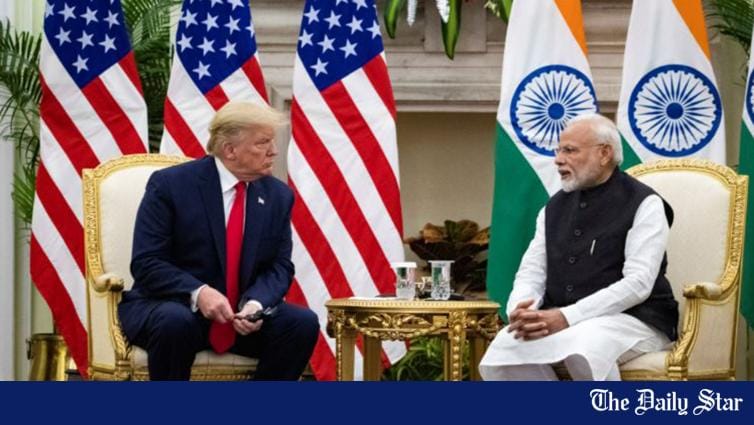
US President Donald Trump's tirade against India over trade and Russian oil purchases threatens to undo two decades of diplomatic progress, analysts and officials say, and could derail other areas of cooperation as domestic political pressures drive both sides to harden their stances.

India's opposition parties and the general public have urged Prime Minister Narendra Modi to stand up to what they call bullying by Trump, who on Wednesday signed an executive order subjecting Indian imports to an additional 25% in duties on top of an existing 25% tariff, due to its big purchases of Russian oil.

While India has emerged in recent years as a key partner for Washington in its strategic rivalry with China, its large US trade surplus and close relations with Russia - which Trump is seeking to pressure into agreeing to a peace agreement with Ukraine - have made it a prime target in the Republican president's global tariff offensive.

Trump's taunt that India could buy oil from arch enemy Pakistan has also not gone down well in New Delhi, said two Indian government sources. India has also rejected repeated claims by Trump that he used trade as a lever to end a recent military conflict between India and Pakistan.

In an unusually sharp statement this week, India accused the US of double standards in singling it out for Russian oil imports while continuing to buy Russian uranium hexafluoride, palladium and fertiliser. On Wednesday, it called the tariffs "unfair, unjustified and unreasonable," vowing to "take all actions necessary to protect its national interests."

But New Delhi knows that any further escalation will hurt it in matters beyond trade, said the sources. Unlike China, India does not have leverage like supplies of rare earths to force Trump's hand to improve the terms of any trade deal, they said.

In recent years, successive US administrations, including Trump's first, carefully cultivated relations with India with an eye on it as a vital partner in long-term efforts to counter the growing might of China.

But analysts say Trump's recent moves have plunged the relationship back to possibly its worst phase since the US imposed sanctions on India for nuclear tests in 1998.

"India is now in a trap: because of Trump's pressure, Modi will reduce India's oil purchases from Russia, but he cannot publicly admit to doing so for fear of looking like he's surrendering to Trump's blackmail," said Ashley Tellis at Washington's Carnegie Endowment for International Peace.

"We could be heading into a needless crisis that unravels a quarter century of hard-won gains with India."

Indian state refiners have in recent days stopped buying Russian oil as discounts narrowed and pressure from Trump rose, Reuters has reported.

NEW CHALLENGES FOR RELATIONS

A more pressing challenge for India, analysts say, is the stark divergence between its priorities and Trump's political base on key issues such as work visas for tech professionals and offshoring of services. India has long been a major beneficiary of US work visa programs and the outsourcing of software and business services, a sore point for Americans who have lost jobs to cheaper workers in India.

Relations with India risk becoming a "football in American domestic politics," warned Evan Feigenbaum, a former senior State Department official under the Republican presidency of George W. Bush.

"Issues that directly touch India are among the most partisan and explosive in Washington, including immigration and deportation, H1B visas for tech workers, offshoring and overseas manufacturing by US companies, and technology sharing and co-innovation with foreigners," he wrote in a LinkedIn post.

Since a 2008 deal to cooperate on civilian nuclear technology, the two countries have deepened intelligence sharing and defence cooperation and expanded interactions with Australia and Japan through the Quad grouping aimed at containing China's dominance in the Indo-Pacific.

But fractures have appeared, despite Modi's rapport with Trump in his first term and then former President Joe Biden.

Images in February of Indians deported by the US on military planes, their hands and legs shackled, horrified the country just days before Modi went to see Trump seeking to stave off high tariffs.

The relationship was also seriously tested in late 2023 when the US said it had foiled a plot with Indian links to kill a Sikh separatist leader on US soil. New Delhi has denied any official connection to the plot.

"The Modi regime's credibility in the US has gone down," said Sukh Deo Muni, a former Indian diplomat and a professor emeritus at New Delhi's Jawaharlal Nehru University.

"And maybe there are people who think that India or Modi had to be brought back on track, if not taught a lesson. And if that trend continues, I'm quite worried that the challenge is quite powerful and strong for India to navigate."

STRENGTHENING TIES WITH US RIVALS

One Indian government source said India needs to gradually repair ties with the US while engaging more with other nations that have faced the brunt of Trump tariffs and aid cuts, including the African Union and the BRICS bloc that includes Brazil, Russia, China and South Africa.

India is already making some moves with Russia and China.

Russian President Vladimir Putin is expected to visit New Delhi this year and on Tuesday, Russia said the two countries had discussed further strengthening defence cooperation "in the form of a particularly privileged strategic partnership."

India has also boosted engagement with China, a change after years of tensions following a deadly border clash in 2020. Modi is set to visit China soon for the first time since 2018.

"Russia will attempt to exploit the rift between the US and India by proposing the restoration of the Russia-India-China trilateral and new projects in defence," said analyst Aleksei Zakharov at the Observer Research Foundation in New Delhi.

"India will undoubtedly be mindful of structural factors such as sanctions against Russia and will seek to find a compromise with the Trump administration."​
 
Analyze

Analyze Post

Add your ideas here:
Highlight Cite Fact Check Respond

India pauses plans to buy US arms after Trump's tariffs

REUTERS
Published :
Aug 08, 2025 18:06
Updated :
Aug 08, 2025 18:06

1754701127466.webp

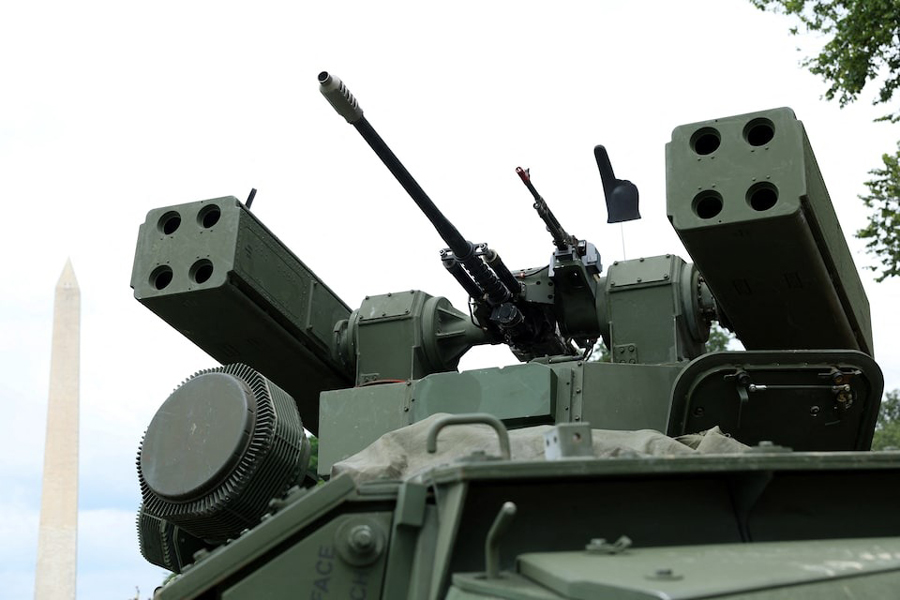
A view shows a Stryker armored vehicle with the Washington Monument in the background on the day of a military parade to commemorate the US Army's 250th Birthday in Washington, D.C. US, June 14, 2025. Photo : REUTERS/Kevin Mohatt

New Delhi has put on hold its plans to procure new US weapons and aircraft, according to three Indian officials familiar with the matter, in India's first concrete sign of discontent after tariffs imposed on its exports by President Donald Trump dragged ties to their lowest level in decades.

India had been planning to send Defence Minister Rajnath Singh to Washington in the coming weeks for an announcement on some of the purchases, but that trip has been cancelled, two of the people said.

Trump on Aug. 6 imposed an additional 25 per cent tariff on Indian goods as punishment for Delhi's purchases of Russian oil, which he said meant the country was funding Russia's invasion of Ukraine. That raised the total duty on Indian exports to 50% - among the highest of any US trading partner.

The president has a history of rapidly reversing himself on tariffs and India has said it remains actively engaged in discussions with Washington. One of the people said the defence purchases could go ahead once India had clarity on tariffs and the direction of bilateral ties, but "just not as soon as they were expected to."

Written instructions had not been given to pause the purchases, another official said, indicating that Delhi had the option to quickly reverse course, though there was "no forward movement at least for now."

India's defence ministry and the Pentagon did not respond to Reuters' questions. Delhi, which has forged a close partnership with America in recent years, has said it is being unfairly targeted and that Washington and its European allies continue to trade with Moscow when it is in their interest.

Reuters is reporting for the first time that discussions on India's purchases of Stryker combat vehicles made by General Dynamics Land Systems and Javelin anti-tank missiles developed by Raytheon and Lockheed Martin (LMT.N) have been paused due to the tariffs.

Trump and Indian Prime Minister Narendra Modi had in February announced plans to pursue procurement and joint production of those items.

Singh had also been planning to announce the purchase of six Boeing P8I reconnaissance aircraft and support systems for the Indian Navy during his now-cancelled trip, two of the people said. Talks over procuring the aircraft in a proposed $3.6 billion deal were at an advanced stage, according to the officials.

Boeing, Lockheed Martin and General Dynamics referred queries to the Indian and US governments. Raytheon did not return a request for comment.

RUSSIAN RELATIONS

India's deepening security relationship with the US, which is fuelled by their shared strategic rivalry with China, was heralded by many US analysts as one of the key areas of foreign-policy progress in the first Trump administration.

Delhi is the world's second-largest arms importer and Russia has traditionally been its top supplier. India has in recent years however, shifted to importing from Western powers like France, Israel and the US, according to the Stockholm International Peace Research Institute think-tank.

The shift in suppliers was driven partly by constraints on Russia's ability to export arms, which it is utilizing heavily in its invasion of Ukraine. Some Russian weapons have also performed poorly in the battlefield, according to Western analysts.

The broader US-India defence partnership, which includes intelligence sharing and joint military exercises, continues without hiccups, one of the Indian officials said.

India also remains open to scaling back on oil imports from Russia and is open to making deals elsewhere, including the US, if it can get similar prices, according to two other Indian sources.

Trump's threats and rising anti-US nationalism in India have "made it politically difficult for Modi to make the shift from Russia to the US," one of the people said. Nonetheless, discounts on the landing cost of Russian oil have shrunk to the lowest since 2022.

India's petroleum ministry did not immediately respond to a request for comment.

While the rupture in US-India ties was abrupt, there have been strains in the relationship. Delhi has repeatedly rebutted Trump's claim that the US brokered a ceasefire between India and Pakistan after four days of fighting between the nuclear-armed neighbours in May. Trump also hosted Pakistan's army chief at the White House in the weeks following the conflict.

In recent months, Moscow has been actively pitching Delhi on buying new defence technologies like its S-500 surface-to-air missile system, according to one of the Indian officials, as well as a Russian source familiar with the talks.

India currently does not see a need for new arms purchases from Moscow, two Indian officials said.

But Delhi is unlikely to wean itself off Russian weapons entirely as the decades-long partnership between the two powers means Indian military systems will continue to require Moscow's support, one of the officials said.

The Russian embassy in Delhi did not immediately respond to a request for comment.​
 
Analyze

Analyze Post

Add your ideas here:
Highlight Cite Fact Check Respond
Trump approves Russia sanctions bill with 500pc tariffs on India

ANI Washington, USA
Published: 08 Jan 2026, 13: 08

1767920375044.webp

US President Donald Trump and Indian Prime Minister Narendra Modi shake hands as they attend a joint press conference at the White House in Washington, D.C., US, on 13 February 2025 Reuters file photo

American Senator Lindsey Graham on Wednesday (local time) said that US President Donald Trump has given a green light to the bipartisan Russia Sanctions Bill which would give leverage against India, China, and Brazil to stop them from purchasing Russian oil and punish the countries "fueling Putin's war machine".

In a post on X he said that the move comes amid the backdrop of the ongoing peace negotiations for Ukraine and hinted that it would go for a bipartisan vote next week.

"After a very productive meeting today with President Trump on a variety of issues, he greenlit the bipartisan Russia sanctions bill that I have been working on for months with Senator Blumenthal and many others. This will be well-timed, as Ukraine is making concessions for peace and Putin is all talk, continuing to kill the innocent. This bill will allow President Trump to punish those countries who buy cheap Russian oil fueling Putin's war machine. This bill would give President Trump tremendous leverage against countries like China, India and Brazil to incentivise them to stop buying the cheap Russian oil that provides the financing for Putin's bloodbath against Ukraine. I look forward to a strong bipartisan vote, hopefully as early as next week."


As per the official website of US Congress, the bill titled "Sanctioning of Russia Act 2025" by Graham seeks to impose several provisions, which includes penalties on individuals and entities including an increase of the rate of duty on all goods and services imported from Russia into the United States to at least 500 per cent relative to the value of such goods and services.

On 7 January, Ukrainian president Volodymyr Zelenskyy met the members of the US delegation including Steve Witkoff and Jared Kushner, where both sides discussed upon a diplomatic approach towards ending the Russia-Ukraine conflict.

Earlier, US President Donald Trump had claimed that PM Modi was unhappy over high tariffs imposed on India for purchasing Russian oil.

At the House GOP Member Retreat, Trump suggested that although relations remain cordial, the tariff issue has created tension.

"I have a very good relationship with PM Modi, but he is not happy with me as India is paying high tariffs. But now they have reduced it very substantially, buying oil from Russia," Donald Trump said.

The tariffs, totalling 50 per cent, were imposed due to India's significant purchases of Russian oil, which the US sees as supporting Russia's economy amid the Ukraine conflict.

Trump's remarks came a day after he warned that Washington could further raise tariffs on Indian goods if New Delhi does not address US concerns over Russian oil imports.

"They wanted to make me happy, basically. Modi is a very good man; he is a good guy. He knew I was not happy, and it was important to make me happy," he said.

India has earlier rejected Trump's assertion that PM Narendra Modi had assured him New Delhi would stop purchasing Russian oil, clarifying that no such conversation or assurance had taken place.​
 
Analyze

Analyze Post

Add your ideas here:
Highlight Cite Fact Check Respond

Members Online

⤵︎

Latest Posts