Donate ☕
201 Military Defense Forums
[🇺🇸] - Greenland Annexation. | Page 3 | PKDefense
Home Login Forums Wars Movies Watch Videos
Serious discussion on defense, geopolitics, and global security.

[🇺🇸] Greenland Annexation.

Reply (Scroll)
Press space to scroll through posts
G   American Defense
[🇺🇸] Greenland Annexation.
13
148
More threads by Saif

Greenland says 'no more fantasies about annexation' after Trump remarks
Reuters Copenhagen
Published: 05 Jan 2026, 21: 11


1767661870235.webp

An aerial view shows a fjord in western Greenland, 16 September 2025.

Greenland’s leader declared “enough is enough,” and Denmark’s allies in Europe affirmed that the Arctic island’s future must be determined by its people, rebuffing renewed remarks by US President Donald Trump about acquiring the vast territory.

A US military operation to capture Venezuelan President Nicolas Maduro, and Trump’s intention to oversee governance of the oil-rich Latin American country, have rekindled concerns in Denmark that Greenland, an autonomous Danish territory, might face a similar scenario.

“Greenland and the Kingdom of Denmark must determine the future of Greenland and nobody else,” British Prime Minister Keir Starmer told reporters. Starmer has sought to stay on good terms with Trump and adopted a less publicly critical approach than most other European leaders.


Trump has repeatedly said he wants to take over Greenland, an ambition first voiced in 2019 during his first presidency. On Sunday, he told The Atlantic magazine in an interview: “We do need Greenland, absolutely. We need it for defence.”

Trump renews Greenland ambition

Speaking to reporters aboard Air Force One early on Monday, Trump said he would revisit the topic in a few weeks.

“Threats, pressure, and talk of annexation have no place between friends,” Greenland Prime Minister Jens-Frederik Nielsen said on Facebook late on Sunday. “Enough is enough. (...) No more fantasies about annexation.”

On 21 December, Trump appointed Louisiana Governor Jeff Landry as special envoy to Greenland. Landry has publicly expressed support for incorporating Greenland into the United States.

Greenland’s strategic location between Europe and North America makes it a critical site for the U.S. ballistic missile defence system. The island’s significant mineral resources also align with Washington’s ambition to reduce dependence on Chinese exports.

German Foreign Minister Johann Wadephul said Monday that Greenland belongs to Denmark and suggested NATO could discuss strengthening its protection if necessary.

France also expressed solidarity, saying Greenland belonged to the people of Greenland, while a European Commission spokesperson said that the EU will continue to uphold the principle of national sovereignty.

Support for Denmark and Greenland also came swiftly from all Nordic and Baltic leaders. Danish Prime Minister Mette Frederiksen said on Sunday that U.S. comments about needing to take over Greenland made “absolutely no sense”.​
 
Analyze

Analyze Post

Add your ideas here:
Highlight Cite Fact Check Respond

Trump announces Greenland 'framework', backing off force and tariffs

AFP Davos, Switzerland
Published: 22 Jan 2026, 09: 52

1769131503633.webp


US President Donald Trump looks on as he leaves the congress centre during the World Economic Forum (WEF) annual meeting in Davos on January 21, 2026. The World Economic Forum takes place in Davos from January 19 to 23 January, 2026 AFP

US President Donald Trump backed down Wednesday on threats to seize Greenland by force from ally Denmark, announcing a vague deal aimed at ensuring security of the Arctic territory.

Trump cast his retreat -- also lifting the promise of sanctions against European nations that spoke out against the threats to Denmark -- as a win, saying the deal gives Washington "everything we wanted".

The agreement, he told reporters at the World Economic Forum in Davos, was negotiated with NATO Secretary-General Mark Rutte and would last "forever".

"I think it puts everybody in a really good position, especially as it pertains to security, and minerals and everything else," Trump said, hours after a speech in which he appeared to remove the threat of force to seize Greenland.

However, there was no sign that Trump had succeeded in his repeated vow to make Greenland part of the United States.


When asked if Denmark would continue to control the territory, Rutte said the subject of Greenland's sovereignty "did not come up" in his talks with Trump.

Speaking to Fox News' "Special Report with Bret Baier," Rutte gave few details of what the new status for Greenland might be, only saying that NATO would continue to work for securing the Arctic region from adversaries such as Russia or China.

The NATO chief meanwhile told AFP that "there's still a lot of work to be done".

Trump said in a social media post that he would be scrapping tariffs of up to 25 percent threatened against Denmark and other European allies that have sent troops to Greenland in solidarity, including Britain, France and Germany.

NATO spokesperson Allison Hart said that Denmark, Greenland, and the United States will negotiate on "ensuring that Russia and China never gain a foothold -- economically or militarily -- in Greenland" -- a key stated concern of Trump.

Some relief in Europe, markets

Global markets that had been rattled by the rift and the threat of tariffs saw relief, with Wall Street's key indices climbing.

Trump's threats had triggered one of the biggest transatlantic crises in decades, with warnings that he could single-handedly destroy NATO through aggression against a fellow member.

His apparent turnaround brought guarded relief in Denmark, long a steadfast US ally, where Trump's bellicose language has triggered shock and feelings of betrayal.

"Trump said that he will pause the trade war, he says, 'I will not attack Greenland'. These are positive messages," Foreign Minister Lars Lokke Rasmussen told Danish public television DR.

Lokke had flown last week to Washington and met Vice President JD Vance, only to say afterward that the United States had not budged on seeking to control Greenland.

But Aaja Chenmitz, one of two Greenlandic lawmakers in the Danish parliament, questioned why NATO would have a voice on the island's mineral wealth.

"NATO in no case has the right to negotiate on anything without us, Greenland. Nothing about us without us," she posted.

In Nuuk, where authorities started handing out brochures on how to live through a crisis, 65-year-old pensioner Lis Steenholdt said that Greenland and Denmark had been firm that the island is not for sale.

"You have to believe the system. That's the only option we have right now," Steenholdt said.

Facing down Trump

Trump has repeatedly said that the United States, the key force in NATO, deserves Greenland as it would be forced to defend the island against Russia or China, although neither country holds any claim to the island.

Addressing Davos for the first time in six years, Trump called Denmark "ungrateful" but appeared to take the threat of military action off the table.

"I don't want to use force. I won't use force. All the United States is asking for is a place called Greenland," Trump said.

Trump, 79, repeatedly referred to Greenland as Iceland in his speech.

Canada's Prime Minister Mark Carney won a standing ovation at Davos on Tuesday when he warned of a "rupture" in the global order long championed by Washington. French President Emmanuel Macron for his part said Europe would not be bullied.

Trump attacked both leaders, mocking Macron for wearing sunglasses at Davos, which the French president said was because of an eye condition.​
 
Analyze

Analyze Post

Add your ideas here:
Highlight Cite Fact Check Respond

More Europeans see Trump as ‘enemy’ than ‘friend’
Agence France-Presse . Paris, France 23 January, 2026, 23:32

A half of Europeans surveyed in seven EU countries view US president Donald Trump as an ‘enemy of Europe’, according to a poll published Friday.

Fifty-one per cent view Trump as an ‘enemy of Europe’, while just eight per cent consider him to be a ‘friend of Europe’, according to the survey of more than 1,000 people in each of France, Belgium, Germany, Italy, Spain, Denmark and Poland.

Some 39 per cent think he is ‘neither one nor the other’, it said, after polling participants between January 13 and 19, following Trump’s threats to seize the Danish autonomous territory of Greenland.

Danes were among those who most considered Trump to be an ‘enemy’, with 58 per cent of those polled believing this.

Across all seven nations, 44 per cent said Trump ‘behaves like a dictator’, while another 44 per cent think he has ‘authoritarian tendencies’.

Just 10 per cent consider that ‘he respects democratic principles’.

Europe has struggled to set red lines as its once-close American ally has turned hostile under Trump, even threatening its sovereignty.

While Trump this week backed down on seizing mineral-rich Greenland by force, European countries say they remain vigilant for any next move from the US leader.

Trump on Wednesday said Europe was ‘not heading in the right direction’.

A US national security strategy released in December by Trump’s administration said migration was threatening Europe with ‘civilisational erasure’, and called for ‘cultivating resistance’ among right-wing parties.​
 
Analyze

Analyze Post

Add your ideas here:
Highlight Cite Fact Check Respond

Greenland and the return of empire politics

By Khan Khalid Adnan

1769303659452.webp


US President Donald Trump holds a bilateral meeting with NATO Secretary General Mark Rutte at the World Economic Forum (WEF) in Davos, Switzerland on January 21, 2026. PHOTO: REUTERS

The international order built after World War II rests on one hard rule: states may not threaten or use force to take territory. Article 2(4) of the United Nations (UN) Charter was written to make conquest illegitimate, not just unpopular. The UN’s Declaration on Principles of International Law concerning Friendly Relations later reaffirmed that borders are not to be changed by coercion. Thus, when a great power signals that sovereignty is negotiable, smaller states should read it as a systemic warning, not colourful rhetoric.

In early January, President Donald Trump revived and escalated his push for the United States to take Greenland. On January 10, he said the US would act on Greenland “whether they like it or not,” adding that it could be done “the easy way” or “the hard way.” That was not bargaining, but more so a threat to change borders using pressure.

A new development now complicates the picture further. At the World Economic Forum in Davos on January 21, Trump said he would not use force to acquire Greenland and spoke of a “framework” for an Arctic and Greenland arrangement being discussed with Nato Secretary General Mark Rutte. The next day, Denmark’s prime minister reiterated that Arctic security can be discussed, but only “with respect for our territorial integrity,” and Greenlandic parliamentarian Aaja Chemnitz stressed that nothing can be negotiated without Greenland’s participation. Meanwhile, it is reported that the emerging idea is not a sovereignty transfer, but an update to existing defence arrangements, alongside Arctic security and raw materials cooperation.

Developments since Davos underline why wording matters. Trump has since touted the understanding as giving the US “total access” to Greenland, even as Denmark and Greenland maintain that sovereignty is not negotiable and key details remain uncertain. Denmark and Nato are discussing how the whole alliance should step up Arctic security, including talks to revise the 1951 agreement governing US military presence on the island. If the framework is to be off-ramp rather than a precedent, it should be negotiated transparently with Nuuk, Greenland’s capital, at the table, and it should explicitly reaffirm sovereignty while focusing on defined defence tasks, basing rights, and funding.

A renunciation of force is welcome. But it does not erase earlier threats, and it does not satisfy the deeper question: can territorial ambition be pursued through intimidation instead of invasion?

In Davos, Trump framed Greenland as something the US “needs” and hinted that refusal from Greenland would carry consequences. If the goal is still to gain control, the method matters less than the message: borders can be bent to the will of the strong.

Greenland is not an ownerless prize on a map. It is a self-governing country within the Kingdom of Denmark. Under the 2009 Act on Greenland Self-Government, Greenland manages most of its own domestic affairs, while Copenhagen (Denmark’s capital) retains responsibility for foreign affairs, defence, and security policy. The Act recognises Greenlanders as a people with the right to self-determination, including the option of independence. “Acquisition” is therefore an error of category error and any legitimate change in status must happen through Greenlanders’ freely expressed choice and Denmark’s constitutional role.

This is why the most basic flaw in Washington’s posture has been political as much as it is legal. Greenland’s future cannot be negotiated over Greenlanders’ heads. Even a Nato-labelled package will look colonial if Nuuk is treated as a bystander. Chemnitz’s warning is not diplomatic theatre. It is the minimum standard for legitimacy: Greenland must be at the table as a political actor, not treated as a strategic surface. The strategic reasons behind the US’s interest in Greenland are real. Greenland hosts the Pituffik Space Base, central to missile early warning and space surveillance. The island also sits in the Greenland, Iceland, and UK corridor, which is essential for monitoring Russian naval movement in the North Atlantic. Plus, climate change is reshaping risk calculations in the Arctic and will continue to pull major powers northward.

But none of this justifies treating Greenland as an object to be possessed. Strategy is not a legal licence because Washington already has extensive access.

The 1951 Defense of Greenland Agreement underpins US defence activity on the island and has been updated since. If deterrence and access are the goal, ownership is unnecessary. If the US wants wider radar coverage, larger runway capacity, or more logistics hubs, it can negotiate expanded arrangements transparently with Denmark and Greenland, and finance what it asks for.

Completing the big picture, Greenland’s rare earth and uranium prospects are often brought up in supply chain debates, even as local politics, environmental constraints, and infrastructure limits make extraction slow and contested. Offshore hydrocarbons add temptation. Yet, none of these call for annexation, but rather investment, regulation, and contracts under Greenlandic law and consent, with clear local benefits and high standards.

This is where the Nato crisis begins. Nato’s legitimacy rests on collective defence consistent with principles in the UN Charter. If one ally openly pressures another ally over territory, the alliance stops being collective defence and starts looking like coercion inside the club. Denmark’s Prime Minister Mette Frederiksen outlined the stakes when she warned that if the United States attacks a Nato country militarily, “everything stops.” The point was not to dramatise but to draw a line around the basic trust that holds alliances together.

Even without force, coercion can still corrode the system. The Friendly Relations declaration explicitly recalls the duty to refrain from military, political, or economic coercion aimed at another state’s territorial integrity or political independence. Tariff threats over Greenland or hinting that intra-alliance solidarity is conditional present the outward message that sovereignty is a bargaining chip.

The Davos “framework” can become an off-ramp if it replaces territorial theatre with a consent-based security package. That means three things. First, Denmark and Greenland must be free to say no without facing threats. Second, Greenland must be fully represented in any talks that concern its territory, basing, or resources. Third, any upgraded defence footprint should be paired with transparent economic and social investment that Greenlanders themselves prioritise, rather than a narrow extraction agenda.

For Bangladesh, this principle is not remote. Rules against coercive territorial changes act as a shield for every medium and small state. If Greenland can be pressured because it is strategically valuable, others can be pressured because they are “inconvenient.” The discussion on Greenland should therefore be taken as a warning and a test, not a precedent. Bangladesh has its own stake in a world where strategic access is negotiated, not imposed, and where economic pressure is not used to rewrite political realities. When great powers normalise the language of “need” over consent, small states pay the price first.

Barrister Khan Khalid Adnan is advocate at the Supreme Court of Bangladesh, fellow at the Chartered Institute of Arbitrators, and head of the chamber at Khan Saifur Rahman and Associates in Dhaka.​
 
Analyze

Analyze Post

Add your ideas here:
Highlight Cite Fact Check Respond

Trump's Greenland ambitions strain MAGA ties with Europe's far-right

AP
Published :
Jan 25, 2026 14:01
Updated :
Jan 25, 2026 14:01

1769390566896.webp

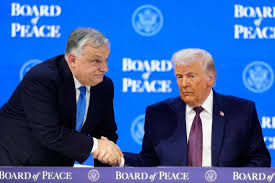
President Donald Trump shakes hands with Prime Minister of Hungary Viktor Orban, left, during a signing ceremony on his Board of Peace initiative at the Annual Meeting of the World Economic Forum in Davos, Switzerland, Thursday, Jan. 22, 2026. (AP Photo/Markus Schreiber, File)

Tensions over U.S. President Donald Trump's plans to take control of Greenland have driven a wedge in the once iron-clad link between MAGA and Europe's far-right.

The rift seems to signal that ideological alignment alone may not be enough to temper worries among European nationalists over Trump's interventionism abroad.

Far-right leaders in Germany, Italy and France have strongly criticized Trump's Greenland plans. Even Nigel Farage, a longtime ally of Trump and head of the Reform UK nationalist party, called Trump's Greenland moves “a very hostile act.”

During a debate Tuesday in the European Parliament, far-right lawmakers typically aligned with Trump overwhelmingly supported halting a EU-U.S. trade pact over their uneasiness with his threats, calling them “coercion” and “threats to sovereignty."

MAGA's trans-Atlantic partners

Such a divergence between Trump and his European acolytes came as some surprise.

Far-right parties surged to power in 2024 across the European Union, rattling the traditional powers across the bloc’s 27 nations from Spain to Sweden. Their political groupings now hold 26% of the seats in the European Parliament, according to the German Institute for International and Security Affairs.

Less than a year ago, Europe's far-right parties gathered in Madrid to applauded Trump's election under the banner “Make Europe Great Again,” while Elon Musk, before his fall from Trump’s graces, had boosted European far-right influencers and figures on X, including Germany’s radical right Alternative for Germany party.

U.S. Vice President JD Vance drew scorn from within Germany and across Europe after he met with AfD leader Alice Weidel during elections in February. The party, with which mainstream parties refuse to work, upset German politics by doubling its presence in the Bundestag to become the nation's second-largest party.

Yet deep divisions within MAGA itself over Trump’s approach to foreign affairs has reverberated in Europe, with his actions over Greenland, Venezuela and Iran forcing his political allies to favor their ideological convictions over their deference to the U.S. president.

Sovereignty trumps shared values

France’s far-right National Rally has at times vaunted its ideological closeness to Trump, particularly on immigration.

A year ago, the party sent one of its senior figures, Louis Aliot, to attend Trump’s inauguration. In turn, Trump has staunchly defended party leader Marine Le Pen, describing her conviction for embezzling EU funds as a “witch hunt.”

Jordan Bardella, the 30-year-old National Rally’s president and a MEP, has praised Trump’s nationalist views, saying to the BBC last month that a “wind of freedom, of national pride” was blowing across Western democracies.

In recent days, however, Bardella has appeared to distance himself from the U.S. administration. In his New Year’s address, he criticized U.S. military intervention in Venezuela aimed at capturing then-President Nicolás Maduro, calling it “foreign interference” designed to serve “the economic interests of American oil companies.”

Going further, Bardella on Tuesday denounced Trump’s “commercial blackmail” over Greenland.

“Our subjugation would be a historic mistake,” Bardella said.

Another Trump ally, Italian Prime Minister Giorgia Meloni, echoed this sentiment. In an interview on Rai television Wednesday, she said that she told Trump during a call that his tariffs threat over Greenland was “a mistake.”

Reluctance to criticize on the EU's eastern flank

Yet the reactions among European right-wing leaders has not been lockstep. Hungarian Prime Minister Viktor Orbán, widely regarded as the trailblazer of Trump’s brand of illiberal populism, has been careful to avoid even the slightest criticism of the U.S. president.

Facing what is likely to be the toughest election of his 16 years in power in April, Orbán has built his political identity around his affinity with Trump, promising voters that his close relationship with the president will pay hefty dividends.

Trump, Orbán has insisted, is Europe’s only hope for peace amid the war in Ukraine and a guarantor of national sovereignty.

Orbán has sought to cast Trump's threats on Greenland and capture of Maduro either as beneficial for Hungary, or none of its business.

“It’s an in-house issue … It’s a NATO issue,” Orbán said of Trump’s plans for Greenland during a news conference earlier this month, adding that any proposed change to Greenland's sovereignty can be discussed within NATO.

Despite his staunch advocacy of national sovereignty, Orbán also praised the U.S. action in Venezuela, calling the country a “narco state” and suggesting Maduro’s ouster could benefit Hungary through future cheaper oil prices on world markets.

Hungary’s reluctance to push back on Trump’s actions reflected similar positions among far-right leaders in the EU’s eastern flank.

Polish President Karol Nawrocki, seen as an ally of both Orbán and Trump, said in Davos this week that the tensions over Greenland should be solved “in a diplomatic way" between Washington and Copenhagen — not a broader European coalition. He called on Western European leaders to tone down their objections to Trump’s conduct.

In the neighboring Czech Republic, prime minister and Trump ally Andrej Babis has declined to speak out against the U.S. threats to Greenland, and warned against the EU allowing the issue to cause a conflict with Trump. In Slovakia, Prime Minister Robert Fico has remained silent on Trump’s Greenland designs, even as he met with the president in his Mar-a-Lago resort last week.

Still, Trump’s deposing of Maduro led Fico to “unequivocally condemn” the action, calling it a “kidnapping” and the “latest American oil adventure.”

Disruption or division ahead

The ideology linking MAGA and its European allies might survive recent disagreements by doubling down on old, shared grievances, said Daniel Hegedüs, Central Europe director of the German Marshall Fund.

He pointed to recent votes against Brussels’ leadership in European Parliament by far-right European lawmakers on the EU migration pact and halting the massive trade deal with the Mercosur bloc of five South American nations.

“If Trump continues that way, posing a threat to the sovereignty of European countries, then of course that will divide the European radical right,” he said.

“We don’t know whether this division will stay with us or whether they can again unite forces around issues where they can cooperate. Those issues can be damaging enough for the European Union.”​
 
Analyze

Analyze Post

Add your ideas here:
Highlight Cite Fact Check Respond

Members Online

⤵︎

Latest Posts

Latest Posts