Home Watch Videos Wars Login

[🇮🇳] India's Space Program

[🇮🇳] India's Space Program
65
2K
More threads by Saif

G   Indian Defense

Isro successfully rolls SpaDeX satellites, pushes them to the limit​

Story by India Today Science Desk
• 3h•
2 min read
1743160305045.webp


Isro successfully rolls SpaDeX satellites, pushes them to the limit

Isro successfully rolls SpaDeX satellites, pushes them to the limit
The Indian Space Research Organisation (ISRO) has achieved another milestone in its Space Docking Experiment (SpaDeX) mission by successfully conducting the "rolling" or "rotating" experiment.

This test involved one satellite circumnavigating the other and returning to its original position while remaining in line of sight.

The experiment, completed last week, was confirmed by ISRO Chairman V Narayanan to Times of India, as he emphasized the importance of ground simulations to avoid errors and maximize data generation.

The rolling experiment is being compared to Chandrayaan-3's "hop" test on the Moon for its significance in advancing future space missions. It validates ISRO's ability to control satellite maneuvering from ground stations using advanced software, sensors, and positioning technologies.

This capability is crucial for future missions like Chandrayaan-4, human spaceflight programs under Gaganyaan, and satellite servicing projects.

SpaDeX involves two satellites, SDX01 (Chaser) and SDX02 (Target), launched together on December 30, 2024.

The mission aims to demonstrate technologies related to orbital rendezvous, docking, and proximity operations.

Earlier in January 2025, ISRO became the fourth country globally to achieve successful space docking using indigenous technology.


Related video: ISRO Successfully Docks SpaDex Satellites In Historic Space Achievement, PM Modi Congratulates (The Times of India)


https://www.msn.com/en-in/news/India/isro-successfully-rolls-spadex-satellites-pushes-them-to-the-limit/ar-AA1BP7Sm?ocid=BingNewsSerp
 
Analyze

Analyze Post

Add your ideas here:
Highlight Cite Respond

We finally know how Isro is planning to land Mangalyaan-2 on Mars​

Story by India Today Science Desk
• 1h•
2 min read

1744372245540.webp

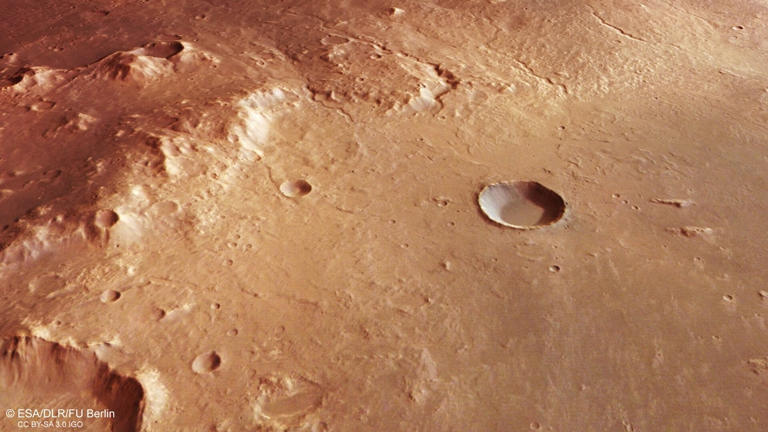
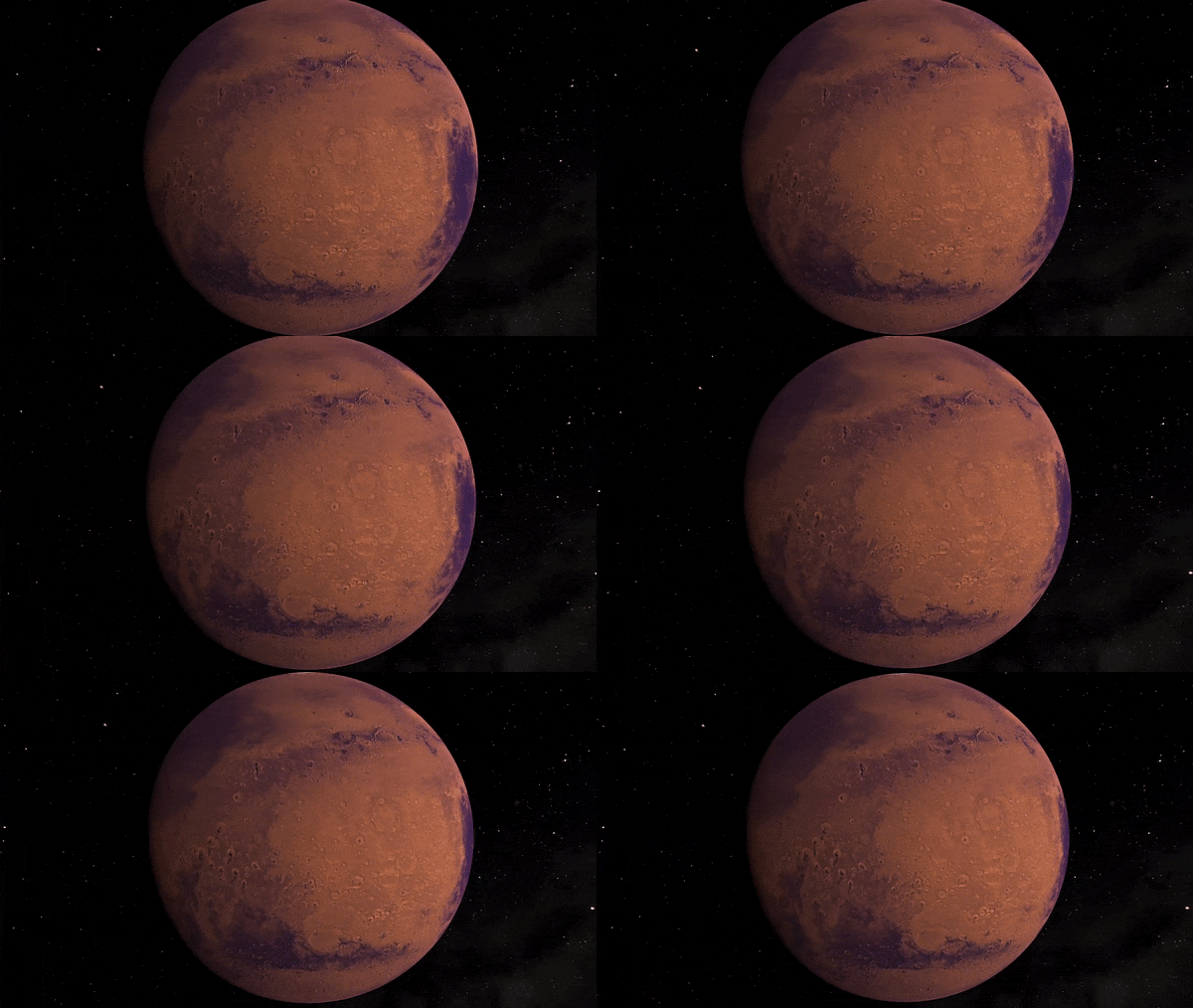
In a major step forward for India's interplanetary ambitions, the Indian Space Research Organisation (ISRO) has revealed detailed plans for its second Mars mission, Mangalyaan-2, which, unlike its predecessor, will include a lander for a direct touchdown on the Martian surface and a helicopter.

The details were shared by Isro chief Dr V Narayanan during an address at the Navaratna Conference.

Launched aboard the LVM3 rocket, the 4,500 kg spacecraft will initially be placed in an Earth orbit of 190 x 35,786 km.


Mars

Mars
From there, a composite module â consisting of a Cruise Stage and a Descent Stage â will set off on its months-long journey to the Red Planet.

The Cruise Stage will serve as the propulsion system to take the spacecraft from Earth's orbit to a capture orbit around Mars.

Once Mangalyaan-2 enters Martian proximity, the Descent Stage will detach from the Cruise Stage and make a direct entry into Mars' atmosphere â a bold move that skips the need for orbiting before landing.

Slowing down during this high-speed descent will be managed through a process called aerobraking, which uses the Martian atmosphere to reduce velocity.

To do this safely, ISRO will employ a heat-protective aeroshell and supersonic parachutes, helping the spacecraft withstand intense atmospheric friction and rapidly drop speed.


Descent Stage will detach from the Cruise Stage and make a direct entry. (Photo: ESA)

Descent Stage will detach from the Cruise Stage and make a direct entry. (Photo: ESA)
The final phase of the landing will begin when the Descent Stage is about 1.3 km above the Martian surface. At this point, the lander will engage its powered descent system â a set of onboard engines designed to guide and control a soft and precise touchdown.

If successful, Mangalyaan-2 will mark India's first attempt at landing on another planet, placing it in an elite group of nations to achieve such a feat. The mission's success would not only boost India's standing in space exploration but also provide invaluable data for future interplanetary missions.

While ISRO has yet to confirm a launch date, the planning reveals a bold and technically complex mission that could pave the way for deeper Martian exploration â and one more giant leap for India's space program.


Related video: It will be routine to go into space in the next two decades: Pawan Chandana (India Today)

https://www.msn.com/en-in/news/techandscience/we-finally-know-how-isro-is-planning-to-land-mangalyaan-2-on-mars/ar-AA1CJfNr?ocid=msedgntp&pc=U531&cvid=9fae7f40286743d98522425801285129&ei=8
 
Analyze

Analyze Post

Add your ideas here:
Highlight Cite Respond

India leading most cost-effective, successful space programme in world: PM Narendra Modi​

22h•
5 min read
1745822695939.webp


India leading most cost-effective, successful space programme in world: PM Narendra Modi

India leading most cost-effective, successful space programme in world: PM Narendra Modi
Noting that India has become a global space power, Prime Minister Narendra Modi on Sunday said the country is leading the most cost-effective but successful space programme in the entire world and is going to scale new heights in the future. Many youth are attaining new milestones in the field of space startups, Modi said, adding 10 years ago, there was only one company, but today there are more than 325 space startups working in the country.

Invest in solar energy & save - candi solar - Immediate cost saving


Ad
Invest in solar energy & save - candi solar - Immediate cost saving

candi.solar
Learn morecall to action icon

In his monthly radio broadcast 'Mann Ki Baat', he also paid tributes to former ISRO chief K Kasturirangan, who passed away last week.

"Two days ago we lost the country's great scientist Dr. K. Kasturirangan ji. Whenever I met Kasturirangan ji, we discussed topics like the talent of Indian youth, modern education, Space-Science. His contribution in lending newer heights to science, education and India's space programme shall always be remembered. ISRO attained a new identity under his leadership," he said.

The space programmes that moved forward under his guidance gave global recognition to India's efforts, Modi said.

Many of the satellites that India uses today were launched under the supervision of Dr. Kasturirangan, he said.

"There was one more special facet to his personality, which the younger generation can learn from. He always accorded importance to innovation. The vision of learning, knowing and doing something new is very inspiring," Modi said.


Related video: It will be routine to go into space in the next two decades: Pawan Chandana (India Today)
Good afternoon everyone.
Loaded: 1.42%


The prime minister said Kasturirangan also played a major role in formulating the new National Education Policy of the country.

Kasturirangan came up with the idea of ' ' forward looking" education according to the modern needs of the 21st century, Modi said.

"His selfless service to the country and contribution to nation building will always be remembered. Very humbly, I pay my tribute to Dr. K. Kasturirangan," he said.

Noting that April marks 50 years of the launch of the Aryabhata Satellite, Modi said, "Today, when we look back and remember this journey of 50 years, we realise how far we have come. This flight of India's dreams in space once commenced with just conviction. Some young scientists with the passion to do something for the nation - they neither had the modern resources like today, nor the access to world technology as such. If at all they had anything, it was talent, dedication, hard work and the passion to do something for the country."


"You must have seen pictures of our scientists carrying critical equipment themselves on bullock carts and bicycles. It is the result of that very dedication and spirit of service to the nation that so much has changed today," he said.

Modi pointed out that India has become a global space power, pointing "We have created a record by launching 104 satellites simultaneously. We have become the first country to reach the South Pole of the Moon. India has launched the Mars Orbiter Mission and we have reached pretty close to the Sun through the Aditya - L1 Mission," he said.

Today, India is leading the most cost-effective but successful space programme in the entire world, he pointed out.

Many countries of the world take help from ISRO for their satellites and space missions, Modi said.

"When we see a satellite launch by ISRO, we are filled with pride. I had a similar feeling when I witnessed the launch of PSLV-C-23 in 2014. I was also present at the ISRO Centre in Bengaluru during the landing of Chandrayaan-2 in 2019. At that time Chandrayaan failed to achieve the expected success, it was a very difficult time for the scientists. But I could see with my own eyes the patience of the scientists and their zeal to achieve something," he said.


And a few years later, the whole world too noticed how the same scientists made Chandrayaan-3 a success, the PM added.

Noting that India has opened her space sector for the private sector as well, Modi said today many youth are attaining new milestones in the field of space startups.

"The times to come are ushering in a lot of new possibilities in Space.India is going to scale new heights. The country is busy preparing for many important missions like Gaganyaan, SpaDeX and Chandrayaan-4. We are also working on the Venus Orbiter Mission and Mars Lander Mission," he said.

Indian space scientists are going to fill the people of the country with new pride through their innovations, Modi said.

Recalling the 'Champaran Satyagraha', Modi said it was the first big experiment by Bapu in India.

"The entire British rule was shaken by Bapu's Satyagraha. The British had to suspend the law that forced farmers to cultivate indigo. This was a victory that infused new confidence in the freedom struggle. All of you must be aware that another son of Bihar also contributed a lot to this Satyagraha, who became the first President of the country after Independence. The great personality was Dr. Rajendra Prasad. He also wrote a book on the 'Champaran Satyagraha'," Modi said.

Many more indelible chapters of the freedom struggle are associated with April itself, he said.

"Gandhiji's 'Dandi March' culminated on the 6th of April itself. This march which commenced on the 12th of March and continued for 24 days had shaken the British. The Jallianwala Bagh massacre took place in April itself. The marks of this blood stained history are still present on the soil of Punjab," Modi said.

He said that in a few days, on May 10, the anniversary of the first freedom struggle would also be there.

The spark that arose in that first battle for freedom, later became a torch for millions of freedom fighters, Modi said.

"On April 26, we observed the death anniversary of the great hero of the 1857 revolution, Babu Veer Kunwar Singh. The entire country derives inspiration from this great freedom fighter of Bihar. We have to keep alive the immortal inspirations of lakhs of such freedom fighters," he said.


The energy received from them provides renewed strength to our resolve of 'Amrit Kaal', Modi added.

He said the biggest strength of the country is our 140 crore citizens, their capability, their will power, and when crores of people join a campaign together, its impact is huge.

He cited the example of the 'Ek Ped Maa Ke Naam' campaign and pointed out that on the 5th of June, on 'World Environment Day', this campaign is completing one year.

"During this one year, under this campaign, more than 140 crore trees have been planted in the name of the mother across the country. Observing this initiative of India, people outside the country have also planted trees in the name of their mother," he said.

In his broadcast, Modi also lauded how in Wayanad, saffron is not being grown in any field or soil but with the help of aeroponics technique.
For more news like this visit The Economic Times.

 
Analyze

Analyze Post

Add your ideas here:
Highlight Cite Respond

Indian space agency’s satellite mission fails due to technical issue
United News of Bangladesh/ AP. New Delhi 18 May, 2025, 17:01

1747615517067.webp

View of PSLV-C61 launch vehicle of India. | ISRO X handle

The Indian space agency’s mission to launch into orbit a new Earth observation satellite failed after the launch vehicle encountered a technical issue, officials said Sunday.

The EOS-09 Earth observation satellite took off on board the PSLV-C61 launch vehicle from the Sriharikota space center in southern India on Sunday morning.

‘During the third stage ... there was a fall in the chamber pressure of the motor case, and the mission could not be accomplished,’ said V Narayanan, chief of the Indian Space Research Organisation.

Active in space research since the 1960s, India has launched satellites for itself and other countries, and successfully put one in orbit around Mars in 2014.

After a failed attempt to land on the moon in 2019, India became the first country to land a spacecraft near the moon’s south pole in 2023 in a historic voyage to uncharted territory that scientists believe could hold reserves of frozen water. The mission was dubbed as a technological triumph for the world’s most populous nation.
 
Analyze

Analyze Post

Add your ideas here:
Highlight Cite Respond

Indian space agency’s satellite mission fails due to technical issue
United News of Bangladesh/ AP. New Delhi 18 May, 2025, 17:01

View attachment 17521
View of PSLV-C61 launch vehicle of India. | ISRO X handle

The Indian space agency’s mission to launch into orbit a new Earth observation satellite failed after the launch vehicle encountered a technical issue, officials said Sunday.

The EOS-09 Earth observation satellite took off on board the PSLV-C61 launch vehicle from the Sriharikota space center in southern India on Sunday morning.

‘During the third stage ... there was a fall in the chamber pressure of the motor case, and the mission could not be accomplished,’ said V Narayanan, chief of the Indian Space Research Organisation.

Active in space research since the 1960s, India has launched satellites for itself and other countries, and successfully put one in orbit around Mars in 2014.

After a failed attempt to land on the moon in 2019, India became the first country to land a spacecraft near the moon’s south pole in 2023 in a historic voyage to uncharted territory that scientists believe could hold reserves of frozen water. The mission was dubbed as a technological triumph for the world’s most populous nation.


Third failure of PSLV rocket todate.
 
Analyze

Analyze Post

Add your ideas here:
Highlight Cite Respond
Analyze

Analyze Post

Add your ideas here:
Highlight Cite Respond
What is the time frame for India to send astronaut to Moon?

By 2030. It is not on our priority list. Reusable rockets are on priority. Scremjet engines are on priority list.
 
Analyze

Analyze Post

Add your ideas here:
Highlight Cite Respond
  • Like (+1)
Reactions: Saif
India’s push for home-grown satellite constellation gets 30 aspirants
REUTERS
Published :
Dec 24, 2024 21:39
Updated :
Dec 24, 2024 21:39

View attachment 12085
A satellite model is placed on a picture of Earth in this illustration taken November 25, 2024. Photo : REUTERS/Dado Ruvic/Illustration/Files

Thirty Indian companies have answered the space regulator’s call to build and operate constellations of Earth observation (EO) satellites in a groundbreaking private-public partnership to reduce the country’s reliance on foreign data for defense, infrastructure management and other critical mapping needs.

“We have received 9 applications ... Each applicant represents a consortium, involving a total of 30 companies,” said Pawan Goenka, chairman of the Indian National Space Promotion and Authorisation Centre, or IN-SPACe.

The regulator had sought “expressions of interest” (EoI) in July to build home-grown satellite constellations as part of a broader strategy to monetize the sector and ensure data sovereignty.

India is doubling down on its small satellite and data services market to carve out a leading role in the global commercialization of space. The market for such services, increasingly key for industries ranging from telecoms to climate monitoring, is projected to reach $45 billion by 2030, opens new tab.

The applicants for IN-SPACe’s latest effort in this regard include startups such as Google-backed Pixxel and Baring Private Equity-backed SatSure, as well as larger entities like Tata Group’s Tata Advanced Systems. The companies did not immediately respond to requests for comment.

Goenka said he expects technical evaluations to be completed by the end of January, after which a tender will be floated to determine the winning bidder.

IN-SPACe’s eligibility criteria include applicants raising or investing at least 850 million rupees ($10 million) in space-related activities, having a valuation of 8.5 billion rupees, or a turnover of 2 billion rupees in the past three years.

They must also set up spacecraft control centres in India or partner with ground station service providers for operational needs.

The government plans to loan up to 3.5 billion to the winner, with private companies expected to cover the remaining costs, according to a source familiar with the matter.

Since opening the sector to private players in February, India has established a 10-billion-rupee venture fund to support space startups.

The country has also unveiled ambitious plans for crewed space exploration and a mission to Venus, but the primary focus remains on fostering commercial ventures and scaling up private sector participation.

India currently sources much of its EO data from foreign companies and agencies like the European Space Agency (ESA) and the Indian Space Research Organisation (ISRO).

IIFCL Projects Ltd, an advisory arm under the Ministry of Finance, is overseeing the bidding process.​
Prof. Prem raj Pushpakaran writes -- 2025 marks the 50th year since the launch of Aryabhata, and let us celebrate the occasion!!! Prof Prem raj Pushpakaran Profile Page | World Architecture Community
 
Analyze

Analyze Post

Add your ideas here:
Highlight Cite Respond

Posts you haven't read yet..

Members Online

Latest Posts

Back
 
G
O
 
H
O
M
E