Home Watch Videos Wars Login

[🇮🇳] India's Space Program

[🇮🇳] India's Space Program
65
2K
More threads by Saif

G   Indian Defense

India's Space Sector Set to Grow To $44Bn: Union Minister Jitendra Singh | ISRO | N18V​


Union Minister Jitendra Singh has said that India's space sector is expected to reach a value of $44 billion soon. This is a fivefold increase from its current worth, Addressing the 'Space-Tech for Good Governance' Conclave, Singh highlighted India's commitment to leveraging space technology for innovations. #space #India #Governance #JitendraSingh #Technology #cnbctv18digital🔴CNBC TV18 LIVE TV: to our Channel: 👑 Check Out Top CNBC TV18 Playlist Videos: 🔹Young Turks Reloaded with Shereen Bhan: World News: TV18 Classic Interviews: TV18 Digital: TV18 Weekend Special: TV18 Next-Gen: Show: TV18 Newsreels: Streets: can also connect with CNBC-TV18 News OnlineCatch the latest news: CNBC-TV18 round the clock: updated with all the market action in real time: can also stay updated with all the latest news on-the-go with CNBC-TV18 Minis: us on Facebook: us on Twitter: us on Instagram: us on: Linkedin: CNBC-TV18:
 
Analyze

Analyze Post

Add your ideas here:
Highlight Cite Respond

ISRO handles its own software development: Ex-ISRO chief Somanath​

ISRO develops its own software for accuracy, security, and scientific rigor. It converts raw scientific data into actionable insights. The organization now wants to commercialise its software.​

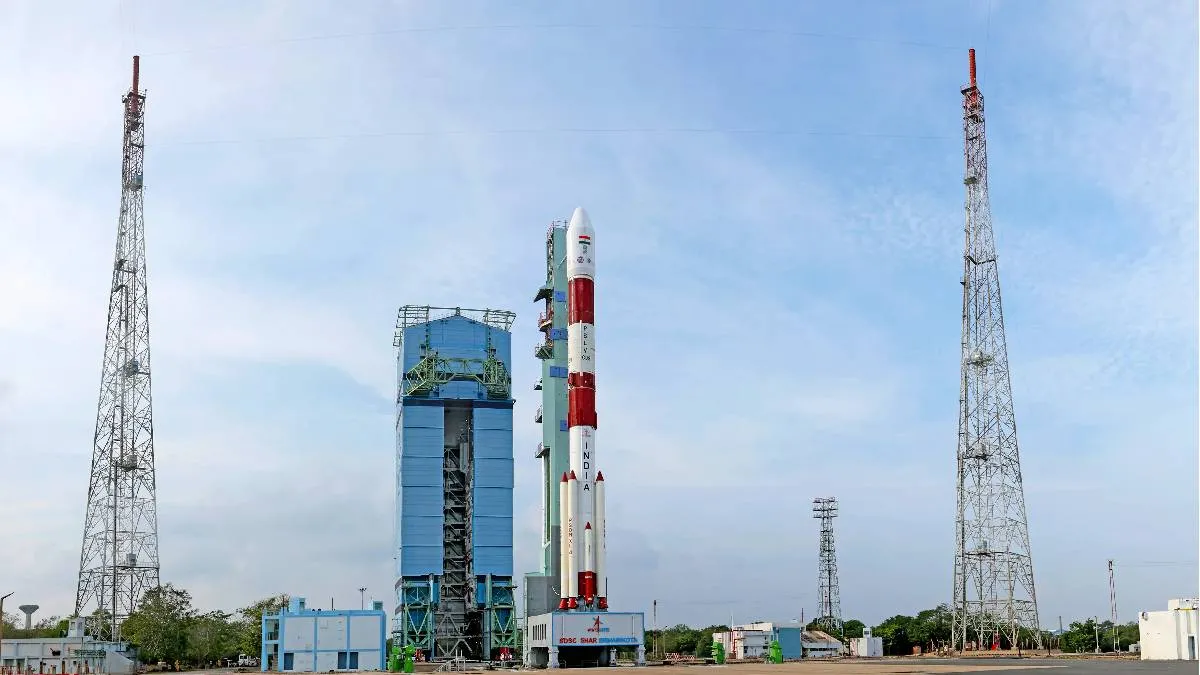
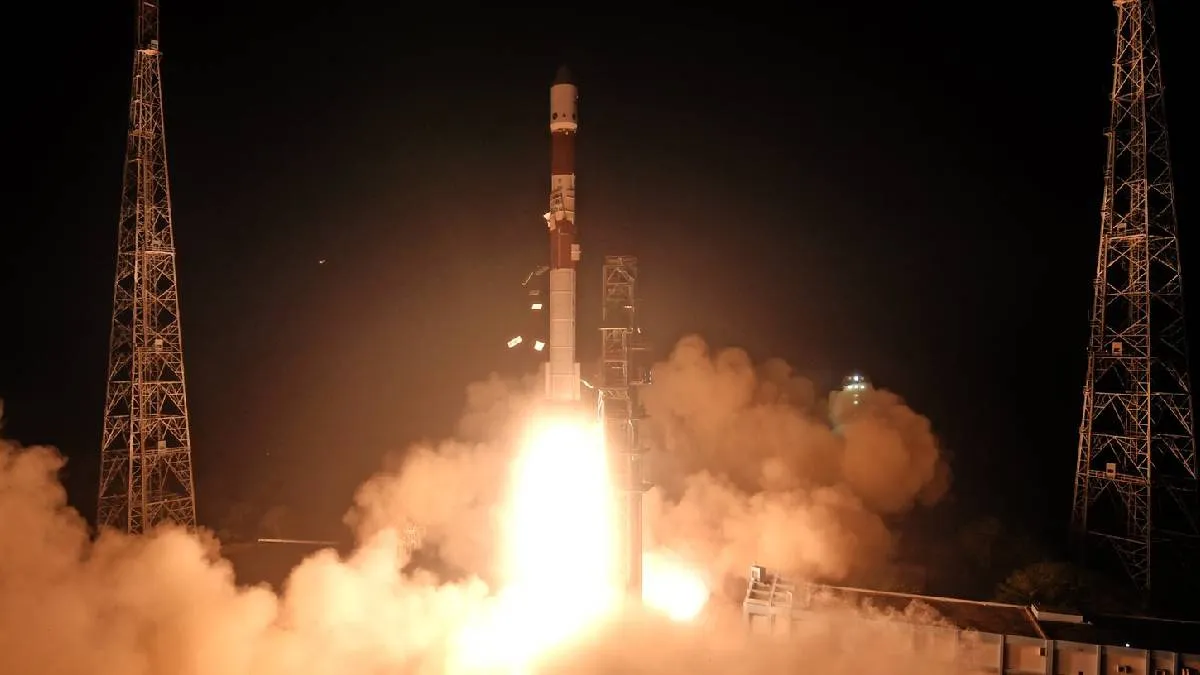
PSLV-C59/PROBA-3 Mission
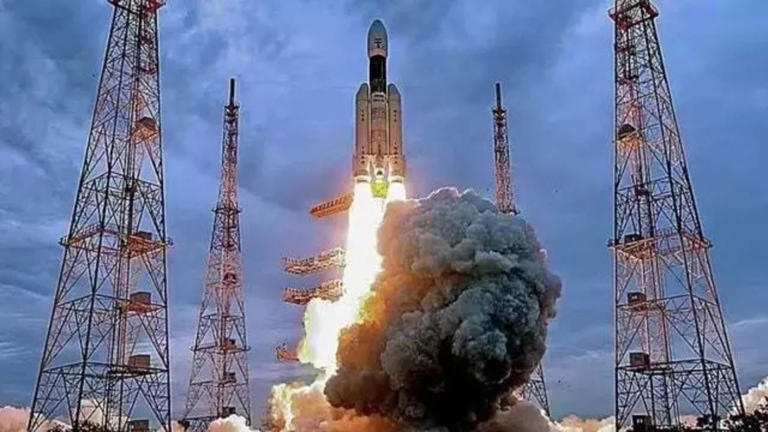
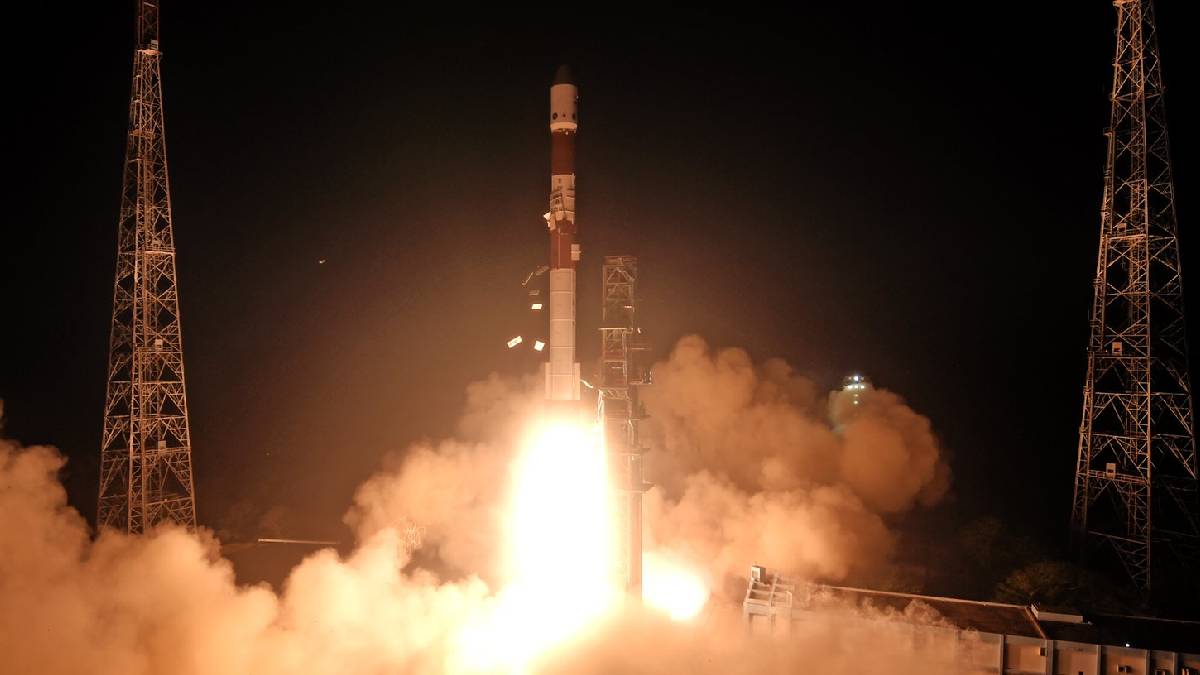
PSLV-C59/PROBA-3 MissionImage Source : ISRO
Written By: Om Gupta
New DelhiPublished: March 02, 2025 11:55 IST, Updated: March 02, 2025 11:55 IST

S. Somanath, the former chief of ISRO, indicated that software development within the organisation has consistently been an internal undertaking, managed by their own scientists and engineers from various fields, including environmental science, physics, and computer science. He stated that ISRO does not outsource critical software systems due to the necessity for a profound understanding of the integration between science, technology, and applications.


Speaking at the Software Product Management (SPM) Summit hosted by IIM Bangalore, Somanath noted that the two-day event, which took place on February 28 and March 1, marked its 7th edition under the theme of 'Software Product Management Excellence at Scale.' He elaborated on the evolution of software product management and development for space missions, highlighting the transition from missions focused primarily on environmental concerns to those featuring commercially operated systems.

He emphasised that all software developed for satellite operations, data analysis, and mission simulations is created in-house to guarantee accuracy, security, and scientific rigor. According to Somanath, ISRO has over the years implemented intricate software systems for various applications such as geospatial data portals, disaster management frameworks, and climate monitoring tools, all intended for use by governments, researchers, and the general public.

Somanath reflected on ISRO's journey in software product development, stating that it goes beyond basic coding; it involves converting raw scientific data into actionable insights. He mentioned that the organisation is now also looking to commercialise some of these tools, making them accessible to Indian institutions and industries to encourage innovation across different sectors.

Finally, he expressed his belief that India's advancements in space, technology, and sustainable development will rely heavily on a robust foundation in software excellence, which should be developed on a large scale and continually refined through ongoing learning and collaboration.

ALSO READ: ISRO scheduled to resume its SpaDeX experiments beginning March 15: V Narayanan
 
Analyze

Analyze Post

Add your ideas here:
Highlight Cite Respond

India and Japan Join Forces For Chandrayaan-5 Mission, ISRO Shares Details of Ambitious Lunar Project​

Story by Times Now Digital
• 21h•
2 min read
1742280796137.webp


india and japan join forces for chandrayaan-5 mission, isro shares details of ambitious lunar project

india and japan join forces for chandrayaan-5 mission, isro shares details of ambitious lunar project
An ambitious Chandrayaan-5 mission in partnership with Japan has received approval by the Centre, ISRO Chairman V Narayanan announced. The mission, which aims to study the Moon with a significantly heavier rover than its predecessors, will be undertaken with Japan to enhance the mission's scientific capabilities, he said.


Announcing the approval at an event celebrating his new role as ISRO Chairman, V Narayanan said, "Just three days ago, we received approval for the Chandrayaan-5 mission. We will be undertaking it in collaboration with Japan." ISRO had successfully launched the Chandrayaan-3 mission with Vikram Lander's 'soft-landing' on the South pole of the Moon on August 23, 2023. The Chandrayaan-5 mission, in partnership with Japan, will include a 250 kg rover, a major leap from the 25 kg 'Pragyan' rover deployed during Chandrayaan-3.

All about the Chandrayaan Missions​

India's Chandrayaan programme, a cornerstone of the nation's lunar exploration efforts, has made significant strides with three missions so far. The first, Chandrayaan-1, launched in 2008, made history by chemically mapping the Moon’s surface, unveiling mineralogical and photo-geological details that set the stage for future exploration.

Then, in 2019, Chandrayaan-2 embarked on its journey. While the mission faced challenges during its final descent, its orbiter continues to provide invaluable high-resolution images and data, shedding light on the Moon's mysteries from orbit.

Meanwhile, Chandrayaan-3 was launched in 2023 and successfully demonstrated India's ability to achieve a soft landing on the Moon's South Pole. The mission's lander, Vikram, and rover, Pragyan, were placed into hibernation mode due to the lunar night, which lasts about 14 Earth days, to conserve energy and protect the instruments from extreme cold.


Related video: Know all about Isro's space missions in 2025 | Homeland (India Today)
https://www.msn.com/en-in/news/india/india-and-japan-join-forces-for-chandrayaan-5-mission-isro-shares-details-of-ambitious-lunar-project/ar-AA1B4nYy
 
Analyze

Analyze Post

Add your ideas here:
Highlight Cite Respond

ISRO successfully tests semi-cryogenic engine: A big step for future space missions​

ISRO's successful semi-cryogenic engine test is a major step toward developing more powerful, efficient, and reusable launch systems. With ongoing improvements in propulsion technology, India is gearing up for a new era in space exploration.​

ISRO successfully tests semi-cryogenic engine
ISRO successfully tests semi-cryogenic engineImage Source : File
Written By: Saumya Nigam @snigam04
New DelhiPublished: March 08, 2025 14:00 IST, Updated: March 08, 2025 14:00 IST

The Indian Space Research Organisation (commonly known as ISRO) has successfully conducted a hot test on the semi-cryogenic engine (SE2000), marking a major milestone in developing powerful engines for future space missions. This test called the Power Head Test Article (PHTA), is an important step toward finalizing the cryogenic stage that powers the booster stages of launch vehicles.


What is the Power Head Test Article (PHTA)?

The PHTA is a significant test to evaluate key subsystems of the semi-cryogenic engine. It helps validate the performance of critical components such as:

  • Gas generator
  • Turbo pumps
  • Pre-burner
  • Control systems
The hot-firing test lasted for just 4.5 seconds and was the first major hardware test for the semi-cryogenic engine's development.

A step forward after 2023 setback

ISRO had previously attempted a similar test in July 2023, but it was aborted due to a technical glitch. Since then, scientists have worked continuously to refine the engine, which is designed to deliver 2,000 kiloNewton (kN) of thrust.


India Tv - ISRO
(Image Source : ISRO)A big step for future space missions


Why is a semi-cryogenic engine important?

Rockets need powerful propulsion systems to lift off from Earth, pass through the atmosphere, and reach space. Choosing the right propellant system is crucial for efficiency, cost, and reusability.

Currently, ISRO uses environment-friendly propellants such as:

  • Liquid Oxygen (LOX) and Liquid Hydrogen (LH2) for cryogenic engines
  • LOX-Kerosene-based propulsion systems for semi-cryogenic engines

Advantages of Semi-Cryogenic Engines

A semi-cryogenic engine offers several advantages:
  • Uses liquid oxygen and kerosene, which is easier to store than hydrogen
  • Provides high-density impulse, making it more efficient
  • Less toxic and cost-effective compared to other options
  • Enhancements in LVM3 and future missions
ISRO is also working on improving the Launch Vehicle Mk III (LVM3), which will be equipped with the C32 cryogenic upper stage for upcoming missions.

C32 vs. C25: The new C32 stage will allow more propellant storage, increasing the payload capacity by 25 per cent.

Read Also​


 ISRO celebrates century of launches: PSLV carries largest number of satellites into space
ISRO celebrates century of launches: PSLV carries largest number of satellites into space

ISRO’s navigation satellite NVS-02  faces technical glitch days after 100th launch

  • ISRO aims to increase spacecraft launch capacity from 4 tonnes to 5.1 tonnes to Geosynchronous Transfer Orbit (GTO) without increasing costs.
A new LOX-kerosene propulsion system powered by a 2,000-tonne thrust engine is under development.

Next-generation launch vehicle (NGLV) development on track

With India's ambitious Gaganyaan mission (both unmanned and manned) gaining momentum, ISRO is also making progress on its Next Generation Launch Vehicle (NGLV).

What is NGLV?


  • A human-rated launch vehicle with high payload capacity and reusability
  • Features a reusable first stage, with a maximum payload of 30 tonnes to Low Earth Orbit (LEO)
  • Uses LOX engines in the first and second stages, with a cryogenic engine in the upper stage
According to ISRO Chairman V. Narayanan, the design of NGLV is complete, and development has begun. The agency is also working on technologies to recover and reuse launch vehicles, making future space missions more efficient.

Future Plans: Next-gen propulsion systems

ISRO is exploring advanced propulsion technologies that could revolutionize space travel. The goal is to develop a system where:

  • A rocket takes off like an aircraft
  • Switches to a cryogenic engine mid-flight
  • Covers thousands of kilometres across continents in a few hours
This breakthrough could enable faster intercontinental travel and pave the way for next-gen space exploration.

 
Analyze

Analyze Post

Add your ideas here:
Highlight Cite Respond

LOVE THIS​

What is NGLV?

  • A human-rated launch vehicle with high payload capacity and reusability
  • Features a reusable first stage, with a maximum payload of 30 tonnes to Low Earth Orbit (LEO)
  • Uses LOX engines in the first and second stages, with a cryogenic engine in the upper stage
 
Analyze

Analyze Post

Add your ideas here:
Highlight Cite Respond

ISRO Chairman Dr V. Narayanan inaugurates research centre at IIT Madras​

Story by India Today Education Desk
• 21h•
2 min read
1742285837971.webp


ISRO Chairman Dr V. Narayanan inaugurates research centre at IIT Madras

ISRO Chairman Dr V. Narayanan inaugurates research centre at IIT Madras
The Chairperson of the Indian Space Research Organisation (ISRO) inaugurated a new research centre, the S. Ramakrishnan Centre of Excellence, at the Indian Institute of Technology Madras (IIT Madras) on Monday.

The S Ramakrishnan Centre of Excellence in Fluid and Thermal Science Research will support 'Atmanirbhar Bharat' initiatives, promoting self-reliance in advanced space technologies and reducing India's dependency on foreign solutions. The centre will also attract global talent and international research collaborations.

Ad

The Centre is named in honour of S. Ramakrishnan, a distinguished IIT Madras alumnus and aerospace engineer who made substantial contributions to the development of India's launch vehicle program.

Dr V. Narayanan emphasised the significance of this collaboration and highlighted the achievements of ISRO in areas such as cryogenic engine technology. He proudly stated, "The Cryogenic Engine technology was denied to India, but today, we have three different such engines, with the third one being human-rated. Only six countries in the world have this technology, and we have achieved world records in this area."

Looking forward to the collaboration, Professor V. Kamakoti, Director, IIT Madras, said, "More and more we explore the space, we have an increasing need for technologies that could handle thermal and cooling requirements. I am sure the proposed Centre jointly with ISRO shall develop very effective solutions for the same."


Related video: ISRO's SpaDeX Mission: India Docks Satellites In Space, Enters Elite Club Of Nations (WION)


KEY ROLES OF THE CENTRE​

1. Spacecraft and Launch Vehicle Thermal Management: Addressing heat dissipation challenges in satellites and launch vehicles.

2. Experimental & Numerical Studies on Cooling Systems: Developing efficient cooling solutions using micro heat pipes, spray cooling, vapour chambers, and two-phase heat transfer devices.

3. High-Fidelity Simulation & Testing Facilities: Utilising cutting-edge computational fluid dynamics (CFD) simulations and experimental setups for real-world validation

4. Capacity Building & Training: Encouraging ISRO scientists to pursue advanced degrees at IIT Madras while fostering industry-academia collaborations.

Highlighting the expected outcomes from this new research centre, its coordinator, Prof. Arvind Pattamatta, Department of Mechanical Engineering, IIT Madras, said, "In the Medium Term (Next 3-5 Years), we are hoping to achieve breakthroughs in Advanced Thermal Management, such as development of new active and passive cooling techniques for spacecraft electronics and prototyping and Testing of Next-Gen Heat Pipes, which are Innovative cooling systems for long-duration space missions. Further integration with ISRO's Space Missions and incorporation of new research findings into upcoming ISRO satellite and launch vehicle projects will also be a focus area."


EXPECTED LONG-TERM OUTCOMES​

1. Revolutionising Spacecraft Design: Laying the groundwork for high-performance, reusable space vehicles with superior thermal control.

2. Enhancing India's Deep Space Exploration Capabilities: Supporting future missions such as Gaganyaan, lunar and interplanetary missions.

3. Boosting Indigenous Space Technology: Reducing reliance on foreign technology by developing cutting-edge thermal management solutions within India

This Centre will play a crucial role in the development of next-generation space technologies. The impact of the centre will extend beyond space, contributing to advancements in aerospace engineering, cooling technologies, and interdisciplinary research, while also promoting India's self-reliance in the critical domain of space technology.

 
Analyze

Analyze Post

Add your ideas here:
Highlight Cite Respond

‘Strength Respects Strength’: ISRO Chief Explains Why Japan Approached India For Chandrayaan-5​

Story by Harish Upadhya
• 1h•
3 min read
1742295224322.webp


ISRO chief V Narayanan also gave updates on Gaganyaan. (PTI File)

ISRO chief V Narayanan also gave updates on Gaganyaan. (PTI File)© Copyright (C) new18.com. All Rights Reserved.
India’s space ambitions have soared to new heights with the recent approval of the Chandrayaan-5 mission, a collaborative lunar exploration mission between the Indian Space Research Organisation (ISRO) and the Japan Aerospace Exploration Agency (JAXA). This marks growing international recognition of India’s space capabilities, particularly following the successful Chandrayaan-3.

Speaking exclusively to CNN-News18, ISRO chairman V Narayanan explained how the Japanese approached India for the mission and what’s in store.

“It is a joint mission. As you know, strength respects strength,” said ISRO Chairman V Narayanan. “When we successfully accomplished the Chandrayaan-3 mission and India became the only country that soft-landed near the south pole of the moon and the fourth country to soft-land on the moon, the JAXA team said they would like to have a collaboration. So, we are collaborating and accomplishing that mission. In fact, it is going to be launched by the Japanese rocket and the launch vehicle.”

WHAT IS CHANDRAYAAN-5?​

The Chandrayaan-5 mission will feature a significantly larger rover, weighing approximately 350 kg, compared to the 25 kg rover deployed during Chandrayaan-3.

“One comparison I can give is Chandrayaan-3, we had a rover, something around 25 kg… Here, the rover is going to be 350 kg,” Narayanan explained. “Our mission was only a 14-day mission, but here it is going to be a long-term mission.”


The mission will focus on the lunar polar region, aiming to further explore water availability and conduct a wide range of scientific investigations.

“Because of Chandrayaan-3, we had 14 days only, but we could collect the statistics. We had a lot of discoveries through our colleagues. We have discovered electron clouds, we have found seismic activity in some locations. We have discovered the thermal profile, mapped it, and like that, a lot of scientific discoveries were there. Here, it is going to be again a polar region mission to understand the water availability, and so many things, so many aspects are involved,” Narayanan said. He also mentioned that the scientific payloads are still being finalised.


GAGANYAAN MISSION PROGRESS UPDATE​

In addition to the Chandrayaan-5 announcement, Narayanan provided an update on the progress of India’s human spaceflight mission, Gaganyaan. “As you are aware, to accomplish the Gaganyaan mission, a lot of things have to be done,” he said.

He highlighted key milestones, including the completion of the human rating of the launch vehicle system and the near-finalisation of the integrated vehicle health monitoring system. “Then, of course, we need to develop the environmental control and safety system, which maintains the required pressure, temperature, relative humidity, carbon dioxide, the partial pressure level of oxygen, and everything it has to maintain, and those developments are in the advanced stage,” Narayanan said.


The Crew Escape System, designed to safeguard the astronauts in case of emergencies, has also undergone successful testing. “We went through a couple of tests, and recently, a year ago, we did one exclusive experiment by utilising a developed test vehicle exclusively for that purpose. It was a grand success and a satisfying thing,” Narayanan said. “Our Navy ship, picked up the module from the right spot. We were there to receive it and we were very happy.”

ISRO plans to conduct further tests and three uncrewed missions before the actual manned mission.

“The first uncrewed mission is getting ready. Once it is successful, we will go through the second and third missions, followed by the actual mission,” Narayanan said, adding that the ‘Gagan Yatris’ are currently undergoing rigorous training.

 
Analyze

Analyze Post

Add your ideas here:
Highlight Cite Respond

Chandrayaan-4 to weigh 9,500kg, to be launched by 2 rockets​


Indian space agency ISRO is presently working on two Lunar missions - Chandrayaan-4 and Chandrayaan-5. Both of them are robotic missions to explore the moon and map its resources. Such missions pave the way for an eventual Indian crewed moon landing in the coming decades. For more details on Chandrayaan-4 and its progress, WION's Principal Correspondent Sidharth.M.P spoke to ISRO Chief Dr. V. Narayanan. See less
11

 
Analyze

Analyze Post

Add your ideas here:
Highlight Cite Respond

Posts you haven't read yet..

Members Online

Latest Posts

Back
 
G
O
 
H
O
M
E