[🇮🇳] India's weapon development, Testing, Purchase, sale, upgrade, Collaborations and Joint venture in Defense sectors.

[🇮🇳] India's weapon development, Testing, Purchase, sale, upgrade, Collaborations and Joint venture in Defense sectors.
More threads by Krishna with Flute

G   Indian Defense

India to join US-Russia elite club: Tata-led Consortia shortlisted to build fighter jets​

Story by FE News Desk
• 43m•
3 min read

1771308882131.webp


DRDO Shortlists Tata, L&T-BEL and Bharat Forge for AMCA Prototype Development

DRDO Shortlists Tata, L&T-BEL and Bharat Forge for AMCA Prototype Development
According to The Indian Express’ exclusive report, three private sector contenders — Tata Advanced Systems Ltd, a Larsen & Toubro-led consortium, and a Bharat Forge-led consortium — have been shortlisted to design and develop prototypes of India’s proposed Advanced Medium Combat Aircraft (AMCA), the country’s ambitious fifth-generation stealth fighter programme.


According to The Indian Express, seven consortiums had originally submitted bids, including Adani Defence and state-run Hindustan Aeronautics Ltd (HAL). After screening, three private sector groups have now been selected for the prototype development stage.

AMCA Fighter Jet Project: Tata, L&T-BEL and Bharat Forge Consortium shortlisted by DRDO​

According to information accessed by The Indian Express, Tata Advanced Systems Ltd is in the race as a standalone bidder. The other two shortlisted entities are a consortium of Larsen & Toubro and Bharat Electronics Ltd, and another consortium comprising Bharat Forge, BEML Ltd and Data Patterns.

The shortlisting has been carried out by the Defence Research and Development Organisation (DRDO). The agency, through the Aeronautical Development Agency, had floated tenders in July 2025 seeking Indian industry partners for the AMCA project.

The shortlisted companies are expected to receive government funding support to build AMCA models. Manufacturing rights are likely to be granted after successful development and evaluation of the prototypes.

AMCA fifth-generation stealth fighter: Key features, timeline and production plan​

The AMCA is India’s plan to develop a homegrown fifth-generation stealth fighter jet. It is designed as a single-seat, twin-engine aircraft with advanced stealth coatings and internal weapons bays to reduce radar visibility. The programme is expected to lead to the production of more than 125 fighter jets. These aircraft could be ready for induction into the Indian Air Force by 2035.

If completed as planned, India would join a small group of countries operating fifth-generation fighters, including the United States (F-22 and F-35), China (J-20) and Russia (Su-57).

Defence acquisition council clears 114 Rafale Jets, 6 P-8I aircraft for IAF and Navy​

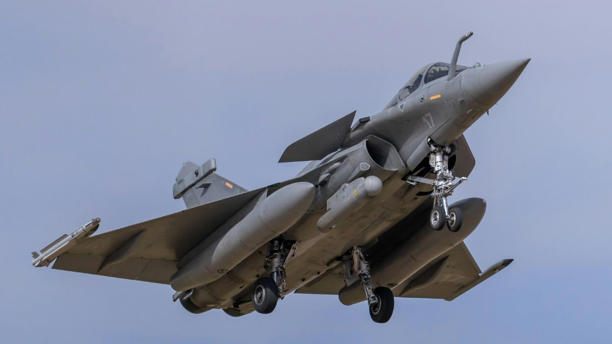
Last Thursday, the Defence Acquisition Council (DAC) cleared a long-awaited proposal to buy 114 Rafale fighter jets from France under an inter-governmental agreement for the Indian Air Force. Of these, 90 jets are expected to be manufactured in India, The Indian Express had reported earlier. The clearance came days before French President Emmanuel Macron’s visit to India between February 17 and 19.


The DAC, chaired by Union Defence Minister Rajnath Singh, also approved the procurement of six additional P-8I maritime surveillance and anti-submarine warfare aircraft from the United States for the Indian Navy.

Why was HAL not shortlisted for AMCA prototype stage​

According to sources, HAL’s bid was rejected at the screening stage due to a mistake in paperwork linked to a mandatory eligibility criterion, not just an evaluation parameter. While it remains theoretically possible for HAL to participate later, sources told The Indian Express, that the company which develops the prototype would naturally have an advantage in securing final manufacturing rights.


Last week, HAL Chairman and Managing Director DK Sunil had told The Indian Express that the company would still participate in the bidding process for licence manufacturing of the indigenous fifth-generation fighter jet, even if its consortium was not shortlisted initially. “We are yet to receive any official communication about the firms being shortlisted in the screening process,” he said.


120 KN engine to be upgraded by advance cooling and further refinement of geometry.
 
Indonesia Seals Landmark BrahMos Missile Deal with India

New Delhi: In a significant stride toward modernising its national security infrastructure, Indonesia has officially entered into an agreement with India to procure the advanced BrahMos supersonic cruise missile system.


The deal was confirmed on Monday by Rico Ricardo Sirait, a spokesperson for the Indonesian Defence Ministry. He hailed the deal as a pivotal element in the nation’s ongoing effort to upgrade its military hardware and bolster its defensive capabilities, particularly within the maritime sector.

While the official value of the contract remains undisclosed by the Indonesian government, previous disclosures from BrahMos, a prominent joint venture co-owned by the Indian and Russian governments, indicated that the two nations had been in advanced negotiations regarding a package estimated to be worth between 200 million dollars and 350 million dollars.

This procurement follows the path set by Indonesia’s Southeast Asian neighbour, the Philippines, which became the first foreign customer for the BrahMos system in 2022 with a 375 million dollars order for a shore-based anti-ship variant.


Related video: Indonesia to buy BrahMos missiles from India amid defence boost (WION)

Headquartered in New Delhi, the BrahMos company produces a highly versatile missile system capable of being deployed from land-based launchers, aircraft, ships, and submarines. Although neither the Indian Defence Ministry nor BrahMos representatives issued an immediate response to the latest announcement, the agreement marks a major milestone for the joint venture as it expands its footprint in the region.


Another Pinaka regiment becomes operational, three more by 2027: Reports​


India's artillery modernisation programme has crossed another significant milestone with the operationalisation of the seventh Pinaka Multi-Barrel Rocket Launcher regiment, as the eighth undergoes conversion and is expected to become operational in the second half of 2026, reports have suggested. The total number of operational Pinaka regiments is expected to reach ten by 2027, advancing India steadily toward its long-term goal of 22 regiments in total. The expansion completes a six-regiment order placed in August 2020, signed within months of the Galwan Valley clash, and reflects a sustained, methodical effort to address the firepower requirements of both the northern and western fronts. The system's combat credentials are formidable. A single Pinaka launcher fires 12 rockets in 44 seconds, neutralising a target area of 1,000 by 800 metres. Variants engage targets from 38 kilometres to over 75 kilometres, with shoot-and-scoot capability ensuring survivability against counter-battery fire. Each regiment fields 18 launchers. The system is also extending its reach by LRGR-120, which extends range to 120 kilometres and fires from existing launchers with only a canister change, keeping induction costs low. In January 2026, Tata Advanced Systems and Larsen and Toubro were awarded back-to-back contracts for long-term fleet sustainment, a signal that the Army intends to operate Pinaka for decades.


India set for $2-billion drone order in biggest buy, industry body says

REUTERS

Published :
Jun 03, 2026 21:40
Updated :
Jun 03, 2026 21:40

1780532863366.webp


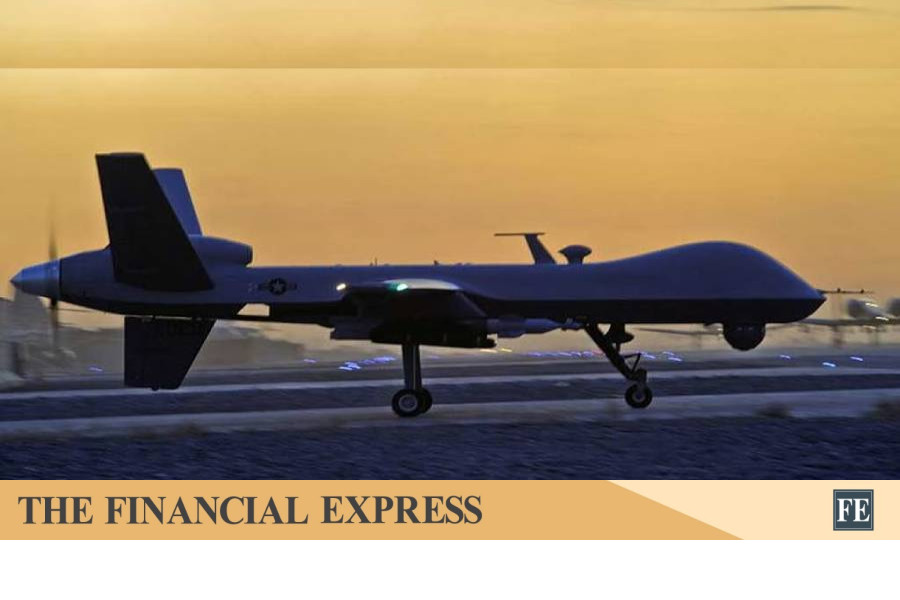
India is likely to order more than $2 billion worth of military drones from domestic firms this year in its biggest such purchase, an industry body working with the government told Reuters, as global and regional conflicts boost demand.

The plans are in advanced stages with deliveries expected over 18 to 24 months, for a jump in value from recent government orders worth 30 billion rupees ($313 million) for tactical-class drones, said Smit Shah, president of the body.

“In the next phase, tactical drone procurements in India may exceed 200 billion rupees, or more than $2 billion,” said Shah, whose Drone Federation India represents more than 550 companies and works closely with the government.

Shah said the new orders may follow a fast-track procurement route designed to meet urgent operational needs, with deliveries probably needed within 24 months.

The defence ministry did not immediately respond to requests for comment on the likely purchase order, which Reuters is the first to report.

Offensive Potential of Low-cost Drones In Spotlight

India’s push follows clashes with arch-rival Pakistan in May last year, when both sides deployed unmanned aerial vehicles at scale for the first time, highlighting the offensive potential of low-cost drones.

The conflicts in Ukraine and Iran have further sped adoption globally, driving down costs and reshaping battlefield tactics.

In March, the defence ministry approved a proposal worth about 2.38 trillion rupees ($24.85 billion) to buy transport aircraft, missiles system and “remotely piloted strike aircraft”, or armed drones, without giving a spending breakdown.

“Drones are force multipliers on the modern battlefield,” said Ramesh Chandra Padhi, an executive at IG Defence, a builder of advanced unmanned aerial and short-range missile systems.

“The Indian army is following emergency or fast-track procurement to expedite the induction of drones on a very large scale,” the former senior army officer added.

Drone Industry Explodes In India

India has more than 600 firms making drones and components, with more than 100 focused on defence applications.

The companies range from large players such as Adani Group, Larsen & Toubro and Tata Advanced Systems to startups like ideaForge, Newspace Research and Asteria Aerospace.

They work on building reconnaissance, logistics, loitering munition, precision-strike and critical component systems.

In recent years, India has overhauled a typically slow defence procurement process to allow faster acquisition of drones, particularly after clashes with Pakistan exposed gaps in surveillance and strike capabilities, Reuters has reported.

New Delhi has started relying on emergency procurement powers and swifter efforts under the Defence Acquisition Procedure, compressing timelines to months instead of years.

At the same time, in its push to boost domestic manufacturing, it is giving priority to systems made at home.

The government has also expanded schemes such as Innovations for Defence Excellence (iDEX) to fund prototypes and enable smaller firms to win initial orders and help scale up production quicker.

At the same time, the defence ministry has opened more areas of procurement to startups and private firms, eased testing norms and pushed the armed forces to add systems through repeat and interim orders that let companies refine products rapidly.

The changes are reshaping India’s drone industry, long dominated by small players, as better order visibility and policy support unlock funding and partnerships, DFI’s Shah said.

Venture investment and tie-ups with larger defence firms have picked up, with companies ramping up manufacturing and research to fill rising military demand, he added.​
 

Latest Posts

Back