Home Watch Videos Wars

[🇧🇩] Indo-Bangla Relation: India's Regional Ambition, Geopolitical Reality, and Strategic Options For Bangladesh

[🇧🇩] Indo-Bangla Relation: India's Regional Ambition, Geopolitical Reality, and Strategic Options For Bangladesh
575
25K
More threads by Saif

G Bangladesh Defense

Bangladesh wants good ties with India: Adviser

FE ONLINE REPORT
Published :
Jul 24, 2025 19:56
Updated :
Jul 24, 2025 19:56

1753400994810.webp


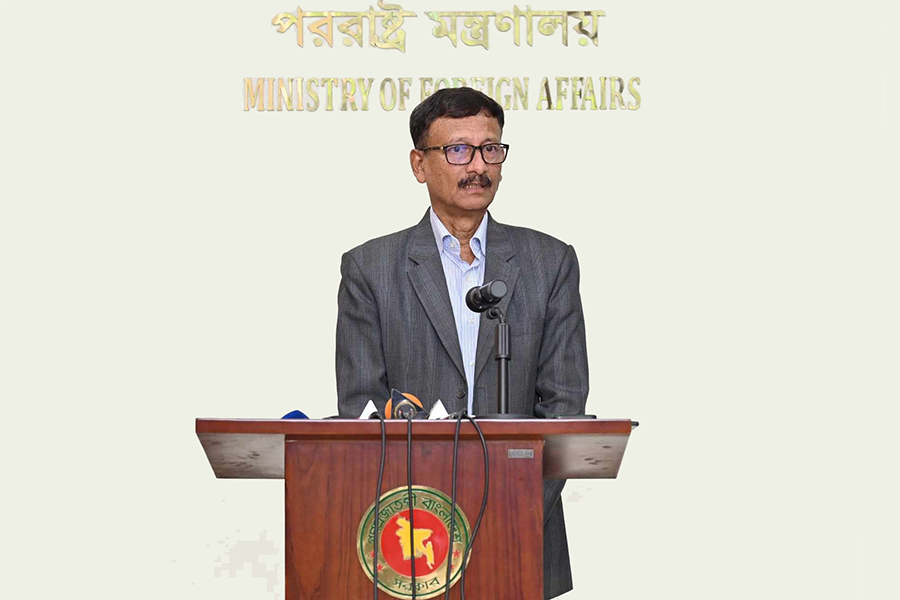
Md Touhid Hossain, Foreign Affairs Adviser to the interim government, said on Thursday that no one, including himself or anyone within the government, has ever stated that they do not want good relations with India.

He made the remark in response to a journalist’s question at the Ministry of Foreign Affairs on Thursday evening.

When asked whether India sending a special medical team to Dhaka to assist with treatment for those injured and burned in the recent fighter jet crash at Milestone School and College in Uttara signalled any diplomatic coldness between the two countries, Touhid Hossain replied, “We want good relations with India. We want a good working relationship based on mutual respect. Our position on this has been consistent. No one has ever said — neither I nor anyone in this government — that we don’t want good relations with India.”

He added, “We have extended all necessary courtesies. After the incident (the aircraft crash), several countries expressed interest in helping, and India was one of them. We consulted the burn unit regarding their needs and conveyed those to India. In response, they sent two doctors and a nurse. They will provide whatever support they can. You see, people-to-people contact between the two countries has always been positive.”

On Wednesday evening, a three-member Indian medical team arrived in Dhaka to assist with the treatment of burn victims from the incident.

When asked about the foreign policy priorities of the current government, Touhid Hossain said, “We have not done anything to harm our relationships with any country. Maintaining good relations with neighbours has been a key focus, but that doesn’t mean we have become overly dependent on anyone. We have prioritised our national interests. Our goal with India is to maintain good relations, but there must be mutual respect and a conducive environment for cooperation.”

Responding to a question, he said the Chinese Ambassador in Dhaka recently assured him that the dam on Brahmaputra River by China won’t affect Bangladesh.

They have assured us, he added.

Replying to a question, he said that the setting up of the mission office of the UN Human Rights Council will be positive for Bangladesh.

The decision was taken in the interest of the people of the country, he noted.​
 
Analyze

Analyze Post

Add your ideas here:
Highlight Cite Fact Check Respond

Dhaka-Delhi relations show positive signs despite border worries

UNB Dhaka
Published: 26 Jul 2025, 19: 39

1753577470318.webp


The relationship between Bangladesh and India has demonstrated some ‘encouraging signs of goodwill’ in recent days despite killings along the border and push-ins prompting concerns from Dhaka which keeps focusing on good working relations with New Delhi, officials from both sides said.

The arrival of an Indian medical team in Bangladesh, coupled with a symbolic gesture from Chief Adviser Prof Muhammad Yunus in the form of sending delicious mangoes to the Indian leaders, reflects the ‘underlying spirit of friendship and cooperation’ that continues to shape bilateral ties.

Though tourists’ visas remain closed for nearly a year, official spokesperson at the Indian Ministry of External Affairs Randhir Jaiswal said they have been issuing visas to Bangladesh for various reasons - for various travels, medical emergencies and students. “We are issuing substantial visas.”

The visit of the Indian doctors and nursing officials follows Indian Prime Minister Narendra Modi’s assurance to extend all possible assistance and support to Bangladesh in the wake of the tragic incident of plane crash in Dhaka on 21 July 2025.

The Indian medical team, now in Dhaka to help provide treatment to Milestone crash victims, held detailed medical consultations with senior officials of the Bangladesh Ministry of Health and doctors at the National Institute of Burn and Plastic Surgery in Dhaka.

They reviewed each of the critical cases, exchanged views on the treatment methodologies, and conveyed their assessment on future courses of treatment.

Taking India’s medical team’s presence in Bangladesh positively, Foreign Affairs Adviser Md Touhid Hossain said the interim government always wanted a good working relationship with India on the basis of reciprocity and mutual respect.

“We always wanted that ... .from day one we said we want a good working relationship with India on the basis of reciprocity and mutual respect. Our position remains unchanged,” he said on Thursday, noting that they -- no one from the interim government -- never said they do not want good relations with India.

Earlier this month, Prof Yunus sent mangoes to the Indian President and Prime Minister in a sweet gesture of goodwill.

Often referred to as ‘mango diplomacy’, this tradition has become an annual gesture symbolising warmth and neighbourliness between the two nations and the gesture is seen as a seasonal reminder of shared culture and mutual respect.

In addition to the President and Prime Minister of India, the recipients include the King and Prime Minister of Bhutan; the President, Vice President, and Prime Minister of Nepal; the President and Prime Minister of Pakistan; and the President of the Maldives. These mangoes were sent on behalf of the Chief Adviser, an official told UNB.

Border killings

In February this year, Bangladesh and India agreed to take concrete measures to eliminate border killings, strengthen security and enhance cooperation on cross-border issues, following the 55th border conference between Border Guard Bangladesh (BGB) and India’s Border Security Force (BSF).

In order to reduce the incidents of shooting, killing, injuring, and beating of unarmed citizens on the border to zero, both sides agreed to intensify joint patrols in vulnerable areas, exchange intelligence promptly, undertake awareness campaigns among border communities and implement socio-economic development initiatives.

Dhaka, however, says border killings continue. On July 25, two Bangladeshi nationals were killed and another injured after Indian Border Security Force troops opened fire on them along the Bashpadua border in Feni's Parshuram upazila early.

Foreign Affairs Adviser Hossain said no border guard force has the right to shoot and kill someone who violates the law along the border, stressing that those who do this should be tried under Indian law.

“We are clearly saying that the border guard force does not have the right to shoot and kill someone who violates the law at the border. It is illegal. We have been protesting about this regularly. We keep continuing our protest,” he said.

As journalists wanted to know whether the interim government, although initially strict in its stance on protesting the border killings, has become a little softer now, Adviser Hossain said, “Not at all.”

Push-ins

Bangladesh remains concerned about reported push-ins from India to Bangladesh and Dhaka thinks these are still happening which is against the existing arrangements between the two countries.

The Foreign Affairs Adviser said there is a prescribed process between the two countries to identify and take back citizens through exchange of lists, but if push-ins are carried out without following it, it is a clear violation of the rules.

He said they have recently taken back several citizens through the existing arrangement. “We insist that they maintain this procedure. This is our expectation.”

On 23 July, the Human Rights Watch (HRW) said Indian authorities have expelled hundreds of ethnic Bengali Muslims to Bangladesh in recent weeks without due process, claiming they are “illegal immigrants” and many of them are Indian citizens from states bordering Bangladesh.

The government should stop unlawfully deporting people without due process and instead ensure everyone’s access to procedural safeguards to protect against arbitrary detention and expulsion, said the New York-based rights body.

On 8 May, Bangladesh’s Foreign Ministry wrote to the Indian government calling these ‘push-ins’ – an apparent reference to collective expulsions – ‘unacceptable’, and saying that they would “only accept individuals confirmed as Bangladeshi citizens and repatriated through proper channels.”

Neighbours can’t be changed

Bangladesh and India witnessed changes after 5 August last year and both sides are trying to take forward the relations accepting this changed reality.

The downturn that the two countries witnessed over the past months in terms of bilateral business activities affected both Bangladesh and India, not just Bangladesh.

“Despite ups and downs, we can’t ignore India as our neighbor. At the same time, India can’t ignore Bangladesh. It is better for both sides to maintain cordiality,” a senior official told UNB.

He said, “A kind of imbalance was created during the previous regime. We are trying to make a balance,” he added, noting that Bangladesh-India relationship is not without its challenges.

Bangladesh is now heading towards the next national election, likely to be held in February or April in 2026. Like Bangladesh’s other foreign partners, India is also keeping its eyes on the developments in Bangladesh.

“We have said that as a democracy we would welcome holding of elections that are inclusive and includes everybody in its fold,” said Randhir Jaiswal in a regular briefing in New Delhi.

He said India wants a ‘positive and constructive’ partnership with Bangladesh.

“We have had engagements at the leaders’ level. We also had Foreign Secretary visiting Bangladesh. We have had meetings between our External Affairs Minister and his counterpart, and you know there are several areas of cooperation between the two countries that are ongoing including development partnership. So, that is the context in which you must look at how we want to approach India-Bangladesh ties,” Jaiswal said.

On 23 July, the Human Rights Watch (HRW) said Indian authorities have expelled hundreds of ethnic Bengali Muslims to Bangladesh in recent weeks without due process, claiming they are “illegal immigrants” and many of them are Indian citizens from states bordering Bangladesh.

The government should stop unlawfully deporting people without due process and instead ensure everyone’s access to procedural safeguards to protect against arbitrary detention and expulsion, said the New York-based rights body.

On 8 May, Bangladesh’s Foreign Ministry wrote to the Indian government calling these ‘push-ins’ – an apparent reference to collective expulsions – ‘unacceptable’, and saying that they would “only accept individuals confirmed as Bangladeshi citizens and repatriated through proper channels.”​
 
Analyze

Analyze Post

Add your ideas here:
Highlight Cite Fact Check Respond

Bangladesh-India relations should be based on equity

1754014107261.webp

Despite frequent affirmations of friendship, Bangladesh often finds itself on the receiving end of disproportionate behaviour. The sharing of the Teesta River serves as a glaring example. FILE VISUAL: SALMAN SAKIB SHAHRYAR

The relationship between Bangladesh and India has been tense since the ouster of former Prime Minister Sheikh Hasina following the nationwide student-led movement in July-August 2024. Subsequently, anti-Bangladesh propaganda in the Indian media, coupled with Delhi's seeming reluctance to extradite Hasina, fuelled growing anti-India sentiment in Bangladesh. Additionally, the chief adviser of the interim government visited China on his first bilateral visit abroad, breaking the longstanding tradition of visiting India first. This shift also led to reciprocal trade restrictions between India and Bangladesh on crucial trade routes.

India, as a regional giant and emerging global power, bears responsibility to recalibrate its approach to Bangladesh. The relationship has often been marked by asymmetry, characterised by political goodwill but lacking in equity. Dhaka is not just a smaller ally but a genuine partner, deserving of fair treatment that recognises its legitimate interests.

Equity in diplomacy does not equate to equality. It entails fair treatment, recognition of differing capabilities, and the establishment of systems that address power asymmetries rather than exploit them. Stronger nations must shoulder greater responsibilities not to dominate but to facilitate balanced cooperation.

The United Nations Charter upholds the sovereign equality of all its members. Regardless of size or strength, every country, including Bangladesh, deserves an equal voice in regional decisions affecting its people, resources, and security.

Non-intervention in domestic affairs is another fundamental principle of international relations, directly relevant to Bangladesh-India relations. India's perceived involvement in Bangladesh's internal political dynamics has often bred resentment and suspicion, undermining mutual trust.

These principles are not just moral ideals but practical guidelines for sustainable and respectful diplomacy. For Bangladesh-India relations to thrive in the 21st century, both countries must embody these values.

Despite frequent affirmations of friendship, Bangladesh often finds itself on the receiving end of disproportionate behaviour. The sharing of the Teesta River serves as a glaring example. Despite over a decade of negotiations, India's domestic political considerations, especially opposition from West Bengal, have repeatedly stalled the Teesta River sharing agreement. Meanwhile, farmers in Bangladesh's northern regions suffer from water shortages. The solution demands equitable negotiation and sensitivity to the environmental and human costs on both sides of the border, rather than dominance.

Similarly, border killings by Indian security forces remain a tragic and unresolved issue. Although both governments claim to be working to reduce such incidents, they continue to occur regularly, often involving unarmed civilians. Such actions not only violate bilateral agreements but also undermine the spirit of peaceful coexistence enshrined in international law. India must increase efforts to hold its forces accountable and address Bangladesh's concerns seriously.

Bangladesh maintains a significant trade deficit with India. While India exports over $11 billion worth of goods annually to Bangladesh, its imports from Bangladesh remain below $2 billion. This imbalance is shaped not just by market dynamics but also by non-tariff barriers, bureaucratic hurdles, and restrictive Indian trade policies. Equity demands that India provide preferential market access and remove trade barriers hindering Bangladesh's export growth. Only then can the bilateral relationship mature into a true partnership.

There have been positive developments in connectivity between the two nations, including the revival of rail and road links, the utilisation of ports, and growing energy cooperation. Bangladesh has accommodated Indian requests for transit and access to its territory. However, regional connectivity must be reciprocal, viewing Bangladesh's strategic location not merely as a corridor to India's northeast but as a sovereign asset to be respected and fairly negotiated.

India's aspiration to lead South Asia as a regional power must be grounded in consensus-building rather than unilateralism. Legitimate leadership requires generosity, fairness, and the capacity to uplift neighbours rather than dominate them.

Bangladesh and India possess significant potential for cooperation, ranging from climate change and disaster response to trade, counterterrorism, and cultural exchange. To unlock this potential, both countries must move beyond the old paradigm of dominance and dependency. India should regard Bangladesh not as a subordinate but as an equal stakeholder in South Asia's future.

Bangladesh, meanwhile, should assert its national interests confidently yet diplomatically, leveraging its growing geopolitical significance. Multilateral forums, particularly SAARC and BIMSTEC, should serve as platforms for reinforcing norms of equity, with active engagement from both nations to rejuvenate these institutions.

Sadia Aktar Korobi is a graduate from the Department of Peace and Conflict Studies at the University of Dhaka.​
 
Analyze

Analyze Post

Add your ideas here:
Highlight Cite Fact Check Respond

Surely India won’t decide Bangladesh’s ties with Pakistan: Touhid Hossain
Diplomatic Correspondent Dhaka
Published: 04 Aug 2025, 22: 28

1754354108529.webp

Foreign affairs adviser Md Touhid Hossain speaks to the newspersons at the foreign ministry Prothom Alo file photo

Foreign Affairs Adviser Md Touhid Hossain on Monday said as Bangladesh does not decide the nature of India’s relationship with Pakistan, similarly, India surely will not determine Bangladesh’s relationship with Pakistan.

He made the remark while responding to a newsperson’s question at the Foreign Service Academy in Dhaka on Monday evening .

Pakistan’s Deputy Prime Minister and Foreign Minister Ishaq Dar is scheduled to visit Dhaka on 23 August. This will be the first bilateral visit of any Pakistani foreign minister in the past three decades.

When asked whether India’s concerns over Bangladesh’s relations with Pakistan would be taken into account, Touhid Hossain said, “I don’t decide how India’s relationship with Pakistan will be. Likewise, surely India won’t decide how our relations with Pakistan will be.”

Speaking about Ishaq Dar’s upcoming visit to Bangladesh, the foreign affairs adviser further said that the visit involves matters of mutual interest between Bangladesh and Pakistan, including trade and commerce, and that all aspects of the bilateral relationship will be open for discussion.

Bangladesh, he said, seeks normal relations with Pakistan. Relations are not going to rise abnormally to a higher level; at the same time, Bangladesh has also moved away from the earlier position of intentionally keeping ties strained with Pakistan. “Our relationship with Pakistan will be like that with any other country.”

Asked whether issues such as a formal apology for 1971 or the return of outstanding funds (including Bangladesh’s share of the State Bank of Pakistan and USD 200 million in foreign donations intended for cyclone victims in 1970) would be on the table, Touhid Hossain said, “Every issue will be on the table. What hasn’t been possible in 50 years won’t be resolved in six months.”

Emphasising that Bangladesh will approach talks with a positive mindset, the foreign adviser said, “We don’t want one issue to block another.”

On whether a Bangladesh–China–Pakistan trilateral initiative would be discussed during Ishaq Dar’s visit, Touhid Hossain said there is no such alliance among Dhaka, Beijing, and Islamabad.

According to him, an informal meeting took place. That doesn’t mean there can’t be another one soon. Bangladesh would welcome broader participation—perhaps one or two other countries could join.​
 
Analyze

Analyze Post

Add your ideas here:
Highlight Cite Fact Check Respond

India to offer gun licences to people in state bordering Bangladesh
Agence France-Presse. New Delhi, India 08 August, 2025, 07:12

India's Assam state, bordering Muslim-majority Bangladesh, is to issue gun licences to ‘indigenous’ residents, its Hindu nationalist leader has announced, a move raising concerns among the state's Muslims.

Assam Chief Minister Himanta Biswa Sarma has previously warned that the Assamese-speaking population ‘face the threat of attacks from the Bangladesh side, and even in their own villages’.

The northeastern state of around 31 million people is riven by multiple ethnic, linguistic and religious fault-lines, and was troubled by several bloody clashes in past decades.

Muslims make up roughly 35 percent of the population, most of them Bengali speaking, according to the most recent national census in 2011, with the rest largely Hindus.

Sarma announced on Wednesday the introduction of a website ‘where indigenous people, who perceive a threat to their lives and reside in sensitive areas, can apply for arms licenses’.

India has otherwise strict gun control laws, and critics and opposition leaders condemned the move.

‘This will lead to gang violence and crimes based on personal vendettas,’ said opposition Congress lawmaker Gaurav Gogoi on social media platform X.

‘This is not governance, this is a dangerous step backwards towards lawlessness.’

Sarma is from Prime Minister Narendra Modi's Bharatiya Janata Party (BJP).

The move is part of a wider populist campaign by Sarma's BJP government backing the majority Assamese-speaking people, including large-scale eviction drives against what he has called ‘illegal foreigners or doubtful citizens’.

It is widely seen as targeting Muslims speaking Bengali -- the main language in neighbouring Bangladesh.

But many ethnic Bengalis are Indian citizens, with roots in Assam long before the region that is now Bangladesh was carved out at the bloody end of British imperial rule in 1947.

Assam was the first state to implement a controversial citizenship verification exercise in 2019, which excluded nearly two million people -- many of them Muslims.

Tensions in Assam have grown in the past year since the overthrow of Bangladesh's autocratic government, once a close ally of Modi's BJP.

Sarma has warned that ‘the indigenous people’ in border districts ‘live in an atmosphere of insecurity due to the recent developments in Bangladesh’.​
 
Analyze

Analyze Post

Add your ideas here:
Highlight Cite Fact Check Respond

Posts you haven't read yet..

Members Online

Latest Posts

Back
 
G
O
 
H
O
M
E