Donate ☕
201 Military Defense Forums
[🇧🇩] - Indo-Bangla Relation: India's Regional Ambition, Geopolitical Reality, and Strategic Options For Bangladesh | Page 115 | PKDefense
Home Login Nation Wars Watch Videos
Serious discussion on defense, geopolitics, and global security.

[🇧🇩] Indo-Bangla Relation: India's Regional Ambition, Geopolitical Reality, and Strategic Options For Bangladesh

Reply (Scroll)
Press space to scroll through posts
G Bangladesh Defense
[🇧🇩] Indo-Bangla Relation: India's Regional Ambition, Geopolitical Reality, and Strategic Options For Bangladesh
572
24K
More threads by Saif

Indo-Bangla Relation: India's Regional Ambition, Geopolitical Reality, and Strategic Options For Bangladesh​

By Saif

The independence movement under the leadership of Congress was for establishing undivided independent India through the eviction of British rulers from the soil of India, but the degeneration of Hindu-Muslim relations into hostility and the subsequent demand of Muslim league for a separate state for the Muslims of the region thwarted the dream of an undivided independent India and made the partition of subcontinent inevitable. While the initial proposal for the partition met with steep resistance as most of the senior leaders of Congress namely, Mahatma Gandhi, Jawaharlal Nehru, and Maulana Abul Kalam Azad vehemently protested such proposal and termed it as British conspiracy to divide India, the Congress finally gave its nod of approval in the fear that outright rejection of the partition proposal might be used by the British colonial rulers against the independence movement to perpetuate their political domination over the country and in the hope that with a small resource base, peculiar geographic reality that separates both the wings of the country by one thousand miles, and paucity of leaders with high political experience, Pakistan would not survive too long and would reunite with India in the end.

There is no surprise that partition of India came as a shock to Congress leaders and that they could never reconcile themselves to the idea of an independent Pakistan because their freedom struggle was for undivided India, and therefore they wanted to roll back the geographical changes made to Indian subcontinent through partition and their intention was clearly demonstrated to Pakistan from the very beginning, which gave rise to a plethora of problems and a paucity of trust between the two nations.

What Pakistan needed in those formative years was national unity and balanced development in the two wings to ensure security and progress to consolidate its position as a powerful nation in the subcontinent and to thwart Indian attempt to undo the geographical arrangements after partition. But the then Pakistani leaders' myopic failure to recognize Bengalis as equal partners and unforgivable reluctance to give them due share of political power and economic opportunity caused widespread resentment among the East Pakistanis, which was cunningly used by India against Pakistan in the subsequent years. The Indian political leaders in later years used their diplomatic channels and intelligence agencies to cultivate close relations with East Pakistani political establishment in order to involve themselves in almost all political movements in East Pakistan to use the prevailing sense of deprivation among East Pakistanis to their own political advantage and to instigate East Pakistanis against West Pakistanis to accelerate

the process of disintegration of Pakistan firstly, to weaken it, and secondly, to bring it back to India's lap through various political machinations to realize the dream of undivided India.

No amount of political negotiations between the two wings could improve the situation in East Pakistan due, mainly, to the stubbornness of West Pakistanis, which gave rise to increasing sense of alienation and deprivation among the people of East Pakistan, and finally when Sheikh Mujib was denied the premiership in 1970, Bengalis decided to get out of the relationship once and for all. So, for the first time and certainly for the last time in history, the disintegration of Pakistan became a common goal for both India and Bengalis of East Pakistan as the former wanted to break Pakistan to realize its vision of undivided India and the latter wanted to establish a separate independent nation to rid themselves of an insensitive and repressive political regime.
 
Last edited:
Analyze

Analyze Post

Add your ideas here:
Highlight Cite Fact Check Respond
  • Like (+1)
Reactions: Egyptian and Bilal9
Not anti-India 'rhetoric', but a call for national capability

Maha Mirza
Updated: 11 Jan 2026, 09: 38

1768114307849.webp


A critical economic issue has received little attention in Bangladesh’s media, caught up as it is in election alliances and anti-India politics. On 27 December, the country’s yarn mill owners called an emergency meeting. They appealed to the government to protect Bangladesh’s yarn mills from Indian imports.

Over 80 per cent of the yarn used in Bangladesh’s garment industry comes from India. In other words, Bangladesh’s garment factories depend on India for raw materials. But this does not mean we have no yarn of our own or that Indian yarn is our only option. There are nearly 500 yarn factories in the country’s industrial zones. Yet, cheap Indian yarn imports are pushing these domestic mills toward destruction. In the last fiscal year alone, Indian yarn imports increased by 137 per cent.

Indian yarn is cheaper than locally produced yarn—$2.70 per kilogram compared to $3 per kilogram for domestic yarn. When incentives were in place, the price difference was only 5 cents; now it has widened to 30 cents. Unsurprisingly, garment manufacturers are choosing to buy ‘Delhi’ yarn instead of ‘Dhaka’ yarn to reduce costs. The Bangladesh Textile Mills Association (BTMA) reports that over 50 yarn factories have closed in just one year, causing 150,000–200,000 workers to lose their jobs. In short, domestic yarn mills cannot compete with cheap Indian imports.


Why is the production cost of domestic yarn higher? Why is India’s cost lower? Is it because we are inefficient and incompetent, and India is skilled? But does this “efficiency” fall from the sky, or is it built? India benefits from state protection, sustained investment, and a long history of subsidies. Indian yarn mills receive incentives of up to 15 per cent and funding for technological modernisation. But what has our “anti-hegemonist” government done to protect local spinning mills from Indian yarn?

Previously, local yarn production received a 5 per cent cash incentive. This has been reduced to 1.5 per cent. Naturally, production costs have risen, and prices have gone up. Why would garment owners buy higher-priced domestic yarn? They may curse garment owners as “Indian agents,” but at the end of the day, a businessperson will buy the cheaper Indian yarn.

Creating “backward linkages” is not the responsibility of garment owners. It is not the job of the young people chanting anti-Indian hegemony slogans in Shahbagh. This is the responsibility of the state’s policymakers. In the harsh reality of global competition, industries survive only through government intervention. Yet, what a tragic irony: while $2 billion worth of yarn has been imported from India during the interim administration, enormous domestic yarn stocks worth Tk 120 billion remain unsold! The BTMA has recommended imposing at least a 30-cent duty on imported yarn to protect local mills. But so far, the government has not responded.

In other words, on one hand, we want to resist Indian hegemony, but on the other, we import Indian yarn while letting thousands of crores worth of domestic yarn stock go unused. Is this opposing Indian dominance, or is it a complete failure and short-sightedness in building our own strategic capabilities? The same situation exists in many other industries, not just yarn.

Wedding season: Dhaka or Delhi?

It is currently wedding season in the country, with hundreds of weddings happening daily, only in the capital. Look closely—whose sarees, lehengas, or kurtas are being worn at these weddings? Dhaka’s or India’s? Slogans alone will not help. A visit to Mirpur’s Banaraspalli reveals the sad state of Dhaka-made sarees.

Banaraspalli was originally established to protect local weavers. Yet 60 per cent of the sarees sold in this area now come from India. In the very heart of Dhaka’s weaving industry, Indian Kanjivaram and Banarasi sarees are being sold instead of local Dhakai cotton. The wealthy buy them, and the middle- and lower-income groups do too. The reason is simple: Indian sarees cost less to produce and are cheaper. But is this lower production cost accidental, or is it the result of consistent policies by India’s central and state governments?

India has made long-term investments to sustain its handloom industry, provided incentives, and offered loans on easy terms for technological modernisation. What have we done? We have left a highly promising industry, involving the livelihoods of a million artisans, entirely in the hands of the market. The country’s market is now dominated by Indian sarees. Skilled weavers, with decades of expertise, have lost their jobs; some are now working as street vendors, others have bought auto-rickshaws.

The irony doesn’t end there—auto-rickshaw parts are also imported from India! Engines, bearings, shock absorbers, joints—all come from Indian brands like Bajaj and Lumax. Local mechanics cannot compete with the cheaper Indian parts. The reason is the same: India’s auto-rickshaw industry has grown due to central government incentives (promoting environmentally friendly vehicles instead of diesel). Meanwhile, we import millions of Indian parts, and when poor people buy auto-rickshaws and take to the streets, it’s as if we are bulldosing our own economy.

Domestic jute mills shut down while India develops its jute industry

India is the largest market for Bangladesh’s raw jute. It has expanded its jute industry to such an extent that, even as a producer itself, India imports huge quantities of raw jute from Bangladesh. Yet, was the jute grown through the hard labour of Bangladeshi farmers ever meant to serve the country’s own industrialisation? We haven’t forgotten that a section of our media, economists, and intellectuals had, by promoting the narrative of subsidies, built public opinion in favour of closing 26 state-owned mills.

Now, however, the largest jute mills in Khulna, Jashore, and Demra have been deliberately shut down, forcing Bangladesh to depend on India for selling raw jute.

Meanwhile, India has used Bangladeshi raw jute to develop its own jute-processing industry, invested in value addition, made the use of domestic jute mandatory in government corporations, and secured a place for “high-end” jute products in the global market. It goes without saying that these are not isolated policies; rather, every political decision since Nehru’s time has aimed at building national capability.

In contrast, Bangladesh’s state-owned jute mills have seen no new investment in 50 years. Yet, agriculture-based industrialisation was supposed to be a core strength of agrarian Bangladesh—jute, sugar, dairy, poultry, fisheries, and agro-processing. Instead, we have closed functioning factories and sold off machinery worth thousands of crores at bargain prices (visit Khulishpur, Platinum, and Crescent jute mills).

On one hand, stories of millions of jobs are promoted; on the other, industries employing hundreds of thousands of workers—built on the country’s soil, water, climate, and local skills—have been handed over, along with machinery and infrastructure, to businessmen incapable of creating even 100 jobs. The result: the entire industrial belt in the south has collapsed.


Can economic hegemony be prevented without state investment?

If we wanted to resist Indian economic dominance, shouldn’t we have mobilised to save the jute mills and sugar mills employing millions of workers? Continuous recommendations from SCOPE and BGMEA suggested investing just Tk 12 billion, upgrading technology, replacing old charkha/hessian looms with modern ones, installing modern machinery in spinning and batching units, increasing production capacity, reducing corruption in jute procurement, and reforming the industry overall.

Without state investment, “modern” industries do not stand—this is historical reality. Those who believe the market is an apolitical “magic” and that industries will develop automatically under a “free market” should study the industrialisation histories of Europe, America, South America, South Korea, Singapore-Malaysia, or India.

By citing subsidies, Bangladesh’s raw jute has ended up in India. Yet behind India’s jute mills, paper mills, textile, pharmaceutical, shipbuilding, steel, petrochemical, fertilizer, aviation, and telecommunications industries lies decades of sustained state investment and political decisions on subsidies. In the United States, there is not a single food chain, manufacturing industry, or bank-insurance company that has not received substantial, continuous federal support. Companies like Walmart, JP Morgan, FedEx, Nike, Nestle, IBM, Intel, McDonald’s, Pizza Hut, KFC, Burger King, and Domino’s Pizza all benefit from federal subsidies.

When we dream of Amazon, Apple, Dell, HP, Samsung, Lenovo, or Google coming to Bangladesh, a quick search will reveal the extent of state subsidies these companies receive. If Bangladesh buys 14 airplanes from Boeing, does Boeing profit solely on its own, or does its survival depend on billions in federal subsidies? General Motors, Ford, or BMW receive subsidies to establish assembly lines. Tesla was incentivised to promote electric vehicles, and the company itself acknowledges that it could not have survived without federal support.

Countries like Finland, France, Norway, South Korea, and those in South America industrialised using public tax money. They provided continuous subsidies for key industries, offered low-interest bank loans, imposed tariffs on imports, increased budgets for technology, and ensured state ownership in strategic sectors. These policies were not about profit and loss; they aimed to build, sustain, and protect industries of national strategic importance. In other words, the industrial history of developed countries is not a story of an apolitical “free market,” but a history of political decisions, state investment, and strategic subsidies.

On the other hand, while talking about resisting hegemony, we have abandoned the market to the so-called “free market.” Whether it is Indian, Chinese, or American, is it possible to confront powerful economic hegemony without state initiative? Can an economy dependent on Indian markets, Indian raw materials, and Indian products stand tall against Indian hegemony?

Will we keep stockpiles of domestic yarn worth thousands of crores while importing garment yarn from India? Will our sugar mills remain closed while our refineries import raw sugar from India? Will our Banaraspalli sell Indian Banarasi sarees, auto-rickshaw parts and tractors come from India, and 80 per cent of our jute seeds be imported from India, yet we refuse to even discuss self-reliance—while paying lip service to anti-India slogans?

Millions of our workers have fought desperately to save domestic industries, losing jobs, livelihoods, and even facing imprisonment. Yet, we were not even remotely involved in their long struggle. We did not raise a finger to save the country’s jute mills. And now, maintaining an India-dependent economy, can we think we can resist Indian dominance with mere sloganeering?

“Dhaka, not Delhi” is a powerful slogan. We have long used it in anti-Hassina movements. We have consistently argued that to counter India’s subservient foreign policy under Hasina, the killings by the BSF along the border, the Felani murder, hegemonic trade deals in the energy sector, the unfair sharing of Teesta water, unjust transit agreements, and turning the Rampal power plant into a dumping ground for India’s low-grade coal—an economically self-reliant foundation is needed. National capability is required. Reducing dependence on India demands long-term policy. Handing over the backbone of the economy to Delhi while chanting “Dhaka Dhaka” is populist politics—it cannot stop hegemony.

#Maha Mirza is a teacher at the Department of Economics, Jahangirnagar University.​
 
Analyze

Analyze Post

Add your ideas here:
Highlight Cite Fact Check Respond

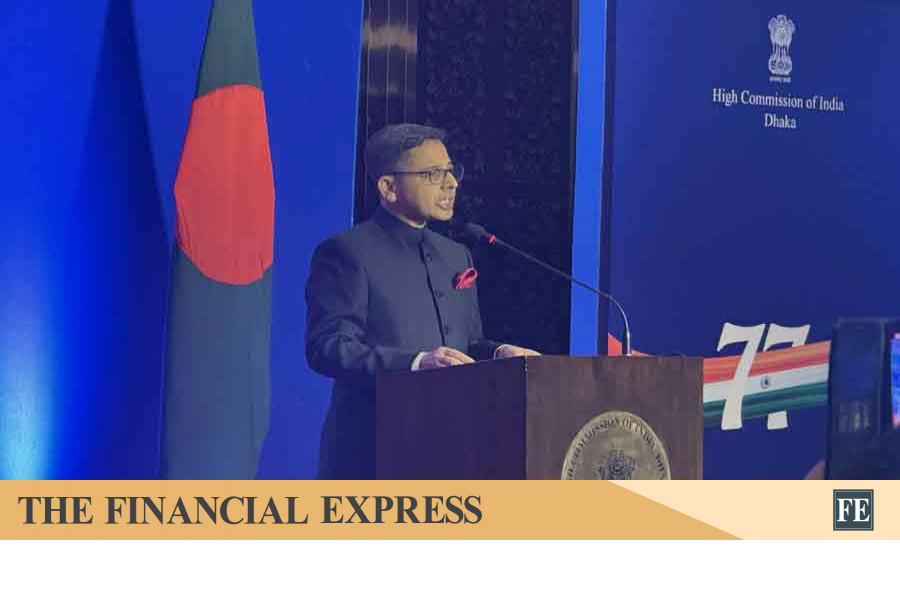
India designates Bangladesh mission as non-family posting amid security concerns

FE ONLINE REPORT
Published :
Jan 21, 2026 18:57
Updated :
Jan 21, 2026 18:57

1769041913760.webp


India has temporarily classified its diplomatic mission in Bangladesh as a non-family posting, due to security concerns, Indian foreign ministry sources told the FE on Wednesday.

Officials at India’s ministry of external affairs (MEA) said the decision was taken as a precautionary measure in light of the evolving security situation. While the Indian high commission and its consulates in Bangladesh remain fully operational, diplomats and officials have been advised to send their immediate family members back to India.

“Given the security situation, as a precautionary measure, we have advised the dependents of officials in the Mission and Posts to return to India,” an MEA official told the FE, on condition of anonymity.

“The Mission and all Posts in Bangladesh continue to remain open and operational in full strength.”

The move, which came into effect on 1 January, means that Indian diplomats posted to Bangladesh will no longer be permitted to be accompanied by spouses or children for the duration of their assignments. Officials were informed that family members should return to India by 8 January, though those with children enrolled in Bangladeshi schools were granted a seven-day extension. By 15 January, families of Indian officials in Dhaka, Chattogram, Khulna, Sylhet and Rajshahi had been required to leave at short notice.

Until now, only four countries – Pakistan, Afghanistan, Iraq and South Sudan – were designated by India as non-family postings for diplomatic assignments. Bangladesh’s addition to that list marks a significant shift in how New Delhi is assessing risk in a neighbouring country with which it shares deep political, economic and cultural ties.

Indian media reports on Tuesday first revealed the decision, triggering speculation about a possible deterioration in security conditions. India’s foreign ministry has yet to issue a detailed public statement, but multiple sources within Bangladesh’s foreign ministry confirmed the development, describing it as a preventive step rather than a response to any specific threat.

The decision comes at a politically sensitive moment for Bangladesh, which is preparing to hold parliamentary elections following the ouster of the Sheikh Hasina-led Awami League government in a violent, student-led uprising in August 2024. Election campaigning is due to begin on 22 January, with the interim administration under chief adviser Muhammad Yunus promising strict security measures to ensure a credible vote.

Concerns over public order, misinformation and the safety of minority communities have featured prominently in recent discussions between New Delhi and Dhaka. Indian officials have repeatedly raised the issue of minority protection, while Bangladesh’s interim government has insisted that most incidents involving minorities in 2025 were criminal acts rather than communally motivated attacks.

Indian media commentary has interpreted the reclassification of the mission as a signal of heightened caution. “Such measures are typically adopted when host countries face prolonged political uncertainty or elevated security risks, even as routine diplomatic engagement continues,” one report noted.

Despite the unusual step, both sides have sought to downplay any suggestion of a diplomatic rift. The Indian mission continues its normal operations, and there has been no indication of a reduction in diplomatic engagement or staffing levels.​
 
Analyze

Analyze Post

Add your ideas here:
Highlight Cite Fact Check Respond

Geopolitical game India playing behind T20 World Cup
Saif Hasnat
Published: 21 Jan 2026, 17: 58

1769216965049.webp

Indian Prime Minister Narendra Modi is with ICC Chairman Jay Shah, the son of India’s Home Minister Amit Shah PTI

Cricket romantics describe the game as a "gentleman's game," where boundaries are marked with ropes and not barbed wire, and where bat and ball are the only weapons. However, times have changed so much that they may wonder while watching the “game” if this is even cricket!

As the next T20 World Cup approaches, the harsh reality of the "gentleman's game" is becoming increasingly clear. World Cups are supposed to be global celebrations of cricket, but instead, they are turning into stages for diplomatic disputes.

Before a major event like the World Cup, the focus is usually on—who are the favourites, who might win, which group is stronger, which group is weaker. But this time, the discussion is whether domestic politics in the host country is suffocating cricket. Questions arise: Is India shooting itself in the foot by politicising cricket?

More regrettably, India is not the only victim of its apparent unwarranted arrogance; the cricketing world is also being impacted negatively. The question of whether this World Cup will be held properly began with the exclusion of Bangladeshi cricketer Mustafizur Rahman from the IPL.

Mustafiz, who has been in discussions for years due to his performances in the Indian Premier League, was identified this year as a "security risk," not for any cricketing reason, but due to the growing ''anti-Bangladesh'' sentiment in India.

This incident has given rise to a contradiction that neither the BCCI nor the ICC can ignore. By labeling a high-profile Muslim cricketer as a "security risk," Indian authorities inadvertently validated the fears they had long dismissed.

If an individual star, protected within the franchise infrastructure, is not safe from the toxic political climate, how can the Bangladesh Cricket Board (BCB) dare send their entire squad, support staff, journalists, and fans there?

When the BCB cited security concerns and refused to tour India, various quarters labeled Bangladesh’s fear as unfounded. Yet, as revealed by a ‘careless’ comment from Bangladesh's sports advisor, ICC’s own security analysis highlighted the risks, which constitutes strong evidence against the host country’s security situation.

The analysis, even according to the sports advisor's claim, mentioned that as Bangladesh’s elections draw nearer, security-related risks will also intensify. It is an indirect admission that India's current environment is so hostile and toxic that it may not be possible to ensure the safety of visiting players—especially Muslim players from neighboring countries.

It needs to be clarified that Pakistan's involvement here is likely opportunistic. This does not stem from a deep love for Bangladesh but rather from a strategic desire to put pressure on their ‘archenemy’ India.
This crisis is not limited to Bangladesh. American cricketer Ali Khan's visa application was also rejected. Ali Khan publicised the news in a bizarre way—when a player is forced to post on Instagram about his visa rejection, holding nothing but a bucket of fried chicken as consolation, the scene might seem laughable; but in this case, it does not appear funny, because everyone knows the serious reason behind it.

Even Ali Khan’s matter is not an isolated incident. Some reports suggest that England's Adil Rashid and Rehan Ahmed have also encountered similar difficulties. These incidents indicate a worrying trend where immigration policies and religious identities are being used as tools to control access to a sports event. How ridiculous, and at the same time, pathetic!

The ICC tirelessly promotes the spread of cricket globally and offers more opportunities to associate countries. Yet, when the United States qualifies to play in the World Cup, their players must undergo a process that cannot be described as anything other than ‘profiling,’ instead of the usual protocol.

By turning the visa process into a tool for political vetting, the host country sends this message to the world: your religion or birthplace is more important to them than your cover drive. In doing so, it alienates the global community that the ICC has tried to build for so long. A World Cup that excludes a player based on their identity is no longer a World Cup; rather, it becomes a geopolitical gathering with a specific ‘dress code’ to follow.

Why is there such a deep crisis of trust in the security assurances provided by the host country? The answer lies in the blurred lines between India’s cricket administration and the country’s ruling political party, the BJP.

The ICC, which is technically the impartial guardian of this game, is currently led by Jay Shah. He is not just a cricket administrator but also the son of India's Home Minister, an important figure in the BJP leadership.

This connection creates a mountain of conflicts of interest that is impossible to ignore. The anti-Muslim sentiment that has led to security concerns in Bangladesh is widely criticised for being fostered by the BJP.

When the BCB or other boards express their concerns, they are told to trust the ICC’s assurances. But in the eyes of many, the ICC and the Indian political establishment have become indistinguishable. How can Bangladesh trust those security assurances when the global body providing them is so intricately connected to a political machine accused of inciting threats?

In international sports, neutrality is the main asset, and by 2026, the ICC seems bankrupt in this regard.

The uncompromising stance of the ICC’s India-based establishment has created a vacuum, and predictably, geopolitics has filled that space. Pakistan has recently indicated that they might reconsider their participation in the World Cup if Bangladesh’s concerns aren’t addressed, leading to even more dangerously precarious outcomes.


It needs to be clarified that Pakistan's involvement here is likely opportunistic. This does not stem from a deep love for Bangladesh but rather from a strategic desire to put pressure on their ‘archenemy’ India. However, you cannot blame Pakistan for capitalising on the opportunity India has created. By politicising neighbourly security, India has handed its adversary a powerful diplomatic weapon.

But the position Pakistan is rumoured to have taken has not been confirmed by the Pakistani government. This silence from Islamabad might represent a new chapter in a traditional strategy to keep New Delhi on edge. Altogether, India's failure to manage regional relations with courtesy has turned the World Cup into a proxy battlefield for South Asian grievances. The focus should have been on the cricket pitch, but all discussions have now moved to the immigration office.

If Bangladesh is forced to change groups, or if at the last minute the games are moved to Sri Lanka amid chaos, then the beauty of the competition itself will be in question. The World Cup was supposed to be a test of skill based on equality, but it’s becoming a test of diplomatic influence.

The 2026 World Cup could have been a showcase of India’s vast influence in cricket. Instead, it is highlighting the reverse side of India’s largest democratic image. If cricket continues on this path—where security is discriminatory, visas are used as political tools, and the governing body becomes a clear extension of state machinery—then the power of the game will only lead to division, whereas sport is only hoped to bring unity.

#Saif Hasnat is a journalist and writer.​
 
Analyze

Analyze Post

Add your ideas here:
Highlight Cite Fact Check Respond

Members Online

⤵︎

Latest Posts

Latest Posts