New Tweets

[๐Ÿ‡ง๐Ÿ‡ฉ] Indo-Bangla Relation: India's Regional Ambition, Geopolitical Reality, and Strategic Options For Bangladesh

G Bangladesh Defense
[๐Ÿ‡ง๐Ÿ‡ฉ] Indo-Bangla Relation: India's Regional Ambition, Geopolitical Reality, and Strategic Options For Bangladesh
581
27K
More threads by Saif

Hindutva group stages protest outside Bangladesh mission in Mumbai

Diplomatic Correspondent Dhaka
Published: 07 Jan 2026, 22: 21

1767834513459.webp


Nearly 150 VHP leaders and activists arrived without prior warning, chanting anti-Bangladesh slogans just 30 metres from the mission on Wednesday afternoon. Courtesy: Diplomatic sources

Members of the Hindutva organisation Vishva Hindu Parishad (VHP) staged a protest right in front of the Bangladesh Deputy High Commission in Mumbai.

Nearly 150 VHP leaders and activists arrived without prior warning, chanting anti-Bangladesh slogans just 30 metres from the mission on Wednesday afternoon, after office hours. At one point, scuffles broke out between the VHP supporters and police.


Several diplomatic sources in Mumbai confirmed the matter to Prothom Alo. They said Bangladesh Deputy High Commissioner Farhana Chowdhury and several others left the mission for home after office hours at 5:00 pm local time as usual.


However, without any prior notice, around 150 VHP leaders and activists gathered on the opposite side of the World Trade Centre in Mumbai around 5:15 pm local time. The police officials on duty were startled seeing such a gathering all of a sudden.


At that time, the protesters chanted different slogans denouncing Bangladesh. When the police tried to push them back, a scuffle broke out.

After roughly half an hour, the VHP protesters left the area in front of the Bangladesh mission due to police intervention.

Sources in Mumbai said that usually only a few police officers are posted outside the mission, but in the past few days, 15 additional officers had been deployed there.​
 
Analyze

Analyze Post

Add your ideas here:
Highlight Cite Respond
Bangladesh suspends visa services at three missions in India

By Diplomatic Correspondent
Three key Bangladesh missions in India have temporarily suspended visa services on security grounds, said Foreign Affairs Adviser Touhid Hossain yesterday.


โ€œWhat I have done is that I have asked our three missions to keep their visa sections closed for the time being. Itโ€™s a security issue,โ€ he told reporters at the foreign ministry in response to a question if Bangladesh missions in India have restricted tourist visas for Indians.


Though he did not mention the names of the missions, according to diplomatic sources, they are the Bangladesh High Commission in New Delhi, the Deputy High Commission in Kolkata, and the Bangladesh Assistant High Commission in Agartala.

Meanwhile, visa services in the other two Deputy High Commissions in Chennai and Mumbai remain operational.


In recent weeks, there have been large-scale protests near Bangladesh missions in several Indian cities, with demonstrators citing alleged violence against minorities in Bangladesh.​
 
Analyze

Analyze Post

Add your ideas here:
Highlight Cite Respond
Not anti-India 'rhetoric', but a call for national capability

Maha Mirza
Updated: 11 Jan 2026, 09: 38

1768114307849.webp


A critical economic issue has received little attention in Bangladeshโ€™s media, caught up as it is in election alliances and anti-India politics. On 27 December, the countryโ€™s yarn mill owners called an emergency meeting. They appealed to the government to protect Bangladeshโ€™s yarn mills from Indian imports.

Over 80 per cent of the yarn used in Bangladeshโ€™s garment industry comes from India. In other words, Bangladeshโ€™s garment factories depend on India for raw materials. But this does not mean we have no yarn of our own or that Indian yarn is our only option. There are nearly 500 yarn factories in the countryโ€™s industrial zones. Yet, cheap Indian yarn imports are pushing these domestic mills toward destruction. In the last fiscal year alone, Indian yarn imports increased by 137 per cent.

Indian yarn is cheaper than locally produced yarnโ€”$2.70 per kilogram compared to $3 per kilogram for domestic yarn. When incentives were in place, the price difference was only 5 cents; now it has widened to 30 cents. Unsurprisingly, garment manufacturers are choosing to buy โ€˜Delhiโ€™ yarn instead of โ€˜Dhakaโ€™ yarn to reduce costs. The Bangladesh Textile Mills Association (BTMA) reports that over 50 yarn factories have closed in just one year, causing 150,000โ€“200,000 workers to lose their jobs. In short, domestic yarn mills cannot compete with cheap Indian imports.


Why is the production cost of domestic yarn higher? Why is Indiaโ€™s cost lower? Is it because we are inefficient and incompetent, and India is skilled? But does this โ€œefficiencyโ€ fall from the sky, or is it built? India benefits from state protection, sustained investment, and a long history of subsidies. Indian yarn mills receive incentives of up to 15 per cent and funding for technological modernisation. But what has our โ€œanti-hegemonistโ€ government done to protect local spinning mills from Indian yarn?

Previously, local yarn production received a 5 per cent cash incentive. This has been reduced to 1.5 per cent. Naturally, production costs have risen, and prices have gone up. Why would garment owners buy higher-priced domestic yarn? They may curse garment owners as โ€œIndian agents,โ€ but at the end of the day, a businessperson will buy the cheaper Indian yarn.

Creating โ€œbackward linkagesโ€ is not the responsibility of garment owners. It is not the job of the young people chanting anti-Indian hegemony slogans in Shahbagh. This is the responsibility of the stateโ€™s policymakers. In the harsh reality of global competition, industries survive only through government intervention. Yet, what a tragic irony: while $2 billion worth of yarn has been imported from India during the interim administration, enormous domestic yarn stocks worth Tk 120 billion remain unsold! The BTMA has recommended imposing at least a 30-cent duty on imported yarn to protect local mills. But so far, the government has not responded.

In other words, on one hand, we want to resist Indian hegemony, but on the other, we import Indian yarn while letting thousands of crores worth of domestic yarn stock go unused. Is this opposing Indian dominance, or is it a complete failure and short-sightedness in building our own strategic capabilities? The same situation exists in many other industries, not just yarn.

Wedding season: Dhaka or Delhi?

It is currently wedding season in the country, with hundreds of weddings happening daily, only in the capital. Look closelyโ€”whose sarees, lehengas, or kurtas are being worn at these weddings? Dhakaโ€™s or Indiaโ€™s? Slogans alone will not help. A visit to Mirpurโ€™s Banaraspalli reveals the sad state of Dhaka-made sarees.

Banaraspalli was originally established to protect local weavers. Yet 60 per cent of the sarees sold in this area now come from India. In the very heart of Dhakaโ€™s weaving industry, Indian Kanjivaram and Banarasi sarees are being sold instead of local Dhakai cotton. The wealthy buy them, and the middle- and lower-income groups do too. The reason is simple: Indian sarees cost less to produce and are cheaper. But is this lower production cost accidental, or is it the result of consistent policies by Indiaโ€™s central and state governments?

India has made long-term investments to sustain its handloom industry, provided incentives, and offered loans on easy terms for technological modernisation. What have we done? We have left a highly promising industry, involving the livelihoods of a million artisans, entirely in the hands of the market. The countryโ€™s market is now dominated by Indian sarees. Skilled weavers, with decades of expertise, have lost their jobs; some are now working as street vendors, others have bought auto-rickshaws.

The irony doesnโ€™t end thereโ€”auto-rickshaw parts are also imported from India! Engines, bearings, shock absorbers, jointsโ€”all come from Indian brands like Bajaj and Lumax. Local mechanics cannot compete with the cheaper Indian parts. The reason is the same: Indiaโ€™s auto-rickshaw industry has grown due to central government incentives (promoting environmentally friendly vehicles instead of diesel). Meanwhile, we import millions of Indian parts, and when poor people buy auto-rickshaws and take to the streets, itโ€™s as if we are bulldosing our own economy.

Domestic jute mills shut down while India develops its jute industry

India is the largest market for Bangladeshโ€™s raw jute. It has expanded its jute industry to such an extent that, even as a producer itself, India imports huge quantities of raw jute from Bangladesh. Yet, was the jute grown through the hard labour of Bangladeshi farmers ever meant to serve the countryโ€™s own industrialisation? We havenโ€™t forgotten that a section of our media, economists, and intellectuals had, by promoting the narrative of subsidies, built public opinion in favour of closing 26 state-owned mills.

Now, however, the largest jute mills in Khulna, Jashore, and Demra have been deliberately shut down, forcing Bangladesh to depend on India for selling raw jute.

Meanwhile, India has used Bangladeshi raw jute to develop its own jute-processing industry, invested in value addition, made the use of domestic jute mandatory in government corporations, and secured a place for โ€œhigh-endโ€ jute products in the global market. It goes without saying that these are not isolated policies; rather, every political decision since Nehruโ€™s time has aimed at building national capability.

In contrast, Bangladeshโ€™s state-owned jute mills have seen no new investment in 50 years. Yet, agriculture-based industrialisation was supposed to be a core strength of agrarian Bangladeshโ€”jute, sugar, dairy, poultry, fisheries, and agro-processing. Instead, we have closed functioning factories and sold off machinery worth thousands of crores at bargain prices (visit Khulishpur, Platinum, and Crescent jute mills).

On one hand, stories of millions of jobs are promoted; on the other, industries employing hundreds of thousands of workersโ€”built on the countryโ€™s soil, water, climate, and local skillsโ€”have been handed over, along with machinery and infrastructure, to businessmen incapable of creating even 100 jobs. The result: the entire industrial belt in the south has collapsed.


Can economic hegemony be prevented without state investment?

If we wanted to resist Indian economic dominance, shouldnโ€™t we have mobilised to save the jute mills and sugar mills employing millions of workers? Continuous recommendations from SCOPE and BGMEA suggested investing just Tk 12 billion, upgrading technology, replacing old charkha/hessian looms with modern ones, installing modern machinery in spinning and batching units, increasing production capacity, reducing corruption in jute procurement, and reforming the industry overall.

Without state investment, โ€œmodernโ€ industries do not standโ€”this is historical reality. Those who believe the market is an apolitical โ€œmagicโ€ and that industries will develop automatically under a โ€œfree marketโ€ should study the industrialisation histories of Europe, America, South America, South Korea, Singapore-Malaysia, or India.

By citing subsidies, Bangladeshโ€™s raw jute has ended up in India. Yet behind Indiaโ€™s jute mills, paper mills, textile, pharmaceutical, shipbuilding, steel, petrochemical, fertilizer, aviation, and telecommunications industries lies decades of sustained state investment and political decisions on subsidies. In the United States, there is not a single food chain, manufacturing industry, or bank-insurance company that has not received substantial, continuous federal support. Companies like Walmart, JP Morgan, FedEx, Nike, Nestle, IBM, Intel, McDonaldโ€™s, Pizza Hut, KFC, Burger King, and Dominoโ€™s Pizza all benefit from federal subsidies.

When we dream of Amazon, Apple, Dell, HP, Samsung, Lenovo, or Google coming to Bangladesh, a quick search will reveal the extent of state subsidies these companies receive. If Bangladesh buys 14 airplanes from Boeing, does Boeing profit solely on its own, or does its survival depend on billions in federal subsidies? General Motors, Ford, or BMW receive subsidies to establish assembly lines. Tesla was incentivised to promote electric vehicles, and the company itself acknowledges that it could not have survived without federal support.

Countries like Finland, France, Norway, South Korea, and those in South America industrialised using public tax money. They provided continuous subsidies for key industries, offered low-interest bank loans, imposed tariffs on imports, increased budgets for technology, and ensured state ownership in strategic sectors. These policies were not about profit and loss; they aimed to build, sustain, and protect industries of national strategic importance. In other words, the industrial history of developed countries is not a story of an apolitical โ€œfree market,โ€ but a history of political decisions, state investment, and strategic subsidies.

On the other hand, while talking about resisting hegemony, we have abandoned the market to the so-called โ€œfree market.โ€ Whether it is Indian, Chinese, or American, is it possible to confront powerful economic hegemony without state initiative? Can an economy dependent on Indian markets, Indian raw materials, and Indian products stand tall against Indian hegemony?

Will we keep stockpiles of domestic yarn worth thousands of crores while importing garment yarn from India? Will our sugar mills remain closed while our refineries import raw sugar from India? Will our Banaraspalli sell Indian Banarasi sarees, auto-rickshaw parts and tractors come from India, and 80 per cent of our jute seeds be imported from India, yet we refuse to even discuss self-relianceโ€”while paying lip service to anti-India slogans?

Millions of our workers have fought desperately to save domestic industries, losing jobs, livelihoods, and even facing imprisonment. Yet, we were not even remotely involved in their long struggle. We did not raise a finger to save the countryโ€™s jute mills. And now, maintaining an India-dependent economy, can we think we can resist Indian dominance with mere sloganeering?

โ€œDhaka, not Delhiโ€ is a powerful slogan. We have long used it in anti-Hassina movements. We have consistently argued that to counter Indiaโ€™s subservient foreign policy under Hasina, the killings by the BSF along the border, the Felani murder, hegemonic trade deals in the energy sector, the unfair sharing of Teesta water, unjust transit agreements, and turning the Rampal power plant into a dumping ground for Indiaโ€™s low-grade coalโ€”an economically self-reliant foundation is needed. National capability is required. Reducing dependence on India demands long-term policy. Handing over the backbone of the economy to Delhi while chanting โ€œDhaka Dhakaโ€ is populist politicsโ€”it cannot stop hegemony.

#Maha Mirza is a teacher at the Department of Economics, Jahangirnagar University.​
 
Analyze

Analyze Post

Add your ideas here:
Highlight Cite Respond

India designates Bangladesh mission as non-family posting amid security concerns

FE ONLINE REPORT
Published :
Jan 21, 2026 18:57
Updated :
Jan 21, 2026 18:57

1769041913760.webp


India has temporarily classified its diplomatic mission in Bangladesh as a non-family posting, due to security concerns, Indian foreign ministry sources told the FE on Wednesday.

Officials at Indiaโ€™s ministry of external affairs (MEA) said the decision was taken as a precautionary measure in light of the evolving security situation. While the Indian high commission and its consulates in Bangladesh remain fully operational, diplomats and officials have been advised to send their immediate family members back to India.

โ€œGiven the security situation, as a precautionary measure, we have advised the dependents of officials in the Mission and Posts to return to India,โ€ an MEA official told the FE, on condition of anonymity.

โ€œThe Mission and all Posts in Bangladesh continue to remain open and operational in full strength.โ€

The move, which came into effect on 1 January, means that Indian diplomats posted to Bangladesh will no longer be permitted to be accompanied by spouses or children for the duration of their assignments. Officials were informed that family members should return to India by 8 January, though those with children enrolled in Bangladeshi schools were granted a seven-day extension. By 15 January, families of Indian officials in Dhaka, Chattogram, Khulna, Sylhet and Rajshahi had been required to leave at short notice.

Until now, only four countries โ€“ Pakistan, Afghanistan, Iraq and South Sudan โ€“ were designated by India as non-family postings for diplomatic assignments. Bangladeshโ€™s addition to that list marks a significant shift in how New Delhi is assessing risk in a neighbouring country with which it shares deep political, economic and cultural ties.

Indian media reports on Tuesday first revealed the decision, triggering speculation about a possible deterioration in security conditions. Indiaโ€™s foreign ministry has yet to issue a detailed public statement, but multiple sources within Bangladeshโ€™s foreign ministry confirmed the development, describing it as a preventive step rather than a response to any specific threat.

The decision comes at a politically sensitive moment for Bangladesh, which is preparing to hold parliamentary elections following the ouster of the Sheikh Hasina-led Awami League government in a violent, student-led uprising in August 2024. Election campaigning is due to begin on 22 January, with the interim administration under chief adviser Muhammad Yunus promising strict security measures to ensure a credible vote.

Concerns over public order, misinformation and the safety of minority communities have featured prominently in recent discussions between New Delhi and Dhaka. Indian officials have repeatedly raised the issue of minority protection, while Bangladeshโ€™s interim government has insisted that most incidents involving minorities in 2025 were criminal acts rather than communally motivated attacks.

Indian media commentary has interpreted the reclassification of the mission as a signal of heightened caution. โ€œSuch measures are typically adopted when host countries face prolonged political uncertainty or elevated security risks, even as routine diplomatic engagement continues,โ€ one report noted.

Despite the unusual step, both sides have sought to downplay any suggestion of a diplomatic rift. The Indian mission continues its normal operations, and there has been no indication of a reduction in diplomatic engagement or staffing levels.​
 
Analyze

Analyze Post

Add your ideas here:
Highlight Cite Respond

Geopolitical game India playing behind T20 World Cup
Saif Hasnat
Published: 21 Jan 2026, 17: 58

1769216965049.webp

Indian Prime Minister Narendra Modi is with ICC Chairman Jay Shah, the son of Indiaโ€™s Home Minister Amit Shah PTI

Cricket romantics describe the game as a "gentleman's game," where boundaries are marked with ropes and not barbed wire, and where bat and ball are the only weapons. However, times have changed so much that they may wonder while watching the โ€œgameโ€ if this is even cricket!

As the next T20 World Cup approaches, the harsh reality of the "gentleman's game" is becoming increasingly clear. World Cups are supposed to be global celebrations of cricket, but instead, they are turning into stages for diplomatic disputes.

Before a major event like the World Cup, the focus is usually onโ€”who are the favourites, who might win, which group is stronger, which group is weaker. But this time, the discussion is whether domestic politics in the host country is suffocating cricket. Questions arise: Is India shooting itself in the foot by politicising cricket?

More regrettably, India is not the only victim of its apparent unwarranted arrogance; the cricketing world is also being impacted negatively. The question of whether this World Cup will be held properly began with the exclusion of Bangladeshi cricketer Mustafizur Rahman from the IPL.

Mustafiz, who has been in discussions for years due to his performances in the Indian Premier League, was identified this year as a "security risk," not for any cricketing reason, but due to the growing ''anti-Bangladesh'' sentiment in India.

This incident has given rise to a contradiction that neither the BCCI nor the ICC can ignore. By labeling a high-profile Muslim cricketer as a "security risk," Indian authorities inadvertently validated the fears they had long dismissed.

If an individual star, protected within the franchise infrastructure, is not safe from the toxic political climate, how can the Bangladesh Cricket Board (BCB) dare send their entire squad, support staff, journalists, and fans there?

When the BCB cited security concerns and refused to tour India, various quarters labeled Bangladeshโ€™s fear as unfounded. Yet, as revealed by a โ€˜carelessโ€™ comment from Bangladesh's sports advisor, ICCโ€™s own security analysis highlighted the risks, which constitutes strong evidence against the host countryโ€™s security situation.

The analysis, even according to the sports advisor's claim, mentioned that as Bangladeshโ€™s elections draw nearer, security-related risks will also intensify. It is an indirect admission that India's current environment is so hostile and toxic that it may not be possible to ensure the safety of visiting playersโ€”especially Muslim players from neighboring countries.

It needs to be clarified that Pakistan's involvement here is likely opportunistic. This does not stem from a deep love for Bangladesh but rather from a strategic desire to put pressure on their โ€˜archenemyโ€™ India.
This crisis is not limited to Bangladesh. American cricketer Ali Khan's visa application was also rejected. Ali Khan publicised the news in a bizarre wayโ€”when a player is forced to post on Instagram about his visa rejection, holding nothing but a bucket of fried chicken as consolation, the scene might seem laughable; but in this case, it does not appear funny, because everyone knows the serious reason behind it.

Even Ali Khanโ€™s matter is not an isolated incident. Some reports suggest that England's Adil Rashid and Rehan Ahmed have also encountered similar difficulties. These incidents indicate a worrying trend where immigration policies and religious identities are being used as tools to control access to a sports event. How ridiculous, and at the same time, pathetic!

The ICC tirelessly promotes the spread of cricket globally and offers more opportunities to associate countries. Yet, when the United States qualifies to play in the World Cup, their players must undergo a process that cannot be described as anything other than โ€˜profiling,โ€™ instead of the usual protocol.

By turning the visa process into a tool for political vetting, the host country sends this message to the world: your religion or birthplace is more important to them than your cover drive. In doing so, it alienates the global community that the ICC has tried to build for so long. A World Cup that excludes a player based on their identity is no longer a World Cup; rather, it becomes a geopolitical gathering with a specific โ€˜dress codeโ€™ to follow.

Why is there such a deep crisis of trust in the security assurances provided by the host country? The answer lies in the blurred lines between Indiaโ€™s cricket administration and the countryโ€™s ruling political party, the BJP.

The ICC, which is technically the impartial guardian of this game, is currently led by Jay Shah. He is not just a cricket administrator but also the son of India's Home Minister, an important figure in the BJP leadership.

This connection creates a mountain of conflicts of interest that is impossible to ignore. The anti-Muslim sentiment that has led to security concerns in Bangladesh is widely criticised for being fostered by the BJP.

When the BCB or other boards express their concerns, they are told to trust the ICCโ€™s assurances. But in the eyes of many, the ICC and the Indian political establishment have become indistinguishable. How can Bangladesh trust those security assurances when the global body providing them is so intricately connected to a political machine accused of inciting threats?

In international sports, neutrality is the main asset, and by 2026, the ICC seems bankrupt in this regard.

The uncompromising stance of the ICCโ€™s India-based establishment has created a vacuum, and predictably, geopolitics has filled that space. Pakistan has recently indicated that they might reconsider their participation in the World Cup if Bangladeshโ€™s concerns arenโ€™t addressed, leading to even more dangerously precarious outcomes.


It needs to be clarified that Pakistan's involvement here is likely opportunistic. This does not stem from a deep love for Bangladesh but rather from a strategic desire to put pressure on their โ€˜archenemyโ€™ India. However, you cannot blame Pakistan for capitalising on the opportunity India has created. By politicising neighbourly security, India has handed its adversary a powerful diplomatic weapon.

But the position Pakistan is rumoured to have taken has not been confirmed by the Pakistani government. This silence from Islamabad might represent a new chapter in a traditional strategy to keep New Delhi on edge. Altogether, India's failure to manage regional relations with courtesy has turned the World Cup into a proxy battlefield for South Asian grievances. The focus should have been on the cricket pitch, but all discussions have now moved to the immigration office.

If Bangladesh is forced to change groups, or if at the last minute the games are moved to Sri Lanka amid chaos, then the beauty of the competition itself will be in question. The World Cup was supposed to be a test of skill based on equality, but itโ€™s becoming a test of diplomatic influence.

The 2026 World Cup could have been a showcase of Indiaโ€™s vast influence in cricket. Instead, it is highlighting the reverse side of Indiaโ€™s largest democratic image. If cricket continues on this pathโ€”where security is discriminatory, visas are used as political tools, and the governing body becomes a clear extension of state machineryโ€”then the power of the game will only lead to division, whereas sport is only hoped to bring unity.

#Saif Hasnat is a journalist and writer.​
 
Analyze

Analyze Post

Add your ideas here:
Highlight Cite Respond

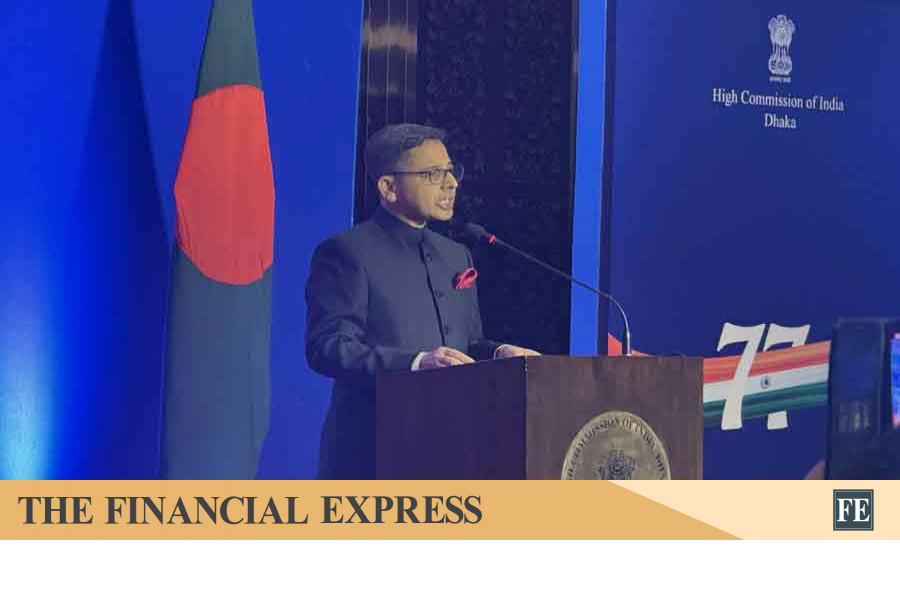
Bangladesh, India reaffirm depth of ties; stress people-centred cooperation

Republic Day of India observed in Dhaka


FE ONLINE DESK
Published :
Jan 24, 2026 21:28
Updated :
Jan 24, 2026 21:28

1769300113388.webp


Bangladesh and India used the occasion of the 77th anniversary of Indiaโ€™s Republic Day to publicly reaffirm the depth of their bilateral relationship, highlighting shared history, expanding energy and connectivity links, and the importance of addressing challenges through sustained dialogue.

Speaking in Dhaka, Bangladeshโ€™s Adviser for Communication and Energy, Fouzul Kabir, described India as Bangladeshโ€™s โ€œclosest neighbourโ€ and emphasised that relations between the two countries are grounded in shared history, geography, and cultural ties. He recalled Indiaโ€™s role during Bangladeshโ€™s 1971 War of Independence, calling the contribution of the Indian people โ€œcrucialโ€ and enduring.

โ€œOur relationship was forged during the glorious War of Independence in 1971, and we will always remember the contribution of the people of India,โ€ Kabir said, framing the bilateral bond as one that extends beyond governments to societies and citizens.

Kabir stressed that Dhaka remains committed to advancing relations through a people-centric approach, placing public welfare at the core of cooperation. While acknowledging that challenges exist, as in any bilateral relationship, he said experience had shown that both countries had repeatedly overcome difficulties in the greater interest of their peoples.

โ€œIt is important that we approach these challenges as opportunities for renewed dialogue,โ€ he said, signalling Bangladeshโ€™s preference for engagement rather than confrontation.

The adviser also underlined Bangladeshโ€™s commitment to regional cooperation, reiterating its support for the South Asian Association for Regional Cooperation (SAARC). He said Bangladesh envisions a peaceful and prosperous South Asia and remains willing to work with all regional countries to revitalise cooperation mechanisms that have long been stalled by political tensions.

Indiaโ€™s High Commissioner to Bangladesh, Pranay Verma, echoed these themes, pointing to concrete examples of how bilateral cooperation has translated into tangible benefits. He highlighted cross-border energy projects, including the pipeline transporting high-speed diesel from an Indian refinery to Bangladesh, and power transmission lines that connect Bangladesh to electricity generated in both India and Nepal.

โ€œThese are examples of how we have together laid the foundations of energy connectivity, leading to regional economic integration,โ€ Verma said, describing the growing interdependence between the two economies as part of a rapidly transforming connectivity landscape.

Verma argued that such projects have brought businesses and societies closer together, reinforcing mutual trust and shared interests. He said the success of existing initiatives should encourage both sides to pursue more ambitious and future-ready collaborations, particularly in technology, innovation, and sustainability.

Looking ahead, the Indian envoy portrayed Bangladesh and India as potential catalysts for each otherโ€™s sustainable growth, capable of building regional value chains, shared digital ecosystems, and interconnected energy corridors. He stressed the importance of ensuring that South Asiaโ€™s energy future is โ€œclean, affordable and secureโ€, including joint efforts to address climate change and environmental sustainability.

โ€œOur geographical proximity can be transformed into economic opportunity,โ€ Verma said, arguing that cooperation between the two countries could serve as an anchor for broader regional integration.

In a politically significant remark, the high commissioner reiterated Indiaโ€™s support for a โ€œdemocratic, stable, peaceful, progressive and inclusive Bangladeshโ€, at a time when the country is undergoing political transition and institutional reform under an interim administration.​
 
Analyze

Analyze Post

Add your ideas here:
Highlight Cite Respond

Sheikh Hasina's statement in Delhi jeopardising progress of democracy and security in Bangladesh

Diplomatic Correspondent Dhaka
Updated: 25 Jan 2026, 19: 59


1769390758153.webp


The government and the people of Bangladesh are surprised and shocked that fugitive Sheikh Hasina, who has been convicted by the International Crimes Tribunal for committing crimes against humanity, was allowed to make a statement at a public event in New Delhi on 23 January.

The government also said Sheikh Hasina openly called for the removal of the government of Bangladesh and issued blatant incitements to her party loyalists and general public to carry out acts of terror in order to derail the upcoming general elections in Bangladesh.

The foreign ministry said this in a statement on Sunday.

Bangladesh is deeply aggrieved that while India is yet to act on her obligations to hand Sheikh Hasina over to Bangladesh under the bilateral extradition agreement despite repeated requests by the Bangladesh government, she has instead been allowed to make such inciteful pronouncements from its own soil.

This clearly endangers Bangladesh's democratic transition and peace and security.

The statement also said allowing the event to take place in the Indian capital and letting mass murderer Hasina to openly deliver her hate speech are contrary to the norms of inter-State relations, including the principles of respect for sovereignty, non interference and good neighbourliness, and constitute a clear affront to the people and the government of Bangladesh.

It sets a dangerous precedent vis-a-vis the future of Bangladesh-India relations and may seriously impair the ability of the future elected polity in Bangladesh to engage, shape and nurture mutually beneficial bilateral relations.

The unabashed incitements by Awami League's leadership yet again demonstrated why the Interim government had to ban its activities.

Bangladesh would hold this outfit responsible for committing incidents of violence and terror in the run up to the elections and on the election day, and will take appropriate actions to foil its evil conspiracies.​
 
Analyze

Analyze Post

Add your ideas here:
Highlight Cite Respond

Unable to understand what the signal indicates: Foreign adviser

Diplomatic Correspondent Dhaka
Updated: 28 Jan 2026, 19: 46

1769647451979.webp


Foreign adviser Md Touhid Hossain at the foreign ministry on Wednesday afternoon. Prothom Alo

The government has not been informed of any security concerns regarding the family members of Indian diplomats in Bangladesh.

It is unclear whether the withdrawal of the family members of Indian diplomats from Bangladesh is intended to convey some kind of message.

Foreign adviser Md Touhid Hossain made these remarks in response to journalists' questions at his office on Wednesday afternoon.

When asked about the repatriation of family members of Indian diplomats from Bangladesh, Touhid Hossain said, "There is no concern about security, but I am completely at a loss about what the signal is. It's their own matter. They can ask their employees to return. I can't find the reason for this."

The foreign adviser commented that there is no situation in Bangladesh that suggests officials or their families are in danger.

He said, "Nothing like that has happened so far. They might have concerns or they might want to send a message. However, I can't really find any reason in this. If they want to take their families back, we have nothing to do."

Referring to the overall security situation in light of the upcoming Thirteenth National Parliamentary elections, Touhid Hossain said, "So far, there has been no disruption in security. It doesn't seem to me that there are more clashes than in past election periods. I don''t think any security situation has arisen that would warrant such measures."

When asked if the Indian embassy in Dhaka had expressed any prior security concerns, the foreign adviser said they had not communicated any such concerns.​
 
Analyze

Analyze Post

Add your ideas here:
Highlight Cite Respond

Members Online

Latest Posts

Back
PKDefense - Recommended Toggle