Smoke and flames were observed at the border between Bangladesh and Myanmar after continuous loud explosions amid a violent conflict between the Myanmar military and rebels of the Arakan Army. Smoke was seen across the Hnila border in Cox's Bazar's Teknaf from 8am on Saturday. On the other side of
Smoke and flames were observed at the border between Bangladesh and Myanmar after continuous loud explosions amid a violent conflict between the Myanmar military and rebels of the Arakan Army.
Smoke was seen across the Hnila border in Cox's Bazar's Teknaf from 8am on Saturday. On the other side of the border are Balibazar and Nagakura Para in Myanmar.
Tarek Mahmud Roni, the president of Hnila Adarsha Govt Primary School, believed that a village located between these areas appears to have been deliberately set ablaze.
Roni noted a shift in the conflict dynamics, with gunfire subsiding by Friday evening, only for explosions to intensify post-midnight into Saturday morning.
A series of around 40 to 50 explosions were reported between 7:30am and 8am, with fires raging until noon.
However, upon recalling the Rohingya crisis in 2017, Roni noted that the residents are terrified of the explosions and the smoke.
The Arakan Army clashed with the military in Myanmar's villages east of the Whykong and Hnila border, including Kumirhali, Naichdong, Kwangchigong, Shilkhali, and Nafpura.
The Border Guard Bangladesh and Coast Guard members have increased their patrols along the Naf River, covering a 54km stretch from Whykong in Teknaf Upazila to Shah Pori’s island at the border.
Residents of the border region reported intermittent shelling and mortar fire in some villages around Maungdaw in Myanmar’s Rakhine State from Friday evening to Saturday afternoon.
Rashed Mahmud Ali, chairman of Hnila Union, mentioned that fighting intensified in Rakhine State over two days, with mortar shells exploding across the Naf River.
Fear prevented thousands from going to their farms, he added.
Shah Jalal, the panel chairman of the Whykong union council, noted that the loud sound of mortar shells caused tremors in his area. Children were disturbed by frequent vibrations at night, and many cried out in fear.
The Arakan Army took control of the Totardia area on the Naf River bank across the Whykong Union two weeks ago, and now it is believed that the Myanmar security forces are trying to retake it.
Adnan Chowdhury, the Upazila executive officer or UNO, said the BGB and the Coast Guard have strengthened patrols along the Myanmar border and residents have been advised to remain vigilant amid the escalating conflict in Rakhine state.
Residents living on the Naikhongchhari border in Bandarban and the Ukhia border in Cox’s Bazar did not hear any gunfire last three days.
Lt Col Mohiuddin Ahmed, leading the Teknaf 2 Battalion of the BGB, said they are closely monitoring the situation in Rakhine and the BGB is on high alert to prevent Rohingya infiltration.
What Bangladesh can do regarding the ongoing crisis in Myanmar
www.thedailystar.net
Civil War in Myanmar
'We need to demonstrate diplomatic agility and manoeuvring skills'
Maj Gen (retd) ANM Muniruzzaman, president of the Bangladesh Institute of Peace and Security Studies (BIPSS), suggests what Bangladesh can do regarding the ongoing crisis in Myanmar, in an exclusive interview with Naimul Alam Alvi of The Daily Star.
For Bangladesh, what are the implications of the current situation in Myanmar?
The current situation in Myanmar is in a state of flux. The Myanmar military junta is rapidly losing control of areas, including areas of interest to Bangladesh—Rakhine and Chin states. The Arakan Army's significant gains suggest they will soon control large swathes. They have already captured Pauktaw, Minbya, and Paletwa. Not only are civilians fleeing these areas, but military soldiers and paramilitary forces are also retreating. Some of them are crossing into Bangladesh, creating a tense and volatile situation. The rapidly changing situation makes it difficult for Bangladesh to receive complete information on the ground, posing a major security threat.
What are the specific challenges?
The first challenge is the insecure border. There have been airspace violations and mortar shells from Myanmar have landed in Bangladesh, damaging settlements; two civilians have already been killed and several villagers have been injured. This is disrupting life and security in Bangladesh.
Secondly, the influx of fleeing Myanmar soldiers poses a major threat. There is information that civilians are gathering on the other side of the border, preparing to enter Bangladesh, including over 400 members of the Chakma ethnic group. We can also expect that others may follow—even the remaining Rohingya who are in Myanmar may also try to enter Bangladesh.
Can the unrest there spill over and create unrest inside our border?
Instability is inherently contagious. When one region experiences turmoil, it can naturally spread to neighbouring areas. This concern is heightened due to the presence of shared ethnicities on both sides of the border. An attack on one group there could easily invite sympathy and even cause unrest among their kin on this side. Therefore, the potential for ethnic tensions spilling over is a significant cause for concern and something to be analysed.
Is there a possibility of unrest increasing in the Rohingya refugee camps?
Of course, the possibility exists. The Rohingya camps have already faced various security issues and disruptions over several years. Internal conflicts and violence between groups within the camps are still going on. If the instability on the other side intensifies, it will undoubtedly affect the Rohingya population here, further complicating an already complex situation.
The prospects for repatriation, already bleak, have dimmed further due to the escalating crisis in Myanmar. Discussions, effective arrangements, and sustained action seem nearly impossible in the current turmoil. The situation worsens daily.
Bangladesh recently summoned the Myanmar ambassador to express its displeasure. However, given the Myanmar government's precarious control, how effective is such an act? What can Bangladesh realistically achieve?
Traditional diplomatic methods might struggle in this fluid conflict zone. Summoning the ambassador and issuing a protest note is standard diplomatic practice, but this is no ordinary situation. It's a dynamic conflict demanding a robust approach. We may need to explore avenues of understanding and communication with various actors involved.
Major international players like India, China, the US, other Western powers, and Russia are directly involved due to their diverse interests. Communicating solely with Myanmar won't be entirely effective. We must engage in broader diplomatic manoeuvring, leveraging our existing relationships.
I fear crucial time has been lost, but establishing new communication channels is imperative. We need to demonstrate the diplomatic agility and manoeuvring skills required in such complex conflict situations. Clinging to routine diplomacy will leave us overtaken by events. We cannot repeat our inactiveness during the Rohingya crisis, when we'd started our diplomacy after the influx. We must be proactive, anticipating developments and taking steps to prevent the situation from spiralling out of control.
What additional measures can we take?
Beyond diplomacy, we must prioritise physical security. This requires fortifying and strengthening our borders, and closing any loopholes vulnerable to infiltration or security breaches. We need comprehensive armed arrangements to effectively respond to potential threats across the entire border region. These are immediate crisis management needs.
Furthermore, engaging with regional powers is vital. Understanding their perspectives on the security situation and aligning our own needs with theirs is crucial. This multipronged approach requires a comprehensive understanding of how to effectively secure our borders.
You mentioned major global players being involved. Can you elaborate on their motivations and specific interests in Myanmar?
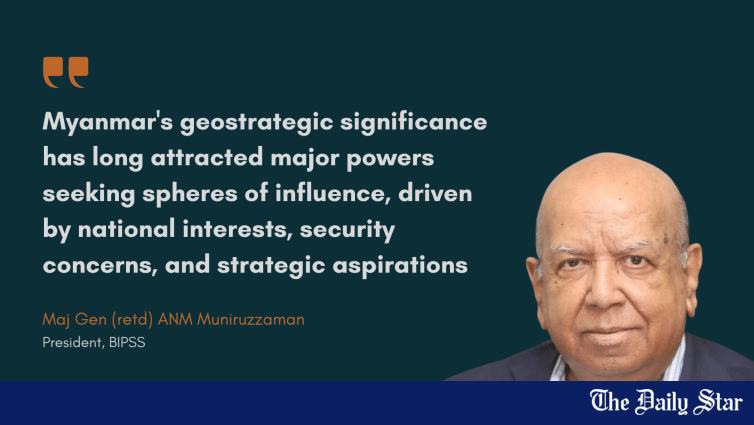
Myanmar's geostrategic significance has long attracted major powers seeking spheres of influence, driven by national interests, security concerns, and strategic aspirations. The ongoing crisis has reignited their involvement, with each aiming to maintain or expand their reach.
For example, India has a significant presence in our bordering state Rakhine. There is the Kaladan Multi-Modal Highway, which enters India's northeast from Sittwe port by land and river. This is a multi-billion dollar project for India, and India's interests are directly involved in it.
We also know that Rakhine is a major gateway to the Bay of Bengal and the Indian Ocean. And for this reason, all the major powers have a special interest in this region. The deep sea port that has been built in Kyaukpyu is a major Chinese port. It does not only serve as a deep sea port but is also a major energy hub—transporting oil and gas directly to China's Yunnan province. This strategic location aligns with their national and energy interests. So China has significant interest in Rakhine.
There are also several special economic zones being set up in Rakhine, where Russia and China plan to establish industrial zones, drawing Russia into the mix.
In the current geopolitical reality, with global strategic competition being high, wherever China has an interest, the US gets involved to counter it. So that's why the US has a big interest here too. This is evident in their close monitoring of Myanmar and the recent Burma Act legislation, signalling their readiness for action.
What strategy do you propose to deal with the current crisis?
Our approach must be exceptionally dynamic and innovative. We need unconventional solutions alongside traditional diplomacy, engaging with multiple actors. Maintaining active communication with Asean, given Myanmar's membership, is crucial. Additionally, establishing communication with the major global players I have mentioned, while considering their interests alongside our own, is essential. We must also reevaluate the timing of formally engaging with non-state actors. Time is of the essence. Delays in effective diplomacy could lead to even more significant challenges.
This is a crisis, and like any crisis, it demands more than a routine 9-to-5 office. Establishing a dedicated crisis task force is paramount. This team, comprising representatives from various ministries and government agencies (foreign affairs, home affairs, defence, intelligence), humanitarian organisations and relevant stakeholders, should operate 24/7. Their mandate would be to constantly monitor the situation, analyse developments, and propose solutions for political decision-making across various angles: security, diplomacy, conflict resolution, humanitarian aid, and resource management.
It's crucial to remember that this is not just a security concern; it's a multifaceted crisis with diverse dimensions requiring a holistic approach. Addressing emerging challenges swiftly and effectively necessitates a collaborative effort beyond the capabilities of any single ministry.
Traditional diplomatic methods of summoning ambassadors or issuing protests are inadequate for this dynamic situation. We need a fresh, analytical approach, tailoring responses to emerging threats. Proactive measures are essential; there is no time to lose.
A Bangladeshi youth who sustained bullet injuries in Ukhia of Cox’s Bazar during ongoing conflict in Myanmar a month ago died...
www.newagebd.net
MYANMAR CONFLICT
Bangladeshi youth succumbs to bullet injury
Our Correspondent . Cox’s Bazar | Published: 23:02, Mar 08,2024 | Updated: 23:40, Mar 08,2024
A Bangladeshi youth who sustained bullet injuries in Ukhia of Cox’s Bazar during ongoing conflict in Myanmar a month ago died at a hospital on Thursday.
The victim, Anowarul Islam, 35, a father of three, sustained bullet injuries on February 6 when a group of locals tried to resist Myanmar nationals from trespassing on the international border.
He was admitted to Cox’s Bazar District Hospital where he died at about 10:00pm on Thursday.
Palongkhali union parishad chairman M Gafur Uddin Chowdhury said that Anowarul sustained injuries when a group of armed Rohingyas, who were later arrested, entered Bangladesh along with members of the Myanmar Border Police.
The hospital resident medical officer, Ashikur Rahman, confirmed the death.
Moriam Khatun, wife of the deceased, said that they had two daughters and one son.
Anowarul was a farmer and got injured while working on land like every day, she added.
Ukhia police station officer-in-charge Shamim Hossain said that he had learnt about the death and were looking into the matter.
At least 179 personnel from Myanmar security forces crossed the border near Naikhyangchari in Bandarban on Monday and sought shelter in Bangladesh amid their ongoing...
www.newagebd.net
179 Myanmar troops take shelter in Bangladesh again
Muktadir Rashid | Published: 16:39, Mar 11,2024 | Updated: 00:13, Mar 12,2024
Members of the Angthapaya Border Guard Police Camp of Myanmar enter Bangladesh through the border of Jamchari union in Bandarban on Monday. — New Age photo
At least 179 personnel from Myanmar security forces crossed the border near Naikhyangchari in Bandarban on Monday and sought shelter in Bangladesh amid their ongoing conflict with the ethnic rebel group Arakan Army.
Initially, 29 personnel with camouflage and civil dress arrived in the daytime, and after dark, 150 others arrived, officials in Border Guard Bangladesh and Bandarban district administration said.
‘Now our security forces are disarming them,’ said Bandarban district deputy commission Shah Mujahid Uddin.
Earlier, a total of 330 troops and civilians fled fighting in Myanmar’s Rakhine State to enter Bangladesh between February 4 and 10, while the Border Guard Bangladesh rejected the entries of 75 Rohingya who wanted shelter around the same time.
A ship from Myanmar took back Myanmar troops and civilian officials on February 15.
After sending them back, BGB director general Major General Mohammad Ashrafuzzaman Siddiqui told the media that no more troops would be allowed to cross the border.
Different government authorities said that Bangladesh would also not allow any more Rohingya people here.
More than 700,000 Rohingya fled the Myanmar military’s crimes against humanity and acts of genocide in 2017. They joined thousands of Rohingya people already leaving Bangladesh, taking the number of Rohingyas here to over a million.
Two attempts to repatriate the Rohingyas failed, as they refused to return with out a guarantee of safety and citizenship.
An estimated 600,000 Rohingya are still believed to remain in Rakhine State, confined to squalid camps and villages under a system of apartheid.
Shayna Bauchner, Asia researcher at Human Rights Watch, noted in their latest report published on February 9 that in late January, between 12 and 24 Rohingya civilians were killed in Myanmar, while as many as 100 more may have been injured.
People living in Bangladesh villages living along the border have reported frequent sounds of gunfire in recent weeks.
BGB officials confirmed that 29 members of the Angthapaya Border Guard Police Camp came through the border area of Jamchari union and took shelter with Bangladesh Border Guard Battalion 11.
‘We are verifying their identities and documenting their details,’ said a senior BGB official.
The AA warned all regime forces in Rakhine to raise the white flag or face death, Thailand-based news portal The Irrawaddy reported on Monday.
The report, quoting AA, said that the rebel forces chased and attacked fleeing regime forces during their seizure of a military division headquarters in Kyauktaw Township and the junta’s 9th Central Military Training School in Minbya Township. It also claimed to have captured a number of fleeing regime forces.
Foreign minister Hasan Mahmud said on Tuesday that the government was in touch with Myanmar authorities to send back the Myanmar security force members, who...
www.newagebd.net
Govt working to send back Myanmar escapees: FM
Civilians pushed back
Staff Correspondent | Published: 00:09, Mar 13,2024
Foreign minister Hasan Mahmud. --File photo
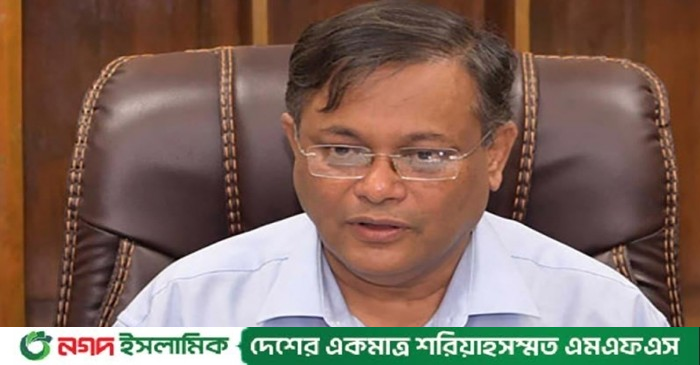
Foreign minister Hasan Mahmud said on Tuesday that the government was in touch with Myanmar authorities to send back the Myanmar security force members, who fled to Bangladesh again amid fighting with rebel forces in bordering Rakhine State.
He said that some civilians in a fresh move also made efforts to enter Bangladesh, but they were pushed back.
‘A total of 177 members of Myanmar’s Border Guard Police have entered Bangladesh again till Tuesday afternoon. We are working to send them back as before. Some civilians also tried to come, but they were pushed back,’ the foreign minister said, responding to reporters’ queries at his Segunbagicha office.
Asked whether the ambassador of Myanmar would be summoned following the latest incident, Hasan said that his ministry was in constant contact with them. ‘The Myanmar ambassador will be summoned if it is necessary,’ he added.
The Myanmar security forces crossed the border near Naikhyangchari in Bandarban on Monday and sought shelter in Bangladesh amid their ongoing conflict with the ethnic rebel group, the Arakan Army.
Initially, 29 personnel with camouflage and civil dress arrived in the daytime, and after dark, 150 others arrived, officials at the Border Guard Bangladesh and the Bandarban district administration said on Monday.
Earlier, a total of 330 troops and civilians fled fighting in Myanmar’s Rakhine State to enter Bangladesh between February 4 and 10, while the Border Guard Bangladesh rejected the entries of 75 Rohingya who wanted shelter around the same time.
A ship from Myanmar took back Myanmar troops and civilian officials on February 15.
After sending them back, BGB director general Major General Mohammad Ashrafuzzaman Siddiqui told the media that no more troops would be allowed to cross the border.

 Bangladesh Defense