[🇧🇩] Insurgencies in Myanmar. Implications for Bangladesh

[🇧🇩] Insurgencies in Myanmar. Implications for Bangladesh
481
23K
More threads by Saif

G Bangladesh Defense

International response to Myanmar’s crimes
1787787457785.webp

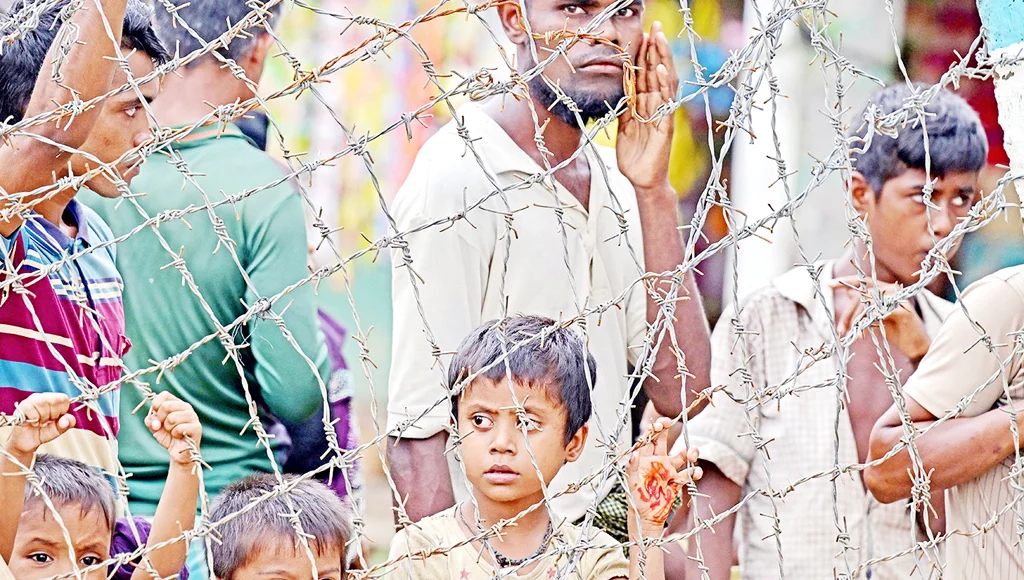
This photo taken in September 9 shows Rohingya refugees standing behind barbed wires at Kutupalong refugee camp. | Agence France-Presse/Munir uz Zaman

WHEN more than 700,000 Rohingya fled to Bangladesh in the last quarter of 2017, the world witnessed a humanitarian crisis of an unprecedented scale in Southeast Asia. The UN human rights chief described it as ‘a textbook example of ethnic cleansing.’ The UN secretary general called the situation ‘catastrophic.’ The French president described it as ‘a genocide.’ The US vice-president called Myanmar’s actions ‘terrible savagery.’ Yet, a decade later, Rohingyas, the stateless, forgotten and embittered race of the mankind, languish in camps in Bangladesh. The international response has been a study in failure and Bangladesh’s performance, despite bearing the heaviest burden, has been marked by strategic miscalculations.

Great power game

CHINA and Russia have been the most consequential obstacles to international action. They both called Myanmar’s atrocity crimes ‘internal affairs.’ They opposed resolutions against Myanmar in the UN Security Council in 2017. When Britain and France drafted a resolution calling on Myanmar to ‘immediately cease military operations’ and allow refugees to return, China strongly opposed it. A UNSC diplomat said that the Chinese were not on board and wanted them ‘to say nothing and do nothing on this issue.’

In November 2018, Britain drafted another resolution with a timeline for refugee return and a warning that the Security Council could consider further steps, including sanctions. Both Russia and China rebuffed it. The Russian UN ambassador called the draft resolution ‘inappropriate, untimely and useless.’ China boycotted all discussions and defined Myanmar’s genocidal crimes as ‘a legitimate counter-insurgency operation.’

Both Chinese and Russian policies towards Myanmar are motivated by strategic and economic interests. Russia has military trade interests. It is the largest source of Myanmar air force inventory. Four months after the genocidal crimes, Myanmar placed a purchase order for six Su-30SME military aircraft at $210 million, along with Orlan-10E UAV and Pantsir S-1 missile systems. After the 2021 coup, Russia secured the sale of undisclosed quantities of Ka-27/28 anti-submarine helicopters and precision-guided munitions.

China has classified geostrategic, economic and military trade interests in Myanmar. Military regimes have received China’s consistent protection. China has its ‘second coast’ in Myanmar, providing a quick access to the Indian Ocean through the Bay of Bengal, reducing dependence on the Malacca Strait.

India’s calculated silence

INDIA, a geopolitical actor in the region, remained silent. Its support was limited to only a plane load of rice for the refugees. In resonance with the Myanmar regime, India announced plans in September 2017 to deport Rohingya refugees living in Indian states. On October 4, 2018, India handed over seven Rohingya men to Myanmar authorities at the border town of Moreh in Manipur state after ‘reconfirming their willingness to be repatriated, a move Human Rights Watch called ‘forced return.’ On April 8, 2021, the Indian Supreme Court cleared the deportation of 176 more Rohingyas.

India has geostrategic interests in Myanmar and competes with China. Driven by its act-east policy, counter-insurgency concerns in its northeast and competition with China, India views the Myanmar government as a critical partner. It has provided military aid for the Tatmadaw. It avoided supporting Bangladesh’s call for the repatriation of the Rohingyas to keep Nay Pyi Taw in confidence.

ASEAN paralysis

THE Association of Southeast Asian Nations, caught by its ‘principles of non-interference’ dilemma, failed to respond to the crisis perpetrated by one of its member states. During the 31st Summit held in November 10–14, 2017, the regional bloc did not respond because of the leadership failure to grasp the gravity of the situation. The Philippines president, chair of the summit, was a maverick on the refugee crisis. He said on January 6, 2018 that ‘genocide was taking place in Myanmar’ then apologised to Aung San Suu Kyi for his ‘genocide remark.’

ASEAN’s ‘five-point consensus’ on Myanmar, agreed on after the 2021 coup, has been openly ignored by the junta. The inability to take collective, decisive action has exposed ASEAN’s organisational pitfall.

ICJ: silver line

THE republic of the Gambia, with support from the Organisation of Islamic Cooperation, filed a lawsuit against Myanmar in the International Court of Justice in November 2019. On January 23, 2020, the court ordered provisional measures that ‘Myanmar must take all measures within its power to prevent the commission of genocide against Rohingya.’

On July 22, 2022, the ICJ rejected Myanmar’s objections on the court’s jurisdiction and ruled to proceed with the Rohingya genocide trial. Public hearings on the merit of the case were held in January 12–29, 2026. Eleven states intervened in the case. During the hearings, the ICJ heard allegations that military officials had incited violence through hate speech, calling the ethnic minority in derogatory terms who should be made ‘extinct.’ Myanmar rejected the allegations, telling the court that the Gambia’s case rests on ‘unsubstantiated allegations.’

However, the final judgement could take years and the most important question remains: ‘If the Gambia gets a favourable verdict, what will be the international community’s response to implementing the judgment?’

Bangladesh’s pitfalls

WHILE bearing the immense economic and environment burden resulting form the catastrophe, Bangladesh’s handling of the crisis has been marked by several strategic missteps. Initially, Dhaka’s primary focus was on emergency management and relying heavily on the goodwill of powers like China to mediate with Myanmar. This approach failed to account for the fundamentally transactional nature of the mediators’ interests.

A critical error was Dhaka’s early reluctance to internationalise the issue robustly, fearing it would antagonise Myanmar and China and complicate repatriation talks. This allowed the narrative to be framed as a bilateral or trilateral issue, precisely as China desired, insulating the Myanmar junta from the full weight of multilateral pressure.

Two subsequent actions severely damaged repatriation prospects. First, Bangladesh’s relocation of refugees to the Bhasan Char island was strategically misinterpreted by the junta as evidence that Bangladesh was preparing for long-term integration of the Rohingyas into its own population. Second, the Arakan Army’s successful takeover of Rakhine State altered the reality on the ground. The junta with which Bangladesh negotiated is no longer the sovereign authority in Rakhine.

Bangladesh failed to analyse military junta’s intention after the Kofi Annan Commission’s report and also failed to understand the purpose of Myanmar’s military buildup in northern Rakhine in June–July 2017. While the army was bringing in extra forces, the Arakan Army and the Tatmadaw were holding an unofficial ceasefire. Warring parties normally do not move personnel or war material while a truce is in force. Extra forces were brought in to conduct a planned Clearance Operation to evict the Rohingyas.

Another blunder was not creating leadership within the Rohingya community. They needed a leader to keep them organised for resettling in their homes in Myanmar.

Unfolding humanitarian catastrophe

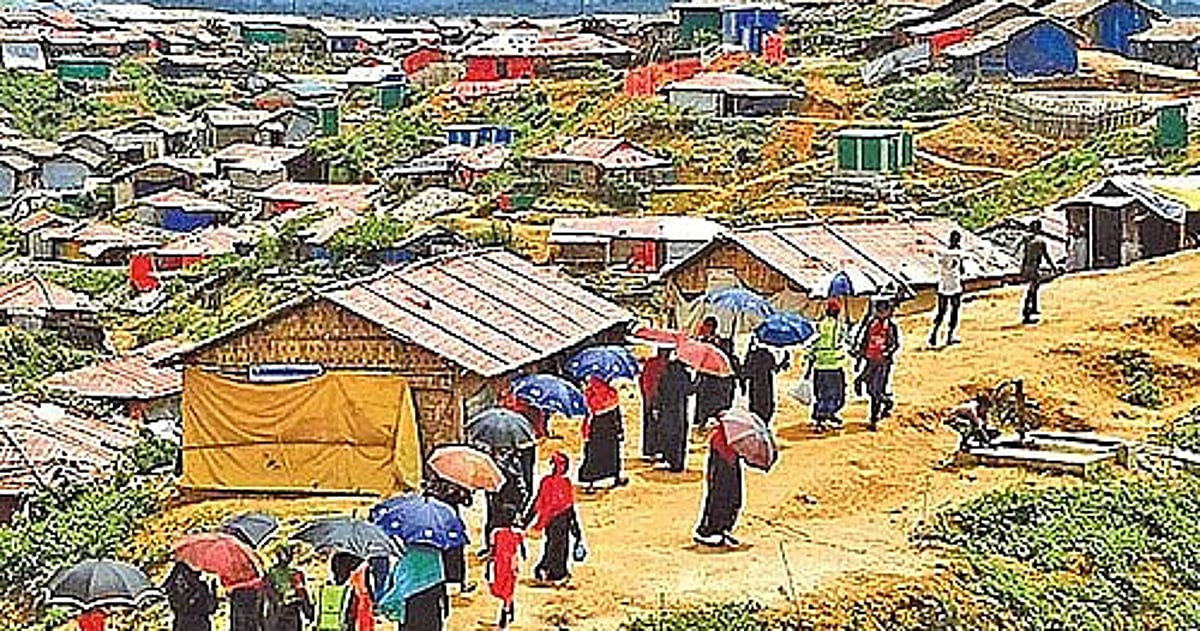
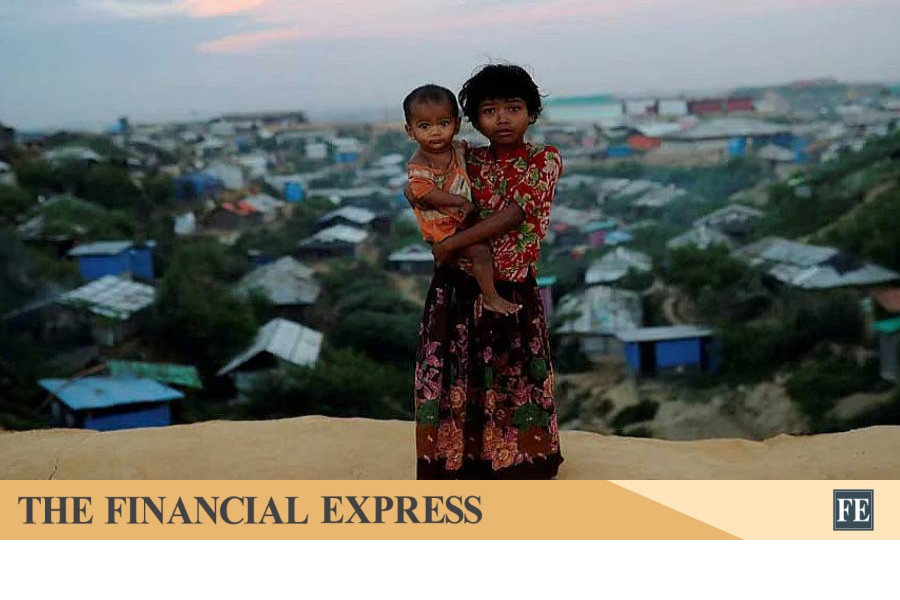
TODAY, more than 1.2 million Rohingya refugees live across 33 congested camps in the world’s largest refugee settlement in Cox’s Bazar and Bhasan Char. New arrivals continue in bits and pieces as conflict, insecurity and violence escalate in Rakhine. The Office of UN High Commissioner for Refugees recorded 150,000 new arrivals in 2025.

The 2025–2026 joint response plan requires $934.5 million to reach 1.2 million people, but it has only received 35 per cent of the funding. Life in the camps remains bleak and overcrowded and fragile settlements face constant threats from extreme weather, disease, and insecurity. More than 235,000 Rohingya children remain without access to formal education. An MSF survey found that 84 per cent of the Rohingya refugees do not feel safe returning to Myanmar.

The tenth year of the exodus finds the Rohingyas no closer to justice or return. The world watched in 2017. A decade later, the world continues to watch and do far too little.

To be continued.

Mohammad Abdur Razzak (safera690@yahoo.com), a retired commodore of the Bangladesh navy, is a geopolitical analyst.​
 

The long road home: Why China matters to Rohingya repatriation

Jannatul Ferdous
Published: 27 Aug 2026, 18: 41

1788046568438.webp

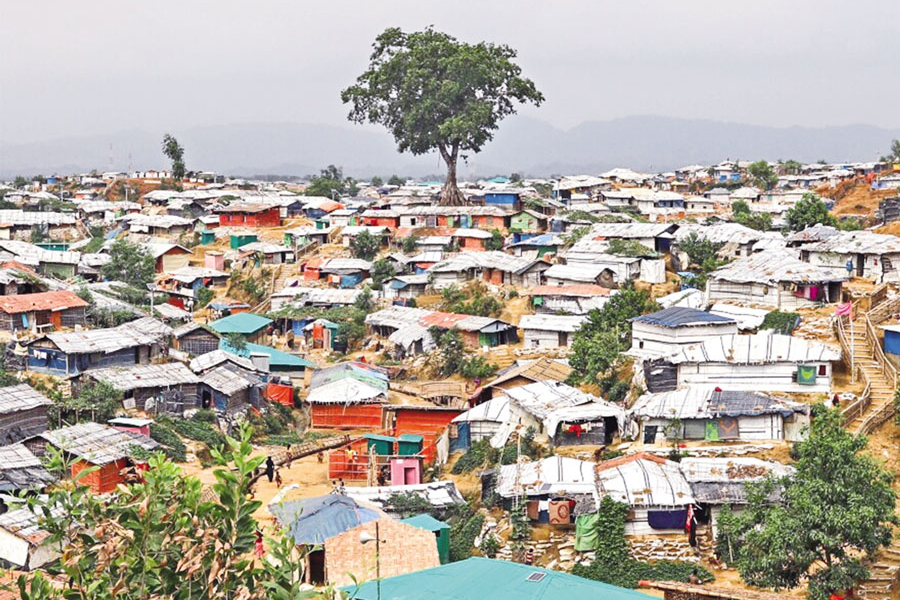
Kutupalong Rohingya Camp File photo

Bangladesh's demand for Rohingya repatriation is not new in diplomatic agenda. It has been a key goal of Bangladesh's policy on the crisis for decades. In 1978 and 1991-92, there were two instances of large-scale displacement from Myanmar, which were followed by return programmes between Bangladesh and Myanmar. Dhaka has made voluntary return a top foreign policy priority after more than 700,000 Rohingya refugees arrived in Bangladesh in response to violence in Rakhine State, Myanmar, in August 2017. However, nothing much has happened since 2017 in terms of a large, voluntary repatriation.

The challenge is not only to plan a physical return across the border, but to ensure the conditions are in place for a voluntary, safe, dignified and sustainable return. UNHCR has repeatedly called for refugees to be able to return freely and voluntarily.

The challenge is more apparent when it's understood that the history of displacement has been a complex process. Rohingya have been discriminated and excluded in Myanmar for decades. The 1982 Citizenship Law introduced a concept of citizenship that effectively denied citizenship to most Rohingya and denied secure citizenship. Repeated displacement was caused by restrictions on movement, education and employment, as well as by recurrent violence and persecution by state and non-state actors, against victims.

The main issue is that physical infrastructure is not sufficient for repatriation. Rohingya refugees should be given protection from persecution and violence, genuine rights, freedom of movement, and a viable solution to the refugees' citizenship status. Economic recovery is possible by development, but not by infrastructure. This separation is especially relevant during the current conflict in Rakhine, where political and security issues are ambiguous, raising the risks of return.

Limited movement, limited education, and limited access to public services, in addition to repeated violence and persecution by both state and nonstate actors, all played a part in causing repeated displacement. The displacement of 2017 was much greater than the previous big refugee influx of 1978 and 1991-92. For Rohingya refugees in Bangladesh, then, there is no easy return to Myanmar as it's just a border crossing. Whether conditions have indeed improved for them is the question.

On 23 November 2017, Bangladesh and Myanmar inked a deal on the repatriation of the Rohingya. This was not followed by significant progress, however, as issues of verification, citizenship, security, freedom of movement and conditions of return remained largely unresolved. In 2018 and 2019, refugees did not find the conditions favourable, and the repatriation of the refugees was not successful. The bilateral agreement's effectiveness was demonstrated to be insufficient to create refugees' confidence in the safety of their return. The "Let's Go Home" mobilisation of the Rohingya leader Mohib Ullah also revealed the possibility of an aspiration to return coupled with also demands for security, rights and recognition.

The situation has become more complex since the military takeover in Myanmar in February 2021 and the increased violence in the country. Since the renewed conflict between the Myanmar military and Arakan Army, the security situation in Rakhine has deteriorated even further. This has made the repatriation issue more complex. Territorial control and governance in Rakhine are increasingly contested and the problem cannot be approached in isolation of the relationship between the two central governments of Bangladesh and Myanmar. Any return process should take into account the real security and political situation of the areas to which Rohingya will return.

But Bangladesh continued to engage in diplomatic activities. The fifth meeting of the Myanmar-Bangladesh Joint Working Group was held in June 2022, and ongoing dialogue on verification/repatriation. In 2023, Bangladesh and Myanmar moved forward with a pilot repatriation programme involving 1,140 Rohingya. Of these, 711 had been cleared for return, while the remaining 429 were subject to further verification.

Refugees had raised many concerns about security, citizenship, freedom of movement and the possibility of repatriation to their countries of origin. The experience showed that a list of returnees or reception arrangements is not enough, rather refugees must be given sufficient information and confidence to make a truly voluntary decision to return.

It is in this respect that China's part is significant. China was more active with its diplomacy following the 2017 crisis. In November 2017, the Chinese Foreign Minister Wang Yi proposed three steps: "First, peace and stability; second, bilateral consultation on repatriation; and third, development and poverty reduction in Rakhine State. This important proposal was because it was not just a logistical exercise, but linked to the broader themes of stability and development.

The unique position of China is that it has significant political, economic and strategic ties with both Bangladesh and Myanmar. China has been enjoying long-standing cooperation with Myanmar as well as Bangladesh has been having extensive cooperation in the fields of economic and infrastructure development with China.

Chinese investment in Myanmar is spread across many fields, such as connectivity and infrastructure developments, which are connected with the China – Myanmar Economic Corridor and Kyaukphyu. These ties open up diplomatic access for Beijing to Myanmar which Bangladesh doesn't have. But accessing doesn't equate to unlimited leverage. China has influence over Myanmar through the economic and political ties with the country but Beijing does not have a right to impose its solution on Myanmar or any armed groups in Rakhine.

The Rohingya crisis has no easy solution. Previous agreements have shown that diplomatic commitments alone cannot overcome the security and political conditions underlying displacement. Sustainable return ultimately depends on whether Rohingya refugees can reasonably expect to live with security, rights and dignity in Myanmar.

China's involvement started to become more institutionalised in the form of trilateral diplomacy. Bangladesh, Myanmar and China signed a tripartite mechanism in 2019 to help the repatriation process and conduct on-the-ground assessments. China restated its commitment to return and willingness to help communications between Bangladesh and Myanmar. However, with all these diplomatic gestures not much in the way of large-scale voluntary repatriation has happened. China's contribution should be measured in terms of practical action aimed at promoting conditions for repatriation, not just in terms of verbal assurances.

The main issue is that physical infrastructure is not sufficient for repatriation. Rohingya refugees should be given protection from persecution and violence, genuine rights, freedom of movement, and a viable solution to the refugees' citizenship status. Economic recovery is possible by development, but not by infrastructure. This separation is especially relevant during the current conflict in Rakhine, where political and security issues are ambiguous, raising the risks of return.

Hence, for Bangladesh, China's engagement must be viewed as part of a wider diplomatic policy and not as a substitute for diplomacy with other nations. Dhaka must keep in touch with Beijing and continue to cooperate with UN, ASEAN, humanitarian groups and other foreign agencies. Bangladesh should leverage the political and economic relationship with Myanmar for the creation of conditions that facilitate the voluntary, safe, dignified and sustainable return. China can help to facilitate dialogue and help to implement confidence-building measures and development to benefit affected communities; development assistance cannot replace rights, citizenship and security.

The Rohingya crisis has no easy solution. Previous agreements have shown that diplomatic commitments alone cannot overcome the security and political conditions underlying displacement. Sustainable return ultimately depends on whether Rohingya refugees can reasonably expect to live with security, rights and dignity in Myanmar.

China has an important role to play, not in resolving the Rohingya crisis alone, but through its combination of political, economic and strategic ties with Myanmar. If Beijing can translate these relationships into sustained efforts that improve the conditions for return, its contribution could become genuinely meaningful. Bangladesh should encourage such engagement while continuing to pursue broader regional and international diplomacy.

The ultimate goal should not simply be to move refugees across a border, but to create conditions in which returning home is genuinely safe, voluntary, dignified and sustainable.

#Jannatul Ferdous is Associate Professor, Department of Public Administration, Comilla University​
 

Rakhine as I saw it: From green paddy fields to a land of conflict

Md Bayezid Sarwar

1788219406714.webp

Rakhine state of Myanmar, across the Naf River from Teknaf in Cox’s Bazar
 

Bangladesh running out of options on Rohingya crisis: Is there a way out?

Shudeepto Ariquzzaman

Nine years after the Rohingya genocide and refugee crisis, Myanmar has changed. As the country continues to be ravaged by the ongoing civil war, few places have changed more profoundly than Rakhine State, which neighbours Bangladesh. The entire governance structure has changed hands, with Naypyidaw’s armed forces having been ousted by the Arakan Army (AA), a powerful ethnic armed group led and manned by members of the state’s Rakhine majority community. The political wing of the AA, known as the United League of Arakan, now administers most of Rakhine and some areas of Chin State, including the entire frontier region bordering Bangladesh. On the ground, Myanmar currently has no border crossings with Bangladesh under its control. The maritime equation is somewhat different, as the regime’s naval forces retain a conventional edge, preventing the AA from overrunning the state capital, Sittwe.

The retreat of the armed forces responsible for the 2017 genocide and the rise of Rakhine’s majority community have not eased the burdens faced by the Rohingya. Rather, they have produced a fresh wave of at least 150,000 people arriving in Bangladesh, this time fleeing the AA rather than government forces.

Human Rights Watch has now confirmed that AA fighters opened fire on Rohingya civilians in the village of Hoyyar Siri, Buthidaung Township, in May 2024, killing at least 170 people, including 90 children, during their advance on a nearby Myanmar army position. Rohingya activists claim Hoyyar Siri is just the tip of the iceberg and that AA massacres of Rohingya civilians are taking place throughout the region. Such allegations are echoed by those fleeing Rakhine, around 50 to 60 of whom continue to cross into Bangladesh every week.

For many years, Myanmar had refused to create conditions that would allow for the rehabilitation and return of Rohingya refugees. But after losing much of Rakhine State, the Myanmar government is showing a sudden interest in reviving the hitherto stalled repatriation process, identifying 308,797 refugees in Bangladesh as displaced residents of the country.

Such a sudden admission, nine years into the crisis, has raised suspicions about the intentions of a government well known for manipulating the crisis. Many suspect that the timing is not accidental: an ICJ verdict in The Gambia v. Myanmar is expected later this year, and Naypyidaw may hope such gestures will soften the blow.

1788307483106.webp

A view of the Kutupalong refugee camp in Cox’s Bazar, Bangladesh, home to Rohingya displaced from neighbouring Myanmar. Photo: Wikipedia

Myanmar has played this card before. In November 2017, its officials rushed to sign a repatriation arrangement with Bangladesh just 12 days before the United Nations Human Rights Council was due to convene a rare special session to address the mass violence against the Rohingya. The timing was designed precisely to enable an argument that international intervention was unnecessary in what was being presented as a bilateral crisis.

Dhaka has rejected Myanmar’s figures as ‘erroneous’, pointing out that they fail to account for hundreds of thousands of children born to Rohingya parents in the refugee camps in Bangladesh. This might become a point of future contention. Some voices are advocating their right to Bangladeshi citizenship by virtue of their birth. Many of these advocates might have genuine humanitarian intentions, but such a position is not pragmatic in the case of refugees from Myanmar. It could kill all hopes of Rohingya repatriation once and for all. The Rohingya desperately need to preserve their identity as a people of Myanmar, with a right to citizenship in their homeland.

Limits of the Hague

Despite the practical limitations on the ground, where the Arakan Army continues to maintain an iron grip, effectively negating any decision taken by Naypyidaw, the ICJ verdict carries significant symbolic and political value. The verdict, expected later this year, stands out as one of the few formal processes holding Myanmar accountable for human rights violations against the Rohingya. But contrary to the widespread initial optimism in the refugee camps, where there was once much expectation that Myanmar would be forced to take back the Rohingya, the court has no enforcement mechanism of its own. Any question of enforcing an ICJ judgment may ultimately be referred to the UN Security Council for further action, and the overall process can be incredibly slow.

Opponents of the regime hope the ruling will at least disrupt Senior General Min Aung Hlaing’s current charm offensive. He has stepped into the civilian role of president following what has been widely described as a fraudulent election process. But as regional giants China and India roll out the red carpet, diplomats in Naypyidaw hope the ruling will have limited diplomatic impact. The opposition camp might also be hesitant to use the ICJ ruling against the regime because there was widespread popular support for anti-Rohingya policies at the time of the genocide. It will be interesting to see whether anti-Rohingya sentiments inside Myanmar have changed over time and through the shared experience of state atrocities.

1788307542463.webp

Rohingya carry their belongings as they flee ethnic and religious persecution in Myanmar. Photo: Reuters

Diplomatic deadlock

A decade into the predicament, Bangladesh has found itself unable to devise a strategy commensurate with a crisis that transcends its borders. A high-level committee under Prime Minister Tarique Rahman has been formed to find one, but critics say the underlying problem remains, as it has for years, trapped between committee rooms and seminar halls. Meanwhile, international actors are more interested in managing the crisis than in finding an enduring solution.

Most countries in the region, including China and India, have been inclined towards Myanmar rather than Bangladesh. Myanmar’s membership of the regional bloc ASEAN since 1997 has also given it an edge. ASEAN heavyweight Indonesia, which played a significant role during the 1991–92 Rohingya refugee crisis, avoided taking similar responsibility in 2017.

Most countries in the region, including China and India, have been inclined towards Myanmar rather than Bangladesh. Myanmar’s membership of the regional bloc ASEAN since 1997 has also given it an edge. ASEAN heavyweight Indonesia, which played a significant role during the 1991–92 Rohingya refugee crisis, avoided taking similar responsibility in 2017.

Malaysia, the second frontline state in the refugee crisis, has been the sole member of the bloc interested in the rehabilitation of the Rohingya. Even then, it is difficult to miss how the entire region has sidestepped the crimes against humanity and what is now a protracted refugee crisis.

This isolation has resulted in Bangladesh bearing much of the burden, while crimes against the Rohingya continue to go unpunished, with little chance of their return to their homeland in the foreseeable future. Nine years into the crisis, Bangladesh remains largely alone in confronting a problem it did not create and cannot resolve on its own.

Shudeepto Ariquzzaman is a research fellow at Neeti Gobeshona.​
 

Myanmar vows 'safe and dignified' returns of displaced citizens, disavows Rohingya

AFP
Yangon, Myanmar

1788478166744.webp


Rohingya refugees sit inside a truck as they are taken by police, in front of the office of the U.N. Refugee Agency, after being evicted from their homes, at Kuala Lumpur Malaysia on 27 July 2026. Reuters

Myanmar pledged on Thursday "safe and dignified" returns for its citizens displaced abroad, after the United Nations and rights groups raised concerns about the upcoming repatriation of 1,500 people from Malaysia.

The Myanmar foreign ministry also repeated its disavowal of the persecuted Rohingya Muslim minority, members of which campaigners fear may be plunged back into danger by the return scheme.


In July, Malaysia said Myanmar had agreed to take back 5,000 members of the Rohingya, a group which has faced a campaign of violent discrimination in Myanmar since 2017.

Both countries say a first wave of nearly 1,500 Myanmar nationals will be repatriated voluntarily in late September, although it is unclear how many Rohingya will be included.

"Myanmar is committed to working closely with Bangladesh and friendly countries to facilitate the voluntary return of verified displaced persons in a safe and dignified manner," the foreign ministry statement said.

Hundreds of thousands of Rohingya fled Myanmar after a brutal military crackdown starting in 2017, which is the basis of a genocide case at the International Court of Justice.

More than 1.2 million live just over the border in Bangladesh, in the world's largest refugee settlement, but talk of repatriations has yielded little progress.

Another 126,000 Rohingya live in Malaysia, alongside displaced Myanmar citizens from different ethnic groups.

Myanmar has long denied the Rohingya have a distinct heritage, saying they are descendants of immigrants from Bangladesh -- even refusing to use the term "Rohingya".

The foreign ministry repeated its assertion on Thursday that the term "falsely claims an ethnic identity which has never existed in Myanmar", as it condemned recent commemorations in some countries for Rohingya Genocide Remembrance Day.

Malaysia's communications minister Fahmi Fadzil has said his country will not repatriate Myanmar nationals "if they would either be persecuted or their lives would be threatened".


But rights monitors fear returning the Rohingya to a country where their identities are erased will permit a new wave of abuses.

A report by UN Secretary-General Antonio Guterres published Wednesday found "conditions for their voluntary, safe, dignified and sustainable return do not currently exist".

Many migrants in Malaysia are also being held in detention centres, raising quesions about whether their decisions to return can be freely made.​
 

Malaysia PM to offer to host Myanmar’s Min Aung Hlaing in deal for Rohingya return
​
  • Anwar says Malaysia must engage with Myanmar on refugees​
  • Min Aung Hlaing on quest for legitimacy through official visits​
  • Malaysia was a critic of the former junta over refusal to cease hostilities​
  • Anwar says 5,000 Rohingya to return, expects more repatriations in stages​

Reuters
Kuala Lumpur

1789704538044.webp


Kutupalong Rohingya Camp in Cox's Bazar, Bangladesh File photo

Malaysian Prime Minister Anwar Ibrahim said on Wednesday he would invite Myanmar’s junta chief-turned-President Min Aung Hlaing for an official visit in return for his government accepting the return of thousands of Rohingya Muslim refugees.

Min Aung Hlaing, a retired general who seized power in a 2021 coup, has been on a quest for international legitimacy since becoming president in April following an election dominated by an army-backed party in the absence of a viable opposition.

Anwar said Malaysia, like the Association of Southeast Asian Nations bloc, was not ready to recognise Myanmar’s new government, but needed an authority to negotiate with on returning refugees.

“We, following ASEAN, don’t want direct relations with Myanmar. So who are we supposed to negotiate with?” Anwar said during a podcast.

“I invited him to say we can be friends, we can trade, we can accept Myanmar, but Myanmar must accept them (refugees) back.”

ASEAN has not recognised Myanmar’s election and, since 2021, has barred its leaders from its summits amid a civil war that has killed an estimated 100,000 people, with the military widely accused of atrocities against the civilian population, which it rejects.

Malaysia has been one of the most vocal critics of Myanmar’s former junta and had repeatedly expressed frustration at its refusal to cease hostilities.

It would be the fifth of ASEAN’s 11 members to host Min Aung Hlaing after his recent visits to Laos, Thailand, Cambodia and Vietnam. He has also visited China, India and Russia.

‘They need to be sent home’

Malaysia last month said it had finalised the first phase of a voluntary repatriation programme that would return 1,500 Myanmar refugees in September. Malaysia had around 193,800 refugees from Myanmar as of February, according to the UNHCR, which has said it is not safe for them to return there.

Rohingya are a persecuted minority and tens of thousands have fled Myanmar each year, many making perilous sea journeys on rickety boats in search of better lives. More than a million live in crowded camps in Bangladesh.

Anwar acknowledged the suffering of the Rohingya, but said Malaysia could not accommodate them permanently and “they need to be sent home”.

He said Myanmar had now accepted the return of 5,000 refugees, with Kuala Lumpur bearing the repatriation cost, and the expectation was that more would be returned later in stages.

“To me, that’s better diplomacy than just shouting angrily at Myanmar. Who’s going to take them? Where do we send them? They don’t even have Myanmar citizenship,” Anwar said.

“Previously we didn’t negotiate because we didn’t recognise them,” he said of Min Aung Hlaing’s government. “We’re not simply going to recognise and negotiate for no reason.”​
 

Bangladesh bets on China diplomacy to end decade-long Rohingya impasse

Nearly a decade after the mass displacement of Rohingya from Myanmar, Bangladesh is turning to China in search of a breakthrough.

Dhaka announced this month it plans to hold trilateral talks with China and Myanmar, with State Minister for Foreign Affairs Humaiun Kobir stressing that only a political settlement can resolve the crisis, reports Arab News.

Bangladesh insists any return must be safe, voluntary, dignified and sustainable.

China is central to the effort. Beijing maintains working relationships with both Dhaka and Naypyidaw, holds significant economic interests in the region and has been involved in Rohingya diplomacy before—helping establish a trilateral mechanism in 2019 that ultimately yielded little progress.

The renewed push carries fresh economic urgency.

Rakhine sits along critical infrastructure under China’s regional connectivity plans, including the Kyaukphyu Deep Sea Port and pipelines linking Myanmar’s coast to China. A Bangladesh-China-Myanmar economic corridor is also under discussion—a project whose viability depends on stability in Rakhine.

China’s position is also diplomatically unique. Unlike Western governments constrained by sanctions, Beijing has maintained access to Naypyidaw while deepening ties with Dhaka—a combination few other actors can offer.

The obstacles remain serious. Myanmar’s civil war has reshaped the political landscape, and any return will have to address citizenship, security and political inclusion in areas where territorial control has shifted considerably.

For China, however, the incentives are real. A stable Rakhine secures infrastructure investments, deepens regional connectivity and reduces instability on its doorstep.

After nine years, the question is whether Beijing has the will to use its leverage.​
 

PM seeks international support for dignified return of Rohingyas


1790132600916.webp

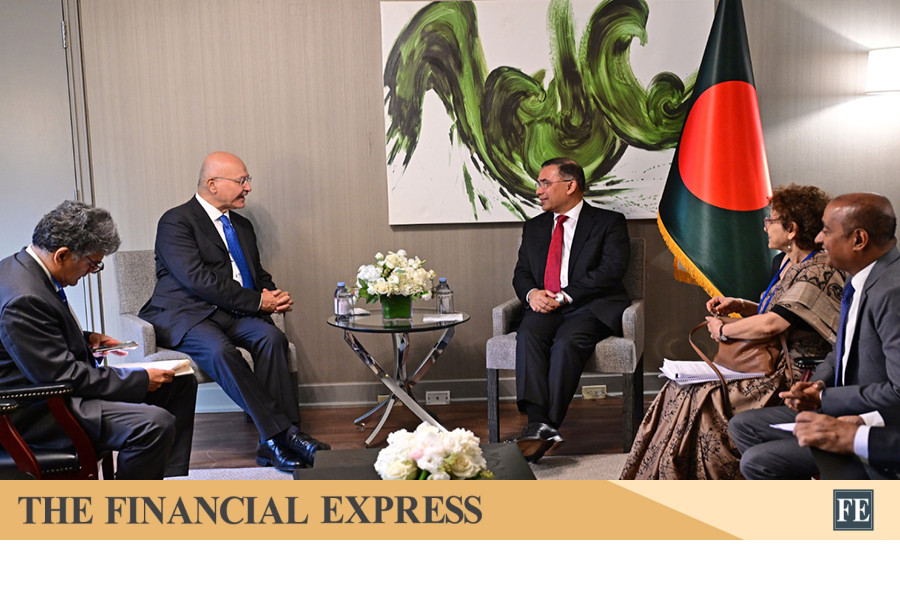
UN Secretary-General’s Special Envoy on Myanmar Julie Bishop (left) holds a courtesy meeting with Prime Minister Tarique Rahman in New York on Tuesday on the sidelines of the UNGA session. Photo: PMO

Prime Minister Tarique Rahman has sought continued support from the international community for a sustainable solution to the Rohingya crisis and the dignified return of the displaced people to their homeland in Myanmar.

He made the call during a meeting with Julie Bishop, Special Envoy of the UN Secretary-General on Myanmar, at the Hyatt Grand Central New York hotel on Tuesday, said PM’s Additional Press Secretary Atikur Rahman Rumon.

The meeting focused on the Rohingya crisis and the need for an effective role by the international community in resolving the long-standing problem

“The Prime Minister sought international cooperation to ensure the safe and dignified return of the Rohingyas to their homeland,” Rumon said.

The meeting took place as the Prime Minister is in New York to attend the 81st session of the United Nations General Assembly, where the Rohingya crisis is among the issues receiving particular attention during his visit.

State Minister for Foreign Affairs Humaiun Kobir, Bangladesh’s Permanent Representative to the UN Irene Khan, Prime Minister’s Adviser Mahdi Amin and Foreign Secretary Asad Alam Siam were present at the meeting.

On Wednesday, Tarique Rahman is scheduled to join a high-level side event on the Rohingya crisis titled “The Rohingya Crisis: A Renewed Call for a Durable Solution from Protracted Displacement, with Justice and Accountability.”

Bangladesh and The Gambia are co-hosting the event, with the European Union as a co-sponsor.

The event is intended to renew international political and humanitarian support for resolving the crisis, strengthen accountability efforts and support conditions for the safe, voluntary and dignified return of Rohingyas to Myanmar.

UN Secretary-General António Guterres has also called for sustained international support for Bangladesh and other refugee-hosting countries and for efforts to address the root causes of the Rohingya crisis and create conditions for voluntary, safe, dignified and sustainable returns.

Julie Bishop, who serves as the UN Secretary-General’s Special Envoy on Myanmar, has been engaging stakeholders on the Myanmar crisis and the Rohingya issue.

During his New York visit, Prime Minister Tarique Rahman is holding a series of bilateral and high-level meetings on the sidelines of the UN General Assembly. He is scheduled to deliver his maiden address at the General Assembly on September 24.​
 

PM, UN refugee chief discuss sustainable solution to Rohingya crisis


1790133270289.webp

Prime Minister Tarique Rahman (Third from the right) and UN High Commissioner for Refugees Barham Salih (Second from the left) hold a high-level meeting on the Rohingya crisis at the Hyatt Grand Central New York hotel in New York on Tuesday. — Photo: PMO

Prime Minister Tarique Rahman and UN High Commissioner for Refugees Barham Salih held a high-level meeting on Tuesday to discuss a sustainable solution to the protracted Rohingya crisis and the safe, voluntary and dignified return of the displaced people to Myanmar.

The meeting was held at the Prime Minister’s place of residence at the Hyatt Grand Central New York hotel, according to a release issued by the PM’s Press Wing.

They discussed creating a conducive environment for the safe, voluntary and dignified repatriation of Rohingyas to Myanmar and the need for an effective and coordinated role by the international community to help resolve the crisis.

The Prime Minister said Bangladesh had been hosting a large number of Rohingyas on humanitarian grounds for years and that there is no alternative to their safe and dignified return to their homeland for a lasting solution to the crisis.

He stressed the need for stronger and more coordinated international efforts to facilitate their repatriation.

The two sides also stressed the importance of continuing humanitarian assistance for the Rohingyas and strengthening international cooperation to expedite the repatriation process.

Barham Salih appreciated Bangladesh’s humanitarian role in hosting the Rohingyas and underscored the importance of continued international cooperation to find a sustainable solution to the crisis.

The meeting took place as the Prime Minister is in New York to attend the 81st session of the United Nations General Assembly.

The Rohingya crisis is among the key issues on Bangladesh’s agenda during the Prime Minister’s visit.

Tarique Rahman is scheduled to attend a high-level side event on the Rohingya crisis on Wednesday, where Bangladesh will call for renewed international efforts for a durable solution to the prolonged displacement.​
 

PM puts forward five urgent measures to address Rohingya crisis


1790221060443.webp

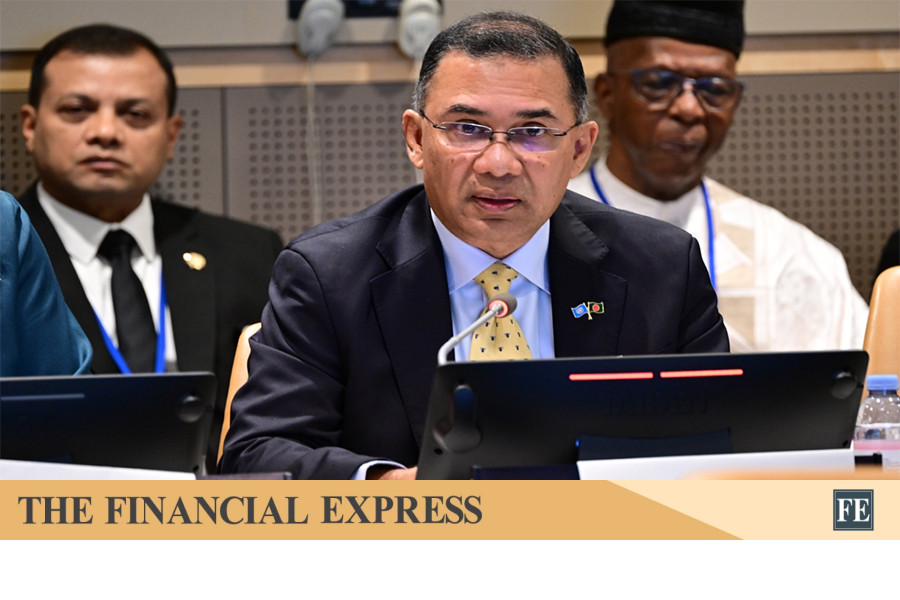
Prime Minister Tarique Rahman addresses a high-level side event at the UN headquarters on Wednesday. Photo: PMO

Prime Minister Tarique Rahman on Wednesday proposed five urgent measures to resolve Rohingya crisis, with a call to the global stakeholders for establishing a clear and credible roadmap for the early, safe, dignified and sustainable repatriation of Rohingyas, saying the time has come to move from managing displacement to ending it.

"The time has come to move from empathy to a search for root causes and their solutions, from promises to action and from managing displacement to ending it," he said while addressing a high-level side event on 'The Rohingya Crisis: A Renewed Call for a Durable Solution from Protracted Displacement, with Justice and Accountability' at the UN headquarters.

The five proposals include establishing a clear and credible roadmap for the early, safe, voluntary, dignified and sustainable repatriation of the Rohingyas to Myanmar; ending violence against civilians, including the Rohingyas and guaranteeing their fundamental rights and security; ensuring adequate and predictable humanitarian support for the Rohingyas and host communities; strengthening justice and accountability and stepping up regional and international cooperation to combat the narco-economy, human trafficking, digital scams, illegal arms and other transboundary crimes.

The Prime Minister made the proposal as he highlighted the plight of over 1.2 million Rohingyas sheltered in Bangladesh and called upon the international community to shoulder its responsibility with conviction to create conditions for their safe and dignified return.

"Bangladesh does not want the Rohingya to remain displaced forever. We want them to return their homes in Myanmar safely, voluntarily, with dignity and with their rights protected," he said.

He added, "Bangladesh has carried its responsibility with humanity. Now the international community must carry its responsibility with conviction. If the necessary conditions are created, Bangladesh will be ready to facilitate their return."

The event was co-convened by Bangladesh and The Gambia, with participation from representatives of different countries and international organizations.

Urging for a roadmap in his first proposal, the Prime Minister said, "The international and regional stakeholders must establish a clear and credible roadmap for the early, safe, voluntary, dignified and sustainable repatriation of the Rohingya to Myanmar.

"The international community and other States must support the stabilization efforts and use their leverage to create conditions within Myanmar that are conducive for return," he added.

In the second point, he called for an end to violence against civilians, including Rohingyas, in Myanmar, stressing that their fundamental rights and security in their homeland must be guaranteed to regain confidence for return.

In the third point, the Prime Minister called for ensuring adequate and predictable humanitarian support for the Rohingyas and host communities, saying the development aspirations of host communities should not be retarded by their generous act of hospitality.

In the fourth point, the Prime Minister said justice and accountability are indispensable for ensuring sustainable repatriation of the Rohingyas, while appreciating The Gambia's leadership in pursuing accountability before the International Court of Justice.

He also acknowledged the important role of the International Criminal Court and other international justice and investigative mechanisms in pursuing individual criminal accountability, stressing the need for continued international support for these efforts and ensuring that those responsible for grave crimes must be held accountable.

In his fifth proposal, Tarique Rahman stressed the need for strengthening regional and international cooperation to combat narco-economy, human trafficking, digital scams, illegal arms and other transboundary crimes that are fuelling instability in the region.

Describing the Rohingya crisis as one originating in Myanmar, the Prime Minister said, "The crisis originated in Myanmar. Its solution lies in Myanmar."

He said the situation in Rakhine State remains deeply concerning, with Rohingyas continuing to face serious violations and abuses, including forced recruitment, arbitrary detention, restrictions on movement, forced labour and other forms of insecurity.

"Serious violations have been reported by both the Myanmar military and the Arakan Army. As such, the conditions for safe and dignified return remain challenged," he added.

1790221091769.webp

Photo: PMO

The Prime Minister noted that Bangladesh has been hosting Rohingyas for over nine years, providing food, healthcare and education based on the Myanmar curriculum through around 6,000 learning centres, besides providing capacity-building and skills development training for Rohingya youth.

"However, humanitarian generosity cannot become an excuse for political inaction. Nor can Bangladesh be expected to shoulder this responsibility indefinitely," he said.

The Prime Minister warned that prolonged displacement was creating new security challenges, including human trafficking, migrant smuggling, drug trafficking and other transnational crimes.

"A crisis left unresolved in one country can become a security challenge for an entire region," he said.

He also expressed concern over declining humanitarian assistance, saying the Rohingya crisis requires sustained international support.

Concluding his remarks, Tarique Rahman urged the global community to ensure that the Rohingyas' future is not defined by persecution, expulsion and displacement.

"Let it be a story of justice, dignity and hope. And above all, let it begin now," he said.

1790221120975.webp

Photo: PMO

President of the 81st UN General Assembly Dr Khalilur Rahman, Vice President of The Gambia Muhammad BS Jallow, UN Secretary-General's Special Envoy on Myanmar Julie Bishop and UN High Commissioner for Refugees Barham Salih addressed the event, moderated by Bangladesh Permanent representative to the United Nations Irene Zubaida Khan.

Statements were also delivered by EU Commissioner for Equality, Preparedness and Crisis Management Hadja Lahbib, Advisor at the Royal Court and Supervisor General of the King Salman Humanitarian Aid and Relief Center of the Kingdom of Saudi Arabia Dr. Abdullah Abdulaziz Al Rabeeah, Minister for the Americas, Multilateral and Human Rights of the United Kingdom Chris Elmore MP, Deputy Minister of Foreign Affairs of Turkiye A. Berris Ekinci, OIC Secretary-General Ismail Ould Cheikh Ahmed, Under Secretary of State for Political Affairs of the United States Department of State Allison Hooker, Permanent Secretary for Foreign Affairs of Thailand Eksiri Pintaruchi, First Assistant Secretary of the Pacific Strategy Division of Australia Craig Chittick and High Commissioner of Malaysia to Bangladesh Ambassador Mohd Shuhada Othman.

Acting Executive Director of the World Food Programme (WFP) Carl Skau, UNFPA Assistant Secretary-General Dr. Catharina Boehme, Assistant Secretary-General of the Office of the United Nations High Commissioner for Human Rights (OHCHR) Claudia Fuentes Julio and Deputy Director General of the International Organization for Migration (IOM) Ugochi Daniel also addressed the event.​
 

What Malaysia’s Rohingya repatriation plan means for Bangladesh
Mohammed Siraj


1790223358354.webp

Rohingya refugees cross a stream near the Naf River along the Bangladesh–Myanmar border in Palong Khali, Cox’s Bazar, on 1 November 2017. Photo: Adnan Abidi/Reuters
 

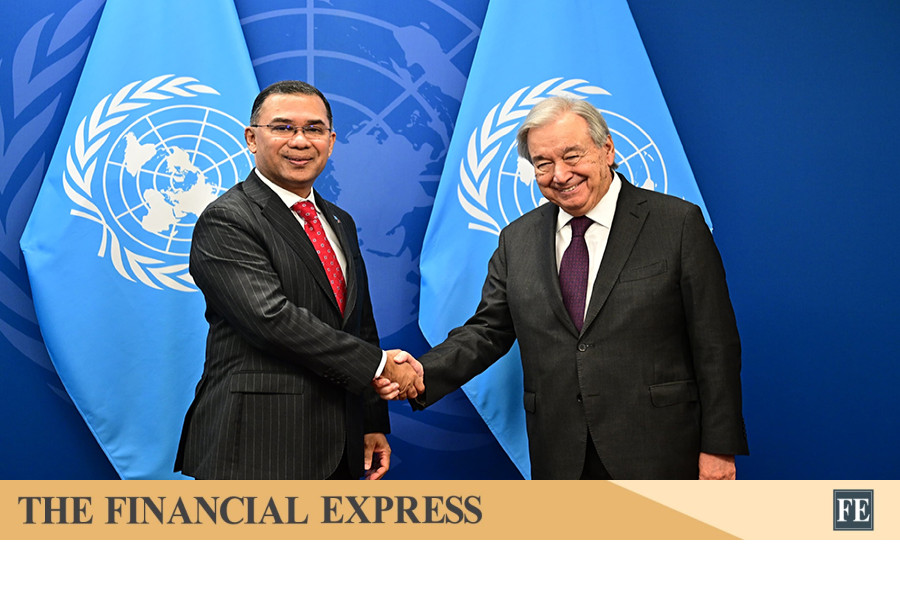
PM meets UN chief António Guterres, discusses Rohingya crisis


1790315348334.webp


Prime Minister Tarique Rahman has met United Nations Secretary-General António Guterres to discuss bilateral cooperation, a sustainable solution to the Rohingya crisis, climate change and key global and regional issues.

The meeting was held on Thursday on the 27th floor of the Secretariat Building at the UN headquarters in New York.

During the meeting, Mr Rahman highlighted the importance of UN cooperation and support for Bangladesh’s development, efforts to address the impacts of climate change and a lasting solution to the Rohingya crisis.

The two sides also discussed Bangladesh’s continued contributions to the UN’s peace, security and development activities, along with other issues of mutual interest.

The prime minister reaffirmed Bangladesh’s commitment to multilateralism, international cooperation, global peace and sustainable development.

Mr Guterres, meanwhile, stressed the importance of further strengthening the longstanding partnership between Bangladesh and the United Nations.

Both sides expressed their commitment to continuing mutual cooperation and working closely to address shared global challenges.​
 

Rohingya groups thank Tarique for raising their issues at UN
Staff Correspondent 25 September, 2026, 09:41

1790318801964.webp

Bangladesh prime minister addresses UN General Assembly in new York on Thursday | PMO Photo

Rohingya rights groups have thanked Bangladesh prime minister Tarique Rahman for raising the community's concerns at the United Nations and calling for a safe, voluntary and dignified return of the refugees to their homeland in Myanmar.

The Arakan Rohingya Society for Peace and Human Rights, in a statement posted on X, expressed its ‘deepest gratitude’ to the prime minister for raising the Rohingyas' call for justice at the UN General Assembly.

The organisation welcomed the five proposals put forward by Tarique, particularly those concerning the safe, voluntary and dignified return of Rohingya refugees and international accountability.

‘The five proposals he presented—especially those advocating for the safe, voluntary, and dignified return of Rohingya refugees and for international accountability—represent hope and a lifeline for our people,’ the organisation said. ‘The world must listen. We simply want to return home and live in peace,’ it added.

In a separate press statement issued on September 24, the United Council of Rohingya, described as an elected representative body of the Rohingya community, also welcomed the renewed international attention to the crisis and the five-point proposal Tarique presented at the September 23 high-level UN side event.

The UCR said the proposal addressed critical priorities - a credible roadmap for safe, voluntary, dignified and sustainable repatriation; an end to violence and restoration of Rohingya rights and security in Myanmar; sustained humanitarian assistance; justice and accountability, including through the International Court of Justice and the International Criminal Court; and stronger international cooperation against transnational crime.

‘The Rohingya crisis originated in Myanmar, and its durable solution requires addressing its root causes there,’ the UCR said, adding that Rohingyas must be able to return to their homeland ‘with citizenship, fundamental rights, freedom, security and dignity,’ and with credible guarantees that the persecution that forced them to flee will not be repeated.

The council said that for nearly a decade the international community had expressed solidarity with the Rohingya, and ‘the time has come to translate that solidarity into concrete action.’

It called upon the United Nations, regional actors and member states to work urgently toward a credible and time-bound pathway for repatriation, while sustaining humanitarian assistance and advancing justice and accountability.

‘The Rohingya do not seek permanent refuge. We seek the right to return to our homeland in safety, freedom and dignity,’ the statement said, underlining that nine years of displacement ‘is already too long.’

The appreciation from both groups came after Tarique, addressing the high-level UN event on the Rohingya crisis in New York on September 23, called for international and regional stakeholders to establish a clear and credible roadmap for the early, safe, voluntary, dignified and sustainable repatriation of Rohingyas to Myanmar.

He said Bangladesh had been hosting more than 1.2 million Rohingyas for over nine years and that the prolonged displacement had placed considerable social, economic, environmental and security pressures on the country and host communities in Cox's Bazar. ‘The crisis originated in Myanmar. Its solution lies in Myanmar,’ the prime minister said, according to his statement.

Tarique proposed action in five areas: establishing a credible roadmap for repatriation; ending violence against civilians and guaranteeing Rohingya rights and security; ensuring adequate and predictable humanitarian assistance; strengthening justice and accountability; and enhancing regional and international cooperation against transboundary crimes.

He said conditions inside Myanmar, particularly in Rakhine State, remained concerning, with Rohingyas facing reported violations including forced recruitment, arbitrary detention, restrictions on movement and forced labour. He also said violations had been reported involving both the Myanmar military and the Arakan Army, leaving conditions for safe and dignified return challenged.

The prime minister also stressed that humanitarian assistance must continue until a durable solution is found. Bangladesh's humanitarian appeal for the Rohingya response has faced a funding shortfall. Tarique said the Joint Response Plan sought more than $934 million in 2025, while the 2026 appeal had been reduced to about $710 million to cover minimum lifesaving needs.

‘Humanitarian generosity cannot become an excuse for political inaction. Nor can Bangladesh be expected to shoulder this responsibility indefinitely,’ he said.

He also linked the prolonged displacement to emerging regional security concerns, including human trafficking, migrant smuggling, drug trafficking and other transnational crimes.

The prime minister subsequently reiterated the issue during the general debate of the 81st UN General Assembly on September 24, saying that the only solution to the crisis was the safe return of displaced Rohingyas to Myanmar and calling for firm and effective support from the UN and the international community. ‘We want them to return to their homes in Myanmar safely, voluntarily, with dignity and with their rights protected,’ Tarique said.​
 

How can Rohingya people return home?


1790380206747.webp


Bangladesh has spent close to a decade being applauded for sheltering the Rohingya, and almost as long without saying what the sheltering is supposed to achieve. This lack of direction was evident from the start of the 2017 influx when the country absorbed hundreds of thousands of terrified people without a comprehensive long-term plan. Given the campaign of murder, rape and destruction by the Myanmar military, offering them shelter back then was the right thing to do. However, that initial crisis has long passed. The few repatriation attempts made so far have predictably failed to send the refugees home. International aid, meanwhile, is dwindling. Against this backdrop, the UN has begun pressing Dhaka to allocate more land for constructing permanent shelters, even as any serious initiative to create the conditions for return remains out of sight. If this continues, it may not be long before the demand to keep them in Bangladesh for good is floated as the natural next step. Time is running out to establish a concrete roadmap that guarantees the right to return. The longer that roadmap remains absent, outside pressures are more likely to grow for determining what comes next.

The movement of people from Arakan into Bengal has a long history. In the 1400s and 1700s, when violence tore through Arakan, survivors crossed into Bengal, regrouped and went back to reclaim their land. Bengal functioned as a staging ground where the displaced could recover and organise until a safe homecoming became possible. That link between shelter and return has largely disappeared from Bangladesh's approach to the Rohingya. They are now treated primarily as a burden to be managed, with very little thought given to preparing them for return.

A clear parallel can be drawn with the approach taken by Turkey towards millions of Syrians who crossed its border from 2011. Turkey did not leave the refugees confined to camps while waiting indefinitely for conditions in Syria to change. Instead the country allowed them to maintain their cultural and religious institutions and gradually incorporated them into its education system and labour market. This strategy prevented the camps from becoming breeding grounds for crime and despair, as educated individuals with clear aspirations are far less likely to resort to illegal activities. Despite initial public backlash from Turkish citizens who feared the newcomers were stealing jobs and draining resources, the government pushed forward with deliberate initiatives. Erdogan referred to them as guests rather than refugees and this distinction helped alter public perception. Turkey also used the refugees to revive economically deprived areas in Istanbul and other cities. This calculated investment ended up giving Ankara undeniable leverage in Syrian negotiations and ensured that Turkey could not be ignored in any talks. More importantly the process cultivated a generation of educated Syrian leaders who could eventually form a cohesive political and military force.

The Turkish experience challenges the assumption that giving refugees room to live, study and organise necessarily means accepting their permanent settlement. In Bangladesh, the approach has been almost the opposite. The authorities have remained highly cautious about allowing Rohingya people any political, organisational or educational space. In 2019, for example, one Rohingya girl named Rahima Akter managed to enrol at a private university in Cox's Bazar by concealing her identity, only to be expelled amid public furore once her background became known. This is just one instance of the authorities' reluctance to let them build lives that extend beyond the confines of the camps. Such restrictions have yielded no tangible results and the refugees are no closer to returning home today than they did at the outset. Meanwhile, the situation in Rakhine has changed considerably during their years of exile. The Arakan Army has seized most of the territory while the Myanmar military struggles to hold its ground, making negotiations between these two forces increasingly inevitable. However, both reject Rohingya identity and any right to return, which means a deal struck without Bangladesh or Rohingya representatives at the table could leave the return out entirely. Bangladesh would then face the formidable task of demanding the repatriation of 1.5 million people without possessing the leverage to enforce its position. The problem is made worse by the absence of any Rohingya leadership with sufficient standing to negotiate on their behalf and by Bangladesh's failure to convene or cultivate Rohingya leaders within any serious political forum.

Waiting is not the only course open to Bangladesh to resolve the problem, though the alternatives demand a much greater leap in political imagination than the country has so far shown. Bangladesh has several options at its disposal that it has yet to exercise. One possibility is to build a coalition with countries such as Malaysia and Turkey, both of which have remained engaged with the Rohingya issue, while using Bangladesh's strong relationship with China to give the effort greater diplomatic weight. Such a coalition could propose a limited security presence in northern Rakhine aimed solely at creating the minimum conditions for the safe and voluntary return of the Rohingya. It need not be directed against either the Arakan Army or the Myanmar military which could make it easier for both sides to view this as temporary security measure. China's influence over Myanmar would make its involvement particularly important, while Turkey and Malaysia could provide diplomatic backing as well. China is also being courted by several Muslim-majority countries seeking alternatives to the American security architecture, giving Bangladesh and its partners an opening to seek Beijing's support for such a proposal. Beijing may also prefer to avoid a larger American role in resolving the crisis. Bangladesh, as the country with the greatest immediate stake in a durable solution, should place itself at the centre of such a coalition. It has already spent nearly a decade managing the consequences of a crisis it had no hand in creating. The question now is whether it will continue managing those consequences or try to influence the conditions that created them.​
 

Rohingyas need the world’s support

PM’s proposed roadmap can guide the international community


1790382901192.webp

VISUAL: STAR

We welcome Prime Minister Tarique Rahman’s proposal of five distinct measures to resolve the Rohingya crisis at a high-level side event of the United Nations General Assembly at the UN Headquarters in New York on September 23. Last month marked the ninth year of the 2017 mass exodus of Rohingya people to Bangladesh, when some 7,00,000 refugees fled targeted military violence in Rakhine State. Currently, more than 1.2 million refugees reside in camps across Cox’s Bazar and Bhasan Char. Their prolonged displacement is felt more keenly as the years have gone by without sufficient cooperation from Myanmar to facilitate the Rohingyas’ dignified and sustainable repatriation. As such, the PM’s proposed steps should be considered and implemented by the international community.


The proposals include establishing a clear and credible roadmap for the early, safe, voluntary, dignified, and sustainable repatriation of the Rohingya to Myanmar; ending violence against civilians in Myanmar (including the Rohingya) and guaranteeing their fundamental rights and security; ensuring adequate and predictable humanitarian support for refugees and host communities in Bangladesh; strengthening justice and accountability; and stepping up regional and international cooperation to combat the narco-economy, human trafficking, digital scams, illegal arms, and other transboundary crimes.

Disappointingly little progress has been made over the years in ensuring voluntary and safe Rohingya repatriation. Meanwhile, the ethnic community’s situation in Myanmar has worsened, as they are caught up between the ruling military forces and the Arakan Army, being subjected to extrajudicial executions, torture, forced labour and recruitment, and large-scale arson. This has made the possibility of safe Rohingya refugee repatriation seem even dimmer. Additionally, “competing conflicts” elsewhere in the world and a historic decline in development aid since 2025 have worsened the Rohingya crisis, an emergency now being viewed as a case of prolonged displacement. The US alone drove three-quarters of the recent aid decline, with its official development assistance falling by 56.9 percent compared to 2024. In 2025, donors met only 46 percent of the $934.5 million appeal for aid under the 2025-26 Joint Response Plan. As a result, in 2026, the appeal was reduced to $710.5 million to cover only the minimum required to sustain lifesaving assistance.

Meanwhile, Bangladesh continues to accommodate a growing refugee population. But the suffering of the Rohingya has only worsened since 2017. Children born nine years ago are unfamiliar with their homeland and are being raised in uncertainty, with little access to the most basic necessities. Most young people remain excluded from education and skills training, and their future is shadowed by increasing uncertainty.

We therefore urge the international community to stand by the Rohingya population and support Bangladesh in pushing for their dignified repatriation and appropriate rehabilitation. No one can make up for the years Rohingya refugees have lost to forced displacement. But the world must realise that the crisis is still there, and worsening each day, and that the multifaceted plight of the Rohingya is no less urgent than any other ongoing humanitarian crisis.​
 

The everyday resistance of Rohingya women the world rarely sees

Sabekun Naher

When people talk about resistance, they often imagine protests, political movements, or people standing in the streets demanding change. But resistance can take many forms.

For Rohingya women, resistance is often quiet. It can be a mother caring for her children after losing her home, a girl continuing her education despite social pressure, a woman learning sewing to support her family, a female teacher educating children, or a community member speaking about the rights and needs of her people.

Since the mass displacement from Myanmar in 2017, Rohingya women and girls have faced displacement, poverty, insecurity, restrictions on movement, limited access to education and limited opportunities to earn an income. These challenges are made harder by social expectations and risks such as early marriage and gender-based violence.

Yet Rohingya women are not only victims of the crisis. They are also caregivers, educators, workers, organisers, advocates and decision-makers.

Their everyday actions show a form of resistance: the determination to protect their families, preserve their identity, educate the next generation and have a voice in their own future.

The following fictional accounts portray six Rohingya women from different backgrounds and the different forms resistance can take in their everyday lives. While the characters and their stories are imagined, they reflect experiences and challenges that warrant deeper exploration through interviews with Rohingya women themselves.

Amina Begum, 32, is a Rohingya mother and community volunteer. She spends most of her day caring for her three children and helping women in her neighbourhood connect with community services.

For Amina, resistance begins at home. “My first responsibility is my children. When they are sick, hungry or afraid, I cannot give up. I have to stay strong even when I am tired.”

Life in a refugee camp can place enormous responsibilities on women who care for children, elderly relatives and other family members.

Amina says women often support one another during difficult situations. “When one family has a problem, other women try to help. Sometimes we share food. Sometimes we take care of someone’s children. Sometimes we simply listen.” She believes this everyday support is rarely recognised as a form of resistance.


1790467736664.webp

Rohingya girls at the Kutupalong refugee camp. Amid the uncertainties of displacement, access to education, opportunities to develop skills and greater participation in community life can help girls imagine and shape futures beyond the confines of the refugee camps. Photo: Anisur Rahman

Rahima, 19, is a Rohingya student who wants to continue her education and eventually work as a teacher. She says education has become one of the most important parts of her life.

“When I study, I feel that I am building something for my future. I don’t want my life to be decided only by the situation around me.” But continuing education is not always easy for Rohingya girls.

Family responsibilities, social expectations, financial difficulties, safety concerns and early marriage can all affect girls’ education. Rahima says she has sometimes faced pressure to think about marriage instead of education.

“Some people ask why a girl needs so much education. I want to answer them by showing what an educated woman can do.”

“If one girl becomes educated, she can teach her children. Then her children can teach another generation. Education can continue even when we lose many other things,” she added.

Hasina, 35, is a Rohingya female teacher who works with children in a community learning centre. For her, teaching is more than a job.

“When I enter the classroom, I feel that I am doing something for the future of my community.” Hasina says girls need women teachers who understand their experiences.

“Some girls are shy about talking about their problems. When they see a woman teacher, they sometimes feel more comfortable.” She also sees education as a form of protection.

“A girl who stays in education has more possibilities. She can dream about becoming a teacher, health worker or something else. Without education, many doors close very early.”

Fatema, 28, is a Rohingya woman who learned sewing through vocational training and now makes clothes and other items for people in her community.

Life in a refugee camp can place enormous responsibilities on women who care for children, elderly relatives and other family members. Amina says women often support one another during difficult situations. “When one family has a problem, other women try to help. Sometimes we share food. Sometimes we take care of someone’s children. Sometimes we simply listen.” She believes this everyday support is rarely recognised as a form of resistance.

She says learning a skill changed how she viewed herself. “Before learning sewing, I often thought about what I could not do. After learning the skill, I started thinking about what I could do.”

But turning a skill into a stable income remains difficult. Women may face limited access to markets, transportation, customers, capital and safe working spaces.

Fatema says these challenges can be discouraging. “Learning the skill is not enough. We need a way to use the skill. If I can make something but cannot sell it, how can I support my family?” Still, she continues. “I want to earn with my own hands. Even if the income is small, it gives me confidence.”

Mariam, 24, is a Rohingya community volunteer who participates in women’s discussions and awareness activities. She says speaking publicly was difficult when she first became involved.

“I was afraid people would criticise me. I thought they might say that a woman should not speak in front of others.” But she continued participating. Her work involves listening to women and sharing their concerns in community discussions. “Women talk about problems that men may not always see. We talk about safety, children’s education, health and family problems.”

Mariam believes women must be part of decisions that affect them. “If a decision affects women, women should be in the room when that decision is made.”

Not every woman has the freedom to speak, study or work. Salma, 41, a Rohingya community elder, says women continue to face several restrictions.

“Many women have ideas, but they are afraid to express them.” She identifies social pressure as one major barrier. “A woman may want to study or work, but she may worry about what relatives or neighbours will say.” Early marriage can create another barrier.

When girls leave education early and become responsible for their own households and children, their opportunities can become much more limited. Salma says security concerns also affect women. “If a woman does not feel safe moving around, how can she attend training, work or community meetings?”

She believes communities must create an environment where women can participate without fear. “We should not tell women to be strong while giving them no safe place to use their strength,” she added.


1790467779597.webp

A Rohingya woman carries a child, with a chicken resting on her shoulder. For Rohingya women, resistance is often rooted in the everyday work of caring for families, sustaining livelihoods and rebuilding lives amid displacement and uncertainty. Photo: Rajib Raihan

Although these six fictional women have different lives, their ideas come together around one point: resistance does not have only one face.

For Amina, resistance means caring for her children. For Rahima, it means continuing her education. For Hasina, it means teaching the next generation. For Fatema, it means developing a skill and trying to earn an income. For Mariam, it means speaking when women are not being heard, and for Salma, it means challenging the barriers that keep women from participating.

Their stories suggest that resistance can exist in ordinary moments. A woman does not have to stand on a stage to demonstrate courage. She can show courage by sending her daughter to school. She can show courage by learning a skill. She can show courage by becoming a teacher. She can show courage by supporting another woman. She can show courage by saying, “I have something to say.”

Rohingya women are often described through the language of crisis: refugees, survivors, displaced people, mothers and victims. Those realities are important, but they are not the whole story. Rohingya women are also caregivers, students, teachers, workers, entrepreneurs, volunteers, advocates and community leaders.

The future of the Rohingya community cannot be built without women. Women should not only be protected from harm. They should be given meaningful opportunities to learn, work, speak, lead and make decisions, because Rohingya women are not simply waiting for their future to be decided. They are already helping to build it.

Sabekun Naher is a Rohingya woman human rights defender, community trainer, teacher, researcher, interpreter and motivational speaker. She serves as the Director of Women Affairs at RYAN (Rohingya Youth Action Network).​
 

Can Tarique Rahman’s plan break the Rohingya repatriation deadlock?

Jannatul Naym Pieal

Prime Minister Tarique Rahman presented a five-point plan to address the Rohingya crisis at the United Nations on September 23, calling for a credible roadmap for voluntary repatriation, an end to violence in Rakhine State, predictable humanitarian funding, stronger accountability and regional cooperation against trafficking, illegal arms and scam networks.

Speaking at a side event co-hosted by Bangladesh and The Gambia, he said humanitarian generosity could not become an excuse for political inaction, as Bangladesh hosts more than 1.2 million Rohingya refugees, nine years after the mass displacement of 2017.

The same day, TIME published an interview with Myanmar's Min Aung Hlaing, who seized power in the 2021 coup and subsequently assumed presidency,

He said an existing repatriation agreement depended on Bangladesh and its allies rolling back international legal cases against Myanmar, warning that otherwise "it becomes an impossible situation for us to resolve".

He also sought sanctions relief from Washington and again denied that the military had committed atrocities against the Rohingya, whom he described as the “Bengalis in Rakhine State”, in 2017.

Myanmar's military government rejected the interview within hours of publication, calling it "unethical", blacklisting the TIME journalist who conducted it and banning the magazine — a reaction that sits awkwardly alongside Min Aung Hlaing's own appeal for closer engagement with the West.

Nevertheless, his remarks underscore a fundamental challenge to Tarique Rahman’s proposal: while Bangladesh is seeking progress on several fronts, Myanmar’s military leadership appears to be tying Rohingya repatriation to concessions on other issues.

1. A credible roadmap for repatriation

The prime minister's first proposal is not new.

Bangladesh and Myanmar reached repatriation agreements following earlier refugee influxes, including those of 1978 and 1991–92.

Although many refugees returned, the agreements failed to resolve the discrimination, denial of citizenship and insecurity that had driven them out.

Myanmar's 1982 Citizenship Law left most Rohingya without citizenship, while restrictions on movement and basic rights continued. Allegations of coercion also affected the 1990s repatriation process.


1790553021883.webp

Rohingya refugee camps in Cox’s Bazar. Photo: Anisur Rahman


The latest verification exercise has produced some administrative progress.

In August, Myanmar's Foreign Ministry said it had verified 308,797 of the 828,824 names submitted by Bangladesh, while leaving 113,507 unverified and flagging 4,241 individuals as suspected of terrorist activity.

But verification is not acceptance for immediate return. Myanmar has said repatriation will begin only when security conditions in Rakhine improve.

Min Aung Hlaing's TIME interview adds another condition: the rollback of international legal cases.

This is a significant obstacle because Bangladesh already has a history of agreements that produced paperwork but few meaningful returns. The November 2017 arrangement, for example, did not lead to substantial repatriation in 2018 or 2019.

Another roadmap will have limited value unless Myanmar commits to a timetable, legal protections and independently monitored returns. The number of verified names cannot substitute for evidence that refugees can actually go home safely.

2. An end to violence and security guarantees

The second proposal faces a more immediate problem: Myanmar's military does not control most of Rakhine State.

The Arakan Army, operating under the United League of Arakan, has captured large parts of the state during its offensive against the military.

The military has retained Sittwe and a limited number of strategic positions, while fighting has continued around the state capital.

This means Min Aung Hlaing cannot guarantee security throughout Rakhine simply by signing an agreement with Bangladesh.

A Rohingya family returning to an area controlled by the Arakan Army would depend on the authority exercising control there, not on assurances from Naypyidaw. The military cannot guarantee access to homes, farmland or villages it no longer administers.

The Arakan Army, however, cannot grant Myanmar citizenship or change national laws. That authority remains with the central government.

Any workable arrangement would therefore need the participation of both Naypyidaw and the Arakan Army, with clear responsibilities for security, movement and protection against abuses.

It would also require independent monitoring and a mechanism to respond if conditions deteriorate.

Tarique Rahman's proposal recognises the need to end violence, but the diplomatic challenge is now much broader than persuading Myanmar's government to accept returnees.

Bangladesh must establish whether the authorities controlling Rohingya destinations will protect them, while ensuring that the central government provides the legal status necessary for a lasting return.

A Rohingya family returning to an area controlled by the Arakan Army would depend on the authority exercising control there, not on assurances from Naypyidaw. The military cannot guarantee access to homes, farmland or villages it no longer administers. The Arakan Army, however, cannot grant Myanmar citizenship or change national laws. That authority remains with the central government. Any workable arrangement would therefore need the participation of both Naypyidaw and the Arakan Army, with clear responsibilities for security, movement and protection against abuses.

3. Predictable humanitarian funding

Rahman called for predictable funding as contributions to the UN’s humanitarian appeal continue to decline.

The 2026 Joint Response Plan sought $710.5 million for 1.6 million people, including Rohingya refugees and host communities in Cox's Bazar, compared with more than $934 million the previous year.

The shortfall threatens food assistance, healthcare, education and other essential services.

But Min Aung Hlaing's TIME interview offered little indication that humanitarian funding for the Rohingya response is a priority for his government. His emphasis was instead on sanctions relief, renewed Western engagement and cooperation against transnational crime — issues that may attract Washington's attention but do not address the immediate funding gap confronting the refugee response in Bangladesh.

The two governments are therefore approaching the crisis from different directions. Bangladesh needs international assistance to sustain the refugee response while pursuing conditions for eventual repatriation. Myanmar's military-backed government, meanwhile, is seeking greater diplomatic and economic engagement while the conditions preventing large-scale Rohingya returns remain unresolved.

There is also a broader risk: that continued humanitarian assistance becomes a substitute for political action.

The international community cannot withdraw essential support while the crisis continues, but financing refugee camps indefinitely is not a durable solution. Bangladesh needs both sustained humanitarian assistance and a credible political process capable of ending the prolonged displacement.

4. Justice and accountability

The fourth proposal reveals one of the sharpest differences between Tarique Rahman's position and Min Aung Hlaing's.

The prime minister thanked The Gambia for pursuing its case against Myanmar at the International Court of Justice (ICJ). Min Aung Hlaing, meanwhile, has linked progress on repatriation to the easing of international legal pressure.

The ICJ concluded hearings on the merits of The Gambia's case on January 29 this year and has begun its deliberations. The Court has said that its decision will be delivered at a public sitting, with the date to be announced in due course.

The case concerns Myanmar's obligations under the Genocide Convention and allegations that its treatment of the Rohingya violated the convention. Myanmar disputes the allegations.

Separately, the prosecutor of the International Criminal Court has applied for an arrest warrant for Min Aung Hlaing over alleged crimes against humanity of deportation and persecution of the Rohingya. An application for a warrant is not the same as an issued arrest warrant, nor does it amount to a finding of guilt.

1790553080477.webp

Prime Minister Tarique Rahman speaks at a high-level side event, “The Rohingya Crisis: A Renewed Call for a Durable Solution to Protracted Displacement, with Justice and Accountability,” at the UN Headquarters in New York on September 23, 2026. Photo: PMO


An Argentine court has separately issued arrest warrants for Min Aung Hlaing and other Myanmar officials under the principle of universal jurisdiction in a case involving allegations of genocide and crimes against humanity.

The proceedings also involve different forms of responsibility. The ICJ case concerns Myanmar's responsibility as a state under the Genocide Convention, while proceedings before the ICC concern the potential criminal responsibility of individuals.

Crucially, these processes are not diplomatic instruments that Bangladesh can simply trade away. The Gambia brought the ICJ case, while the ICC operates under its own legal framework. Bangladesh cannot unilaterally terminate either proceeding.

Nor would the removal of international legal pressure by itself establish the conditions necessary for safe return. Conflict continues in Myanmar, the central authorities do not exercise effective control over all of Rakhine State, and fundamental questions surrounding citizenship, security and rights remain unresolved.

Bangladesh can pursue negotiations over repatriation while continuing to support international accountability processes. Any eventual return arrangement should therefore be assessed according to the protections, legal status, security and freedom available to returnees.

5. Regional cooperation against trafficking and scam networks

The fifth proposal offers perhaps the clearest area of overlapping interests. Bangladesh wants stronger regional cooperation against human trafficking, illegal arms flows and online scam networks that have expanded amid Myanmar's conflict.

Min Aung Hlaing has likewise presented cooperation against transnational crime as an area in which his government could work with Western countries, including the United States.

But cooperation in this area should be distinguished from progress on the Rohingya question itself. Action against scam networks would not, by itself, resolve questions of citizenship, accountability, security or the rights of returning refugees.

Myanmar's broader effort to improve relations with Washington provides important context. Its Ministry of Information has hired veteran US political operative Roger Stone, through the Washington-based DCI Group, for a reported $50,000 a month to work on rebuilding relations with the United States.

The arrangement illustrates the military-backed government's wider effort to reopen channels with Washington at a time when Min Aung Hlaing has publicly expressed interest in sanctions relief and renewed Western engagement.

Malaysia's approach introduces another dimension.

Prime Minister Anwar Ibrahim announced this month that he would invite Min Aung Hlaing to Malaysia as part of efforts to negotiate the return of refugees from Myanmar. Myanmar has reportedly agreed to receive 5,000 people in stages, with Malaysia preparing an initial group for voluntary return.

That initiative will provide an important test. If returns proceed, the central question will not simply be how many people cross the border, but whether they return voluntarily and whether their security, legal status and basic rights can be independently verified after arrival.

For Bangladesh, developments in Malaysia therefore deserve close attention. A visible repatriation programme elsewhere in the region could increase pressure for renewed returns from Bangladesh even if the underlying political and legal conditions in Rakhine remain unsettled.

China and India add another layer.

Both possess considerable influence in Myanmar, but their strategic interests do not necessarily coincide with Bangladesh's priorities. China has major interests in political stability, infrastructure and access to the Bay of Bengal, while India's interests include the Sittwe port and connectivity between its northeastern states and the Bay of Bengal.

Both therefore have reasons to favour greater stability in Rakhine. But an interest in stability does not automatically translate into pressure for Rohingya citizenship, accountability or political rights.

For Bangladesh, the diplomatic challenge is to translate regional powers' interest in stability into concrete support for conditions necessary for sustainable return — including security, humanitarian access, freedom of movement and protection against renewed displacement.

Bangladesh needs to distinguish process from outcome. Verification of a list of refugees does not demonstrate that they can return safely. Cooperation against scam networks does not resolve citizenship. A new memorandum or bilateral agreement does not by itself guarantee protection after return. And diplomatic engagement with Myanmar's government does not necessarily translate into authority over all the territory to which refugees would return.

Bangladesh needs to measure progress differently

The five proposals address many of the central dimensions of the crisis. But Min Aung Hlaing's interview also demonstrates why diplomatic activity should not automatically be treated as progress towards resolving the Rohingya question.

Myanmar's military-backed government is seeking sanctions relief and greater international engagement while fundamental obstacles to repatriation remain. At the same time, political and territorial realities inside Rakhine have changed dramatically, complicating any bilateral agreement reached solely between Dhaka and Naypyidaw.

Bangladesh therefore needs to distinguish process from outcome.

Verification of a list of refugees does not demonstrate that they can return safely. Cooperation against scam networks does not resolve citizenship. A new memorandum or bilateral agreement does not by itself guarantee protection after return. And diplomatic engagement with Myanmar's government does not necessarily translate into authority over all the territory to which refugees would return.

A workable framework will consequently have to address the authorities exercising effective control in relevant parts of Rakhine, while securing independent monitoring, legal protections, humanitarian access and sustained international support. International accountability processes should remain separate from negotiations over repatriation.

Nine years after the mass exodus of 2017, the central question is no longer simply whether Myanmar is prepared to receive Rohingya refugees.

It is whether those refugees can return with sufficient rights, security and freedom to rebuild their lives — without facing persecution or another cycle of displacement.

Jannatul Naym Pieal is a Dhaka-based writer, researcher and journalist.​
 

Rohingya repatriation trap
Mohammad Zaman 06 October, 2026, 00:00


1791245330365.webp

A view of the Kutupalong Rohingya camp in Ukhia, Cox’s Bazar. | Agence France-Presse.

THE Rohingya crisis is too often treated as a humanitarian emergency to be managed rather than a political injustice to be resolved. Bangladesh has sheltered a vast refugee population for nearly a decade, yet the prospect of safe, voluntary and sustainable return grows more remote. The crisis is rooted in Myanmar’s long struggle over identity, citizenship and equal protection. Any durable solution must secure the Rohingya’s legal status and fundamental rights, not merely move them back across a border.

Myanmar’s military and political elite have long advanced a narrow vision of a Bamar Buddhist state. Ultranationalist movements have intensified hostility towards the Rohingyas in recent decades, helping to legitimise violence, forced displacement and the systematic denial of citizenship. But Myanmar is profoundly multi-ethnic. Many communities, including the Karen and Kachin, have sought recognition, representation, autonomy and protection from military rule. The Rohingya catastrophe is therefore not an isolated dispute; it is part of a wider struggle over who belongs and what kind of state Myanmar will become.

The Rohingya Muslims of Arakan, now Rakhine State, have sought recognition of their identity and rights for generations. Their present condition cannot be separated from the upheavals surrounding independence in the 1940s and the failures of postcolonial state-building. Those unresolved conflicts have helped produce armed organisations, including the Arakan Army and the Arakan Rohingya Salvation Army, as well as many other similar groups. Their goals differ, but their rise reflects a common reality: ethnic rights, territorial control and military power remain violently contested, particularly along Myanmar’s borders.

The Rohingyas are routinely branded as terrorists or dismissed as ‘Bengali infiltrators’. These labels erase their longstanding presence in Rakhine State and ignore centuries of movement across a border that did not always exist in its present form. Such rhetoric is not harmless. It strips a people of legitimacy and provides political cover for exclusion and violence. Meanwhile, conflict among armed groups and chronic lawlessness endanger the Rohingyas inside Myanmar and reverberate through the camps in Cox’s Bazar, where trafficking, intimidation and criminal networks exploit desperation.

In Cox’s Bazar and Bhasan Char, severe restrictions on movement, education and formal work leave Rohingya families with little agency over their lives. Humanitarian assistance is inadequate and increasingly uncertain. Bangladesh, moreover, does not recognise the Rohingyas as refugees through a comprehensive domestic legal framework, limiting their access to enforceable rights and durable solutions. Keeping nearly a million people dependent, confined and without a credible future is not stability. It is a prolonged emergency whose human and political costs continue to grow.

Camp life is defined by overcrowding, fragile infrastructure and recurring dangers: landslides, monsoon floods, cyclones, fires and disease outbreaks. Armed violence further erodes security, while gaps in health care, sanitation and psychosocial support fall hardest on children, women, older people and persons with disabilities. Host communities are also under strain as jobs, services, land and natural resources come under pressure. Unless international support reaches both refugees and local residents, hardship and perceptions of unequal assistance will deepen resentment and weaken social cohesion.

With education, livelihoods, legal status and safe return all blocked, some Rohingyas risk sea journeys towards Thailand, Malaysia and Indonesia. They face drowning, trafficking, extortion, detention and exploitation by smugglers. This is how neglect in one country becomes a regional protection crisis. Malaysia, a major destination for the Rohingyas seeking safety and work, is responding to domestic pressures with tougher enforcement, detention and calls for forced repatriation. Its approach exposes ASEAN’s failure to build a credible system for responsibility-sharing, refugee protection and safe disembarkation.

Bangladesh supports repatriation, but three attempts have failed because Myanmar’s military regime has not acted in good faith. No refugee will willingly return without credible guarantees of safety, dignity and rights. China brokered an agreement that emphasised transfer rather than protection, and it collapsed. Beijing wants the crisis contained in part because of its strategic interests and investments in Myanmar. India and other regional powers have likewise declined to apply the sustained pressure required to make return possible. Diplomacy without enforceable rights merely repeats failure.

Past initiatives backed by India and China focused on moving refugees into reception centres or temporary shelters in Myanmar before securing citizenship, freedom of movement, physical safety or access to former communities. That approach confused relocation with repatriation. Earlier efforts failed because the minimum conditions for safe, voluntary, dignified and sustainable return did not exist. The Rohingyas had no reason to believe they would receive legal recognition, protection from renewed persecution, access to land and livelihoods or independent oversight after crossing back into Myanmar.

No major regional or global power has sustained the diplomatic pressure needed to change conditions inside Myanmar. Sanctions have signalled condemnation but delivered limited practical effect when applied unevenly and without coordinated political engagement, humanitarian access and pressure from states with real economic leverage. The agenda must also include accountability for genocide, war crimes, forced displacement and systematic violence. Justice is not an optional addition to repatriation. It is essential to rebuilding trust, deterring renewed abuse and showing refugees that return will not expose them to the same machinery of persecution.

The case brought by The Gambia before the International Court of Justice could strengthen recognition of Myanmar’s obligations and advance accountability. But legal proceedings alone will not protect a family in Rakhine State or a child in a camp. Their impact will depend on the Court’s decisions, credible monitoring and implementation, and the willingness of influential governments and international institutions to turn legal findings into sustained diplomatic action. International law matters most when states are prepared to enforce its consequences. That remains to be seen in the Rohingya crisis.

Bangladesh is right to insist that repatriation must be safe, voluntary and dignified, with citizenship, security and fundamental rights fully protected. It has repeatedly carried that position to the United Nations, most recently through the prime minister of Bangladesh. Yet the country now bears an enormous social, economic, environmental and security burden, especially in Cox’s Bazar and surrounding communities. Declining and unpredictable international assistance has intensified frustration. Responsibility-sharing cannot remain a slogan delivered at donor conferences; regional and global partners must provide reliable financing and use their political influence to address the crisis at its source.

The solution, however, ultimately lies with Myanmar. Its authorities must confront the causes of displacement, restore citizenship and legal protection, guarantee freedom of movement and physical security and permit the Rohingyas to rebuild their lives. At the same time, fighting between the military and increasingly influential armed non-state actors in Rakhine State and along the Bangladesh–Myanmar border must be addressed through a credible political process. Civilian safeguards, humanitarian access and meaningful international monitoring are indispensable. Without them, promises of return are not policy; they are pressure applied to people with nowhere safe to go.

Any policy that forces Rohingya refugees back into danger deserves unequivocal condemnation. Malaysia’s recent move towards forced repatriation, driven by domestic political pressure and public discontent, cannot erase the rights of these vulnerable, stateless people. Forced repatriation sets a dangerous regional precedent, encouraging other host countries to send refugees back before conditions are safe, dignified and sustainable. Forced repatriation is neither safe nor viable. Malaysia’s forced repatriation will not resolve the crisis; it simply redistributes suffering. Myanmar remains in active conflict, including with Rohingya people both within and outside the country.

Optimism about voluntary repatriation is impossible unless the Rohingyas can return with citizenship, legal status and fundamental rights guaranteed. Refugee crises worldwide show that return fails when security, livelihoods, services and safeguards against renewed persecution are absent. Myanmar carries the primary responsibility, but the international community must apply coordinated pressure for reform and accountability while sustaining aid to refugees and host communities. The choice is not between endless camps and reckless return. It is between managing injustice indefinitely and building the political conditions that can finally end it.

Until those conditions exist, Bangladesh needs greater and more predictable aid for both Rohingya refugees and the communities carrying the crisis’s social, economic and environmental costs. UNHCR and its partners should expand education, skills training, livelihoods, healthcare and protection services so that a generation is not lost to confinement and dependency. Neglect has predictable consequences: more people will attempt dangerous journeys in search of safety and opportunity and more will fall prey to traffickers, smugglers and exploitative labour markets.

The Rohingya diaspora across Saudi Arabia, the United Arab Emirates, Pakistan, India, Thailand, Malaysia and Indonesia is evidence of decades of persecution, not a substitute for justice. Many remain without secure legal status or any durable solution. Unless Myanmar changes and the international community protects those displaced in the meantime, onward migration will continue. Repatriation must never become a polite word for abandonment. A safe return begins not at the border, but with citizenship, accountability and the credible promise that the Rohingyas can finally live as equal members of their own country.

Dr Mohammad Zaman is a development and resettlement specialist. He is editor, with co-editors Robert Anderson and Kawser Ahmed, of ‘The Rohingya Stories: History and Geopolitics in a Multipolar World’.​
 

Dhaka: Rohingya crisis now beyond humanitarian concern
Humaiun Kobir calls for stronger international efforts towards dignified return of Rohingyas to Myanmar


1791272131693.webp

Photo: Courtesy

State Minister for Foreign Affairs Humaiun Kobir on Tuesday underscored that the protracted Rohingya crisis has evolved beyond a humanitarian concern, with wider security and irregular migration implications and called for stronger international efforts towards the early and dignified return of the Rohingyas to Myanmar.

He made the remarks when a visiting delegation led by Chair of the UK All-Party Parliamentary Group (APPG) on Bangladesh Apsana Begum MP paid a courtesy call on the State Minister at the Ministry.

The delegation also comprised of Shockat Adam MP and Lord Qurban Hussain, Member of the House of Lords.

The state minister welcomed the delegation and appreciated the APPG’s continued interest in strengthening Bangladesh-UK relations.

The state minister highlighted the UK government’s support toward Bangladesh’s democratic consolidation and reform initiatives.

Acknowledging the role of APPG as a bridge between the UK Parliament, Bangladesh and the British-Bangladeshi community, the State Minister sought the APPG’s support in facilitating greater engagement with the UK Parliament in conveying Bangladesh’s progress and ground realities.

Apprising that the delegation will be visiting the Rohingya camps on Wednesday, the APPG delegation affirmed their support to address the plight of the Rohingya community.

The delegation reassured to keep their voice high in different international mechanisms including in the UK Parliament for continuing humanitarian assistance and for their sustainable repatriation to their homeland, said the Ministry of Foreign Affairs.

The discussions focused on strengthening parliamentary cooperation and exchanges between Bangladesh and the United Kingdom, alongside issues of mutual interest including democratic consolidation, trade and investment, migration, skill mobilization and human rights.

The two sides also exchanged views on regional and global issues and expressed their interest in continuing cooperation through relevant bilateral and multilateral channels.​
 

Malaysia begins sending Mayanmar nationals. Can Bangladesh do the same?


1791332533829.webp

Myanmar migrants repatriated from Malaysia sit together at a temple during their official welcoming process in Thanlyin on October 4, 2026. | AFP Photo

Malaysia has started repatriating Myanmar nationals to their country. Though not all of them are Rohingya, most are, and this has triggered a question for Bangladesh: if Malaysia can start repatriation, why can’t Bangladesh, which has been sheltering more than 1.2 million Rohingya for nearly a decade?

Malaysia began the first phase of its repatriation on September 29, sending 1,476 Myanmar nationals back to Myanmar as part of a bilateral deal to return 5,000 people.

Though Malaysia described the returns as voluntary, the move has faced criticism from the UN and rights groups, which have questioned whether the returns are genuinely voluntary. They have warned that Myanmar is not currently a safe place for return.

Yet, the Malaysian move raises expectations for Bangladesh, particularly because Dhaka has repeatedly called for an early and sustainable return of the Rohingya to Myanmar, having long faced challenges from Rohingya influxes since the 1980s.

But the two situations are far from identical.

‘Malaysia could start the Rohhingya repatriation first of all because it is an ASEAN member and has a much better relationship with Myanmar,’ geopolitical analyst Air Commodore (retd) Ishfaq Ilahi Choudhury told New Age.

Bangladesh, he said, is the biggest victim of the Rohingya crisis, while Malaysia hosts over 126,000 registered Rohingyas as part of a population of nearly 200,000 Myanmar asylum seekers and refugees. Malaysia also has a smaller population but is much bigger in size, with greater economic capacity and resources.

‘Yet, Malaysia is desperately repatriating the Rohingya back to Myanmar,’ he said, noting that the Malaysian process is taking place under a bilateral arrangement.

Malaysia’s move, however, does not mean that Bangladesh has lacked a bilateral framework with Myanmar.

Following the 2017 influx, Bangladesh and Myanmar signed an arrangement on the return of the Rohingya, followed by a physical arrangement and a joint working mechanism. China later became involved in efforts to facilitate the process.

The two countries also moved towards a pilot project. Myanmar officials visited Bangladesh to verify potential returnees, while Bangladeshi officials and Rohingya representatives visited Rakhine under a ‘go and see’ arrangement. In 2023, over a thousand people had been listed for possible return under the pilot project. But none agreed to return.

Instead, the situation in Rakhine has deteriorated further. With renewed conflict between the Myanmar military and the Arakan Army, about two lakh more Rohingya fled to Bangladesh from Rakhine State. The Arakan Army now controls a large part of the state.

This is perhaps the biggest difference between Malaysia’s position and Bangladesh’s. Malaysia is not bordered by Myanmar, but Bangladesh is.

Professor Tawfique M Haque, director of the South Asian Institute of Policy and Governance at North South University, says Malaysia’s repatriation has already generated debate because of the situation in Rakhine.

The central question for Bangladesh, he said, is not simply whether Myanmar will accept the Rohingya, but where they will live and under whose protection.

‘If they return, will they be kept in camps or sent to their homes?’ he asked.

That question goes directly to the core of the Rohingya demand for return: citizenship or legal status, security, freedom of movement, access to livelihoods and education, and the ability to return to their places of origin.

The security situation makes those questions more difficult. On September 28, a Myanmar military airstrike in Kyauktaw in Rakhine killed at least 49 people and injured 58.

Haque questioned whether Rohingya in Bangladesh would be willing to return and whether the UN and other international development partners would support such a process.

‘Can Bangladesh ignore the pressure from the international community and start repatriation?’ he said.

There is another complication.

Myanmar is accepting returnees from Malaysia to prove its democratic nature to the international community.

‘If Bangladesh wants, I think, the current Myanmar government will also agree to repatriation to prove the same,’ Prof Tawfique said.

‘Rohingya leaders I spoke to think that will be a trap for Bangladesh. This will not be sustainable.’

For Bangladesh, the question is also no longer simply how to negotiate with Naypyidaw. The Myanmar government remains the formal counterpart in the bilateral repatriation mechanism, but the Arakan Army mostly controls Rakhine, including areas along the Bangladesh border.

‘That means any sustainable repatriation will ultimately depend on the Myanmar central government’s agreement as well as the security guarantees and endorsement of the Arakan Army. This makes the situation complicated for Bangladesh,’ Tawfique said.

Both analysts said Bangladesh, therefore, faces a difficult choice. It has strong reasons to seek an end to the protracted refugee crisis and has continued to call internationally for early repatriation.

They say the immediate priority should perhaps be to prepare for repatriation without prematurely starting it.

They say Dhaka can accelerate the verification of refugees willing to return, keep the bilateral channel with Myanmar open and simultaneously engage the Arakan Army and other relevant actors whose cooperation would be necessary on the ground.

‘Given the current global geopolitical realities, Bangladesh will have to negotiate with Myanmar bilaterally to solve the problem,’ Ishfaq Ilahi said.

But he also argued that Dhaka needs to look beyond repatriation itself.

‘We need to think of improving ties with Myanmar in terms of trade, culture, tourism and other areas. We need to explain to them the greater challenges if the Rohingya problem is not solved,’ he said.

Professor Tawfique agrees.

The concept of the international community appears to be very weak. So, the Rohingya problem has to be addressed bilaterally.

There is a proposal for a China-Myanmar-Bangladesh Economic Corridor.

‘Bangladesh can ask China, at best, to support Rohingya repatriation as part of implementing the corridor as it would involve Myanmar,’ Tawfique said.

In a Facebook post shared on August 15 this year, Myanmar’s foreign ministry said it had verified 426,545 of the 828,824 refugees on a list provided by Bangladesh as of the end of July, and determined that 308,797 of those verified were former residents of Rakhine.

The ministry also rejected claims that more than 1 million people were displaced from Rakhine, saying that more than 540,000 people crossed into Bangladesh after the violence in 2017, while more than 200,000 remained in northern Rakhine.​
 

2 Rohingyas allegedly obtained NIDs using forged documents in Netrokona
Fresh allegations emerge against Kalmakanda Election Office months after action over similar fraud

Our Correspondent, Netrokona

1791416953386.webp

Photo: Courtesy

Allegations have surfaced again over the fraudulent issuance of Bangladeshi National Identity Cards (NIDs) to two Rohingya nationals through the Kalmakanda Upazila Election Office in Netrokona.

The NIDs were allegedly issued to Nur Halima and Mujibur Rahman by falsely identifying them as residents of Shantinagar village in Rongchhati union of the upazila.

According to sources, Nur Halima received her NID on August 11. Meanwhile, all information relating to Mujibur Rahman, under file number 121150791, was uploaded to the Election Commission server, but issuance of his NID was withheld after the matter came to light.

A confidential source at the election office said the documents of the two individuals were uploaded to the server at 9:45pm on August 11 using the Kalmakanda Upazila Election Office's user ID. Although uploading data at night is against office rules, only the documents of these two individuals were uploaded during that period, the source said.

Nur Halima's NID identifies Omar Ali and his wife Sharifa Khatun of Shantinagar village as her parents.

However, during a visit to the village, Omar Ali said none of his two sons or two daughters is named Nur Halima. He said election office officials recently visited him and obtained a written statement confirming that he has no daughter by that name.

His son, Shamim Mia, expressed anger over the matter, saying they had no sister named Nur Halima and could not understand how their parents' NID information had been used to establish such an identity.

Javed Mia, another resident of the village, alleged that it would not have been possible to prepare the NIDs without the knowledge of the relevant officials and without proper verification of documents, including birth and citizenship certificates.


1791417002248.webp

Photo: Star


A person familiar with the matter, seeking anonymity, alleged that the NIDs were obtained through local brokers in exchange for a large sum of money.

According to the source, under the standard process, a computer operator scans and stores applicant information before the upazila election officer gives final approval. However, irregularities allegedly occurred at every stage of the process.

Contacted, Kalmakanda Upazila Election Officer Md Zillur Rahman said he was unaware of the matter, claiming that verifying the details of a large number of applicants was difficult.

Asked to produce the documents related to the NID processing, he was unable to do so immediately and said the files could not be located even after a week.

He later acknowledged that a local inquiry had found the information used to obtain the NIDs to be false, confirming that the identity cards had been created using forged information.

He added that higher authorities had been informed and that an internal investigation was underway.

District Election Officer Mohammad Tofael Hossain said an inquiry was underway to determine why such incidents continued to occur at the Kalmakanda office.

He warned that the entire office would be overhauled and that nobody found responsible would be spared from punishment.

Earlier, on July 20, three outsourced employees of the Kalmakanda Upazila Election Office were dismissed and the then upazila election officer was transferred over the issuance of NIDs to Rohingya nationals.​
 

US decides to increase Rohingya humanitarian assistance


1791502834384.webp


The United States has decided to increase its financial assistance for the Rohingyas sheltered in Bangladesh, reaffirming Washington's continued humanitarian support for the forcibly displaced Myanmar nationals.

Charge d'Affaires (CDA) ad interim at the US embassy here Eric Geelan conveyed the decision during a courtesy call on State Minister for Foreign Affairs Shama Obaed Islam at the Ministry of Foreign Affairs in Dhaka on Thursday, reports BSS.

The state minister welcomed the decision and thanked the US government for its commitment to enhancing humanitarian assistance for the Rohingyas, according to a foreign ministry press release.

The announcement comes as Bangladesh continues to seek sustained international support to address the protracted Rohingya crisis and meet the growing humanitarian needs of the displaced population.

During the meeting, the two sides also discussed a range of bilateral issues, including combating trafficking in persons, energy cooperation, particularly liquefied petroleum gas (LPG), and expanding educational and training opportunities through the Fulbright programme.

The discussions also covered the US State Department's annual Trafficking in Persons (TIP) Report and opportunities for further cooperation in addressing human trafficking.

Geelan sought Bangladesh's support for US candidatures in upcoming elections to the United Nations and some of its affiliated bodies.

In response, Shama Obaed assured the US diplomat that Bangladesh would give due consideration to Washington's requests.

The US envoy also enquired about the outcome of a recent visit by a high-level Bangladesh delegation to Silicon Valley in California.

The state minister described the visit as successful, saying the delegation held a series of fruitful meetings with leading technology companies, their executives and chief executive officers of several start-ups.

She said the engagements opened opportunities for strengthening Bangladesh-US cooperation in emerging technologies and the broader technology sector.​
 

US opens direct talks with Myanmar's generals, reversing years of isolation

Reuters
Washington
Published: 08 Oct 2026, 22: 50

1791503550727.webp

Myanmar’s President Min Aung Hlaing inspects an honor guard during a welcoming ceremony ahead of his meeting with Malaysia’s Prime Minister Anwar Ibrahim at the Prime Minister’s Office in Putrajaya, Malaysia, Thursday, 8 Oct 2026. Reuters

The Trump administration has begun direct talks with Myanmar’s military-installed government, according to US officials and others familiar with the outreach, in a sharp reversal of Washington's efforts to isolate the country’s generals after the 2021 coup.

The US Assistant Secretary of State for Intelligence and Research, Michael Vance, played a leading role in the outreach, which has focused on shutting down scam centers that target Americans but could lead to broader engagement, including on Myanmar’s rare-earth mineral deposits, according to seven current and former officials and others familiar with the policy shift.

Vance joined talks with coup leader-turned-president Min Aung Hlaing in the capital Naypyitaw on September 15-16. The meeting was aimed at securing the release of American businessman Adam Castillo but also provided an opening for further engagement, four of the people said.

Last month’s meeting — the highest‑level contact since the coup — underscores a broader Trump‑administration foreign policy tilt away from democracy promotion toward transactional engagement.

The presence of Vance, who was confirmed as the State Department’s top intelligence official in August, and his ongoing role in US policy toward Myanmar have not been previously reported.

Military leader remains under US sanctions

Min Aung Hlaing, the former military chief, remains under US sanctions for human rights abuses, including the 2016-2017 mass killings and expulsions of hundreds of thousands of Rohingya Muslims that Washington declared a genocide. Less than two weeks after Vance’s visit, Myanmar’s military conducted an airstrike on a crowded marketplace in Rakhine state, killing over 50 people and injuring scores more, according to United Nations human rights officials.

The State Department said it engages with all groups in Myanmar on issues affecting US interests and raises the need to cease violence and release political prisoners.

“You don't solve problems by ignoring them. You solve problems by addressing them,” spokesperson Tommy Pigott said in a statement.

A spokesperson for the military-backed government did not respond to a request for comment. Min Aung Hlaing, who has cited electoral fraud to justify the coup and labeled his opponents as terrorists, is seeking international legitimacy for his nominally civilian government.

Current and former officials say Vance has met players from all sides of Myanmar’s complex conflict and helped shape the Trump administration’s policy toward the country.

Intelligence chiefs — such as Vance — do not typically steer policy because of concerns about compromising analytic independence.

“If you let policy dictate to intelligence, you can't be sure you're getting a real honest assessment of the facts,” said Richard Betts, an adjunct senior fellow at the Council on Foreign Relations who has consulted for US intelligence agencies.

Pigott declined to address Vance’s role but said the administration “operates as a team with the president as the lead.”

A detained American, and an opening

Castillo, a former head of the American Chamber of Commerce in Myanmar, was detained at Yangon airport on 11 June by Myanmar authorities on what his supporters have described as trumped-up charges. The US government has not commented on whether Castillo was wrongfully detained.

People familiar with the matter said White House, National Security Council and State Department officials held back-channel negotiations with Myanmar officials to secure his release. One person said Myanmar asked only "to have an official engagement at the right level with the US government" in return.

Castillo declined to comment beyond crediting President Donald Trump for his release.

The meeting builds on a June meeting between US and Myanmar officials in Tokyo also involving Vance, four people said. One of the people said officials from the Treasury Department, which oversees sanctions, the Department of Homeland Security, and the Pentagon took part.

It was unclear who represented Myanmar at the talks.

Vance, who became involved in Myanmar policy while advising Vice President JD Vance on Asian affairs, has also met in person and virtually with the democratic opposition and ethnic armed groups fighting the military, five of the people said.

A major focus of the US push is getting Myanmar's help shuttering scam hubsoperating on its territory that run romance and other frauds, which have scammed Americans out of billions of dollars. Two people familiar with the matter said the FBI has had direct contact with Myanmar’s authorities on cyber scams.

Researchers say many scams are run from areas under militia control, with some proceeds flowing to the military, raising doubts about whether Myanmar’s leaders are serious about enforcement.

US officials also discussed access to Myanmar’s massive deposits of heavy rare earths that are used in electric vehicles and wind turbines. US officials acknowledge obstacles: the deposits mainly lie in territory held by ethnic armies fighting Myanmar’s military government, and China, currently the main importer, could see any US role as a challenge.

Still, with Washington seeking to diversify supply chains away from China, Myanmar's deposits remain a recurring topic in conversations, the people said.

From sanctions to engagement

After the 2021 coup, President Joe Biden's administration froze Myanmar's assets at the Federal Reserve Bank of New York and imposed sanctions on senior officers and military‑linked businesses.

In 2022, Congress authorized non-lethal support for the opposition, funding early-warning systems for airstrikes and incentives for officers to defect.

Most of those programs were cut during Trump’s foreign-aid overhaul last year, according to four current and former officials and State Department correspondence with Congress reviewed by Reuters.

The State Department said its engagement with the military government does not diminish its relationships with other groups. The US continues to provide assistance to areas outside military control, it said, without detailing that aid.

Representative Gregory Meeks, the top Democrat on the House Foreign Affairs Committee, said the shift was “contrary to both our values and our interests.”

“By engaging Min Aung Hlaing while failing to implement congressionally mandated sanctions and deploy appropriated democracy funding, Secretary (Marco) Rubio is ceding U.S. leadership and providing this murderous regime greater international legitimacy,” Meeks said in a statement to Reuters.

Myanmar's government, installed after elections criticized by rights groups as a sham, has hired lobbyists to press its case in Washington.

In April, Roger Stone, a longtime Trump adviser, began consulting for DCI Group on behalf of Myanmar's Ministry of Information, according to Foreign Agents Registration Act filings. Stone was convicted in 2019 of obstructing a congressional investigation into Russian interference in the 2016 election. Trump later pardoned him.

A newsletter distributed by DCI warned in June that Washington risked being shut out of access to critical minerals if it did not engage with Myanmar.​
 

Australia provides Tk 1.55b to support Rohingyas, host communities in Bangladesh

Prothom Alo English Desk
Dhaka

1791503827240.webp

Refugee Camp in Kutupalong, Cox's Bazar, BangladeshFile photo

Australia has signed an AUD18 million (about Tk 1.55 billion) agreement with BRAC to support Rohingya refugees and host communities in Bangladesh.

Australian High Commissioner Susan Ryle and BRAC Executive Director Asif Saleh signed the agreement. The announcement was made in the presence of Disaster Management and Relief Minister Asadul Habib Dulu.

The funding will provide flexible, multi-year support for essential services for Rohingya refugees and host communities in Cox’s Bazar and Bhasan Char, according to a press release issued by the Australian High Commission.

Under the agreement, BRAC will provide support in areas including healthcare, water and sanitation, education, disaster risk management, skills development and protection services in the refugee camps and surrounding host communities.

The programme will also support local organisations through BRAC’s localisation fund. The fund is intended to strengthen the capacity of national partners, support cost-effective delivery of services at scale and expand coverage in underserved camps, according to the release.

The new agreement is part of Australia’s AUD370 million (about Tk 31.6 billion) humanitarian package for 2026–2028. The package will support Rohingya refugees and host communities in Bangladesh as well as people affected by the crisis in Myanmar.

Since 2017, Australia has committed AUD1.26 billion (about Tk 107.7 billion) in humanitarian assistance in response to the regional crisis, the release said.

Australia remains committed to supporting the Bangladesh government in providing humanitarian assistance to displaced Rohingyas and their host communities, it said.

The Australian government said continued access to essential support for the Rohingya was critical until conditions are in place for their voluntary, safe, dignified and sustainable return to Myanmar.​
 

Bangladesh firm on safe, voluntary, sustainable Rohingya repatriation: Home minister


1791761622912.webp


Home Minister Salahuddin Ahmed has reaffirmed Bangladesh’s commitment to the safe, voluntary, dignified and sustainable repatriation of forcibly displaced Myanmar nationals to their homeland.

"Coordinated regional and international diplomatic efforts are being strengthened to ensure their return," he said.

The home minister was speaking as the chief guest at a seminar titled “Rohingya Crisis: Way Forward – Towards Sustainable Repatriation and a Durable Regional Solution”, organised by the Foundation for Strategic and Development Studies (FSDS) at the Antara Hall of Radisson Blu Water Garden in Dhaka on Sunday.

Md. Ismail Zabiullah, adviser to the prime minister on the Ministry of Public Administration, with the rank of a minister, attended the event as the special guest.

FSDS Chairman Major General (retd) Fazle Elahi Akbar chaired the seminar, reports BSS.

Addressing the seminar, the home minister said Bangladesh’s unilateral efforts would not be sufficient to ensure sustainable repatriation of the Rohingyas.

He stressed the need to develop a strategic regional alliance and a coordinated approach involving China, ASEAN, the United Nations, Japan and all other relevant stakeholders.

Ahmed added that the prime minister is scheduled to visit Japan later this month, where further discussions are expected on accelerating the repatriation process.

Referring to the changing geopolitical and security situation in Myanmar’s Rakhine State, the home minister said, “The de jure government, the Arakan Army (AA) controls a substantial part of the territory.”

Against this backdrop, Bangladesh is exploring avenues for a solution through various diplomatic channels, including informal communication, he said.

The minister emphasised that peaceful repatriation remains the principal objective and that Bangladesh will continue diplomatic dialogue while keeping all avenues open as a last resort.

Speaking as the special guest, Public Administration Adviser to the Prime Minister Md. Ismail Zabiullah said the Rohingya crisis was not merely a humanitarian problem or a bilateral issue, but one deeply connected to national interests, regional stability and international geopolitics.

Considering the issue’s multifaceted complexities over the past decades and Myanmar’s changing political and military circumstances, he said Bangladesh needs to move from crisis management towards strategic diplomacy, from temporary relief assistance towards sustainable repatriation, and from fragmented initiatives towards an integrated national strategy.

He also underscored the importance of protecting the Rohingyas’ humanitarian rights and ensuring their security, while mobilising international support and exerting pressure on Myanmar to facilitate their safe and dignified return to their homeland.

Speaking to journalists after the seminar, the home minister said Bangladesh’s representative being elected President of the United Nations General Assembly this year had created an opportunity to raise the repatriation issue more forcefully before the international community.

He expressed optimism that discussions with the international community supported by neighbouring and partner countries including China, Japan, India, the United States and the European Union, could help identify a pathway towards swift and sustainable repatriation.

The seminar was attended by distinguished local and foreign diplomats, representatives of international organisations, retired military officers, researchers, academics and representatives of various media outlets.​
 

Colonial roots of anti-Rohingya xenophobia

Habib Siddiqui

1791866969242.webp

Rohingya refugees walking to safety in Bangladesh during the 2017 mass exodus from Myanmar.

CONTRARY to the popular misconception that anti-Rohingya sentiment is a contemporary phenomenon, the roots of ethnic and religious xenophobia in Burma (now Myanmar) run exceptionally deep. While modern attention often focuses on post-colonial developments, exclusionary hostilities can be traced back to the imperial rulers of Myanmar since at least the 11th century when King Anawrahta Minsaw founded of the Pagan Empire. A pivotal historical turning point occurred in 1784, when Burmese King Bodawpaya annexed the independent state of Arakan. This conquest resulted in the enslavement and forced deportation of tens of thousands of Rohingya Muslims to Mandalay, while triggering a massive exodus of indigenous Rohingya Muslims and Rakhine Buddhists seeking refuge in the Chittagong district, then administered by the British East India Company.

This complex demographic landscape was fundamentally upended following the total British conquest of Burma in 1886 following the conclusion of the Third Anglo-Burmese War in November 1885. To consolidate the administration of the new province under the British Raj, the colonial government imported a vast apparatus of educated Indians and Bengalis. Trailing behind this administrative influx came British financial institutions and speculative capital, which paved the way for non-Burmese financial actors. Among them were Chettiars — a caste of Hindu moneylenders from the Tamil region — as well as Marwaris. Engaging in aggressive predatory lending, these usurers frequently seized the land and property of defaulting Burmese peasants. By the early 1930s, Chettiars controlled roughly a quarter of Burma’s lower agricultural landmass. This extensive land loss and economic marginalisation fostered intense, widespread resentment among the native population. Crucially, the indigenous population did not differentiate between predatory financiers and working-class South Asian immigrants; anyone possessing South Asian facial features became a target for xenophobia, drawing Tamils, Bengalis and the indigenous Muslims of Arakan into a singular, hated category.

This volatile atmosphere provided the perfect fertile ground for right-wing, ethno-nationalist groups like the Dobama Asiayone (We-Burmans Association) and radical figures like U Saw (Galon U Saw). Together, they systematically weaponized these economic grievances into violent anti-Indian and anti-Muslim riots throughout the 1930s. The outbreak of World War II pushed these tensions to a horrific climax. When Japanese forces advanced into Burma in 1942, the British administration hastily retreated, leaving behind generations of South Asian and Muslim communities who had built their lives in the country.

As radical Burmese nationalists aligned themselves with the fascist Japanese forces, these abandoned populations became the immediate targets of vicious pogroms. Even the indigenous Rohingyas of Arakan — widely targeted under the accusation of being pro-British collaborators — faced horrific violence executed with a definitive genocidal intent. The resulting fascist pogroms escalated into the region’s first major genocide, during which entire Rohingya-majority towns in southern Arakan were ethnically and religiously cleansed. This systematic violence forced the surviving Muslim populations to flee en masse to the north, creating a segregated demographic concentration bordering modern-day Bangladesh. It also triggered a harrowing mass exodus to India known as the ‘Long March,’ forcing hundreds of thousands of Bengalis and Indians to flee the country on foot before Burma finally achieved independence in 1948.

Economic strife and the rise of Dobama Asiayone

TO FULLY comprehend the rapid ascent of ethno-nationalism in the 1930s, one must examine how the socio-economic structure of colonial Burma buckled under global pressures. Following its annexation, Burma was tightly integrated into the global marketplace, primarily serving as the primary rice bowl of the British Empire. This economic machine relied heavily on the imported South Asian workforce to fill structural gaps. By the early 20th century, South Asian immigrants held a dominant position in urban labour markets, dock yards, financial networks and the lower ranks of the civil bureaucracy in major hubs like Rangoon (Yangon).

When the Great Depression struck, global trade collapsed and the crash of rice prices plunged the indigenous Burmese peasantry into immediate bankruptcy. Unable to service their debts to the Chettiar moneylenders, millions of native farmers suffered land dispossession. Displaced from their ancestral villages, native Burmans migrated to urban centres in search of basic livelihood, where they found themselves in direct, desperate competition with established South Asian labourers.

Amid this widespread economic trauma, the Dobama Asiayone was founded in Rangoon in 1930. Born in the volatile months following deadly racial clashes between native Burman and Indian dock workers, the association sought to overthrow British imperialism while simultaneously asserting Bamar cultural and political supremacy. The organisation popularised an uncompromising, ethno-centric slogan that left no room for minority inclusion: ‘Burma is our country; Burmese literature is our literature; Burmese language is our language.’

Members adopted the title Thakin (Master) as a psychological rebellion against British colonial rulers, signalling that the indigenous population alone should be masters of the land. While the Dobama Asiayone contained various ideological factions — including leftist student radicals who would later lean towards socialism — its dominant right-wing elements capitalised heavily on popular survival anxieties. These right-wing factions systematically scapegoated the entire South Asian community, framing them not merely as tools of colonial exploitation, but as parasitic entities. This ideological pivot transformed a standard anti-colonial liberation struggle into an aggressive nativist campaign demanding the total political, social and economic exclusion of non-indigenous populations.

U Saw, Thuriya and the mechanics of exclusion

WHILE the Dobama Asiayone fostered an intellectual and grassroots base for ethno-nationalism, the practical mechanics of right-wing populism and media-driven anti-immigrant agitation were mastered by U Saw. A fiercely ambitious and ruthless political operator, U Saw built his political career by positioning himself as the ultimate champion of native Burman interests against foreign influence. Unlike the university-educated elite who dominated early nationalist circles, U Saw possessed a background as a provincial lawyer, a factor that heightened his populist appeal to the grievance-driven lower and middle classes.

U Saw’s primary vehicle for ideological dissemination was his ownership and editorial control of the highly influential Burmese-language newspaper Thuriya (The Sun). Under his guidance, Thuriya became a powerful mouthpiece for xenophobic and anti-Muslim propaganda. The publication regularly featured sensationalised reporting, aggressive polemics and editorials that portrayed South Asian immigrants — including Tamils, Bengalis and Muslims — as existential, cultural and economic threats to the native Buddhist population. By continuously running inflammatory narratives regarding immigration and religious friction, U Saw effectively stoked public resentment and manufactured a state of constant cultural panic.

This media-driven hostility found a destructive outlet during the widespread anti-Indian and anti-immigrant riots of 1930 and 1938. The 1938 riots, in particular, were directly aggravated by ethno-nationalist press coverage led by Thuriya, which seized upon a controversial religious pamphlet to instigate countrywide anti-Muslim and anti-Indian pogroms. U Saw capitalised on the chaos of these riots to strengthen his political capital, outmanoeuvre moderate opponents and solidify his stance on restricting immigration.

Beyond print propaganda, U Saw institutionalised his exclusionary agenda through physical force. He established the Galon Army (Galon Tat), a highly disciplined paramilitary organisation named after the mythical bird of Hindu-Buddhist lore that destroys the serpent (Naga). Dressed in uniforms and subjected to strict militaristic training, the Galon Army served as an instrument of intimidation. Through this potent combination of media manipulation and paramilitary force, U Saw’s political platform explicitly demanded the containment, disenfranchisement and eventual ouster of South Asian populations from Burma’s civic sphere.

Terminology transition and roots of modern identity

WHEN examining the exclusionary campaigns of 1930s Burma, a critical distinction must be made regarding the terminology of identity. In contemporary international discourse, the plight of the Muslim population of Arakan (Rakhine) State is intrinsically tied to the term ‘Rohingya.’ However, during the colonial era of the 1930s, this specific political and ethnic designation was not a part of mainstream public or administrative vocabulary.

Instead, the British colonial administration, along with Burmese nationalist groups, employed broad, collective and often derogatory categorisations. The Muslim populations residing in the western frontier of Arakan, alongside transient labourers arriving from the Chittagong division, were universally classified under generic headers such as ‘Bengalis,’ ‘Indians,’ or the sweeping vernacular term ‘Kala.’

By failing to differentiate between multi-generational residents of the frontier regions and recently arrived economic migrants, 1930s right-wing nationalism established a dangerous precedent: it treated all individuals of South Asian descent as a singular, undesirable bloc. The formal introduction of the modern term ‘Rohingya’ into the public political lexicon did not occur until the post-World War II era. During the late 1940s and 1950s, as Burma transitioned towards independence from British rule, local intellectual and political elites in Arakan began utilising ‘Rohingya’ to assert a distinct indigenous identity, seeking constitutional recognition and protection from the central government.

Nevertheless, the foundational mechanics of exclusion developed in the 1930s — which equated South Asian ancestry and Muslim faith with foreign intrusion — persistently cast a shadow over this identity, leaving it vulnerable to state-sponsored rejection.

The cataclysm of World War II: fascist alliances and pogroms

THE structural xenophobia cultivated throughout the 1930s found its ultimate, catastrophic expression during World War II. In 1942, as the Japanese imperial army swept into Southeast Asia, the British colonial administration underwent a rapid and chaotic retreat. In their wake, the British abandoned hundreds of thousands of South Asians and Muslims who had built their homes in Burma over generations. Left without state protection, these minority groups immediately bore the brunt of deep-seated nationalist resentments.

Believing that the Axis powers would guarantee Burma’s absolute independence, radical Burmese nationalists formed a wartime alliance with the fascist Japanese forces. To these nationalist factions, the remaining South Asian population was viewed not merely as an economic burden, but as a hostile, fifth-column element fiercely loyal to the British Crown. The indigenous Rohingyas of Arakan were singled out for particularly brutal treatment under the accusation of being pro-British collaborators — a geopolitical alignment forced upon them as they sought British protection against local hostility.

The resulting collision of Japanese militarism and Burmese ethno-nationalism triggered a wave of fascist pogroms that escalated into the region’s first major modern genocide. In the southern regions of Arakan, nationalist militias carried out systematic campaigns of ethnic and religious cleansing. Entire Rohingya-majority towns and villages were razed and their populations were systematically executed or driven out. This targeted violence fundamentally altered the demographics of western Burma; surviving Muslims fled in desperate masses towards the north, seeking safety in numbers near the border of Chittagong (modern-day Bangladesh).

Simultaneously, the broader South Asian population across Burma faced complete dispossession. This sparked the harrowing historical exodus known as the ‘Long March’, during which upwards of 500,000 Indians, Tamils and Bengalis attempted to flee Burma on foot through treacherous mountainous terrain to reach British India. Countless thousands perished from disease, starvation and rebel attacks along the way. The descendants of those survivors who managed to escape or endure the march still carry the trauma of an exodus that permanently fractured their connection to the land they called home.

The lasting legacy of 1930s xenophobia

THE rise of right-wing ethno-nationalism in 1930s Burma provides a stark historical case study in how deep-seated cultural friction and economic trauma can be weaponized by populist leaders to justify systemic exclusion. Driven by the severe economic disruptions of the Great Depression and the predatory actions of colonial financial systems, the Dobama Asiayone successfully shifted public discourse towards an aggressive, monocultural definition of citizenship. This framework established the enduring national myth that Burma belonged exclusively to the ethnic Bamar majority. Concurrently, figures like U Saw demonstrated the volatile efficacy of combining media propaganda with paramilitary intimidation, transforming socio-economic grievances into violent anti-immigrant pogroms that laid the groundwork for wartime atrocities.

The rhetoric, tactics and demographic engineering forged during this era did not disappear with the conclusion of World War II or the achievement of independence in 1948. Instead, the practice of viewing Muslim and South Asian populations through a lens of permanent foreignness became deeply embedded within the institutional memory and legal frameworks of the modern state. By exploring the deep historical trajectory of King Bodawpaya’s early conquests, the economic displacement caused by the Chettiars and the fascist pogroms of U Saw’s era, one uncovers the direct ideological roots of the modern human rights crises that continue to isolate and persecute minority communities in the region today.

Habib Siddiqui, a peace and rights activist, is author of several books including The Forgotten Rohingya: Their Struggle for Human Rights in Burma.​
 

I won a peace prize, but I’m still a Rohingya without a country

Maung Sawyeddollah

1792540681971.webp

Photo caption: Maung Sawyeddollah delivers his speech during the intergenerational conversation with Nobel Laureate Dr Denis Mukwege at the Kofi Annan Geneva Youth Peace Prize last month. PHOTO COURTESY: Antoine Tardy/Maung Sawyeddollah

On October 15, I was honoured with the inaugural Kofi Annan Geneva Youth Peace Prize. The world recognised my work for peace, education, and human rights, yet the country where I was born still does not recognise me as its citizen. I would think I am a fairly accomplished person, at least by the conventional standard. After all, I have a university degree, have addressed world leaders, and received a peace prize bearing Kofi Annan’s name. But when I factor in the fact that the country I was born in refuses to grant me something as simple as belonging, the contradiction feels more than personal. It reflects a world willing to celebrate refugees who overcome extraordinary barriers while doing far too little to dismantle those barriers for everyone else.

In 2017, I fled Myanmar as a Rohingya teenager, escaping a military campaign that destroyed communities and forced hundreds of thousands across the border. My family spent approximately 15 days travelling to Bangladesh. My mother gave birth during our journey. We arrived with almost nothing, except the hope that we might one day return home safely. I remember the generosity of Bangladeshis who offered us food, water, and shelter. When our own country had turned against us, strangers extended the humanity we had been denied.

I remain grateful for that kindness, but gratitude should never require silence about the conditions refugees continue to endure.

What was supposed to be temporary refuge became years of uncertainty. In Cox’s Bazar, I discovered that escaping violence did not mean escaping exclusion. I was safe from the military that had terrorised my community, but the boundaries of a refugee camp increasingly defined what I could do and where I could go. The most painful restriction was not simply physical. It was the gradual narrowing of our futures. In Bangladesh, I tried repeatedly to continue my education. But my refugee status and lack of recognised documents stood between me and university admission.

Imagine surviving persecution, crossing a border to save your life, and then discovering that your ambition to study has become another struggle for recognition. For thousands of Rohingya young people, this is an everyday reality.

In December 2019, I founded the Rohingya Students Network with a simple conviction: displacement should not mean the end of a young person’s intellectual or civic life. We organised educational initiatives, developed young leaders, and advocated for opportunities that were largely beyond our reach. We called ourselves students even when many of us could not attend school. We refused to surrender our identities to our circumstances.

I eventually earned a university degree through online education and continued my studies at New York University. Those opportunities transformed my life. But I refuse to present my journey as proof that determination alone can overcome injustice. I was fortunate to find pathways that countless equally capable young refugees cannot access. Their exclusion is not evidence of insufficient ambition, but of insufficient opportunity.

This is where Bangladesh and the international community face a difficult but necessary question: what does it mean to protect a generation from violence while leaving its future indefinitely suspended?

Bangladesh has shouldered an enormous humanitarian responsibility by hosting Rohingya refugees. That responsibility should never have fallen disproportionately on one country. The international community must provide sustained financial, political, and institutional support. But protection must mean more than keeping people alive.

A refugee child who needs food today needs an education that will allow them to become a teacher, doctor, engineer, or leader tomorrow. Denying that opportunity does not preserve a temporary arrangement, but creates a permanent loss of human potential.

Bangladesh, international donors, universities, and humanitarian agencies should work together to expand accredited education, recognised qualifications, scholarships, and pathways to higher learning for Rohingya youth. These opportunities must be designed with refugee participation, not merely delivered to refugees as passive recipients. The same principle applies to peacebuilding.

In international conferences, refugees are frequently invited to recount what they have suffered. Their testimonies move audiences, inform reports, and sometimes inspire commitments. But when decisions are made about repatriation, education, protection, or the future of their communities, their participation is too often limited.

We are treated as credible witnesses to our suffering, but not always as credible architects of our future, and that is what must change.

A lasting solution for the Rohingya requires more than humanitarian assistance. It requires accountability for atrocities, restoration of rights, recognition of citizenship, and the conditions for safe, voluntary, and dignified return to Myanmar. Expanding opportunities in Bangladesh must complement, not replace, those demands.

At the Geneva ceremony, I joined Nobel Peace Prize laureate Dr Denis Mukwege for an intergenerational conversation about peace and justice. I carried into that conversation the experiences of young people whose aspirations remain confined by borders, documents, and decisions made without them.

Receiving this prize does not make me more deserving of opportunity than the Rohingya student still studying inside a bamboo shelter. It simply means that my work has been recognised while theirs remains largely unseen. I dedicate this recognition to those young people.

The question is not whether a refugee can become a peace prize laureate. I have now answered that. The question is why millions must struggle for the basic opportunities that make such achievements possible. I do not want my journey to become another inspirational exception that allows the world to feel satisfied. I want it to challenge the injustice that makes such exceptions necessary.

A prize can recognise a peacebuilder. Only justice can restore a person’s rights. And until that happens, the distance between international recognition and genuine belonging remains painfully wide.

Maung Sawyeddollah is a Rohingya human rights advocate and founder and executive director of the Rohingya Students Network (RSN).​
 

Bangladesh urged to use diplomatic leverage over Rohingya crisis amid US-Myanmar talks

Staff Correspondent

1794010838782.webp

Rohingya people make their way during the monsoon rain in Kutupalang refguee camp in August 2020 | AFP file photo


Bangladeshi American Advocacy Group has called for Bangladesh to use its diplomatic leverage with Myanmar’s military-installed government and the Arakan Army to secure conditions for Rohingya repatriation.

BAAG, a group of Bangladeshi immigrants founded in 2010, also recommended that the country presses the United States and regional partners to maintain humanitarian support, a policy memorandum by the Bangladeshi American Advocacy Group has said.

The call came when as when Myanmar military controls Sittwe, Kyaukphyu and Manaung, while the AA controls 14 of Rakhine’s 17 townships.

Bangladesh has been sheltering more than 1.3 million Rohingya, mostly those fleeing atrocities in Rakhine in 2017. Rohingya repatriation has not taken placed despite repeated attempts, while AA’s control in Rakhine has complicated the situation.

Myanmar’s military-backed government is now engaging with the international partners for recognition, while also conducting airstrikes against the civilians in Rakhine.

The BAAG policy memorandum issued on November 2 argued that renewed direct engagement between Washington and Naypyitaw, uncertainty over Myanmar’s representation at the UN and shifting positions within the ASEAN have created a critical 90-day period for Bangladesh.

‘Dhaka does hold real cards: both Naypyitaw and the AA court it, and Bangladesh holds the General Assembly presidency,’ the group says in the memorandum, outlining a series of diplomatic, humanitarian and security measures for Bangladesh.

It says Washington is engaging directly with Myanmar’s military-installed government, initially focusing on scam centres, with discussions possibly extending to rare earths. It also notes that the United States told Dhaka on October 8 that it would increase assistance for the Rohingya.

‘Washington is transactional. It will fund stability and cooperate on shared threats, but it will not underwrite a Rakhine political project,’ the memorandum says.

BAAG recommends that Bangladesh seek concrete commitments from Naypyitaw in exchange for diplomatic engagement, including an end to attacks on civilian sites in Rakhine, returns monitored by the UN and the International Committee of the Red Cross, a written pathway for documentation, and action against scam and trafficking networks.

It also urges Dhaka not to accept any linkage between Rohingya repatriation and the International Court of Justice or International Criminal Court cases against Myanmar, arguing that Bangladesh cannot terminate either legal process.

The memorandum recommends that Bangladesh raise the same demands through bilateral engagement involving Malaysia, Indonesia, Thailand and Singapore, as well as through the US-Myanmar channel.

On Myanmar’s representation at the UN, BAAG said the nine-member Credentials Committee formed in September includes China, Russia and the United States. It notes that Myanmar’s military authorities revoked the status of the country’s UN ambassador, Kyaw Moe Tun, on September 13 and charged him with treason.

Annual deferrals have allowed Kyaw Moe Tun to retain Myanmar’s seat for five years, but the group says the consensus behind the arrangement may now be less certain.

It recommends that Bangladesh quietly work with partners to secure another deferral while keeping the office of the UN General Assembly president strictly procedural. Bangladesh foreign minister Khalilur Rahman currently holds the presidency of the General Assembly.

‘Khalilur Rahman presides over the General Assembly, so lobbying runs through the mission, never his office,’ the memorandum says, calling for safeguards to protect the impartiality of the presidency.

The group also recommends that Dhaka prepare for the possibility of a change in Myanmar’s representation, maintaining humanitarian contacts with whoever occupies the seat while making clear that accreditation does not amount to recognition of authority over Rakhine.

The memorandum calls for a discreet, authorised channel with the AA’s political wing, which it says controls 14 of Rakhine’s 17 townships.

It proposes a four-stage process, beginning with the release of detainees and access for the UN and ICRC, followed by freedom of movement, an end to forced labour and recruitment, and the return of seized land.

The next stages would involve establishing a civil registry under UN observation with representatives selected by the Rohingya community, followed by a small, monitored pilot return to villages of origin.

In return for progress, Bangladesh could consider border-trade permits, the release or exchange of detained fishermen, humanitarian channels and political acknowledgement short of formal recognition, the memorandum says.

The memorandum also proposes a UN-run and inspected cross-border humanitarian arrangement into northern Rakhine, involving UN and ICRC convoys, third-party inspections and Bangladeshi control over cargo.

It suggests involving ASEAN’s humanitarian coordination centre, Malaysia and Indonesia as visible partners.

On security, the group recommends targeting the supply chains supporting Myanmar’s air campaign, including aviation fuel, shipping, insurance and dual-use transshipment. It suggests that Bangladesh deny port services, bunkering and transshipment at Chattogram and Mongla to sanctioned vessels and Myanmar-bound dual-use cargo.

The group also proposes sharing Bay of Bengal vessel-tracking information with the United Kingdom, the European Union, Canada, Australia, Japan and the United States to support sanctions enforcement.

It cautions that an enforced no-fly zone is not achievable under present circumstances and suggested pursuing three steps that cut civilian exposure now and build toward something stronger.

The proposed measures include UN-led deconfliction, early-warning and shelter arrangements, protection of civilian sites and diplomatic efforts to secure commitments against air strikes on designated areas.

The memorandum further called for two buffer arrangements along the border: one on the Bangladesh side under Dhaka’s control and another, negotiated with the AA, on the Myanmar side.

The proposed measures include action against recruitment, training and cross-border movement by armed groups, as well as a weapons-free strip at crossing points monitored by the UN and ICRC.

BAAG said the Rohingya should have a greater role in decisions affecting their future through community-selected councils, education, lawful employment and community safety arrangements.

The memorandum urged Washington to turn its planned increase in Rohingya assistance into multi-year pooled funding through UN agencies and encourage Japan, Gulf donors and the European Union to provide matching support.

It says Bangladesh should seek US cooperation on funding and shared security concerns, including trafficking, illegal arms and scam networks, rather than asking Washington to support a political arrangement in Rakhine or provide security guarantees or recognition to the AA.

‘Ask for what Washington can plausibly give while talking to Naypyitaw: money, shared-interest enforcement and a place for Rohingya deliverables,’ the memorandum says.

The group argues that a locally governed arrangement in northern Rakhine, a monitored repatriation framework or a settlement between Myanmar’s military authorities and the AA remain possible outcomes.​
 

Prime accused in Rohingya leader Mohib Ullah murder case arrested at airport

Our Correspondent . Cox’s Bazar

1794183023778.webp


Special Response Battalion arrested Khairul Amin alias Boli Amin, 45, a prime accused named in the First Information Report in the murder case of prominent Rohingya leader Master Mohib Ullah, at Kutupalong Lambashia Rohingya camp in Ukhiya, Cox's Bazar.

AM Faruk, assistant director of SRB-15, confirmed the matter to New Age on Sunday afternoon.

Rohingya leader Mohammad Mohib Ullah was shot dead on the night of September 29, 2021.

The arrested Amin is the son of Nur Hossain alias Mostafizur and a resident of Block D/4 of Kutupalong Rohingya Camp 1 East under Rajapalong union in Ukhiya.

Faruk said they received information around midnight on Saturday that a fugitive accused in cases involving drugs, robbery and a high-profile murder was staying in the Cox’s Bazar airport area.

Acting on the information, an SRB-15 team conducted a drive and arrested Khairul Amin alias Boli Amin. A smartphone and a passport were recovered from him, he said.

Faruk said Khairul Amin was a Myanmar national and a known criminal in the Rohingya camps and border areas. At least 15 cases had been filed against him with Ukhiya, Teknaf and Naikhongchhari police stations over murder, arms, drugs, human trafficking and attacks on police, he said.

Three arrest warrants had also been issued against him in connection with drug and robbery cases, the SRB official added.

The accused was handed over to Cox’s Bazar Sadar Model Police Station along with the recovered items, he said.​
 

Rohingyas' last hope rests on the ICJ verdict

Kamal Ahmed

1794269935453.webp

The warming of relations between ASEAN leaders and Myanmar’s junta chief, Min Aung Hlaing, appears troubling in the context of justice for the Rohingya genocide. FILE PHOTO : AFP

The long-awaited judgment in The Gambia’s case against Myanmar under the Convention on the Prevention and Punishment of the Crime of Genocide is now scheduled to be delivered on November 19. The International Court of Justice’s (ICJ) announcement of the date has rekindled hopes of justice among the Rohingyas, one of the world’s most persecuted ethnic communities. Bangladesh continues to host more than a million Rohingya refugees, having provided them with shelter for long.

The ICJ judgment comes at a time when the Rohingyas are increasingly losing hope, as the world appears to have forgotten their plight and is seemingly preparing to move on. Recent developments in the Asia-Pacific region and beyond concerning Myanmar suggest a significant shift towards normalising relations with the country’s long-isolated military leadership. The junta stands accused of grave human rights violations against its own people, including mass killings, the overthrow of an elected government, and the imprisonment of thousands of political activists.

Even before the February 2021 military coup, Myanmar’s military, with the complicity of its civilian government led by now-imprisoned leader Aung San Suu Kyi, had carried out systematic persecution and ethnic cleansing of the Rohingya Muslim minority. These atrocities forced nearly a million Rohingyas to flee to Bangladesh and neighbouring countries. The United Nations has repeatedly condemned Myanmar’s military leadership through various resolutions, while the United States and the European Union have imposed sanctions on the country and its military leaders. Only a handful of countries, including China, Russia, and India, have continued to engage with the junta, arguing that a political solution is necessary.

Some recent developments, however, point in a troublingly different direction, particularly since junta chief Min Aung Hlaing staged a widely criticised election and assumed the role of civilian president. He subsequently renewed his diplomatic outreach, visiting several ASEAN member states, including Malaysia, Laos, Thailand, Vietnam, and Cambodia. It is worth recalling that, at their 2025 summit in Kuala Lumpur, ASEAN countries decided against sending an official election observation mission, citing the absence of conditions necessary for free, fair, and inclusive participation.

Hlaing’s visit to Malaysia, however, carried particular significance. One apparent focus of the engagement was the repatriation of approximately 200,000 Rohingyas currently living in Malaysia as refugees. Despite objections from the United Nations and several humanitarian organisations to forced repatriation amid continuing insecurity and the absence of a credible rehabilitation plan in Myanmar, Malaysia sent 1,476 Myanmar nationals back by sea in late September, ahead of Hlaing’s visit. Malaysia subsequently rolled out the red carpet for Min Aung Hlaing, welcoming him with a guard of honour on October 7, 2026.

Washington’s attitude towards Myanmar also appears to be taking a new turn. In September, US Assistant Secretary of State for Intelligence and Research Michael Vance visited Myanmar’s capital, Naypyidaw, and met Min Aung Hlaing. It was reportedly the first high-level meeting of its kind since the military seized power. Vance is also said to have held two other meetings with Myanmar officials in Tokyo, one before and another after his visit to Naypyidaw.

According to the BBC, the first indications of a shift in US policy towards Myanmar emerged during President Donald Trump’s tariff offensive. After Hlaing received a letter from Trump threatening an additional 40 percent tariff, the junta chief responded rather differently from leaders of other affected countries. He described the move as an “encouraging invitation to continue participating in the extraordinary Economy of the United States”.

In another development, reports emerged in late October that Japan had pushed for Myanmar’s removal from the Financial Action Task Force’s (FATF) blacklist. Japan denied the reports. However, on November 5, a spokesperson for Myanmar’s government thanked Japan and a few other countries for “acknowledging Myanmar’s current progress”, without providing further details.

The latest controversy erupted on October 22, when Mike Waltz, the US Permanent Representative to the United Nations, launched a scathing attack on the ICJ and its ad hoc judge, Navi Pillay, on the social media platform X. He accused Pillay of “tipping the scales on the ICJ’s current proceedings on Myanmar, intending to lower the legal threshold for proving genocide so that weakened and false standard can later be weaponised against American and allied soldiers whenever they raise a finger against terrorists that hide behind civilians.” He added: “Pillay, we see your agenda and we’ll be watching the ICJ’s handling of these proceedings very closely. As our actions against the ICC demonstrate, we will not allow globalist, faux-judges to weaponise the law against our troops, undermine our sovereignty, or put American lives at risk.”

Presumably, Waltz was reacting to Navi Pillay’s comments on Gaza genocide after winning the Nobel Peace Prize. He wrote, “The Nobel Committee has disgraced itself by awarding the Peace Prize to Pillay. What a shameful choice to ‘honour’ someone who represents an ‘international community’ with a leftist, globalist, antisemitic agenda.”

The recent electoral success of Democrats in the United States, however, offers some grounds for optimism. It is worth remembering that the US State Department was among the first major government institutions to formally determine that Myanmar had committed genocide against the Rohingya. On March 21, 2022, following what it described as a rigorous factual and legal analysis, the then US Secretary of State formally determined that members of the Burmese military had committed genocide and crimes against humanity against the Rohingya. Since the Holocaust, the United States had made only seven other such determinations, making this the eighth. That determination has not, to date, been rescinded or revised.

One would therefore hope that Waltz’s public criticism of the ICJ reflects neither a fundamental reversal of Washington’s established position on Myanmar nor a rejection of international justice, but rather the Trump administration’s broader hostility towards international judicial institutions.

Since the February 2021 military coup, a new dimension has emerged in the question of Myanmar’s culpability. The ousted political leadership, including Aung San Suu Kyi and her supporters, has itself become a target of military brutality. Against this backdrop, some Western governments appear increasingly inclined to downplay or obscure the role played by Suu Kyi and her civilian administration in the persecution of the Rohingyas. The ICJ proceedings and the forthcoming judgment offer an opportunity to establish greater legal clarity and ensure that responsibility for the atrocities is not obscured by subsequent political developments.

Ultimately, the ICJ judgment should help clarify Myanmar’s legal responsibility for the alleged genocide. But the most important question is what it will mean for the Rohingyas themselves. Will it bring them closer to justice, secure their rights, create conditions for safe, voluntary and dignified repatriation, and offer them a future free from persecution? The international community must ensure that the judgment translates into meaningful action and that the Rohingyas are not once again abandoned to the shifting political interests of powerful states.

Kamal Ahmed is consulting editor at The Daily Star. He led the Media Reform Commission under the interim government.​
 

38 Rohingyas detained for entering Bangladesh from Myanmar by sea

Our Correspondent. Cox’s Bazar

1794359391459.webp

Border Guard Bangladesh detained 38 Rohingyas on Monday | Collected Photo

Border Guard Bangladesh detained 38 Rohingyas, including women and children, for entering Bangladesh from Myanmar by sea on a fishing boat. The detainees included 14 women, eight men and 16 children.

According to local sources, they entered Teknaf by sea in the early hours of Monday. They were allegedly brought to Bangladesh on a fishing boat owned by Farid Mia, son of Yusuf Ali, of Mithapanir Chhara area under Teknaf Sadar union, in exchange for a large sum of money.

Locals alleged that after the boat reached the coast via Teknaf Marine Drive, the 38 Rohingyas were sheltered at the house of a woman named Fatema Khatun in the Habib Chhara area of the union. Acting on information, BGB later conducted a drive at the house and detained them.

Rashid Mia, a member of Teknaf Sadar union parishad, said they had learnt that a boat owner had brought 38 Rohingyas into Bangladesh by sea in exchange for money.

BGB conducted a drive after receiving information and detained them, he said.

Lt Col Mohammad Tajul Islam Chowdhury, commanding officer of Teknaf Battalion-2 of BGB, said 38 Rohingyas, including men, women and children, had been detained while entering Bangladesh by sea.

Legal action over the incident was under way, he said.​
 
Back
Top