| Global Defense, OSINT & Geopolitics Wire

[đŸ‡§đŸ‡©] Insurgencies in Myanmar. Implications for Bangladesh

[đŸ‡§đŸ‡©] Insurgencies in Myanmar. Implications for Bangladesh
492
25K
More threads by Saif

G Bangladesh Defense

Malaysia PM to offer to host Myanmar’s Min Aung Hlaing in deal for Rohingya return
​
  • Anwar says Malaysia must engage with Myanmar on refugees​
  • Min Aung Hlaing on quest for legitimacy through official visits​
  • Malaysia was a critic of the former junta over refusal to cease hostilities​
  • Anwar says 5,000 Rohingya to return, expects more repatriations in stages​

Reuters
Kuala Lumpur

1789704538044.webp


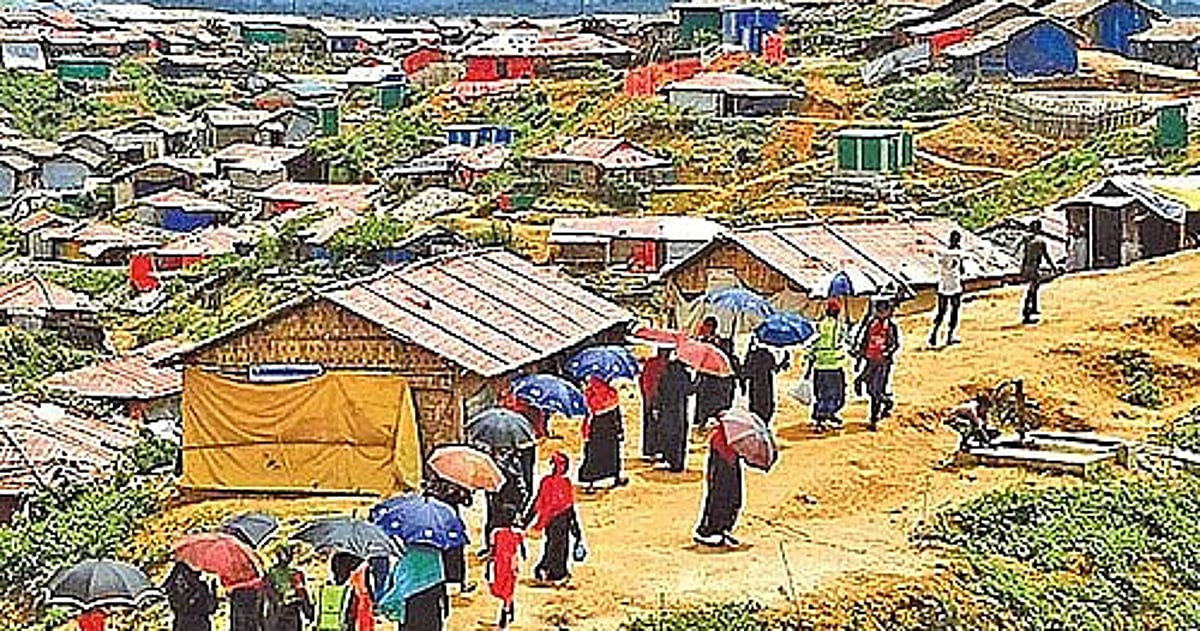
Kutupalong Rohingya Camp in Cox's Bazar, Bangladesh File photo

Malaysian Prime Minister Anwar Ibrahim said on Wednesday he would invite Myanmar’s junta chief-turned-President Min Aung Hlaing for an official visit in return for his government accepting the return of thousands of Rohingya Muslim refugees.

Min Aung Hlaing, a retired general who seized power in a 2021 coup, has been on a quest for international legitimacy since becoming president in April following an election dominated by an army-backed party in the absence of a viable opposition.

Anwar said Malaysia, like the Association of Southeast Asian Nations bloc, was not ready to recognise Myanmar’s new government, but needed an authority to negotiate with on returning refugees.

“We, following ASEAN, don’t want direct relations with Myanmar. So who are we supposed to negotiate with?” Anwar said during a podcast.

“I invited him to say we can be friends, we can trade, we can accept Myanmar, but Myanmar must accept them (refugees) back.”

ASEAN has not recognised Myanmar’s election and, since 2021, has barred its leaders from its summits amid a civil war that has killed an estimated 100,000 people, with the military widely accused of atrocities against the civilian population, which it rejects.

Malaysia has been one of the most vocal critics of Myanmar’s former junta and had repeatedly expressed frustration at its refusal to cease hostilities.

It would be the fifth of ASEAN’s 11 members to host Min Aung Hlaing after his recent visits to Laos, Thailand, Cambodia and Vietnam. He has also visited China, India and Russia.

‘They need to be sent home’

Malaysia last month said it had finalised the first phase of a voluntary repatriation programme that would return 1,500 Myanmar refugees in September. Malaysia had around 193,800 refugees from Myanmar as of February, according to the UNHCR, which has said it is not safe for them to return there.

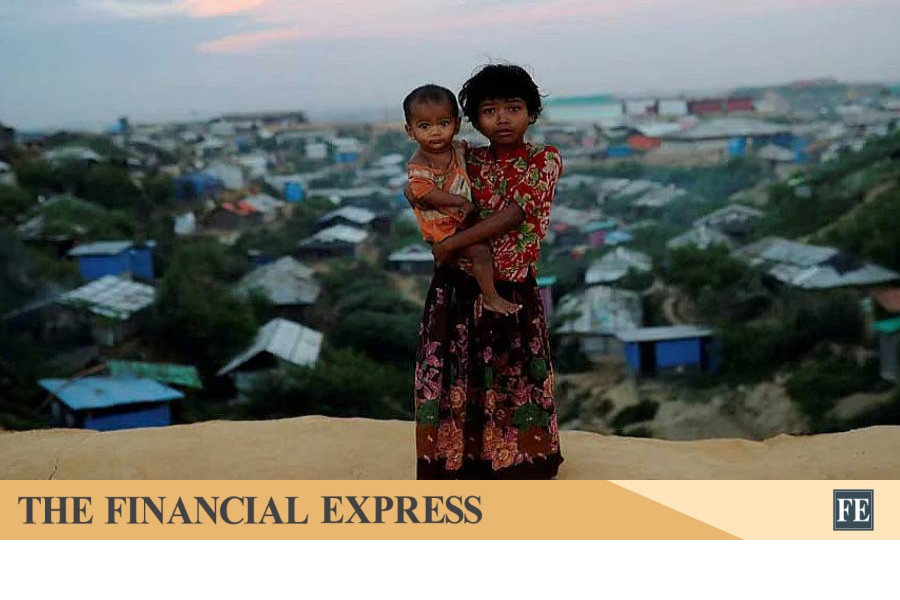
Rohingya are a persecuted minority and tens of thousands have fled Myanmar each year, many making perilous sea journeys on rickety boats in search of better lives. More than a million live in crowded camps in Bangladesh.

Anwar acknowledged the suffering of the Rohingya, but said Malaysia could not accommodate them permanently and “they need to be sent home”.

He said Myanmar had now accepted the return of 5,000 refugees, with Kuala Lumpur bearing the repatriation cost, and the expectation was that more would be returned later in stages.

“To me, that’s better diplomacy than just shouting angrily at Myanmar. Who’s going to take them? Where do we send them? They don’t even have Myanmar citizenship,” Anwar said.

“Previously we didn’t negotiate because we didn’t recognise them,” he said of Min Aung Hlaing’s government. “We’re not simply going to recognise and negotiate for no reason.”​
 

Bangladesh bets on China diplomacy to end decade-long Rohingya impasse

Nearly a decade after the mass displacement of Rohingya from Myanmar, Bangladesh is turning to China in search of a breakthrough.

Dhaka announced this month it plans to hold trilateral talks with China and Myanmar, with State Minister for Foreign Affairs Humaiun Kobir stressing that only a political settlement can resolve the crisis, reports Arab News.

Bangladesh insists any return must be safe, voluntary, dignified and sustainable.

China is central to the effort. Beijing maintains working relationships with both Dhaka and Naypyidaw, holds significant economic interests in the region and has been involved in Rohingya diplomacy before—helping establish a trilateral mechanism in 2019 that ultimately yielded little progress.

The renewed push carries fresh economic urgency.

Rakhine sits along critical infrastructure under China’s regional connectivity plans, including the Kyaukphyu Deep Sea Port and pipelines linking Myanmar’s coast to China. A Bangladesh-China-Myanmar economic corridor is also under discussion—a project whose viability depends on stability in Rakhine.

China’s position is also diplomatically unique. Unlike Western governments constrained by sanctions, Beijing has maintained access to Naypyidaw while deepening ties with Dhaka—a combination few other actors can offer.

The obstacles remain serious. Myanmar’s civil war has reshaped the political landscape, and any return will have to address citizenship, security and political inclusion in areas where territorial control has shifted considerably.

For China, however, the incentives are real. A stable Rakhine secures infrastructure investments, deepens regional connectivity and reduces instability on its doorstep.

After nine years, the question is whether Beijing has the will to use its leverage.​
 

PM seeks international support for dignified return of Rohingyas


1790132600916.webp

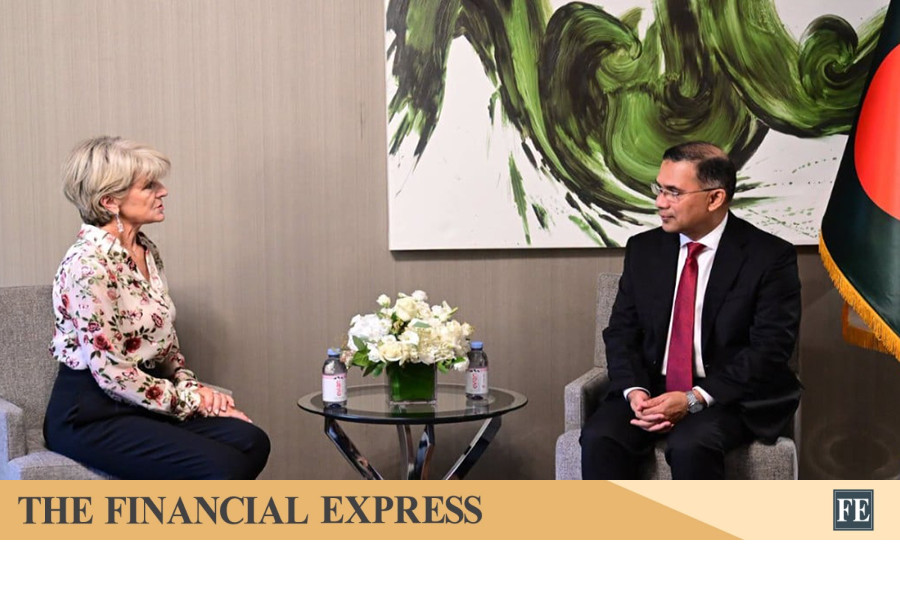
UN Secretary-General’s Special Envoy on Myanmar Julie Bishop (left) holds a courtesy meeting with Prime Minister Tarique Rahman in New York on Tuesday on the sidelines of the UNGA session. Photo: PMO

Prime Minister Tarique Rahman has sought continued support from the international community for a sustainable solution to the Rohingya crisis and the dignified return of the displaced people to their homeland in Myanmar.

He made the call during a meeting with Julie Bishop, Special Envoy of the UN Secretary-General on Myanmar, at the Hyatt Grand Central New York hotel on Tuesday, said PM’s Additional Press Secretary Atikur Rahman Rumon.

The meeting focused on the Rohingya crisis and the need for an effective role by the international community in resolving the long-standing problem

“The Prime Minister sought international cooperation to ensure the safe and dignified return of the Rohingyas to their homeland,” Rumon said.

The meeting took place as the Prime Minister is in New York to attend the 81st session of the United Nations General Assembly, where the Rohingya crisis is among the issues receiving particular attention during his visit.

State Minister for Foreign Affairs Humaiun Kobir, Bangladesh’s Permanent Representative to the UN Irene Khan, Prime Minister’s Adviser Mahdi Amin and Foreign Secretary Asad Alam Siam were present at the meeting.

On Wednesday, Tarique Rahman is scheduled to join a high-level side event on the Rohingya crisis titled “The Rohingya Crisis: A Renewed Call for a Durable Solution from Protracted Displacement, with Justice and Accountability.”

Bangladesh and The Gambia are co-hosting the event, with the European Union as a co-sponsor.

The event is intended to renew international political and humanitarian support for resolving the crisis, strengthen accountability efforts and support conditions for the safe, voluntary and dignified return of Rohingyas to Myanmar.

UN Secretary-General AntĂłnio Guterres has also called for sustained international support for Bangladesh and other refugee-hosting countries and for efforts to address the root causes of the Rohingya crisis and create conditions for voluntary, safe, dignified and sustainable returns.

Julie Bishop, who serves as the UN Secretary-General’s Special Envoy on Myanmar, has been engaging stakeholders on the Myanmar crisis and the Rohingya issue.

During his New York visit, Prime Minister Tarique Rahman is holding a series of bilateral and high-level meetings on the sidelines of the UN General Assembly. He is scheduled to deliver his maiden address at the General Assembly on September 24.​
 

PM, UN refugee chief discuss sustainable solution to Rohingya crisis


1790133270289.webp

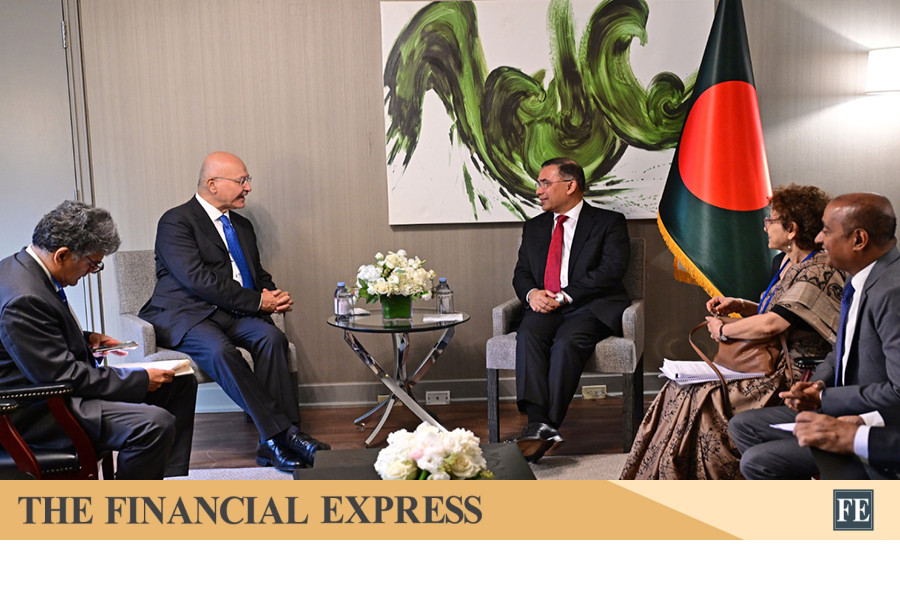
Prime Minister Tarique Rahman (Third from the right) and UN High Commissioner for Refugees Barham Salih (Second from the left) hold a high-level meeting on the Rohingya crisis at the Hyatt Grand Central New York hotel in New York on Tuesday. — Photo: PMO

Prime Minister Tarique Rahman and UN High Commissioner for Refugees Barham Salih held a high-level meeting on Tuesday to discuss a sustainable solution to the protracted Rohingya crisis and the safe, voluntary and dignified return of the displaced people to Myanmar.

The meeting was held at the Prime Minister’s place of residence at the Hyatt Grand Central New York hotel, according to a release issued by the PM’s Press Wing.

They discussed creating a conducive environment for the safe, voluntary and dignified repatriation of Rohingyas to Myanmar and the need for an effective and coordinated role by the international community to help resolve the crisis.

The Prime Minister said Bangladesh had been hosting a large number of Rohingyas on humanitarian grounds for years and that there is no alternative to their safe and dignified return to their homeland for a lasting solution to the crisis.

He stressed the need for stronger and more coordinated international efforts to facilitate their repatriation.

The two sides also stressed the importance of continuing humanitarian assistance for the Rohingyas and strengthening international cooperation to expedite the repatriation process.

Barham Salih appreciated Bangladesh’s humanitarian role in hosting the Rohingyas and underscored the importance of continued international cooperation to find a sustainable solution to the crisis.

The meeting took place as the Prime Minister is in New York to attend the 81st session of the United Nations General Assembly.

The Rohingya crisis is among the key issues on Bangladesh’s agenda during the Prime Minister’s visit.

Tarique Rahman is scheduled to attend a high-level side event on the Rohingya crisis on Wednesday, where Bangladesh will call for renewed international efforts for a durable solution to the prolonged displacement.​
 

PM puts forward five urgent measures to address Rohingya crisis


1790221060443.webp

Prime Minister Tarique Rahman addresses a high-level side event at the UN headquarters on Wednesday. Photo: PMO

Prime Minister Tarique Rahman on Wednesday proposed five urgent measures to resolve Rohingya crisis, with a call to the global stakeholders for establishing a clear and credible roadmap for the early, safe, dignified and sustainable repatriation of Rohingyas, saying the time has come to move from managing displacement to ending it.

"The time has come to move from empathy to a search for root causes and their solutions, from promises to action and from managing displacement to ending it," he said while addressing a high-level side event on 'The Rohingya Crisis: A Renewed Call for a Durable Solution from Protracted Displacement, with Justice and Accountability' at the UN headquarters.

The five proposals include establishing a clear and credible roadmap for the early, safe, voluntary, dignified and sustainable repatriation of the Rohingyas to Myanmar; ending violence against civilians, including the Rohingyas and guaranteeing their fundamental rights and security; ensuring adequate and predictable humanitarian support for the Rohingyas and host communities; strengthening justice and accountability and stepping up regional and international cooperation to combat the narco-economy, human trafficking, digital scams, illegal arms and other transboundary crimes.

The Prime Minister made the proposal as he highlighted the plight of over 1.2 million Rohingyas sheltered in Bangladesh and called upon the international community to shoulder its responsibility with conviction to create conditions for their safe and dignified return.

"Bangladesh does not want the Rohingya to remain displaced forever. We want them to return their homes in Myanmar safely, voluntarily, with dignity and with their rights protected," he said.

He added, "Bangladesh has carried its responsibility with humanity. Now the international community must carry its responsibility with conviction. If the necessary conditions are created, Bangladesh will be ready to facilitate their return."

The event was co-convened by Bangladesh and The Gambia, with participation from representatives of different countries and international organizations.

Urging for a roadmap in his first proposal, the Prime Minister said, "The international and regional stakeholders must establish a clear and credible roadmap for the early, safe, voluntary, dignified and sustainable repatriation of the Rohingya to Myanmar.

"The international community and other States must support the stabilization efforts and use their leverage to create conditions within Myanmar that are conducive for return," he added.

In the second point, he called for an end to violence against civilians, including Rohingyas, in Myanmar, stressing that their fundamental rights and security in their homeland must be guaranteed to regain confidence for return.

In the third point, the Prime Minister called for ensuring adequate and predictable humanitarian support for the Rohingyas and host communities, saying the development aspirations of host communities should not be retarded by their generous act of hospitality.

In the fourth point, the Prime Minister said justice and accountability are indispensable for ensuring sustainable repatriation of the Rohingyas, while appreciating The Gambia's leadership in pursuing accountability before the International Court of Justice.

He also acknowledged the important role of the International Criminal Court and other international justice and investigative mechanisms in pursuing individual criminal accountability, stressing the need for continued international support for these efforts and ensuring that those responsible for grave crimes must be held accountable.

In his fifth proposal, Tarique Rahman stressed the need for strengthening regional and international cooperation to combat narco-economy, human trafficking, digital scams, illegal arms and other transboundary crimes that are fuelling instability in the region.

Describing the Rohingya crisis as one originating in Myanmar, the Prime Minister said, "The crisis originated in Myanmar. Its solution lies in Myanmar."

He said the situation in Rakhine State remains deeply concerning, with Rohingyas continuing to face serious violations and abuses, including forced recruitment, arbitrary detention, restrictions on movement, forced labour and other forms of insecurity.

"Serious violations have been reported by both the Myanmar military and the Arakan Army. As such, the conditions for safe and dignified return remain challenged," he added.

1790221091769.webp

Photo: PMO

The Prime Minister noted that Bangladesh has been hosting Rohingyas for over nine years, providing food, healthcare and education based on the Myanmar curriculum through around 6,000 learning centres, besides providing capacity-building and skills development training for Rohingya youth.

"However, humanitarian generosity cannot become an excuse for political inaction. Nor can Bangladesh be expected to shoulder this responsibility indefinitely," he said.

The Prime Minister warned that prolonged displacement was creating new security challenges, including human trafficking, migrant smuggling, drug trafficking and other transnational crimes.

"A crisis left unresolved in one country can become a security challenge for an entire region," he said.

He also expressed concern over declining humanitarian assistance, saying the Rohingya crisis requires sustained international support.

Concluding his remarks, Tarique Rahman urged the global community to ensure that the Rohingyas' future is not defined by persecution, expulsion and displacement.

"Let it be a story of justice, dignity and hope. And above all, let it begin now," he said.

1790221120975.webp

Photo: PMO

President of the 81st UN General Assembly Dr Khalilur Rahman, Vice President of The Gambia Muhammad BS Jallow, UN Secretary-General's Special Envoy on Myanmar Julie Bishop and UN High Commissioner for Refugees Barham Salih addressed the event, moderated by Bangladesh Permanent representative to the United Nations Irene Zubaida Khan.

Statements were also delivered by EU Commissioner for Equality, Preparedness and Crisis Management Hadja Lahbib, Advisor at the Royal Court and Supervisor General of the King Salman Humanitarian Aid and Relief Center of the Kingdom of Saudi Arabia Dr. Abdullah Abdulaziz Al Rabeeah, Minister for the Americas, Multilateral and Human Rights of the United Kingdom Chris Elmore MP, Deputy Minister of Foreign Affairs of Turkiye A. Berris Ekinci, OIC Secretary-General Ismail Ould Cheikh Ahmed, Under Secretary of State for Political Affairs of the United States Department of State Allison Hooker, Permanent Secretary for Foreign Affairs of Thailand Eksiri Pintaruchi, First Assistant Secretary of the Pacific Strategy Division of Australia Craig Chittick and High Commissioner of Malaysia to Bangladesh Ambassador Mohd Shuhada Othman.

Acting Executive Director of the World Food Programme (WFP) Carl Skau, UNFPA Assistant Secretary-General Dr. Catharina Boehme, Assistant Secretary-General of the Office of the United Nations High Commissioner for Human Rights (OHCHR) Claudia Fuentes Julio and Deputy Director General of the International Organization for Migration (IOM) Ugochi Daniel also addressed the event.​