[🇱🇧] Lebanon - Israel Conflict -2024

[🇱🇧] Lebanon - Israel Conflict -2024
104
4K
More threads by Ghazi52

G  Lebanese Defense

Analysis: Israel's economy is paying a high price for its widening war​

From CNN's Hanna Ziady

In late September, as Israel’s nearly year-long war widened and its credit rating was downgraded yet again, the country’s finance minister, Bezalel Smotrich, said that, while Israel’s economy was under strain, it was resilient.

“Israel’s economy bears the burden of the longest and most expensive war in the country’s history,” Smotrich said on September 28, a day after Israeli airstrikes killed Hezbollah’s leader Hassan Nasrallah in Lebanon’s capital Beirut, ratcheting fears that tensions with the militant group would turn into a full-blown conflict.

“The Israeli economy is a strong economy that even today attracts investments.”

Almost a year after Hamas’ deadly attack on October 7, Israel is pushing forward on multiple fronts: launching a ground incursion against Hezbollah in Lebanon, carrying out airstrikes in Gaza and Beirut, and threatening retaliation for Iran’s ballistic missile attack earlier this week.

As the conflict spills over into the wider region, the economic costs will spiral too, both for Israel and other countries in the Middle East.
 

Israel’s economy is paying a high price for its widening war​


Analysis by Hanna Ziady, CNN
October 4, 2024


Hay is being harvested in front of an Israeli army battle tank in southern Israel near the border with the Gaza Strip, as smoke rises above the Palestinian territory in May 2024.


Hay is being harvested in front of an Israeli army battle tank in southern Israel near the border with the Gaza Strip, as smoke rises above the Palestinian territory in May 2024.
Jack Guez/AFP/Getty Images


In late September, as Israel’s nearly year-long war widened and its credit rating was downgraded yet again, the country’s finance minister, Bezalel Smotrich, said that, while Israel’s economy was under strain, it was resilient.

“Israel’s economy bears the burden of the longest and most expensive war in the country’s history,” Smotrich said on September 28, a day after Israeli airstrikes killed Hezbollah’s leader Hassan Nasrallah in Lebanon’s capital Beirut, ratcheting fears that tensions with the militant group would turn into a full-blown conflict. “The Israeli economy is a strong economy that even today attracts investments.”

Almost a year after Hamas’ deadly attack on October 7, Israel is pushing forward on multiple fronts: launching a ground incursion against Hezbollah in Lebanon, carrying out airstrikes in Gaza and Beirut, and threatening retaliation for Iran’s ballistic missile attack earlier this week. As the conflict spills over into the wider region, the economic costs will spiral too, both for Israel and other countries in the Middle East.

“If recent escalations turn into a longer and more intense war, this will take a heavier toll on economic activity and growth (in Israel),” Karnit Flug, a former governor of Israel’s central bank, told CNN on October 1.

The war has significantly worsened the situation in Gaza, pushing it into an economic and humanitarian crisis long ago, and the West Bank is “undergoing a rapid and alarming economic decline,” the United Nations said in a report last month.

The Lebanese economy, meanwhile, could contract by up to 5% this year due to cross-border attacks between Hezbollah and Israel, according to BMI, a market research firm owned by Fitch Solutions.

Israel’s economy could shrink even more than that, based on a worst-case estimate by the Institute for National Security Studies at Tel Aviv University.

Even in a more benign scenario, its researchers also see Israel’s gross domestic product per head — which in recent years overtook the United Kingdom’s — falling this year, as Israel’s population grows faster than the economy and living standards decline.

Before the October 7 attack and ensuing Israel-Hamas war, the International Monetary Fund forecast that Israel’s economy would grow by an enviable 3.4% this year. Now, economists’ projections range from 1% to 1.9%. Growth next year is also expected to be weaker than earlier forecasts.

Yet Israel’s central bank is not in a position to cut interest rates to breathe life into the economy because inflation is accelerating, propelled by rising wages and soaring government spending to fund the war.
 

‘Long-term’ economic damage​

The Bank of Israel estimated in May that costs arising from the war would total 250 billion shekels ($66 billion) through the end of next year, including military outlays and civilian expenses, such as on housing for thousands of Israelis forced to flee their homes in the north and south. That is equivalent to roughly 12% of Israel’s GDP.

Those costs look set to rise further as fiercer fighting with Iran and its proxies, including Hezbollah in Lebanon, adds to the government’s defense bill and delays the return of Israelis to their homes in the country’s north. Israel launched a ground incursion into southern Lebanon targeting Hezbollah on September 30.

Smotrich, the finance minister, is confident that Israel’s economy will bounce back once the war ends, but economists are concerned the damage will far outlast the conflict.

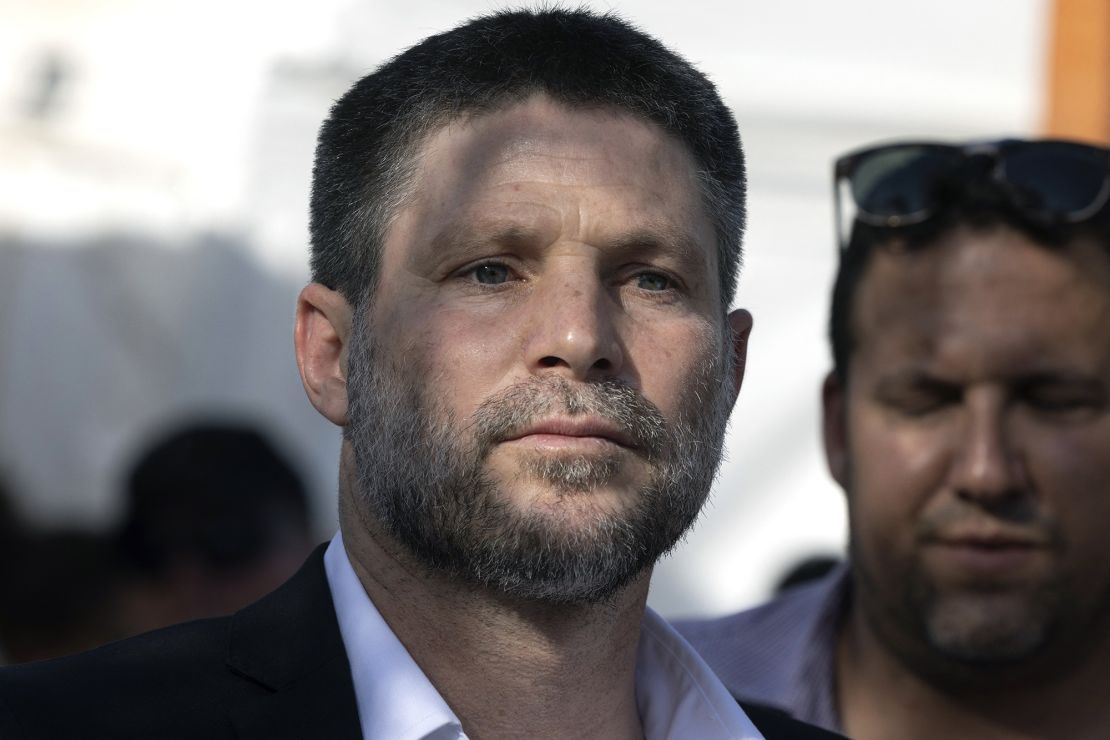
Israel's finance minister, Bezalel Smotrich, pictured in June 2024.

Israel's finance minister, Bezalel Smotrich, pictured in June 2024.
Menahem Kahana/AFP/Getty Images
Flug, the former Bank of Israel governor and now vice-president of research at the Israel Democracy Institute, says there is a risk the Israeli government cuts investment to free up resources for defense. “That will reduce the potential growth (of the economy) going forward,” she said.

Researchers at the Institute for National Security Studies are similarly downbeat.

Even a withdrawal from Gaza and calm on the border with Lebanon would leave Israel’s economy in a weaker position than before the war, they said in a report in August. “Israel is expected to suffer long-term economic damage regardless of the outcome,” they wrote.

“The anticipated decline in growth rates in all scenarios compared to pre-war economic forecasts and the increase in defense expenditures could exacerbate the risk of a recession reminiscent of the lost decade following the Yom Kippur War.”

The 1973 war, also known as the Arab-Israeli war, launched by Egypt and Syria against Israel’s forces in the Sinai Peninsula and Golan Heights, ushered in a long period of economic stagnation in Israel, partly as the country massively ramped up defense spending.

Likewise, potential tax hikes and cuts to non-defense spending — some already mooted by Smotrich — to fund what many expect to become a permanently enlarged military, could hurt economic growth. Such measures, coupled with a weakened sense of security, could also spur an exodus of highly educated Israelis, notably tech entrepreneurs, Flug warned.

“It doesn’t have to be in very large numbers, because the tech sector is very dependent on a few thousand of the most innovative, creative and entrepreneurial individuals,” she said of a sector that accounts for a hefty 20% of Israel’s economic output.
 
1728076484126.webp


A Jewish man walks past closed shops in Jerusalem's Old City on September 11, 2024.

Ahmad Gharabli/AFP/Getty Images

A large-scale departure of high-earning taxpayers would further dent Israel’s finances, which have taken a knock from the war. The government has delayed publishing a budget for next year as it grapples with competing demands that make it hard to balance its books.

The conflict has caused Israel’s budget deficit — the difference between government spending and revenue, mostly from taxes — to double to 8% of GDP, from 4% before the war.

Government borrowing has soared and become more expensive, as investors demand higher returns to buy Israeli bonds and other assets. Multiple downgrades to Israel’s credit ratings made by Fitch, Moody’s and S&P are likely to raise the country’s cost of borrowing even further.

In late August — a month before Israel carried out strikes on Lebanon’s capital and the ground incursion against Hezbollah in the country’s south — the Institute for National Security Studies estimated that just one month of “high-intensity warfare” in Lebanon against the militant group, with “intensive attacks” in the opposite direction that damage Israeli infrastructure, could cause Israel’s budget deficit to soar to 15% and its GDP to contract by up to 10% this year.
 

Uncertainty ‘the biggest factor’​

To shrink the fiscal hole, the government can’t rely on a healthy flow of tax revenue from businesses, many of which are collapsing, while others are reluctant to invest while it’s unclear how long the war will last.

Coface BDi, a major business analytics company in Israel, estimates that 60,000 Israeli firms will shut this year, up from an annual average of around 40,000. Most of these are small, with up to five employees.

“Uncertainty is just bad for the economy, bad for investment,” said Avi Hasson, the CEO of Startup Nation Central, a non-profit that promotes Israel’s tech industry globally.

In a recent report, Hasson warned that the remarkable resilience of Israel’s tech sector so far “will not be sustainable” in the face of the uncertainty created by the prolonged conflict and the government’s “destructive” economic policy.

Even before the October 7 attack, government plans to weaken the judiciary were prompting some Israeli tech companies to incorporate in the United States. The insecurity created by the war has exacerbated that trend, with most new tech companies formally registered overseas, despite tax incentives to incorporate locally, and a large number considering moving some of their operations outside Israel, Hasson told CNN last month.

He remains bullish on Israeli tech, pointing to robust fundraising, but cautions that the industry’s future growth “depends on regional stability and responsible government policies.”
 
Other sectors of Israel’s economy, while less important than tech, have been hit much harder. The agriculture and construction sectors have struggled to fill gaps left by Palestinians whose work permits have been suspended since October last year, pushing up prices for fresh vegetables and leading to a steep decline in housebuilding.

Tourism has also taken a knock, with arrivals down sharply this year. Israel’s tourism ministry has estimated that the drop in foreign tourists has translated into 18.7 billion shekels ($4.9 billion) in lost revenue since the start of the war.

The Norman, a boutique hotel in Tel Aviv, has had to lay off some staff and cut its prices by up to 25%, partly because some of its facilities — including its Japanese rooftop restaurant — remain closed to save on costs.

Occupancy levels have fallen from above 80% before war to below 50% currently, according to the hotel’s general manager Yaron Liberman.

“We know the day when the war will finish it’s going to be crazy here as far as business coming back,” he told CNN in mid-September, citing correspondence from would-be guests keen to visit Israel but unable to book flights or secure travel insurance.

But for now, “the biggest factor is the uncertainty,” Liberman said. “When is the war going to end?”
 

Israeli police report heavy damage in northern Israel following Hezbollah rocket barrage​


From CNN’s Tamar Michaelis and Eyad Kourdi


Israeli police reported heavy damage in northern Israel following a Hezbollah rocket barrage on Friday.

Earlier on Friday, the Israeli military said nearly two dozen projectiles were identified crossing into Israeli territory from Lebanon.

Police officials said they had received reports about several areas impacted by rocket fire across Kiryat Shmona and the Lower Galilee, with heavy damage reported.

Fire and rescue teams attend to a fire in Kiryat Shmona


Fire and rescue teams attend to a fire in Kiryat Shmona

Northern District Fire & Rescue/Northern District Fire & Rescue
Several fires broke out but no injuries were reported.

Police officers and bomb disposal teams were at the scenes of the strikes.

Firefighting teams were working to extinguish a fire that broke out after a direct hit on a garage in Kiryat Shmona, according to a statement from the Fire and Rescue Services.
 

Iran says any Lebanon ceasefire should be simultaneous with Gaza​

Reuters
October 4, 2024

BEIRUT: Tehran backs efforts for a ceasefire in Lebanon on the condition it would be backed by Hezbollah and simultaneous with a ceasefire in the Gaza Strip, Iran’s foreign minister Abbas Araqchi said in Beirut on Friday.

“We support efforts for a ceasefire on the condition that it would be acceptable to the Lebanese people, acceptable to the resistance, and thirdly, it would be synchronized with a ceasefire in Gaza,” he said.

Iran’s most senior diplomat also said his presence in Beirut “in these difficult circumstances” was the best evidence that Iran stood by Lebanon and supported the Shias.
 
WASHINGTON: US President Joe Biden on Friday advised Israel against striking Iran’s oil facilities, saying he was trying to rally the world to avoid the escalating prospect of all-out war in the Middle East.

But his predecessor Donald Trump, currently campaigning for another term in power, went so far as to suggest Israel should “hit” the Islamic republic’s nuclear sites.

Making a surprise first appearance in the White House briefing room, Biden said that Israel’s Benjamin Netanyahu “should remember” US support for Israel when deciding on next steps.

“If I were in their shoes, I’d be thinking about other alternatives than striking oil fields,” Biden told reporters when asked about his comments a day earlier that Washington was discussing the possibility of such strikes with its ally.

Biden added that the Israelis “have not concluded how they’re, what they’re going to do” in retaliation for a huge ballistic missile attack by Iran on Israel on Tuesday.

The price of oil had jumped after Biden’s remarks Thursday.

Any long-term rise could be damaging for US Vice President Kamala Harris as the Democrat confronts Republican Trump in a November 5 election where the cost of living is a major issue.
 

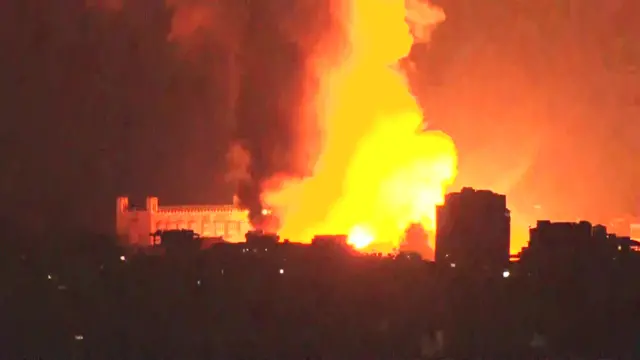
Large explosion seen in Beirut
​

Live images show a large explosion in Beirut, after what appears to be a fresh Israeli attack on the city.

Little is known about exactly what was hit and the Israeli military is yet to comment. We'll bring you more as we have it.

Explosion in Beirut
 

Protesters call for hostage deal in Jerusalem and Tel Aviv​

Jon Donnison
Reporting from Jerusalem

A protest in Jerusalem
Image source, Getty Images

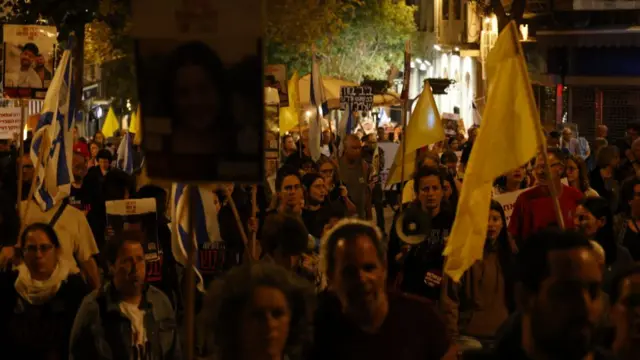
In Jerusalem tonight, as in Tel Aviv, there have been more mass protests from Israelis calling for a ceasefire and a hostage release deal in Gaza.

The families of some of those who are still being held, as well as those who’ve been killed, were invited to address the crowd. “Bring them home," they chanted, waving placards bearing the faces of hostages.

Those demonstrating are furious at Prime Minister Benjamin Netanyahu and believe he is putting his own political ambitions ahead of the lives of Israeli hostages.

A year ago, Israel was united in its revulsion at what Hamas did on 7 October.

Twelve months on, its public, politicians and military are very much divided over the strategy in Gaza.
 

IDF says more than 400 Hezbollah fighters killed during ground invasion​

Israeli military spokesman Daniel Hagari says 440 Hezbollah fighters have been killed since the start of Israel's ground invasion into southern Lebanon on Monday night.

He says that includes 30 commanders.

Hezbollah has not said how many of its members have been killed.
 

Anger and grief in south Lebanon city almost deserted after Israeli strikes​

Orla Guerin - Reporting fromTyre, southern Lebanon

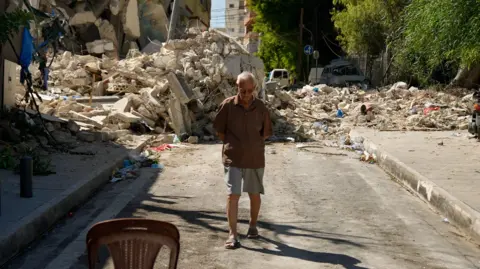
Goktay Koraltan An elderly Lebanese man walks in a street surrounded by toppled buildings and rubble after Israeli air strike


Goktay Koraltan

An elderly Lebanese man walks in front of a building brought down by a recent Israeli air strike
Conversations in Tyre in southern Lebanon happen in a hurry now. It’s not wise to linger on the streets, and there are fewer and fewer people to talk to.

Chats can be cut short by the rumble of Israeli bombing, or the sound of outgoing rocket fire by Hezbollah – which can attract incoming fire.

Israeli drones buzz overhead.

You drive fast, but don’t speed, knowing there are eyes in the sky. Mostly you are the only car on an empty road – which can make you a target.

That knowledge is always with us, like the body armour we now wear.

But civilians here have no armour plating to shield them, and many Lebanese no longer have a roof over their heads. More than one million have been forced to flee, according to the Prime Minister, Najib Mikati.


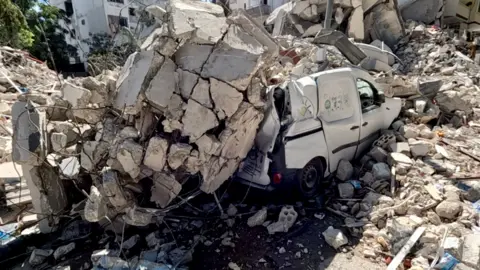
Goktay Koraltan A vehicle crushed under rubble


Goktay Koraltan

A vehicle crushed under rubble after Israeli air strikes in Tyre
War has created a vacuum here – sucking the life out of this ancient city proud of its Roman ruins, and golden sandy beach.

Streets are empty, and shops shuttered. The seashore is deserted. Windows rattle with Israeli air strikes.

The local civil defence headquarters lies abandoned – rescue teams were forced to evacuate – to save themselves after they got a telephone warning from Israel.

Israeli strikes are getting louder and closer to our hotel – in recent days several strikes on the hills opposite us appear to involve some of Israel’s most destructive bombs, weighing in at 1000lb.

And then there is the Hezbollah factor. Even as the armed group is trying to hold off invading Israeli troops on Lebanese soil, it is controlling the international media in the city of Tyre. It limits our movements, though it has no control over what we write or broadcast.

In hospitals, doctors look weary and overwhelmed. Many no longer go home because it is too dangerous to travel.

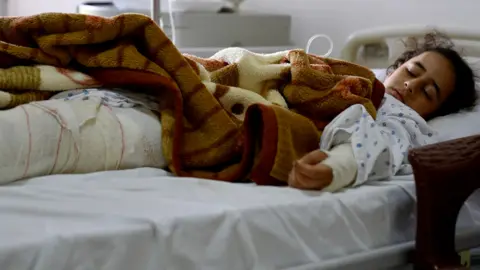
Instead, they tend to patients like nine-year-old Mariam, whose left leg is in a cast, and whose arm is heavily bandaged. She lies sleeping in a bed in Hiram Hospital, dark hair framing her face.


Goktay Koraltan Mariam lies asleep in a hospital bed with a her left leg in a cast and arm heavily bandaged.


Goktay Koraltan

Nine-year-old Mariam lies asleep in a hospital bed with a her left leg in a cast and arm heavily bandaged

“She came in as part of a family of nine,” said Dr Salman Aidibi, the hospital CEO.

“Five of them were also treated. We operated on Mariam, and she is doing much better. We hope to send her home today. Most casualties are given first aid here and stabilised before being sent to other centres, because this hospital is on the front line.”

He says the hospital receives about 30-35 injured women and children a day, and it is taking its toll on staff.

“We need to be positive while we’re working,” he said. “It’s when we stop and contemplate, remember, that’s when we get emotional.”

Asked about what may lie ahead his response comes with a sigh. “We are in a war,” he says. “A destructive war on Lebanon. We hope for peace, but we are prepared for all eventualities.”

Also prepared for the worst is Hassan Manna. He’s staying put in Tyre as war tightens its grip. And he is staying open for business at the small coffee shop he has run for the past 14 years. Locals still pass by for a chat and some reassurance in the form of small plastic cups of sweet coffee.
 
“I'm not leaving my country,” Hassan told me. “I'm not leaving my house. I’m staying in my place, with my children. I’m not afraid of them (the Israelis).

"The whole world is out on the streets. We don’t want to be humiliated like that.

"Let me die in my house.”

Five of his neighbours were killed in their home by an Israeli air strike last weekend. Hassan saw it happen and was thrown in the air by two incoming Israeli missiles.

He managed to walk away with just an injured arm.


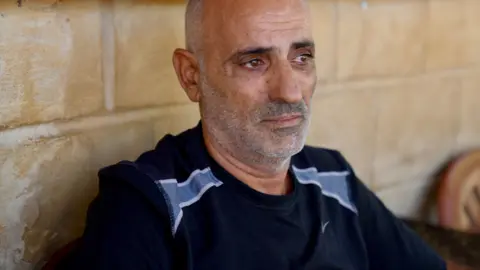
Goktay Koraltan Hassan Manna stares into the distance and appears visibly upset as he narrates his experiences


Goktay Koraltan

Five of Hassan Manna's neighbours were killed in their home by an Israeli air strike last weekend

Was there a Hezbollah target there? We don’t know. Hassan says the dead were all civilians and members of one family, including two women and a baby.

Israel says its targets are Hezbollah fighters and their facilities, and not the people of Lebanon. Many here say otherwise – including doctors, and witnesses like Hassan.

Israel says it is taking steps to minimise the risk of harming civilians – accusing Hezbollah of hiding its infrastructure among civilian populations.

“There was nothing (no weapons) there,” Hassan insisted. “If there was, we would have left the area. There was nothing to be bombed. The woman was 75.”

After the strike he dug in the rubble for survivors until he collapsed and was taken to hospital himself.

When he speaks of his neighbours his voice breaks with anger and grief - and his eyes fill with tears.

“It’s unjust,” he said, “totally unjust. We know the people. They were born here. I swear I wish I had died with them.”


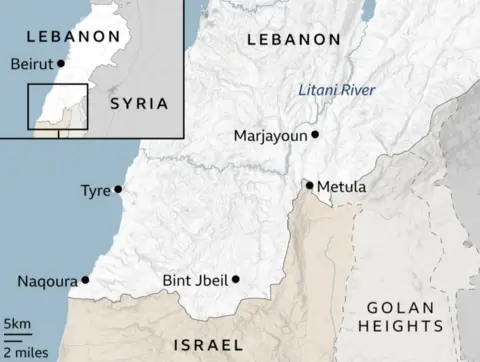
A map shows where Tyre is in relation to other areas of Lebanon


Ten days ago, we got the view in a Christian area, close to the border.

One local woman – who asked not to be named - told me everyone was living on their nerves.

“The phone is constantly beeping,” she said. “We can never know when (Israeli) attacks are coming. It’s always tense. Many nights we can’t sleep.”

We were interrupted by the sound of an Israeli air strike, which sent smoke rising from distant hills.

She reeled off a list of villages nearer the border - now deserted and destroyed after the past year of tit for tat exchanges between Hezbollah and Israel.

She said the damage in these areas was already far greater than in the five-week war of 2006. “If people want to come back later", she said, “there are no houses left to come back to.

"And there is no house that did not lose relatives,” she said, “either close or distant. All the men are Hezbollah.”

Before the war the armed group was always “bragging about its weapons, and saying it would fight Israel forever,” she told me. “Privately, even their followers are now shocked at the quality and quantity of attacks by Israel.”

Few here would dare to guess at the future. “We have entered a tunnel,” she said, “and until now we cannot see the light."

From Tel Aviv, to Tehran, to Washington no one can be sure what is coming next, and what the Middle East will look like the day after.

Additional reporting by Mohamed Madi
 

Sirens blare as Israel intercepts Hezbollah​

In northern Israel rocket barrages from Lebanon are continuing to trigger sirens and interception systems.

Overnight, the Israel Defense Forces (IDF) said it stopped around 30 rockets which had been fired into northern Israel.

Sirens have also been heard throughout the day along Israel's western coast from as far north as Haifa and as far south as Hadera, the IDF said on X.
 

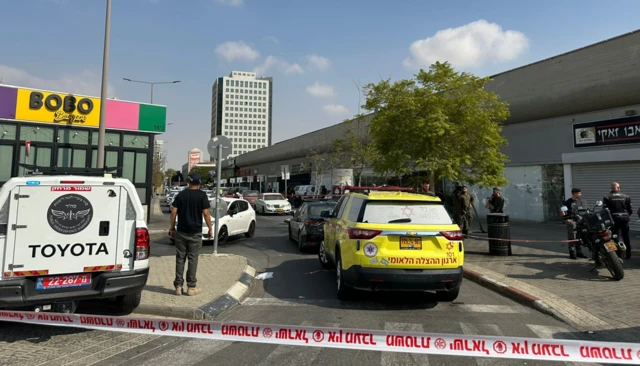
Woman killed and several injured in Israel bus station​


Emergency services at the scene of a shooting outside a bus station in Beersheba


Image source,MDA

Several people have been injured and a 25-year-old woman has been killed in a shooting attack at a bus station in Israel.

Police say a "suspected terror attack" was carried out in Beersheba in southern Israel in the last hour.

Israel's ambulance service says medics are treating ten casualties, some of whom suffered gunshot wounds.

Police say the attacker has been killed.

Details are still emerging and we will bring you more as we get it.
 

Iran-backed group in Iraq says it launched drones at Israel​


The Islamic Resistance in Iraq group says it launched drones at three targets in the Israeli-occupied Golan Heights in the early hours, according to a statement shared by Hezbollah.

The group is allied to Hezbollah and other Iran-backed groups opposed to Israel in the region. They sometimes refer to themselves as the Axis of Resistance.

The IDF has not commented on the report and it is not clear if it caused any damage.
 

Hezbollah rocket attack hurts at least 6 people in northern Israeli city of Haifa, hospital says​


From Tamar Michaelis and Kareem El Damanhoury


Israeli rescue force members inspect the site where a projectile fell in Haifa, northern Israel, on Sunday.


Israeli rescue force members inspect the site where a projectile fell in Haifa, northern Israel, on Sunday.
Shir Torem/Reuters


At least six people have been injured after Hezbollah fired a barrage of rockets into the city of Haifa in northern Israel late Sunday.

The Iran-backed militant group said in a statement that it had launched the rockets at Israel’s Carmel military base, while Israeli authorities reported rockets and shrapnel dropping around the city.

Haifa’s Rambam Hospital said it was treating six people who were injured in the barrage. It described one of them as “lightly to moderately injured” and four of them as “lightly injured” due to shrapnel. Another person was suffering anxiety, it said, adding that all the injured were conscious.

Israel’s Magen David Adom emergency services said separately that it had treated two people at the scene — a 13-year-old boy with a head injury caused by shrapnel and a 22-year-old man who was hit by a window that fell due to the blast.

This appears to be the first time rockets have actually struck Haifa during the latest conflict between Israel and Hezbollah.

Debris and shrapnel have been reported by police and bomb disposal experts in two primary areas, according to the police.

The Israel Defense Forces said earlier that it had spotted five projectiles fired toward the city and tried to intercept them, but several of the rockets landed.

Israeli officials say Hezbollah fired more than 100 rockets across the border Sunday. Israel continued with its extensive bombing campaign on southern Beirut and surrounding areas in Lebanon, which has killed more than 1,400 people over the past two weeks, according to Lebanese authorities.

CNN’s Jeremy Diamond contributed to this report.
 

Israel vows retaliation against Iran as it strikes southern Lebanon and Gaza. Here's the latest​

From CNN staff


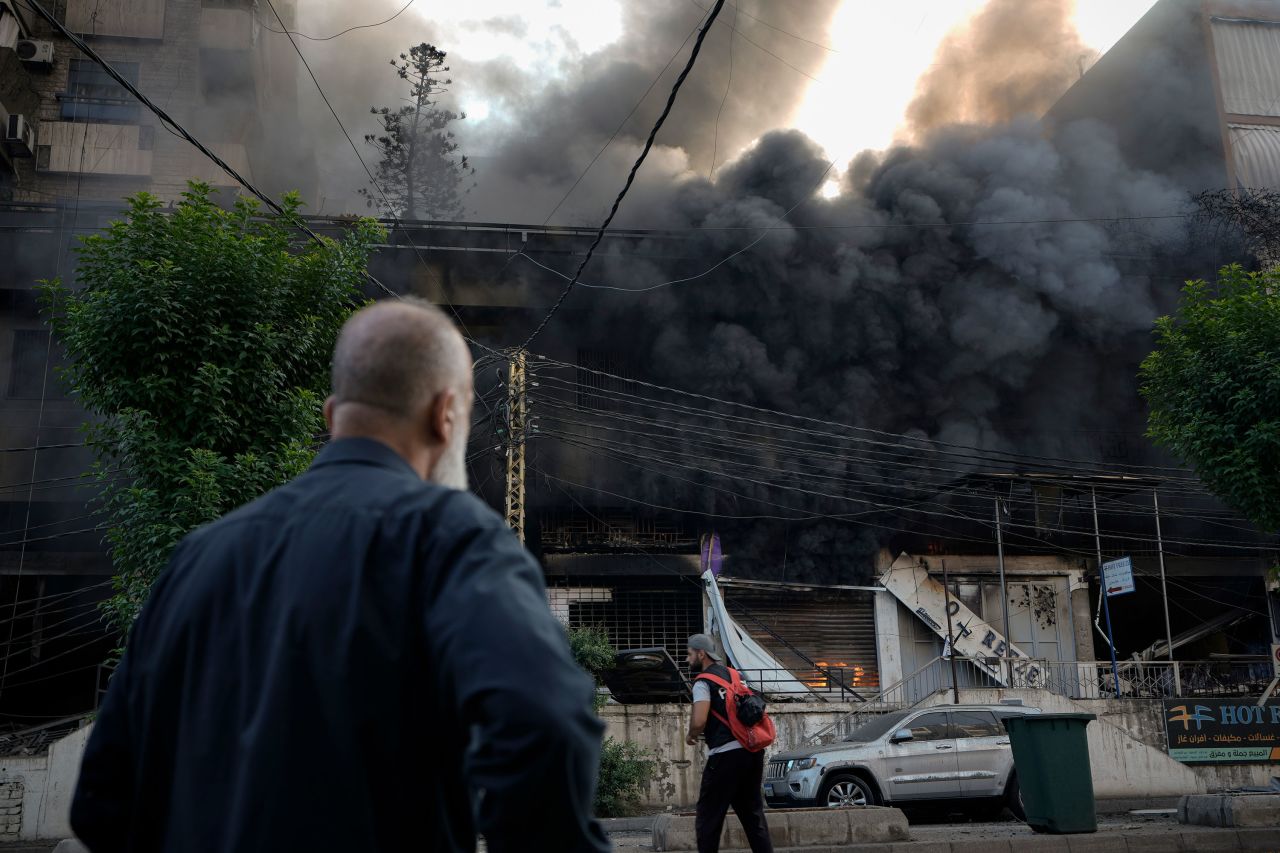
Flames and smoke rise from a destroyed building at the site of an Israeli airstrike in Dahiyeh, in the southern suburbs of Beirut, Lebanon, on Sunday.


Flames and smoke rise from a destroyed building at the site of an Israeli airstrike in Dahiyeh, in the southern suburbs of Beirut, Lebanon, on Sunday.

Bilal Hussein/AP

The Israeli military called for more evacuations in southern Lebanon late Sunday after pounding southern Beirut and surrounding areas with some of its most intense bombing of the current campaign against Hezbollah, the Iran-backed militant group.

The announcement echoed a series of previous warnings, now affecting a total of 124 villages, as Israel says it is striking Hezbollah targets embedded in civilian areas. That has forced hundreds of thousands of Lebanese people to flee the onslaught, and more than 1,400 have been killed so far, according to the Lebanese health ministry.

Meanwhile, Israeli officials have vowed retaliation for Iran’s largest-ever attack on the country — a missile barrage launched last Tuesday — and have begun a new military operation in northern Gaza, where the Israel Defense Forces says it saw signs of Hamas regrouping.
 
Here are the latest developments in the region:

  • Israel’s retaliation against Iran: Israel is closely coordinating with the United States as it prepares to strike back at Iran but will make its own, independent decisions about how to retaliate, Israeli Defense Minister Yoav Gallant told CNN. Even as the US has made clear it opposes a strike on Iranian nuclear facilities, Gallant said Israel has not ruled out any of its options. “Everything is on the table,” Gallant said.
  • The latest from Gaza: Israel’s military says it has encircled Jabalya in northern Gaza and launched a new ground operation after seeing signs of Hamas rebuilding there, despite nearly a year of fighting in the territory. Elsewhere, Israeli airstrikes targeted a school and mosque that were converted into shelters in central Gaza, killing at least 25 people and overwhelming nearby Al-Aqsa Martyrs Hospital with casualties. The IDF claimed Hamas was operating at the complex.
  • October 7 anniversary: The Israeli military has reinforced soldiers near the Gaza Strip ahead of the ceremonial events that will mark one year since the Hamas attacks. Additional troops have been deployed at border communities for both “defensive and offensive scenarios,” according to a statement by the IDF. Meanwhile, there have been more demonstrations, marches and memorials across the world ahead of the anniversary — both mourning the attacks’ victims and demanding an end to the ensuing war.
  • Iran cancels flights: Flights at Iran’s airports will be canceled overnight Sunday into Monday, and a portion of the country’s airspace will be closed down due to “military exercises” nightly until at least October 9, according to Iran’s Civil Aviation Organization. The Iranian government did not elaborate on the decision, but it comes ahead of the anniversary of the Hamas attacks and as Israel mulls its retaliation.
  • Lebanon delays start of school year: Lebanon has postponed the start of the school year until November 2 as a protective measure amid the escalating fighting between Israel and Hezbollah. Some 400,000 students and 40,000 teachers have been displaced from their homes across the country following the fighting, Lebanese education minister Abbas Halabi said.
 

Strike near historic Roman ruins in Lebanon prompts warning from local governor​


From CNN’s Charbel Mallo


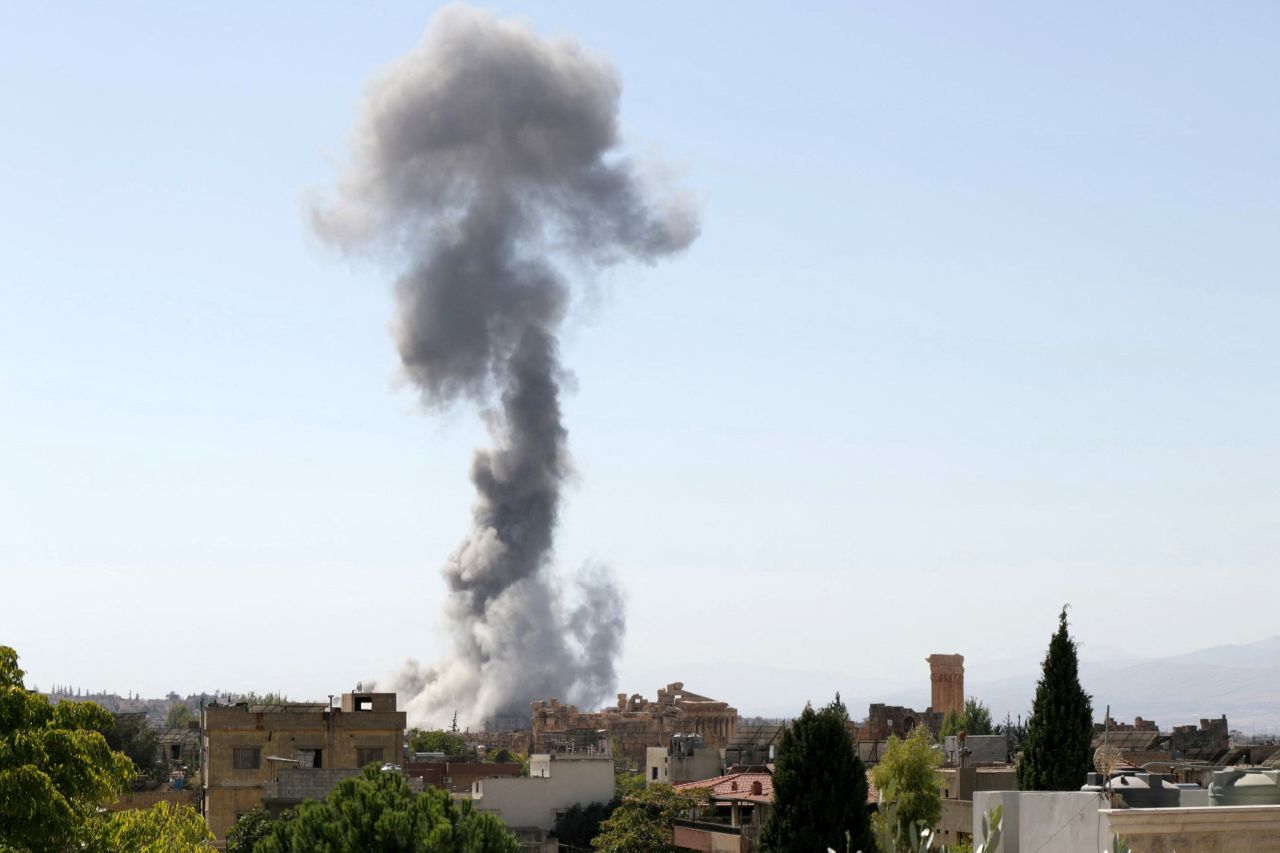
Smoke billows following an Israeli airstrike near the ruins of the ancient Roman Temple of Bacchus in Lebanon's eastern city of Baalbek in the Bekaa valley on October 6, 2024. (Photo by Nidal SOLH / AFP) (Photo by NIDAL SOLH/AFP via Getty Images)


Smoke billows following an Israeli airstrike near the ruins of the ancient Roman Temple of Bacchus in Baalbek, Lebanon, on October 6.

Nidal Solh/AFP/Getty Images

An Israeli strike landed close to Roman ruins in the Lebanese city of Baalbek, raising warnings from local officials on the structural integrity of the site.

The Israeli attack did not target the historic complex, Baalbek-Hermel Governor Bachir Khodr said — but it struck nearby.

“It is 500 to 700 meters away from it, but raids near it will have negative repercussions on it,” Khodr said in a post on X Sunday.

Khodr shared an image showing smoke rising behind what appears to be the monoliths of the ancient complex. It is unclear what the Israeli military was targeting in the area. CNN has reached out to the Israel Defense Forces.

More on the historic significance of site:
The ancient complex — a UNESCO World Heritage Site — contains the ruins of some of the largest and best-preserved Roman temples. It has survived many natural disasters and conflicts over centuries, most recently the 2006 Israeli-Hezbollah conflict and a 15-year civil war that started in 1975.

The city of Baalbek has a Hezbollah presence and is located northeast of Lebanon. It has been targeted by Israel several times over the past year.

The Israeli military has been carrying out its current bombing campaign in Lebanon at an unprecedented intensity. The Lebanese government says strikes have killed more than 1,400 people and forced hundreds of thousands of civilians to flee residential areas, where the IDF says the militant group is operating.
 

Hezbollah rockets hit northern Israeli city of Haifa​


David Gritten
BBC News


Getty Images Residents and Israeli officials inspect the damage following an overnight rocket attack in Haifa, Israel (7 October 2024)


Getty Images

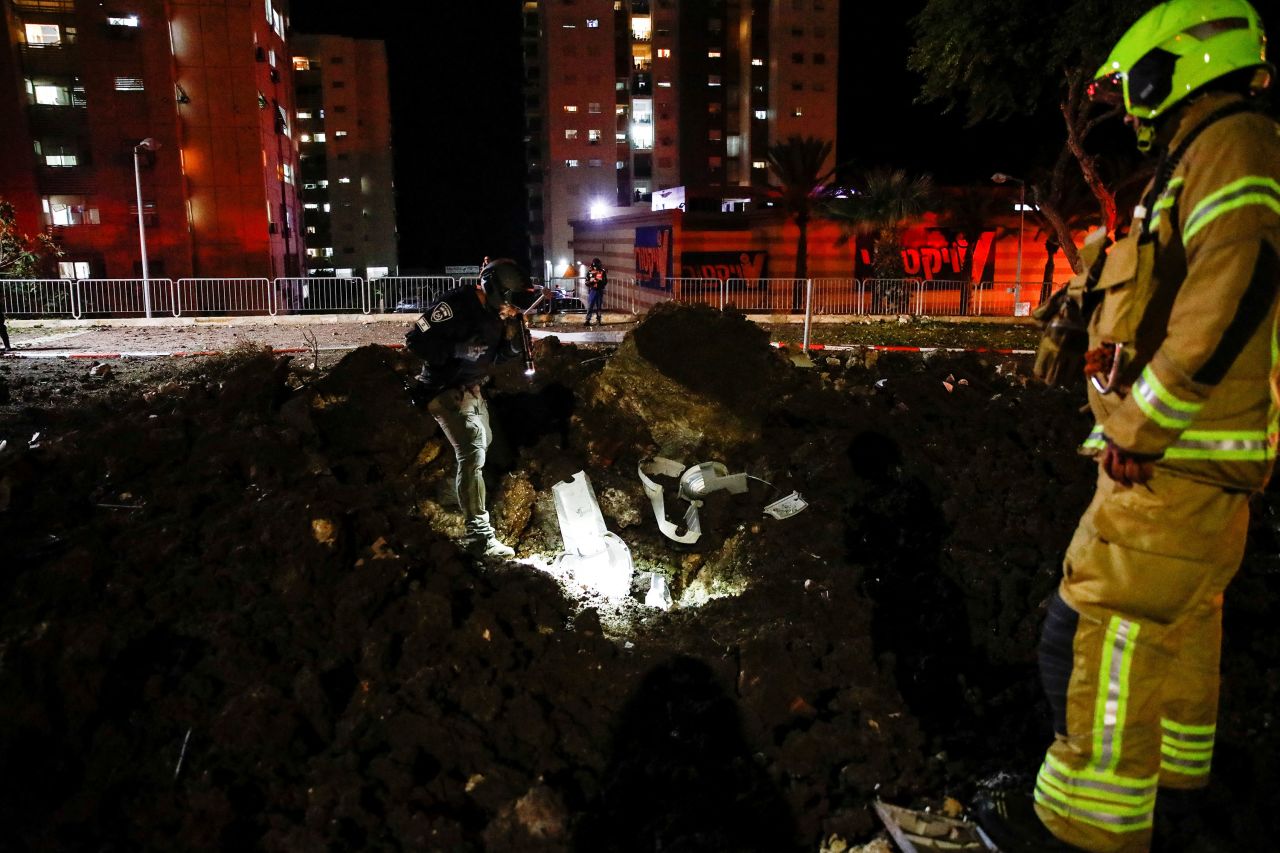
One rocket hit a roundabout near a supermarket and several apartment blocks in eastern Haifa

The northern Israeli port city of Haifa was hit by about five rockets fired by the Lebanese armed group Hezbollah late on Sunday, causing damage and injuring eight people, Israeli authorities say.

A spokesman for Haifa's municipality said it was the first time the city had been targeted since the 2006 war between Israel and Hezbollah.

The Israeli military said it was investigating how its air defences failed to intercept the rockets. Hezbollah said it targeted a military base south of Haifa.

Another person was injured when a barrage of rockets hit the town of Tiberias, which is located to the east on the shore of the Sea of Galilee.

Meanwhile, Israeli warplanes carried out a new round of air strikes in the Lebanese capital. Beirut, hitting what the military said were Hezbollah targets.

The military also said a third division had joined its invasion of southern Lebanon, where Hezbollah said its fighters were targeting Israeli troops in and around border villages.

Israel’s government has pledged to make it safe for tens of thousands of displaced residents to return to their homes near the Lebanese border after a year of cross-border fighting sparked by the Gaza war.

The hostilities have escalated steadily since Hezbollah began firing rockets into northern Israel in support of Palestinians on 8 October 2023, the day after its ally Hamas’s deadly attack on southern Israel.

Hezbollah has remained defiant despite suffering a series of devastating blows in recent weeks, insisting on Monday that it was confident in its ability to “repel the [Israeli] aggression”.


According to the Israel Defense Forces (IDF), Hezbollah fired more than 135 rockets into northern Israel on Sunday.

Approximately five projectiles crossed from Lebanon after air raid sirens sounded in the Carmel and Bay areas of Haifa at 23:22 local time (20:22 GMT), an IDF statement said.

“Interceptors were fired. Fallen projectiles were identified in the area. The incident is under review,” it added.

Eliran Tal, spokesman for the Haifa municipality, told the BBC that two neighbourhoods were hit.

BBC Verify geolocated CCTV footage showing the moment that one of the rockets hit a roundabout near a supermarket and several apartment blocks in the west of the city.

In another video, emergency services and bystanders are seen inspecting a crater and piles of rubble and earth at the scene.

Tal Rosen, a member of the emergency services, told Reuters news agency that he had been inside his home about 500m (1,640ft) away when he heard an explosion.

“In the beginning, we didn't find any injuries and then I saw in this building,” he said, pointing to damaged windows on the side of a nearby apartment block.

“There were shards of glass in this building. I went inside and I found four people [with] minor to moderate [injuries]."

Israel’s Magen David Adom (MDA) ambulance service said it treated a 13-year-old boy in a moderate condition with shrapnel injuries to his head, as well as a 22-year-old man in a moderate condition with both a blast injury and a head injury from falling through a window.

Hezbollah said it launched "a salvo of Fadi 1 rockets at the Carmel base south of Haifa” late on Sunday in retaliation for the Israeli air strike that killed its leader Hassan Nasrallah last month.

Mr Tal dismissed Hezbollah's claim, saying it was "an attack on civilian population".

He estimated that 95% of Haifa's population of 280,000 was staying put.

"With missile threats from the north, it is not an easy period of time. But we are strong," he said.

"We went through a lot of tragedy like this - and I hope the IDF and the leadership will do their best to push the enemy far from the border."

The MDA also reported that a man in his 20s was in a serious but stable condition and suffering from shrapnel injuries to his chest and abdomen following a separate rocket attack on the town of Tiberias, about 50km (30 miles) to the east.

The IDF said approximately 15 projectiles were identified as crossing from Lebanon at the same time as the Haifa attack. Some were intercepted while others fell in the area, it added.

The Israeli police said some buildings and properties were damaged.
 

Israeli forces proximity to Irish troops in Lebanon 'concerning'​


EPA Plums of grey and white smoke rise from buildings in Lebanon.
EPA

The IDF are a few hundred metres from camp UN-652

Israeli Defence Forces' (IDF) proximity to an outpost where a number of Irish troops are stationed is "concerning", said the United Nations Interim Force in Lebanon (UNIFIL).

Andrea Tenenti from UNIFL has said that the IDF are currently a few hundred metres from camp UN-652, she said to Irish Broadcaster RTÉ.

The proximity of the IDF to Irish UN troops has caused high levels of concern within United Nations Headquarters as fighting continues between Israel and Hezbollah.

President Michael D Higgins said it is "outrageous" that the Israel Defence Forces (IDF) has "threatened" UNIFIL peacekeepers and attempted to have them evacuated from the villages they are defending in Lebanon.

A convoy is set to de-escaluate the situation​

Mr Tenenti, who is in Beirut, told RTÉ that efforts are being made in New York to deal with the Israeli permanent mission to the UN in order to get IDF soldiers to move away from the area as their presence compromises the safety of UNIFIL troops.

If the IDF refuse to leave the area, the [UN] Security Council will decide how to move forward, Mr Tenenti added.

Mr Tenenti explained that troops at the outpost have supplies for a couple of weeks and a convoy is heading to the area and de-escalate the situation.

He said there is also concern for troops from other countries as there are 29 other positions that are based near the "blue line".

Drawn by the United Nations, the Blue Line is the 120km demarcation line where Israeli pulled back to when they left south Lebanon in 2000.
 

'Ireland's position is clear'​

Also condemning the attack on the 7 October is Tánaiste Micheál Martin who says that the violence must end and a political process needs to begin.

He said: "I think today of the hostages still in Gaza and their families who desperately want them home. I call again for their immediate release,

"I recognise the hurt and sorrow of the Israeli people, and of the Jewish and Israeli communities here in Ireland and throughout the world.

"I express our profound sympathy to all who are mourning loved ones brutally murdered, and think especially of the family and friends of Kim Damti."

Martin added: "It is not possible to view this anniversary in isolation from the justifiable outrage at the death and destruction suffered by ordinary Palestinians in Gaza over the past 12 months.

"Ireland's position is clear and on the record. The violence must stop.

"There must be an immediate ceasefire and hostage release deal, and a massive scaling up of humanitarian assistance into Gaza."
 

Hezbollah says it's attacking Israeli troops along the border​

As we've been reporting, as well as the rockets being fired into northern Israel and continued air strikes in southern Lebanon, there's also on-the-ground fighting along the border in Lebanon.

Israel expanded its ground invasion earlier this week, attacking in western as well as eastern areas.

Hezbollah says it fired a missile at Israeli troops trying to push into the Labbouneh area, in the west.

And much further east, it says it also fired a rocket barrage at Israeli soldiers heading towards the twin border villages of Mays al-Jabal and Mouhaybib.
 

What's the latest?​

An ambulance is crumpled and crushed under rubble and dust
Getty Images

An ambulance lies destroyed in the rubble of an air strike in Kafra, Lebanon
  • Hezbollah rocket attack: Two Israelis were killed during a rocket attack on the border town of Kiryat Shmona - Hezbollah said it fired rockets at the area
  • On-the-ground: Fighting has been reported by Israel and Hezbollah along the border. Hezbollah says it pushed back the IDF in western Lebanon
  • Air strikes: The IDF said this morning it's hit 185 Hezbollah sites in the last 24 hours. Explosions have been seen near Tyre and in the Khiam area
  • Displaced people: The UN says a quarter of Lebanese territory is under evacuation order, with displaced people living on the streets and beaches of Beirut
  • Biden-Netanyahu phone call: US President Biden and Israeli Prime Minister Benjamin Netanyahu are expected to speak to later today.
 

Hezbollah says it fired 'rocket salvo' at border town​

Smoke rises from Kiryat Shmona, next to a road as traffic passes


Reuters
A photo sent to us in the last hour shows smoke rising above Kiryat Shmona
We just reported that two people have been killed in Kiryat Shmona, a border town in the north-east of Israel.

Hezbollah has released a statement confirming they targeted "a gathering of Israeli enemy forces" in the same area with "a rocket salvo" at 14:00 local time (12:00 BST).
 

More rockets fired at Haifa, says Israel​


Two ambulances on a road with a police officer standing beside one.
Image source, MDA
A photo shared by Israel's emergency medical service of the scene after people were hit by shrapnel
Israel says the Haifa area has been hit by rockets again today, marking the third consecutive day of attacks on Israel's third-largest city.

The Israel Defense Forces (IDF) says that about 40 "projectiles" - which usually means rockets - have crossed from Lebanon into Israel, targeting areas around Upper Galilee and Haifa Bay. While some were intercepted, several landed in the region, the IDF says.
According to Israel’s emergency services Magen David Adom (MDA), six people are injured. Five have been injured by shrapnel, including a 16-year-old boy, and a motorcyclist suffered minor injuries in a traffic accident during the alarm.

Haifa has a population of about a quarter of a million. It was hit on Monday for the first time in 18 years, and was hit again yesterday.
 

Israel can weaken Hezbollah - but its ideology will persist​

Hugo Bachega
Middle East correspondent, in Beirut

Last night, Israeli PM Benjamin Netanyahu said: I say to you, the people of Lebanon: Free your country from Hezbollah so that this war can end
Reute

Benjamin Netanyahu, pictured last month

Last night, Prime Minister Benjamin Netanyahu released a video with a message to the Lebanese people: "Free your country from Hezbollah," he said.

But here, his words are unlikely to have any resonance.

There is a long history of Israeli violence in Lebanon, and resentment and suspicion run deep. And, no matter the scale of the damage that Israel manages to inflict on Hezbollah, the group will not be entirely destroyed.

In Lebanon, Hezbollah is more than a militia, it is a political party with representation in parliament, and a social movement with significant support.

Israel may be able to weaken the group, but its ideology will persist – as it did after the wars of the past.

Now, because this is a country full of divisions, Hezbollah opponents will not be disappointed to see a degraded Hezbollah.

This is a group often described as a state with a state, powerful and influential. Critics say it is acts to defend its own interests – and those of Iran, its main supporter.

Long term, there is the real risk that Hezbollah supporters, feeling humiliated, may become more radicalised and isolated. This could exacerbate tensions in this country, which endured a civil war between 1975-1990.

This is something that people are starting to talk about - the future of this country and what may happen after the war is over.
 

Six injured in stabbing attack in Israel
​

Medical workers operating on a street in Hadera


Image source,MDA

A stabbing attack in the city of Hadera, northern Israel, has injured six people, with at least two in a serious condition.

Israeli police call the incident a "terrorist attack".

According to Israeli media, the suspect was on a scooter when he stabbed passers-by in four different locations. He was later shot dead by the police.

Among the six victims, one is in critical condition, one in serious condition, and another four in moderate condition, KAN reports.

Hadera is about 40km (25 miles) north of Tel Aviv.

At the weekend, an Israeli policewoman was killed and 10 others injured in a shooting in Beersheba, in what police called a suspected terror attack.

On 1 October, seven people were killed a shooting and knife attack in Tel Aviv - Hamas said it was behind the attack.
 

Israel says it's hit 185 Hezbollah sites in past 24 hours​

The Israeli army this morning gave an update on fighting in the past 24 hours, saying it hit approximately 185 Hezbollah targets in Lebanon.

In a statement, the Israel Defense Forces says its soldiers engaged in "close-quarter encounters" with Hezbollah fighters on the ground in southern Lebanon, as well as carrying out more air strikes.
During the on-the-ground fighting, an Israeli commander was killed in an exchange of fire, the IDF says.

As a reminder, Hezbollah earlier claimed it has repelled Israeli incursions in eastern and western parts of the Lebanese border.

The IDF also says it targeted 45 Hamas sites in the Gaza Strip in the past 24 hours.

A view shows a damaged site in the aftermath of Israeli strikes on Beirut's southern suburbs, amid the ongoing hostilities between Hezbollah and Israeli forces, in Lebanon, October 8, 2024.
Reuters
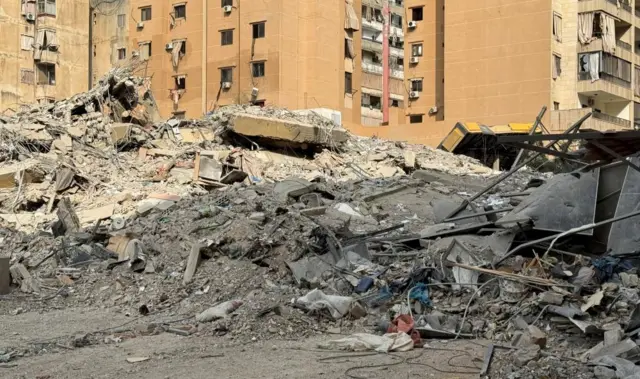
Rubble from a damaged building in Beirut's southern suburbs, as seen on Tuesday
 

More blasts seen in southern Lebanon this morning​

We've been seeing pictures of some of the explosions being reported this morning in southern Lebanon, including in the town of Khiam and a village near Tyre, Lebanon's fourth-largest city.

The town of Tayr Debba near Tyre was hit in a strike, resulting in six injuries, reports Lebanese state news agency NNA.

Smoke rises following air strikes by Israeli forces in Khiam near the Lebanese-Israeli border
EPA
Smoke rises in Khiam near the Lebanese-Israeli border, an area which has been targeted by Israeli raids in recent days
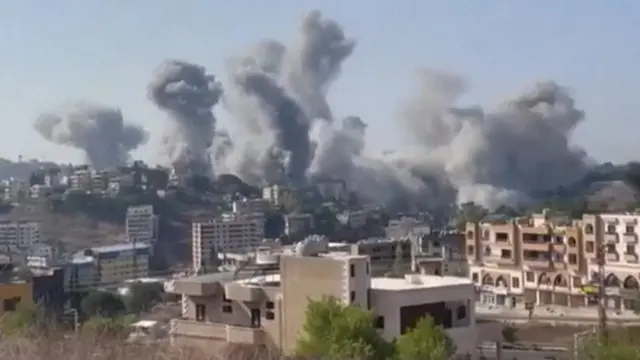
Birds fly away as plumes of smoke erupt following an Israeli air strike on a village near Lebanon's southern city of Tyre
AFP
Plumes of smoke erupt following an Israeli air strike on a village near Lebanon's southern city of Tyre
 

Netanyahu calls for 'immediate' removal of UN peacekeepers in southern Lebanon​


Israeli prime minister Benjamin Netanyahu has called on the UN chief Antonio Guterres to remove peacekeeping forces in southern Lebanon "immediately".

"Mr Secretary General, get the UNIFIL forces out of harm's way. It should be done right now, immediately," Netanyahu said in a video statement issued by his office.

Earlier this month, Israel's Foreign Minister Israel Katz declared Guterres persona non grata following Iran's attack on Israel.
 

40 nations 'strongly condemn' attacks on UN peacekeepers in Lebanon
​

The UK is among 40 nations to "strongly condemn" attacks on United Nations (UN) peacekeepers in Lebanon.

On Thursday, two Indonesian peacekeepers were injured falling from an observation tower after Israeli tanks fired towards it.

On Friday, the Israel Defense Forces (IDF) acknowledged that its troops were responsible for an incident in which two Sri Lankan soldiers, in Naqoura, were injured and that it would be investigated.
And the United Nations, on Saturday, said another peacekeeper was injured by gunfire in the south on Friday, though added it did not know the origin of the fire.

In a joint statement posted on X, external by the Polish UN mission, the countries say attacks on the United Nations Interim Force in Lebanon (Unifil) "must stop immediately and should be adequately investigated".

"We consider Unifil's role as particularly crucial in light of the escalating situation in the region," the statement adds.

Members of the United Nations peacekeepers (UNIFIL) look at the Lebanese-Israeli border, as they stand on the roof of a watch tower ‏in the town of Marwahin, in southern Lebanon, October 12, 2023
 

Fighting in southern Lebanon intensifies​

Sebastian Usher
Middle East editor

Hezbollah says that its fighters have been involved in combat at point-blank range with Israeli troops in a village near the border with Israel.

The Israel Defense Forces (IDF) says that in addition to two severely wounded soldiers, many others have been evacuated to hospital with light and moderate injuries.
The fighting in south Lebanon is intensifying, as Lebanese officials say that Israel has widened its target area in the country.

The IDF says that it's carried out airstrikes on around two-hundred Hezbollah targets in the past twenty-four hours.

In one incident, the Lebanese Red Cross says its volunteers suffered injuries as an Israeli strike hit a building they were searching for casualties in south Lebanon.

The IDF has accused Hezbollah of using ambulances to transport weapons and fighters, without providing any evidence.

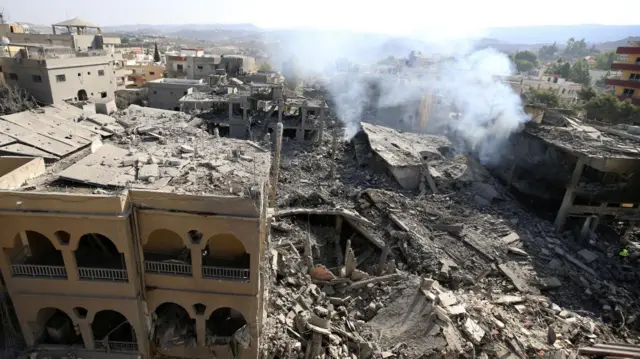
Smoke rising from the site of an Israeli air strike that targeted Kfar Tibnit in Lebanon on Sunday
Image source, Getty Images
Smoke rising from the site of an Israeli air strike that targeted the Kfar Tibnit in Lebanon on Sunday
 

Israeli media reports US considering sending THAAD air defence system to Israel
​

Wyre Davies
Reporting from Jerusalem

Several reports in Israeli media today suggest the United States is considering transferring an advanced missile defence system, known as THAAD (Terminal High Altitude Area Defence), to Israel.

The system, specifically designed to intercept high altitude ballistic missiles, would add to Israel’s already sophisticated multi-layered missile defence capability. That has been repeatedly deployed with a high level of success against rockets, projectiles and missiles fired from Gaza, Lebanon and Iran.

It is the prospect of conflict with Iran escalating into a wider regional war that has prompted more talk of THAAD being deployed.

Israel is soon expected to respond to Iran’s unprecedented launch of 180 missiles against Israel earlier this month. Israel’s Defence Minister Yoav Gallant has promised a strike against Iran will be "lethal, precise and surprising".

If president Biden were to approve sending the mobile THAAD system to Israel, from one of the US military bases in the region, it would reportedly require numerous American military personnel to operate the system.

Although the US is already deeply involved in this conflict, supplying much of Israel’s heavy and sophisticated weaponry, the prospect of American military “boots on the ground” would underline just how reliant Israel has become on US military support.
 

How Israeli strikes changed Lebanon's capital​

Nafiseh Kohnavard
Reporting from Beirut

The face of the Beirut has completely changed.

Streets are packed with cars, some parked in the middle of boulevards.

Hundreds fleeing Israeli operations in the south of the country have fled to the capital’s suburbs, sheltering in schools in “safer” neighbourhoods. Many have found themselves sleeping on the streets.

On the motorway towards the airport and the south, billboards show Hassan Nasrallah’s face. Both pro- and anti-Hezbollah people tell me these feel surreal.

In other areas, posters that previously read “Lebanon doesn’t want war” now say “Pray for Lebanon”.

The city’s iconic Martyrs’ Square - usually host to protests and huge Christmas celebrations - has turned into a tent city.

Tents outside Martyrs’ Square


Makeshift homes stretch from the square all the way down to the sea.

Most of the families here are Syrian refugees, who’ve found themselves displaced again and barred from shelters which are limited to Lebanese nationals. Many Lebanese families have found themselves homeless too.

Just over a kilometre away, 26-year-old Nadine is trying to take her mind off everything for a few hours. She’s one of very few customers at Aaliya’s Books, a bookshop-bar in Beirut’s Gemmayze neighbourhood.

“I don’t feel safe any more,” she tells me. “We keep hearing explosions all night.
 

Lebanon condemns call for removal of peacekeepers
​

Lebanese Prime Minister Najib Mikati has condemned Israeli Prime Minister Benjamin Netanyahu’s call to remove UN peacekeepers from the border.

Netanyahu made the demands earlier on Sunday, adding that it should be done "immediately".

Mikati described the call as a “new chapter in the enemy’s approach of not complying with international norms”.

Clashes between Hezbollah and Israeli forces have intensified in recent days with a number of UN peacekeepers injured. Some 40 countries have strongly condemned the attacks on peacekeepers in Lebanon.
 

Ex-Israeli spy chief says he expects Israel to strike Iran's nuclear sites​

A former Israeli military intelligence chief has told the BBC that he expects Israel to strike Iranian nuclear sites in one of its "rounds" of attacks against Iran.

"Not only do I expect that, but I expect the international community to support us," Yossi Kuperwasser tells the BBC.

"Look how dangerous Iran is without nuclear weapons," says Kuperwasser, a former director general of the Israel Ministry of Strategic Affairs and Israel Defense Forces intelligence head.
It comes as reports suggest Prime Minister Benjamin Netanyahu has assured US President Joe Biden that Israel will only target Iranian military infrastructure in response to the missile attacks earlier this month.
"I believe this is true," Kuperwasser tells the BBC, "because everybody has to understand this is not going to be a one-time attack by Israel."
Given Israel will be launching multiple rounds of attacks against Iran, "we have to make sure the Americans know we are attentive to their concerns about wide-scale regional war".

"The nuclear sites will have to be dealt with in the next round, if it's not going to be dealt with this round," Kuperwasser says.
 

We will not be defeated, Hezbollah deputy chief says
​

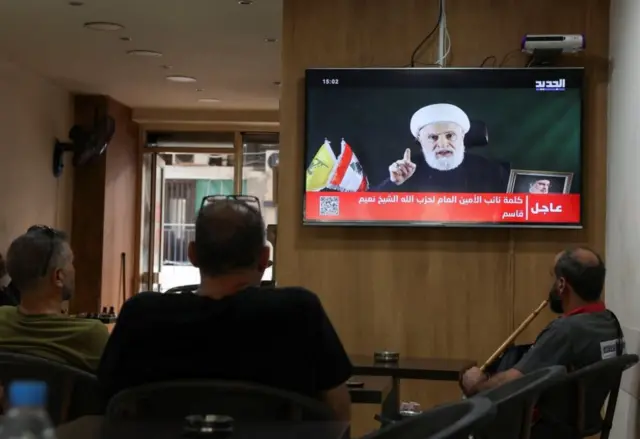
People watch Hezbollah deputy leader Sheikh Naim Qassem delivering a televised address, as they sit in a cafe in Beirut, Lebanon 15 October 2024
Image source,Reuters

People watch Hezbollah deputy leader Sheikh Naim Qassem delivering a televised address in Beirut
Back to Lebanon, Hezbollah's deputy secretary general Sheikh Naim Qassem warns Israelis that the only solution to the current war is a ceasefire.

He says that since Israel targeted Lebanon, Hezbollah "have the right from a defensive position to target any place".

He adds that Israelis in northern Israel will be under constant threat if Israel keeps attacking Lebanon and Gaza, and says "the solution is a ceasefire... the resistance [Hezbollah] will not be defeated because this is its land".
 

Israel condemns 'terrorist incitement' after police officer killed in shooting
​

We now have more on the police officer who was killed in a shooting in Israel earlier today.

The Israeli police say the officer was killed on Route 4, a main road in Israel, when the gunman, who they called a "terrorist", fired at a police car, then continued shooting at other passing cars, injuring four more people.

An Israeli government spokesperson says there have been "almost daily attacks" relating to "terror" in the recent weeks, adding: "We know that this terrorist incitement seeks to kill Israelis, within Israel - make no mistake. Our security forces are on extremely high alert."

Earlier this month, an Israeli policewoman was also killed in a shooting in the southern Israeli city of Beersheba.

"This incessant incitement comes from Hamas and Iran," the spokesperson says, "they will not succeed.
 

US anti-missile system operational in Israel in near future, Pentagon says
​


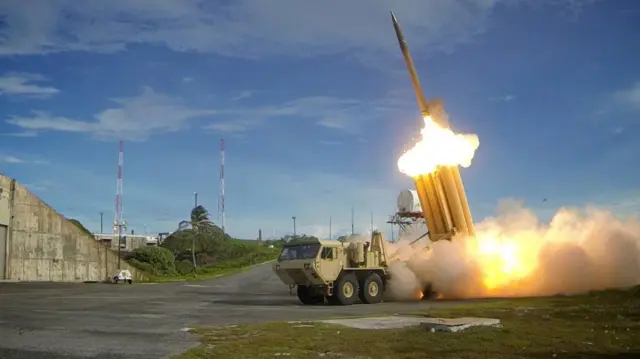
Thaad interceptor missile is launched during a test
Image source, AFP via Getty Images

Each Thaad system - like this one seen in an archive photo - costs about $1bn (£766m)
An advance team of US military personnel, along with Terminal High-Altitude Area Defense (Thaad) battery components, have arrived in Israel, the Pentagon says.

More US personnel are expected to arrive in the coming days to operate the system to protect Israel from missile attack.

US President Joe Biden has said it is meant "to defend Israel", which is still expected to retaliate against an Iranian strike involving more than 180 ballistic missiles fired at Israel on 1 October.

Pentagon press secretary Maj Gen Pat Ryder says the deployment of the Thaad battery to Israel "underscores the United States’ commitment to the defence of Israel and to defend Americans in Israel from any ballistic missile attacks by Iran".

Ryder adds the battery will be fully operational "in the near future".
 
Here's the latest:

"Desperate situation" in Gaza: The UN has delivered food aid to northern Gaza for the first time in two weeks, calling the situation there "desperate". Fighting between Israel and Hamas continues in the area, and there have been many civilian casualties in recent days, according to the UN.

Cameron considered sanctions on Israeli ministers: Former Foreign Secretary David Cameron says he had been planning to sanction two Israeli ministers, describing them "extremist". He also urged the current Labour government to consider doing so. The UK Foreign Office declined to comment.

Peacekeepers to stay in Lebanon: The UN said its peacekeepers in southern Lebanon will hold their positions, despite repeated demands from Israel that they move.

Israel to continue striking Hezbollah: Israeli PM Benjamin Netanyahu said late on Monday that Israel would continue strikes on Hezbollah in Lebanon “without mercy”, including targeting Beirut.

Policeman killed in Israel shooting: A policeman has been killed and four people wounded in a shooting in Israel, Israeli police says. The identity or motive of the gunman is not yet clear.
 

In pictures: Aftermath of strikes in southern Lebanon​

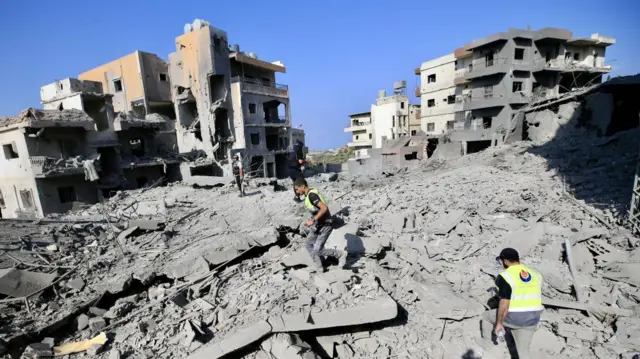
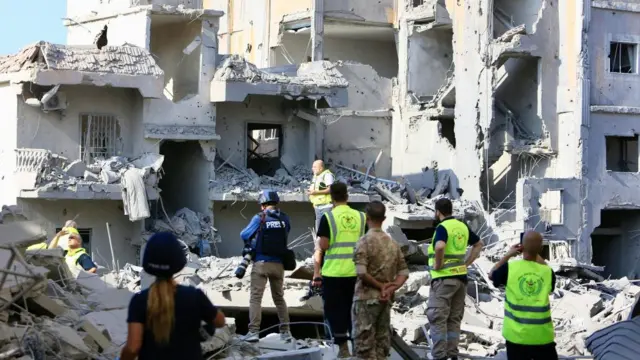
We're seeing images now of the aftermath of Israeli strikes on Qana, near Tyre in south Lebanon, as rescuers search the rubble.


Rescuers search the rubble in aftermath of a series of strikes on Qana in southern Lebanon


Image source, EPA
Rescue operations are under way amid the damaged buildings

Smoke rises above the rubble in aftermath of a series of strikes on Qana in southern Lebanon


Image source, EPA
One person was killed and 30 others wounded in the town, the Lebanese health ministry says

Rescuers search the rubble in aftermath of a series of strikes on Qana in southern Lebanon, with press present


Image source, EPA
The state run news agency earlier said the death toll could be as high as 10
 

Lebanon's PM condemns Israeli attack on Nabatieh
​

Lebanon's prime minister has condemned the Israeli strikes on Nabatieh - which his office say "intentionally targeted a meeting of the municipal council".

Prime Minister Najib Mikati says "this new aggression, coupled with all the crimes committed by the Israeli enemy against civilians, is a design of the world that is deliberately silent about the crimes of the occupation, which encourages it to persist in its transgression and crimes".

He also questions the use of demanding a ceasefire from the UN, "if all the countries of the world are unable to deter a blatant aggression against the Lebanese people.

"What can deter the enemy from its crimes that have reached the point of targeting peacekeeping forces in the south? What solution can be hoped for in light of this reality?"

Smoke rises above Nabatieh after strikes
 

Israeli strikes on Beirut seemed to defy US pressure​

Joel Gunter
Reporting from Beirut

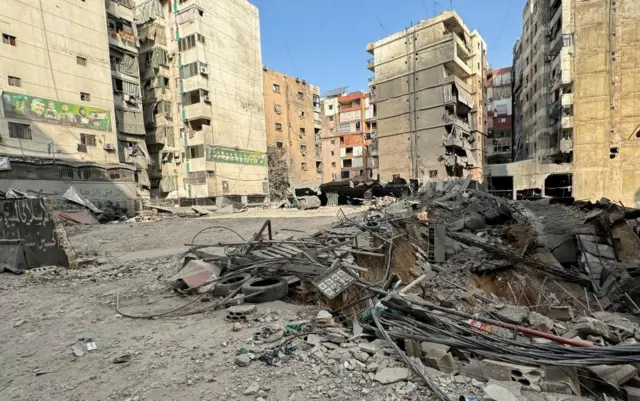
Debris lies at a damaged site in the aftermath of Israeli strikes on Beirut's southern suburbs


Image source, Reuters
The scene in southern Beirut on Wednesday, after the Israeli strikes

The Israeli air strikes on Beirut this morning – after five days of respite for the Lebanese capital – came just hours after the US said it opposed the "scope and nature" of Israel’s bombing campaign on the city.

State department spokesman Matthew Miller told a briefing on Tuesday that the US had expressed its concerns to Israeli Prime Minister Benjamin Netanyahu, saying they were "made clear to the government of Israel".


As my colleagues covered earlier, there had been reports that the unexpected pause in air strikes against Beirut was the result of a US intervention.

The strikes on Wednesday morning came shortly after Netanyahu rejected the idea of a ceasefire that would leave Hezbollah close to the northern Israeli border.

He told the French president Emmanuel Macron on Tuesday he was "opposed to a unilateral ceasefire which does not change the security situation in Lebanon, and which would return the country to its previous state" according to a read-out from his office.

Also on Tuesday, in a televised address, Hezbollah's deputy leader Naim Qassem said the only solution to the recent escalation was a ceasefire - while also threatening to continue targeting Israel with missiles.

Rubble lies at a damaged site in the aftermath of Israeli strikes on Beirut's southern suburbs


Image source, Reuters

Before the recent pause, Israel had hit southern Beirut on a near-daily basis
 

Nowhere in Lebanon seems safe, say people in Beirut​

​

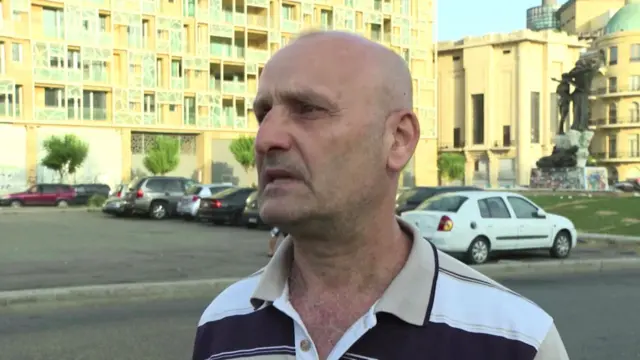
Mohamed Gradi close us. Bald man wearing black, white and beige striped polo shirt. In background is a parking lot with several parked cars, buildings illuminated by early morning sunshine


Image source, Reuters
Mohamed Gradi warns the 'situation is only getting worse' 15 days into Israel's ground operation in Lebanon

We just brought you pictures from Beirut - now we can bring you quotes from some of the people there.

Mohamed Gradi, 57, says there is no part of Lebanon where people feel safe.

"You see displacement, people not finding places to stay," he tells Reuters.

"[People] got displaced from the south, from Dahieh [Beirut’s southern suburbs], from Bekaa, and even from areas of our fellow Christians, they as well got displaced."

Meanwhile, displaced Mostafa Saleh, 48, says Israel's air strikes could increase support for Hezbollah.

"If they think that they can scare the supporting environment [of Hezbollah] this way - on the contrary...look at us... we are living not like human beings, we are homeless."
 

In pictures: Displaced people start the day on Beirut streets​

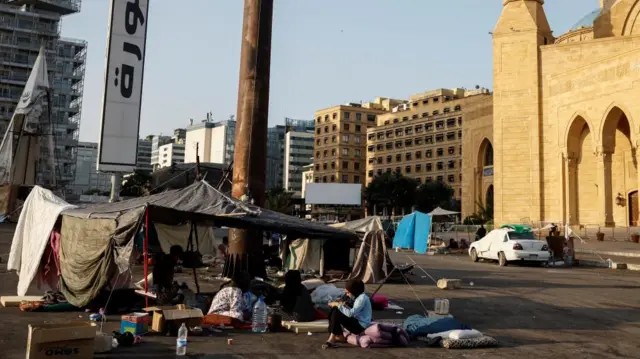
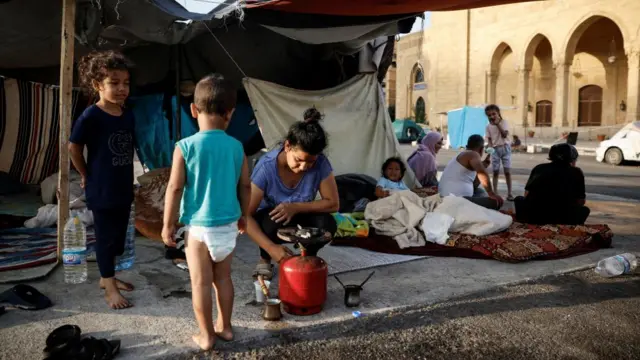
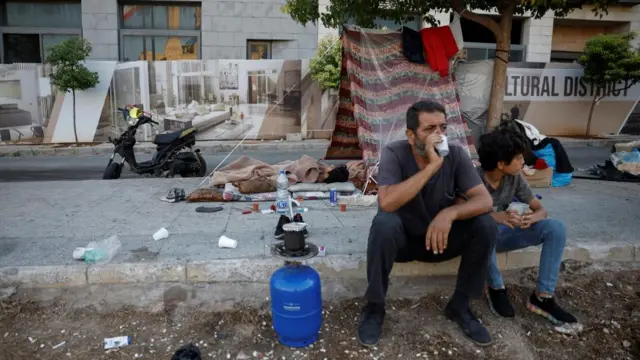
More than 1.2 million people have been displaced in Lebanon since Israel stepped up its air strikes last month, according to the Lebanese government.

Many have fled southern towns and villages and moved north to the nation's capital.

These images from this morning show displaced people who have been sleeping on rolled-out rugs or in makeshift shelters on the streets of central Beirut.

On the central Beirut streets, people sit under makeshift shelters beside a grand building


Image source, Reuters


A woman makes coffee on the streets of central Beirut while young children stand near her.


Image source, Reuters


A man and a boy drink from plastic cups while sitting on a curb in front of a makeshift tent on the streets of central Beirut


Image source, Reuters
 
Back
Top