[🇧🇩] Save the Rivers/Forests/Hills-----Save the Environment

[🇧🇩] Save the Rivers/Forests/Hills-----Save the Environment
648
26K
More threads by Saif

G Bangladesh Defense

A rain-soaked July is over. Now Bangladesh faces a hotter August

Mostafa Shabuj

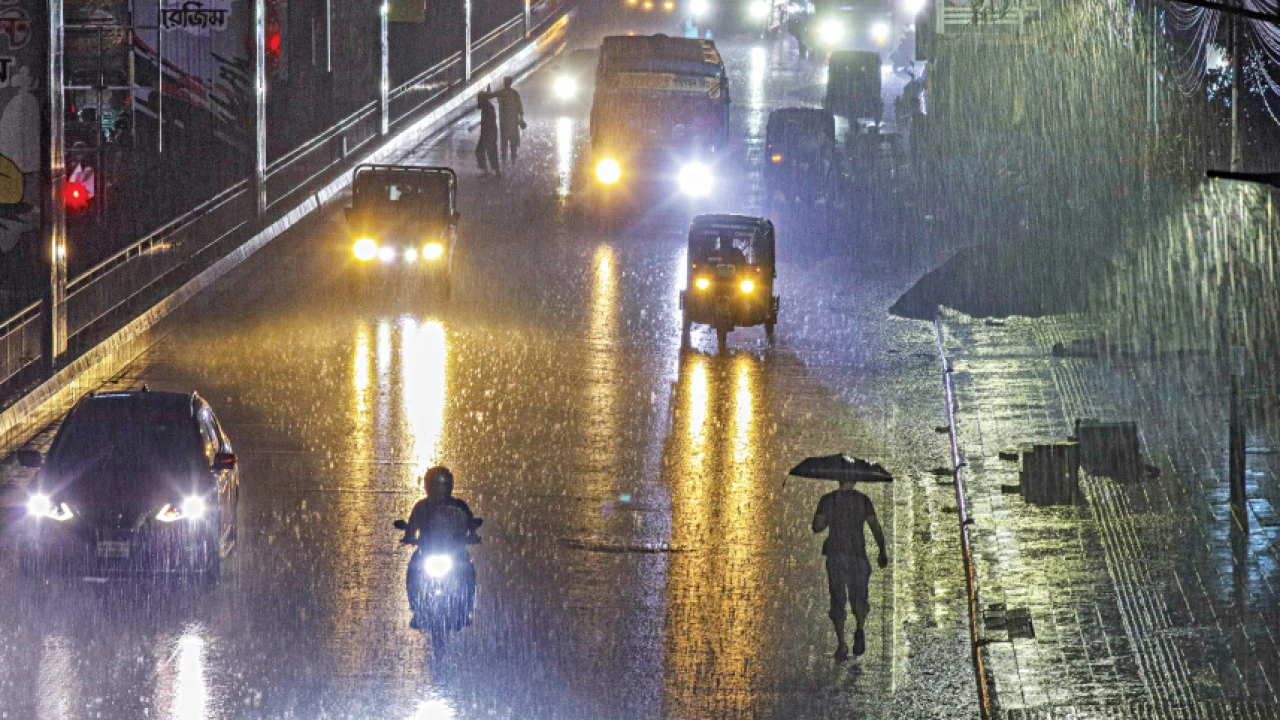
Bangladesh recorded 35.6 percent higher-than-normal rainfall in July due to active monsoon winds, low-pressure systems and depressions, according to the latest long-term weather report released by the Bangladesh Meteorological Department (BMD) today.

In its forecast for August, the BMD predicted near-normal overall rainfall across the country, alongside above-normal day and night temperatures, isolated mild-to-moderate heatwaves and the possibility of short-term flooding in several regions.

According to the report, Bangladesh received an average of 666mm of rainfall in July, well above the normal monthly average of 457mm.

The country also experienced an average of 25 rainy days during the month, compared with the normal monthly average of 21 days.

Except for Mymensingh, where rainfall remained close to normal with a marginal negative deviation of 0.05 percent, recording 437mm over 27 days, all other divisions experienced above-normal precipitation.
1785713919072.webp

According to the report, Bangladesh received an average of 666mm of rainfall in July, well above the normal monthly average of 457mm. File Photo

Khulna recorded the highest increase in rainfall, receiving 554mm over 23 days, or 53 percent above normal. Chattogram followed with 1,047mm over 26 days, 51 percent above normal, while Sylhet recorded 736mm over 28 days, 37.3 percent above normal.

Dhaka received 495mm of rainfall over 25 days, 33.4 percent above normal. Rangpur recorded 472mm over 27 days, 15.4 percent above normal, Rajshahi received 354mm over 26 days, 13.6 percent above normal, and Barishal logged 602mm over 26 days, 12.6 percent above normal.

BMD attributed the excessive rainfall to three low-pressure systems that formed over the Bay of Bengal during July, two of which intensified into depressions.

The highest single-day rainfall during the month was recorded at Ambagan in Chattogram, where 329mm of rain fell on July 8.

The country's highest temperature in July was 37.6 degrees Celsius, recorded in Rangpur.

Following a meeting of its expert committee chaired by BMD Director Md Mominul Islam today, the department forecast near-normal rainfall across the country in August.

The committee predicted that one to two monsoon low-pressure systems may form over the Bay of Bengal during the month, with one likely to intensify into a depression.

Both day- and night-time temperatures are expected to remain above the normal monthly averages. The BMD also forecast that one or two isolated mild (36.0°C to 37.9°C) to moderate (38.0°C to 39.9°C) heatwaves may sweep across parts of the country.

1785713964500.webp

BMD also forecast that one or two isolated mild (36.0°C to 37.9°C) to moderate (38.0°C to 39.9°C) heatwaves may sweep across parts of the country. Photo: Firoz Ahmed

Water levels in the country's major river systems are likely to rise during the month. Owing to heavy seasonal rainfall, short-term flood situations may develop in the northern, north-eastern and south-eastern regions of Bangladesh.

In its three-month outlook for August to October 2026, also released today, the BMD forecast below-normal rainfall over the period.

During these three months, the Bay of Bengal may witness four to six low-pressure systems, of which two to three could intensify into depressions.

The department also forecast thunderstorms on 10 to 15 days during the period, while isolated mild-to-moderate heatwaves may occur four to six times.

Daytime and night-time temperatures are expected to remain generally above normal throughout the late monsoon period.​
 

Clean and healthy rivers are the key

Transformation of Asia's food systems

1785884546354.webp

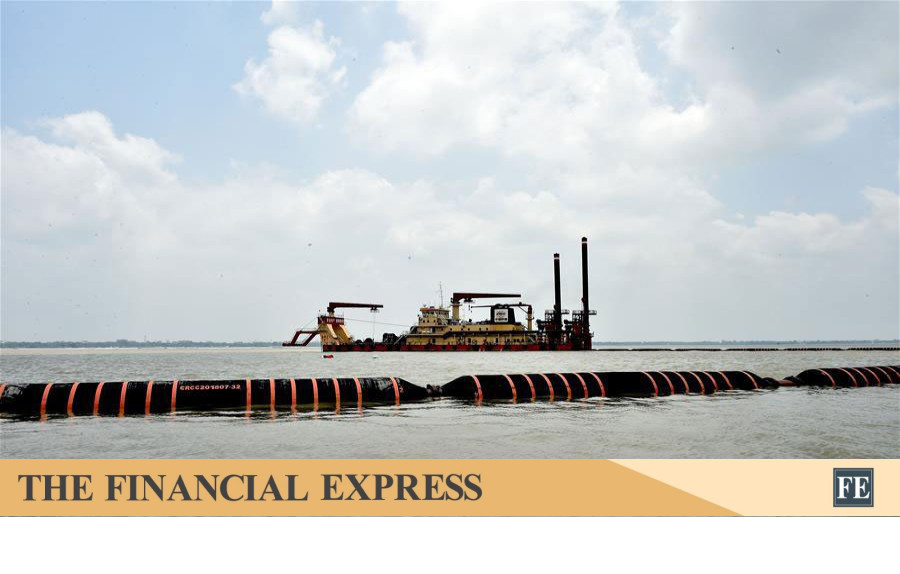
A dredging vessel works on Padma river in Shariatpur district, Bangladesh on May 27, 2019 —Xinhua Photo


Asia and the Pacific's food story has always been a water story.

From the Indus to the Mekong, the Yellow River to the Ganges, rivers have shaped civilizations, nourished crops, and powered trade. That relationship is under strain. The region is home to over half the world's people but holds far less than its share of freshwater. Demand is rising, even as rivers, aquifers, and ecosystems face mounting stress.

Food security begins long before food reaches the table. The region feeds more than 4 billion people using just 28 per cent of global freshwater and 30 per cent of arable land. Yet, more than three-quarters of the region's land experiences water stress. Rice-the predominant staple-uses about 40 per cent of irrigation water, and almost half of cropland is degraded, undermining productivity and ecological resilience.

In six decades, Asia and the Pacific experienced three waves of transformation. The Green Revolution doubled cereal yields in countries such as India and Indonesia. Rural industrialisation connected farms to processing and markets. Globalisation turned Thailand and Viet Nam into major agricultural exporters.

These shifts slashed hunger-but generated hidden costs. South Asia now hosts some of the world's most groundwater-stressed basins. Fertiliser use in parts of East and Southeast Asia more than quadrupled since the 1970s, polluting rivers and creating coastal dead zones. Diets have narrowed toward calorie sufficiency rather than nutritional diversity.

A changing climate compounds these pressures. Glaciers in the Hindu Kush-Himalayan region, which supplies water to almost 2 billion people, are retreating rapidly-a third could disappear this century. After a period of higher flows driven by accelerated melting, river volumes will likely decline in arid months. Meanwhile, rainfall grows more erratic. In 2022 and 2023, floods across Pakistan, India, and parts of Southeast Asia caused billions of dollars in losses, while droughts reduced agricultural output in Central and West Asia.

Agriculture itself is intensifying river stress. Heavy fertiliser and pesticide use leads to nutrient runoff and contamination. Soil erosion from steep-slope farming reduces reservoir storage and irrigation reliability. Groundwater extraction in parts of India, Pakistan, and northern People's Republic of China now exceeds natural recharge rates.

The cycle is clear: degraded rivers undermine agriculture; unsustainable agriculture degrades rivers.

River systems do not follow borders; they connect mountain headwaters to deltas and farms to fisheries.

Breaking that cycle requires managing food systems at the scale at which water flows-across landscapes and river basins. River systems do not follow borders; they connect mountain headwaters to deltas and farms to fisheries. Monitoring glacier melt, for example, enables governments to anticipate seasonal river flows so farmers downstream can adjust crops and irrigation schedules. Restoring upstream forests reduces floods and sediment loads, protecting irrigation and hydropower infrastructure. Wetland restoration buffers storm surges while sustaining farming and fisheries.

Water must also be valued as natural capital. Water-related disasters account for nearly 75 per cent of natural disaster losses. When aquifers collapse or river water becomes unsafe, economic shocks ripple across agriculture, health, and industry. Incorporating ecosystem services into planning-through natural capital accounting, smarter pricing, and better incentives-aligns growth with sustainability.

Four shifts are essential.

First, move from yield maximisation to systems optimisation. The goal is to grow food in ways that conserve water, protect soil, diversify crops, and improve diets. Drip irrigation, for instance, can reduce water use by 30 to 50 per cent while significantly increasing yields for certain high-value crops. In South Asia, farmers shifting from water-intensive rice to diversified horticulture have raised incomes while easing pressure on groundwater.

Governments must coordinate policies. Water, agriculture, health, and environment ministries often operate independently. Unsafe water and poor sanitation spread disease and reduce nutrient absorption, stunting the growth of children. Over half of all stunted children live in Asia and the Pacific. Aligning fertiliser subsidies with water-quality standards and nutrition strategies can improve farm productivity, protect rivers, and strengthen human capital.

We need to transition from short-term projects to long-term, programmatic investment. Multi-year initiatives that combine irrigation modernisation, watershed restoration, digital water monitoring, and climate adaptation deliver more durable resilience than isolated infrastructure projects. Integrated river basin programs in the Mekong and South Asia show how upstream data and downstream investments can be coordinated to reduce flood risk and stabilise agricultural output.

Finally, embed inclusion. Women make up a substantial share of the region's agricultural workforce yet often lack authority over water management. Evidence from farmer-managed irrigation systems shows that when women participate in water scheduling and fee collection, maintenance improves and irrigation coverage expands. Inclusion strengthens both equity and system performance.

Securing water is inseparable from improving nutrition. Clean and reliable water enables production of fruits, vegetables, and protein sources essential to healthy diets.

The future of food in Asia and the Pacific flows through its rivers. To secure that future, we must treat rivers as economic assets and manage and restore landscapes as living systems.

The direction is clear: transforming food systems begins with restoring and sustaining clean, healthy rivers.

Qingfeng Zhang is Asian Development Bank (ADB) Country Director for Bangladesh.​
 

A new frontier for Bangladesh's green economy


1786233092561.webp


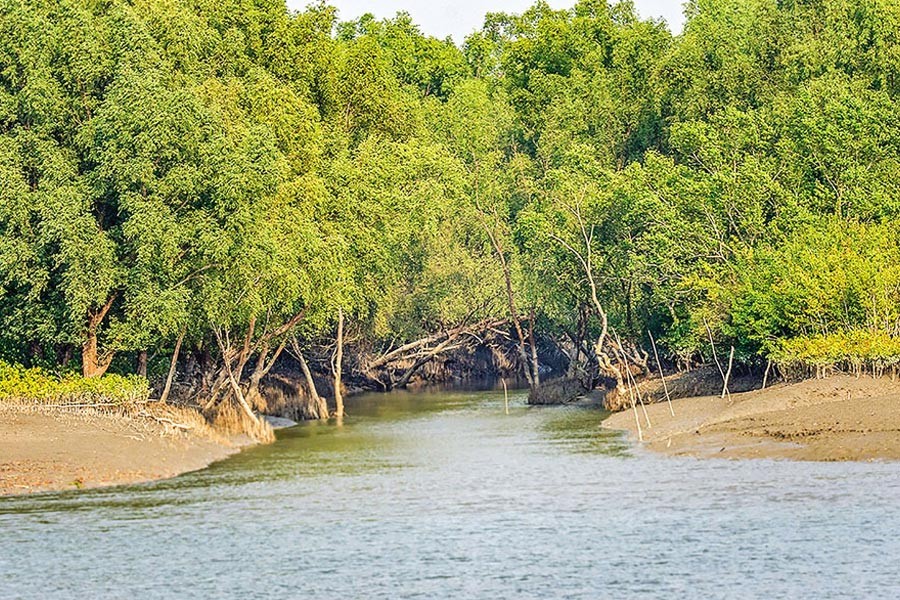
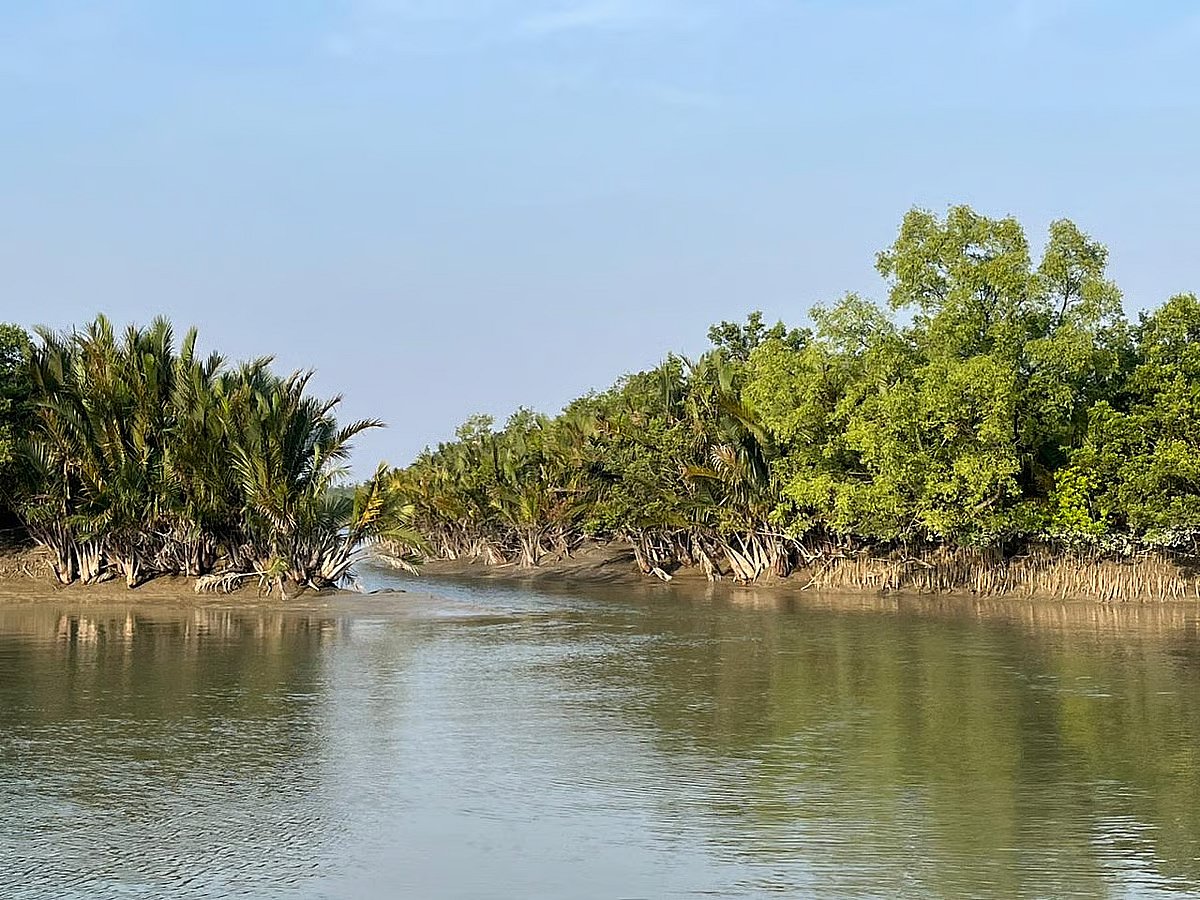
The Sundarbans, the country's mangrove forest, helps Bangladesh reduce the carbon emissions to a large extent.
Bangladesh is widely recognized as one of the most vulnerable to the impacts of climate change. Cyclones, floods, river erosion, salinity intrusion, and frequent heat waves continue to place mounting pressure on the country's economy and the livelihoods of millions. Yet Bangladesh contributes less than one per cent of global greenhouse gas emissions. This stark imbalance underscores the importance of climate justice. At the same time, it presents an opportunity to transform climate action from a development challenge into an economic opportunity. Among the most promising avenues is carbon trading.

Carbon trading is a market-based mechanism that assigns economic value to reducing greenhouse gas emissions. When a country, company, or project successfully lowers or removes carbon emissions beyond established benchmarks, it can generate carbon credits. These credits can then be sold to governments or businesses seeking to offset their emissions or meet climate commitments. In simple terms, environmental stewardship becomes a source of financial return. As both voluntary and compliance carbon markets continue to expand worldwide, carbon trading is emerging as an integral component of the global green economy.

For Bangladesh, the prospects are particularly encouraging. The country possesses significant untapped potential to develop internationally recognized carbon credit projects across multiple sectors. Renewable energy initiatives, especially solar power, biogas plants, energy-efficient brick kilns, industrial energy efficiency improvements, sustainable waste management, climate-smart agriculture, and social forestry all offer viable pathways for reducing emissions while creating tradable carbon assets.

Bangladesh's forests also represent an important opportunity. The country's mangrove ecosystems, coastal green belts, and community forestry programmes play a critical role in carbon sequestration. The Sundarbans, the world's largest mangrove forest, is not only an ecological treasure and a UNESCO World Heritage Site but also one of the region's most valuable natural carbon sinks. Through rigorous scientific assessment, conservation, and sustainable forest expansion aligned with international standards, Bangladesh could generate substantial carbon credits while simultaneously protecting biodiversity and strengthening climate resilience.

At the same time, global climate policies are reshaping international trade. The European Union's Carbon Border Adjustment Mechanism (CBAM) currently applies to carbon-intensive sectors such as cement, steel, aluminium, fertilizers, electricity, and hydrogen. Although Bangladesh's ready-made garment sector is not yet covered, the EU's broader sustainability agenda-including its 2030 industrial strategy, sustainable textiles policy, and supply-chain decarbonization initiatives-signals that stricter environmental requirements for textile and apparel exports are likely in the coming years.

While there has been no final decision to impose carbon tariffs on garments, many policy experts anticipate that between 2028 and 2030 manufacturers may face mandatory carbon reporting, product carbon footprint disclosure, and more stringent environmental transparency requirements. For Bangladesh, whose economy relies heavily on garment exports, preparing for this transition is no longer optional-it is a strategic necessity.

Encouragingly, many Bangladeshi garment manufacturers have already invested in green factories, rooftop solar systems, energy-efficient technologies, water conservation measures, and waste recycling. These investments not only enhance environmental performance but also position the industry to participate in international carbon markets. If properly certified, such initiatives could generate additional revenue through carbon credits while strengthening the country's competitiveness in an increasingly sustainability-driven global marketplace.

Despite these opportunities, significant challenges remain. Participation in carbon markets requires robust systems for measuring, reporting, and verifying (MRV) emission reductions, supported by reliable data, internationally-accredited verification procedures, skilled professionals, and strong institutional capacity. Bangladesh has made progress, but these capabilities remain limited. Moreover, the costs associated with project registration, certification, and compliance with international standards can be prohibitive, particularly for small and medium-sized enterprises.

Policy coordination is equally critical. Developing a successful carbon market will require close collaboration among the Ministry of Environment, Forest and Climate Change, the Ministry of Power, Energy and Mineral Resources, the Ministry of Industries, the Ministry of Finance, and the private sector. Bangladesh must also establish a transparent, accountable, and internationally credible national carbon market framework aligned with Article 6 of the Paris Agreement, which provides the legal basis for international carbon trading and cooperation.

Global investors are increasingly directing capital toward low-carbon and climate-resilient projects. If Bangladesh acts decisively by strengthening its policy framework, building technical expertise, and fostering international partnerships, carbon trading could become more than just a new source of foreign exchange earnings. It could accelerate sustainable development, create green jobs, facilitate technology transfer, attract climate finance, and enhance the country's long-term economic resilience.

Bangladesh has long been viewed primarily as a victim of climate change. The time has come to redefine that narrative. By embracing carbon trading, the country has an opportunity to become an active contributor to global climate solutions while advancing its own development objectives. With sound policies, scientific preparedness, and timely investment, today's climate initiatives can lay the foundation for tomorrow's green economy.

Carbon trading is not merely an environmental instrument; it is an economic opportunity for which the time has arrived.​
 

Can Buriganga with Dhaka be brought back to life?


1786922363877.webp


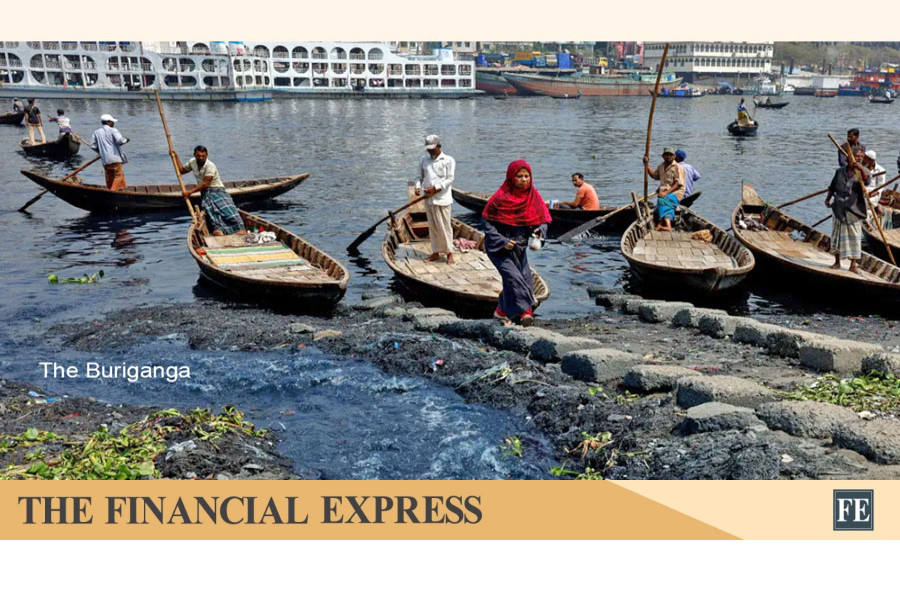
During a meeting on improving the water quality and environment of Buriganga River held at the Cabinet Division conference room of the Bangladesh Secretariat recently, Prime Minister Tarique Rahman directed the authorities concerned to prepare a time-bound action plan against pollution in the Buriganga and the other rivers surrounding Dhaka. The directive also envisages an inter-agency committee under the supervision of the Prime Minister's Office (PMO). The Department of Environment (DoE), Dhaka WASA, Bangladesh Inland Water Transport Authority (BIWTA), Bangladesh Water Development Board (BWDB), RAJUK, the two city corporations and district administration are to work together. Industrial effluents, poor sewerage and drainage, shrinking canals and mismanagement of solid waste were identified as the main culprits. So far so good. But Dhaka has seen many plans for saving its rivers before, only to watch the waters turn blacker and the banks narrower.

To understand what has been lost, one has to look back at how Dhaka came into being. The Buriganga, literally the Old Ganges, was not a water channel at the edge of the city; it was the basis of the city's growth. When the Mughals made Dhaka the provincial capital in the early seventeenth century, the river offered navigation, defence, communication and access to the trading routes of Bengal. Muslin and foodgrains moved through it, while its water served households and its fish sustained communities. Settlements, markets, warehouses, ghats and structures grew along its northern bank. Today, Sadarghat remains a gateway between the capital and riverine Bangladesh. In fact, before roads, flyovers and motor vehicles came to dominate the scene, the Buriganga was Dhaka's road, marketplace, water source and breathing space rolled into one.

But the same city that drew life from the Buriganga gradually began treating it as a drain. Unplanned urbanisation, encroachment and industrial expansion brought tanneries, dyeing units and chemical factories to its banks and catchment. Sewage, industrial effluent, biomedical waste, oil, plastic and household garbage then found the easiest way out through drains into the river. Relocation of the Hazaribagh tanneries removed one notorious source, but did not bring the Buriganga back to life. According to the World Bank, more than 80 per cent of Dhaka's untreated wastewater and sewage enter the interconnected waterways, while over half of the city's canals have disappeared or remain clogged. During the dry season, when fresh flow is meagre, the system carries little other than the waste generated by the metropolis.

Now, to treat such poisoning as merely an environmental problem would be to miss the wood for the trees. Dhaka is surrounded by the Buriganga, Turag, Balu and Shitalakkhya and was once crisscrossed by canals. Together they formed a natural drainage bowl for monsoon water. When canals are filled and outfalls choked, heavy rain turns roads and neighbourhoods into stagnant pools. Pollution further reduces flow and obstructs drainage. A restored river-and-canal network would, therefore, strengthen flood resilience, reduce waterlogging and help the city cope with heavier rainfall expected from climate change. No number of pumps can permanently compensate for destruction of the natural drainage system on which this deltaic city was built.

The issue is equally one of public health and social justice. People beside the rivers, especially the poor, are exposed to foul air and contaminated water and suffer from skin, respiratory and waterborne diseases. Polluted water also harms fish, livestock and crops and can enter into the human food chain. Meanwhile, dependence on groundwater puts pressure on the aquifers beneath Dhaka. Cleaner surface water would expand the city's future water-supply options, though it would require treatment. A living river could moderate the harshness of the concrete-dominated environment, support biodiversity and provide space for recreation. No wonder cities around the world spend generously to recover waterfronts they once neglected.

There is also an economic argument policymakers cannot ignore. Navigable rivers offer cheap transport for passengers and goods and can take pressure off Dhaka's congested roads. Clean riverfronts can revive boat services, fisheries, markets, tourism and small businesses and restore dignity to Old Dhaka. But erecting concrete structures, restaurants and decorative lights on the banks will not amount to river restoration. Nor can eviction of poor settlers be a substitute for action against encroachers and industrial polluters. The water has to be cleaned at source, the natural width and flow of the river protected and riverbanks kept accessible to the public. Otherwise, a cosmetic riverfront will only hide a sewer behind an attractive facade.

Notably, the country does not suffer from a shortage of laws, studies or grand plans. The Blue Network programme to restore four rivers and 22 canals is already on the books, and the World Bank approved US$370 million in February for sanitation, solid waste management and river restoration. So, the latest action plan should not become another layer of paperwork. It must bring existing initiatives under one measurable framework. Every pollution outlet should be mapped; every agency should have a responsibility, budget and deadline; and water-quality data should be made public in real time. An effluent treatment plant (ETP) that operates only during an inspection is of no use. Polluters must be made to pay without exception and not only when a mobile court happens to appear.

In this connection, factories should operate ETPs, while common treatment facilities are provided for clusters where individual plants are impractical. Sewerage, faecal-sludge management and door-to-door waste collection have to expand together. Drains and canals must be freed of illegal connections, waste and encroachment, with humane rehabilitation for vulnerable occupants. Dredging alone will not do, since it merely shifts toxic sediment unless the material is tested and safely disposed of. At the same time, freshwater flow, regular monitoring, heavier penalties for repeat offenders and prosecution without political favour are essential. Environmental organisations, universities, schools and riverbank communities should monitor progress, but the state cannot pass its regulatory duty on to volunteers.

The Prime Minister is right that failure now will leave the nation answerable to future generations. Yet the real test will begin after committee meetings, press briefings and preparation of the promised plan are over. The PMO should publish transparent quarterly progress reports and make agencies as well as polluters fully answerable for missed targets. The Buriganga and other rivers around the capital have to be restored not as part of beautification projects, but as the living drainage, transport and ecological system without which Dhaka cannot become a liveable city. In the final analysis, bringing the Buriganga back to life means giving Dhaka itself a real chance once again to breathe and survive.​
 

Tackling ramifications of climate change

Importance of Global Environment Facility and Nagoya protocol

While the Global Environment Facility (GEF) predates the 1992 Rio 'Earth' Summit, its importance as a financial mechanism grew after the Summit which was also attended by me representing the OIC countries. The UN Secretary-General Boutros Boutros-Ghali inaugurated the Rio 'Earth' Summit 1992 and underlined the need to develop a global blueprint for balancing economic development with environmental protection. The GEF's importance as a financial mechanism grew after the Summit.

The Rio Summit produced three major environmental conventions. These were the United Nations Framework Convention on Climate Change (UNFCCC), the Convention on Biological Diversity, and later in 1994, the Convention to Combat Desertification. The GEF also became the financial mechanism for these agreements, charged with mobilising and distributing funds to help countries implement them.

The Global Environment Facility was established in October 1991 under the chairmanship of Mohamed El-Ashry as a US Dollar1 billion pilot programme in the World Bank to enable developing countries to take action on environmental challenges and to promote sustainable development. The GEF would provide new and additional grants and concessional funding to cover the "incremental" or additional costs associated with transforming a project with national benefits into one with global environmental benefits.

In 1992, at the Rio Earth Summit, the GEF was restructured and established as a permanent, separate institution. The decision to make the GEF an independent organisation enhanced the involvement of developing countries in the decision-making process and in implementation of the projects. Since 1994, the World Bank has served as the Trustee of the GEF Trust Fund and provides administrative services.

As part of the restructuring, the GEF was entrusted to become the financial mechanism for both the UN Convention on Biological Diversity and the UN Framework Convention on Climate Change. In partnership with The Montreal Protocol on Substances that Deplete the Ozone Layer, the GEF started funding projects that enable the Russian Federation and nations in Eastern Europe and Central Asia to phase out their use of ozone-destroying chemicals.

GEF Agencies are the operational arm of the GEF. They work closely with project proponents-government agencies, civil society organisations, and other stakeholders-to design, develop and implement GEF-funded projects and programmes.

The United Nations Development Programme, the United Nations Environment Programme, and the World Bank were the three initial partners implementing GEF projects. Some of the other important agencies the GEF works with are -- Food and Agriculture Organisation (FAO), United Nations Industrial Development Organization (UNIDO), Asian Development Bank (ADB), European Bank for Reconstruction and Development (EBRD), International Fund for Agricultural Development (IFAD) and International Union for Conservation of Nature (IUCN).

In 1998, the GEF Council decided to expand beyond the initial three implementing agencies, including the International Finance Corporation, to broaden its ability to enable innovating financing mechanisms and better leverage private sector investment. The GEF subsequently was also selected to serve as financial mechanism for three more international conventions: The Stockholm Convention on Persistent Organic Pollutants (2001), the United Nations Convention to Combat Desertification (2003), and the Minamata Convention on Mercury (2013).

The GEF work focuses on biodiversity, climate change (mitigation and adaptation), chemicals and waste, international waters, land degradation, and sustainable forest management.

Biodiversity appears to be under heavy threat. Reducing and preventing further biodiversity loss are considered among the most critical challenges to humankind. Of all the problems the world faces in managing "global goods," only the loss of biodiversity is viewed as irreversible.

Climate change from human-induced emissions of heat-trapping greenhouse gases (GHGs) is considered as a critical global issue, requiring substantial action. It is felt that these actions need to include investment to reduce emissions of greenhouse gases, and adaptation to climate changes including variability. The early impacts of climate change have already appeared, and scientists believe that further impacts are inevitable by the poorest people in developing countries. The GEF consequently supports projects in developing countries.

Climate change mitigation by reducing or avoiding greenhouse gas emissions through renewable energy; energy efficiency; sustainable transport; and management of land use, land-use change, and forestry are considered as important. In this context it is felt that developing countries aiming to become climate-resilient should try to promote immediate and longer-term adaptation measures in development policies, plans, programmes, projects, and actions.

Land degradation is also considered as a major threat to biodiversity, ecosystem stability, and society's ability to function. In this context the interconnectivity between ecosystems across scales and land degradation is triggering destructive processes that can have cascading effects across the entire biosphere. Loss of biomass through vegetation clearance and increased soil erosion can also produce greenhouse gases that contribute global warming and climate change. The GEF supports projects in reversing and preventing desertification, land degradation and in mitigating the effects of drought in affected areas in order to support poverty reduction and environmental sustainability.

Sustainable forest management by reducing emissions from deforestation and forest degradation is also a significant area of interest for GEF. Forest ecosystems are expected to play a key role in helping people in developing countries to adapt to the effects of climate change. The GEF supports projects in forest conservation (primarily protected areas and buffer zones), sustainable use of forests (forest production landscapes, sustainable forest management), and addressing forests and trees in the wider landscape.

The GEF Trust Fund operates through periodic "replenishment" cycles. Donor countries pledge new contributions every four years, which allows the GEF to finance programmes during the next funding period. For example, the GEF-9 cycle will cover the period from July 2026 to June 2030 and focus on scaling up environmental investments while mobilising private capital and strengthening country ownership of environmental policies.

The Global Environment Facility (GEF) has created Integrated Programmes. These are special programmes designed to address multiple environmental goals at the same time in a more coordinated and efficient way. For example, the Food Systems Integrated Programme does not fund separate projects for climate change, biodiversity, and land degradation. Instead, it combines them into one unified project, which helps achieve stronger and longer-lasting results while making better use of funding.

Global Biodiversity Framework Fund is also a relatively new component of the GEF family of funds. It was created to help countries implement the Kunming Montreal Global Biodiversity Framework, which was adopted in 2022 under the Convention on Biological Diversity.

The biodiversity framework sets ambitious targets for protecting nature by 2030. Its most prominent targets include the "30 by 30" target, which calls for protecting at least 30 per cent of the world's land and ocean areas by the end of the decade. The Framework also sets a 30 per cent target for the restoration of ecosystems and a target of mobilising 30 billion US Dollars in international financial flows to developing countries for biodiversity action.

The Global Biodiversity Framework Fund supports actions that help countries meet these targets.

It would also be pertinent at this juncture to refer to the Nagoya Protocol Implementation Fund which aims to support countries in implementing the Nagoya Protocol on Access and Benefit Sharing. This international agreement, part of the Convention on Biological Diversity, aims to make sure that the genetic resources of the planet are used fairly and equitably, with benefits shared with those who provide them. Genetic resources include plants, animals, and microorganisms that are used in research and commercial products such as medicines, cosmetics, and agricultural technologies. Historically, many developing countries have expressed concerns that companies and researchers benefit from these resources without sharing profits or knowledge.

The Nagoya Protocol fixes these issues by requiring users to get permission from the country providing the resources and also agree on how benefits (like money or knowledge) will be shared. The fund supports countries by helping them: create laws and rules for using genetic resources, improve monitoring systems and build skills among researchers and policymakers. Projects funded in this context are also aimed to support Indigenous peoples and local communities, who often hold traditional knowledge associated with biological resources. Protecting this knowledge and ensuring fair compensation has thereby become a key objective of the Nagoya framework.

Before concluding, one also needs to refer to the Least Developed Countries Fund which focuses on supporting climate adaptation in the world's most vulnerable nations. These countries often face severe environmental risks but lack the finances and systems to respond efficiently. This fund supports the preparation and implementation of the National Adaptation Programme of Action and National Adaptation Plans. These are country-specific strategies that identify the most urgent climate risks facing each country and outline measures to reduce vulnerability. Typical projects within this paradigm include the following-- strengthening climate-resilient agriculture, improving water management systems, Protecting coastal zones, and building early warning systems for extreme weather events. It may also be noted here that because many least developed countries face multiple environmental issues at once, the fund often supports integrated projects that address climate change alongside biodiversity conservation and land management.

Muhammad Zamir, a former Ambassador is an analyst specialised in foreign affairs, right to information and good governance.​
 

The danger of melting Himalayan glaciers


1788044825488.webp

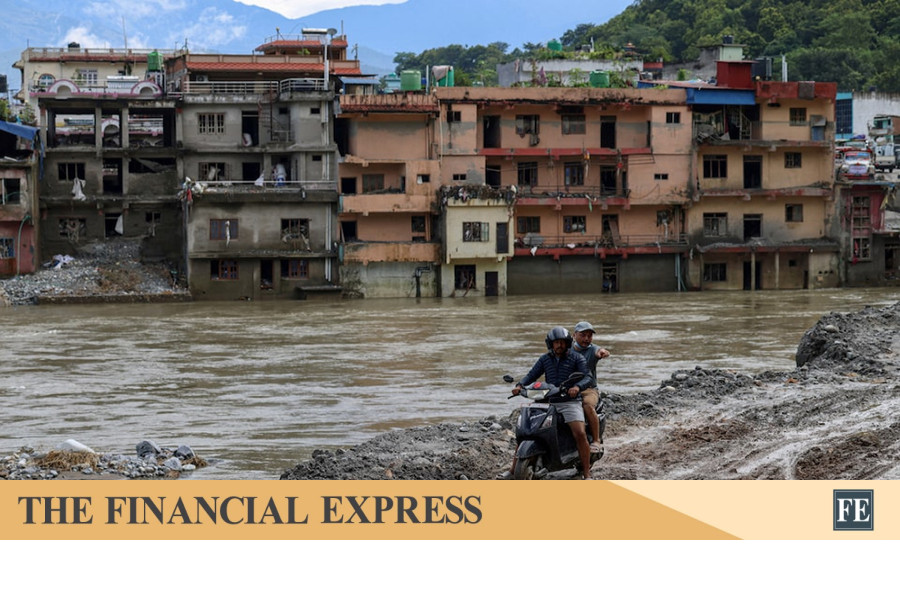
Photo: Tika Gurung/Handout via REUTERS

Nepal has been devastated by catastrophic flash floods and mudslides, apparently triggered by the collapse of a massive glacier and avalanche. The collapse on Wednesday morning caused such a powerful shock that the U.S. Geological Survey recorded it as a magnitude 5.2 event on the Richter scale, leading to initial speculation that the flooding had been caused by an earthquake. But later, scientists ascertained that a high-altitude landslide coinciding with a glacial collapse most likely caused the flash flood.

Satellite images showed that the glacier collapse took place at an elevation of around 17,000 feet on a Nepalese mountain near the border with Tibet. It unleashed an enormous mass of water, ice, rock and debris that rapidly gathered momentum as it descended from the high mountains. It then blasted down the Bhote Koshi and Trishuli rivers along the Nepal-Tibet border with the force of a tsunami. The sheer volume and speed of the deluge left little time for people in its path to react or seek safety. Video footage of the deluge circulating on social media is profoundly shocking, showing the torrent sweeping away entire villages, roads, bridges, schools and hydropower plants, swallowing everything in its path. The death toll from the disaster has reached 526 in Nepal and 7 in China/Tibet, while more than 1,000 people are reportedly missing.

It is a sad hour for the people of Nepal. They need material assistance as much as moral support. At the same time, the disaster should be a moment of reckoning for the whole world. Natural calamities worldwide appear to be becoming more frequent and lethal, as if something is disturbing the poise and even tenor of our planet. Humanity has made remarkable advances in predicting and managing natural hazards, yet it remains extremely vulnerable in many ways. While oceanic storms and tidal bores leave scope for advance warning, no warning can be made in the case of earthquake, tsunami or landslide. Even developed countries are struggling to cope with the increasing frequency and ferocity of natural calamities without suffering great losses. One may recall the recent heat waves in Europe, which claimed thousands of lives. If wealthy countries are struggling to cope with such disasters, the vulnerability of poorer countries, and of the poor in rich countries, can well be imagined.

Scientists will need to determine the extent to which climate change and other environmental factors caused the disaster. Scientists have said that rising temperatures caused by climate change may have destabilised the glacier and rock face. In fact, given the scale of global warming, scientists have long warned that more than 70 per cent of the glacier volume on Mount Everest could be lost by 2100. In such a scenario, Everest could be transformed from a snow-covered landscape into a largely rocky mountain peak. This would not only be a loss for Nepal but could also have dire consequences for the surrounding countries.

Everest and the surrounding Himalayan glaciers are the sources of several major transboundary rivers in Asia, some of which also flow through Bangladesh. The Himalayan glaciers and ice caps store and supply water downstream, and millions of people in the Gangetic Plains depend on glacial meltwater for agriculture, drinking water and power generation. Accelerating glacier melt could increase the risks of flooding and landslides in the short term, while the eventual loss of glaciers could deprive rivers of a crucial source of water. Many rivers in South Asia could therefore face severe water shortages in the long term.

The tragedy in Nepal, therefore, should not be viewed merely as another natural disaster. It should serve as a wake-up call. Beyond relief and rescue operations, countries across the world need to work together to protect the Himalayan ecosystem, reduce dependence on fossil fuels and push for stronger action against greenhouse gas emissions. For Bangladesh, a downstream country dependent on transboundary rivers, what happens in the Himalayas is not a distant environmental concern but a matter of water security. The fate of the Himalayas is closely tied to the fate of millions downstream, making the protection of its glaciers not merely an environmental responsibility but a matter of survival for the people of the region.​
 

Is Bangladesh ready to access international climate finance?

Md. Shahidul Islam


1788219863415.webp


When it comes to the eligibility for receiving support from international climate funds in order to address climate-induced loss and damage, Bangladesh indeed has a strong case. Every year, a significant number of people lose their lives, homes, and livelihoods due to climate-induced disasters. Earlier in July, we saw how heavy rain triggered flash floods and landslides across the country, claiming the lives of at least 56 people and displacing some 10,854 people. However, a strong justification alone does not guarantee access. In most cases, affected people receive only short-term relief such as food and emergency medicine. Long-term recovery support—including compensation for losses, relocation aid for displaced populations, and rehabilitation efforts—remains largely unavailable. To make matters worse, Bangladesh lacks a comprehensive mechanism to provide compensation for unavoidable loss and damage resulting from climate change.

A potential source of such support is the Fund for Responding to Loss and Damage (FRLD), established under the United Nations Framework Convention on Climate Change (UNFCCC) in 2022. This fund is designed to help vulnerable countries recover from climate-related losses and damages by supporting post-disaster recovery, rebuilding damaged infrastructure, restoring livelihoods, and facilitating the relocation of climate-displaced communities. Recently, the FRLD published the initial status of its funding pipeline as of 29 June 2026, which indicates the highly competitive nature of accessing this fund. The FRLD issued its first call for funding requests at COP30 in November 2025 and received some 198 funding requests, of which 176 entered the formal pipeline. The remaining 22 funding requests were marked as non-compliant. The pipeline also shows that funding requests submitted earlier already advanced to technical review, whereas many later submissions remain at the preliminary stage due to capacity constraints within the FRLD. This highlights the importance of country readiness and timely engagement in accessing this fund.

As Bangladesh is one of the world's most climate-vulnerable countries, every year, floods, cyclones, storm surges, and other extreme weather events cause losses estimated at around $3 billion, equivalent to about one percent of national GDP. Moreover, climate-related factors, including sea-level rise, water scarcity, river erosion, and declining agricultural production, are driving large-scale displacement. Between 2008 and 2024, around 21 million people in Bangladesh were displaced due to climate-related factors. So, the FRLD can truly be beneficial to Bangladesh. However, initial experience of Bangladesh reveals significant weaknesses in its readiness to access this fund. For example, Bangladesh submitted two funding requests: one through the Palli Karma-Sahayak Foundation (PKSF), a national access entity, and another through the Food and Agriculture Organization of the United Nations (FAO), an International Entity (IE). However, PKSF's funding request was pending pipeline entry during the first round of screening because it was submitted without the letter of endorsement from the national focal point of Bangladesh. This rejection for a basic compliance requirement should not be viewed merely as an administrative mistake; instead, it should be treated as a warning about broader institutional weaknesses in accessing international climate finance, as such shortcomings can delay access to finance.

Failure to access funding through national entities reduces Bangladesh's chances of strengthening country ownership. Direct access to FRLD through national institutions is important because it allows Bangladesh to set its own priorities, manage funds, and implement projects through its own institutions. Meanwhile, the IE and FAO submitted a funding request on behalf of 17 climate-vulnerable countries, including Bangladesh, which is currently at the initial review stage. This entity generally has greater experience and technical expertise in accessing climate finance and is therefore more likely to meet the FRLD's technical and compliance requirements.

However, concerns arise when funds are mobilised through IEs. First, country ownership may be constrained, as key decisions regarding project design, management, and implementation are often influenced by international organisations. Second, reliance on IEs may limit opportunities for national institutions to develop the technical and institutional capacities needed to access climate finance directly in the future. Third, although Bangladesh has an urgent need for funding, it appears that this proposal was submitted later than those of several other vulnerable countries. This delay raises questions about whether Bangladesh's urgent funding needs were adequately reflected in the proposal development and submission process. Early submission may increase the likelihood of timely access to funding, as the FRLD Secretariat can start evaluating the funding request earlier.

Notably, the FRLD will not automatically distribute money to all vulnerable countries. Like other international climate finance mechanisms, it is expected to support countries that submit well-prepared, evidence-based, and technically sound funding requests. Other South Asian countries such as Pakistan and Sri Lanka submitted funding requests through both national entities and IEs, and these funding requests are progressing well. They submitted their funding requests earlier; therefore, the review of these funding requests has been completed, and feedback has been provided to the countries. On the other hand, these countries are actively strengthening the readiness and capacity of their national institutions to access the fund while simultaneously enhancing collaboration with IEs. Their experience suggests that institutional preparedness and early engagement are equally important for accessing international climate finance.

Competition for FRLD funding is expected to be intense, as available financing remains limited relative to global needs. The fund currently has total pledges of approximately $822.06 million, far below estimated global needs of roughly $130 billion to $940 billion in 2025 alone. Developing countries have submitted 176 funding requests worth around $2.8 billion, while only $342 million will be allocated for the first round. Countries with strong institutional readiness and technical capacity will be in a stronger position to secure funding. The importance of institutional readiness becomes even clearer when viewed against Bangladesh's wider climate-finance gap. The country needs approximately $29.3 billion annually to address the impacts of climate change, while it currently mobilises only around $2.76 billion from national and international sources, most of it in the form of loans. Under the UNFCCC climate finance framework, Bangladesh had mobilised only $801.7 million up to 2025.

Bangladesh has consistently argued that developed countries do not provide sufficient climate finance, which is true, but an equally important question is how much effort Bangladesh is making to secure available finance. The debate is no longer about whether Bangladesh deserves support; its vulnerability to climate change and its development needs are well recognised. The more important question is whether Bangladesh is sufficiently prepared to mobilise climate finance when opportunities arise. Without stronger institutional readiness and proactive engagement, Bangladesh risks missing a potential opportunity to access finance that could help millions of people recover from unavoidable climate losses and damages.​
 

Plastic pollution in Buriganga needs to end

THE photograph that New Age published on September 3 of three factory workers washing plastic wastes in the River Buriganga shows that the pollution of the river continues apace. The washing of plastic wastes pollutes the river water with various chemicals and pollutants. But, it also could release microplastics into the water, further damaging the environment. This happens despite the promises and measures that authorities have repeatedly made and taken to end the pollution of the river water. Such a scene is common as there are more than 600 small plastic processing factories along the river bank that discharge pollutants into the river. Although the photograph was taken at Kamrangirchar, only Islambagh bordering on the river is home to more than 300 such factories. Most of them are illegal as they do not have the required official documents. Yet, being legal, having government certification, but still washing plastic wastes in the same manner in the river does not end the pollution of the river. While such pollution is reported to have almost destroyed the aquatic life, it has also put people using the water of the river for daily chores at health risks in addition to causing other harms to the environment.

What is worrying about it is that a government move of 2026 has promised to enlist all plastic processing factories all over the country in five years aimed at gradual registration, but the Extended Producer Responsibility Guidelines on Plastic Waste Management 2026 has exempted export-oriented establishments from the enlistment process. Such exemptions, combined with the environment department’s lack of human resources to monitor factory activities and the influence of money, power and muscle create an ideal situation for errant factories to violate the laws meant to protect the environment. An environment department and the River and Delta Research centre study has earlier identified more than 500 pollution points along the Buriganga that discharge wastes into the river. Such pollution has caused the dissolved oxygen levels in the water to plunge to 0.1 milligrams a litre, rendering the river unable to sustain life. The High Court on September 2 ordered relevant authorities to remove plastic and other wastes along the river bank in 15 days and report back to the court afterwards. The government should see that the authorities comply with the order and do not disregard it as was the case with another High Court order of 2010.

The government must, therefore, enforce the laws to protect the river from dying off completely. It must in no way give in to the influence of any kind when it executes the High Court order.​
 

Cox's Bazar beach facing severe existential threat


1789106969491.webp


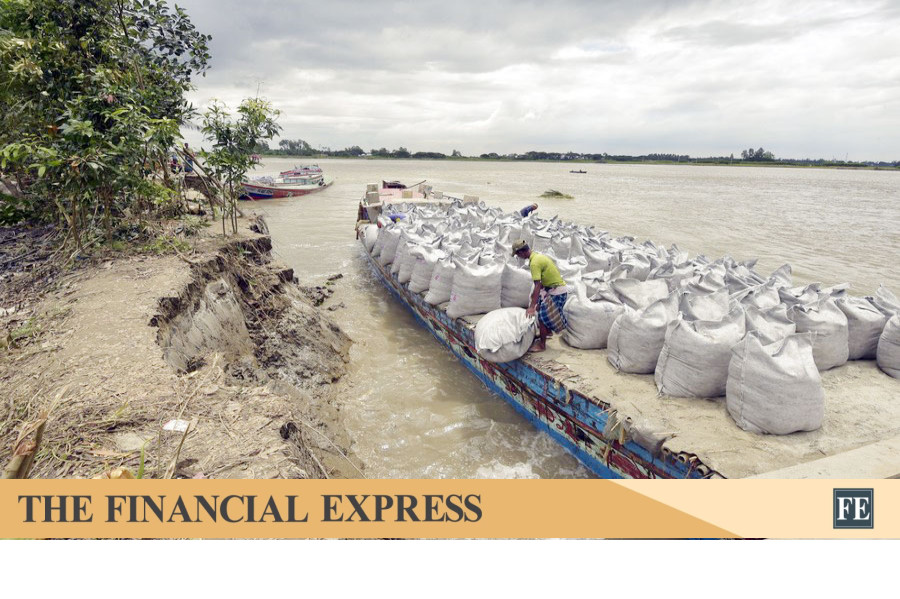
Waves crash against an eroded portion of Cox's Bazar beach, exposing damaged geobags as the shoreline continues to recede. — FE Photo

COX'S BAZAR, Sept 10: Cox's Bazar, home to one of the world's longest natural sea beaches, is increasingly facing a threat of destruction due to unchecked sand extraction,

destruction of beach vegetation and casuarina trees, unplanned urbanisation and mounting pressure from tourism infrastructure.

Locals claim that at least 500 feet of the beach's sandy stretch has disappeared into the sea over the past five years. Although geobags have been placed at several points to combat erosion, the measure has failed to provide a lasting solution.

In many places, the bags have torn apart, shifted from their original positions or become exposed as sand beneath them has been washed away, making the erosion even more visible.

During a recent visit to Laboni, Sugandha and Kalatali points of Cox's Bazar beach, signs of severe erosion were found at several locations. In some areas, sections of the

beach have dropped several feet, while in others, the removal of sand from beneath geobags has created gaps and cavities. In several places, waves have battered and torn the geobags apart, scattering their remains across the beach.

The situation is not only damaging the natural beauty of the beach but also creating discomfort for tourists. As the sandy stretch and natural dunes continue to shrink, tourism-dependent businesses and the fragile coastal ecosystem are also coming under growing threat.

A tourist couple, Jesmin Bokhari and Shah Rukh Bokhari, who travelled to Cox's Bazar from Mirpur in Dhaka with their family, said the condition of the beach had deteriorated significantly.

The environment of the beach has become very poor. Looking at the eroded shoreline, it feels as if a war has taken place here. Instead of temporary repairs, the authorities should take a long-term approach to solving the problem, they commented.

Local residents said that only a few years ago, many parts of the beach had extensive sandy stretches, rows of casuarina trees and natural dunes covered with beach vegetation. Today, powerful waves are crashing directly onto many of those areas.

Erosion becomes particularly severe during the monsoon, they said. Despite repeated efforts to protect the shoreline with geobags, the expected results have not been achieved.

Tourism entrepreneur Shahed Selim said Cox's Bazar beach suffers severe damage every year during the monsoon.

"The beach is gradually losing its existence because of sand extraction from the sea and the destruction of beach vegetation and casuarina trees," he said.

According to people concerned with the issue, interference with the natural movement of seawater, encroachment on the beach, pollution, inadequate drainage and unplanned urbanisation have further complicated the situation.

H.M. Faridul Alam Shaheen, joint convener of Dharitri Rokkhae Amra, a local environmental organisation, blamed sand extraction and unplanned activities for the worsening situation.

"Geobags are being placed in the affected areas, but they are not working. They are also affecting the natural beauty of the beach. Every year, a significant amount of money is being spent on geobags, but it seems that the entire expenditure is going into the water," he said.

Experts opine climate change is not the only factor behind the erosion. Unplanned tourism development and the destruction of natural sand dunes have also contributed significantly to the deterioration of the beach.

They believe that geobags may temporarily reduce the impact of waves, but they cannot provide a long-term solution. Instead, restoring natural dunes and bringing back the beach's ecological balance should be prioritised.

Fazlul Kader Chowdhury, president of the Cox's Bazar Civil Societies Forum, said the beach was globally renowned for its natural beauty.

"But if uncontrolled sand extraction, destruction of dunes and vegetation, and unplanned development continue, the beach's natural defence system will become even weaker," he said.

Oceanographer Abdul Qayyum suggested that sand be brought from other areas to replenish the eroded sections.

Salahuddin Ahmed, sub-divisional engineer of the Cox's Bazar Water Development Board, said the agency had faced various obstacles while attempting to work on beach erosion control two years ago.

"Because of those obstacles, we currently have no ongoing work there," he said.

However, Cox's Bazar Deputy Commissioner Md A. Mannan said initiatives were underway to identify erosion-prone areas and formulate a permanent project.

"We are identifying the areas where erosion control measures are necessary and preparing a Development Project Proposal (DPP) for submission to the government. We hope work can begin through a government-funded project once the necessary allocation is secured," he said.​
 

Bangladesh unveils $1.85b plan for green transition


1789107535848.webp


Bangladesh has outlined a $1.85 billion investment plan to execute an equitable green economic transition, becoming the first country in Asia to incorporate a dedicated Just Transition chapter into its Nationally Determined Contributions (NDC 3.0).

The framework translates the country's climate targets into actionable and bankable investment opportunities, according to an action plan presented at a national high-level dialogue in Dhaka on Thursday.

The dialogue was jointly organised by the Department of Environment, International Labour Organisation (ILO), South Asian Network on Economic Modeling (SANEM) and the Embassy of Sweden.

The strategy was developed through a cross-mapping of 14 national strategy documents, including the Eighth Five-Year Plan, Perspective Plan 2041 and Bangladesh Delta Plan 2100. It consolidated 258 commitments into 33 core priorities.

These priorities form an action matrix containing 69 traceable and time-bound activities across six key sectors-energy, transport, construction, agriculture, waste management, and industrial processes and product use (IPPU).

The final implementation plan will be incorporated into NDC 3.0 this month before being presented to international development partners and global investors at COP31 in November.

SANEM Executive Director Dr Selim Raihan and ILO Just Transition Technical Officer Elisa Benistant Fremigacci jointly presented the action plan and its annexes at the dialogue.

Speaking as the chief guest at the event, State Minister for Environment, Forest and Climate Change Shaikh Faridul Islam said the government was focusing on field-level measures to clean major rivers and reduce air and noise pollution.

Referring to his recent visits to facilities in Rajshahi, he stressed the need to improve occupational safety and health standards for factory and waste-management workers.

Workers are central to economic growth and therefore need fair wages, stronger social protection and skills upgrading to cope with technological changes, he said.

Bangladesh is also targeting 10,000 MW of renewable energy within five years as part of its clean-energy transition, including through wind power projects such as those in Cox's Bazar.

The government is forming an inclusive, multi-sectoral team to present strong research and policy positions at COP31, the state minister added.

Speaking at a panel discussion, Dr Fahmida Khatun, distinguished fellow at the Centre for Policy Dialogue (CPD), said a just transition must focus on creating employment through the green transition.

She called for sector- and occupation-level mapping to identify where jobs would be gained or lost and proposed adding a green jobs module to the Labour Force Survey to establish a reliable baseline. She also stressed the need for data disaggregated by sex, age, geography, and formal and informal employment to better target social safety-net programmes such as the Family Card.

Emission-reduction tracking should be paired with employment and decent-work indicators, she said, calling for an institutional mechanism to integrate data across the Bangladesh Bureau of Statistics, government ministries, employers and worker organisations.

Moustapha Kamal Gueye, director of the ILO's Just Transition Priority Action Programme, said climate ambition requires building human capacity among workers, businesses and communities to transform energy, agriculture and transport systems.

Social justice and decent work are essential to climate mitigation and adaptation rather than merely additional benefits, he said, stressing that social dialogue should be formally institutionalised instead of remaining ad hoc.

Bangladesh Employers' Federation Secretary General Farooq Ahmed said a just transition required a whole-of-society approach involving all stakeholders, not just employers and workers.

He noted that Bangladesh accounts for only 0.47 per cent of global carbon emissions, yet remains disproportionately vulnerable to climate change because of its geographical position.

He identified three key responsibilities: raising public awareness, mobilising financial and technical resources, and developing a framework for resilience and preparedness.

He also called for climate issues to be communicated in simple and accessible language and stressed the need to build the capacity of small and medium-sized enterprises to adapt to environmental and technological changes.

Mesbahuddin Ahmed, chairman of the National Coordination Committee for Workers' Education, recalled past industrial disruptions caused by globalisation and cautioned against repeating instances where workers lost jobs without opportunities for retraining.

The current green transition must prioritise worker reskilling and involve worker organisations from the outset, he said.

Sector-level specialisation is also crucial to understanding future workforce needs and designing appropriate training, he added, stressing that a just transition must go beyond policy documents to deliver real jobs, job security and effective skills transfer.

ILO Country Director Max Tunon moderated the panel discussion.​
 

Who will pay for the climate crisis?

Atia Ibnat Rifah & Azizul Hakim Rakib
Published: 12 Sep 2026, 09: 34

1789193202840.webp

A man walks past damaged buildings after the flash floods and mudslide, at Trishuli, Nuwakot district, Nepal, 29 August 2026. Reuters

Nepal has demanded climate compensation after the recent devastating landslides and floods that killed thousands and caused widespread damage. The question that Nepal has raised by demanding compensation from major emitters like the United States, India, and China is not unique to Nepal. Rather, it is one of the world’s biggest justice questions: who will ultimately pay for the damage caused by climate change?

To find the answer to this question, we need to look back. Since the Industrial Revolution, much of the world’s economic growth has been based on coal, oil, and gas. These fuels have fueled unprecedented prosperity in the economies, urbanization, and lifestyles of industrialised countries. But the environmental costs of that prosperity are not just on their shoulders.

Global warming is increasing, sea levels are rising, rainfall patterns are changing, cyclones and heat waves are intensifying, droughts are getting longer in some places, and the risk of floods and landslides is increasing in others. And the biggest impact of all this is often falling on countries that have played a relatively small role in creating this crisis.

This is where the biggest paradox of climate change lies. The countries or populations that have contributed the least to global warming often suffer the most. A coastal farmer in Bangladesh, a small farmer in Africa, or a family in a remote village in the Himalayas did not make the decision to join the global carbon economy. But they are paying the price of climate change with their lives and livelihoods.

So the question arises, is this just bad luck, or is it a matter of responsibility?

This is where the concept of climate justice comes into play. Not all countries are equally responsible for the climate crisis, nor are all countries equally affected. As a result, the argument that everyone should be equally responsible for the solution does not stand the test of fairness.

Countries that have achieved economic prosperity by emitting large amounts of greenhouse gases for a long time cannot be limited to reducing emissions in the future. They must also face the question of taking responsibility for a part of the damage caused today due to those past emissions.

There is a debate over the word ‘compensation’. Many in developed countries want to see climate finance as a continuation of development aid. On the other hand, affected countries argue that getting money for damage they did not cause due to the climate crisis is not kindness. It should be part of a fair international system.

The difference between the two positions is very important. Aid usually depends on the goodwill of the donor. But compensation depends on liability. When asking for aid, the poor country is a beneficiary; but when it demands fair compensation, it speaks of its rights. This change in language is very important in climate politics.

Of course, there is a hard reality here. It is not possible to hold any specific country responsible for the entire damage of every flood, cyclone or landslide in the world. In addition to climate change, local topography, deforestation, unplanned urbanization, weak infrastructure or a lack of disaster management can also make a disaster more severe. Therefore, an effective compensation system should not be based on emotions, but on scientific evidence, historical emissions, current emissions, economic viability and the scale of damage.

But this complexity does not negate the need for compensation. On the contrary, it shows that we need a more fair and effective international system.

The world is already talking about ‘Loss and Damage’. The UN climate process has decided to create a fund for this. This is undoubtedly an important step forward. But creating a fund is not the same as ensuring sufficient money compared to the need.

This is the major weakness of the current system. The scale of damage from the climate crisis is increasing rapidly, while compensation money still depends largely on voluntary commitments and political will. Uncertain and inadequate financing cannot be a sustainable solution to the damage of a crisis that has accumulated over decades and whose effects will continue for decades to come.

The bigger question is, where will this money come from?

Relying solely on the national budgets of developed countries will be difficult to meet in the long term. Proposals such as a global levy on the excess profits of the fossil fuel industry, certain types of charges on international aviation and shipping, mandatory contributions from high-emitting countries, or creating new sources of finance through the international financial system could be seriously considered for climate compensation. It is not unreasonable to create a link between an economy that has long benefited from its dependence on fossil fuels and an economy that has benefited from climate damage.

Another issue is whether loss-and-damage finance should come in the form of loans. On paper, a loan may count as climate finance. But from the perspective of justice, the picture is very different. If a country that has suffered economic losses due to floods, cyclones, or rising sea levels has to borrow again to deal with those losses, the burden of the loss is simply shifted from the present to the future. Therefore, financing for loss and damage needs to be as grant-based and predictable as possible.

The greatest injustice of the climate crisis may not simply be that some people are losing their homes, land and livelihoods. It may be that those who contributed least to creating the crisis are being asked to pay the highest price for it.
Here, the question of the responsibility of the developed world is even clearer. Just as it is not right to simply claim that the development of industrialized countries is not entirely due to climate change, it is also not consistent with reality to deny the role of their historical emissions. Today''s climate crisis is not the result of any one year's emissions; it is the result of accumulated emissions over many decades. Therefore, determining responsibility only by looking at current emissions leaves out a large part of history.


At the same time, the reality of the current world must be acknowledged. Countries like China and India are now among the world's largest emitters, although their historical responsibility and per capita emissions are not the same as those of developed Western countries. As a result, a future climate compensation system cannot be stuck in a simple division of ''West vs. the rest of the world''. Those with greater historical responsibility, higher current emissions, and greater economic capacity must take proportionately greater responsibility.

That is, the basis of climate compensation should be justice, not revenge.

Another important aspect of this justice is where the money will go. The responsibility does not end when money is deposited in international funds. If money is also stuck in the bureaucratic structures of the affected country, or if the needs of local people are neglected in the name of large infrastructure projects, then that funding will lose its original purpose.

The ultimate beneficiaries of climate compensation must be the people who are actually suffering—coastal farmers, landless families in river erosion, displaced people, small-scale fishers, agricultural workers, and communities whose livelihoods have been lost due to climate change.

This debate is therefore particularly important for Bangladesh.

We have long been known as one of the world’s most climate-vulnerable countries. Although our emissions are very small compared to the global crisis, the impact of climate change on our development, agriculture, water, coastal life, and human migration is becoming increasingly visible. As a result, climate financing for Bangladesh is not just another matter of international aid; it is a question of future development and justice.

1789193267576.webp

Climate change in Bangladesh. Survival calls for effective climate adaptation Logic/UNDP

However, we also need to be careful about one thing. Demanding compensation alone is not enough. What the international framework for compensation will be, what damage will be considered compensable, how liability will be scientifically determined, how the money will be distributed, and how it will reach local people—these are questions that countries like Bangladesh need to take a stronger stance on.

Much of the discussion on climate change has been about how to prevent future disasters. Then came the question of how to adapt people to those changes. Now comes the more difficult question—who will pay for the damage that has already been done?

The answer to this question is not just a question of money. It is also a question of history. It is a question of development models. It is a question of power. And most of all, it is a question of justice.

Nepal’s recent claim has only brought that question to the fore. But the question is much bigger than Nepal. As the number and scale of climate disasters increase in the coming days, the world will have to decide—will we keep climate-affected countries dependent on sympathy and relief, or will we accept their losses as part of a just international obligation?

Climate change does not respect national borders. Its consequences do not stop at the borders of the countries least responsible for causing it. If the benefits of carbon-intensive development have been accumulated disproportionately in one part of the world while its costs are increasingly borne elsewhere, then the international system must find a fairer way to share those costs.

The greatest injustice of the climate crisis may not simply be that some people are losing their homes, land and livelihoods. It may be that those who contributed least to creating the crisis are being asked to pay the highest price for it.

* Atia Ibnat Rifah, and Azizul Hakim Rakib are postrgaduate students at the Department of International Relations, University of Rajshahi. They are also independent researchers researching in the field of climate change adaptation, environmental governance and politics, climate justice, and gender studies.​
 

Sunderbans towards risk?
Gouranga Nandy 13 September, 2026, 00:00

1789256698511.webp


THE national energy sovereignty is in a critical position. Maheskhali is the only spot where all of imported liquefied natural gas is unloaded. It is important to overcome this structural bottleneck. A technical failure or local disaster on a single location can plunge the country into darkness. We saw this in August. Since the replacement of coal, we have an increased dependence on liquefied natural gas. And, this dependence may continue for a long time.

The government has, however, initiated radical infrastructural changes. The goal is a complete decentralisation of the energy grid by 2029. As part of this, the power and energy minister has, as reports published on August 11 say, said that new floating storage and re-gasification units will be set up at Payra, Hiran Point and Mongla.

The move to the west coast to break the monopoly of Maheskhali is a good initiative and the work is scheduled to be completed by 2029. The recent fires and technical outages at the Maheskhali plant have not only disrupted power supply but has also crippled industrial production and proved that the national grid is vulnerable. As a result, ‘decentralisation’ has become the main goal for survival.

The first choice for this strategy is a site near the Payra seaport, where Petrobangla has already finalised a term-sheet agreement with US-based Excelerate Energy to set up a floating storage and re-gasification unit. The project is expected to serve as a major driver for the growing industrial areas in the south and the west.

The government has also taken a step towards full infrastructural sovereignty. It has scrapped long-standing talks to import gas from India through the Bhomra–Khulna pipeline. It was originally designed to connect Bangladesh to India’s H-Energy network. However, by severing the cross-border connection, the government has ensured that the success of the south-west network is fully dependent on domestic infrastructure and coastal projects. This determines the future of Bangladesh’s energy map within its own borders despite immediate financial pressure. This will, of course, also come at a high cost.

To avoid the need for a huge, specialised line to the capital, Petrobangla is looking forward to using the Tk 4,500-crore Bhola-Khulna transmission pipeline. The 205-km project, with a capacity of 180 million cubic feet a day, was originally designed to transport domestic gas from Bhola. However, it is now considered for use for liquefied natural gas transmission. The proposed Hiran Point and Mongla terminals are considered to integrate the imported liquefied natural gas into this network to create a ‘south-western energy loop.’ Instead of incurring the cost of a separate route to Dhaka, this loop will allow imported gas to use the Bhola-Khulna infrastructure, which will serve the regional industrial needs of Khulna and Jashore. It could transform the local distribution pipeline into a strategic artery for the entire south-western industrial sector.

In fact, Gas Transmission Company Limited suffers from a serious financial crisis. In one financial year, the company has incurred a huge loss of Tk 12.12 billion. This is not just an operational shortfall but also a systemic failure caused by the ‘capacity payment’ trap. Under the contracts, the company is forced to pay millions of takas to foreign companies to maintain gas compressor stations that often remain idle because of low domestic gas flows. Despite gas supply being stagnant, the company has been spending on payments to foreign companies to operate and maintain the often-inactive infrastructure.

This cash drain has been compounded by the strict restrictions of the International Monetary Fund on government borrowing. The restrictions effectively prevent the state from allowing the company to operate independently. As a result, both the company and energy future are dependent on high-interest foreign loans and whims of international development partners.

The International Monetary Fund and the World Bank finance and manage this shift to a decentralised grid. One of the conditions for borrowing from them is that there should be no fuel subsidies. This is why the Power Development Board has recently increased the wholesale price of electricity from 17 per cent to 21 per cent. In fact, the IMF and World Bank recommendation to eliminate the subsidies can be explained by three factors. The first is to completely remove the cost from the consumer. The second is to take away the power to set prices from politicians and hand them over to an automated formula that allows prices to fluctuate in line with global markets. And the third, the market-based exchange rate has weakened the value of the taka, making it more difficult to repay the Tk 4,500 crore loan for the pipeline.

The irony is that electricity prices have been rising for years. The increase in share is a direct result of the ‘automatic tariff formula,’ which is needed to cover the cost of idle machinery and ‘capacity payments’ that drain GTCL funds.

The issue is whether we should take a high-stake gamble on the Sunderbans to build alternative infrastructure. Constructing a gas corridor near the world’s single largest contiguous mangrove forest is a task as daunting as walking on an ecological tightrope. The Sunderbans is home to the Royal Bengal tigers and the endangered Irrawaddy and Gangetic dolphins. The forest is not suitable for constructing pipelines using the conventional ‘open-cut’ method. Excavation using the conventional method would destroy the ‘pneumatophores,’ breathing roots, and risk the spread of various diseases, including ‘top-dying.’ To address this problem, international lenders have mandated the use of horizontal directional drilling technology. It involves tunnelling deep into the riverbed and under the roots without breaking the forest surface, which has a huge cost; and, the risks are also higher.

Beyond the excavation, there is the ‘dangerous’ threat of exposing acid sulphate soils. Excavating coastal clay can expose dormant soil to oxygen, creating an acidic flux. If this happens, this acidic flux can destroy local aquatic life as soon as the first rains come. It is a high-stakes gamble, where the existence of a UNESCO world heritage site is pushed to the brink of destruction in exchange for building energy infrastructure. We have already put the Sunderbans at risk by building a coal-fired power plant at Rampal, very close to the forest. Now, by making way for alternative energy import, are we pushing the Sunderbans towards greater risk of extinction?

In building an infrastructure for the imported liquefied natural gas, Bangladesh is moving from a centralised hub to a risky, high-stake decentralised network in which the mangrove ecosystem is at risk of complete destruction. In addition, this decentralised infrastructure is being built with international loans and rising consumer spending. Will this attempt to use horizontal directional drilling technology to drill deep into the Sunderbans and integrate its ‘south-western energy loop’ bring about the desired rapid industrial development? Or will the people have to bear more responsibility for the destruction of their lives, livelihood, and material systems in the name of development?

Gouranga Nandy is an independent journalist.​
 

PM orders integrated initiative to prevent pollution in 5 Dhaka lakes


1789701927313.webp


Prime Minister Tarique Rahman has directed agencies to launch a coordinated drive to tackle pollution in the lakes of Gulshan, Banani, Niketan, Baridhara, and Dhanmondi.

At a Thursday meeting at the Secretariat, the prime minister asked authorities to stop sewage flowing into the lakes, improve waste removal, install Sewage Treatment Plants, and scale up operations of the agencies involved, according to Deputy Press Secretary Md Suzauddhowla.

The meeting reviewed pollution and renovation plans for the Gulshan, Banani, Baridhara, Niketan and Dhanmondi lakes, with officials identifying sewage discharge as a major source of contamination.

Authorities were told to block sewage entry points, require building-level treatment plants, survey the sewerage network and improve drainage. Six primary and six secondary sewage discharge points were identified around Gulshan Lake.

A technical committee also presented short-, medium- and long-term proposals, while progress on Dhanmondi Lake’s renovation and sludge-removal work was reviewed.​
 

Climate change likely to have helped trigger Nepal glacier collapse, scientists say


1789702562543.webp

A motorcyclist rides through thick mud with flood-damaged houses in the background following deadly flash floods and a mudslide, in Devighat, Nuwakot district, Nepal, on September 11, 2026. — Reuters/File

Climate change is highly likely to have contributed to the catastrophic glacier collapse that flooded parts of Nepal and Tibet in late August, killing around 1,400 people and leaving thousands still missing, scientists said on Thursday.

Rapidly warming temperatures in the region ‌have caused glaciers to thin and have melted ice and permafrost buried deep in the bedrock of the Himalayas, according to the World Weather Attribution (WWA) group of researchers.

While it is difficult to ascertain the precise role played by climate change in the collapse of around 2 sq km (0.8 sq miles) of rock wall and glacier ice on the Langtang Lirung mountain ⁠last month, soaring temperatures created the preconditions that made it more likely, researchers involved in the study said.

"There's absolutely no doubt that human induced climate change played a role here in the preconditioning of the disaster through permafrost thawing, through thinning of the glaciers, through having more rainfall instead of snow," said Friederike Otto, a climatologist at Imperial College London.

WWA uses peer-reviewed methods to assess the role played by global warming in extreme weather events, according to its website.

The study said mean temperatures were around 5 degrees Celsius (9 degrees Fahrenheit) higher than normal in the Himalayan region ‌in ⁠August, with 1.5 C of the increase coming from climate change.

Unusually high levels of snowfall in October and November of last year also added to the volume of meltwater once temperatures began to rise, which could have helped trigger the glacier collapse, according to the study.

Glaciers in the region have been thinning by about ⁠half a metre per year (about 1.6 feet) since the year 2000, changing stresses on the rock. Melting permafrost is also likely to have weakened the rock wall, the study said.

A 7.8 magnitude earthquake that hit the ⁠same mountain in 2015 could have played a role by weakening the underlying bedrock as well, but its precise impact is unclear.

"We conclude that this was a geologically vulnerable slope, potentially weakened ⁠by the 2015 earthquake, but it was destabilised further by glacier and permafrost retreat and by the excessive meltwater and exceptional warmth in the final period before the collapse," said Walter Immerzeel, a mountain hydrologist from Utrecht University.​
 

PM calls for urgent global action on climate crisis, seeks predictable finance


1790221226901.webp


Prime Minister Tarique Rahman on Wednesday called for five urgent global actions to tackle climate change and ensure a just and equitable transition, including meeting the 1.5-degree Celsius target and ensuring predictable climate finance.

“Collective action based on “Common But Differentiated Responsibilities and Respective Capabilities” is imperative…We call for 5 urgent actions,” he said.

Tarique made the call while addressing a high-level meeting on “Climate Action and the Just Transition” at the UN Headquarters in New York.

Outlining the five urgent actions, the Prime Minister first called for achieving the 1.5-degree Celsius global warming limit through global emission cuts, as set out in the Paris Agreement.

Second, Tarique called for predictable and accessible finance for adaptation in climate-vulnerable countries.

Third, he urged greater access to climate-smart technologies to enable a just and equitable climate transition.

Fourth, Tarique stressed the need for expanding renewable energy through accessible finance, capacity-building and technology transfer.

And fifth, he called for full implementation and regular replenishment of the Loss and Damage Fund.

“Bangladesh seeks partnerships that help us implement our plans. Let us act together to build a safer and more sustainable future for generations to come,” the Prime Minister added.

Tarique said Bangladesh contributes less than 0.5 percent of global greenhouse gas emissions but is among the most climate-vulnerable countries.

He said Bangladesh could lose 12 to 18 percent of its coastal areas to sea-level rise by the end of this century, affecting the livelihoods of tens of millions of people.

“Climate change has caused loss and damage equivalent to 1% of our GDP. Our food security is at serious risk,” Tarique said.

The Prime Minister said Bangladesh had allocated nearly $3.19 billion in its budget for climate adaptation but warned that the country risked severe damage without international support.

He said Bangladesh plans to plant 250 million trees over five years and dig around 20,000 kilometres of rivers and canals, alongside the Padma Barrage and Teesta Barrage Master Plan, to retain water, reduce flood risks, revive wetlands and recharge groundwater.

The government also aims to generate 20 percent of the country's electricity demand from renewable sources by 2030, Tarique said.

Bangladesh is promoting green industries, including jute products, eco-friendly transport, waste-to-energy and circular economy initiatives, while developing a national carbon market, he said adding that, “But we cannot succeed in isolation.”

The high-level meeting was held at the Trusteeship Council Chamber of the UN Headquarters as part of the Prime Minister's engagements during the 81st session of the UN General Assembly.​
 

PM calls for four urgent actions to tackle sea-level rise

He addresses UNGA in Bangla

Bangladesh Sangbad Sangstha . New York 25 September, 2026, 00:59


1790318973575.webp

Prime minister Tarique Rahman addresses a high-level meeting on Rohingya Crisis on the sidelines of the 81st session of the UN General Assembly at the United Nations Headquarters in New York on Thursday. | PID photo

Prime minister Tarique Rahman on Thursday called for four urgent global actions to tackle the growing threat of sea-level rise, including faster and deeper cuts in global emissions, accessible adaptation finance, wider access to climate-smart technologies and stronger international cooperation to address climate-induced displacement and damage.

He made the call at a meeting on addressing the existential threat posed by sea-level rise, held at the Conference Room 4 of the United Nations Headquarters in New York in the morning (local time), on the sidelines of the 81st session of the UN General Assembly.

The prime minister is set to address the 81st session of the United Nations General Assembly in Bangla at 5:00pm on Thursday (3:00am Bangladesh time on Friday), prime minister’s adviser Mahdi Amin said.

This will be Tarique Rahman’s first address to the UN General Assembly since becoming prime minister on February 17 after the BNP won the 13th parliamentary elections with an outright majority.

The prime minister, addressing the Thursday’s meeting, referred to a World Bank estimate and said that a 25-centimetre rise in sea level could submerge around 4 per cent of Bangladesh’s land by 2050, threatening the homes, livelihoods and human dignity of about 10 million people.

‘The sea is rising fast. Our ambition must rise faster,’ Tarique Rahman said, urging the international community to turn the promises of the Declaration on Sea-Level Rise into action and ensure that no nation is left behind to face the rising tide.

He thanked the president for convening the high-level meeting and the co-facilitators for their efforts in crafting the declaration.

Elaborating on the four urgent actions, the prime minister first called for faster, deeper and fairer cuts in global emissions, stressing that the world must keep the 1.5-degree Celsius target within reach.

‘First, we must cut global emissions faster, deeper, and more fairly. We must keep 1.5 degree Celsius within reach,’ he said.

Second, he called for predictable and accessible finance for adaptation in climate-vulnerable countries.

‘Vulnerable countries like Bangladesh cannot face the grave consequences of sea-level rise alone,’ he said, stressing that global support and assistance are needed to redouble their efforts.

Third, the prime minister called for expanding access to climate-smart technologies, data and early-warning systems for vulnerable coastal nations.

He said Bangladesh had already built early-warning systems, strengthened cyclone preparedness and invested in coastal protection despite its limited resources.

Finally, Tarique Rahman called for stronger international cooperation to address climate-induced displacement and loss and damage and to ensure dignified pathways for communities displaced by sea-level rise.

The prime minister said the calls were particularly important for Bangladesh, an active delta where hundreds of rivers meet the sea and people live close to the water.

‘Our prosperity and future are tied to the coast,’ he said.

He said adaptation measures alone would not be enough to address the effects of sea-level rise, as ‘the ocean reacts to every tonne of carbon the world releases.’

‘Therefore, we need to rethink the way we consume, so that we reduce carbon emissions into the environment,’ he said.

Tarique Rahman said Bangladesh was taking ambitious steps to strengthen its climate resilience.

‘Over the next five years, Bangladesh aims to dig around 20,000 kilometres of rivers and canals, advance the Padma Barrage initiative to retain and reserve water, modernize the Teesta Barrage with a master plan and plant 250 million trees,’ he said.

At the same time, Bangladesh is pursuing green growth, targeting at least 20 per cent renewable electricity by 2030, with an emphasis on solar power, while promoting green industries and eco-friendly transport.

It is also developing a national carbon market and strengthening the protection of forests, wetlands and vulnerable coastal ecosystems, he said.

The high-level meeting brought together heads of government and state, as well as representatives of relevant international organizations, on the occasion of the 81st session of the UN General Assembly.

Concluding his remarks, the prime minister reiterated the need to translate the Declaration into concrete action.

‘I believe we will all come together, turn the promises of the Declaration into action, and ensure that no nation is left behind to face the rising tide,’ he said.

‘Let our resolve rise with the sea, and let our action rise even faster,’ Tarique Rahman added.​
 

Pollution sources identified, Dhaka rivers still dirty
Sadiqur Rahman . Dhaka 27 September, 2026, 01:05

1790468464430.webp

New Age file photo

Despite years of planning, projects and investment, the five major rivers around Dhaka remain heavily polluted, with government agencies repeatedly identifying the sources of pollution but failing to stop untreated waste from reaching the waterways.

The Buriganga, Shitalakhya, Dhaleshwari, Turag and Balu rivers continue to receive industrial effluents, untreated sewage and solid waste despite successive initiatives to restore them.

In the latest move, the government has identified 424 major sources of untreated wastewater and more than 550 discharge points that are continuously polluting the five rivers.

Water resources ministry, in a letter on August 4, identified 232 liquid-waste sources from 225 entities under industries ministry, 191 sources from 20 entities under local government division, 138 sources from 138 entities under textiles and jute ministry, four sources from four power plants under power division and two sources from one entity under defence ministry.

The ministry asked environment ministry to take action against 257 polluting entities and requested Bangladesh Inland Water Transport Authority to take preventive measures against waste dumping by passenger and cargo vessels.

In December 2021, the National River Conservation Commission identified 280 polluters and 693 pollution sources along the Buriganga, Turag, Balu and Tongi canal.

Environmentalists say repeated identification of pollution sources has not produced significant results because efforts by government agencies remain fragmented, while some agencies responsible for managing urban services are themselves contributing to river pollution.

‘Identifying the pollution sources is important. But integrated waste collection, segregation and reduction is very important. Otherwise, revitalisation of the river system of Dhaka cannot be achieved,’ said Malik Fida A Khan, former executive director of Center for Environmental and Geographic Information Services under water resources ministry.

Greater Dhaka, covering Dhaka city and parts of Gazipur and Narayanganj, produces around 4,000 million litres of wastewater every day, including about 2,400 million litres of industrial discharge and 1,500 million litres of residential sewage, much of which reaches rivers untreated, he said, citing several studies.

Sheikh Rokon, secretary general of Riverine People, said that pollution control efforts had repeatedly failed because government agencies themselves appeared to be major sources of pollution.

He alleged that Dhaka Water Supply and Sewerage Authority continued to discharge untreated sewage into rivers, while the Dhaka city corporations had failed to prevent wastewater from flowing through city canals into rivers.

The government has undertaken several projects over the years, spending crores of taka, much of it in the form of loans, to improve sanitation and restore the rivers.

The latest is the World Bank’s $370 million Metro Dhaka Water Security and Resilience Programme, approved in February. The project is being implemented by Dhaka North City Corporation, Dhaka South City Corporation, Narayanganj City Corporation and Dhaka WASA to address solid waste dumping, direct sewage discharge into drainage networks and industrial effluent discharge into rivers and canals.

In 2020, the government began implementing a Tk 3,855.60-crore project funded by the World Bank and the Asian Infrastructure Investment Bank to improve Dhaka’s sanitation network. Under the project, the Pagla Sewage Treatment Plant is being expanded to a capacity of 200 million litres a day.

The World Bank says only about 20 per cent of Greater Dhaka residents have piped sewer connections, while just 2 per cent use functional faecal sludge management systems.

The 500 million litres per day Dasherkandi Sewage Treatment Plant currently treats around 280MLD during the dry season. The existing 120MLD Pagla plant operates at only 30-40 per cent capacity because parts of its sewer collection and transmission network are damaged or clogged, according to studies.

In early September, the government also formed a 37-member central cell to prevent encroachment and pollution of rivers around the capital and maintain their navigability.

State minister for environment, forest and climate change Shaikh Faridul Islam, one of the cell’s advisers, said that river pollution continued despite rules and regulations as many polluters had failed to establish effluent treatment plants.

‘The environment ministry is committed to stopping river pollution and is strict against polluters who must be held responsible,’ he said.

His assurance comes as the world observes World Rivers Day on Sunday with Dhaka’s rivers still struggling under untreated sewage, industrial waste and solid waste.​
 

Combatting environmental pollution
Mehrab Hossain 28 September, 2026, 00:00

RECENTLY, a 21-year-old boy in India came into the limelight by cleaning up a trash-filled, polluted river single-handedly. What prompted him to take on this great job? Perhaps it was his strong sense of civic responsibility, and undoubtedly, it is one of the paramount examples of what a citizen can do. This thought-provoking incident inspired me to write this article about civic responsibility in general, and fighting environmental pollution in particular.

Combating environmental pollution is one of the most discussed civic responsibilities, which many of us deem as the sole duty of the government. There is no doubt that the government has strong levers at its disposal to address this universal problem. However, citizens from all walks of life also have an important role to play, which we have been ignoring intentionally or unintentionally over the years. At the same time, environmental pollution is not merely the result of individual behaviour; it is also connected with waste management, industrial activities, construction and effective enforcement of laws. In light of these circumstances, let me share three scenarios with you.

Every morning, when I go jogging on the walkway along the bank of the Karatoya River — once a mighty river through which hundreds of commercial ships and passenger boats used to navigate — my heart fills with sorrow when I see the colour of the water transform into semi-black instead of transparent. It seems to me that the river is crying while carrying tons of garbage on its chest.

This is due to the unscrupulous activities of people who throw away everything, ranging from industrial waste and sewage to packaging of chips and biscuits, into this river, eventually contaminating the water. But individual behaviour is only part of the problem; proper waste management, monitoring of pollution sources and enforcement of environmental laws are equally important. This scenario is equally true for many rivers and water bodies across the country.

When I go to the office every day, I see hundreds of vehicles crowding the roads and using hydraulic horns, which beep and roar rampantly. There are many hospitals and educational institutions here in Bogura city. No doubt, such noise can exceed recommended limits and is detrimental to patients and students alike. Apart from road traffic noise, reckless construction activities have emerged as another key source of sound pollution, wreaking havoc on inhabitants in residential areas and increasing the difficulties faced by patients and students.

As Bogura is a densely populated city, construction work is running round the clock in various parts of the city to accommodate and generate employment for its vast population. However, these unplanned and colossal activities may apparently seem benign, but their impacts are malign. To be more specific, if you visit these construction sites, you will definitely find construction materials such as sand and bricks kept in the open air, which results in air pollution on a massive scale. This is a matter of utmost concern as air pollution is one of the prime factors responsible for deaths worldwide, which many of us are not aware of.

If we put these three scenarios together, they lead to gross environmental degradation, which undoubtedly destabilizes the natural ecosystem of our beloved motherland. Now, the question arises: is it possible to combat environmental pollution by government alone? Let us find the answer.

Perceiving the significance of environmental protection, the Government of Bangladesh, through the 15th Amendment in 2011, incorporated Article 18A into the Constitution of the People’s Republic of Bangladesh: ‘The state shall endeavour to protect and improve the environment and to preserve and safeguard the natural resources, biodiversity, wetlands, forests and wildlife for the present and future citizens.’ To address environmental degradation, the Bangladesh government has introduced several laws and rules, such as the Bangladesh Environment Conservation Act, 1995, the Bangladesh Water Act, 2013, the Sound Pollution (Control) Rules, 2006, the Air Pollution (Control) Rules, 2022, and so on.

Interestingly, as an Executive Magistrate, I have conducted many mobile courts applying these laws and fined people for non-compliance. Unfortunately, the outcome is not satisfactory, as people continue to do the same thing again and again. This experience shows that punishment alone cannot solve the environmental problem. At the same time, citizens cannot expect the government to solve every problem without changing their own behaviour.

Now, let us think in the reverse way. If we, as citizens, become proactive and stop throwing waste into rivers, cover construction materials while construction work is underway and refrain from using hydraulic horns unnecessarily on the streets, we can certainly contribute to combating environmental pollution. But these individual actions need to be supported by effective government intervention, proper waste management, regular monitoring and enforcement of environmental laws.

This is the striking point where government should intervene by raising awareness pertaining to civic responsibility through mobilising various government apparatus, especially educational institutions, the Department of Environment, municipalities and the Department of Public Health Engineering, as well as engaging print, electronic and social media in disseminating relevant information about environmental pollution. It is worthwhile to mention here that Bangladeshi media are playing a pivotal role in covering news regarding environmental pollution and creating awareness among citizens. Thus, the bottom line is that fighting environmental pollution will not bring satisfactory outcomes unless we, as citizens, act spontaneously to perform our civic responsibilities properly and sincerely, while government agencies and other institutions fulfil their responsibilities through effective regulation, monitoring and enforcement.

Mehrab Hossain is an executive magistrate at the office of the deputy commissioner, Bogura.​
 

Bangladesh’s urban climate crisis
Hassan Siddiqui and Habib Siddiqui 02 October, 2026, 00:00


1790898236638.webp


ON SEPTEMBER 3, The New York Times published a sobering investigative report titled ‘Is Your City Prepared for Climate Disaster?’ The article summarised a new global resilience index developed by AlphaGeo, ranking 72 major cities on their preparedness for climate shocks — floods, heat waves, droughts, wildfires and coastal storms. Nine of the ten least resilient cities in the world are located in South Asia, a region that has contributed minimally to global greenhouse gas emissions yet bears a disproportionate share of climate impacts. As major governmental, non-profit, corporate and civil society actors converged in New York City for the United Nations General Assembly and Climate Week, these findings cast a long shadow.

Among the least resilient cities were Dhaka, ranked 4th least resilient and Chittagong, ranked 9th. For Bangladeshis, these rankings were painful but unsurprising. They reflect a reality long understood by residents, planners and policymakers: our cities are not failing — they are under siege, especially as deepening climate change escalates climate disasters. The South Asian region as a whole is now experiencing cascading climate shocks that interact across borders, creating shared vulnerabilities that no single nation can address alone.

This essay examines why Dhaka and Chittagong scored so poorly, what structural forces shape their vulnerability and what realistic pathways exist to strengthen their resilience. It also situates Bangladesh’s urban crisis within a broader regional context, including Nepal’s recent climate catastrophe, which has reignited global debates about climate compensation and justice.

Why Dhaka and Chittagong are so vulnerable

Geography they cannot escape: Bangladesh’s geography is both a blessing and a curse. Its fertile delta supports millions, but it also places its cities directly in the path of climate extremes. Dhaka sits atop the Ganges–Brahmaputra–Meghna floodplain, surrounded by rivers that swell during monsoon season. The city is naturally prone to riverine flooding, waterlogging, drainage congestion and heat stress. Climate change magnifies these risks, making rainfall more erratic and extreme precipitation more frequent. Chittagong’s position as Bangladesh’s primary port city exposes it to cyclones, storm surges, coastal flooding, salinity intrusion and landslides in its hilly settlements. Rising sea levels threaten both residential neighbourhoods and critical port infrastructure. As Nepal’s recent disaster shows, even mountainous regions once considered natural buffers are now generating climate shocks of unprecedented scale.

Population pressures they cannot slow: Dhaka is one of the densest cities on Earth, with some wards exceeding 50,000 people per square kilometre. Chittagong, though less dense, is still heavily crowded. High density amplifies climate risk: evacuation becomes difficult, drainage systems are overwhelmed, informal settlements expand into hazard-prone zones and infrastructure is chronically overloaded.

Dhaka’s population exploded from roughly one million in 1970 to over 20 million today. No city — regardless of wealth — has successfully adapted to climate risks while growing at this pace. Rapid urbanisation also limits the ability of governments to invest in long-term climate resilience, as resources are diverted to immediate service delivery and congestion management.

Infrastructure gaps they cannot close overnight: Bangladesh has made impressive strides in rural disaster management — cyclone shelters, early warning systems and community preparedness. But urban adaptation has lagged behind.

Dhaka’s drainage system is overwhelmed every monsoon. Encroachment on canals and wetlands, clogged stormwater drains, insufficient pumping capacity and uncoordinated urban expansion have created a systemic failure that magnifies every climate shock.

Chittagong’s port is the country’s economic lifeline. Cyclones can disrupt shipping, damage port facilities, flood industrial zones and cause billions in economic losses. Infrastructure upgrades are underway, but the scale of risk is immense.

Nepal’s catastrophe illustrates how infrastructure gaps can turn climate hazards into mass-casualty events. When a glacier partially collapsed in Tibet, the resulting landslide and flood surged into Nepal at nearly 180 km/h, wiping out towns and severing highways. More than 6,000 people were dead or missing. The tragedy underscores how fragile infrastructure across South Asia is when confronted with climate-amplified disasters.

Governance structures they inherited

DHAKA’S governance is famously fragmented. Multiple agencies — city corporations, Rajdhani Unnayan Kartripakkha, Water Supply and Sewerage Authority, Bangladesh Water Development Board, Dhaka Transport Coordination Authority and various ministries — share overlapping responsibilities. This fragmentation leads to slow decision-making, weak enforcement of zoning laws, poor coordination during emergencies and infrastructure projects that contradict one another. Chittagong faces similar challenges, though less severe.

Nepal’s disaster response also revealed governance gaps: remote districts remained disconnected for days, complicating rescue efforts and highlighting the need for regional coordination mechanisms that transcend national borders.

Economic constraints

BANGLADESH’S urban governments operate within tight fiscal boundaries while juggling pressing development priorities — housing, transportation, education, healthcare and industrial growth. These demands compete for limited public resources, leaving little room for large-scale climate adaptation.

Climate-resilient infrastructure is expensive. Major drainage overhauls, river restoration, coastal defences, elevated port facilities and heat-resilient urban design require billions of dollars — far beyond municipal budgets. Domestic financing alone cannot meet the scale of investment required to protect these cities from intensifying climate threats.

Bangladesh is among the world’s lowest per-capita emitters, yet it must spend disproportionately on adaptation simply because of where its people live and how global emissions have reshaped their environment. Nepal’s demand for $20 million in climate compensation reflects a growing regional consensus: countries that contributed least to global emissions should not bear the full financial burden of adaptation and recovery.

Realistic pathways forward

DESPITE these constraints, meaningful action is possible. The challenge is to distinguish realistic strategies from idealistic ones. The multi-faceted nature of resilience is being realised across the world. Boston Consulting Group, recently published an assessment ‘Redesigning Climate Resilience for a World of Financial Tipping Points’, which highlights how the fault-lines across climate, financial and societal risk can be traced in high-income countries. Some lessons can be applied to Bangladesh:

Short-term priorities (0–5 years)

Restore wetlands and canals: Dhaka’s natural drainage system has been compromised by decades of encroachment and waste accumulation. Enforcing existing laws and rehabilitating key canals can dramatically improve monsoon resilience.

Upgrade drainage in flood-prone wards: De-silting drains, widening channels and installing pumps can reduce waterlogging and prevent the city from grinding to a halt every monsoon season.

Improve informal settlements: Raised walkways, improved drainage, sturdier roofing and community-managed shelters can save lives without mass displacement.

Implement heat action plans: Cooling centres, public alerts, shaded corridors and reflective roofs can reduce heat-related mortality.

Create municipal resilience taskforces: Small, empowered teams can coordinate projects across agencies, reducing fragmentation and improving emergency response.

Bangladesh should also explore regional early-warning systems with Nepal, Bhutan and India, especially for glacial lake outburst floods and upstream river surges.

Long-term strategy (5–25 years)

Strengthen secondary cities: Bangladesh must rebalance its urban system by strengthening Khulna, Rajshahi and Sylhet to reduce pressure on Dhaka and Chittagong.

Restore rivers and expand nature-based solutions: Retention basins, river dredging and mangrove belts can create ecological buffers that reduce flood peaks and storm impacts.

Build coastal and port resilience in Chittagong: Elevated infrastructure, surge barriers and diversified logistics are essential to protect national economic stability.

Integrate climate into urban planning: Master plans must legally protect floodplains, wetlands and high-risk hillsides. Stronger enforcement of building codes and zoning laws is essential.

Mobilise private sector investment: Public-private risk pools and resilience-linked loans can spur investment in adaptation.

Leverage international climate finance: Accessing global adaptation funds is not charity — it is climate justice. Nepal’s compensation demand should embolden Bangladesh to push for structured regional climate finance mechanisms, including Himalayan disaster funds and Bay of Bengal resilience bonds.

Conclusion: a call for justice and pragmatism

DHAKA and Chittagong’s low resilience rankings are not indictments of their people or their governments. They are reflections of structural injustice: cities punished for emissions they did not cause, struggling against climate forces they did not unleash.

Yet these cities are not helpless. With targeted short-term interventions and ambitious long-term planning, they can reduce suffering, strengthen resilience and reshape their future.

Climate resilience in Dhaka and Chittagong is not merely a national priority — it is a global responsibility. These cities are on the frontlines of a crisis created elsewhere. Their struggle is a reminder that climate justice is not an abstract principle but a lived reality for millions.

Bangladesh’s cities are under siege. Yet with vision, coordination and global support, they can endure — and even thrive — in the climate-challenged decades ahead.​
 

When medicines become pollution: Bangladesh’s rivers face pharmaceutical crisis


1791068747553.webp
 

Tk 75b WB-funded project to protect coastal communities in 14 districts


1791157029948.webp


The government has taken the initiative to implement a TK 75 billion project to protect vulnerable communities in 14 coastal districts from floods and climate change-related risks and improve their living standards.

Funded by the World Bank, the five-year project will be implemented from the next fiscal year, with various activities planned for infrastructure development, flood control and disaster risk reduction in the districts.

The project was discussed at a meeting between LGRD and Cooperatives Minister Dr. Abdul Moyeen Khan and a nine-member World Bank delegation led by Jean Pesme, Division Director for Bangladesh and Bhutan, at the Bangladesh Secretariat today.

Local Government Division Secretary Md. Shahidul Hassan was present at the meeting.

The meeting underscored the need to ensure the safety of vulnerable coastal communities, enhance their capacity to cope with climate-induced disasters and ensure sustainable development.

Discussion also took place on improving the living standards of vulnerable people, strengthening social safety nets and creating employment opportunities.

The project will also focus on improving water treatment and safe water facilities to address salinity in coastal areas, while increasing the use of surface water to reduce pressure on groundwater.

The initiative aims to ensure water security for coastal communities and build their long-term capacity to cope with floods and the impacts of climate change.

Director General of the Planning, Monitoring, Evaluation and Inspection Wing, Shibir Bichitra Barua and senior officials of the ministry were present at the meeting.​
 

Polluted water from govt power plant flowing into Sangu River, DoE test finds

Fisheries official warns contamination could kill aquatic life and eventually reach people through fish

Sifayet Ullah

1791158607090.webp

Water of the Sangu river has turned black as sludge of oil and grease from a power plant entered it through a canal in Satkania upazila of Chattogram. Photo: Courtesy

Water discharged from a government-run power plant in Chattogram and flowing into the Sangu River through a canal contained oil and grease at 3.1 times the permissible limit, according to a Department of Environment test.

The level of suspended solids was 4.4 times the permissible limit, while chemical oxygen demand, an indicator of water pollution, was 3.9 times higher than the standard. The pH level was also below the permissible range.

The DoE’s Chattogram office disclosed the findings Sunday after testing a water sample collected from Moillya canal near the Chattogram-Cox’s Bazar highway. The canal, a branch of the Sangu, flows south of the power plant.

“If the level of oil and grease is high, aquatic animals may have difficulty breathing and could die from a lack of oxygen,” Salma Begum, district fisheries officer of Chattogram, told The Daily Star.

“High levels of suspended solids can also harm aquatic animals. If pollutants accumulate in fish, they can enter the human body when people eat those fish, which can be harmful to health,” she said.

During floods in southern Chattogram in July this year, sludge stored at the power plant spread into nearby farmland and residential areas, according to plant officials and locals.

Residents held a human chain on September 12 and later submitted a complaint to the plant manager demanding an end to the pollution.

Abdul Gafur, a member of Kaliaish union parishad, said, “People use its water for farming. The power plant must permanently stop its waste from entering the canal. I have informed the administration so that action can be taken.”

The Power Development Board’s Dohazari-Kaliaish 100MW power plant is located in Kaliaish union of Satkania. Built on six acres, it began operation in 2011.

Plant manager and BPDB Superintendent Engineer Md Abdul Mannan said the plant uses furnace oil to generate electricity and produces sludge as a by-product.

“We store the sludge in a pond for several months and later sell it through a tender. During the floods in Satkania in July, the pond inside the plant went under water. The sludge mixed with the floodwater and spread through the canal into nearby areas,” he told The Daily Star.

“We came to know about the matter from local farmers in September,” he added.

Moinuddin Faisal, an inspector at the DoE’s Chattogram district office, inspected the plant on September 16.

“We collected a sample of the blackish water flowing through a drain from inside the plant into the canal. We also visited the point where the canal meets the river and saw the blackish water spreading there,” he told The Daily Star.

“All four parameters tested were outside the permissible limits. We will soon recommend action against the power plant under environmental laws,” he said.

1791158657312.webp

Photo: Courtesy


The Sangu River originates in the Arakan Hills of Myanmar and flows through Bandarban and Chattogram before emptying into the Bay of Bengal. The river is about 294km long, with around 170km flowing through Bangladesh.

A study published in July this year identified 75 fish species in the river.

Under the Bangladesh Environment Conservation Act, measures must be taken to control the release of wastewater or waste containing pollutants above permissible limits. The law also provides for punishment for violations.

Asked what measures had been taken, Mannan said the plant had started collecting the sludge using temporary workers.

“We have already recovered around 150 litres of sludge. The remaining sludge is also being collected,” he said.

Zamir Uddin, director of the DoE’s Chattogram regional office, said action would be taken against the responsible establishment in accordance with the law.​
 

COP31 eyes modest steps as climate disasters multiply

Concerns over energy security will also loom large, with no end in sight to the Middle East war

1791272823673.webp

Representational Image. Photo: Collected

Nations reeling from a year of climate devastation gather for COP31 next month, but negotiations are not expected to deliver major progress in cutting the fossil fuels driving the crisis.

The conference follows deadly heatwaves and fires in Europe, catastrophic floods in Nepal and record temperatures around the world, testing whether the United Nations-backed talks can keep pace with reality.

As leaders meet in Turkey, an exceptionally powerful El Niño pattern will be approaching peak strength, threatening to amplify weather chaos worldwide and drive global heat to unprecedented highs.

Concerns over energy security will also loom large, with no end in sight to the Middle East war that has sent oil and gas prices soaring and hit fossil fuel-importing nations hard.

With a new agreement on fossil fuels unlikely, Turkey is rallying support for a voluntary "electrification" pledge it says could cut heat-trapping emissions and reduce reliance on energy imports.

"In many ways, the defining contexts for this year's climate summit will be heat and Hormuz," said David Waskow from the World Resources Institute, referencing the vital strait that carried one-fifth of the world's hydrocarbons before the Iran war.

Unusually, Turkey must navigate these complexities with Australia, a major fossil fuel exporter, after both countries agreed to share COP31 duties following a bruising hosting battle.

Australia's Climate Minister Chris Bowen, who is leading the negotiations in Antalya starting November 9, said this year's extreme events "show climate change is not a future challenge".

"It is a present reality... and the costs of inaction are rising," he said.

A "pre-COP" meeting began Monday in the climate-vulnerable Pacific with a leaders' retreat in Tuvalu and government meetings in Fiji.

Stalemate

Unlike recent COPs -- where nearly 200 nations forged landmark pacts on phasing down coal or moving away from fossil fuels -- the negotiation agenda at COP31 is light on big-ticket items.

There are more than 100 items on the table but many deal with technical matters, like approving indicators to track progress on climate adaptation.

"Much of the Antalya summit will be a 'roll up the sleeves' effort. Governments need to make concrete headway in negotiations, though there may not be dramatic outcomes this year," Waskow told AFP.

Nations are not expected to adopt new binding commitments to reduce the burning of fossil fuels -- the leading cause of climate change.

Countries agreed in 2023 to move away from coal, oil and gas but since then efforts to negotiate concrete targets or timelines for that transition have gone nowhere.

At last year's summit, fossil fuels were not mentioned by name in the final agreement after oil and gas-producing nations prevented consensus on the issue.

"Everyone agrees there will be no real gain at the multilateral level at the moment," Marta Torres-Gunfaus from the IDDRI think tank told AFP.

Fossil fuel emissions, meanwhile, hit record highs in 2025.

In September, the UN conceded that the milestone 1.5C climate target will be missed in a matter of years.

Nations frustrated at the COP gridlock have sought progress elsewhere.

Nearly 60 countries attended a fossil fuel phaseout conference without UN involvement this year.

France, the Netherlands and Germany have published "roadmaps" with explicit deadlines for quitting coal, oil and gas.

UN Climate chief Simon Stiell has defended the negotiations while acknowledging their limitations: "No single COP can fix this global crisis, but each takes meaningful steps forward," he said.

Pressure

Turkey says it is not realistic to expect all countries to move at the same pace.

"Any proposal that fails to reconcile our climate objectives with social and economic realities will be doomed to fail," said Turkish President Recep Tayyip Erdogan.

Turkey is curating an "action agenda" alongside the negotiations that encourages countries to support non-binding pledges on issues from artificial intelligence to waste management.

There is broad support for its centrepiece goal: raising the share of global energy demand met by electricity from around 20% on Tuesday to 35% by 2035.

The electrification target does not state how that extra power should be produced. One-third of electricity is generated by coal, and there are concerns the target could provide cover for expanded fossil fuel use.

The Nepal floods would also put "a huge amount of pressure" on western countries to increase financial support for climate disaster recovery, said Ajay Mathur, a former Indian government negotiator.

"We did not create this crisis, yet we are paying for it," Nepal's Prime Minister Balendra Shah said.​
 

Factories must stop polluting rivers

Govt must go after industries not using effluent treatment plants

1791331616544.webp

VISUAL: STAR

As the political promises of planting 25 crore trees and digging 20,000 kilometres of canals and waterways are reiterated at review meetings and conferences, marginalised sections of our population continue to suffer multiple types of environmental pollution daily. As a report by this daily outlines, the canals in Gazipur’s industrial areas remain pitch-black as industrial and household waste flow through the Tongi canal into Turag and Balu rivers. Not only is the water uninhabitable for aquatic life, but the land around these waterways is also not conducive to farming crops. Besides, chemicals evaporate, polluting the air, corroding tin roofs and, more concerningly, affecting the health of residents. Meanwhile, in Narsingdi, a similar story of waste plagues the Haridhoa River. Here, too, the river is encroached upon and is polluted by chemical waste from surrounding industries.

In both Gazipur and Narsingdi, industries pollute nearby water bodies despite having effluent treatment plants (ETP). While a number of factories, including Leeds-certified ones run their ETPs properly, many others do not. Consequently, it impacts public health. Tests of surface water along the Turag have found lead, cadmium, chromium, nickel, and iron above permissible levels by local and global standards. Some samples recorded pH levels as low as 2 to 4, indicating highly acidic water. In some locations, the concentration of dissolved heavy metals such as iron, lead, chromium, and nickel is alarmingly high. Near the Haridhoa, locals avoid getting into the water, while those who still bathe in it often develop skin problems. The Narsingdi Sadar Hospital reportedly receives 14 to 16 patients a day with diseases caused by the river pollution.

Most concerningly, there is a severe shortage of workforce to monitor these industries and their pollution. In Gazipur district, for instance, the Department of Environment (DoE) office responsible has five staff members, only three of whom are inspectors. Meanwhile, a Tk 6.5-crore project under the Narsingdi Water Development Board to excavate the Haridhoa has only reached 15 percent completion since it began last August.

We cannot allow life-giving rivers to be choked by reckless human-made corruption. Beyond individual-level plastic pollution, the government must treat industrial pollution as an emergency because it affects the daily lives of crores of people nationwide. Rivers must be revived and kept pollution-free to help life flourish as they have done for centuries.​
 

Bangladesh among finalists for AI climate award


1791588878862.webp


Five innovative AI-powered climate solutions from Bangladesh, Indonesia, Tanzania, and Mali have been selected as finalists for the 2026 AI for Climate Action Award, hosted by the UN Climate Change Technology Mechanism in partnership with the Korea International Cooperation Agency (KOICA).

The finalists will showcase their innovations at the AI for Climate Action Forum 2026, taking place in Phnom Penh, Cambodia, on 13–14 October, where the Award winner will be announced.

The Award recognises innovative, locally driven applications of artificial intelligence supporting climate change mitigation and adaptation in least developed countries (LDCs) and small island developing States (SIDS).

It aims to give greater visibility to practical solutions that respond to local climate challenges, while helping connect innovators with the partnerships, expertise and support needed to take promising technologies further.

“AI can fast track climate action but only if it is used with purpose and responsibility,” said Simon Stiell, UN Climate Change Executive Secretary “We're already facing a two-speed global transition. AI must help us bridge that divide not widen it.

The five finalists highlight the growing potential for AI innovation developed in and for developing countries, and the importance of ensuring that emerging technologies are accessible, affordable and adapted to local needs.

Among the five finalists, Climate Action Copilot – Bangladesh — uses AI and geospatial data to identify climate-vulnerable communities and infrastructure, helping governments prioritize cost-effective adaptation investments.

Launched in 2024, the UNFCCC Technology Mechanism AI for Climate Action (AICA) Award recognizes innovative, open-source AI solutions that support climate change adaptation and mitigation, with a particular focus on least developed countries (LDCs) and small island developing States (SIDS).

The Award showcases locally relevant innovations with the potential to strengthen climate resilience, reduce emissions and be scaled up or replicated in other climate-vulnerable countries. In 2025, it attracted more than 600 submissions from 110 countries, highlighting the growing potential of AI to support climate action.

The 2026 Award is hosted by the UNFCCC Technology Executive Committee (TEC) and the Climate Technology Centre and Network (CTCN), which together comprise the UNFCCC Technology Mechanism, in partnership with the Korea International Cooperation Agency (KOICA).

AI for Climate Action Forum 2026

Organized by the UNFCCC Technology Executive Committee (TEC), in partnership with KOICA and the Royal Government of Cambodia, the two-day Forum will bring together policymakers, researchers, innovators, technology experts, development partners and practitioners to explore how AI can support practical climate action in developing countries.

Hosted under the UN Climate Change Technology Mechanism Initiative on AI for Climate Action, the Forum will focus on translating the potential of AI into tangible mitigation and adaptation solutions, while addressing the governance, capacity, finance and partnerships needed for responsible and inclusive deployment.

Key areas of discussion include

Practical climate solutions showcasing locally developed AI applications for mitigation and adaptation, sharing experiences from developing countries and exploring how promising innovations can move beyond pilots towards wider implementation.

Access and inclusion include exploring how developing countries can develop, access and benefit from AI technologies, including the institutional capacity, skills, data and digital infrastructure needed to ensure solutions respond to national and local priorities.

Responsible and sustainable AI include addressing the environmental and social risks associated with AI, including energy and resource consumption, data governance and equitable access.

Discussions will consider efficient, fit-for-purpose AI applications and ways to reduce their environmental footprint.

National approaches and enabling conditions include examining how policy frameworks, institutional coordination and national approaches can support the responsible development and deployment of AI for climate action.

AI for Climate Action Award will showcase the five finalists, highlighting their practical innovations and announcing the 2026 winner.

In a video message to the Forum, UN Climate Change Executive Secretary Simon Stiell stresses the importance of deploying AI with purpose and responsibility, ensuring its benefits reach developing countries while reducing its own environmental footprint.​
 

Why restoring Chakaria Sundarbans is essential

Chakaria Sundarbans, the country’s second-largest mangrove forest, was destroyed in the 1980s by the expansion of the shrimp trade. Restoring it is vital to our very survival for many reasons, including protection against cyclones and the effects of climate change.

Khalilullah

1791678326750.webp

An NGO had planted 80,000 bain (Avicennia alba) trees across 25 acres on a trial basis along the Badarkhali Channel in Chakaria Sundarbans Prothom Alo

Chakaria Sundarbans, once a blessing for Bangladesh’s coastal environment, mainly covered parts of the Dulahazara and Badarkhali areas.

Although its destruction began with the establishment of settlements, the forest was cleared primarily to make way for shrimp farming.

The World Bank, the Asian Development Bank (ADB), the United Nations Development Programme (UNDP) and groups of influential local interests all contributed to its destruction in pursuit of their respective interests.

Grameen Bank, a Nobel Peace Prize-winning institution, also established an aquaculture project on 10 acres of land divided into 30 plots, which remains in operation today.

Chakaria Sundarbans was one of the oldest mangrove forests in the subcontinent. In the 1950s, it covered approximately 21,102 acres.

Subsequently, the authorities declared 18,508 acres as reserved forest and designated the remaining area as protected forest. Today, only a single sundari tree survives. On 24 July 2025, Prothom Alo published an investigative report titled “Chakaria Sundarbans: A mangrove forest killed by aid and greed”.

The process of leasing out Chakaria Sundarbans began in 1977. In 1985, the Ershad government accelerated the forest’s destruction by introducing a shrimp farming policy.

Under this policy, the authorities could lease any forest land suitable for shrimp farming to interested parties.

Researchers believe that if Chakaria Sundarbans had remained intact, the 1991 cyclone would not have claimed the lives of hundreds of thousands of people in a single night.

Initiatives to restore the forest

On 28 March this year, Prothom Alo organised a discussion at the Chakaria upazila parishad conference room to explore ways to restore Chakaria Sundarbans.

The meeting brought together Prothom Alo Editor Matiur Rahman, forestry professors, experts, officials from relevant government departments and representatives of local civil society.

As someone who attended the discussion, I witnessed participants pledge their support for restoring the destroyed forest. Prothom Alo also published a special full-page supplement, highlighting the key points raised at the meeting.

The good news is that, according to a report published by Prothom Alo on 21 September under the headline “Hope for reviving Chakaria Sundarbans”, an NGO had planted 80,000 bain (Avicennia alba) trees across 25 acres along the Badarkhali Channel in Chakaria Sundarbans.

The survival rate of the bain trees has been encouraging. In June this year, another 40,000 bain trees were planted across a further 25 acres of the forest.

However, the ecosystem must first return to a healthy, natural state before large-scale tree planting can begin. The land must therefore be recovered before restoration efforts can proceed. For this reason, strong government intervention is particularly important.

According to Prothom Alo, Shaikh Faridul Islam, state minister for Environment, Forest and Climate Change, said that although various organisations had received leases for land in the Chakaria Sundarbans area, 4,000 acres of forest land remained recorded in the name of the Forest Department. The government’s first priority is to reclaim this land.

Because the authorities have failed to demarcate land leased by the ministries responsible for fisheries, agriculture and land, leaseholders have also encroached on land belonging to the Forest Department. The government plans to cancel the other leases after reclaiming the forest land.

The question now is whether this process will fall victim to bureaucratic red tape.

Coexistence can offer a solution

Since the 1980s, Bangladesh’s shrimp industry has become part of the global supply chain. The existing global supply chain model, however, often encourages aggressive commercial practices.

Yet shrimp farming could have continued alongside the Sundarbans. Instead, Chakaria Sundarbans fell victim to the relentless pursuit of profit by those involved in the industry.

In the 1980s, shrimp ranked second only to the garment industry among Bangladesh’s export sectors. There is no doubt that the substantial profits from shrimp farming improved the financial circumstances of many people at the local level.

However, the industry has caused far more harm. Shrimp farming has contributed to numerous socioeconomic and environmental problems, including forest destruction, ecological imbalance, local disputes and conflicts, the leasing of land belonging to small-scale fish farmers, and the loss of land rights among poor local residents.

Although various organisations had received leases for land in the Chakaria Sundarbans area, 4,000 acres of forest land remained recorded in the name of the Forest Department. The government’s first priority is to reclaim this land.

Shaikh Faridul Islam, state minister for Environment, Forest and Climate Change

Researchers believe these problems could have been reduced if shrimp farming had maintained ecological balance rather than destroying the entire ecosystem.

Discussions with experts and local residents at a meeting organised by Prothom Alo in Chakaria on 28 March, along with consultations with other specialists, suggest that shrimp farming and mangrove forests can coexist through a system known as “silvofishery”. However, those involved must abandon the mindset of trying to take everything for themselves.

A roundtable discussion at the Prothom Alo office on 10 September also highlighted mangrove-based shrimp farming as a potential solution. Rising temperatures caused by climate change have increased shrimp mortality under conventional farming methods to 64 per cent.

However, maintaining mangrove vegetation around shrimp enclosures can lower temperatures and reduce the mortality rate to 50 per cent. Participants said trials of this method across 100 hectares in Paikgachha, Khulna, had produced these results.

At the discussion, however, Mohammad Amir Hosain Chowdhury, chief conservator of Forests at the Forest Department, recommended implementing this mangrove-based system outside the natural mangrove forests of the Sundarbans.

In other words, the authorities should test the method at a new location rather than in areas where natural Sundarbans forests still survive.

Chakaria Sundarbans would be an ideal site for such an initiative, as we have a responsibility to make amends for the historical damage inflicted on this forest.

In his 1926 study, “The Flora of Chakaria Sundarbans”, James Cowan listed 53 plant species found in the forest. Chakaria Sundarbans once provided a habitat for tigers, deer and numerous bird species. It also served as a breeding ground for fish.

The destruction of the forest has depleted local fish stocks. Restoring the forest would help lost wildlife return, increase marine fish breeding and maintain ecological balance.

The mangroves of the Sundarbans act as a natural barrier protecting coastal areas. Understandably, the coastal areas of Chakaria and Pekua face considerable risks from cyclones and storm surges.

Researchers believe that if Chakaria Sundarbans had remained intact, the 1991 cyclone would not have claimed the lives of hundreds of thousands of people in a single night.

Local residents who attended the discussion organised by Prothom Alo in Chakaria also said that the damage would have been considerably less if the forest survived. That cyclone struck the Cox’s Bazar and Chattogram regions particularly hard.

Experts believe that restoring Chakaria Sundarbans would help reduce the speed of powerful winds and protect nearby communities from the impact of storm surges.

In its 21 September report, Prothom Alo identified four challenges to restoring Chakaria Sundarbans: leaseholders’ reluctance, disruption to tidal flows caused by embankments around polders and shrimp farms, soil degradation resulting from years of salt exposure and shrimp farming and changes to the natural flow of water.

Restoring the forest is essential for our survival

Scientists have repeatedly warned that climate change and global warming will increase the intensity and frequency of cyclones in the future. Coastal forests are therefore essential to protecting people and other living creatures.

Scientists also recommend creating new forests beyond those that already exist. Yet we continue to destroy forests one after another. Restoring Chakaria Sundarbans, which once covered an area of 30 square kilometres, is therefore essential to our survival.

Mangrove forests can absorb far more carbon dioxide than ordinary forests. At a time of rising global temperatures, Chakaria Sundarbans could help keep local temperatures at tolerable levels by absorbing carbon from the atmosphere.

According to recent research, coastal mangroves, including the Sundarbans, store at least 150 megatonnes of carbon per hectare. Based on this estimate, Chakaria Sundarbans, which covered approximately 8,498 hectares, could have stored 1,274,700 metric tonnes of carbon.

Mangrove forests serve as important carbon sinks and rank among the most effective coastal carbon ecosystems. Their destruction therefore causes two forms of harm simultaneously. When trees are cut down, the carbon they would have stored is released, compounding the damage.

Climate scientists consider diverse mangrove forests one of the key ways to strengthen resilience against the potential rise in sea levels caused by climate change. Mangroves also play a vital role in increasing land elevation through biogenic processes.

Coastal erosion, cyclones and other disasters cause extensive damage to coastal housing, fuel and sanitation systems, transport networks and infrastructure as a whole. Chakaria Sundarbans is essential to protecting these assets.

Researchers say mangrove forests reduce both the speed and the force of storm surges and strong winds. Coastal mangrove forests not only store carbon but also supply dissolved organic carbon to the sea.

Restoring the forest would provide sources of food, water, fish, grazing land for livestock, fuel, construction materials, medicines, wild foods, honey, grass and marine food resources.

These benefits would strengthen the local economy. Ecotourism could also develop around the restored forest, creating further economic opportunities.

Restoring Chakaria Sundarbans is not merely a matter of environmental activism; it is a struggle for our survival. We must learn from the extensive loss of life and property caused by the 1991 cyclone, when Chakaria Sundarbans no longer stood to protect the coast. Rebuilding this forest is essential to safeguarding the future of the next generation.

Discussions with experts and local residents at a meeting organised by Prothom Alo in Chakaria on 28 March, along with consultations with other specialists, suggest that shrimp farming and mangrove forests can coexist through a system known as “silvofishery”.

Challenges to restoring the forest

In its 21 September report, Prothom Alo identified four challenges to restoring Chakaria Sundarbans: leaseholders’ reluctance, disruption to tidal flows caused by embankments around polders and shrimp farms, soil degradation resulting from years of salt exposure and shrimp farming and changes to the natural flow of water.

However, several other challenges stand in the way of restoring Chakaria Sundarbans. One of the most significant is the international market for shrimp.

As mentioned earlier, the World Bank jointly implemented a shrimp farming project with the United Nations Development Programme (UNDP) in the 1980s.

The Asian Development Bank (ADB) also ran a separate project. Although the World Bank withdrew amid criticism at the time, it resumed investment in shrimp farming across 14 coastal districts in 2018 under the Sustainable Coastal and Marine Fisheries Project (The Daily Star, 14 July 2026).

Another major challenge is the extensive industrialisation of Maheshkhali Island. Many trees have already been cut during the construction of the Matarbari coal-fired power plant.

In addition, forest clearance continues to make way for the Matarbari Port Access Road. Has anyone sought expert advice on how to carry out these projects without destroying the forest?

Many countries across Asia, Africa and Latin America have successfully restored lost mangrove forests. The key condition, however, is to restore the ecosystem of the area where the forest once stood to its original state.

This allows the mangrove forest to regenerate naturally. Political will, however, remains the most critical factor in achieving this goal.

During a visit to the Chakaria area, I learnt that most people across several generations were unaware that a vast forest known as Chakaria Sundarbans had once existed there.

However, as the issue has recently attracted media attention, future generations may learn that Chakaria Sundarbans could not be restored despite the availability of solutions. And the reason is lack of political will.​
 

Sundarbans: 39pc Sundari trees affected by disease

The research covered wildlife, air, soil, water and tree resources in the Sundarbans. The findings were presented at a workshop at the Forest Department’s headquarters in Agargaon, Dhaka, on 14 September. The study provides a detailed picture of the plight of Sundari trees.

Mostafa Yusuf
Dhaka


1791762896878.webp

Sundari trees affected by top-dying disease in the Sundarbans. Photo taken recently. Swapan Sarkar

Four out of every 10 Sundari trees (39 per cent) in the Sundarbans are affected by top-dying disease. The number of affected Sundari trees now stands at 129.5 million. Of them, 20.24 million are severely affected.

The Sundarbans now has around 330 million Sundari trees. The rate of natural seedling regeneration per hectare has also declined in the world’s largest mangrove forest. As a result, the Sundarbans’ carbon absorption capacity has fallen by 15 per cent. These findings emerged from a two-year study (2024–25) on the overall ecosystem of the Sundarbans.

The multidimensional study, titled Ecological Monitoring of Sundarbans, was conducted by the Centre for Environmental and Geographic Information Services (CEGIS), an organisation affiliated with the Ministry of Water Resources, and the Arannayk Foundation.

The research covered wildlife, air, soil, water and tree resources in the Sundarbans. The findings were presented at a workshop at the Forest Department’s headquarters in Agargaon, Dhaka, on 14 September. The study provides a detailed picture of the plight of Sundari trees.

Researchers fear that the forest cover, carbon storage capacity, and habitats and distribution of wildlife in the Sundarbans may change. When top-dying disease strikes, it initially affects the leaves of Sundari trees. The branches and twigs then dry out, eventually destroying the main trunk. Experts have attributed the decline of this important tree species to rising salinity, reduced freshwater flow, sediment deposition, changes in tidal patterns and climate change.

Not all affected trees in the Sundarbans suffer from the disease to the same degree. The percentage of infection is determined by how far the disease has spread, from the leaves to the main trunk.

The study was conducted by Dr Swapan Kumar, a professor in the Department of Forestry and Environmental Science at Shahjalal University of Science and Technology. He told Prothom Alo that 120 permanent survey plots had been established in the Sundarbans since 1986. After identifying changes in the trees in these plots and following a specific methodology, the researchers estimated the number of affected trees.

He said the incidence of top-dying disease had declined somewhat compared with 1986, but the number of severely affected trees had increased. The rate of infection is higher in areas with high and moderate salinity.

Further research is needed to determine how the large number of trees affected by top-dying disease is affecting the forest, its wildlife and the overall ecosystem.

Over 20 million trees severely affected

Not all affected trees in the Sundarbans suffer from the disease to the same degree. The percentage of infection is determined by how far the disease has spread, from the leaves to the main trunk. For example, a tree whose leaves and branches are affected to a limited extent is considered to have less than 25 per cent infection.

According to the study data, 83.03 million trees have less than 25 per cent infection.

The incidence of top-dying disease had declined somewhat compared with 1986, but the number of severely affected trees had increased. The rate of infection is higher in areas with high and moderate salinity----Swapan Kumar, Professor, Department of Forestry and Environmental Science, SUST.

Another 25.08 million trees have infection levels of 25 to 50 per cent, affecting their leaves and branches extensively. A total of 20.24 million trees have more than 50 per cent infection, meaning their leaves, branches and main trunks are affected. According to the study, around 200 million of the Sundarbans’ 330 million trees are healthy.

Professor Swapan Kumar said, “In 1986, the number of severely affected trees was 11.92 million. It has now reached 20.24 million. This is a matter of concern. We need to monitor these trends over the long term and find solutions.”

The study identified salinity as one of the most serious threats to the ecological health of the Sundarbans. It said the central and western parts of the forest face a high risk of salinity. The problem is worsening due to reduced upstream water flow, rising sea levels and variations in rainfall.

Areas where the disease is spreading most

For the study, the Sundarbans was divided into 53 compartments. Among these, the highest levels of top-dying disease were recorded in the Patkostam, Kaga Dobeki and Gewakhali areas of the Khulna Range.

The density of seedlings per hectare in the Sundarbans is declining. According to the study, the forest had 2,689 seedlings per hectare in 1986. By 2022, the figure had fallen to 776. Over 36 years, seedling density declined by around 71 per cent. This indicates that the Sundarbans is losing its capacity for natural regeneration.

The areas with the second-highest levels of infection were Dobeki in the Satkhira Range, Harbaria in the Chandpai Range, Charaputia and Kokilmoni in the Sharankhola Range.

In January 1988, British botanist and University of Aberdeen professor Eric Boa conducted a study titled Symptoms and Causes of Top-Dying. That study identified rising salinity as a possible cause.

According to Professor Swapan Kumar, although the disease is more prevalent in areas with high salinity, it has not yet been scientifically established that salinity alone is responsible. Further long-term research is needed.

The density of seedlings per hectare in the Sundarbans is declining. According to the study, the forest had 2,689 seedlings per hectare in 1986. By 2022, the figure had fallen to 776. Over 36 years, seedling density declined by around 71 per cent. This indicates that the Sundarbans is losing its capacity for natural regeneration. The forest’s above-ground biomass (AGB) has declined by 15 per cent over the past three decades.

Asked about the findings, Chief Conservator of Forests Md Amir Hosain Chowdhury told Prothom Alo that this was the first baseline study of the Sundarbans covering the periods before and after independence.

He further said that top-dying has been a centuries-old problem in the Sundarbans. To tackle it, the Bangladesh Forest Research Institute (BFRI) identified and felled affected trees in the 1980s and the early 1990s. The assumption was that the disease would not spread to healthy trees. However, the method proved ineffective and was later discontinued, he said.

No continuous research

Experts say it is not possible to determine whether Sundari trees will survive in the long term, how the replacement of Sundari trees by other species is affecting the Sundarbans ecosystem, or what impact these changes are having on wildlife. The main reason is the lack of continuous academic or government-led research on the Sundarbans.

Professor Khaled Misbahuzzaman of the Institute of Forestry and Environmental Sciences at the University of Chittagong told Prothom Alo that Sundari trees appear at the final stage of plant succession in the Sundarbans. In other words, Sundari seedlings are the last to grow in open areas of the forest. This is why the species is known as a climax species. It is also the dominant tree species in the Sundarbans.

In some areas that previously had a much higher concentration of Sundari trees, natural regeneration of smaller tree species such as Singra and Amur is now being observed. In addition, the spread of Gewa trees is increasing in some areas where Sundari trees once predominated, he added.

He said understanding the effects of these changes was essential to saving the Sundarbans. He expressed hope that the government and the Forest Department would give serious consideration to the need for continuous research.​
 

Sundarbans conservation require coordinated action

Staff Correspondent & Correspondent

Khulna and Satkhira


1791935720306.webp

The Sundarbans is one of the country’s major tourist destinations. Sozib Mia

Using technologies suited to local conditions and properly maintaining existing water sources are essential to addressing the coastal drinking water crisis. At the same time, coordination among government agencies responsible for protecting the Sundarbans needs to be strengthened, with clear responsibilities for forest management.

These views emerged at a discussion titled “The Coastal Water Crisis and the Sundarbans Ecosystem”, organised by Prothom Alo at the conference hall of Friendship’s regional office in Mongla upazila on Sunday morning.
University teachers, local residents, researchers, government officials, environment activists, teachers and students, forest-dependent communities, development workers and people from various professions attended the event.

Speakers said the coastal water crisis and the ecological challenges facing the Sundarbans were interconnected and required coordinated efforts to address them.

The discussion began with a video presentation on the water crisis and the Sundarbans by Partha Shankar Saha, assistant news editor at Prothom Alo. Khalilullah, climate project manager at Prothom Alo, moderated the session.

Who is responsible for protecting the Sundarbans?

Professor Anwarul Kadir, chairperson of the Sundarbans Academy, said groundwater conditions varied across the southwestern region. Some areas had high salinity, while others faced problems with iron or other elements in the water.

Therefore, rather than applying the same technology throughout the country, solutions suited to the region’s specific conditions should be selected.

He said another important question was who was responsible for protecting the Sundarbans and which agency served as its principal guardian.

Oil spills, waste dumping, noise and artificial light from vessels travelling through the forest adversely affected wildlife and vegetation, he said. To address these risks, the responsibilities of the relevant agencies needed to be clearly defined and effective coordination established. He also suggested that the Sundarbans should have a dedicated ministry.

Professor Md Kamruzzaman of the Forestry and Wood Technology discipline at Khulna University said the lack of safe drinking water was one of the biggest problems facing people along the southwestern coast. Residents had been struggling to secure water for a long time.

Governments and development partners had undertaken various initiatives, including treating pond water and storing rainwater. However, many of these facilities were not properly maintained and eventually became unusable.

“Building infrastructure alone is not enough. Arrangements must also be made to keep it functional for a long time,” he said.

He added that ensuring water availability was not sufficient; its safety was equally important. Local communities needed to raise their demands collectively so that the government and development partners would be compelled to take effective action.

Alternative livelihoods were often proposed to reduce people's dependence on the Sundarbans, he said. However, these alternatives must not create additional pressure on the local environment and natural resources.

On tourism and resource management in the forest, Kamruzzaman said declaring an area a protected forest did not automatically guarantee its conservation. Tourism and other economic activities should not be expanded without considering the Sundarbans' carrying capacity.

Ensuring people's right to safe drinking water is essential

Prothom Alo Editor Matiur Rahman said the newspaper sought to highlight civil rights, economic and social development, the problems faced by people from different walks of life, and the protection of the country''s nature, environment, rivers and forests. The Sundarbans was a particularly important focus of these efforts.

He described the Sundarbans as a source of national pride, saying it was not merely a forest but also an important part of the coastal population''s protection.

“After Cyclone Sidr in 2007, many trees in the Sundarbans were damaged. There was talk of an initiative to clear them away. We organised a discussion on the issue, and experts said that protecting the Sundarbans required preserving its natural environment and avoiding unnecessary intervention. We used the headline, ‘Do not disturb the Sundarbans’. The government later abandoned the plan,” he said.

Matiur Rahman noted that the Sundarbans had provided significant protection to coastal communities during Cyclones Sidr and Aila.

“We do not want the Sundarbans to be destroyed. Its biodiversity must be protected, and the forest must survive with its natural characteristics intact,” he said.

Expressing concern over the shortage of safe drinking water along the coast, he said arsenic and lead had also been detected in water sources. People collected and stored rainwater for drinking, but finding contaminants in that water after testing was a matter of serious concern.

“Ensuring people's right to safe drinking water is essential,” he said.

“We have come here to learn more about the Sundarbans, listen to you and discuss how the forest can be protected. The experiences and opinions of local residents, researchers, teachers, students, social workers, forest department officials and everyone else concerned are important to us,” he added.

Local participation needed to protect the Sundarbans

Imran Ahmed, conservator of forests for the Khulna region of the Forest Department, said the coastal drinking water crisis and the Sundarbans ecosystem were closely linked.

Women in coastal areas often had to travel long distances to collect water, he said. Even the water they brought home after considerable effort was not always safe. They also faced physical health problems and sanitation-related difficulties while collecting water.

Protecting forests was difficult in a densely populated country like Bangladesh, he said. Although the Forest Department was responsible for protecting the Sundarbans, it could not fulfil that responsibility effectively without local participation.

Local residents could help identify people using poison to catch fish or hunting wildlife near the forest. If they protested against such activities and shared information with the Forest Department, preventing forest-related crimes would become easier, he added.

Imran Ahmed said the department had increased the use of drones and intelligence operations to detect forest crimes. However, it lacked sufficient boats to reach incident sites quickly. A plan to purchase 10 boats last year had not materialised.

The department had also changed its patrolling methods. While patrols were previously conducted by boat in many areas, greater emphasis was now being placed on patrolling on foot. This had increased opportunities to find and recover traps set to catch deer, he said.

AZM Hasanur Rahman, divisional forest officer of the Sundarbans West Forest Division, said packaging from chips, biscuits and other products consumed aboard vessels and launches was a major source of plastic waste in the forest.

Such waste was generated by vessels operating on routes from Khulna towards Koyra and Mongla. The Forest Department had discussed the issue with the relevant stakeholders and taken initiatives to raise awareness, he said.

Md Rezaul Karim Chowdhury, divisional forest officer of the Sundarbans East Forest Division, said increasing salinity in the Sundarbans could affect not only vegetation but also aquatic animals.

Irrawaddy dolphins could live in relatively saline waters, while Ganges river dolphins preferred freshwater environments. Rising salinity could therefore alter the habitats and distribution of these species, he said.

Mohammad Nehal Azmat Mohi, project coordinator at WaterAid Bangladesh, said the coastal shortage of safe drinking water, sanitation problems and hygiene challenges were interconnected.

Installing safe water technologies did not mark the end of the responsibility, he said. Regular maintenance and repairs when necessary were essential to keep these systems functional.

Others who spoke at the meeting included Arthita Howlader, assistant commissioner (land) of Mongla upazila; Md Refatul Islam, assistant superintendent of police at the Mongla Circle office; Dr Md Shaheen, upazila health and family planning officer; Md Zahidul Islam, senior upazila fisheries officer; and Piyush Roy, upazila agriculture officer.

Open discussion

During the open discussion, participants shared their views on the Sundarbans and the water crisis, along with possible solutions.

Kamala Sarkar, a woman who depends on the forest for her livelihood and lives in South Kainmari village of Chandpai union in Mongla upazila, said the water crisis extended beyond drinking water.

“Our water crisis is not limited to drinking water. We also face shortages for cooking, bathing and even providing water for livestock and birds. Women suffer from various physical problems while fishing in saline river water. Many of them cannot even afford medical treatment,” she said.

The discussion concluded with a song about the Sundarbans performed by members of Antor Bajao, an organisation founded by poet Rudra Muhammad Shahidullah.​
 

Shama stresses climate justice, accountability ahead of COP31

State minister urges climate finance, green growth and promotion of jute as a plastic alternative


1792109081227.webp

State Minister for Foreign Affairs Shama Obaed Islam chairs a meeting on Bangladesh’s priorities and preparations for COP31 at the Ministry of Foreign Affairs in Dhaka on Thursday, October 15, 2026. Photo: Courtesy


State Minister for Foreign Affairs Shama Obaed Islam on Thursday highlighted the importance of climate justice and accountability, the loss and damage fund, a just transition and green growth for Bangladesh ahead of COP31.

Speaking at a meeting on Bangladesh’s priorities and preparations for the climate conference, she called for implementing the National Action Plan and ensuring the predictable, adequate and transparent disbursement of global climate finance in line with national priorities.

The Ministry of Foreign Affairs hosted the meeting with climate experts and other stakeholders, with the state minister in the chair.

Prime Minister’s Special Assistant on Environment, Forest and Climate Change Md Saimum Parvez, prominent climate experts of Bangladesh, representatives of research organizations, national and international organizations, and senior foreign ministry officials attended the meeting.

Discussions focused on the COP31 action agenda, Bangladesh’s priorities and preparations for the conference.

Shama said the Conference of the Parties (COP) provides a global platform for climate diplomacy, covering adaptation, mitigation and resilience.

She also highlighted the importance of linking the circular economy with green industry and said Bangladesh’s jute, a sustainable and biodegradable natural fibre, will be showcased at COP31.

The state minister urged stakeholders to contribute from their respective positions to strengthen Bangladesh’s stance at the conference.

The participants welcomed the ministry’s initiative, while climate experts shared their perspectives on the COP31 agenda to help shape Bangladesh’s position.

Youth representatives, who are set to participate in the conference for the first time, also shared their views, expectations and proposals to strengthen the country’s preparations.

The participants also mentioned that strategies and policies should be formulated in a holistic way so that they can be implemented beyond COP31.

They also underscored the importance of highlighting flagship projects/initiatives of the government to the world.

COP31 is going to take place in Antalya, Türkiye on November 9-20, 2026.

A Bangladeshi delegation is expected to participate in high-level sessions, negotiations and discussions.

Bangladesh also plans to present its climate priorities and achievements, with a particular focus on showcasing jute products and technology, along with the fibre’s commercial potential as a sustainable alternative to plastic.​
 

Giant plastic monster with a tree in hand emerges on Cox’s Bazar beach

Staff Correspondent
Cox’s Bazar

1792196169969.webp

A recent photo shows a giant sculpture made from plastic waste installed at Sugandha Point on Cox’s Bazar beach.Collected

A giant monster-shaped sculpture stands on the sand dunes of the Cox's Bazar sea beach. It has been made entirely from discarded plastic bottles. Tourists have gathered to see it. Some are taking photographs, while others are recording videos.

This was the scene at Sugandha Point on Cox’s Bazar beach last Wednesday afternoon. Bidyanondo Foundation has taken this unusual initiative to raise awareness about plastic pollution.

The organisation runs a ‘Plastic Exchange Store’ in Cox’s Bazar throughout the year. There, people can exchange discarded plastic for essential commodities, including rice, flour, sugar and edible oil. A portion of the plastic collected through this programme has been used to create the ‘Plastic Monster’ sculpture.

Cox’s Bazar Deputy Commissioner Md A Mannan inaugurated the sculpture exhibition on Monday, 12 October. Police Superintendent Sajedur Rahman and other officials were present at the event.

The sculpture will remain on display at the beach for the next four months. Films on tourism awareness will also be screened. Visitors will have to bring two discarded plastic bottles as an entry fee to watch the films.

The organisers said the ‘Plastic Monster’ sculpture was created to highlight how plastic used by tourists and local residents is polluting the sea and the harmful consequences of such pollution.

Through the four-month exhibition, they aim to raise awareness among several hundred thousand tourists and local residents about the harmful effects of marine pollution. The organisers said they want to encourage people to act responsibly in managing plastic waste.

Bidyanondo Foundation director Jamal Uddin said, “We often enjoy the beauty of the sea but forget our own role in polluting it. This monster, made from discarded plastic, is actually a reflection of our lack of awareness.

“We want people not just to take photographs of the sculpture and leave, but also to ask themselves where they are disposing of the plastic they use and what harm it is causing to the sea,” he added.

On the sculpture, Deputy Commissioner Md A Mannan said the sea is an important part of Bangladesh’s natural resources, biodiversity and economy. However, due to people's lack of awareness, plastic waste is threatening the marine and beach environment.

Such initiatives will bring the severity of pollution to people's attention and encourage changes in their behaviour. Everyone, including tourists, local residents, business owners and other stakeholders, must play a responsible role alongside the administration in keeping Cox’s Bazar clean, he added.​
 

Rising threat from microplastics and heavy metals


1792365879435.webp


Recent studies have found microplastics in toothpaste and heavy metals in guava produced commercially in the Rajshahi Division. Now comes the revelation that the gills of crabs in and around the Sundarbans contain plastic chips and there are harmful levels of copper, nickel, cadmium and lead in the three most popular fish species of the Poshur River. Two studies conducted ---one by the Centre for Natural Resource Studies (CNRS) and Aranayak Foundation and the other by the Biomedical and Toxicological Research Institute under the Ministry of Science and Technology---on plastic pollution and impact of heavy metals in the Sundarbans area respectively have brought these alarming developments to the fore.

Heavy concentration of microplastics in water and soil anywhere poses a serious threat to the ecosystem and all living organisms including human beings. Bangladesh generates as high as 3,000 tonnes of plastic waste daily. Upstream channels from both Bangladesh and India carry 4.0 million tonnes of such waste annually to the Bay of Bengal via the rivers flowing by the Sundarbans. Remarkably, at the end of the post-Amphan relief operation, 56 tonnes of plastic waste was accumulated in that forest.

This shows that even noble acts like distribution of relief materials can unwittingly cause serious damage to the forest's ecosystem. The study has shown concentration of microplastics from 360 to 570 in each cubic metre of water of the rivers in that region. This is quite high. Again, in each kilogram of alluvial soil of the rivers Khelpotua, Bhola and Shakbaria, the number of microplastics was 57, 44 and 45 respectively. No animal other than human beings causes such environmental pollution. Evidently, limiting the use of plastic is not an option but a dire necessity.

There is no reason to think that those rivers in the south-west coastal area alone are so polluted. More polluted are the rivers girdling the capital city Dhaka. Presence of poisonous heavy metals in the fish indicates the intrusion of untreated solid waste and effluent from factories and industries. Industrial waste, auto-rickshaw batteries, fertilisers and pesticides get mixed up with soil and water. Plants need nutrients from soil for their growth. In polluted soil, the heavy metals also get into the system of plants along with nutrients. Similarly, zooplankton and other small aquatic creatures eat microplastics, leading to their intrusion, according to experts, into the food chain of higher animals.

Some people are quite aware of the danger of eating foods they purchase from market. This country had no option but to go for modern agriculture in order to feed an increasing number of people. There was no time for thinking how cereals, vegetables and fruits are produced. But now is the time when a comprehensive review of the food growing method and mechanism is warranted. There is a need for ensuring the quality of food alongside its quantity. Admittedly, advanced organic farming has its limitations, chief among them being the initial higher costs on account of agricultural implements. But its long-term benefits far outweigh the investment. However, the small farmers stand no chance of shifting to such methods without government support.

Indiscriminate use of fertiliser and pesticides has eroded the quality of soil. Now restoring the health of agricultural land is the prime task. Advanced agricultural method can do the task but this calls for targeted investment in agriculture. Agriculture policy should be updated to address the challenges farmers now confront on account of pollution of soil and water. It has to take into consideration the impacts of climate change, such as the invasion of saline water into cultivable lands in the coastal south and south-west of the country and groundwater depletion and its arsenic contamination in the country's north.

Microplastics can be dealt with by limiting production and use of plastics and polythene but the problem of heavy metals poses more serious challenges. Let scientists of agriculture and other disciplines concerned carry out researches aimed at solving the problem.​
 

Ashulia’s toxic burden: Workers face growing environmental health crisis

Industrial chemical pollution is turning parts of Ashulia and Savar into a dangerous environmental health zone, with workers and surrounding communities exposed to PFAS, lead, mercury, and other hazardous substances. A recent community-based study by ESDO and HEJSupport, with FEMNET and other partners, provides disturbing evidence of contamination in water, soil and wastewater and raises urgent questions about occupational safety, public health and corporate responsibility.

Shahriar Hossain

1792453556179.webp

Toxic industrial waste pollutes a river File Photo

For thousands of workers and residents living beside Bangladesh’s rapidly expanding textile and industrial belt, pollution is no longer an abstract environmental issue. It is becoming a daily health reality.

Factories provide employment, income and foreign exchange for the country, but in communities surrounding the industrial centres of Ashulia and Savar, the environmental cost of production is increasingly visible.

Rivers and canals receive industrial discharges, agricultural soils are exposed to contaminated water and sediments, and communities living close to factories face repeated exposure to substances that can persist in the environment and accumulate in people.

A new community-based monitoring study conducted by the Environment and Social Development Organization (ESDO) in cooperation with Health and Environment Justice Support (HEJSupport), under a multi-actor partnership involving FEMNET, Südwind, INKOTA, BILS and other partners, has brought this hidden crisis into sharper focus. The study analysed soil, water, wastewater and human-hair samples and combined laboratory findings with interviews and focus-group discussions involving affected communities. (HEJ-Support)

The findings are deeply concerning. The research identified PFAS, chlorinated paraffins, nonylphenols, heavy metals and other hazardous chemicals in environmental samples collected from textile-producing communities in Ashulia. PFAS contamination in some water samples was extraordinarily high compared with international drinking-water benchmarks. PFOA was detected at concentrations of 2.13 and 2.99 micrograms per litre, while PFOS reached 2.78 micrograms per litre.

Compared with the US Environmental Protection Agency's current drinking-water limits cited in the report, some of these concentrations were hundreds of times higher. (HEJ-Support)

These represent a warning about the environmental conditions in which workers, children, women and other residents are living.

A chemical cocktail in the environment

PFAS, or per- and polyfluoroalkyl substances, are often described as “forever chemicals” because many of them are highly persistent in the environment. They have been widely used because of their resistance to water, grease, heat and stains and can be associated with industrial and textile applications.

The Ashulia study found multiple PFAS compounds in tested samples. PFOA and PFOS were among those detected at particularly alarming concentrations. PFNA was also found at a level substantially above the US EPA benchmark cited by the researchers. (HEJ-Support)

The significance of PFAS contamination is that these substances do not behave like ordinary pollutants that simply disappear after entering the environment. Their persistence means contamination can remain for long periods, potentially moving through water, soil and biological systems.

The study also detected short-chain chlorinated paraffins (SCCPs). One wastewater sample contained SCCPs at 65.83 micrograms per litre, almost three times the 25 micrograms-per-litre ZDHC wastewater limit referenced in the report. Chlorinated paraffins are persistent industrial chemicals and some have serious environmental and health implications. (HEJ-Support)
Another troubling finding concerned nonylphenols and related chemicals.

Nonylphenol was detected at 76.43 micrograms per litre, more than 250 times the EU drinking-water value cited by the researchers. Octylphenol and nonylphenol ethoxylates were also detected above the referenced ZDHC limit. These substances are of particular concern because some alkylphenols have endocrine-disrupting properties. (HEJ-Support)

The picture emerging from these results is a chemical mixture problem.

Lead in the soil, mercury in human hair

The study's findings on heavy metals are equally disturbing.

Lead was detected in Ashulia agricultural soil at 114.64 parts per million, exceeding the Bangladesh agricultural soil safety threshold of 100 ppm cited in the report. Cadmium was also detected at 2.1 ppm, approaching the national agricultural threshold of 3 ppm. (HEJ-Support)

Lead contamination is particularly worrying where agricultural land, homes and industrial areas exist side by side. Lead is a potent neurotoxic substance, with children especially vulnerable to its effects. Persistent exposure can affect neurological development and other aspects of health.

The implications extend beyond the soil itself. Where contaminated soil is used for cultivation, there is a potential pathway from industrial pollution to soil, crops, livestock, food and ultimately people. Earlier research in an industrially affected agricultural area of Ashulia has also documented elevated concentrations of several heavy metals, including chromium, arsenic and lead, and identified anthropogenic activities as important sources of some of these contaminants. (PubMed Central (PMC))

Perhaps one of the most striking findings of the ESDO-HEJSupport study came from human hair analysis. Some residents had elevated mercury concentrations, with the report noting particularly concerning findings among women. Mercury is a toxic metal capable of affecting the nervous system and other biological systems. Finding elevated mercury in human biological samples does not, by itself, establish that a particular factory caused an individual's exposure or illness. But it is an important warning sign that warrants detailed exposure assessment, medical investigation and stronger environmental controls.

Health complaints are being heard

Communities are not talking only about polluted rivers and contaminated soil. Residents report health problems including respiratory difficulties, skin problems, gastrointestinal complaints, headaches, eye irritation and chronic fatigue. (femnet.de)

People living and working in industrial areas can be exposed to numerous hazards at the same time, including chemical substances, dust, fumes, poor air quality, heat, noise, unsafe working conditions and inadequate sanitation.

That is precisely why the findings demand a comprehensive environmental-health response rather than a narrow factory-by-factory inspection. The central concern is cumulative exposure.

A garment worker may spend eight to ten hours inside a factory and then return to a home located beside a polluted canal or industrial drain. A child may play near contaminated soil. A household may depend on groundwater. A farmer may irrigate crops with polluted surface water. Livestock may drink from contaminated water bodies. In such circumstances, occupational exposure and community exposure overlap.

FEMNET has noted that many people in textile-producing communities live immediately beside factories, contaminated drains and water bodies, while many also work in the textile industry themselves, creating the possibility of exposure both at work and at home. (femnet.de)

More than an environmental problem

The Ashulia-Savar crisis should therefore be understood as an environmental justice issue.

The people most exposed to industrial pollution are often not those who benefit most from the economic value generated by industrial production. Workers produce garments for domestic and international markets, while neighbouring communities absorb part of the environmental burden.
This raises a fundamental question: Who pays for the pollution?

If hazardous chemicals are discharged into waterways, the cost does not disappear. It is transferred from the factory balance sheet to the river, the farmer, the worker, the household and ultimately the public-health system.

A polluted canal may reduce the availability of clean water. Contaminated soil can undermine agriculture. Chemical exposure can create health costs. Lost working days reduce household income. Medical treatment creates additional financial pressure. Environmental degradation can also reduce the quality of life and long-term economic resilience of communities.
In other words, pollution is not free.

The burden on tens of thousands of people

The industrial belt of Ashulia and Savar is home to a very large population of workers and residents, and the affected communities identified by the study include areas such as Dhamsona, Ghoshbag, Noyapara, Jamgora, Molla Bazaar and surrounding industrial communities. The scale of the population exposed to industrial environmental pressures means that the issue cannot be treated as a small localised pollution incident. (HEJ-Support)

For tens of thousands of people living and working in and around these communities, environmental quality is directly connected to everyday survival.

Clean water is essential for drinking, cooking, washing and agriculture. Clean soil is essential for food production. Clean air is essential for workers and children. When all three environmental compartments are under pressure simultaneously, the risk becomes multidimensional.

This is why the government, industry and international brands cannot view chemical management as merely a compliance exercise.

Community-based monitoring changes the conversation

One of the most important aspects of the ESDO-HEJSupport research is its community-based monitoring approach.

Instead of relying exclusively on conventional regulatory inspections, the project incorporated observations and experiences from people who live and work in the affected areas. Environmental samples were collected and subjected to laboratory testing, while interviews and focus groups documented community experiences and health concerns. (HEJ-Support)
This approach gives communities something they have often lacked: evidence.

For years, residents may say that water has changed colour, fish have disappeared, crops are declining or people are becoming sick. Without scientific evidence, such concerns can easily be dismissed.
Laboratory results change that equation.

When community observations are combined with scientifically analysed samples, environmental complaints can become measurable evidence that regulators, factory owners, brands and policymakers must address.

What must happen now?

The first priority should be an independent and comprehensive environmental-health investigation covering the major industrial clusters of Ashulia and Savar.

Sampling should not be limited to factory wastewater outlets. It should cover rivers, canals, groundwater, agricultural soils, sediments, air, food pathways and, where ethically and medically appropriate, biological samples from exposed populations.

Second, Bangladesh needs stronger control over the use and discharge of hazardous chemicals in the textile sector. Factories should maintain transparent chemical inventories and adopt safer alternatives wherever possible.

Third, industrial wastewater treatment systems must be independently verified. Merely possessing an effluent treatment plant cannot be considered sufficient. The question is whether the plant is properly operated, whether it removes hazardous chemicals and whether treated effluent remains within applicable standards.

Fourth, workers need stronger right-to-know protections. Employees should know what chemicals they handle, what risks those substances pose and what protective measures are required.

Fifth, the government should establish systematic health surveillance for workers and communities in heavily industrialised zones. Particular attention should be given to children, pregnant women, agricultural workers and people with prolonged occupational exposure.

Sixth, international apparel brands and buyers must accept responsibility throughout their supply chains. Environmental due diligence cannot stop at the factory gate. If a brand profits from production in a particular community, its responsibility should extend to identifying and addressing serious environmental and human-rights risks associated with that production.

Development cannot be built on contamination

Bangladesh's garment industry is a national economic success story. Millions of people depend on it, directly and indirectly. Protecting workers and communities from toxic chemicals is therefore not an argument against industrialisation or exports. It is an argument for responsible industrialisation.

Economic development that destroys rivers, contaminates soil and exposes workers to hazardous chemicals is ultimately self-defeating. The country cannot protect its export competitiveness by externalising environmental and health costs onto workers and communities.
The findings from Ashulia should therefore be treated as a warning, not merely another environmental report.

PFAS hundreds of times above international drinking-water benchmarks, lead above the cited national agricultural soil threshold, mercury detected at elevated levels in human hair, and a range of other hazardous chemicals appearing in water, wastewater and soil together tell a compelling story: the chemical footprint of textile production is reaching beyond factory walls.

The people of Ashulia and Savar should not have to choose between employment and health, between economic opportunity and clean water, or between a thriving textile industry and a safe environment.

The challenge now is to ensure that Bangladesh''s industrial future does not repeat the mistakes of industrialisation elsewhere, where pollution was treated as the inevitable price of development. It is not inevitable.

With stronger regulation, cleaner production, transparent chemical management, responsible global supply chains, independent monitoring and meaningful participation by workers and communities, Ashulia can become an example of how industrial growth and environmental protection can coexist.

That transformation must begin with recognition of the problem. And the evidence emerging from the communities of Ashulia and Savar suggests that the time for recognition has already arrived.

* Dr. Shahriar Hossain is an environmental scientist and social justice advocate working on environmental pollution, toxic chemicals, public health and sustainable development.​
 

The price of climate finance
Bangladesh's COP31 agenda

1792538126015.webp

A man throws sandbags into the river to prevent river erosion in Munshiganj district, Bangladesh, September 19, 2022. The country is highly climate vulnerable —Xinhua Photo

An embankment can prevent enormous losses without earning a taka to repay the loan that built it. That distinction—between an investment’s value to society and the cash available to service its debt—should be at the centre of Bangladesh’s climate finance agenda at COP31. [Officially, COP31 stands for the 31st meeting of the Conference of the Parties (COP) to the UN Framework Convention on Climate Change (UNFCCC), a landmark international treaty agreed in 1992, and parent treaty to the 2015 Paris Agreement.]

At the recent Pre-COP31 meetings in Fiji, Pacific representatives made a related point: countries facing rising climate costs cannot borrow their way out of every threat. This scribe joined those discussions with colleagues from Monash University’s Pacific Action for Climate Transitions (PACT). As the scribe prepares to travel with Monash’s delegation to COP31 in Antalya, Türkiye, he is thinking about what each financing offer would mean for Bangladesh’s public budget and for the households that ultimately bear the costs.

This scribe grew up in Khulna, near the Sundarbans, and his research on recovery after Cyclone Aila in the same region has brought those household costs into focus. When support is delayed, families may face difficult choices between meeting immediate needs and preserving the assets on which future earnings depend. Climate finance should reduce the need to make such choices.

Climate-related losses extend beyond damaged infrastructure. UNICEF reported that extreme weather disrupted schooling for 35 million children in Bangladesh in 2024—a reminder that financing decisions must consider human capital as well as physical assets.

Look beyond the headline amount: Bangladesh should ask of each financing offer: what are the terms, when will funds arrive, and who carries the risk?

A grant and a loan with the same face value are not equivalent. Even a concessional loan creates repayment obligations. A foreign-currency loan can become more expensive in taka if the exchange rate moves adversely. A long grace period postpones repayments; it does not eliminate them.

This does not make all climate borrowing inappropriate. Investments that generate reliable savings or revenues may justify concessional debt. However, the financing decision must distinguish between an economic return to society and the cash available to repay a lender. An embankment may prevent substantial losses without generating revenue, but its debt service must still be funded by taxes or other public resources.

Bangladesh should therefore prioritise grants for essential adaptation that benefits poor communities. If borrowing is proposed, the appraisal should assess repayment capacity under additional climate shocks and the expected benefits. It should also include maintenance costs: infrastructure without a funded maintenance plan can become another liability.

Negotiators should also ask whether a promised contribution is new or a repackaging of an existing aid budget. Shifting funds from health or education into a climate category may inflate the reported climate total without providing Bangladesh with additional resources. Donors should clarify the baseline for their claims.

The same discipline applies to private capital. Energy efficiency, storage, and productive enterprises may attract investors, but many protective services will not. Public guarantees can encourage investment, but they also create contingent liabilities for the state. Before offering a guarantee, the government should establish why support is needed, what private investors will contribute, and how much taxpayers could lose.

Take a financing program to Antalya: COP31 can shape international commitments and build relationships with funders, but it cannot replace prepared proposals. Negotiating ambition and project preparation must proceed in tandem. [[COP31, the United Nations Climate Change Conference, is taking place in Antalya, Türkiye from 9 to 20 November 2026.]

Bangladesh should present a small set of costed programs with clear implementation responsibilities and financing requirements. These programs should distinguish investments with credible repayment capacity from essential services that require grants. Coastal water security, resilient housing, and drainage deserve attention, including provisions for maintenance.

National institutions already have relevant experience. PKSF’s coastal homestead and livelihood project, backed by a US$42.2 million Green Climate Fund grant, shows one route for financing locally led adaptation. Bangladesh should build on that experience by seeking preparation grants and sustained in-house technical capacity rather than repeatedly commissioning disconnected studies.

Finance officials, sector agencies, and local authorities should agree on costs and delivery responsibilities before approaching funders. Delays can lead to missed construction seasons or revised estimates as costs rise. Bangladesh should identify bottlenecks in international review, domestic approval, and procurement.

In Antalya, negotiators should seek support during preparation and establish clear review milestones. Once agreements are finalized, payment schedules should reflect realistic implementation plans. A pledge, an approval, and a payment are separate stages, and reports should clearly distinguish between them.

Arrange support before losses deepen: Bangladesh’s shelters, warning systems, and volunteers have significantly improved cyclone protection. Protecting livelihoods also requires sustained investment.

Timing can be as important as financing terms. Cash arriving after a family has sold its productive assets may relieve hunger but do less to preserve its livelihood. Bangladesh already has experience with anticipatory assistance. A joint report by the World Food Program and the Ministry of Disaster Management and Relief records 15 activations in 2024, reaching nearly 430,000 people across 20 districts ahead of floods, cyclones and heatwaves.

Bangladesh needs to seek funding to expand arrangements that release support based on agreed forecasts and triggers. These arrangements require reliable early warnings, identified recipients, and payment systems ready to operate. Contingency provisions are also needed for households whose losses are not captured by a trigger. Such arrangements can complement, but not replace, longer-term adaptation and recovery finance.

Some losses remain despite preparation. The destruction of homes and livelihoods requires support beyond immediate relief.

The Fund for responding to Loss and Damage offers a path, though its resources remain limited. Its first funding round raised US$342 million. By the close of the application window, 119 countries had submitted 176 funding requests totalling about US$2.8 billion. Demand far exceeds available resources.

Working with other vulnerable countries, Bangladesh should press for predictable replenishment and accessible procedures while preparing evidence for its own requests. That evidence must include losses beyond damaged buildings and crops. Lost work, disrupted schooling, and relocation costs are harder to document but critical to recovery.

The government should disclose the status of all previously submitted requests and identify who is responsible for follow-up. The fund covers both slow-onset losses and extreme events. Bangladesh should develop proposals to address salinity and deteriorating freshwater supplies rather than treating every funding opportunity as a response to the latest cyclone.

Measure finance by what it delivers: International access is only part of the problem. My research on housing reconstruction assistance after Aila found that political connections were associated with bribery and missing grant funds. Funds reaching an affected locality did not ensure fair allocation and delivery to households.

Delivery arrangements belong in financial design. Budget from the outset for publishing eligibility criteria, accessible complaint procedures, and independent checks. Electronic payments may leave a clearer record, but fair delivery starts with who is included on the list.

A national climate-finance register should record funding sources, instruments, terms, implementing agencies, disbursements, and results. The finance ministry needs a consolidated view of loans, repayment schedules, and guarantees, including contingent liabilities that become payable if specified events occur. Public reporting should track delivery without exposing households’ personal information.

Pacific countries and Bangladesh can cooperate on these demands despite their different circumstances. Both have an interest in grant-based adaptation, predictable financing, and stronger emissions reductions. More borrowing cannot indefinitely offset rising climate risks.

Bangladesh should arrive in Antalya with a clear account of its financing needs and obligations, costed programs matched to appropriate funding, and proposals to accelerate support to households. For families in southwestern districts such as Khulna and Satkhira, success means fewer assets sold under pressure and less borrowing simply to survive until earnings recover.

Asad Islam is Professor of Economics and a Professorial Fellow at Pacific Action for Climate Transitions (PACT), Monash University.​
 

Global warming is accelerating: Report


1792538357610.webp


Global warming caused by fossil fuel emissions is accelerating, pushing many of the Earth's most important ecosystems close to their tipping points, said Johan Rockström, director of the Potsdam Institute for Climate Impact Research.

Speaking at the Reuters Sustainability Europe conference on Tuesday, Rockström said damage to coral reefs and the Amazon rainforest was close to becoming irreversible. Parts of the Atlantic Ocean circulation system, including the current that moderates Western Europe's climate with warm water from the Caribbean, were close to collapse.

The latest science confirms the world is on course to exceed a 1.5°C (2.7°F) rise in average surface temperature in the next few years, increasing the frequency and intensity of extreme weather events, he said, ahead of the United Nations' COP31 climate talks starting on Nov 9.

Companies looking to prepare and build resilience into their operations should treat climate and nature as a single integrated agenda rather than separate issues, he said.

While prioritising efforts to decarbonise, they should also invest in helping preserve nature, particularly projects related to maintaining or rebuilding biodiversity and reserves of fresh water.

Rockström said it was "incredibly disturbing" to see lobbying for an easing of rules on phasing out internal combustion engine vehicles, pointing to subsidies for petrol and diesel that were undermining consumer demand for electric vehicles.​
 

Bangladesh’s hidden climate bill: How much are we losing?

Shahiduzzaman
Published: 20 Oct 2026, 16: 15

1792539419141.webp

Scientific research has found climate change is causing heatwaves to become longer, more frequent and more intense. AFP

Bangladesh has earned global recognition for reducing deaths from cyclones and floods. Early warning systems, cyclone shelters, embankments and community preparedness have transformed the country’s disaster response. Yet another climate crisis is receiving far less attention: the economic damage climate change is quietly inflicting on households, farmers, workers, businesses and public finances.

The question is no longer whether climate change is costing Bangladesh. It clearly is. The real question is how much we are losing, who is paying the price and whether the country is doing enough to prevent these losses.

The uncomfortable reality is that Bangladesh still lacks a comprehensive annual system for calculating climate induced microeconomic damage. Losses are recorded separately through agricultural damage, disaster assessments, health costs, infrastructure destruction, lost working days, business interruption, declining household income and climate induced migration. As a result, much of the country’s real climate bill remains invisible.

Available evidence shows that the cost is already enormous. The World Bank estimates that tropical cyclones cost Bangladesh around US$1 billion annually. It has also warned that a severe flood could reduce national GDP by as much as 9 per cent, while climate change could cause around one third of agricultural GDP to be lost by 2050. As many as 13.3 million people could become internal climate migrants by 2050 because of climate related pressures on agriculture, water and land. The economic burden is no longer limited to cyclones and floods.

Extreme heat is emerging as a major source of economic loss. A 2025 World Bank assessment found that heat related physical and mental health conditions resulted in an estimated 250 million lost workdays in Bangladesh in 2024. The resulting economic loss was estimated at between US$1.33 billion and US$1.78 billion, equivalent to around 0.3 to 0.4 per cent of GDP.

This should fundamentally change how Bangladesh understands climate damage. A disaster does not have to destroy a house, factory or bridge to cause economic loss. When extreme heat reduces the productivity of a construction worker, garment worker, farmer, transport worker or street vendor, the economy loses output.

The hidden climate bill therefore extends far beyond physical destruction.

Consider a farmer in coastal Bangladesh. Rising salinity may gradually reduce agricultural production. The immediate result is lower household income. But the consequences do not end there. A family may sell livestock, borrow money, reduce food consumption or withdraw children from school. Eventually, one or more family members may migrate to Dhaka or another city.

A climate shock that begins in a field can therefore become a problem for the labour market, housing, education, health services and urban infrastructure.

The same chain of losses occurs during floods. A small shopkeeper can lose inventory. A transport worker can lose several days of income. A factory may remain physically undamaged but stop production because roads are submerged or workers cannot reach their workplace.

Households may spend their savings on repairs instead of education, healthcare or investment. At the same time, the government must spend more on emergency relief, damaged roads, embankment repair, reconstruction and public health.

Climate change therefore creates a double burden: private income and productive assets are lost while public expenditure increases.

This is why Bangladesh urgently needs a national climate loss accounting system. It should systematically measure household and productive asset losses, agricultural and fisheries damage, lost income and working days, health and productivity costs, business interruption, supply chain disruption, displacement and loss of human capital.

Such a system would tell policymakers not simply how much a cyclone or flood costs in physical damage, but how much income ordinary citizens lose and how much economic activity Bangladesh sacrifices.

This is particularly important because a large share of Bangladesh’s workers remain in informal employment. Agricultural labourers, construction workers, transport workers, street vendors and small entrepreneurs often have limited access to paid leave, insurance or social protection. When a flood, cyclone or heatwave prevents them from working, their income can disappear immediately. Climate change is therefore also an inequality crisis.

A wealthier household may be able to repair its home, relocate temporarily or pay medical expenses. A poor household may have to sell productive assets or take on debt. For families living close to the poverty line, one climate shock can erase years of economic progress.

Bangladesh has taken important steps toward adaptation. Its National Adaptation Plan for 2023 to 2050 identifies major adaptation priorities and recognises the enormous investment required to protect people, livelihoods and development. But the gap between ambition and implementation remains a serious concern.

The first major gap is data. Bangladesh cannot effectively manage climate related economic damage without knowing its full scale. The government should publish an annual National Climate Economic Loss Report covering households, agriculture, businesses, labour productivity, health and public infrastructure.

The second gap is institutional coordination. Climate adaptation cannot remain primarily the responsibility of environmental or disaster management agencies. Climate risks must be integrated into agriculture, finance, labour, health, housing, transport, industry, education and urban planning.

The third gap is prevention. Bangladesh has become relatively successful at responding after disasters, but prevention deserves much greater economic priority. A resilient drainage system that prevents repeated business disruption may be more valuable than repeatedly repairing flood damage. A climate resilient crop can protect rural income for years. A heat resilient workplace can preserve thousands of working days.

The fourth challenge is finance. Bangladesh cannot meet its enormous adaptation needs through public budgets alone. International climate finance, concessional financing, private investment, insurance and innovative financial mechanisms will all be necessary.

International experience offers useful lessons. The Netherlands demonstrates how flood protection can be integrated into long term spatial planning, infrastructure and water management. Its experience shows that flood resilience can be treated as an economic strategy rather than simply an emergency response.

Singapore offers another important lesson, particularly for Bangladesh’s cities. Its approach to rising temperatures combines urban greenery, heat modelling, climate sensitive planning and protection of vulnerable populations. Dhaka could similarly treat trees, shaded public spaces, cool buildings, drainage and water management as economic infrastructure rather than merely environmental amenities.

Bangladesh can also build on its own success. Its cyclone warning system and community preparedness programmes demonstrate that locally rooted approaches can deliver remarkable results. The same principle should now be applied to protecting livelihoods, small businesses, agriculture and workers.

Most importantly, adaptation should be judged by economic outcomes. Instead of simply reporting how much money is spent on a climate project, the government should measure how many jobs are protected, how much income is safeguarded, how many working days are preserved and how much future economic loss is avoided.

The real climate bill is not simply the cost of rebuilding a bridge after a flood. It is the farmer who produces less for years because of salinity. It is the worker who loses productive days because of extreme heat. It is the small entrepreneur whose capital disappears in a flood. It is the child whose education is interrupted because household income collapses. It is the family forced to migrate after losing its land.

When millions of such individual losses accumulate, they become a national economic crisis. Bangladesh has demonstrated that it can protect its people from the deadliest consequences of climate disasters. The next challenge is to protect their livelihoods and economic future.

The country cannot manage what it does not measure. It is time to move from simply counting disasters to counting lost income, lost jobs, lost working days, damaged productive assets and the GDP that climate change prevents Bangladesh from generating.

The objective should not simply be to calculate how much climate change costs Bangladesh. It should be to determine how much Bangladesh can save by investing in resilience today.

Climate adaptation is no longer merely an environmental responsibility. For Bangladesh, it is an investment in GDP, employment, poverty reduction, human development and long term economic security. The climate bill is already being paid. The failure is that we still do not know its full size.

* The writer is the Editor and CSO of News Network​
 

Bangladesh’s sinking delta faces $52b climate-funding gap


1792712352529.webp

Representational image

Bangladesh faces a growing climate-financing challenge as sinking delta land and rising sea levels threaten coastal communities, infrastructure and economic activity.

The country's Delta Plan 2100 requires an estimated US$52 billion in investment through 2040, but with 99 per cent of the expenditure expected to come from public resources, securing the necessary funding remains a formidable task.

The challenge is compounded by land subsidence, which can accelerate the relative rise in sea levels and worsen coastal flooding.

"Land subsidence is exceeding sea level rise in major river delta systems," says the Asian Development Bank (ADB) in its Asia-Pacific Climate Report 2026: Coastal Risks on the Rise -- Actions for a Resilient Future, released on Wednesday.

The Delta Plan 2100 envisages 80 projects, with estimated implementation costs of around $52 billion, including operation and maintenance, through 2040.

Financing the plan remains a major challenge, as the report estimates that 99 per cent of total expenditure will need to come from public resources.

Delta-related expenditure would need to reach 2.5 per cent of gross domestic product (GDP) annually, according to the report.

Against existing adaptation spending of around 0.8 per cent of GDP a year, Bangladesh would require an additional 1.2 per cent of GDP in public finance and 0.5 per cent in private investment.

The funding requirement comes as the country faces mounting risks from coastal flooding, erosion and saltwater intrusion, which threaten settlements, infrastructure, livelihoods and economic activity.

The report estimates that around 17.45 million people in Bangladesh could be affected by coastal flooding by 2100 under a high-emissions scenario.

It identifies Bangladesh and Vietnam as countries facing both high absolute exposure and a high relative population burden from coastal flooding.

The risks extend beyond damage to homes and farmland. Flooding and salinity can disrupt transport, undermine agricultural production, threaten freshwater supplies and damage infrastructure, increasing pressure on public expenditure and the wider economy.

Land subsidence adds another layer of risk. The report says the Ganges-Brahmaputra-Meghna delta has a mean subsidence rate of 4 millimetres a year, while the maximum rate in some locations reaches 55 millimetres a year.

Subsidence is driven by factors including groundwater extraction, sediment compaction and reduced sediment supply.

As a result, some areas can experience a faster rise in relative sea levels than projections based on ocean levels alone would suggest, intensifying the risks of flooding, erosion and saltwater intrusion.

The report's regional projections underline the potential economic cost of delaying adaptation. Across 30 coastal economies in Asia and the Pacific, annual coastal flood damage is estimated at around $27 billion today.

Without adequate adaptation, it could rise to between $172 billion and $199 billion by 2050, and between $520 billion and $739 billion by 2100.

The ADB estimates that annual investment of $9 billion to $19 billion in coastal protection across the economies covered could keep damage close to current levels and avert between $178 billion and $360 billion in losses each year.

These are regional estimates, not Bangladesh-specific costs, but they indicate the potential economic benefits of investing in coastal resilience before disasters cause further damage.

More than 400 million people in the ADB's developing member economies with coastlines live within 10 kilometres of the sea.

The region's coastal areas generate an estimated $7.0 trillion in economic output annually, making the protection of coastal settlements and infrastructure an economic as well as an environmental priority.

The report also highlights a gap in climate finance. International adaptation finance for coastal economies rose from around $5 billion in 2015 to an annual average of $11.4 billion in 2022-23, but financing needs remain substantial.

For Bangladesh, the challenge is to turn long-term planning into funded, coordinated and implementable investments while managing competing demands on public resources.

The Delta Plan's reliance on public funding makes the mobilisation of government resources and the effective prioritisation of projects particularly important.

The report calls for long-term, adaptive and risk-informed approaches to coastal protection that take account of differences in local geography and exposure.

Such approaches can help governments plan investments in advance and adjust them as risks change, rather than relying mainly on emergency responses after disasters.

For Bangladesh, where the delta supports a large population and significant economic activity, the task is not only to finance the proposed investment but also to ensure that resources are deployed effectively to reduce risks to people, infrastructure and the economy over the coming decades.​
 

Forests need more than paper promises

Encroachment in Patuakhali reserved forest exposes gap between pledges and the will to enforce them


1792714984717.webp

VISUAL: STAR

Why is it that our forests are so often treated as expendable? On one hand, we are quick to make gestures that look commendable on paper. But we are far less consistent in realising them on the ground. The latest report of such attrition of forestland comes from Patuakhali’s Rangabali, where an estimated 200 to 300 trees have been cut down in a reserved forest to make way for watermelon cultivation. Forest officials say an excavator is also being used to build an embankment on the site. The work has continued despite the Forest Department’s objections and its filing of two cases and a general diary with police. What is most troubling is that the encroachment may have been given an appearance of being legal.

Last October, the district administration reportedly leased at least 30 acres of reserved forest for two years. However, a Rangabali upazila land office document from last year, signed by a former UNO, appears to have permitted farming for only one season or a year. Those overseeing watermelon cultivation claim they leased it from the administration, while the current UNO denies any involvement. How could land in a reserved forest be leased at all, and why did the Forest Department’s objections fail to stop the cultivation work?

There is a tendency in Bangladesh to use nature’s resources for immediate gain, and not treat them as living ecosystems whose value exceeds what they can provide. This is made worse by routine disregard for laws, an acute lack of enforcement, and repeated use of political patronage for a senseless desire for profit. In a climate-vulnerable country like Bangladesh, coastal mangroves (which surround the reserved forest in question) shield communities from cyclones and storm surges, and their destruction strips away an effective natural defence.

Local communities should be empowered to be stewards of the forests, not mere beneficiaries. We urge the government to thoroughly investigate the leasing of forest land and ensure accountability for those responsible. Coastal regions are certainly well-suited for watermelon cultivation, but it should never come at the cost of a forest’s health. Genuine institutional goodwill, matched by enforcement, can make all the difference.​
 

COP31 should be able to deliver on promises

As the UN climate conference (COP31) approaches at Antalya in Türkiye from November 9 to 20, Bangladesh has a strong case to present before the international community. Being one of the countries most exposed to the adverse impacts of climate change, it has learnt through bitter experience how to cope with cyclones, floods, river erosion, salinity intrusion and droughts. Notably, the country's community-based disaster preparedness, early warning arrangements and cyclone shelters have helped save countless lives over the decades. It is, therefore, commendable that Bangladesh is going to showcase these locally-led initiatives at the climate summit. Also, its efforts towards afforestation, renewable energy, environment-friendly jute products and other green programmes deserve wider exposure. But survival of people during a cyclone is not the whole story. Consider the losses to their homes, crops, employment and livelihoods long after the cataclysm has passed. These are the issues that need to be brought to the fore at Antalya.

However, presenting its disaster adaptation experience alone will not suffice. Bangladesh should also take a leading role, alongside other climate-vulnerable nations, in pressing rich countries to make good on their repeatedly made promises of financial and technological support. Notably, its updated Nationally Determined Contribution (NDC 3.0) aims to cut greenhouse gas emissions by 20.31 per cent by 2035, requiring US$116.18 billion, including US$90.23 billion in international support. Its National Adaptation Plan, on the other hand, envisages investments of around USD$230 billion by 2050. Obviously, these are no small amounts for an economy already under fiscal pressure. Climate assistance in that case should come principally as grants rather than loans. Bangladesh should also seek technology transfer, capacity-building and technical assistance through the proposed Belém Action Mechanism (BAM) for a 'Just Transition'. With graduation from the LDC category approaching, it needs to develop a new diplomatic identity so that its economic security and claims as a climate-vulnerable nation are not compromised.

Now, the question is whether COP31 is going to be another climate summit of just talks. It would be worthwhile to recall that the Paris Agreement of 2015 was followed by lofty climate ambitions, but little was done to support the victims of global warming. The COP29 agreement, for instance, envisaged mobilising US$300 billion annually by 2035 led by developed nations, while COP30 in Brazil called for scaling climate finance to US$1.3 trillion a year and tripling adaptation finance by 2035. But where is the guarantee that these figures will translate into money reaching the affected communities? Worse still, major economies continue investing in fossil fuels while promising emission reductions. Environmental groups including Greenpeace have raised concerns about this contradiction, while Urgewald, a non-profit environmental and human rights organization, has questioned the continued coal expansion plans of some nations. Small wonder that critics often dismiss these grand international gatherings as little more than talking shops. Their scepticism cannot be dispelled merely through another round of declarations.

The power-sharing arrangement whereby Türkiye will preside over COP31 and Australia will steer the negotiations may provide an opportunity to break with the past. But the merits of such an arrangement have to be proved through results. The Antalya climate summit should narrow its focus from pledges to schedules for financing and measurable implementation of earlier commitments. Rich nations should come forward with support for adaptation, clean technologies and the transition from fossil fuels without jeopardising jobs and livelihoods in poorer economies. Bangladesh, for its part, needs to present credible projects backed by evidence, coordinate its climate diplomacy with other vulnerable countries and make its own green commitments work on the ground. After three decades of negotiations, it is time the global climate forum moved beyond assurances to implementation. Hopefully, COP31 would be remembered not for the speeches delivered there, but for what it did for the people bearing the worst consequences of climate change.​
 

What Bangladesh must demand

Md Babul Miah

1793149049435.webp


IN AUGUST 2024, floodwater rose through Feni, Noakhali and other eastern districts faster than most people could react. Families climbed onto rooftops and boats could not reach many villages for days. When the water receded, at least 74 people had died and losses exceeded Tk 14,000 crore. Bangladesh is a global example in cyclone early warning, yet this flood caught people largely unprepared.

That flood was not an isolated shock. April–May heat has become almost unbearable, hospitals fill up with heatstroke patients and schools close at short notice. In many villages of Satkhira and Khulna, tube-well water is now too salty to drink.

It is against this backdrop that the 31st UN Climate Change Conference opens in Antalya, Türkiye, on November 9. The environment ministry has already formed a technical committee to draft a position paper and explore joint positions with the Least Developed Countries Group, Nepal and Bhutan — a welcome step. But the real question is: what exactly should Bangladesh demand in Antalya?

This year’s conference comes at a turbulent time. After the US-Israel war on Iran broke out in early March, shipping through the Strait of Hormuz came to a near halt and Qatar suspended liquid natural gas deliveries. Around 72 per cent of our imported LNG comes from Qatar and the UAE. Within days, Bangladesh was buying spot LNG at nearly two and a half times the earlier price and the South Asian Network on Economic Modeling estimates that the shock could cut gross domestic product by up to 1.2 per cent.

The crisis is a reminder that dependence on imported fossil fuels is not just a climate risk, but an economic and national security risk too. Making rooftop solar easier for factories, government buildings and homes would advance energy security and emission cuts together.

The war is also taking a toll on climate finance. According to the Stockholm International Peace Research Institute, global military spending reached a record $2.89 trillion in 2025, rising 14 per cent in Europe alone. Meanwhile, developing countries received only $26 billion in international public adaptation finance in 2023 — less than one per cent of a single year’s military spending against needs estimated at $310–365 billion a year by 2035.

The UK has cut overseas aid to boost defence spending. At COP30, wealthy nations promised to triple adaptation finance; in June, at the UN climate talks in Bonn, several of them resisted committing to a plan to deliver it. There is never a shortage of money for weapons, yet the countries whose emissions created this crisis are dragging their feet when it comes to supporting those who suffer most.

According to the Global Climate Risk Index 2026, Bangladesh is the 13th most climate-vulnerable country in the world. But my bigger worry lies elsewhere. Our research, using multiple carbon neutrality scenarios, found that even after the world reaches carbon neutrality, the intensity of extreme rainfall in monsoon regions does not easily return to earlier levels. The risk of floods like Feni’s will stay high for a long time. The embankments, drainage systems and cities we plan today must therefore be designed for the rainfall of the future, not the past. And with high-resolution climate models and machine learning, such extreme rainfall can now be forecast much earlier than in 2024.

A key document for this preparation is the Nationally Determined Contribution 3.0, which sets an unconditional target of cutting emissions by 6.39 per cent by 2035, at an estimated cost of around $116 billion. Its costed chapter on ‘just transition’ is a strength, but the Centre for Policy Dialogue has shown that its power-sector target is weaker than in the previous NDC. Progress on the NDC and the National Adaptation Plan should also be made public every year; the moral weight of asking for money abroad depends on transparency at home.

Other gaps at home are just as clear. Ahmedabad in India reduced heat-related deaths through a heat action plan; why can’t Dhaka, Rajshahi or Chuadanga have one? The Sundarbans remain our strongest natural shield, as Cyclones Sidr and Aila proved, and deserve far more investment. And for people who lose their homes to river erosion and salinity and end up in urban slums, the 2021 national strategy on climate-induced displacement is barely visible on the ground.

At the UN General Assembly in September, prime minister Tarique Rahman spoke of climate justice, finance and adaptation support. In Antalya, these words must become concrete demands. First, a time-bound plan for tripling adaptation finance — as grants, not loans. Second, simpler access to the Fund for Responding to Loss and Damage. Third, international recognition for climate-displaced people. Fourth, support for a regional early warning system and real-time sharing of river and rainfall data with upstream countries; the 2024 floods showed how deadly the lack of such information can be. Bangladesh should also ask that the EU’s Carbon Border Adjustment Mechanism does not, as its scope expands, become a new burden on vulnerable countries’ exports. These demands will carry more weight if raised together with the LDC Group and other vulnerable nations.

For years, Bangladesh has been a familiar example of climate disaster on the global stage and we have received plenty of sympathy. But a wide gap remains between what is promised and what is delivered. To close it, we must put our own house in order and press firmly for what is rightfully ours — not as charity, but as a right.

What matters far more than who said what in Antalya is whether the next flood in Feni comes with a warning in time and whether a village in Satkhira finds drinking water a little easier to get. That is the yardstick by which COP31 should be judged.

Md Babul Miah is a PhD researcher in climate and ocean modelling at Jeonbuk National University, South Korea.​
 

Rising tourist numbers put Saint Martin’s Island at risk

Saint Martin’s was declared an Ecologically Critical Area in 1999. Lighting up the beach at night, making excessive noise and holding barbecues are prohibited. Various restrictions are also in place to protect the coastal vegetation and biodiversity.

Sujoy Chowdhury


1793319444396.webp

Under pressure from excessive tourist numbers, the country’s only coral island, St Martin’s, is facing a serious crisis. Sourav Das

To protect Saint Martin’s Island’s natural environment, the daily limit on visitors had been set at an average of 2,000. This year, the government has raised it to 3,500. The period during which tourists can stay overnight has also been extended from two months to four and a half months.

But questions have been raised over whether an updated scientific study has been conducted to determine how much additional pressure the island’s water resources, waste management systems and natural environment can withstand.

Saint Martin’s is an ecologically critical area. More tourists mean greater demand for drinking water, more sewage and rubbish, and heavier foot traffic on the beaches. Environmentalists have questioned whether these pressures were properly considered when the new limit was set.

They say the island still lacks adequate facilities to cope with the previous limit of 2,000 visitors a day. Allowing another 1,500 tourists could put its natural environment at further risk.

Under the government’s decision, tourists will be allowed to visit Saint Martin’s from 1 November to 15 March. Each visitor will have to pay an environmental conservation fee of Tk 100. Confusion over overnight stays prompted the Ministry of Environment, Forest and Climate Change to issue a new notification on Tuesday, clarifying the matter. It states that tourists can stay overnight from 1 November. Previously, overnight stays were allowed only in December and January.

Alongside restrictions on tourism, the interim government had also taken steps to create alternative livelihood opportunities for island residents. A project was launched to provide training for locals and financial assistance for two months to a selected number of families directly dependent on tourism.

Saint Martin’s was declared an Ecologically Critical Area in 1999. Lighting up the beach at night, making excessive noise and holding barbecues are prohibited. Various restrictions are also in place to protect the coastal vegetation and biodiversity. Questions have now arisen over whether enforcement of these restrictions will be strengthened alongside the increase in tourist numbers.


Photo shows the ‘UNO Resort’ being constructed in the southern part of Saint Martin’s Island in violation of the law on 9 August 2026. Prothom Alo

After 5 August 2024, the former interim government restricted tourist visits to Saint Martin’s. From November to January, a maximum of 2,000 tourists a day could visit the island through an online registration system.

For the rest of the year, the island remained almost free of tourists. Over the past two tourist seasons, 237,000 people visited the island—less than half the number recorded three years earlier. This also brought environmental benefits.

Alongside restrictions on tourism, the interim government had also taken steps to create alternative livelihood opportunities for island residents. A project was launched to provide training for locals and financial assistance for two months to a selected number of families directly dependent on tourism. A draft master plan for Saint Martin’s was also finalised, emphasising an approach to tourism that would be community-centred and environmentally friendly.

1793319615357.webp

A tourist ship on its way to Saint Martin's island. Prothom Alo

A senior source at the Ministry of Environment told Prothom Alo that shipowners and hotel and resort operators had sought permission for at least 6,000 tourists to visit the island each day. Following discussions, the proposed number was reduced to 3,500.

Attempts were made to contact Environment Minister Abdul Awal Mintoo for comment on the increase in tourist numbers, but he was unavailable due to a busy schedule.

Environmentalists say the island had begun to benefit from measures introduced by the interim government. With fewer tourists visiting, less rubbish was being dumped on the beaches.
Questions were also sent to Toffazzal Hossain, the ministry’s public relations officer, but no response was received. Ministry Secretary Fahmida Khanam is currently abroad. She was contacted via WhatsApp and sent written questions, but did not respond.

Concerns that the environmental gains could be lost

Decades of unplanned tourism and uncontrolled construction have damaged Saint Martin’s natural environment. During the Awami League government’s tenure in particular, hotels, resorts and cottages sprang up across the island. Many of these structures lacked environmental clearance and fire safety approval. There was also no limit on the number of tourists. As visitor numbers grew, so did plastic and other waste, polluting the beaches and surrounding sea.

Environmentalists say the island had begun to benefit from measures introduced by the interim government. With fewer tourists visiting, less rubbish was being dumped on the beaches.

Allowing 1,100 to 1,200 tourists a day would be reasonable, given the island’s environmental carrying capacity. Yet the daily limit has been raised to 3,500 without any significant improvement in drinking water supplies, waste management or essential infrastructure. Mohammad Kamal Hossain, Supernumerary Professor, Institute of Forestry and Environmental Sciences, Chittagong University.

Research also indicated that seawater quality had improved while tourism was suspended. The natural environment had begun to recover, at least to some extent, from years of pollution and unrestricted human activity.

Now, with the daily tourist limit increased by 75 per cent at a stroke, there are concerns about whether those gains can be sustained. More tourists will mean greater water consumption at hotels and resorts, along with more sewage, plastic bottles and food packaging.

Without adequate facilities to treat and dispose of waste, pollution could spread to the beaches and sea. Human activity will also increase around coral reefs and marine habitats.

Mohammad Kamal Hossain, supernumerary professor at the Institute of Forestry and Environmental Sciences at the University of Chittagong, told Prothom Alo that allowing 1,100 to 1,200 tourists a day would be reasonable, given the island’s environmental carrying capacity.

Yet the daily limit has been raised to 3,500 without any significant improvement in drinking water supplies, waste management or essential infrastructure. A scientific assessment of how much pressure the island could withstand should have been conducted before increasing visitor numbers, he said.

Highlighting the sensitivity of coral reefs and marine biodiversity, he said mass tourism might be suitable for Cox’s Bazar, but the same approach was in no way acceptable for Saint Martin’s. The island’s natural environment should not be put at risk for tourists’ entertainment. Increasing visitor numbers to satisfy people involved in the tourism business would only harm the environment, he added.

Less tourist pressure helps the environment recover

Saint Martin’s is Bangladesh’s only coral-rich island and an important habitat for the country’s marine biodiversity. According to the Department of Environment, the island was once home to around 1,076 species.

It provided a safe habitat for coral, sea turtles, algae, shells and various species of migratory birds. Over the past two decades, plastic pollution and unplanned construction have led to the loss of many species.

Recent research suggests that reducing tourist pressure can improve the island’s environment. A study published in the Journal of Environmental Management and Tourism in May 2026 found that dissolved oxygen levels in seawater increased significantly while tourism was suspended from February to October 2025. Researchers view this as a sign of improvement in the marine environment.

Syeda Rizwana Hasan, chief executive of the Bangladesh Environmental Lawyers Association (BELA), told Prothom Alo that the decision to increase tourist numbers had no scientific basis. In the past, relevant agencies, including the Department of Environment and the Bangladesh Oceanographic Research Institute, were involved in setting limits on visitor numbers and overnight stays.

This time, the number of tourists was increased at the request of resort owners and local political figures, she said.

In her view, environmental considerations could justify reducing tourist numbers, but not increasing them. She also said it was necessary to clarify how the Tk 100 collected from each tourist would be spent.

Syeda Rizwana Hasan, who served as environment adviser in the former interim government, said the administration had already struggled to enforce the previous limit of 2,000 tourists a day. Her question is: how will the authorities effectively monitor 3,500 visitors a day?​
 

Attachments

  • 1793319552613.webp
    1793319552613.webp
    89.5 KB · Views: 3

Threat to mangrove ecosystem

Gouranga Nandy


1793406397535.webp


THE government is moving forward with plans to construct a floating storage and re-gasification unit terminal at Akram Point in the Sunderbans. Located in the lower reaches of the Ganges delta, Akram Point lies on the south of the Sunderbans. The world’s largest contiguous mangrove forest is a UNESCO world heritage site and a designated Ramsar site. The coastal estuarine environment is highly complex. The ecosystem supports significant global biodiversity, fisheries and coastal livelihood and provides for natural protection against cyclones, tidal surges and coastal erosion.

This is the location being considered for a floating storage and re-gasification unit terminal, which could facilitate the import of liquefied natural gas to be fed into the national grid. However, its viability cannot be assessed solely in terms of gas import logistics. It must be evaluated by considering the site’s ecological sensitivity, navigational and geotechnical conditions, vulnerability to extreme weather, the risk of accidents and the cumulative impact of the associated infrastructure. The question is: can a liquefied natural gas terminal be established at Akram Point without creating unacceptable risks for the Sunderbans and the communities living in the surroundings? Furthermore, what are the potential environmental and engineering risks associated with the establishment of such a terminal?

A floating storage and re-gasification unit is a specialised vessel that receives liquefied natural gas from carriers, stores it at the required temperature, re-gasifies it into natural gas and delivers that gas to the shore or into the national transmission network. A typical terminal requires several interconnected components. They include a floating storage and re-gasification unit vessel and a gas transfer system, mooring facilities, offshore berths or buoy-based mooring systems; a designated navigation channel and an approach route for vessels, gas pipelines, subsea connections and onshore receiving facilities, gas metering, pressure control, emergency shutdown systems and control infrastructure as well as supporting activities such as dredging, anchoring, maintenance and marine services. There are requirements for access routes, power supply, communication systems, and other onshore infrastructure.

The environmental impact of a terminal is, therefore, not limited to the floating vessel alone. It also encompasses the navigation routes, shipping channels, pipeline construction zones and all supporting facilities. Another critical technical aspect involves the use of seawater or heat from other sources for the re-gasification process, which can trigger various environmental responses.


Akram Point is situated at the confluence of the Passur and Shibsa rivers, the main channel leading to Mongla port, which cuts through the Sunderbans, with wildlife sanctuaries on both sides. These rivers serve as habitats for the endangered Ganges river and Irrawaddy dolphins.

The construction of the proposed terminal must take into account four key characteristics of the site: the tidal river system, where water levels, currents, sediment transport and salinity fluctuate with the tides and the seasons; mangrove-dependent ecological processes, which rely on specific sediment conditions, tidal exchange and functional root systems; aquatic and terrestrial wildlife, including fish, dolphins, birds, reptiles and forest mammals, which depend on interconnected habitats; and coastal protection functions: mangrove vegetation and the associated intertidal landscape help reduce erosion and the impact of waves.

According to UNESCO, large-scale industrial development in the vicinity of the Sunderbans could threaten the region’s outstanding universal value and natural environment. A primary potential environmental risk is damage to the mangrove forest and its root systems. The forest is home to mangrove species adapted to tidal inundation, saline water and waterlogged, silty soil. Industrial pipelines, access infrastructure, dredging and other activities could damage this forest and its vegetation. Construction projects could harm these specialised habitats. During pipeline construction, mangrove roots may be severed or buried underground. Sediment deposition and erosion patterns along riverbanks could be altered. Tidal drainage and water flow dynamics may also be disrupted, while the growth of seedlings and natural regeneration could be hindered.

Climate change and reduced freshwater flow from upstream have already increased salinity levels. If the specialised aerial roots of the mangroves are repeatedly buried, whether by construction activities or sediment, the mortality rate of the trees is likely to rise. The proposal to lay pipelines by excavating the surface within the mangrove forest is concerning. It is suggested that the pipelines will be installed by excavating the riverbed, which would pose a significant challenge to the saline, muddy environment essential for the mangroves.

Furthermore, large LNG-carrying vessels require sufficient water depth, adequate space for navigation and suitable conditions for manoeuvring and berthing. There is considerable doubt as to whether such vessels could reach Akram Point without extensive dredging, given the high rate of sediment deposition in the Meghna estuary and the areas to its west. Despite extensive and costly dredging in the Ramnabad channel of Payra port, it has not been possible to maintain normal vessel movement. Near Akram Point, downstream, at Hiron Point, the confluence of the Passur and Kunga rivers, the rate of sediment deposition is exceptionally high. Regular dredging is essential to keep the navigation channel operational. However, the dredging process re-suspends fine sediments, increasing the turbidity of the river water. This reduces light penetration, which harms aquatic plants and microscopic algae. Bottom-dwelling life, molluscs and fish spawning habitats can get buried or suffocated. Furthermore, pollutants previously trapped in the riverbed sediments are released back into the water column. Dredging also alters the channel’s geometry, local current patterns, riverbank erosion rates, and sediment deposition dynamics. There is often no alternative to dispose of the dredged material either within the river itself or inside the Sunderbans. Consequently, continuous dredging can become a significant environmental burden.

The increased movement of carriers, the operation of tugboats, dredging activities and underwater noise will disrupt the natural rhythms of aquatic wildlife. Key risks include dolphins being injured or killed by vessel collisions or propeller strikes. Underwater noise interferes with the dolphins’ ability to communicate, navigate and locate prey. Shallow-water foraging habitats may be damaged or degraded. Additionally, fish, including their eggs and larvae, as well as benthic organisms, face an increased risk of injury or mortality. Both Ganges river dolphins and Irrawaddy dolphins rely heavily on acoustic information to navigate their turbid riverine environments; while underwater noise may go unnoticed by humans above the surface, it is profoundly significant for these aquatic animals.

While construction-related noise is typically temporary, the noise generated by operational vessels can persist for decades. The frequency of vessel traffic, along with the specific routes and speeds of these ships, poses a serious danger to the aquatic fauna inhabiting the area.

Re-gasification is another significant factor. Converting liquefied natural gas, stored at about -162°C, back into its gaseous state requires the application of heat. If seawater is used as a heat source, large volumes of chilled water would be discharged back into the sea, altering local temperatures. This would place stress on temperature-sensitive aquatic organisms, potentially harming fish eggs, larvae, and plankton.

The actual risks depend largely on the re-gasification technology employed. Carriers and support vessels carry fuels, lubricants, hydraulic fluids and other operational materials. Accidental spills, leaks during refuelling, or improper waste disposal could contaminate the estuary. This process would further exacerbate the pollution already caused by the routine waste discharge from vessels calling at Mongla port.

Floating oil can alter plant tissues and harm fish, crustaceans, molluscs, birds, and other wildlife. Some impacts may persist even after the visible oil has disappeared.

Other potential sources of pollution include bilge water and oily wastewater from vessels; cleaning agents and maintenance chemicals; antifouling substances and corrosion-control products; as well as sewage and solid waste discharged from ships. While liquefied natural gas is volatile, a leak could still pose a risk of severe fires or the formation of hazardous vapour clouds.

Furthermore, the presence of terminal lighting, machinery, watercraft, service vehicle traffic, and pipeline-related activities can disturb wildlife inhabiting riverbanks, forest edges and adjacent waterways. Potential impacts include the disruption of wildlife movement between feeding and resting areas. Noise and human activity may disturb the lives of tigers, deer, wild boars and other mammals. Artificial lighting could alter the behaviour of nocturnal species. Pipelines or access infrastructure may create barriers, leading to the fragmentation of habitats. Furthermore, as work sites draw people into forested areas, the frequency of human-wildlife encounters is likely to increase. Even without large-scale forest clearing, persistent disturbance can force animals to alter how they use their habitat.

Many coastal households, which rely, directly or indirectly, on fishing, crab harvesting, the collection of forest resources or river-based transport, will face significant losses. If the availability of aquatic resources declines due to dredging, vessel traffic, habitat degradation, or pollution, local communities, particularly fishers, will see a reduction in their catch and, consequently, a drop in their income. Small boats will be unable to access the terminal area and will be forced to take alternative routes, resulting in increased travel time and costs. Small-scale fishers, low-income households, and those with limited livelihood alternatives are the most vulnerable to such economic setbacks.

It goes without saying that environmental impacts and engineering risks are closely intertwined. The failure of anchoring equipment, a pipeline, or a ship-transfer system could trigger a pollution incident. Conversely, poor engineering decisions regarding dredging or coastal protection measures could cause long-term environmental damage.

A key engineering question is whether the site can safely accommodate a vessel under realistic tidal and weather conditions. This involves assessing factors such as the vessel’s draft, under-keel clearance, tidal windows, channel width, the geometry of the turning basin, and the availability of sufficient manoeuvring space for emergency situations. A mere nominal depth is insufficient for the construction of this type of terminal. Due to siltation, vessels may become stranded on shoals, come into contact with the seabed, or collide with navigational infrastructure.

Grounding may occur, and access could be restricted during adverse weather conditions; consequently, this may lead to disruptions in LNG supply.

Although a floating storage and re-gasification unit is a floating vessel, the associated infrastructure may require foundations, anchors, piles, pipelines, and onshore facilities. The deltaic sediment surrounding the Sunderbans varies significantly in terms of thickness, strength, and composition. It is also unclear whether the seabed and riverbanks can adequately support the proposed structures. Potential risks include low load-bearing capacity or uneven ground subsidence; instability or reduced holding capacity of anchors; and issues with pipelines, such as subsidence, unsupported spans, or excessive bending. Other risks include erosion around piles, anchors, or water intake and discharge structures; slope instability and bank erosion near pipelines; and damage to subsurface infrastructure caused by sediment migration.

The coastal region is prone to cyclones, storm surges, strong currents, and extreme weather conditions. A moored floating storage and re-gasification unit must remain stable under combined forces of wind, waves, currents, vessel motion, and the influence of passing ships. Mooring lines, chains, and anchors must be capable of withstanding extreme stress; otherwise, components of the mooring system could fail. In extreme weather, the vessel might shift from its position, potentially damaging gas transfer arms or flexible hoses. There is also a risk of collision between the unit and carriers or support vessels. Furthermore, adverse weather could hinder safe access for emergency responders. During the design phase, it is essential to ensure that the infrastructure can withstand not only normal operational conditions but also extreme environmental stresses. Furthermore, specific measures must be in place ahead of a cyclone, such as halting gas transfers, disconnecting transfer equipment, relocating personnel to safety, and securing the terminal. Gas is transferred from carriers to the unit using specialised equipment. The process could be disrupted, potentially causing accidents, due to equipment malfunction, improper connections, excessive vessel movement or human error. It is worth noting that a fire incident occurred at the Maheskhali terminal in July.

A leak can result in the release of an extremely cold liquid and the rapid formation of a vapour cloud. Depending on prevailing conditions, this cloud could disperse, accumulate in a specific area, or ignite upon contact with a source of fire.

The pipeline connecting Akram Point to Mongla, or any other receiving facility, introduces additional engineering and environmental risks. They include corrosion, material degradation, and defects in welds or joints. Other risks involve external damage caused by anchors, dredgers, or maritime activities; shifting or subsidence of the seabed or riverbed; excessive bending or stress on the pipeline while crossing channels; damage during the crossing of coastal areas or riverbanks; and leaks or breaches in valves, joints, or pressure-control installations. Furthermore, there is the risk of delays in detecting leaks in remote areas. The release of gas under high pressure could also lead to fires or explosions.

The establishment of a floating storage and re-gasification unit terminal will increase the movement of large vessels within a river system influenced by tides. Collisions or groundings could occur due to factors such as poor visibility, strong currents, equipment failure, human error, inadequate channel geometry, or unforeseen incidents involving other vessels. This will increase risks for fishing boats and other small vessels.

Above all, there is a significant legal issues surrounding the terminal proposed for Akram Point. There is no legal provision for authorising the construction of facilities or projects that could adversely affect the Sunderbans. Simply obtaining environmental clearance does not render the project legally valid. The government must establish the legal viability of this project. If UNESCO deems the project or facility unacceptable, the nation’s reputation will be at risk. Before finalising this proposal, which poses serious concerns for the mangrove ecosystem, the environmental and engineering risks must be carefully considered. Should we implement such a project in such a sensitive area?

Gouranga Nandy is an independent journalist and writer on environmental issues.​
 

Must the Sundarbans pay for our energy needs?


1794005058150.webp


Energy shortages make governments impatient, and impatient governments often turn to quick fixes without giving enough thought to their long-term consequences. Unfortunately, the government's search for quick solution has now brought the Sundarbans into consideration as a possible site for new LNG terminal. According to recent media reports, the government is considering building a liquefied natural gas terminal at Akram Point where the Shibsa and Passur rivers meet. Another possible site is near Nalian village on the Shibsa river, right beside the forest. Both spots sit periliously close to protected zones which raises serious red flags. Akram Point is inside the Sundarbans and less than two kilometres from the South and East Wildlife Sanctuaries, both part of the UNESCO World Heritage Site. Nalian, although outside the forest, is also less than two kilometres from another wildlife sanctuary and falls within the 10-kilometre Ecologically Critical Area surrounding the Sundarbans. In other words, whichever site is eventually chosen, a major industrial facility would end up being built next to protected habitats that are already under pressure from human activity.

It is not difficult to see, though, why these locations catch the eye of policymakers under pressure to deliver. The confluence of the Shibsa and Passur rivers has sufficient depth to accommodate large LNG carriers, making it a handy spot for terminal. But the real attraction may well be the availability of land. Akram Point is state forest with no human settlements, so there would be no families to relocate, no compensation to pay and no private landowners to negotiate with. For a ministry racing against time, this must look like zero-cost real estate just waiting to be claimed. This mindset also explains why the Sundarbans keeps popping up as a target for big industrial projects no matter who is in power. The previous Awami League government, for instance, pushed ahead with the Rampal coal fired power plant despite years of objections from environmentalists and UNESCO over the harm it could do to the world's largest mangrove forest. Those warnings did little to change the government's course then, and the same temptation has returned under the new leadership.

There is no walking around the fact that the country desperately needs a steady flow of energy. Industries depend on gas, power plants need fuel and shortages hold back economic growth. But that does not mean every proposed location for energy infrastructure is necessarily suitable. The stakes are particularly high when a project is planned in an ecologically sensitive area where the consequences of an accident, pollution or even routine operations could reach far beyond the project site. The terminal itself may take up little land, but running it means a steady stream of large ships, pipelines and constant dredging to keep channels open. All of this reaches straight into the surrounding waterways and changes the forest's wider environment.

Right out of the gate, the 23-kilometre pipeline needed to pump gas from Akram Point to Mongla poses an immediate threat. If it runs through the forest, laying it could damage the very root systems that keep the mangroves alive. This is because mangrove trees have specialised breathing roots that rise above the mud to absorb oxygen. Conventional digging to install the pipeline could sever these roots, putting large numbers of trees including the iconic sundari at risk of dying. Tunnelling beneath the root systems could help avoid such damage, but that would come at a considerably higher cost. History offers little reason to believe that ecological concerns will take precedence when cheaper alternatives are available.

The pipeline is just the tip of the iceberg. Large LNG carriers would be a regular sight on the surrounding rivers, bringing more noise, vibration and the risk of pollution. The Sundarbans has already seen the ugly side of such mishaps. In December 2014, an oil tanker accident in the Shela river sent thousands of tonnes of fuel oil spreading through the forest's waterways. The fallout from a disaster like that never stays locked down at the crash site. Tides and currents carry pollutants deep into creeks and canals, affecting fish, aquatic plants and the animals that depend on them. More ship movements would raise the odds of such accidents while routine discharges and waste would add to the strain on an ecosystem that is already vulnerable.

Running an LNG terminal brings its own set of headaches depending on the tech involved. Regasification turns the liquid gas back into vapor and some systems need huge amounts of water for cooling or heating. Pulling water from the river and dumping it back at a different temperature could upset aquatic life, especially fish eggs and larvae that need stable conditions to survive.

The Sundarbans is already under pressure from several directions, and environmental groups have been sounding the alarm for years. The UNESCO's World Heritage Centre has urged more detailed research into the threats facing the forest, as well as a strategic environmental management plan to protect it. The danger is not only ecological. Forest and river pirates run rampant in the region creating an atmosphere of fear for fishermen, honey collectors and others who make their living there. Extortion, threats, kidnapping and blocked transport are part of life for these people day after day. Coastal communities have repeatedly called for action against these criminal groups and their powerful backers, but the response so far has fallen far short of what is needed.

Nor are the waters spared, since illegal fishing with pesticides and liquid poison can leave creeks and canals barren for years. Deer poaching, meanwhile, continues to threaten one of the forest's most important species. With so many problems already facing the Sundarbans, the government's decision to bring a major energy project into the picture makes zero sense. There is simply too much at stake to put the world's largest mangrove forest at risk for the sake of short-term energy gains. Any economic relief such a project might bring would pale before the damage it would inflict. The sooner the government recognises this, the better for the forest, the people who live off it and the country at large.​
 

COP31: challenges and opportunities

Md Zahirul Haque

COP31 is going to be held in Turkey in November 9–20. Murat Kurum, Turkiye’s environment minister, will preside over the conference, which has been held every year since 1995 to assess the progress of actions and commitments by the parties.

I want to remember the Copenhagen summit, held in December 2009, that drew 100 heads of state and more than 40,000 participants, including scientists, activists and policymakers. The International media reported on December 18 that the ‘Copenhagen accord was in disarray.’ I want to draw attention to that event which was dominated by the United States, China, India, Brazil and South Africa. The United States recommended this agreement as a meaningful one where most member states made a debate on its legal obligation and did not unanimously adopt it. Despite a series of debates on the document drafted, every member acknowledged that climate change is one of the greatest challenges for human survival on the planet and agreed to keep average temperature increase below 2°C.

Development is an indispensable activity for human civilisation. But, it sometimes become complementary and sometimes hostile players. Uncontrolled anthropogenic activities, rapid, unregulated urban expansion, environmental degradation and poverty are key drivers that create disaster risks. The most important human actions that determine degrees of greenhouse gas emissions are the frequent use of explosives, as in wars, unregulated luxury lives, as in the use of air-conditioners and motor vehicles, the use of gases for cooking, etc. Developed countries must share responsibilities with a less accusation against poor, under-developed countries that have less choice than to adapt to the consequences created in the name of development.

Almost every year, Bangladesh face either cyclones, flooding or water surge, or drought. Bangladesh must, on the one hand, fight the disasters and remain, on the other hand, compatible with international rules and regulations, legal aspects needed for climate change. A government study shows that the country lost more than 400,000 people in the 1970 cyclone that hit coastal areas. Other disasters that occurred in 1991, 2007, 2009 were of magnitude, but loss was negligible in the number of lives and property. It was because the people proved their inherent quality of survival against the nature. Bangladesh has gained its quality to sit on the driver’s seat to hold the steering when the issue of disaster management comes.

Bangladesh suffers from devastating tropical cyclones repeatedly because of its unique geographic location. The funnel-shaped northern portion of the Bay of Bengal intensifies the storm flow to tropical cyclones. This geographical location and land characteristics, rivers with silted bottom, have set this country vulnerable to natural disaster. Its monsoon climate causes natural disasters almost every year, sometimes more than once a year.

A factory emits carbon but creates employment when it produces useful things for people whereas a factory also emits carbon when it produces missiles that kill humanity, destroy development, environment and civilisation. Most of global warming is driven largely by anthropogenic activities mainly done by developed countries causing emissions of greenhouse gases. We must focus on the areas to keep our planet a safe habitat.

The Kyoto protocol 1997 commits state parties to reduce greenhouse gas emissions, The Cancun agreements 2010 agreed to reduce greenhouse gas emissions and to help developing nations protect themselves from climate impacts and build their own sustainable futures. the Paris agreement 2016 covers climate change mitigation, adaptation and finance.

The United Nations Framework Convention on Climate Change was established in June 1992 and Bangladesh ratified it in April 1994. Bangladesh introduced regulatory provisions not before 2012 to create public awareness and develop early warning systems. But, it started the construction of cyclone shelter-cum-schools in cyclone-prone areas after the Bhola Cyclone of 1970, the erection of embankments to protect floods, etc. As a result, the number of death and damage fell to a very negligible magnitude in 1990, 2007 and 2009.

We are all aware of the fact that climate change has occurred after a long-term shift in temperature and weather patterns. But since the 1800s, human activities have been the main driver of climate change, primarily because of the burning of fossil fuels such as coal, oil and gas. Burning fossil fuels generate greenhouse gas that act like a blanket wrapped around the earth, trapping the sun’s heat and raising temperature. Bangladesh ratified all agreements/protocols hoping to prevent climate change to protect the earth. It has developed awareness, preventive measures and worked out rules and made laws to comply with UN policies.

The geographical location of Bangladesh has exposed this small country to risks. It has become more vulnerable whenever the issue of financial ability comes. Despite all the compliance by the government such as the enactment of the Disaster Management Act 2012, the Nationally Determined Contributions, the National Plan for Disaster Management, how far we are reassured about disasters. The United Nations Framework Convention on Climate Change is trying to protect the earth, but the climate is worsening and the global temperature is rising every year. There have been 30 COP sessions till 2025. The world, especially developing countries, is taking adaptation measures. How long will this continue? What is way forward? How can we stop climate change? Bangladesh is taking effective measures and the world leaders recognised its credibility. If we evaluate properly the Emission Trade and Gratification Traps, Bangladesh has been put in a complex situation where it must develop effective adaptation efficiency and no other way forward.

Our great concern is to assess properly our strength such as the establishment of the United Nations Framework Convention on Climate Change in 1992 as the principal global treaty for coordinating international responses to climate change; weaknesses such as our negligence to assess nature’s virulent behaviour; opportunities such as agreements to limit carbon emissions; and threat such as the ego of militarily powerful countries. COP31 might address these areas.

There has always been great concern about the effectiveness of all measures taken by the United Nations Framework Convention on Climate Change to stop greenhouse gas emissions. Emissions trade and gratification traps are major challenges for country such as Bangladesh.

Md Zahirul Haque is a retired civil servant.​
 

Water, work and women: The climate costs COP31 must count

Asad Islam

I grew up in a village in Khulna, near the Sundarbans. My village, Dhamrail, lies at the edge of Paikgachha, where Koyra begins, with Assasuni in neighbouring Satkhira across the Kapotaksha River. I completed my primary and secondary schooling in the village and often travelled through Koyra, Assasuni and Shyamnagar to visit relatives. I knew these places long before I encountered them in climate research.

Water defined our landscape, yet safe freshwater was never guaranteed. As a child, my family drank pond water because there was no alternative. We waited for the sediment to settle, even though clearer water was rarely safe. Today, I still see households relying on ponds and rainwater. Better-off families, including my own now, can buy bottled water or pay for van- and truck-based deliveries. For most of our neighbours, buying water every day remains impossible.

The disparity is not just about what people drink. It is about who must search for water, carry it home and bear the burden of scarcity. That physical burden falls almost entirely on women and girls. When a pond turns saline, a local tube well fails or stored rainwater runs dry, women’s unpaid labour fills the gap.

Wealth does not eliminate the region's water crisis, but it determines how a family endures it. Affluent households can buy and store water to shield themselves from immediate disruption. Poorer families pay in a different currency altogether: hours lost walking and waiting, chronic exposure to extreme heat and contaminated water, dangerous informal livelihoods, and time taken from rest, work and girls' schooling.

As Bangladesh prepares for COP31, our delegation must ask an urgent question: will incoming climate finance actively ease this invisible labour, or will it continue to treat it as an endless, free shock absorber?

After Cyclone Aila, my colleagues and I investigated household recovery in Khulna and Satkhira. Our findings showed that a family’s recovery depended heavily on whether their wider social network of relatives and neighbours had also been wiped out. Other research found that political patronage skewed the distribution of reconstruction grants, leaving the most vulnerable behind. Although those studies did not explicitly measure women’s unpaid care work, they highlighted one enduring reality: when public support and disaster relief fall short, women are forced to make up the difference.

1794096639384.webp

Momotaj Begum and her neighbours return home carrying water from a pond in Satkhira’s Gabura union. They walk more than a kilometre to collect drinking water, reflecting the daily burden of water scarcity on coastal women. Photo: Md Rahamatullah

The work behind water

A 2023 UNICEF–WHO report found that women and girls in Bangladesh spent more than ten times as long fetching household water as men. Water insecurity is not simply a shortage measured in litres. It is a claim on women’s working day.

The seasons change the problem rather than reliably resolving it. Monsoon rainfall can refill ponds and rainwater tanks. But flooding and waterlogging can contaminate sources and make earthen roads difficult to use. Rainwater harvesting also requires a suitable roof, adequate storage and money for maintenance.

During the dry season, stored rainwater runs out, ponds shrink and freshwater becomes harder to obtain. Women may face longer journeys, longer queues and greater exposure to heat. An hour spent obtaining water cannot be spent resting, studying or earning an income. Rest and control over one’s day have value in their own right; women’s time should not matter only when it can be converted into more production.

Cyclone Aila caused more than immediate destruction. Saline inundation following embankment breaches also prolonged the water and livelihood crisis beyond the emergency.

Yet it would be misleading to blame climate change alone for every salty pond or failed crop. Reduced river flows, damaged embankments, blocked tidal movement, poorly maintained water systems and saline aquaculture also shape the crisis. Newspaper reporting from Satkhira in December 2025 described embankments being breached to admit saline water for shrimp cultivation, contributing to the salinisation of surrounding farmland and freshwater ecosystems.

Climate change acts as an amplifier. Rising seas and extreme heat add to the pressures that cyclones, storm surges and rainfall variability place on already vulnerable water systems. Recognising the role of poor water management and unequal public services does not reduce the urgency of climate action. It shows where public policy can intervene now.

When coping becomes exposure

Some women in coastal communities collect shrimp fry, crabs and small fish, or work in shrimp enclosures as agricultural livelihoods have narrowed. Their earnings help families survive, but that contribution should not make hazardous conditions acceptable.

Qualitative research in Shyamnagar documents women’s accounts of skin and menstrual health difficulties amid water scarcity, dehydration during extreme heat and distress over water collection and household finances. These experiences warrant clinical attention. However, they do not establish whether salinity, contamination, heat or other factors caused the symptoms. Poor sanitation, poverty and limited access to treatment can compound these risks.

Drinking saline water is a separate exposure. A multinational review in BMJ Global Health linked higher drinking-water salinity to elevated blood pressure. Its hypertension findings were less certain in a sensitivity analysis. These observational findings strengthen the case for safe water and preventive care but do not establish the cause of an individual illness.


1794096713979.webp

Shrimp and soft-shelled crab farm owners breach embankments to divert saline river water into their farms, increasing soil salinity, damaging agricultural land and contaminating freshwater sources. Photo: Md Rahamatullah

Heat makes water collection and outdoor work more physically demanding while increasing the need for hydration. Advice to drink more water means little when finding safe water already takes up much of the day.

Girls can lose time, too. The NGO Helvetas records a girl’s account from Koyra in which collecting water and caring for siblings disrupted her school attendance. One account cannot show how widespread the problem is, but it does point to a pathway that adaptation programmes should investigate and measure.

The educational cost may appear as lateness, missed lessons or reduced study time, not necessarily immediate dropout. When household income falls after a cyclone or failed harvest, demands for care work or income-generating activities can also increase.

Women are not a single category, nor are they simply victims. Their exposure and options differ according to income, land ownership, disability, family structure and social position. They manage water, earn income, organise communities and develop practical solutions. But endurance does not prove that adaptation is working. Calling women resilient must not become an excuse for relying on their continued sacrifice.

What COP31 should deliver

COP31 will be held in Antalya, Türkiye, from 9 to 20 November 2026. Türkiye will host the conference, and Australia will lead the negotiations. The Belém Gender Action Plan already provides a framework for gender-responsive climate action through 2034. The challenge is implementation.

For a woman in Koyra, Paikgachha, Assasuni or Shyamnagar, what would a successful COP31 change: the distance to water, its price, its safety, or none of these?

Frameworks do not carry water. Four changes are needed.

First, measure what women experience. Counting water facilities is not enough. Governments and climate funds should track whether water remains safe and affordable year-round, how long collection takes, who bears the time cost and whether girls continue attending school and learning. National averages can mask severe local shortages and large differences among households.

Second, adaptation that provides essential public services should receive grant support rather than depend on commercial returns. Safe water, preventive healthcare and school protection rarely generate enough revenue to repay loans. Affordable charges may cover day-to-day operations, but poor households should not be excluded because of their inability to pay. Funding must cover water testing, repairs and long-term maintenance, not merely construction and launch ceremonies.

Third, adaptation must connect water, livelihoods, health, education and social protection. Women need viable alternatives to prolonged work in saline water and confidential assessment and treatment for occupational and reproductive health concerns. Girls need support to continue learning when transport, household income or care arrangements are disrupted. Cash or practical assistance ahead of a forecast cyclone can help families protect food, assets and schooling, preventing the hazard from becoming a deeper economic crisis.

Finally, climate finance must become fairer and more accessible locally. National institutions should create transparent small-grant mechanisms so local governments, women’s cooperatives and community organisations can access funding and technical support. Eligibility rules should be public. Communities need accessible complaint and appeal mechanisms, implementation support and independent checks on how funds are used.

1794096756719.webp

Residents of Kalabogi village in coastal Khulna rely on ponds maintained by the Forest Department for drinking water. Shortages worsen during the dry season, placing additional burdens on women responsible for collecting water. Photo: Habibur Rahman

Bangladesh should not wait for international finance to improve accountability. The Department of Public Health Engineering and local authorities should identify who operates each publicly funded water scheme, who pays for repairs and where residents can file complaints when a scheme fails. These arrangements should be public, with protections for households unable to afford charges.

Women should influence budgets and the location and design of services, but they should not be the default unpaid workforce responsible for maintaining them. Programmes must also encourage men and boys to share responsibility for water collection and care.

Success should be judged by household outcomes: reliable water, reduced collection time, safer livelihoods, access to treatment, uninterrupted schooling and women’s control over resources. Money committed and infrastructure built matter, but neither alone shows whether daily life has become more secure.

When I return to Dhamrail, my family’s ability to buy water reminds me how differently neighbours experience the same environmental pressures. Climate finance should narrow that gap, not depend on poorer households making ever-greater sacrifices.

Women in southwestern Bangladesh have been adapting for decades. They have carried water, worked in saline rivers and held families together through cyclones and livelihood losses. They do not need another celebration of their resilience. Climate policy and climate finance must now begin adapting to their lives.

Asad Islam is professor of Economics at Monash Business School and a Professorial Fellow with the Centre for Pacific Action for Climate Transitions (PACT), Monash University.​
 

COP31 and Bangladesh

Md Sohrab Ali

1794183212921.webp

A billboard reads ‘The future of the world is in Turkey!’ Turkey hosts the COP31 climate talks in November 9–20 in the Mediterranean resort city of Antalya, with Australia presiding over the negotiations. | Agence France-Presse/Ozan Kose

THE UN Conference of Human Environment was held in Stockholm in 1972 against the backdrop of huge global environmental degradation. The conference culminated in providing leaders around the world with a food for thought on devising ways and means for the kind of development that could bring about long-term and sustained benefits for the societies they represented. The conference brought the industrialised and developing nations together to delineate the rights pertaining to adequate food, sound housing and safe water of human families for a healthy and productive environment.

The UN General Assembly established in 1984 the World Commission on Environment and Development that was chaired by Gro Herlem Brundtland, a former prime minister of Norway. The commission came up with a report ‘Our Common Future’ in April 1987. The United Nations as a follow-up on the report later in 1992 adopted three Rio conventions — UN Framework Convention on Climate Change, the UN Convention on Biological Diversity and UN Convention to Combat Desertification adopted by the UN. All the focal areas such as climate change, biodiversity and land degradation are interdependent; and, synergistic actions are essential for saving lives.

The UN Framework Convention on Climate Change entered into force on March 21, 1994. It is the global voice for handling climate crises that pose serious threats to human existence. Climate change is an old phenomenon and what makes it worrying is that it now happens much faster because of anthropogenic actions such as burning fossil fuels that release heat-trapping green houses gases, causing the planet to become warm and weather more extreme and unpredictable with which the living beings cannot keep pace.

The climate change conferences, or COPs, take place every year and are the world’s only multilateral decision-making forum on climate change that brings together almost every country on the earth. The convention took longer time to reach the Paris agreement in 2015 that aims at limiting global warming well below 2ºC above the 1750–1850 pre-industrial levels, with a strong push for keeping it to 1.5ºC. It entered into force on November 4, 2016, with very little progress having been made till today.

The UNFCCC COP31 will be held in Antalya in November 9–20. The theme of this year’s event is ‘From Commitments to Community Action: Advancing a Just and Resilient Transition.’ Climate crises are so acute that Antalya should come up with urgent positive outcomes, but past COPs made people very cautious about the delivery.

Bangladesh has a sub-tropical climate with wide seasonal variation in rainfall, temperature and humidity. The maximum temperature ranges between 34ºC and 38ºC in the summer. The highest record was 44ºC on April 21, 1989 in Bogura. The minimum temperature ranges between 10ºC and 15ºC during he winter. The annual rainfall varies from about 1250mm in the extreme west to more than 5000mm in the extreme north-east, most of which, about 85–90 per cent, occurs in the monsoon season. There are also significant variations from year to year in the dates when the monsoon season begins and ends that creates problems for farmers. The average temperature in Bangladesh has increased steadily over recent decades.

Bangladesh is one of the most climate-vulnerable countries in the world because of its low elevation, monsoon climate, dense river network and dependence on agriculture. Soils, formed largely under alluvial, deltaic and coastal conditions, are highly sensitive to climate-induced stresses such as flooding, salinity intrusion, drought and temperature rise. Climate change is, therefore, not only an environmental issue but also a soil sustainability and food security crisis. Soils are already under tremendous pressure to meet the food demand of a booming population with diminishing land resources.

Climate change worsens by having direct and serious impacts on soils, affecting agriculture, rural livelihood and social security. To be optimally and sustainably productive, an ecosystem requires stability resilience maintaining a delicate balance between the land-soil-water-climate milieu and living plants, animals and humans. Fragility sets in when this delicate balance is disturbed because of the internal processes of ecosystem or external forces and influences or both working simultaneously or in succession where climate change plays a pivotal role.

Fragile ecosystems such as those of haors, chars, the Barind, coastal region and the hills, face major risks because of climate vulnerabilities. In the Barind Tract and beyond, climate change has increased the frequency of seasonal drought and soil moisture stress during the dry season. Such soils are becoming increasingly vulnerable to desertification-like processes. Climate change disrupts soil nutrient dynamics. Riverbank erosion leads to a permanent loss of productive agricultural land and infrastructure.

Bangladesh has young and highly dynamic soils, shaped mainly by the Ganges-Brahmaputra-Meghna river systems and monsoon climate. Floodplain soils, about 80 per cent, are the most important agricultural soils. Coastal and tidal soils are severely impacted by salinity, particularly, during the dry season. Coastal districts such as Khulna, Satkhira, Bagerhat, Patuakhali, Barguna and Noakhali are increasingly affected. Saline water moves inland through rivers and groundwater. Sea-level rises owing to climate change, reduced upstream freshwater flow. Upstream withdrawal intensifies soil and water salinity.

Cyclones and storm surges deposit salt on agricultural land. Warming causes high evapotranspiration that leaves salt crust on the mangrove forest floor. Owing to climate change, sea level rise is a hard reality. The average rate of sea level rise was 1.3mm a year between 1901 and 1971 that increased to 3.7mm a year between 2006 and 2018. Being a low-lying country, Bangladesh is under the acute threat of sea-level rise. The average elevation of the southern coastal zones ranges from below 1m in some places to 5m on the highest number of locations.

Rising sea levels are attributed to the adversity of global climate change and they overwhelm the coastal region with a barrage of calamities such as tidal inundation, erosion and salt water intrusion into surface and groundwater sources. The risks, in turn, increase the risks of the already vulnerable people along the coast by manifold. Migration and the loss of agricultural productivity through land degradation because of soil and water salinity are very important, among others.

More than 70 per cent the population depends directly or indirectly on agriculture. Climate change causes long-term soil health decline, reinforcing poverty and food insecurity, and intensifies rural-urban migration of small-holders or landless people or both. Such climate refugees even lack basic amenities and are partly responsible for degradation of city environment. The Bangladesh Agricultural Research Council and the Food and Agricultural Organisation recognised land degradation as a major climate adaptation challenge. Climate change fundamentally alters the physical, chemical and biological properties of the ecosystems.

Flooding, salinity, erosion and drought degrade soil health and threaten agricultural sustainability. Protecting soils must, therefore, be central to climate adaptation policies, food security planning and sustainable land management. Climate change is a hard reality. We must not now depend much on adaptation to external resources when global community irresponsibly makes the least and undependable financial commitment.

Climate change is now a reality and Bangladesh is an innocent victim of it. According to Climate Watch Historical GHG Emission 2025, global per capita GHG emission is 6.36 tCO2e in 2022. In the same period, Bangladesh’s per capita GHG emission is 1.48tCO2e, which is much below the global average or lower than that of least developed countries. Bangladesh regularly attended COPs but was unable to represent the sufferings at the global platform with appropriate statistics despite being a climate change hot spot.

Bangladesh has yet to set well organised, systematic baseline climatic data collection and ecosystems responses towards damage assessment owing to climate change-led land-water-air degradation, the loss of biodiversity, forest degradation, river bank erosion and the loss of infrastructure, decline in industrial production, damage to human psychology and physical health, etc.

The biggest problem is the lack of coordination taking into account the ‘whole of government’ and the ‘whole of society’ approach towards framing a national position. More subject matter specialist such as the Bangladesh Meteorological Department and the Department of Agriculture Extension should take part in the COP negotiation. Because of various deficiencies, Bangladesh is yet to secure required international financial and non-financial resources to execute national adaptation plan.

Climate change neither knows geographical boundary nor care for global, regional and national politics. It harms disproportionately the poor people to the extent unfathomable. The adaptation of animal kingdom to climate change largely depends on the adaptation of plant kingdom. Humans are still trying to understand plant’s response to global warming which is essential for devising ways and means for adaptation. Bangladesh needs to set up a world class ‘climate research centre’ for a close understanding of climate vulnerabilities, technology development and adaptation capacity building of people.

This is also essential for technical and policy support towards adaptation needs. The global community will also benefit from the centre through new knowledge and technology transfer. The centre may be established based on own resources or seek international support. The issue may be raised during COP31 and beyond.

Dr Md Sohrab Ali is a former additional director general of the environment department.​
 

Restoring Dhaka's native green cover


1794266219933.webp


Dhaka has been losing its trees along with the birds that once lived in its gardens and groves. Conservationists are warning that even trees being planted to make the city greener may not be helping matters. A recent report says exotic species make up about 60 per cent of Dhaka's trees. So, what exactly are we trying to restore through the government's plantation drive? Is it merely the appearance of greenery, or the natural environment that gives life to a city?

At a public discussion last year, a senior forest official said that Dhaka had only one tree for every 28 residents, far below what he considered necessary for meeting people's oxygen needs. A subsequent scientific inventory counted about 1.3 million trees, or one for every seven people, and found that tree cover occupied less than 11 per cent of the city. However, oxygen availability cannot be calculated simply by dividing people by trees. But neither estimate gives Dhaka much reason for comfort. The government's plan to plant 250 million trees nationwide over five years is understandable. The question, however, is what kinds of trees would be planted. Municipal authorities and developers have long preferred fast-growing foreign species and decorative trees along roads and in parks. Many such species, though providing shade, offer little of the fruits, seeds, flowers and nesting opportunities upon which the local birds and small animals depend. Birds may perch on them, but rows of alien trees do not necessarily become habitats. A tree is not just a green object occupying a piece of land. It is part of a living network connecting the soil, insects, birds and other creatures.

Consider the native birds once familiar in Dhaka's neighbourhoods. Their disappearance cannot be blamed on the loss of indigenous trees alone, since noise, pollution, destruction of wetlands and indiscriminate construction have also played their parts. But when local vegetation vanishes, so do its insects, fruits and nesting places. And as insect-eating birds decline, some insect populations may increase without their natural predators. Thus, the practice of replacing an old grove with a collection of ornamental saplings may have consequences that go far beyond the apparent loss of shade. Dhaka's natural landscape belongs to the wider Madhupur-Bhawal tract, once associated with sal forests and numerous indigenous species. Sal, or Shorea robusta, grew alongside jarul, haritaki, bahera and other trees suited to the region's soil and climate. Amloki, neem, kadam and native fruit-bearing trees also have their place in this ecological heritage. Why should the capital, with this rich natural history, now seek greenery mainly from imported varieties? Obviously, not every sal tree can be planted beside a narrow footpath or under electric cables. Species and locations must be matched intelligently.

There are also questions about the indiscriminate planting of eucalyptus and certain acacias, long favoured for their quick growth and commercial value. Environmentalists warn of groundwater depletion and harm to local biodiversity, particularly in large, uniform plantations. These concerns deserve scientific examination rather than making every foreign tree an enemy. Even so, it makes little ecological sense to introduce species indiscriminately while suitable indigenous alternatives are available. The authorities should know the difference between raising trees for timber and recreating a functioning urban ecosystem. More importantly, the existing mature trees must be protected. What purpose would planting thousands of saplings serve if old trees continue to be felled for widening roads, erecting structures or beautifying public spaces? Surviving trees have roots imprisoned beneath concrete and branches cut without expert supervision. The city corporations should involve botanists, foresters and wildlife specialists in drawing up locality-wise plantation plans. Contractors alone should not decide what will take root in the city's soil. They should identify open grounds, institutional compounds and remaining wetlands, raise indigenous nurseries and monitor saplings for years, not count them only on planting day.

A plantation target is not the same as ecological restoration. Dhaka cannot become greener in true sense if the trees planted cannot support the life that once thrived here.​
 

PM leaves for Turkey today to attend COP31

Staff Correspondent . Dhaka

1794270444919.webp

Tarique Rahman


Prime Minister Tarique Rahman will leave for Turkey on Tuesday to attend the 31st United Nations Climate Change Conference, newly appointed Foreign Secretary Salahuddin Noman Chowdhury said on Monday.

Speaking at a press conference at the Ministry of Foreign Affairs, the foreign secretary said that the prime minister would make an official visit to Turkey from November 10 to 12 to attend the conference.

COP31 will take place in Antalya, Turkey, from November 9 to 20.

Turkey is hosting and presiding over this year’s conference, while Australia will co-chair the formal climate negotiations.

Salahuddin Noman said that the prime minister might hold a meeting with Turkish President Recep Tayyip Erdogan on the sidelines of the conference.

Asked about the possible meeting, the foreign secretary said that the two sides would discuss various areas of cooperation if it took place.

The foreign secretary said that meetings between Prime Minister Tarique Rahman and the Australian prime minister, the president of Uzbekistan and the vice-president of China had been confirmed.

Tarique is also scheduled to meet the UK foreign secretary and the administrator of the United Nations Development Programme, he added.

Bangladesh would seek compensation for losses and damage caused by climate change, citing an estimated annual economic loss of $15.2 billion, Environment, Forest and Climate Change Minister Abdul Awal Mintoo said on Thursday.

‘At COP31, Bangladesh will not only seek funding for itself but also push for an increase in the fund for countries vulnerable to climate change,’ he said at a press conference at the secretariat.​
 
Back
Top