Home Watch Videos Wars Movies Login

[🇧🇩] Manpower Export: Prospects and Challenges.

Latest Posts Countries Wars Q&A

[🇧🇩] Manpower Export: Prospects and Challenges.
50
2K
More threads by Saif

G Bangladesh Defense
Bangladesh migrants face a precarious situation: Migration experts

Staff Correspondent Dhaka
Published: 15 Jan 2026, 22: 25

1768524811711.webp


Migration experts attend a National Consultation for Shadow Report on GCM Implementation. WARBE Development Foundation oranised it at the BIISS Auditorium in the capital on Thursday. Collected

Rights activists have expressed grave concerns over the violation of rights of migrants workers who are sending huge amount of remittance to the country annually.

They made the remarks at a National Consultation for Shadow Report on GCM Implementation. WARBE Development Foundation oranised it at the BIISS Auditorium in the capital on Thursday.

RMMRU executive director Tasneem Siddiqui moderated the event. Migration expert and national consultant Asif Munier presented a report.

WARBE Development Foundation Chairman Syed Saiful Haque said they would submit a shadow report to the UN Migration Network through the IOM. The report will be presented at the International Migration Review Forum 2026 alongside the government’s submission.

Bangladesh Labour Federation (BLF) General Secretary Shakil Akhter Chowdhury said that although there have been many discussions on labour migration, no visible progress has been made in the sector.


“We are earning 30 billion US dollars from this sector. What is the government’s contribution to the welfare of migrant workers?” he asked.

Shakil Akhter Chowdhury urged the government to create a comprehensive database of migrants, noting that the existing database is incomplete. He also said the government should improve consular services for migrants and ensure social protection for all migrant workers.

Former Secretary of the Ministry of Expatriates’ Welfare and Overseas Employment Salim Reza highlighted some good practices in overseas employment. He noted that migrants are going to Japan as technical interns without incurring any migration costs, and that similar good practices are being followed in employment to South Korea. However, he did not provide statistics on employment in those countries.

Salim Reza said that many Bangladeshis migrate to Saudi Arabia—the largest labour market for Bangladesh—but many of them fail to secure jobs or receive regular salaries there. He also stressed the need to hold joint working group meetings regularly to address migrants’ issues.

Policy Adviser at the Ministry of Expatriates’ Welfare and Overseas Employment Zia Hassan said various steps have been taken to improve migrant welfare, but obstacles often arise during implementation.

1768524865505.webp


Migration experts attend a National Consultation for Shadow Report on GCM Implementation. WARBE Development Foundation oranised it at the BIISS Auditorium in the capital on Thursday. Collected

Citing an example, Zia Hassan said phone numbers had been provided so members of the diaspora could contact officials when they faced problems. However, officials were reluctant to share WhatsApp numbers, fearing an overwhelming volume of calls.

WARBE Development Foundation Chairman Syed Saiful Haque said the government should recognise and consider the voices of migrant workers and civil society organisations.

IOM deputy chief of mission in Bangladesh, Catherine Northing, Stakeholder advisory group Mahjabeen Khaled and WARBE director Jasiya Khatoon, among others, spoke at the consultation.​
 
Analyze

Analyze Post

Add your ideas here:
Highlight Cite Respond
  • Like (+1)
Reactions: Bilal9

Saga of hapless migrant workers

SYED FATTAHUL ALIM
Published :
Jan 26, 2026 00:02
Updated :
Jan 26, 2026 00:02

1769389910564.webp


The authorities must work together to alleviate the sufferings of the Bangladeshi migrant workers in Malaysia — Collected

Past and present governments of Bangladesh have traditionally been very effusive in praising the hard work the migrant workers do abroad and send home their precious dollars. But they have not been equally concerned about what these foreign-bound job-seekers go through once they are in the hands of the recruiting agents, both genuine and fake, and then what happens to them either at home or when they reach their host country. It is not that the government and the public are not aware about reports on how migrant workers are pushed around from the very beginning of the recruiting procedures till they reach their foreign destinations and meet their employer. In fact, each step of their journey is slippery and except the lucky ones, the migrant workers, in overwhelming numbers, are at best subjected to exploitation and at worst to outright fraudulence. According to a recent report, two Bangladeshi migrant workers, on behalf of 93 of their compatriots, filed a case with the Malaysian police against their employer, a gloves manufacturing company named Medicerem. The allegations were about serious violation of labour laws and breach of contract. Their employer, the allegation went, illegally confiscated their passports and failed to renew work permits. Mediceram terminated 170 workers as the latter held protest demonstrations against these instances of injustice. The employer also cancelled visas of 16 workers and influenced the Malaysian authorities to deport them to Bangladesh.

It was further reported that since the beginning of their recruitment in that factory, they were deprived of their wages month after month. Their work permits oftentimes faced inordinate delays. But each of these workers had to pay from Tk 450,000 to 600,000 to get the job. Instances of such maltreatment of Bangladeshi migrant workers in host countries abound. There are other cases where migrants workers were victims of digital scams. They found job opportunities from ads on their smartphones. The job offers appeared too good to be true, but they still believed and fell for those. Seeking jobs overseas through fake online recruitment schemes, falling into betting traps, becoming victims of identity theft through mobile apps, messaging platforms, social media and so on became widespread between 2022 and 2024. More than 48,000 Bangladeshi migrant workers entered Malaysia during this period. Many of them were victims of online recruitment scam. As noted in similar cases in the foregoing, they paid from Tk450,000 to Tk600,000 for jobs that were nonexistent. In fact, a syndicate was involved in trafficking those workers to Malaysia where it (the syndicate) engaged the workers into forced labour. In this way, the syndicate made billions of dollars through ripping off the hapless overseas job-seekers. Many rural youths with poor level of digital literacy, especially less familiar with mobile financial services and digital banking, fall prey to cybercriminals. Digital fraudulence apart, the very recruiting system itself is a veritable minefield of informal channels that include personal connections and brokers or dalals.

Even jobs are offered on the basis of verbal assurances. The job-seekers are so desperate to get a job that they agree to any conditions. So, a lack of experience to distinguish between a fake and a genuine job source, digital or otherwise, land them in trouble . Moreover, the very eagerness to get an overseas job by hook or by crook make the youths, mostly from rural backgrounds, fall into the hands of fraudsters. Even the US-based news agency Bloomberg recently (on January 23) published a damning investigative report on how the corruption-ridden, syndicate-controlled recruitment channels are trapping Malaysia-bound Bangladeshi migrant workers into cycles of exploitation through forced and debt bondage. The Bloomberg report narrated the fate of a Bangladeshi worker named Shofiqul who fell prey to such a gang of scamsters, lost US$4,400 in the hope of getting a construction job in Malaysia and landed in a 'run-down building outside Kuala Lumpur'. His contact person dropped him at that dormitory and vanished. The promised job was not forthcoming. With no means to survive in a foreign land, Shofiqul ultimately died in that dormitory after suffering from convulsions. He was one of more than 80,000 Bangladeshi workers who had been duped over the last one decade into accepting job offers in Malaysia.

But in many cases, the job promises were fake. The Bloomberg report, as could be learnt, was based on the interviews of '100 people including current and former government officials, labor analysts, recruitment agents and Bangladeshi migrants'. The report dwells in detail on the recruitment process that is 'shaped by entrenched corruption and designed to extract as much money as possible from desperate workers often leading to debt bondage, forced labor and human trafficking.' Worse yet, the report added that people at the highest levels of government were aware of these incidents, but did not address them because 'the recruitment fees line pockets of everyone involved. Bangladeshi migrant workers, who make up 20 per cent of Malaysia's foreign labourers, are the easiest victim of the fraudulent recruitment racket. As found out through Bloomberg report, people at high places in both Malaysia and Bangladesh know about this. But nothing has been done so far to alleviate the sufferings of victim migrant workers like Shofiqul. Even UN human rights experts in Geneva (according to a report published on 21 November, 2025) did express concern about what they said, 'fraudulent recruitment and the exploitation of migrants remain widespread and systemic in Malaysia'. The UN human rights experts further noted that a small number of recruiting agencies operate as a closed syndicate sustained by corruption, lack of transparency, and systemic corruption. At the same time, the UNHCR experts reminded the governments of both Bangladesh and Malaysia that they (the governments) had an obligation to ensure that labour migration was governed in a rights-based, transparent, and accountable manner.

Malaysia is but one of the destinations of Bangladeshi migrant workers. The largest number of them, however, work in the Middle East. Few are interested to know about the untold stories of sacrifice the foreign-bound workers make for their families and the state. The government should not limit itself to only counting the dollars the migrant workers remit. Their stories of misfortune need also to be heard and a mechanism devised for redress.​
 
Analyze

Analyze Post

Add your ideas here:
Highlight Cite Respond
  • Sad (0)
Reactions: Bilal9

Need for comprehensive data on migrant workers

Wasi Ahmed
Published :
Feb 10, 2026 23:42
Updated :
Feb 10, 2026 23:42

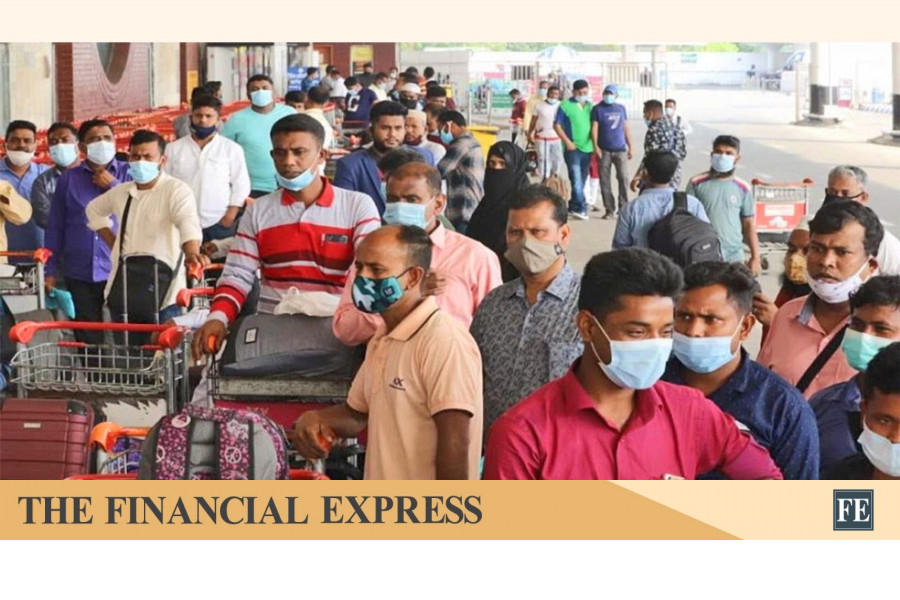
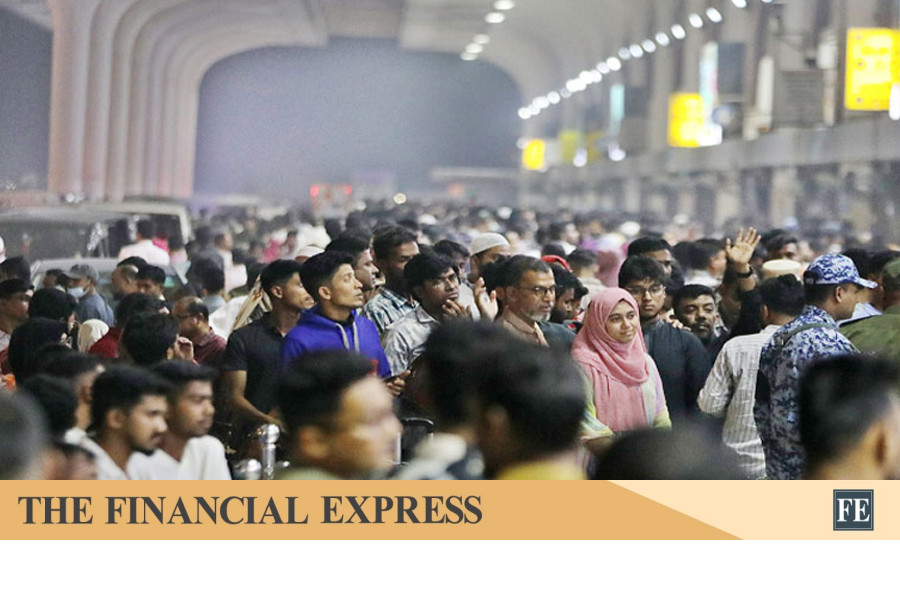
1770770469845.webp


The country continues to witness steady growth in outbound migration, accompanied with record-breaking remittance earnings. Yet behind the encouraging headline figures lies a significant blind spot: the absence of comprehensive data on returnee migrant workers. The lack of systematic information on how many migrants return, the reasons behind their return, and the extent of issues related to sickness, injury, or death creates a serious void in understanding the country's overall migration situation.

According to the International Organisation for Migration (IOM), Bangladesh is currently the sixth largest migrant-sending country in the world, with more than 11 million Bangladeshis working overseas. Migration has long been promoted as a pathway to employment, poverty reduction and foreign currency inflow. However, migrant rights organisations argue that this one-sided focus on outward flows and remittances overlooks a large and vulnerable group-migrants who return home under dismal circumstances. Despite their immense contribution to national development, returnee migrants receive limited policy attention and inadequate institutional support.

Official figures reflect the continued upward trend in overseas employment. Citing government data, the Refugee and Migratory Movements Research Unit (RMMRU) reported that outbound migration increased by 12 per cent in 2025, reaching 1.13 million workers, compared with 1.01 million in 2024. This surge translated into a historic US$32.82 billion in remittances in 2025, representing a 22 per cent rise from the previous year. These numbers are frequently highlighted by policymakers as evidence of the success of Bangladesh's labour migration strategy.

Yet, experts caution that these figures tell only part of the story. Shakirul Islam, chairperson of the Ovibashi Karmi Unnayan Programme (OKUP), argues that government negligence lies at the heart of the problem. He notes that while authorities celebrate the rising number of outbound migrants, they fail to monitor how many return prematurely after becoming victims of fraud, job mismatches, work permit rejections, health or fitness complications, workplace injuries, or even unnatural deaths. "If accurate data on returnees existed, the government would be compelled to expand services for them," he told the media. Referring to a 2024 study, he said that around 6.0 per cent of migrants returned home within the first three months of 2022 after failing to secure employment abroad. Alarmingly, he claims that the government remains largely unaware of this trend due to the absence of a robust tracking mechanism. According to him, Bangladesh's migration data is fundamentally "incomplete," and it is the responsibility of the state to ensure that all relevant data and documentation are updated and that due service was provided to migrant workers throughout the migration cycle, including after their return.

One of the most troubling aspects of Bangladesh's migration narrative is the high number of migrant deaths abroad. Each year, an estimated 4,000 to 5,000 bodies of migrant workers are repatriated. Data from the Wage Earners' Welfare Board (WEWB) show that in 2024 alone, a record 4,813 deceased migrants were returned to their families, up from 4,552 in 2023. Despite the scale of these deaths, many remain shrouded in mystery. In most cases, bodies do not undergo postmortem examinations upon arrival in Bangladesh, leaving families without clear answers and limiting the state's ability to investigate unsafe working conditions, employer negligence, or potential rights violations abroad.

Beyond deaths, the reasons for migrants' return remain poorly documented. At present, sporadic media reports appear to be the primary source of information on why workers come back. A 2023-24 study by OKUP found that 60 per cent of returnee migrants cited health-related issues as the main reason for their return. This highlights the physical and mental toll of overseas employment, often carried out in hazardous environments with limited access to healthcare.

Health data further underscore the vulnerability of returnee migrants. According to the Directorate General of Health Services (DGHS), about 15 per cent of newly diagnosed HIV-positive individuals in Bangladesh in 2024 were returnee migrants. This statistic points to serious gaps in health awareness, prevention, and screening mechanisms both before departure and after return, as well as the stigma and lack of support many returnees face once back home.

Despite the commendable contribution of migrant workers to Bangladesh's economy, the authorities concerned appear ill-equipped to develop a comprehensive database that captures all relevant aspects of migration. A holistic migration management system would require integrating data on recruitment, overseas employment conditions, return patterns, health outcomes, injuries, deaths, and reintegration challenges. Without such data, policy responses remain fragmented and reactive, leaving returnee migrants largely invisible.

Experts argue that addressing this gap is not merely a technical issue but a matter of rights and accountability. Migrant workers are often hailed as "remittance heroes," yet their struggles, particularly upon return, receive little recognition. Strengthening data collection, ensuring transparency, and expanding reintegration services would not only provide a clearer picture of Bangladesh's migration landscape but also honour the sacrifices made by millions of workers who sustain the economy through their labour abroad.

Ultimately, ensuring the sustainability of Bangladesh's migration-driven growth requires shifting the policy lens beyond departure figures and remittance volumes to the full migration cycle. Returnee migrants-whether they come back successful, unemployed, sick, injured, or deceased-are an integral part of this cycle and deserve institutional recognition and support. Developing a comprehensive, centralised database on return migration, strengthening coordination among relevant agencies, and investing in health screening, legal aid, and reintegration programmes are critical steps forward. Without addressing these gaps, Bangladesh risks overlooking the human cost behind its migration success story, undermining both the welfare of migrant workers and the long-term resilience of the sector that contributes so significantly to national development.​
 
Analyze

Analyze Post

Add your ideas here:
Highlight Cite Respond
  • Sad (0)
Reactions: Bilal9

Members Online

No members online now.

Latest Posts

Back
 
G
O
 
H
O
M
E