Home Watch Videos Wars

[🇧🇩] Monitoring Bangladesh's Economy

[🇧🇩] Monitoring Bangladesh's Economy
955
25K
More threads by Saif

G Bangladesh Defense

Bangladesh stock market: Analysing the challenges ahead

1733012518526.webp

FILE VISUAL: STAR

The Bangladesh stock (equity) market has experienced significant fluctuations since the 2010 market crash, reflecting a challenging macroeconomic and political environment. Analysing the post-crash period from 2011 onwards provides insights into the volatility and recovery patterns of the market.

In 2011, the market experienced a dramatic loss of 32.2 percent (total return), driven by a sharp capital loss of 36.6 percent following the speculative bubble that burst in late 2010. This was compounded by high inflation (10.7 percent), leading to a substantial negative real return of 42.9 percent. Investor confidence remained low in 2012, with a further decline in market returns (by 16.1 percent) and inflation staying elevated (8.7 percent), resulting in another negative real return of 24.9 percent.

However, the market began to stabilise from 2013 onwards. Although capital gains were modest at 4 percent, dividend yields provided some cushion, and total market return rose to 7.8 percent. With inflation beginning to taper (7.5 percent), the real return turned positive at 0.3 percent, signalling a tentative recovery. From 2014 to 2017, the market gradually improved, with total returns averaging around 15 percent per year. The highest total return during this period was 26.7 percent in 2017, despite inflation averaging around 5-7 percent, leading to consistent positive real returns.

A major setback occurred in 2018 when the market saw a loss of 10.8 percent (total return), coupled with inflation at 5.7 percent, resulting in a negative real return of 16.4 percent. This trend continued into 2019 as the market struggled to recover, with a further 13.1 percent decline in total return. The market showed a sharp recovery in 2020 and 2021, with total returns of 24.4 percent and 29.1 percent, respectively, as post-pandemic optimism boosted performance. However, high inflation and corporate-led corruption have led to a decline in 2022 and 2023, and in 2024 YTD, the market is down by 16.2 percent (capital loss), facing significant headwinds like macro instability, high inflation, and weak investor sentiment.

The overall post-crash analysis shows a pattern of recovery but is marked by periods of volatility, inflationary pressure, and ongoing political and economic risks.

The Bangladesh stock market typically rebounds after 2-3 consecutive years of correction, as historical patterns suggest. Based on past trends, one might expect a recovery in or by 2025. However, the current situation presents unique challenges, as the market's trajectory is increasingly intertwined with the country's macroeconomic conditions and political landscape. Given these dynamics, the projection for the next two years remains cautious. The Bangladesh stock market is poised to encounter substantial headwinds due to a confluence of macroeconomic and political uncertainties, which could significantly impact its performance. Below is a detailed analysis of the key challenges expected to shape market outcomes in the coming years. To provide a more comprehensive understanding, the article includes historical context that sheds light on the underlying causes of anxiety among minority investors in Bangladesh's stock market, ensuring these issues are neither overlooked nor ignored.

Bangladesh's stock market is under strain as high interest rates on government bonds (11-13 percent) pull institutional investors toward safer, risk-free returns, weakening liquidity and investor confidence. Rising inflation, projected to hover around 10 percent for at least the next two years, exacerbates economic instability by eroding consumer purchasing power and corporate profitability while also increasing borrowing costs. Additionally, declining foreign exchange (FX) reserves, driven by reduced export competitiveness, supply chain disruptions, and rising business costs, further undermine economic stability. The weakening taka adds to the strain, raising import prices, feeding inflation, and deterring foreign investment due to the risk of currency losses. Compounding these challenges is Bangladesh's rising foreign debt burden, which is becoming increasingly expensive to service due to the taka's depreciation, diverting resources away from critical development projects and infrastructure investments. Without effective fiscal management, investor confidence and stock market growth are likely to remain subdued.

High global interest rates, particularly in the US, are drawing investment flows away from emerging markets like Bangladesh. With US bonds offering safer, more attractive returns, foreign investors are less likely to invest in Bangladesh's stock market, exacerbating capital outflows. Additionally, capital flight driven by export-import manipulation and corruption in large project financing, involving major corporations like S Alam Group, Summit Group, and BEXIMCO Group, continues to deplete foreign exchange reserves. Hopes of recovering these siphoned funds are unrealistic, as they are often held in tax havens with little incentive to cooperate. This capital flight and lack of international legal recourse further weaken the country's economic stability and stock market performance.

Bangladesh's stock market faces significant challenges due to weak regulatory leadership, institutional failures, and unresolved margin loan issues. The Bangladesh Securities and Exchange Commission (BSEC) remains under scrutiny. Compounding these concerns, the Investment Corporation of Bangladesh (ICB), once a major stabilising force in the market, is now struggling under a portfolio of junk stocks and questionable investments.

Years of mismanagement and corruption, including dubious investments have left ICB in a weakened financial state, severely limiting its ability to intervene in market downturns. Moreover, the persistent issue of margin loans continues to burden financial institutions. Merchant banks and brokerage firms, plagued by bad debts from margin loans extended during previous market bubbles, are unable to provide fresh loans, stifling market liquidity. The total outstanding margin loans, including interest, have reached Tk 250 billion ($2 billion), with a significant portion in negative equity. Despite efforts to address these issues, powerful individuals with political and social connections have manipulated the system, obtaining unauthorised loans and evading accountability. Without decisive action from the BSEC and a comprehensive cleanup of financial institutions' balance sheets, Bangladesh's stock market will remain vulnerable, limiting its growth potential and undermining investor confidence.

Bangladesh's stock market is grappling with a significant lack of "smart capital," as wealthy investors and corporations either move funds abroad or hold back investments due to uncertainty. This absence of new, well-capitalised investors leaves the market dependent on a small group of players, increasing the risk of manipulation and volatility. Foreign investors, too, are deterred by poor transparency, particularly under the previous leadership of the BSEC, further stalling capital inflows. Additionally, tax policies provide little incentive for companies to list on the stock exchanges, with the tax differential between listed and non-listed firms being too narrow to justify the costs of going public. As a result, many well-established companies avoid the stock market, depriving it of the quality listings needed for growth and stability. Combined with the regulatory failures that allow debt-ridden companies to remain listed, these factors prevent the market from attracting both local and international long-term investors, ultimately stifling its development. Without reforms, the Bangladesh stock market will struggle to achieve sustainable growth and liquidity.

Given these challenges, a conservative investment strategy focusing on government bonds is advisable. Allocating 60-70 percent of funds to government bonds ensures capital preservation in uncertain times. Until a stable government is established and market conditions improve, focusing on low-risk investments is a prudent approach. It's important to remember that in a stormy sea, keeping your ship steady is far more vital than rushing toward the horizon. In such dangerous waters, ensuring your vessel stays afloat matters more than chasing quick profits.​
 
Analyze

Analyze Post

Add your ideas here:
Highlight Cite Fact Check Respond
  • Like (+1)
Reactions: Bilal9

Bangladesh on track for next IMF loans
Meets all conditions except for revenue target

1733012841704.webp


Bangladesh is on track to meet all 12 conditions set by the International Monetary Fund (IMF) to qualify for the fourth tranche of a $4.7 billion loan programme, only missing the revenue collection target.

This comes as an IMF mission, led by mission chief Chris Papadakis, is set to visit Bangladesh from December 3 to 17 to review the country's performance and compliance with structural reform conditions.

The team will meet with Finance Adviser Salehuddin Ahmed on December 3, finance ministry officials told The Daily Star.

During their stay, the IMF team will also hold meetings with officials from the Bangladesh Bank, the finance ministry, the power and energy ministry, the National Board of Revenue, and the Bangladesh Bureau of Statistics.

There are seven performance criteria for which the IMF has set specific floor or ceiling figures to be achieved by June 2024.

These conditions include net international reserves, budget deficit, accumulation of external payment arrears, reserve money, tax revenue, priority social spending, and capital investment undertaken by the government.

According to a finance division official, the government has met six of these conditions but failed to achieve the revenue collection target.

As per the IMF target, the government was supposed to collect Tk 394,530 crore in taxes by June.

Data from the Finance Division showed that the government collected Tk 369,209 crore by June, meaning it fell Tk 25,321 crore short of the IMF target.

Another major condition set by the IMF was to increase the country's net international reserves, which was fulfilled after the IMF lowered the required threshold in May this year upon request by the then government.

The initial target was $20.11 billion by June 30. However, the IMF lowered it to $14.79 billion later in May. As of June 30, Bangladesh had $16.7 billion net international reserves.

Bangladesh failed to fulfil this target for each previous instalment of the loan package.

The IMF's loan programme contains two types of conditions: seven linked to performance criteria and the remaining related to structural benchmarks.

Officials said Bangladesh was scheduled to meet five structural reform conditions out of 27 by June.

The IMF team will assess whether Bangladesh met these five conditions and will also review other structural reform conditions to be met at different times from September this year to December next year.

One of the structural reform conditions was the publication of an updated medium-term debt management strategy, covering FY25 to FY27. The finance ministry has already published it.

According to the publication, it is crucial for Bangladesh to move towards a unified debt management framework gradually to enhance the country's public debt management.

"Under this framework, all aspects of public debt management, from the issuance of treasury securities to the oversight of national savings certificates and external borrowing, among others, should be conducted under the Finance Division through an autonomous unit," it said.

Capacity development of the debt management unit in this regard will help to ensure better implementation of the debt strategy and maintain public debt on a sustainable trajectory, it added.

An official from the finance ministry said the report was formulated at the end of the previous government's tenure. The interim government or the next elected government may introduce changes.

Finance ministry officials said that other macroeconomic challenges, including inflation, subsidy reductions and reforms in revenue collection, would be discussed during the IMF team's visit.

The interim government will also share updates on steps taken to generate authentic statistics.

The total arrears of the government subsidy in the power, fertiliser, and energy sectors amounted to approximately Tk 60,000 crore at the end of June. Discussions with the IMF mission will prioritise how subsidies in these sectors can be reduced, according to the officials.

On top of the ongoing $4.7 billion programme, the government has already sought an additional $3 billion loan from the IMF.

An official from the Bangladesh Bank said this will be discussed in detail with the visiting IMF mission. To avail of that loan, the government, however, will be required to meet additional conditions set by the IMF.

Zahid Hussain, a former lead economist at the World Bank's Dhaka office, said the IMF's upper management is positive about providing additional loans.

"But specific conditions must be fulfilled by the government," he said.

These conditions could relate to the banking sector, tax policy, subsidy reductions, exchange rate management and more, he added.

Hussain said it is still unclear whether the new loan will be incorporated into the existing loan package or offered in a different form.

In the face of mounting pressure on its foreign reserves, Bangladesh sought IMF assistance at the end of 2022. The multilateral lender approved $4.7 billion in January 2023. Of that, the government has already received $2.3 billion in three tranches.​
 
Analyze

Analyze Post

Add your ideas here:
Highlight Cite Fact Check Respond
  • Like (+1)
Reactions: Bilal9

White paper on Bangladesh's economy likely on December 1
Staff Correspondent 01 December, 2024, 00:25

The white paper on the country’s economy will be submitted today highlighting how political driven data created the ‘villainous’ development narrative by the ousted Awami League regime.

Out of 23 topics — such as macro-economy, structural section, social sector planning, instable market, policy outlook, health, education and employment— ‘the villain of development narrative because of political driven data is very crucial’, said Debapriya Bhattacharya on Saturday.

Debapriya, head of the 12-memebr committee on formulating the much-talked-about paper, said they were going to meet the chief adviser at around 12:00pm.

Debapriya, also a distinguished fellow of the local think-tank Centre for Policy Dialogue, has already said that they would make the report public on Monday.

The interim government that assumed power on August 8, three days after deposed prime minister Shekh Hasina fled to India on August 5 amid a mas uprising, appointed the full committee on August 28 and asked it to submit the report in 90 days.

The members of the committee are professor AK Enamul Haque, dean, Faculty of Business and Economics, East West University, Ferdaus Ara Begum, chief executive officer of Business Initiative Leading Development, Imran Matin, executive director, BRAC Institute of Governance and Development at BRAC University, Kazi Iqbal, senior research fellow at Bangladesh Institute of Development Studies, M Tamim, a professor of Bangladesh University of Engineering and Technology, a former special assistant to the chief adviser (2008), Mohammad Abu Eusuf, a professor of the Department of Development Studies at the University of Dhaka, professor Mustafizur Rahman, a distinguished fellow at Centre for Policy Dialogue, Selim Raihan, a professor at the Department of Economics of the University of Dhaka and executive director, South Asian Network on Economic Modelling (SANEM), Sharmind Neelormi, a professor at the Department of Economics at Jahangirnagar University, Tasneem Arefa Siddiqui, a former professor of the Department of Political Science at the University of Dhaka and founding chair, Refugee and Migratory Movements Research Unit, and Zahid Hossain, a former lead economist at the World Bank.

A committee member while describing the concept of white paper said it is utilised by a new regime to fix new policies.​
 
Analyze

Analyze Post

Add your ideas here:
Highlight Cite Fact Check Respond
  • Like (+1)
Reactions: Bilal9

Remittance rises 14% in November
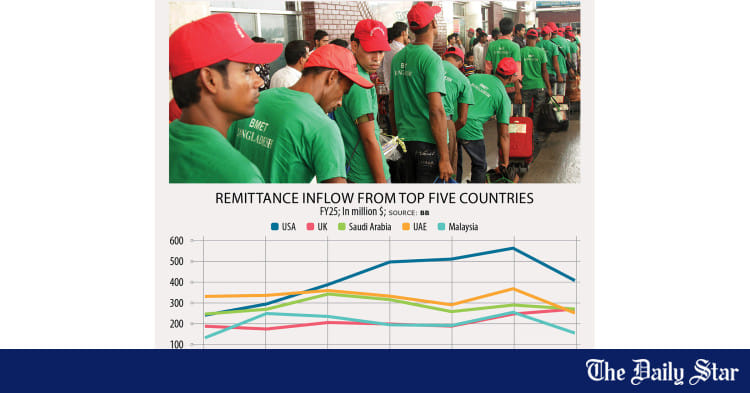
The amount of remittance sent home in November by Bangladeshis living abroad rose 14 percent year-on-year to $2.20 billion, showed Bangladesh Bank latest data.

Industry insiders said Bangladeshi expatriates have been continuously increasing the amount of remittance they have been sending to the country since August.

This upward trend of remittance inflow will create a breathing space and reduce pressure on foreign exchange reserves, they added.

However, November's inflow is 8.16 percent lower than that in October.

The upward trend of remittance inflow will create a breathing space and reduce pressure on forex reserves

Year-on-year, the inflow of remittance fell 3.2 percent in July and then increased 39 percent in August, 80 percent in September and 21 percent in October, data showed.

During the July-November period of this fiscal year, remittance earnings stood at $11.13 billion, up from $8.80 billion in the same period of last fiscal year, as per the central bank data.

In the first five months of this fiscal year, remittance inflow increased by 26.4 percent from the same period of last fiscal year.

Bankers said remittance inflow would increase further in the coming days, since Bangladeshi expatriates' capacity to send money has increased due to falling commodity prices on the global market.

In November, Islami Bank Bangladesh received the highest $360 million in remittance, Agrani Bank $288 million, Janata Bank $264 million, Rupali Bank $153 million, BRAC Bank $187 million and Sonali Bank $117 million, the BB data showed.

Mustafa K Mujeri, executive director of the Institute for Inclusive Finance and Development, recently told this newspaper that the continuous rise in remittance inflow was good news for the country.

However, he said the forex earnings were not enough considering the country's foreign payment obligations.

Remittance inflow and export earnings will have to increase further to mitigate the ongoing pressure on foreign exchange reserves, he said.

The economist recommended that the government focus on exporting skilled manpower to increase remittance earnings.

He also said authorities should find new markets and take initiatives to tackle hundi, an illegal and informal remittance instrument.

The country's foreign exchange reserves stood at $18.73 billion as of November 27, down from $19.51 billion on the same day last year, BB data showed.​
 
Analyze

Analyze Post

Add your ideas here:
Highlight Cite Fact Check Respond
  • Love (+3)
Reactions: Bilal9

Debt payment burden to intensify further

1733098027739.webp

Karnaphuli tunnel, built at a cost of around Tk 10,700 crore, has been earning less than its required maintenance expenses. Of the construction cost, the Exim Bank of China gave $705.80 million or Tk 5,913 crore with 2 percent interest and 0.20 percent service charge, while the Bangladesh government funded the rest. Photo: Star/file

A spike in the already-increasing debt servicing burden is imminent as the country's debt to gross domestic product (GDP) ratio remains far from growth-reducing thresholds, according to the white paper on the state of the economy.

The paper said debt distress can arise even at "low" levels when debt servicing competes for domestic and foreign currency amid a liquidity shortage.

"Inattention in policy and practice to value for money in decisions to borrow from domestic and external sources has been the Achilles heel of public debt management in Bangladesh in the last decade and a half," the paper said.

According to the paper, by the end of June this year, the total debt is estimated to have reached 41.3 percent of the GDP, up from 35.6 percent just two years ago.

The bulk of the $166.7 billion equivalent public and publicly guaranteed (PPG) debt at the end of FY23 was domestic debt denominated in local currency, which accounted for 55.6 percent of the PPG debt stock. In FY23, interest and amortisation on domestic debt totalled $19.4 billion, or 11.7 percent of the GDP.

According to the white paper, treasury bonds and bills, a majority of which are owned by banks, make up nearly half of the nation's debt. Less than one-fifth is owned by the Bangladesh Bank (BB), with non-bank financial institutions holding the remaining shares.

Around 23 percent of the total domestic debt is made up of National Saving Certificates (NSCs).

It said the trends in debt intensity appear much less comfortable, especially on metrics not contaminated by data fog.

According to the paper, external debt was 44.4 percent of the PPG debt stock and 17.7 percent of the GDP in FY23 compared to 15.1 percent in FY21.

External PPG debt is predominantly owed by the central government to multilateral and bilateral lenders, accounting for 52 percent and 34 percent respectively at the end of FY23.

The rest are short-term, sovereign bonds held by non-resident Bangladeshis and guaranteed state-owned enterprises' debt.

Private sector external debt stood at 5 percent of the GDP in FY23 and declined by another 7.5 percent by the end of June this year relative to the same point in time in 2023.

Total interest and amortisation related to external debt in FY23 amounted to $3.9 billion, or 0.9 percent of the GDP.

Regarding the reason for growing public debt, the white paper decried an overall sense of comfort among policymakers and multilateral institutions on the intensity of public debt.

This is rooted in two sets of facts.

First, including guarantees, PPG debt is lower in Bangladesh than in India, China, Thailand, and Vietnam, recent increases notwithstanding. Second, as before, a joint debt sustainability analysis (DSA) by the International Monetary Fund (IMF) and World Bank (WB) in June 2024 assessed that there was a "low risk of external and public debt distress".

The IMF-WB analysis found a baseline with 7 percent long-term average economic growth, primary budget deficits averaging 2.6 percent of the GDP, 5-6 percent inflation and stable exchange rates, it explained. The paper said such a happy conjunction of macroeconomic conditions is increasingly looking farfetched going into 2025.

Growth projections for the current year have already been drastically revised down to between 4 and 5 percent and the timing of projected recovery is highly uncertain, the white paper pointed out.

All other variables have moved in directions incongruent with the baseline. These include contingent liability, financial market, natural disaster and export shock.

However, the paper said the IMF-WB debt sustainability analysis is beginning to gather a reputation of often underestimating economic downturns, leading to delayed debt relief and hurriedly designed increases in austerity measures.

It also said it is not very assuring that a decline of long-term growth to 6.5 percent does not change external and overall debt risk ratings.

Fogs in the integrity of GDP data suggest maybe even 6.5 percent is no more than an upside risk and certainly not a downside risk as tagged in the Digital Security Act.

Bangladesh may never have exceeded 5 to 5.5 percent annual growth except in the volatile decade of the 70s, the white paper committee believes.

The reported rise in the extent of indebtedness could be understated and the favourability of debt dynamics overstated because of significantly rising upward bias in GDP growth and perhaps even the level of nominal GDP estimates.

Moreover, there is a limit to the extent to which favourable debt dynamics can reduce indebtedness in the face of large primary deficits or below the line adjustments, the latter often making a big difference.

Key factors weighing on Bangladesh's debt vulnerability are its growing exposure to foreign currency-denominated non-concessional debt for mega-projects, elevated refinancing risks, and low fiscal and external buffers.

Given doubts about the veracity of data on real GDP growth and nominal GDP levels, the external debt to foreign exchange earnings metric has better credibility.

It has also gained more currency as Bangladesh struggled to manage the recent crunch in foreign exchange liquidity, the white paper mentioned.

But the white paper committee suggested transformative debt management reforms would be needed to make a credible case for renegotiations supported by global lenders such as the IMF and the WB.​
 
Analyze

Analyze Post

Add your ideas here:
Highlight Cite Fact Check Respond
  • Sad (0)
Reactions: Bilal9

Posts you haven't read yet..

Members Online

No members online now.

Latest Posts

Back
 
G
O
 
H
O
M
E