โ˜• Support Us โ˜•
[๐Ÿ‡ง๐Ÿ‡ฉ] - Monitoring Bangladesh's Economy | Page 90 | PKDefense

[๐Ÿ‡ง๐Ÿ‡ฉ] Monitoring Bangladesh's Economy

Reply (Scroll)
Press space to scroll through posts
G Bangladesh Defense
[๐Ÿ‡ง๐Ÿ‡ฉ] Monitoring Bangladesh's Economy
893
23K
More threads by Saif

Remittances hit $2.93 billion in 28 days of December

UNB
Published :
Dec 30, 2025 00:03
Updated :
Dec 30, 2025 00:11

1767055737181.webp

The upward trend in remittances sent by expatriate Bangladeshis has continued in December, with receiving over US $ 2.93 billion in 28 days of the month.

Bangladesh received $15.97 billion inward remittance so far in the current fiscal year FY 2025-26.

According to the latest update from Bangladesh Bank, the $ 2.93 billion remittance in 28 days of December, is an increase by 21.3 percent compared to the same period last year. In December of the previous year (2024), the country received around $ 2.42 billion in 28 days of December.

The growth is attributed to several factors, including incentives offered for sending money through legal banking channels, increased encouragement for using the formal system, and the active role of exchange houses.

Remittance inflow has shown robust growth throughout the current fiscal year (FY 2025-26). From July 1 to December 28, 2025, the total remittance inflow reached $15.97 billion. This represents an increase of $2.42 billion compared to the same period in the previous fiscal year (FY 2024-25), when the total stood at $ 13.55 billion. The year-on-year growth rate for the fiscal year to date is 17.8 percent.

Following a significant jump in inward remittances this year, Bangladesh Bank has been actively purchasing dollars from commercial banks to maintain market stability and balance the supply-demand of foreign exchange.

Bangladesh Bank Executive Director and Spokesperson Arif Hossain Khan said that the central bank purchased $ 3.05 billion in the current fiscal year. As a result, the gross forex reserves crossed $32 billion so far.

As commercial banks face a surplus of dollars due to the remittance boom, the central bank has stepped in to prevent drastic fluctuations in the exchange rate.​
 
2025 brings calm to external balance sheet, not to businesses

1767057710032.webp


In 2025, some macroeconomic indicators improved, but the mood on the ground did not.

On the external front, the year opened on a stronger note. The country ends the year with record remittance inflows, a steadier foreign exchange market and rising dollar stocks. Together, they brought a welcome sense of relief to the country's external sector.

Stopping large-scale loan scams in the banking sector and easing the dollar shortage were among the interim government's major successes, said Mohammad Hatem, president of the Bangladesh Knitwear Manufacturers and Exporters Association (BKMEA).

There was also some bad news. While headline numbers showed improvement, the trade and business environment remained largely gloomy throughout the year.

Political uncertainty, weak law and order and high interest rates continued to weigh heavily on investor and business confidence.

According to the BKMEA leader, deteriorating law and order stood out as one of the major failures of the interim government, which was formed in August last year after the mass uprising toppled the Awami League regime.

REMITTANCES LEAD THE TURNAROUND

Following the uprising, remittance inflows started to rebound, with money sent home by expatriates emerging as the most decisive stabilising force of 2025.

Many attributed the surge to a renewed sense of patriotism among Bangladeshis abroad. A sharp decline in illegal money transfer channels such as hundi and hawala also played an important role.

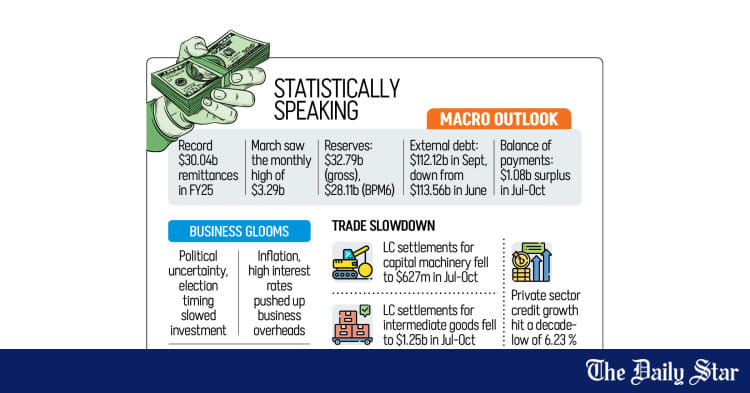
Bangladeshis living overseas sent home a record $30.04 billion in the fiscal year 2024-25, the highest amount ever received in a single fiscal year. The figure marked a 25.50 percent increase from $23.74 billion in FY24, according to Bangladesh Bank data.

Monthly inflows reached a historic high in March, when remittance receipts climbed to $3.29 billion. The surge improved liquidity in the banking system and eased pressure on the foreign exchange market.

FOREX STABILITY, RESERVE REBUILDING

Although the central bank introduced a market-based exchange rate regime in May, the foreign exchange market remained largely stable throughout the year.

Strong remittance inflows, slower import payments and steady export earnings supported the shift, which was required to meet conditions tied to an ongoing $4.7 billion loan programme by the International Monetary Fund (IMF).

Many had feared the taka would weaken further and that volatility would intensify under the new system. Those concerns did not materialise.

For most of the year, the exchange rate of the US dollar hovered around Tk 122, with the Bangladesh Bank intervening when the rate moved sharply above or below that level.

In the year, the central bank shifted from selling dollars to purchasing them from the interbank market to stabilise the exchange rate and rebuild reserves. Dollar purchases crossed $3 billion in the ongoing fiscal year.

Between FY21 and FY25, the Bangladesh Bank sold more than $25 billion from reserves to cover imports of fuel, fertiliser and food. Since the beginning of the current fiscal year, it has focused on rebuilding reserves as dollar inflows improved.

As of December 24, gross foreign exchange reserves stood at $32.79 billion, while reserves calculated under the IMF's BPM6 method amounted to $28.11 billion.

A year earlier, gross reserves were $24.94 billion. The central bank has set a target of raising reserves to $35 billion.

Improved forex liquidity also strengthened the country's external position.

The balance of payments recorded a surplus of $1.08 billion during the July-October period of the current fiscal year, compared with a deficit of $2.19 billion in the same period a year earlier. The financial account also moved into surplus.

By the end of September this year, external debt stood at $112.12 billion, down from $113.56 billion at the end of June, reflecting improved repayment capacity.

STILL BUSINESSES UNDER STRAIN

Despite relief on the external front, trade and business activity remained weak throughout 2025.

Political changeover in August last year and uncertainty surrounding the election timeline dampened investor confidence.

Many businesses postponed expansion plans and fresh investments amid unclear policy signals.

High borrowing costs added to the pressure. The central bank kept the policy rate at 10 percent, the highest among neighbouring economies, while lending rates rose to 16 percent to 17 percent, discouraging borrowing and investment.

Hatem said banks delayed back-to-back letters of credit in 2025, preventing industries from operating on schedule. Manufacturing units also faced inconsistent energy supplies.

The slowdown was reflected in trade data. During the July-October period of the current fiscal year, letter of credit settlements for capital machinery fell 10 percent year-on-year to $627 million.

Settlements for intermediate goods declined 19 percent to $1.25 billion.

Meanwhile, private sector credit growth stood at 6.23 percent in October, the lowest level in more than a decade, and remained on a downward trajectory throughout the year.

Business leaders said banks stayed cautious due to past loan scams and anomalies, while firms hesitated to borrow amid high interest rates and subdued demand.

WEAK LAW & ORDER, HIGH INFLATION HURT CONFIDENCE

Industry insiders said weak law and order in parts of the country disrupted supply chains, logistics and retail activity this year. They cited extortion, vandalism and rising operational risks.

The situation remained fragile throughout the year.

Several garment factories and industrial units owned by the Beximco Group, S Alam Group and Nassa Group shut down after their owners were jailed over loan scams.

Around 100 ready-made garment factories in Ashulia and Gazipur were also closed following labour unrest.

"One group of businesspeople looted the banks during the previous regime, and now good businesses are being forced to pay the price for it," Hatem commented.

High inflation added to the strain. With consumer prices hovering around 8 percent throughout the year, purchasing power weakened and demand for non-essential goods remained subdued.

Sales growth suffered, especially among small and medium enterprises and retail businesses.

Still, business leaders expressed optimism that the announcement of an election schedule, with national polls slated for February next year, could help restore confidence and bring greater policy clarity next year.​
 
A year of reform and resistance in the tax sector

1767143132803.webp


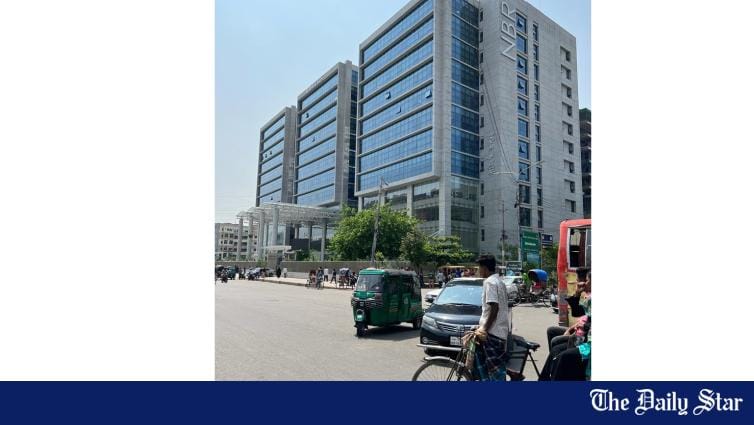
Protest, turmoil, and punishment -- these three words defined Bangladesh's revenue sector in 2025, a year marked by the split of the National Board of Revenue (NBR), a major source of government income.

Following a mass uprising in August last year, the interim government launched long-awaited reforms aimed at separating tax policy-making from tax administration to improve efficiency, accountability, and revenue collection.

A five-member advisory committee was first formed to guide the reforms. Although the committee submitted a report on restructuring the NBR, the government did not make it public.

In mid-May, a 'controversial' ordinance dissolved the NBR, dividing its functions into two new bodies: the Revenue Policy Division, responsible for drafting tax laws and handling treaties, and the Revenue Management Division, tasked with enforcement and collection.

The reform followed international best practices by separating policy from implementation and was linked to conditions under Bangladesh's International Monetary Fund (IMF) support programme.

The decision, however, faced strong opposition within the NBR. Officials and employees feared losing power, career uncertainty, and erosion of their cadre status.

Their main grievance was a provision allowing general administration cadre civil servants to lead the new divisions, potentially sidelining experienced revenue officers.

They claimed the reform was rushed and imposed with little consultation, turning a long-promised overhaul into a year of turmoil that severely disrupted tax administration and caused significant revenue losses.

In response, NBR staff formed the "NBR Reform Unity Council," demanding the repeal of the ordinance and the public release of the advisory committee's report.

The protests quickly spread nationwide, starting with pen-down work abstentions and escalating to phased shutdowns between May 14 and June 29. The unrest paralysed import and export operations and large segments of the revenue administration.

At one point, protesters also demanded the removal of NBR Chairman Md Abdur Rahman Khan.

To address the crisis, the government formed another advisory committee led by Energy Adviser Muhammad Fouzul Kabir Khan, which recommended amendments to the ordinance.

In September, the government revised the ordinance, allowing revenue officials to hold top and senior positions in the Revenue Policy Division.

At the same time, authorities cracked down on the protests with forced retirements, suspensions, transfers, and disciplinary notices, creating fear and bitterness within the institution.

Several officials -- including current members, commissioners, and the president and general secretary of the protesting platform -- faced punitive measures, while the Anti-Corruption Commission launched inquiries into leaders of the protests.

These actions not only slowed the revenue machinery but also increased frustration and discontent among staff.

By the end of the year, the revenue sector remained shaken, even though overall revenue collection had improved.

UNFINISHED REFORM PROPOSALS

When the ordinance was issued, the interim government abruptly dissolved the initial five-member advisory committee before it could submit its comprehensive report. A week later, a new nine-member National Taskforce on Tax Restructuring was formed, led by economist and Policy Research Institute (PRI) Chairman Zaidi Sattar.

The taskforce is tasked with recommending ways to raise the tax-to-GDP ratio and proposing short- and long-term policies for a business- and trade-friendly tax system that supports economic growth.

As of yesterday, the government has not yet completed the separation process, although Finance Adviser Salehuddin Ahmed said it would be done by the end of the year. NBR Chairman Md Abdur Rahman Khan added that the interim government aims to finalise the process during its tenure.

Economists and tax experts say the NBR conflict has revealed deeper structural weaknesses, stressing that political stability and clear policies are crucial to restoring confidence in the revenue system.

Towfiqul Islam Khan, additional research director at the Centre for Policy Dialogue, said, "The real challenge is not announcing reforms, but implementing them. We talk about reforms, but operationalisation is far from reality. Key issues remain unresolved, so implementation will inevitably take time."

He questioned claims that the reforms would be completed quickly, saying, "The claim that everything will be done by December is not credible."

Khan raised concerns about the transparency of the reform process. "A committee formed to guide the reforms was dissolved before submitting its final report, and the progress of another committee remains unclear," he said.

"The reform process is moving forward in a non-transparent manner, without accountability," he added.

Khan warned that the lack of political engagement could weaken the sustainability of the reforms and noted that internal disruptions within the revenue administration following the protests remain a serious issue.

As of November, the NBR is still short of its five-month target by Tk 23,000 crore. This comes at a time when Bangladesh's tax-to-GDP ratio remains low compared with regional standards, and the revenue system relies heavily on indirect taxes like VAT and import duties instead of broad-based direct taxes.

The next government, following national elections, will inherit a revenue authority facing internal dissent, ongoing institutional restructuring, and the broader challenge of meeting fiscal targets in a strained macroeconomic environment.​
 
Ending discretionary oversight: Why Bangladesh needs rule-based trade monitoring

1767143579562.webp

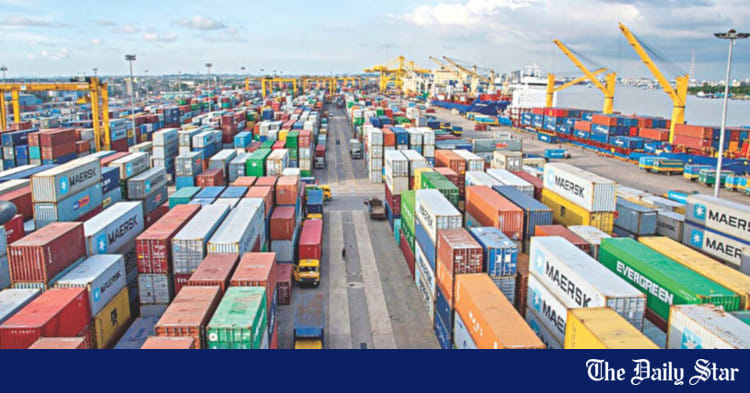
How effectively can a central bank detect misinvoicing using manual tools and human judgment alone? FILE PHOTO: STAR

The controversy surrounding under-invoicing surfaced as a flagship achievement of the Bangladesh Bank leadership during the previous regime. At that time, the central bank proudly declared that it had uncovered large-scale import mispricing, taking credit for identifying irregularities that were said to be draining foreign exchange from the economy. The narrative was simple: under-invoicing and over-invoicing were distorting the external account, encouraging capital flight, and weakening the local currency. The solution, it was claimed, lay in aggressive monitoring and strict interrogation of import declarations. That narrative, however, had broader economic implications that were not fully considered.

By mid-2022, the taka faced one of its most serious crises in decades. A confluence of global commodity shocks, supply chain disruptions, declining reserves, and domestic economic imbalances led to a sharp depreciation. In response, a wide range of administrative measures was introduced. Some were necessary, but many were reactive and lacked strategic coherence. Import monitoring became unusually intensive. Banks were required to submit detailed import information for transactions of $3 million or more, at least 24 hours before initiating imports. The central bank formed internal teams to scrutinise these submissions, examining declared prices against its own reference scales. Banks and importers were often summoned to justify deviations. What was presented as regulatory oversight gradually became, in many eyes, an intimidating process.

As per industry insiders, officials of the central bank tasked with identifying mispricing often took a confrontational approach. Commercial bank officials were repeatedly asked to explain price differentials for thousands of items, even though international prices regularly fluctuate due to shipment conditions, contract terms, trade credit arrangements, insurance costs, and quality differences. The importers, too, felt they were being treated as suspects rather than stakeholders in trade facilitation. In an environment where businesses were already struggling with uncertain exchange rates and shortages of foreign currency, the added burden only compounded difficulties for importers.

The stated goal was noble: to detect and curb misinvoicing. In theory, misinvoicing is a reality in many developing economies. It can distort national statistics, leak foreign exchange, and provide avenues for illicit financial flows. Yet the question remains: how effectively can a central bank detect misinvoicing using manual tools and human judgment alone? Modern practice suggests that a rule-based, data-driven, and technology-enabled approach is essential. Bangladesh, however, was attempting to detect complex trade mispricing through methods that are inherently subjective and prone to inconsistencies.

After the regime change, businesses expected a shift away from the earlier confrontational style. The new governor held meetings with major commodity importers. They pointed out that the old system of price verification was still very much alive, with teams continuing to call banks and importers for explanations, as per the media. They argued that such regulatory behaviour was not only impractical but also unfair. Global commodity markets move daily, sometimes hourly. Freight charges change by season. Supplier terms differ across countries. Without access to high-quality global price databases, real-time analytics, and properly trained investigators, none of these variances can be accurately interpreted. The governor reportedly assured importers that the process would be simplified. Yet businesses claim the same informal interrogations continue. This suggests that institutional culture, once established, does not change automaticallyโ€”it must be replaced with a rules-based framework that restricts individual discretion.

The broader question is whether misinvoicing can realistically be detected by a central bank through ex-ante document review. Theoretically, yes. Many global institutions use sophisticated tools such as trade-pricing databases, automated red-flag systems, machine learning models, and cross-border information exchange. But the operative word is "sophisticated." Without proper digital infrastructure, experienced analysts, and well-implemented trade-data interfaces, price verification risks becoming arbitrary. It may capture unusual cases, but more often it produces false alarms, leading to unnecessary harassment.

A central bank's core role is to maintain monetary and financial stability. It is not designed to be an investigative agency policing every invoice that enters the country. When it attempts to take on tasks without proper institutional tools, the result is inefficiency and erosion of trustโ€”both in the banking system and in the wider regulatory framework. No major economy conducts invoice-level policing as a routine practice. Instead, they rely on risk-based compliance systems, automated data triangulation, and post-transaction audit trails. Bangladesh must move in the same direction.

The case for a rule-based approach is strong. First, it eliminates discretion. When rules are clearly defined and automated systems flag anomalies based strictly on data, the scope for subjective interpretation diminishes. Businesses get clarity. Banks realise the limits of their obligations. Regulators reduce the risk of bias or allegations of undue pressure. Second, rules minimise operational burden. Millions of import documents enter the system every year. No central bank team, however large, can manually examine each one. A system that automatically compares declared values with global indices and identifies deviations beyond a predefined margin can process information without human fatigue.

Third, rule-based systems enhance credibility. Investors and global institutions view predictable regulatory environments favourably. When decisions appear personal, unpredictable, or discretionary, confidence erodes. This affects investment flows, trade credit, and the overall business climate. Fourth, rule-based oversight supports economic efficiency. When businesses spend excessive time responding to regulatory queries, operational costs increase. Imports are delayed. Supply chains slow down. In critical sectors such as food, energy, and industrial inputs, even a short delay can translate into shortages or price spikes in the domestic market.

There is also an important governance dimension. Harassmentโ€”perceived or realโ€”undermines institutional image. It creates a fear-driven culture of compliance instead of a trust-based one. Regulators should encourage voluntary compliance rather than create a climate where businesses feel compelled to defend themselves against accusations not backed by evidence. Central bank officials cannot rely on "gut feeling" to accuse an importer of mispricing. They must rely on structured data, documented analysis, and internationally recognised methodologies.

To transition towards such a system, Bangladesh needs several reforms. First, the introduction of a global price reference database linked to customs, port authorities, banks, and the central bank. Systems such as UN Comtrade, the International Trade Centre's Market Price Information, and global commodity index feeds can be integrated with domestic trade records. This would allow automated comparison of declared values with worldwide benchmarks adjusted for freight, insurance, quality, and market volatility.

Second, a digital trade-data platform is essential. All banks should be connected to a central trade monitoring hub where import declarations, letters of credit (LCs), shipping documents, and customs declarations are automatically compared. Any irregularities can be flagged digitally, allowing regulators to focus only on high-risk cases.

Third, a post-transaction risk-based audit framework should replace pre-transaction interrogation. This aligns with global best practice. Instead of stopping transactions before they occur, the central bank can review a sample of completed transactions using a scoring model. Only those that show strong red flags should trigger detailed inquiries. This would eliminate the need for importers to justify prices for every single deal.

Fourth, the central bank's investigative role should be clearly delimited. Customs authorities, tax agencies, and financial intelligence units already have mandates for detecting illicit activities. Overlapping responsibilities create confusion and compliance fatigue. The central bank should confine its oversight to areas directly related to foreign exchange regulations and banking operations.

Finally, accountability mechanisms must be strengthened. If businesses face undue harassment, there should be an appeal process. Independent review committees can examine disputes, ensuring fairness and transparency. A regulator must itself be subject to rules. Institutions, not individuals, should govern.

The current governor's willingness to engage with importers is a positive signal. Dialogue is essential, but reforms must reflect structural changes rather than policy statements alone. Bangladesh's external sector is gradually stabilising after the 2022 shock. Foreign exchange liquidity has improved. Import payment backlogs have normalised. This is the right moment to modernise regulatory processes and eliminate outdated practices. A central bank should inspire confidence, not fear. Businesses should feel protected, not threatened.

The ghost of the past regulatory regime should not overshadow present progress. Legacy practices survive when they are not formally replaced. That is why Bangladesh must adopt a forward-looking regulatory philosophy: rule-based, technology-enabled, and supportive of trade competitiveness. A country aspiring to become a trillion dollar economy cannot afford to operate with manual, subjective, or personality-driven oversight. It needs strong institutions delivering predictable outcomes. Oversight must be firm but fair. For Bangladesh to build a resilient external sector, regulatory modernisation is not optionalโ€”it is imperative.

Tashzid Reza works in a trade finance company operating as a liaison office in Bangladesh.​
 

Members Online

Latest Posts

Latest Posts