New Tweets

[๐Ÿ‡ง๐Ÿ‡ฉ] Overseas Marine Shipping

G Bangladesh Defense
[๐Ÿ‡ง๐Ÿ‡ฉ] Overseas Marine Shipping
13
1K
More threads by Bilal9

For the first time, Bangladesh Shipping Corp to buy two vessels using Tk900cr of its own funds​


Infograph: TBS

Infograph: TBS

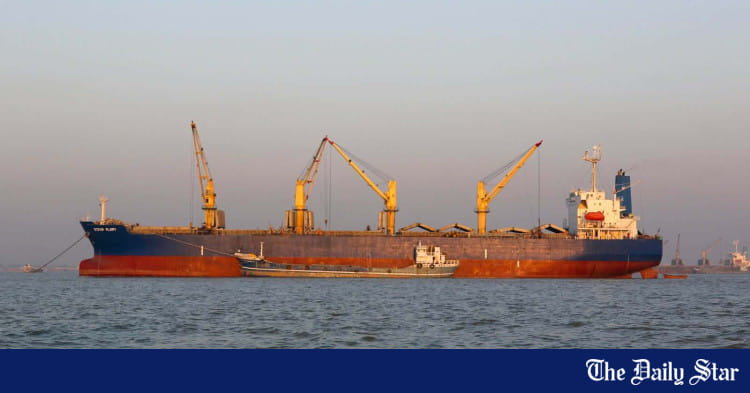
In a strategic move to grow its presence in the shipping sector and boost government revenue income, Bangladesh Shipping Corporation (BSC) will, for the first time, purchase two new ocean-going vessels entirely with its own funds, investing approximately Tk900 crore.

With the purchase of two new ships expected by August or September this year, the state-owned ocean-going vessel company's fleet will grow to seven vessels. Officials say efforts to procure four more ships with government assistance are currently underway.

To procure the two vessels, BSC floated an international tender on 4 June, seeking expressions of interest from potential bidders, with submissions due by 16 July. The selected bidders must deliver the vessels within six months of the tender award.

BSC Managing Director Commodore Mahmudul Malek told TBS, "We have assessed various financing options and concluded that investing in ships is more viable than keeping funds in fixed deposits. We expect over a dozen international bidders to participate."

"We hope that the new bulk carriers will join our fleet by September this year," he added.

Officials said the decision to procure the two ships was made last October at the corporation's annual board of directors meeting, driven by growing demand in the global shipping industry and the aim to expand its footprint.


The two bulk carriers, each with a capacity of 55,000 to 66,000 tonnes and an estimated combined cost of Tk850 to Tk950 crore, will be procured from China. These vessels are built using equipment from Japan and European countries.

This fleet expansion comes nearly six years after the last one in 2018 and 2019, when six ships were acquired with foreign assistance under a government-to-government (G2G) agreement from China, with a total investment of around Tk1,500 crore.

Established in 1972, just months after the country's independence, Bangladesh Shipping Corporation achieved record revenue and profit in the 2023-24 fiscal year since its inception, operating its existing five ocean-going vessels amid significant hikes in chartering fares in the shipping industry.

Why purchase new vessels

BSC's fleet expansion plan aims to enhance government revenue through higher profits and support foreign currency earnings.

The project also intends to meet the country's commercial shipping demands, improve BSC's profitability, strengthen national food security, and develop maritime infrastructure in line with the "Blue Economy."

It will further aid the government in generating significant revenue from port charges, registration, repairs, insurance, taxes, and other fees associated with ship operations.

The plan to acquire two modern bulk carrier ships will raise BSC's cargo capacity by 1.2 million tonnes annually and increase annual profits by about Tk190 crore, contributing substantial tax and dividend revenue to the government.

Overall, the state-owned corporation aims to grow its fleet capacity by over 50%, secure at least $10 million annually in foreign exchange savings and earnings, and establish a maritime logistics hub with ship repair and maintenance facilities near the port.

A journey from collapse to comeback

Established on 5 February 1972, BSC launched commercial operations just four months later with the MV Banglar Doot.

Over time, its fleet expanded to 44 ships, with 25 operating simultaneously at its peak. However, years of mismanagement and financial losses brought the corporation to the brink of bankruptcy.

By 2018, after selling off aged and unfit vessels, the fleet was reduced to just two ships. Later that year and in 2019, six new vessels were acquired with Chinese government financing worth Tk1,843 crore, raising the fleet to eight.

However, that growth faced setbacks. The MV Banglar Samriddhi was abandoned after a Russian rocket attack at Ukraine's Olvia port in March 2022, reducing the fleet to seven. Then, in October 2023, two ageing oil tankers โ€” MT Banglar Sourav and MT Banglar Jyoti โ€” were severely damaged in fires and subsequently scrapped for Tk 55 crore, cutting the fleet back to five ships.

Now, with the upcoming procurement of two new bulk carriers, BSC aims to rebound and expand its fleet to seven ships by the end of this year.

Officials said the move is not only a strategic investment but also a symbolic shift in BSC's operational approach โ€” highlighting self-reliance, financial planning, and an intent to reestablish Bangladesh's presence in the global maritime trade.
 
Analyze

Analyze Post

Add your ideas here:
Highlight Cite Respond

Bangladeshโ€™s flag belongs on the worldโ€™s shipping lanes


1766108352295.webp

The Bangladeshi flag appears rarely on global shipping lanes, relegated to coastal vessels and a small group of domestic operators. PHOTO: RAJIB RAIHAN

Bangladesh is a maritime nation by location, heritage and workforce, yet its maritime policy remains anchored to a framework designed for another era. While nearly 90 percent of global trade moves by sea, Bangladesh continues to operate a closed ship registry that restricts foreign participation and limits the growth of national tonnage. In contrast, countries with fewer natural advantagesโ€”Panama, Liberia and the Marshall Islandsโ€”have turned their registries into global economic and strategic assets. Bangladesh's registry, by comparison, remains small and inward-looking, with only 95 vessels flying the national flag as of 2023. For a country with a 700-kilometre coastline, established marine academies, and one of the world's largest ship-recycling industries, this marginal presence on global shipping lanes is not inevitable. It is the result of policy choices and a condition that can be changed.

At the heart of the matter lies a legal and structural constraint: under the Merchant Shipping Ordinance of 1983, only ships with majority ownership held by Bangladeshi entities may register under the national flag. This rule, a vestige of protectionist thinking, has inadvertently weakened the very capacity it was meant to preserve. Local shipowners often bypass the Bangladeshi flag entirely, choosing instead to register in Panama, Malta, or the Cook Islands, where taxes are lower, documentation is minimal and global service networks operate round the clock. Foreign owners, who control the overwhelming majority of world tonnage, have no pathway to register in Bangladesh even if they wished to. As a result, our flag appears rarely on global shipping lanes, relegated to coastal vessels and a small group of domestic operators. The consequences are severe: lost revenue and visibility, diminished diplomatic influence at the International Maritime Organization, and perhaps most painfully, lost opportunities for Bangladeshi seafarers.

It is here that the crisis becomes personal. Bangladesh produces a large number of competent maritime cadets each yearโ€”young men and women who complete rigorous academic programmes and meet international standards. Yet many of them cannot obtain the mandatory sea time required to qualify as officers because the national fleet is too small to accommodate them. This mismatch between talent and opportunity causes thousands of cadets to remain unemployed or underemployed, even though global shipping periodically faces shortages of trained officers. Bangladesh has yet to solve this issue because it lacks the tonnage necessary to anchor a sustainable pipeline of maritime employment.

A path forward exists, and it is both practical and proven. Bangladesh can establish an international open ship registry under a public-private partnership model, allowing foreign-owned vessels to register under the Bangladeshi flag while maintaining strong regulatory oversight. Under such an arrangement, the state retains sovereignty, legal authority, and control over standards, while a private partnerโ€”typically an experienced international registry operatorโ€”handles marketing, global customer service, digital certification, and compliance support. This structure mirrors the Liberia registry, the Marshall Islands registry, and the modern Panamanian model. It is efficient, profitable, and globally accepted. Most importantly, it is fast. Rather than spending decades building overseas offices, technical capacity and marketing channels, Bangladesh could leapfrog directly into the global registry market by leveraging a partner with existing infrastructure.

But revenue, while important, is not the primary motivation for such reform. The strongest national interest lies elsewhere: expanding employment and training opportunities for Bangladeshi cadets and officers. When a country operates a substantial fleet under its own flagโ€”whether domestically owned or foreign-owned, it gains leverage to require or incentivise shipowners to employ its citizens. India has understood this better than perhaps any other country in the region. In 2025, MSC, the world's largest container carrier, agreed to re-flag 12 vessels to the Indian registry following high-level discussions in New Delhi. This outcome did not occur by chance. India tightened cabotage rules, reformed its merchant shipping law, offered targeted incentives for Indian-flagged vessels and used its vast domestic cargo base to make Indian registration commercially attractive. The results were immediate: more ships under the flag and more jobs for Indian seafarers.

That initiative marked only the beginning. India has since announced an ambitious target to re-flag at least 300 foreign-owned ships by 2030. This drive is part of a broader strategic visionโ€”to reduce the country's massive annual freight bill, enhance logistical resilience, strengthen its maritime industrial base and position itself as a global supplier of seafarers. Above all, it seeks to create employment for its maritime workforce. Re-flagging is viewed not as a narrow fiscal instrument, but as a national development strategy. Through tax incentives at Gujarat International Finance Tec (GIFT) City, simplified digital registration, broader ownership eligibility, bareboat charter registration and favourable cargo policies, India has made its flag commercially compelling. The lesson for Bangladesh is not about scale, but about intent: a nation that controls more tonnage creates more opportunities for its people.

For Bangladesh, a modern, well-regulated international ship registry would generate revenue, enhance global stature and expand maritime services, but its most meaningful contribution would be resolving the long-standing bottleneck in cadet training and officer progression. By embedding seafarer employment requirements into the registry frameworkโ€”through mandatory cadet berths, officer development quotas, financial incentives or reduced fees for compliant vesselsโ€”Bangladesh can convert each newly registered ship into a training platform. Liberia, Cyprus and the Marshall Islands already employ such mechanisms, and they work.

Critics often argue that open registries primarily benefit foreign shipowners. They misunderstand the nature of the modern registry business. It is not about subsidising trade; it is about exporting a sovereign serviceโ€”legal order, regulatory reliability and compliance infrastructure. Panama and Singapore have demonstrated how such models can strengthen national capacity rather than dilute it. The greater risk lies in inaction. Maintaining a closed, outdated system means forfeiting revenue, influence and human capital while neighbours move ahead. We cannot afford to remain a spectator.

To move forward, a political endorsement is essential. An international registry must be treated not as a bureaucratic extension but as a core pillar of the country's Blue Economy strategy. Legislative reform should allow dual registries: a closed national registry for domestic vessels and an open international registry for foreign-owned ships. A transparent and competitive tender should select an experienced global registry operator to manage day-to-day operations under state supervision. Compliance must be strict, with recognised classification societies authorised to inspect and certify vessels on Bangladesh's behalf. Digitalisation must be mandatory, ensuring fast, paperless and globally accessible services.

Bangladesh's maritime future does not depend on building more ships; it depends on building smarter policy. With a well-structured, PPP-run international ship registry, Bangladesh can honour its past while claiming its place in the future. The Bangladeshi flag can fly across the worldโ€”not as a flag of convenience, but as a flag of confidence, capability, and national aspiration.

Ahamedul Karim Chowdhury is adjunct faculty at Bangladesh Maritime University and former head of the Kamalapur Inland Container Depot and the Pangaon Inland Container Terminal under Chittagong Port Authority.​
 
Analyze

Analyze Post

Add your ideas here:
Highlight Cite Respond

Short-term profit should not drive our shipping policy

1766798877822.webp

Shipping ambition must be guided by prudence, not momentum-driven commitments. FILE PHOTO: RAJIB RAIHAN

Recently, Bangladesh Shipping Corporation (BSC) has reported its highest net profit in 54 years, an achievement that has understandably generated optimism among policymakers and maritime stakeholders. After decades of operating largely at a loss, the corporation's return to profitability feels like a long-awaited vindication. Riding on this momentum, the government has signalled its intention to procure new vessels for BSC, with the stated goals of carrying more national cargo, saving foreign exchange, and creating seafaring jobs.

While these objectives are valid and important, the policy direction chosen to achieve them deserves careful scrutiny. Shipping is one of the most volatile and capital-intensive industries in the global economy. Decisions taken during a cyclical upswing can lock a country into long-term financial and operational risks long after favourable market conditions have faded.

BSC's recent profit, though welcome, must be seen in its proper context. Global freight rates surged unusually in the aftermath of the pandemic due to supply chain disruptions, port congestion, and vessel shortages. This exceptional market environment benefited shipowners worldwide, not just BSC. In Bangladesh's case, part of the reported profit also stemmed from one-off factors rather than recurring operational efficiency. A single profitable year, particularly after more than five decades of losses, does not automatically indicate a structural turnaround or long-term competitiveness.

Shipping history offers sobering lessons. Freight markets are cyclical by nature. Periods of high earnings are often followed by sharp downturns, during which revenues fall rapidly while fixed costsโ€”loan repayments, crew wages, insurance, and maintenanceโ€”remain unchanged. Even globally renowned shipping companies, backed by modern fleets and professional management, have gone bankrupt when market cycles turned against them. Publicly funded shipping ventures are especially vulnerable because their losses ultimately fall on taxpayers.

Over the past three decades, most developed maritime nations have drawn clear conclusions from these realities. Governments gradually stepped away from owning and operating commercial shipping lines, not due to ideological preference, but because state ownership proved ill-suited to an industry that demands speed, flexibility, and ruthless cost discipline. Former national flag carriers in Europe and Asia were privatised, merged, or allowed to be acquired by larger private operators once it became clear that emotional attachment to national ownership could not outweigh commercial logic.

Bangladesh's own maritime trajectory reinforces this global lesson. The country already has a growing private shipping sector operating dozens of ocean-going vessels without sovereign guarantees or exclusive cargo privileges. Several private groups today operate fleets far larger than BSC's, demonstrating that local entrepreneurship, when given policy stability and market access, can compete internationally. Expanding state ownership risks crowding out this private capacity rather than complementing it.

There is also a structural concern about market distortion. When government cargo or regulatory advantages are reserved for a state-owned entity, private investment incentives weaken. Such policies also do not encourage competition and efficiency, undermining the very national capacity policymakers seek to build.

One of the most frequently cited justifications for expanding BSC's fleet is the need to create jobs for Bangladeshi seafarers. This concern is genuine, but purchasing ships is neither the most efficient nor the most scalable solution. Each vessel creates a limited number of onboard positions while requiring enormous capital outlay. Meanwhile, thousands of maritime graduates struggle to secure practical sea time not because global opportunities are absent, but because structured pathways to international employment remain weak. As I have argued in a previous article, the core challenge lies in training quality, international accreditation, and placement mechanismsโ€”not in the number of state-owned ships.

Countries such as the Philippines became global leaders in seafarer employment without owning a large national merchant fleet. They invested instead in internationally trusted training systems and global placement networks, enabling their mariners to serve across the world's commercial fleets. Bangladesh could follow a similar path, generating foreign exchange and employment at a fraction of the cost of buying ships.

Another overlooked risk is the long-term financial burden of fleet ownership. Ships depreciate, require periodic dry-docking, and eventually must be replaced. These costs do not pause during market downturn. If freight rates decline or operational inefficiencies emerge, BSC may find itself unable to service debt without renewed government support. Bangladesh's experience with other state-owned enterprises should caution against assuming that shipping will be different.

A more sustainable vision for maritime strength lies in policy reform rather than asset accumulation. As I have argued in another article published in this daily, expanding Bangladesh's presence through an internationally competitive registry and public-private partnership model could deliver broader benefits than state ownership alone.

Many of the world's most successful maritime nations generate revenue, jobs, and influence by hosting ships under their flag rather than owning them outright. Such models allow governments to regulate standards, earn income, and promote national seafarer employment without bearing full commercial risk.

Bangladesh is also investing heavily in ports, logistics corridors, and energy infrastructure. These assets can anchor a strong maritime ecosystem if supported by the right policies. A competitive port system, efficient customs processes, access to ship finance, and skilled human capital will attract shipping activity far more reliably than a state-owned fleet operating in isolation.

None of this suggests that BSC has no role to play. The corporation can serve as a strategic participant, a benchmark for standards, or a partner in specific national interests. But expansion should be cautious, phased, and firmly grounded in commercial viability rather than short-term profitability. Any further fleet growth should be accompanied by strict governance reforms, transparent performance benchmarks, and a clear exit strategy if market conditions turn unfavourable.

Shipping ambition must be guided by prudence. Profits earned during exceptional market conditions should prompt strategic reflection, not momentum-driven commitments. Public investment decisions in shipping are not easily reversible, and mistakes can linger for decades.

Bangladesh's maritime future will be strongest if it is built on competitiveness, private sector vitality, and globally employable human capital. One profitable year is worth celebrating, yes, but it should not decide the country's shipping destiny.

Ahamedul Karim Chowdhury is adjunct faculty at Bangladesh Maritime University and former head of the Kamalapur Inland Container Depot (ICD) and the Pangaon Inland Container Terminal under Chittagong Port Authority.​
 
Analyze

Analyze Post

Add your ideas here:
Highlight Cite Respond
Bangladesh Shipping Corporation (BSC) is embarking on a major plan to buy 22 new mother vessels worth around Tk 10,000 crore (approx. $850 million) from South Korea and China over the next five years to boost national control over seaborne trade, reduce reliance on foreign ships, conserve foreign currency, and create jobs for seafarers. This ambitious acquisition aims to significantly increase the share of Bangladeshi-flagged vessels, which currently handle only 11-12% of the nation's trade, moving towards international standards of around 40%.

Key Details of the Plan:
  • Quantity: 22 new mother vessels (large container ships).​
  • Cost: Approximately Tk 10,000 crore.​
  • Funding: A mix of BSC's own funds and government-to-government (G2G) deals, primarily with South Korea and China.​
  • Timeline: Implementation expected over the next five years.​
Why This Matters for Bangladesh:
  • Economic Control: Strengthens Bangladesh's grip on its import-export logistics.​
  • Currency Savings: Reduces the outflow of foreign currency spent on foreign carriers.​
  • Job Creation: Creates opportunities for local seafarers through employment and training.​
  • Trade Efficiency: Improves the competitiveness and efficiency of national trade operations.​
  • Revitalizing BSC: A strategic move to restore the state-owned carrier's significance after fleet decline.​
Current Situation:
  • Bangladesh currently relies heavily on foreign vessels, with domestic carriers handling a small fraction of trade.​
  • BSC's fleet has dwindled to just six ships, highlighting the urgent need for expansion.​

This project signifies a major strategic push for Bangladesh to enhance its maritime capabilities and self-reliance in global shipping.​
 
Analyze

Analyze Post

Add your ideas here:
Highlight Cite Respond
Chittagong port is a shallow draft port in Bangladesh and handled 3.4 Million TEUs of container traffic in 2025. Over 75% of jetty expansion at Chittagong is not yet done and in two more years will handle in excess of 7 Million TEUs once three more terminals and their jetties are activated. Mongla, Bangladesh' second container port - handled another Half Million TEUs and will be growing manifold in capacity with equipment currently being installed.
Compared to Bangladesh here are the Indian East Coast port TEU's.
Port of Chennai Tamil Nadu ......................1.5 million TEUs
V. O. Chidambaranar Port Tamil Nadu 1.2 million TEUs
Port of Visakhapatnam Andhra Pradesh 1.0 million TEUs
Port of Kolkata West Bengal .................0.8 million TEUs
 
Last edited:
Analyze

Analyze Post

Add your ideas here:
Highlight Cite Respond

Bangladesh Shipping Corporation (BSC) to expand its fleet with 6 new container ships​


16 more ships to join by 2030​

Photo: Collected

Photo: Collected

  • Total cost of the project Tk3,836.83cr
  • 92% cost will be financed through external debt
  • The 6 new ships to transport 6 lakh TEUs annually

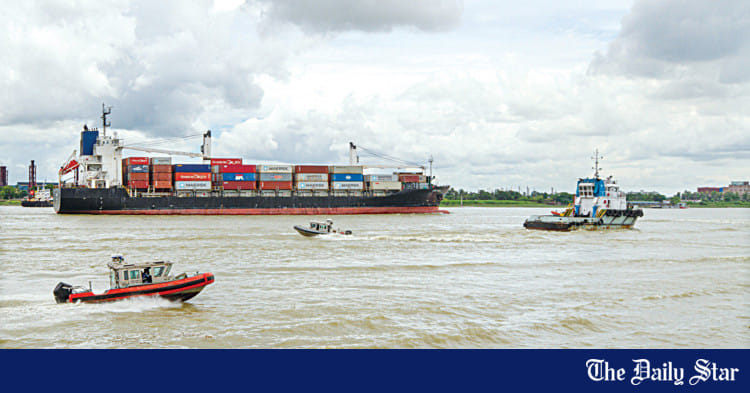
As part of expanding its container ship fleet, Bangladesh Shipping Corporation (BSC) has initiated the process of purchasing six modern container ships from South Korea in the next two to three years.

With these six container ships, BSC plans to add 16 additional ships to its fleet by 2030, a move expected to bring a revolutionary change to the country's maritime trade sector, according to shipping experts.

According to the corporation, while BSC has operated oil and bulk cargo vessels, it currently has no container ships in its fleet. The addition of six new container vessels will mark a significant development for the state-run institution in maritime cargo transport.

Commodore Mahmudul Malek, managing director of BSC, told The Business Standard, "Six container ships are being procured at a cost of Tk3,800 crore from two shipyards in Korea. South Korea's EXIM Bank will provide a Tk3,500 crore loan for the project, while the remaining Tk300 crore will be funded by the Bangladesh government."

He added, "If everything goes as planned, these vessels are expected to join BSC's fleet by 2027 or 2028. The new ships will have a capacity of 2,500 to 2,800 TEUs (twenty-foot equivalent units) with a draft of approximately 9.8 meters.

"If everything goes as planned, these vessels are expected to join BSC's fleet by 2027 or 2028. The new ships will have a capacity of 2,500 to 2,800 TEUs with a draft of approximately 9.8 metres"

Commodore Mahmudul Malek, managing director of Bangladesh Shipping Corporation

"These six new container ships will operate between Chattogram Port and transshipment ports. According to the plan, the ships will run on routes to Singapore, Malaysia's Port Klang, and Tanjung Pelepas. Also, they may also be used for chartering on international routes."

The shipping corporation expects these vessels to transport around 6 lakh TEUs of containerised cargo annually, saving significant foreign currency.

Revenue and operating costs

According to the project proposal, the estimated annual income from these six vessels is Tk2,261.15 crore, while the annual operating cost will be Tk1,215.11 crore.

The total cost of the project, including bank charges, vessel registration, buyer's surveyor's fees, tax, VAT, and logistics, is estimated at Tk3,836.83 crore ($358.58 million), with about 92% of the cost being financed through external debt.


The BSC managing director also said, "In addition to the six container ships, BSC plans to acquire 16 more vessels by 2030, including bulk carriers and other types of ships. Discussions are ongoing with China and Korea regarding the procurement of these vessels."

For the fiscal year 2023-24, the corporation reported a record profit of Tk250 crore, its highest in 53 years.

Industry insiders say BSC's efforts will expand the scope of the country's maritime trade and strengthen Bangladesh's position in the global shipping market.

Speaking to The Business Standard, Syed Mohammad Arif, chairman of the Bangladesh Shipping Agents Association, said, "The plan to add new ships to BSC's fleet is promising. However, it is crucial to ensure that the plan is implemented quickly and effectively. The addition of new vessels will help earn foreign currency for Bangladesh, which will benefit the country's economy."

Fleet history and current situation

"Before 2018, BSC's fleet only included two lighter ships used for transporting oil from Chattogram Port's outer anchorage to Eastern Refinery's jetty. However, after the addition of six new oil tankers and bulk carriers in 2018 and 2019, the fleet grew to eight ships," Syed Mohammad Arif added.

When the Russia-Ukraine war began, BSC's vessel "Banglar Samriddhi" was destroyed in a missile attack at the Ukrainian Port of Olvia, resulting in the death of a crew member.

Recently, two older lighter ships in BSC's fleet were damaged by a fire and sold for scrap. As of now, BSC's fleet consists of just five ships, increasing the need for new acquisitions.

BSC introduced container feeder services on the Chattogram-Singapore route in 1993 with three ships named Banglar Rabi, Banglar Moni, and Banglar Shikha. Now, Bangladesh has 103 ocean-going vessels in operation, both government and private.
 
Analyze

Analyze Post

Add your ideas here:
Highlight Cite Respond

Members Online

Latest Posts

Back
PKDefense - Recommended Toggle