โ˜• Support Us โ˜•
[๐Ÿ‡ง๐Ÿ‡ฉ] - Sea Ports/Air Ports/River Ports/Bridges/Mega Projects | Page 18 | PKDefense

[๐Ÿ‡ง๐Ÿ‡ฉ] Sea Ports/Air Ports/River Ports/Bridges/Mega Projects

Reply (Scroll)
Press space to scroll through posts
G Bangladesh Defense
[๐Ÿ‡ง๐Ÿ‡ฉ] Sea Ports/Air Ports/River Ports/Bridges/Mega Projects
173
6K
More threads by Saif

A turbulent year for the premier seaport
Strikes, tariff resets and disputes over foreign operator appointments tested governance at Ctg port.

1766884439273.webp


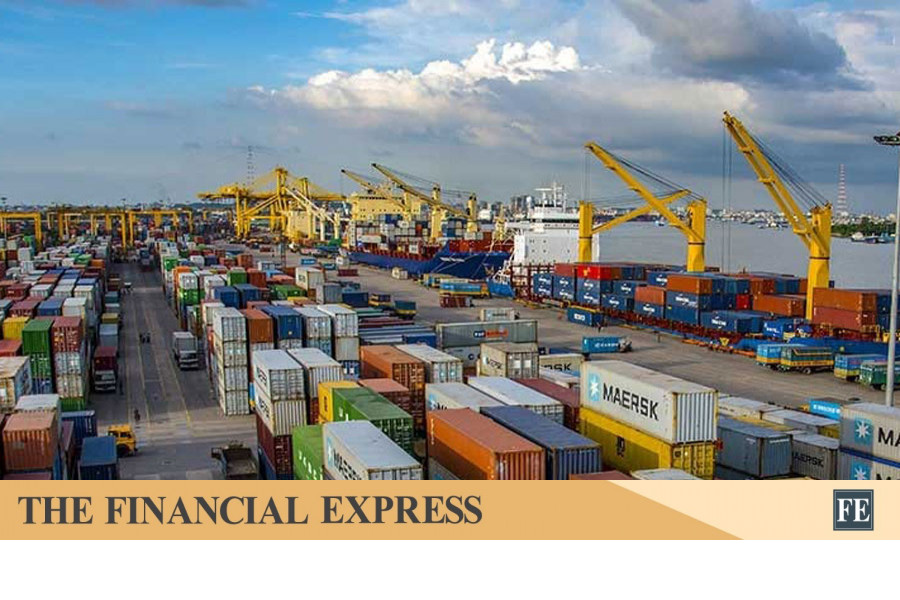
From the start to the end, Chattogram port remained in the national spotlight this year -- for protests, controversy, tariff hikes and other significant policy decisions like handing over operations of major terminals to foreign companies.

Throughout the year, political uncertainty, labour unrest and sensitive reform decisions all collided at the facility that handles more than 90 percent of the country's international trade. It barely got any breathing space for trade to bloom.

Even so, as of December 26, the port handled 33.64 lakh TEUs (twenty-foot equivalent units) containers, a 2.68 percent growth from 32.27 lakh TEUs handled last year, according to Chittagong Port Authority (CPA) data.

Meanwhile, the port handled a total of 13.63 crore tonnes of overall cargo, including the containerised ones, this year till December 27 morning, toppling last year's total volume of 12.40 crore tonnes, which was the highest so far.

The total number of vessels handled so far reached 4,396 compared to 3,867 in 2024.

EARLY-YEAR DISRUPTIONS

The year began with operational strain. In early February, container transport between the port and inland container depots was disrupted after clashes involving prime mover drivers and helpers at DC Park in the port city, temporarily halting cargo movement and exposing the fragility of last-mile logistics for days.

The interruption set an early tone for a year marked by repeated disruptions to port operations. The next month, the CPA sharply increased storage charges for containers remaining beyond the free period, introducing a fourfold hike.

Customs agents and importers warned that the move would inflate logistics costs and compound congestion rather than resolve it. The decision was widely seen as an early signal that port users would face higher charges after decades of relative stability in tariffs.

The true chaos began in the second quarter. Operational pressure intensified during April and May, when a nationwide strike by National Board of Revenue (NBR) officials โ€“ protesting an ordinance restructuring the revenue administration โ€“ severely affected customs services at the port.

Protests continued on and off for weeks. Cargo clearance slowed, vessels waited longer at anchor, and yard capacity approached critical levels. Even after the strike was formally withdrawn in late May, congestion lingered, with the port struggling to return to normalcy.

THE FOREIGN OPERATOR DEBATE

The NBR protest was surely a key flashpoint for the port in the outgoing year. As this protest went on, the Chattogram port unit of Jatiyatabadi Sramik Dal, the workers' wing of BNP, launched a series of weeklong protest programmes, protesting the government's move to lease out the New Mooring Container Terminal (NCT) to a foreign operator.

By June, labour and political opposition to foreign operators at Chattogram port moved into a more organised protest. On June 15, the Jatiyatabadi Sramik Dal, aligned with the port workers' federation, launched a six-day protest programme opposing plans to lease the NCT to UAE-based DP World. Demonstrators argued that handing over the port's largest operational terminal would undermine national control over a strategic asset and threaten workers' jobs.

The issue became a topic of national debate, making headlines regularly. All the while, port operations continued to struggle.

The opposition was notable not only for its intensity but also for its ideological breadth. Political parties from opposing ends of the spectrum, including left-leaning groups and right-wing nationalists, raised similar objections, framing foreign terminal operations as a question of sovereignty, transparency and long-term national interest.

Government officials and port authorities countered that involving experienced global operators was essential to modernise port operations, reduce vessel turnaround time and handle rising trade volumes.

They repeatedly pointed to competition from ports in India, Sri Lanka and Southeast Asia, warning that without rapid reform, Chattogram risked losing cargo to regional rivals.

Political unease over the matter continued through July, August and September, with BNP and Jamaat leaders publicly questioning whether an interim government had the mandate to sign long-term concession agreements for strategic infrastructure.

HIGH TARIFFS, TERMINAL DEALS, PROTESTS

October proved to be the most disruptive month of the year.

In mid-October, the CPA announced a sweeping revision of port tariffs โ€“ the first such adjustment in about four decades โ€“ with an average increase of around 41 percent across several charges related to container handling and storage.

Trade bodies reacted sharply, warning that the higher costs would erode export competitiveness, particularly for garment exporters already facing global demand pressures.

As part of the hike, the CPA raised gate pass fees for heavy vehicles more than fourfold, from Tk 57 to Tk 230. The decision prompted the Chattogram Prime Mover Owners Association to suspend container transport from October 15, causing deliveries to plunge by nearly 45 percent and rapidly building backlogs at the port.

Despite the mounting opposition, the government moved decisively at the year's end. In mid-November, it signed agreements with Denmark's APM Terminals and Switzerland-based Medlog SA for the construction and operation of the Laldia Container Terminal and the operation of the Pangaon Inland Container Terminal.

Street mobilisation followed swiftly. Rallies, torch processions and hunger strikes swept Chattogram, demanding cancellation of foreign operator agreements and reversal of tariff hikes.

Legal challenges soon followed. On November 9, the High Court stayed the tariff hike for one month, offering temporary relief to port users. Later in November, the court ordered a suspension of all activities related to the proposed foreign operator contract for the NCT, following a writ petition challenging its legality.

Meanwhile, the fate of the NCT remained unresolved. On December 4, a High Court bench delivered a dissenting verdict on the writ petition challenging the NCT contract, leaving the matter pending before the chief justice, effectively guaranteeing that the controversy will spill into 2026.​
 
the Chattogram port unit of Jatiyatabadi Sramik Dal, the workers' wing of BNP, launched a series of weeklong protest programmes, protesting the government's move to lease out the New Mooring Container Terminal (NCT) to a foreign operator.

These Jatiyatabadi Sramik Dal people (BNP port workers' wing) are being instigated by Indian RAW agents to destabilize CTG port operations. Every kind of BNP "dal" has these agents, RAW network is exceptionally strong within BNP in Bangladesh.

This is why Indians were so happy to see Tareq Rahman get back home. He's been sold to the Indians long ago. Wake me up when I'm proven wrong.

These Indian haramis have their eye on the port. Indians haven't let go of the idea of taking over the port somehow, so they can improve the economy of their Northeast states.

Little do they know, that the NE states themselves will separate from India proper soon. So mango and sack both will be gone.
 
Why seaport reforms must begin at the customs house

1767143724907.webp

A fully automated customs authority backed by a responsive governance system is needed to support the trillion-dollar economy Bangladesh expects to become. FILE PHOTO: STAR

The ongoing debate over seaport reforms in Bangladesh is largely centred on the long-term leasing of terminals to foreign operators to modernise port infrastructure. However, high-tech docks and foreign management can only do so much if the "brain" of the operation, the customs clearance process, remains bottlenecked by partial digitalisation.

During the period of 2009-2024, the Digital Bangladesh campaign successfully introduced bespoke software and automated platforms to nearly every government office. But nowhere was early digitalisation as critical as at Customs House, Chattogram (CCH), the country's premier tax collection gateway.

CCH, which supports the Chittagong Port, accounts for 70-80 percent of total customs revenue and serves nearly 700 shipping agents, 1,000 freight forwarders, and 4,000 clearing and forwarding (C&F) agents. On average, CCH processes 7,000 to 8,000 bills of entry (BEs) for exports and imports daily. In the first five months of the current fiscal year, CCH collected Tk 31,602 crore in revenue. In FY 2024-2025, its collection was Tk 75,432 crore, which is eight times the amount it collected in FY 2003-2004.

Since its introduction in 1993, CCH upgraded the UNCTAD Automated System for Customs Data (ASYCUDA)โ€”an integrated customs management system for international tradeโ€”several times. Currently, it is using ASYCUDA World, which was intended to reduce the time, cost, and physical visits required to process thousands of BEs manually. However, there are debates among business communities about the system's data accuracy and reliability, and it is often alleged that it leads to significant clearance delays.

The initial payoff of automation and subsequent upgrades were clear: in the 2012-13 fiscal year, CCH attained 90 percent of its revenue target, and by 2016-17, it hit 100 percent. Yet, by 2022-23, this figure dropped back to 82 percent. The current fiscal year's revenue collection for the first five months was 13 percent below the target. End-to-end automation remains elusive. While the core system is digital, several critical checkpoints remain manual. Currently, only 39 percent of submitted BEs (documents filed by importers for tax/duties/legal compliance/clearance assessment) are processed on the same day, while 19 percent take more than four days. Alarmingly, only five percent of imports are processed before arrival, often due to a lack of coordination with port authorities regarding the auction of unclaimed containers.

While ASYCUDA is designed to scrutinise only up to 10 percent of BEs through risk-based inspection, allowing the remaining 90 percent to receive clearance based on documentary checks, this is rarely the case in practice. Inspections of weight and nature of goods remain manual, as do many certification processes. Furthermore, ASYCUDA lacks interoperability. Customs officials are still compelled to rely on physical paperwork because various certifying entities do not work within an integrated system.

These so-called non-tariff barriers are compounded by the "Time, Cost, and Visit" (TCV) burden associated with outside agencies. Obtaining a simple No Objection Certificate (NOC) from the Bangladesh Council of Scientific and Industrial Research (BCSIR) or Bangladesh Standards and Testing Institution (BSTI) can take over a week. Frequent changes in import/export policies by the commerce ministry and adjustments to the Tariff's First Schedule by the finance ministry create further challenges in the process.

According to representatives of the Chittagong Customs Agents Association, the server struggles to take the load when thousands of agents log into the ASYCUDA modules simultaneously. Moreover, the lack of interoperabilityโ€”where an importer shares bank documents with a C&F agent who then manually enters the data into ASYCUDA Worldโ€”creates a "broken link" in the digital chain. This backlog wrongly places the blame on CCH officials, though the root cause often lies in "broken cross-project connectivity."

In addition, the internet connection at CCH is frequently disrupted, despite being provided by the state-owned Bangladesh Telecommunications Company Limited (BTCL), the country's largest Nationwide Telecommunication Transmission Network (NTTN) entity. BTCL management is often slow to respond to queries, and because CCH lacks access to Network Management System (NMS) data, monitoring rests solely with the National Board of Revenue's central IT office in Dhaka.

To partly circumvent this "BTCL conundrum," CCH relies on a private ISP for its primary ASYCUDA services. While this private vendor is functional and responsive, it highlights a hidden vulnerability: the lifeblood of our national trade is indirectly dependent on a private vendor and the country's NTTN duopoly (Fibre@Home and Summit hold NTTN licence, operating a network spanning around 50,000 kilometres and 40,000 km of optical fibre). The main reason for the vulnerability is the erratic service of state-run primary sourceโ€”BTCL.

This strategic interdependence calls for an immediate intervention. Beyond BTCL's questionable balance sheet, the actual damage is the TCV loss incurred by key strategic fiscal entities like CCH. This legacy of the Digital Bangladesh campaignโ€”where software and hardware issues in public offices are left unaddressedโ€”has paradoxically slowed down service delivery and day-to-day operations, creating new hidden costs for taxpayers.

However, some issues stem from the ASYCUDA software itself, including technical glitches during system upgrades that stall customs clearance and leave import/export items idle at the port. This strains the relationship between customs officials and trade agents, damaging the credibility of CCH. C&F agents have noted that software complexity occasionally "scrambles" critical dataโ€”such as product types and weightsโ€”from the BEs.

The reality is that CCH is between a rock and a hard place. The Anti-Corruption Commission frequently examines allegations of revenue evasion via forged documents but often limits investigations mostly to CCH officers, while the business community accuses CCH of harassment through arbitrary duties and inaccurate valuations. Both of these undermine the morale of CCH officials. Correct and timely examination of the customs database is the only way to minimise both corruption and trade losses.

There is, however, room for optimism. Recent steps toward disciplining officials, changes in top leadership at CCH, a functional National Single Window platform, the Bond Management Automation project, and the introduction of E-Auctions, E-Tenders, and E-Payments are beginning to pay dividends. CCH's revenue achievement target is improving. To consolidate these gains, the NBR must invest in strengthening the governance of CCH, including the ability to implement regular software upgrades without system shutdowns, rather than phasing out the ASYCUDA system altogether.

Furthermore, NBR should introduce a TCV measurement tool for all port authorities to identify inefficiencies from a citizen-centred perspective. Also, lobbying for lucrative CCH postings must be stamped out to stabilise the CCH's core administrative workforce.

Lastly, the number of sanctioned posts needs to increase alongside actual appointments to cope with rising demands for timely and proper examination of the custom consignments and the BEs.

Let's not forget that as Bangladesh eyes a trillion-dollar economy by 2030, modernised seaports are only half the equation. We need a fully automated customs authority backed by a responsive governance system that ensures technology facilitates trade rather than obstructing it.

M Niaz Asadullah is a development economist, the head of ICT White Paper Committee, and a member of the Telecom White Paper Committee, under the Ministry of Posts, Telecommunications and Information Technology.​
 

Members Online

Latest Posts

Latest Posts