[🇧🇩] Monitoring Bangladesh's Economy

[🇧🇩] Monitoring Bangladesh's Economy
1K
35K
More threads by Saif

G Bangladesh Defense

Non-interference in financial governance

Published :
May 14, 2026 23:45
Updated :
May 14, 2026 23:45

1778801635826.webp


The remarks made by the finance minister at the inauguration of the Bangladesh Start-up Investment Company (BSIC) have resonated widely across policy and business circles, largely because they carried a message that has long been awaited in the country's financial landscape: a commitment to reducing political interference in financial governance. At a time when confidence in the banking and financial sectors remains fragile, the minister's acknowledgment of the "painful" state of the current investment climate appeared both candid and necessary. Speaking at the launch event, the minister pointed to the prolonged weaknesses within the financial sector and warned that such vulnerabilities are often deepened by political interventions. "We will not have any kind of political interference in the economic sector, including the financial one," he declared, while reaffirming the government's commitment to reforming the capital market and strengthening the broader financial system through greater transparency, improved regulation and renewed investor confidence.

The statement carries particular weight in Bangladesh's present economic context. Over the years, concerns about governance failures, loan irregularities and institutional weaknesses have eroded trust in the financial sector. Against that backdrop, the promise of non-interference is more than a political assurance. Whether such promise can ultimately reshape the culture of financial governance remains to be seen, yet the articulation of the principle itself marks a significant departure from practices that many believe contributed to the sector's distress.

Established by 39 commercial banks, BSIC with an initial fund of approximately Tk 4.25 billion and expected to rise to Tk7.0 billion through annual contributions from participating banks, seeks to support seed, late-seed, and Series A-stage startups through the Onkur Bangladesh Fund-1. Noting that the initiative aligns with the government's broader "creative economy" agenda aimed at generating employment opportunities for millions, the finance minister also referred to ongoing collaboration with international institutions to stabilise the banking sector and improve the overall investment climate. Such partnerships suggest an awareness that restoring confidence requires not only domestic reform but also adherence to international standards of accountability and governance. Echoing the minister's sentiments, the governor of Bangladesh Bank emphasised that the country's next phase of financial development would depend on institutions capable of ensuring innovation, discipline, transparency and accountability. His call for BSIC to prioritise projects benefiting rural economies and marginalised communities reflected an important reminder that financial progress must remain inclusive if it is to be meaningful and sustainable.

In a market economy, politically motivated state interference seldom produces healthy outcomes. Bangladesh's recent experience offers ample evidence of how such practices can weaken institutions and undermine public trust. The success of BSIC, therefore, will depend not only on the availability of funds but also on whether it can function under transparent and professional management. If the government remains steadfast in its stated policy and institutions are allowed to operate independently, initiatives like BSIC may help open new avenues for broader economic and social welfare.​
 

What new in budget under new government
Deregulation of economy, liberalising trade figure Prominently
Handover of losing public entities to private management suggested

Syful Islam

Published :
May 15, 2026 23:51
Updated :
May 15, 2026 23:51

1778888894046.webp


A roadmap on deregulation of the economy and liberalisation of trade and investment forms focal policy features in the national budget the new government prepares to present in parliament, sources say.

Deregulation and liberalisation both are election pledges of the government of the Bangladesh Nationalists Party (BNP) that came to power through an election in February.

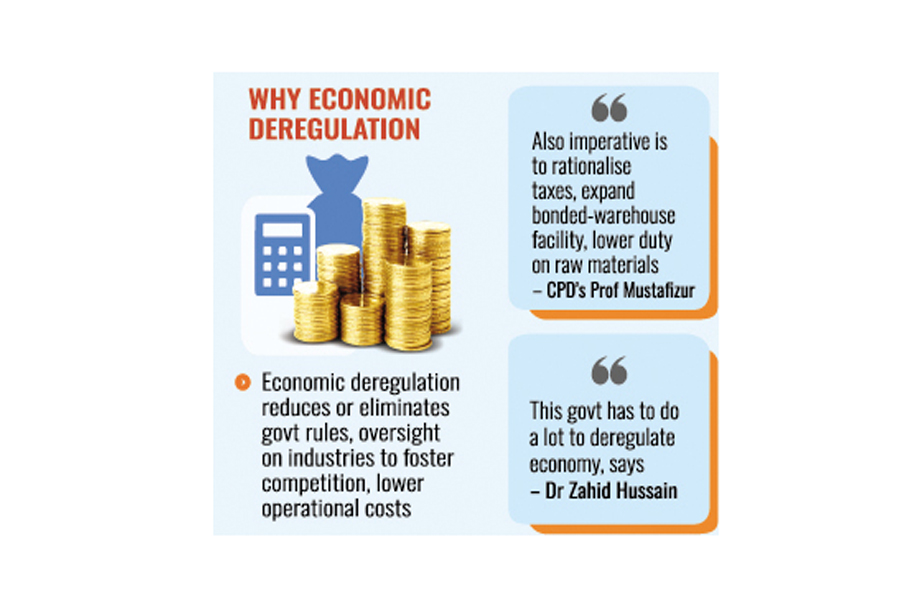
Deregulation of the economy leads to reduction in or elimination of government rules and oversight on industries, aimed at fostering competition, lowering operational costs, and boosting economic growth.

This unclasping of controls means lifting barriers to entry, allowing firms to operate more freely, theoretically lowering consumer prices, and promoting innovation.

Trade liberalisation means the removal of or reduction in trade restrictions or barriers, like tariffs, on the free exchange of goods between nations, according to investopedia.com.

Finance Division officials are now busy formulating fiscal budget for 2026-27, scheduled for rollout on June 11, and on Wednesday, they had meeting with the Prime Minister to apprise him of the budget updates.

At the meeting, sources have said, Prime Minister Tarique Rahman asked the Finance Minister and his team to incorporate as much election pledges as possible in the next budget measures to help reinvigorate the economy and multiply people's welfare.

According to officials concerned, the Finance Division last month asked the ministries and departments concerned to let it know what deregulation-and liberalisation-related measures they have taken so far and what plans they have for the days ahead.

Sources say most of the ministries informed the finance division about the deregulation and liberalisation measures taken in the past.

Only a few ministries proposed what measures they plan to pursue in the future for reduction or elimination of government rules and oversight on industries or removal of or reduction in trade restrictions or barriers.

Finance officials now are preparing a roadmap on deregulation and liberalisation measures to be pursued during the next five years of the present government.

"We are preparing a roadmap based on the election manifesto of the BNP-led+ government," a senior finance division official told The Financial Express.

He said attracting foreign investment by removing various existing barriers and opening up the domestic market as much as possible for all will be at the core of the deregulation and liberalisation measures in the days to come.

Experts also underscore the need for removal of barriers to attracting foreign investments, allowing firms to operate more freely, and lessening cost of doing business to help boost economic growth.

Professor Mustafizur Rahman, a Distinguished Fellow at the Centre for Policy Dialogue (CPD), says rates of duty and taxes in Bangladesh have been comparatively high for a long period and so need to be made rational, expand bonded -warehouse facility and lower duty on raw materials.

He also suggests handover of loss-incurring public entities to private-sector management in the deregulation drive.

"To enhance inflow of foreign investment, one-stop service has to be ensured, logistic policy needs to be implemented, and the time consumption in public service delivery lowered," he says.

Also, Mr Rahman underscores the need for lowering turnaround time of ships in the seaports, making dispute-settlement resolution effective, and easing the repatriation of profit by foreign investors.

"The new government can give more attention on these issues to make doing business easier in the country, leading to higher local and foreign investment," he says.

Dr Zahid Hussain, a former lead economist at the World Bank's Dhaka office, recalls that during the regime of 1991-95 many barriers relating to competition in various sectors were removed.

However, he regrets, the reforms did not continue over the period. Thus, this government will have to do a lot of things to deregulate the economy.

"This government will have to take specific and effective reform measures and make it clear to people what steps it will take for that and how they will be implemented," he says.

Citing an example, he says stakeholders in the next budget want to specifically hear from the government what the National Board of Revenue (NBR) will do in tax -policy reform, what measures will be taken for higher and effective implementation of annual development programme.​
 

Green Economy is a necessity for Bangladesh's sustainable development
Shahiduzzaman

1778889663252.webp

A green and clean environment File Photo

A green economy is an economic system that improves human well-being and social equity while significantly reducing environmental risks and ecological damage. It promotes low carbon development, efficient use of natural resources, renewable energy, sustainable industries, and environmentally friendly technologies. In simple terms, a green economy combines economic growth with environmental protection and social inclusion.

For Bangladesh, the transition to a green economy is no longer simply an option. It has become a national necessity. Bangladesh is one of the most climate vulnerable countries in the world and faces growing environmental and economic challenges caused by climate change, rapid urbanization, industrial pollution, and overuse of natural resources. Rising temperatures, floods, cyclones, salinity intrusion, river erosion, air pollution, and water scarcity are already affecting agriculture, public health, infrastructure, and livelihoods across the country.

These environmental threats are creating serious economic and social impacts. Agricultural production is under pressure due to unpredictable weather patterns. Coastal communities are losing homes and farmland because of rising sea levels and salinity. Urban pollution is damaging public health and increasing healthcare costs. Therefore, adopting a green economy is essential not only to protect the environment but also to ensure long term economic stability, energy security, employment generation, and sustainable national development.

The major elements of a green economy include renewable energy, green industries, sustainable agriculture, waste management, green buildings, water conservation, environmentally friendly transportation, and green technology. These sectors help reduce greenhouse gas emissions, improve resource efficiency, and create sustainable employment opportunities.

In Bangladesh, several sectors are gradually becoming part of the green economy. These include solar and renewable energy, green garment factories, organic and climate smart agriculture, recycling and waste management, energy efficient industries, green transportation, sustainable fisheries and forestry, and green finance and banking. These sectors can reduce carbon emissions while supporting industrial growth, exports, and employment generation.

A green economy is highly effective for sustainable development because it balances economic growth, environmental protection, and social welfare. Sustainable development means meeting present needs without damaging the ability of future generations to meet their own needs.

Bangladesh’s rapid industrialisation and urban expansion have increased pollution, carbon emissions, and pressure on natural resources. Rivers are becoming polluted, forests are shrinking, and air quality is deteriorating, especially in Dhaka and other major cities. Traditional development models often focus on economic growth without considering environmental consequences. A green economy offers an alternative path where industries and businesses can grow while protecting natural resources and reducing environmental damage.

Green economic policies encourage efficient use of energy, water, and land resources. Renewable energy reduces dependence on imported fossil fuels and strengthens energy security. Sustainable agriculture protects soil fertility and biodiversity while ensuring food security. Green industries reduce waste and toxic emissions. Together, these measures support long term economic resilience and environmental sustainability.

The green economy can also play a major role in achieving Bangladesh’s Sustainable Development Goals, particularly goals related to clean energy, climate action, sustainable cities, responsible production, good health, and economic growth.

One of the biggest impacts of a green economy is its contribution to economic growth and Gross Domestic Product. Renewable energy, green manufacturing, eco-tourism, sustainable agriculture, and recycling industries can become major drivers of Bangladesh’s future economy. Green investments can create billions of dollars in economic opportunities over the next two decades.

Bangladesh’s garment industry has already made significant progress in green manufacturing. The country now hosts many internationally certified green garment factories that consume less water and electricity while reducing pollution. These environmentally sustainable factories are attracting international buyers and increasing Bangladesh’s competitiveness in global markets.

The renewable energy sector also offers major economic opportunities. Solar energy, wind power, biogas, and waste to energy projects can reduce fuel imports and save foreign currency. Expanding clean energy can also support industrial production and rural electrification.

Green infrastructure projects such as energy efficient buildings, smart urban systems, and modern public transportation can further increase productivity and economic activity. Global climate financing and foreign investment in green projects can also provide Bangladesh with substantial financial support for sustainable development.

Another important impact of the green economy is employment generation. Green sectors require both skilled and semi-skilled workers in renewable energy, environmental management, recycling, transportation, and sustainable agriculture. Experts believe green industries could generate millions of jobs in Bangladesh in the coming years.


Renewable energy projects need engineers, technicians, electricians, and maintenance workers. Recycling industries create jobs for urban workers and informal laborers. Climate smart agriculture can create rural employment opportunities through organic farming, agro processing, and sustainable fisheries.

Bangladesh’s growing green garment sector is also creating employment opportunities through environmentally certified production systems. Expansion of the green economy can therefore reduce unemployment, increase income levels, and support poverty reduction, especially among young people and rural communities.

A green economy can also significantly improve public health and increase life expectancy in Bangladesh. Air pollution has become one of the country’s most serious public health threats. Industrial emissions, brick kilns, vehicle smoke, and fossil fuel use contribute to respiratory diseases, heart disease, lung cancer, and premature deaths.

By promoting renewable energy, clean transportation, and environmentally friendly industries, Bangladesh can reduce harmful pollution and improve air quality. Cleaner air means fewer respiratory illnesses, lower healthcare costs, and better quality of life for millions of people.

Green urban planning, better waste management, and increased green spaces can also improve sanitation and reduce waterborne diseases. Sustainable agriculture reduces harmful chemical exposure from pesticides and fertilizers. Improved environmental conditions contribute directly to healthier living conditions and longer life expectancy.

Bangladesh, especially Dhaka, frequently ranks among the world’s most polluted cities. Poor air quality affects millions of people every day. Green economic policies offer practical solutions to reduce pollution and improve environmental conditions.

Renewable energy reduces carbon dioxide and toxic emissions from electricity generation. Electric vehicles and improved public transportation systems can reduce traffic related pollution. Energy efficient industries consume less fuel and produce fewer emissions.

Recycling and proper waste management reduce plastic pollution and environmental contamination. Tree plantation and urban forestry programs absorb carbon dioxide and improve urban air quality. Climate smart agriculture also reduces methane emissions and protects rivers, wetlands, and biodiversity.

Several countries have already demonstrated the benefits of adopting green economic policies. Germany invested heavily in renewable energy through its energy transition policy and created hundreds of thousands of green jobs while reducing carbon emissions. China became the world’s largest investor in renewable energy and electric vehicles, improving industrial competitiveness and reducing pollution in many cities.

Denmark expanded wind energy production and now generates a large share of its electricity from renewable sources. South Korea introduced a Green Growth Strategy and invested billions of dollars in green infrastructure, renewable energy, and environmentally friendly transportation systems.

These international examples show that investment in green sectors can improve economic productivity, generate employment, strengthen energy security, and improve environmental sustainability.

Bangladesh also has significant opportunities to accelerate green economic transformation through immediate policy actions. The government can increase investment in solar parks, rooftop solar systems, offshore wind energy, and waste to energy projects. Public institutions, schools, hospitals, factories, and office buildings can adopt solar power systems to reduce electricity costs and emissions.

Electric buses, metro rail expansion, and environmentally friendly transportation systems can reduce urban pollution and traffic congestion. Industries should receive tax incentives and low interest loans for adopting energy efficient technologies and cleaner production systems.

Modern recycling systems and waste separation programs should be introduced in major cities. Large scale tree plantation and urban green development projects can improve air quality and absorb carbon dioxide. Bangladesh also needs skilled workers, engineers, and researchers for green industries. Universities and technical institutions should expand education and training programs related to renewable energy and environmental management.

However, developing a green economy requires substantial long term investment. Bangladesh will need billions of dollars in public and private investment for renewable energy infrastructure, smart electricity grids, green transportation systems, climate resilient agriculture, waste recycling facilities, and sustainable urban development.

International climate financing, foreign investment, development banks, and private sector partnerships will be important sources of funding. Bangladesh can also benefit from global carbon markets and green bonds to support sustainable investment.

Despite its enormous potential, Bangladesh faces several challenges in developing a green economy. These include limited investment, lack of modern technology, weak environmental governance, insufficient infrastructure, policy inconsistency, shortage of skilled manpower, corruption, and limited public awareness.

Large scale green transformation also requires strong political commitment, long term planning, and effective cooperation between government, private sector, civil society, and international partners.

The green economy offers Bangladesh a historic opportunity to achieve sustainable development while protecting the environment and reducing carbon emissions. Renewable energy, green industries, sustainable agriculture, recycling, and green finance can transform the country’s economic future.

A successful green economy can contribute significantly to GDP growth, generate millions of jobs, improve air quality, reduce pollution, strengthen public health, and increase life expectancy. It can also reduce dependence on imported fossil fuels, attract foreign investment, and improve Bangladesh’s competitiveness in global markets.

International experiences from Germany, China, Denmark, and South Korea demonstrate that green development can create both environmental and economic success. Bangladesh now has the opportunity to follow a similar path.

As climate change increasingly threatens Bangladesh’s economy and people, adopting green economic policies is no longer optional. It is a necessity for the country’s future survival, prosperity, and sustainable development. With proper planning, investment, technology transfer, and effective governance, Bangladesh can become a regional leader in green growth and environmental sustainability in the coming decades.

* The author is a freelance writer.​
 

Latest Posts

Back