Donate ☕
201 Military Defense Forums
[🇧🇩] - Monitoring the political activities of BNP | Page 12 | PKDefense
Home Login Forums Wars Movies Watch Videos
Serious discussion on defense, geopolitics, and global security.

[🇧🇩] Monitoring the political activities of BNP

Reply (Scroll)
Press space to scroll through posts
G Bangladesh Defense
[🇧🇩] Monitoring the political activities of BNP
390
9K
More threads by Saif

BNP wants to reinstate caretaker govt system
Says Tarique

1725319887360.webp

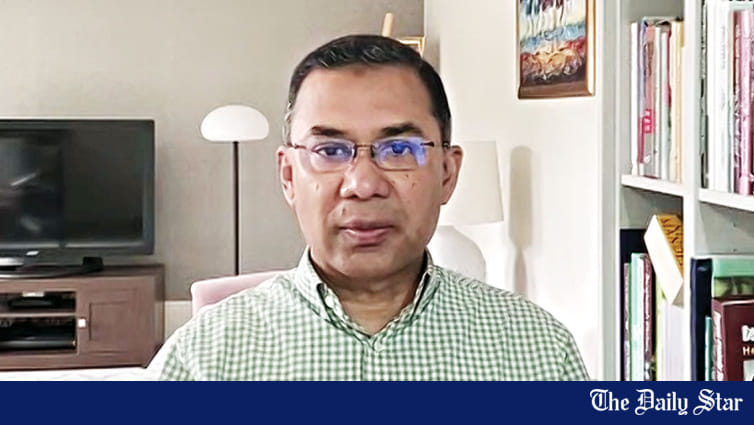
File photo of Tarique Rahman

BNP acting chairman Tarique Rahman yesterday said their party is willing to bring back the caretaker government system for elections to ensure the restoration of the people's voting rights.

"We want to reinstate the caretaker government system in the constitution to restore the people's right to vote," he said while exchanging views with BNP grassroots leaders and activists of Khulna division.

Stating that Bangladesh belongs to its citizens, the BNP leader said it is the people's justified democratic right to elect their representatives through the independent exercise of their voting rights.

He said the BNP introduced the caretaker government system in the constitution in 1996, replacing a partisan government, to safeguard the people's right to vote and ensure free and fair elections in the country.

"But in order to hang onto power, autocratic [Sheikh] Hasina removed it from the constitution and deprived the people of voting rights in three national elections," Tarique mentioned.

The BNP leader outlined the main objectives of their party's politics as ensuring security of the people, upholding freedom of speech, protecting the right to do business and trade peacefully, providing employment for youth, safeguarding the dignity and security of women, guaranteeing equal rights for all citizens regardless of religion, caste, or creed, whether they live on plains or hills, and establishing the rule of law throughout the country.

Tarique said the BNP's priorities also include ensuring a balance of power between the judiciary and executive branches, providing universal healthcare facilities, ensuring fair prices for agricultural products, and, above all, protecting the country's independence and sovereignty.

The BNP leader warned that their party will not tolerate any imprudent actions by a few wayward individuals within the party, regardless of who they are.

Tarique asked his party leaders to identify and resist those who dent the image of the party by not only expelling them from the party but also taking legal action against them.​
 
Analyze

Analyze Post

Add your ideas here:
Highlight Cite Fact Check Respond

Stay alert against conspiracies: Fakhrul

1730852846824.webp


BNP Secretary General Mirza Fakhrul Islam Alamgir today urged all to stay alert, warning that conspiracies are underway to once again plunge Bangladesh into new dangers.

"All of you need to remain alert and strengthen the organisation. The danger is not over yet. New dangers are likely to emerge," he said.

Speaking at a discussion meeting, he said attempts are being made to undermine and destroy democracy once again.

The event was organised by Jatiyatabadi Mohila Dal at the Jatiya Press Club to mark National Revolution and Solidarity Day on November 7.

Fakhrul said Sheikh Hasina, during her 16 years of autocratic rule, brutally repressed BNP leaders and activists, including those from Mohila Dal.

"Hasina used to speak arrogantly while illegally remaining in power. She caused deaths to many people, including students. But we were freed on 5th August by removing that dreadful monster. It is a fact that Hasina fled the country in the face of a mass uprising," he said.

Fakhrul said the nation is going through a critical time, despite the ousting of the autocratic regime. "We must proceed very carefully in this challenging situation."

The BNP leader also called upon the interim government to hold the national election after swiftly implementing necessary state reforms.

"We believe that an elected government is the best government to serve people with their support," he said.

Fakhrul emphasised that elections are the key to restoring democracy in the country.

He said there have been numerous efforts to eliminate the BNP, but no one has been able to divide the party.

"On the contrary, BNP has grown stronger. We will move forward by further strengthening the party, and we will undoubtedly work to rebuild the state by winning the elections."​
 
Analyze

Analyze Post

Add your ideas here:
Highlight Cite Fact Check Respond

BNP wants people’s fate-changing reforms: Tarique Rahman
FE Online Desk
Published :
Nov 05, 2024 20:20
Updated :
Nov 05, 2024 20:20

1730855973670.webp


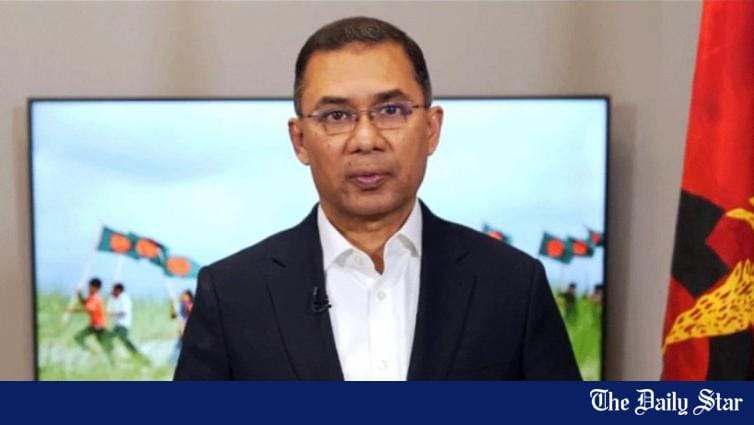
BNP Acting Chairman Tarique Rahman on Tuesday said their party wants such state reforms that will help change the fate of the country’s crores of people and ensure their rights.

Speaking virtually from London at a rally, he also said the nation is still passing through a critical juncture, as the evil ghosts of the deposed autocratic regime are still hatching various plots against the country, reports UNB.

“Many of us now hear about reforms and many people are talking about various reforms. But it is the BNP that first presented reform proposals in Bangladesh to change the fate of people and transform this country,” Tarique said.

He said their party chairperson Khaleda Zia outlined state reforms in 2017 by unveiling BNP’s Vision-2030 charter.

Later, Tarique said, the BNP also presented reform proposals in 2023, outlining a 31-point charter for state reforms in consultation with democratic parties that joined the simultaneous movement for the restoration of democracy.

“What is the main purpose of these reforms? Is it just to change a few lines in the constitution? Of course, reforms are necessary to cope with changing times and the evolving world order in running the country. But I, as a political activist, believe reforms should be about changing the fate of crores of common people across the country and bringing positive changes to the nation,” he said.

As a political activist,” the BNP leader said he thinks simply changing a few lines in the constitution is not reforms.

BNP’s Jashore district unit organised the rally at the Town Hall Ground in the district in memory of the late minister and BNP Standing Committee member, Tariqul Islam, marking his sixth death anniversary.

Tarique said the BNP’s 31-point state reform proposals clearly outline the steps needed to carry out the necessary reforms for ensuring a qualitative change in the country and improving the fate of its people.

“In one sentence, as a political activist, I mean reforms that will change the fortune of the people, bring employment to the unemployed, ensure the freedom and rights of women, guarantee people’s safety, ensure our children get better education, and provide people with minimum healthcare services,” he explained.

He said the country is still going through a period of crisis, even after the fall of the autocratic regime through the mass uprising.

“Although the autocratic regime was ousted and its head fled the country, their ghosts remain in society and different places of the administration. From there, they are still trying to sow the seeds of various conspiracies. I call this a critical time,” the BNP leader said.

Tarique also expressed his feeling of the absence of a political figure like Tariqul Islam, especially during this difficult time for the nation.

“Had someone like Tariqul Islam been alive now, he could have offered me valuable and important suggestions that would contribute to the welfare of both the country and our party,” he said.​
 
Analyze

Analyze Post

Add your ideas here:
Highlight Cite Fact Check Respond

Don’t indulge in activities disliked by the people
Tarique urges BNP leaders, activists

1730939280655.webp

File photo

BNP acting chairman Tarique Rahman yesterday urged his party leaders and activists to avoid activities disliked by the people and focus on earning their trust and love instead of becoming overconfident about electoral victory.

Speaking at a discussion, he also stressed the need for the people's political and economic empowerment to ensure the sustainability of democracy, development, and state reforms.

"I call upon the party leaders, activists, supporters, and well-wishers to earn the trust and love of the people, and stay with them."

The BNP hosted the programme at the Institution of Engineers, Bangladesh, marking the National Revolution and Solidarity Day.

Tarique said the BNP would surely emerge victorious if people could exercise their voting rights in a free and fair election.

The BNP leader said the head of the Awami League regime fled the country after rendering all state institutions dysfunctional and making the country dependent on imports. "But people are still bearing the brunt of the consequences of 15 years of misrule."

Through the defeat of the AL on August 5, it has been proved once again that there is no alternative to a greater unity among Bangladesh's nationalist forces to safeguard the freedom of the country and its people, the BNP leader said.

He said people expect the government to take effective steps to build a safe and prosperous Bangladesh for the future generations.

The conspiracies by the associates of the Hasina regime have not stopped, and attempts are being made to turn the interim government into a failed one, Tarique said.

He said the AL government made efforts to brand Bangladesh a militant country to cling to power. "The defeated forces of August 5 are once again making sinister attempts to portray Bangladesh as a communal country."

He urged the pro-Bangladesh forces to stay alert to the conspiracies of the defeated forces.

Tarique said three months may not be enough to assess the success and failure of a government.

He said it is crucial to strictly control the prices of essentials, particularly to alleviate the hardships of the farmers, daily wage workers, low-income people, and the lower-middle class families.

He warned that if the government fails to bring commodity prices within the reach of the ordinary people, all its reform efforts would be questionable.

BNP Secretary General Mirza Fakhrul Islam Alamgir said the nation was freed from the AL's fascist rule on August 5 through the student-led mass uprising. "We must now proceed with caution to resist the plots of the fascist forces."

He urged the interim government to complete state reforms to promptly hold a credible national election.​
 
Analyze

Analyze Post

Add your ideas here:
Highlight Cite Fact Check Respond

BNP’s unfolding strategic stance: Straddling the aftermath of a revolutionary ‘event’ and realpolitik

1730941189276.webp

People celebrate the fall of the Awami League government in Dhaka on August 5, 2024. File Photo: Anisur Rahman

The July 2024 uprising in Bangladesh marked a pivotal moment as students and citizens rallied for transformative change, challenging established political hierarchies. Unlike previous movements, this protest operated independently of any political party leadership, underscoring a grassroots demand for reform that had eluded mainstream opposition efforts for over a decade. For the first time, a mass uprising forced the removal of a seemingly entrenched regime through sheer public resolve, demonstrating the often-overlooked power of collective action—an "event" as described by eminent French philosopher Alain Badiou: a disruptive break from the status quo of conventional political order.

On August 8, the formation of an interim government emerged as a critical turning point in Bangladesh's political landscape, briefly uniting opposition forces, including the BNP, around a shared agenda for paradigmatic change. Initially supportive of the student movement, some argue that the BNP later tempered its endorsement, seemingly distancing itself strategically from some of the demands for structural reform of extractive institutions widely seen as enabling the rise of illiberal, authoritarian governance, epitomised by the recently ousted regime. Notably, the BNP is now subtly yet unmistakably shifting away from calls for the immediate resignation of the sitting president—a figure closely tied to the discredited past—and towards advocating for a more cautious, electoral roadmap. This strategic repositioning has allowed the BNP to present itself as a stabilising force focused on continuity and gradual reform through electoral processes, a choice that critics argue reflects a conservative impulse to preserve familiar structures.

According to cultural theorist Frederic Jameson, understanding such political decisions requires analysis through multiple lenses or "horizons." On the "political horizon," Jameson's first level of analysis, the BNP's reluctance to support student-led calls for immediate presidential removal can be viewed as a tactical move to balance reform aspirations with stability. By prioritising an electoral roadmap over sudden upheaval, the BNP is perhaps portraying itself as a seasoned opposition force. This approach positions the party as a measured alternative amid calls for radical change—a strategic choice to avoid being swept up in what it might see as "instant gratification" in favour of long-term goals. However, critics argue that this approach risks the party appearing overly conservative and misaligned with the youth-driven energy fuelling the July uprising.

The "social horizon," meanwhile, explores deeper class and institutional interests that shape political choices, often unconsciously. Here, the BNP's distance from grassroots reform demands can be seen as aligning with the entrenched two-party system, which has long structured politics in Bangladesh. By prioritising incremental reforms and institutional stability over radical transformation, BNP implicitly supports structures that have historically benefited both itself and the Awami League. This reluctance to disrupt institutional power structures could be understood through Jameson's concept of the "political unconscious," where underlying class interests influence behaviour that may appear pragmatic but, in effect, serves to protect established hierarchies. The BNP's stance could be reflective of this tendency, preserving a status quo that risks sidelining the radical reforms that some segments of the public are increasingly demanding.

In the "historical horizon," Jameson's final layer of interpretation, BNP's response to the uprising can be seen as part of Bangladesh's cyclical political struggles. Rather than embracing a transformative shift, BNP's positioning could suggest a reluctance to break from long-standing political rivalries, framing itself as the ideological heir to the student movement's anti-Awami League sentiment while resisting a deep engagement with systemic overhaul. But this positioning could risk reducing the uprising's transformative vision to another episode in the Awami League-BNP rivalry. In Jameson's view, such cyclical politics underscore a missed opportunity for genuine change, as BNP's actions could hint at continuity within Bangladesh's familiar political pattern to some, rather than a break from it.

French philosopher Alain Badiou's concept of the "moment" underscores the unique potential of the July 2024 uprising to introduce new political realities. For Badiou, such a moment represents a radical rupture from established norms, challenging entrenched power structures and creating the possibility of unforeseen political reforms. The uprising's mass mobilisation of public sentiment without major party backing exemplifies that this kind of "event" informed disruptive rupture, a grassroots force demanding structural change that bypasses established political channels.

However, Badiou also warns that these transformative moments can be co-opted or neutralised if not sustained by active revolutionary commitment, or what he calls "fidelity" to the event. The BNP's stance, which shifted from initially aligning with the students to later portraying the president as a stabilising figure, could risk dissipating the transformative potential of this "moment." By reverting to conventional political processes, BNP's approach could undermine the movement's radical energy, restoring the status quo ante, rather than actualising the profound systemic reforms demanded by some people.

Ultimately, the BNP's decision to prioritise stability over radical change illustrates a complex dilemma: straddling the aftermath of a revolutionary "event" and realpolitik. While the party's cautious stance may preserve order and avoid immediate risks, it also places the BNP at odds with some segments of society that have become increasingly disillusioned by traditional politics. This hesitance could alienate reform-minded citizens, especially younger voters who may view BNP's position as self-serving or evasive. Rather than merely adopting the movement's ideological legacy, BNP's strategic ambivalence risks positioning it as another entity within the political duopoly that the uprising implicitly critiques.

BNP's strategic choices in the wake of the July uprising reveal a tension between preserving continuity and embracing transformative potential. While Jameson's "Three Horizons" show how the party's stance aligns with established power structures, Badiou's concept of the "moment" underscores the revolutionary potential that the BNP risks missing. By aligning itself too closely with stability, and gradualism, BNP could marginalise itself in the eyes of a public yearning for meaningful change. To truly capture the movement's spirit, the party may need to move beyond mere strategic positioning and fully engage with the grassroots demands that fuelled the July uprising—demands that traditional, incremental politics can no longer afford to overlook. By the same token, this challenge also calls for a delicate balancing act of realpolitik, as the party weighs transformative ambitions against the pressures of political continuity and stability in an unpredictable landscape.

Faridul Alam lives in and writes from New York City, US.​
 
Analyze

Analyze Post

Add your ideas here:
Highlight Cite Fact Check Respond

Only free polls can stop return of fascism
Tarique tells massive BNP rally in city, says conspiracy on to destabilise interim govt

1731110896299.webp

Photo: Palash Khan

The evil, anti-democratic forces have not stopped conspiring, and they are out to make the interim government a failure, BNP acting chairman Tarique Rahman told a massive rally at the capital's Nayapaltan yesterday.

To prevent fascism from making a comeback, it is essential that citizens have the ability to elect their representatives through voting, he added, urging the public to remain vigilant.

"The conspiracy of anti-democratic forces has not stopped. The accomplices of the exiled autocrat are still present at home and abroad, in governance and administration, actively trying to destabilise the interim government. We should not let this government fail, no matter what."— BNP acting chairman Tarique Rahman.

"The accomplices of the deposed autocrat are still working at home and abroad, in governance and administration. We should not let this government fail, no matter what," he said, addressing the rally through a video link.


1731110945374.webp

Photo: Md Abbas/Star

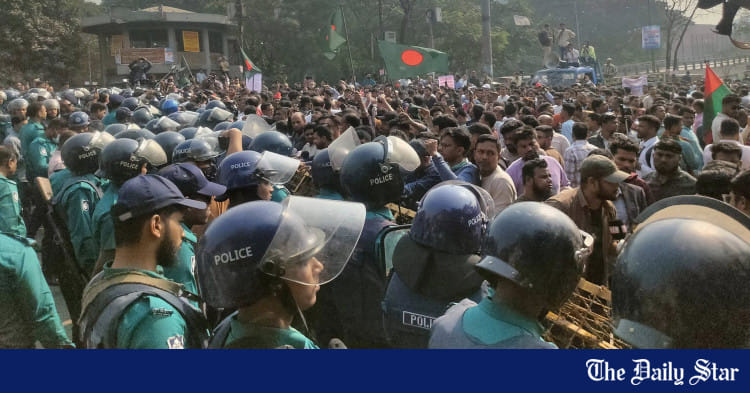
After the brief rally, thousands of BNP activists marched to Manik Miah Avenue.

The party's first mammoth gathering since the fall of the Awami League government in early August marked the National Revolution and Solidarity Day.

Joining from London, Tarique urged the interim government to take effective steps and meet people's expectations.

The procession of hundreds of thousands, he said, is a commitment to "build a Bangladesh which is democratic and free of discrimination that the students and masses who fought against fascism dreamt of".

Those who aspire to be the representatives must rely on votes. Until that happens, the people will not be able to reap the benefits of democracy, he said.

"Even when there is no dictatorship or fascism, it will be impossible to save low-income people from the curse of market syndicates if we cannot ensure people's rights.

"November 7, 1975, was the day to distinguish between friend and foe, and August 5, 2024, was the day to identify the enemies. I have said before that if the pro-Bangladesh forces unite, no one will be able to jeopardise the country's independence."

Instead of holding the programme on November 7, the BNP observed the day yesterday, the first day of the weekend.

After Tarique's address, thousands of activists holding colourful props and festoons marched to Manik Miah Avenue, where BNP Secretary General Mirza Fakhrul Islam Alamgir addressed the crowd.


1731110987820.webp

Photo: Palash Khan/Star

"If we truly want to honour our children who made sacrifices and endured oppression to protect independence and sovereignty, and to restore democracy, then a free and fair election must be held once the necessary reforms are done," he said.

BNP standing committee member Mirza Abbas said his party would be able to resist conspiracies.

"We sense trouble ahead. I don't know who will create it in what way. But today's procession has proven that we will be able to resist," said Abbas.

Earlier at Nayapaltan, Fakhrul said, "Let's unite and make it clear that nothing but democracy will be allowed here. No dictator will stand a chance. We will defeat them."

"For 17 long years, we fought Awami fascism. In those 17 years, the political and economic structures of the country were systematically destroyed….

"Sheikh Hasina and her allies have looted this country. Many of our people have been killed, many disappeared. False cases were filed against more than 60 lakh people.

"We [now] have the chance to create a new Bangladesh. Hasina has fled in the face of this uprising, but her allies are here. They will attack again…. If a crisis arises, we will confront it."

Even though the rally at Nayapaltan started after 3:00pm, crowds began to arrive in the morning. People from eight districts attended the event, sources said.

The VIP Road in front of BNP's headquarters at Nayapaltan was filled to the brim with leaders and activists.

At the procession, there were marching bands and singers on trucks.

The marchers proceeded through Matsya Bhaban, Shahbagh, Bangla Motor, and Farmgate.

The procession grew longer as activists joined from different neighbourhoods along the way.

The event caused severe traffic congestion, forcing commuters to walk to their destinations while vehicles remained stuck in tailbacks.

When the Awami League was in power, the BNP was never allowed to march from Nayapaltan to Manik Miah Avenue.​
 
Analyze

Analyze Post

Add your ideas here:
Highlight Cite Fact Check Respond

Members Online

⤵︎

Latest Posts