Bangladesh Defense
Saif
Senior Member
- Jan 24, 2024
- 21,457
- 9,743
- Nation

- Residence
- Axis Group

"I'm worried over rise of right-wing forces in politics"
Mirza Fakhrul: That’s not true. As you know, I was abroad for quite some time after 5 August. Later, I also visited my daughter and stayed there for a while. After returning, I went to London and stayed there for a considerable time. Then, upon coming back, I developed an eye condition, which...
 en.prothomalo.com
Interview: Mirza Fakhrul Islam Alamgir
"I'm worried over rise of right-wing forces in politics"
One year has passed since the fall of the autocratic Sheikh Hasina government through a student-people's mass uprising. Since then, various political developments have been unfolding in the country. In this context, BNP Secretary General Mirza Fakhrul Islam Alamgir spoke to Prothom Alo about the July mass uprising and related events before and after it. The interview was conducted by Prothom Alo special correspondent Selim Zahid.
Prothom Alo : Prothom Alo: How are you doing?
Mirza Fakhrul Islam Alamgir: Physically, I’m not doing very well. Mentally, I’m distressed by the current political situation in the country.
Prothom Alo : You were abroad for quite some time for medical treatment and have now returned. There has been a lot of discussion and debate around reform and elections. Some people are saying that you are not as visible in your previous role as you had been over the past several years.
Mirza Fakhrul Islam Alamgir: That’s not true. As you know, I was abroad for quite some time after 5 August. Later, I also visited my daughter and stayed there for a while. After returning, I went to London and stayed there for a considerable time. Then, upon coming back, I developed an eye condition, which kept me sidelined. That’s the reason — there’s no other cause.
Besides, the BNP is a large party. Within the party, responsibilities are divided. For example, you may not be seeing me involved directly in the reform discussions. But I did attend the first meeting of the National Consensus Commission on reform. After that, although I may not have been present in subsequent committee meetings formed under our reform commission, those committees were created by our party. Members are speaking and working as per the guidance of the party’s Standing Committee.
Prothom Alo : Around this time last year, the student movement had taken over the streets. On 5 August, the autocratic government fell. What has the BNP learned from the July mass uprising?
Mirza Fakhrul Islam Alamgir: For the BNP, this lesson is not new. People of this region have been fighting against ruling classes since the Mughal and British eras. And for the past 15–16 years, we have been leading the movement against fascists.
Let me say something I’ve repeated many times — in public rallies too — that without the active involvement of the youth, this movement cannot succeed. I’m sure you remember. Later, when the quota reform movement began and students stepped forward, some people asked why we didn’t join then. We didn’t directly join the quota movement for valid reasons — because students could have questioned why we were getting involved. That’s happened before. So instead, we supported them. We instructed our student wing, the Chhatra Dal, to take part in the movement — and they did. That gave it momentum. At that time, we were in communication with student leaders, and even our party chairman (Tarique Rahman) was in touch.
Later, when the movement shifted toward anti-government protests, we were in constant communication. All our top leaders had been arrested. Only Abbas Bhai (Mirza Abbas) and I were still outside. I held daily press conferences at our Gulshan office and consistently said that we must be part of this movement. Every day, the leaders who remained active took part in protests. We were leading the movement against the Awami League.
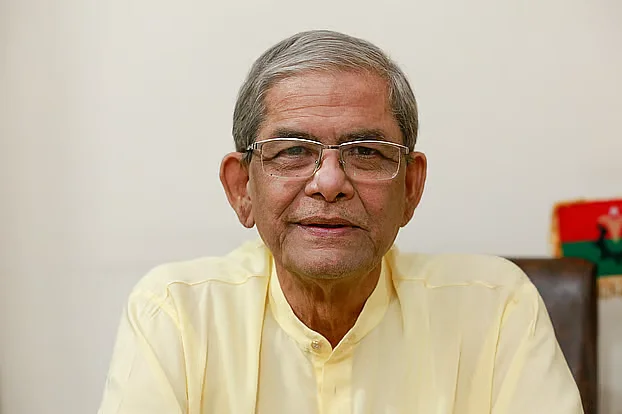
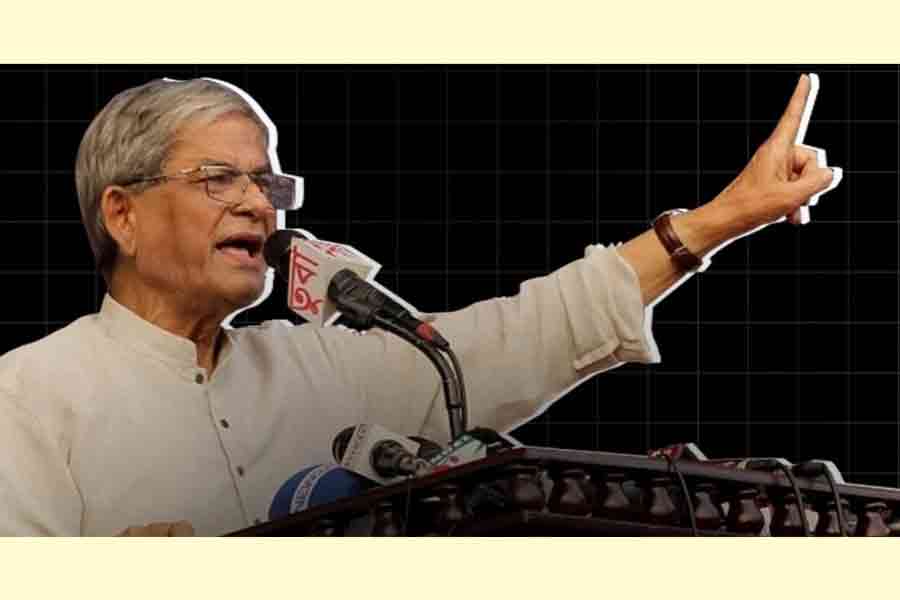
BNP Secretary General Mirza Fakhrul Islam Alamgir File photo
Prothom Alo : You’ve spoken of the BNP’s long struggle against the Awami League, and you also emphasised the youth’s role. But now, as we mark one year since the mass uprising, we’re seeing serious divisions among the parties that took part in it. Why is that?
Mirza Fakhrul Islam Alamgir: There are reasons for this. We are a political party with long-standing experience — in movements, in elections, and in governance. We have responsibilities when it comes to forming a government and running the country. As you know, the reform proposal — who brought it forward? It was we. In 2016, we declared our “Vision 2030.” These experience-based ideas we bring forward — the new parties are struggling to accept them.
And those who are speaking the loudest — many are older political parties — are also attacking the BNP. I think this is a tactic. They believe that by criticising the BNP, they can secure a spot in Parliament as the main opposition. When elections approach, this sort of positioning happens. Now that the government is neutral — and I have to say that — they have started speaking against BNP. I don’t see this as a major problem. If we continue talking through the National Consensus Commission, these issues will be resolved — the reform matters will be settled. All of this can be worked out within a month.
Prothom Alo : Do you think this division is making it easier for the ousted authoritarian Awami League to return?
Mirza Fakhrul Islam Alamgir: Absolutely not. I believe common sense and goodwill will prevail among everyone. This division won’t reach a point of no return, nor will it create a path for the return of the fascist Awami League. But yes, everyone must remain vigilant, and all sides have to play their part to ensure that we don’t get to that point.
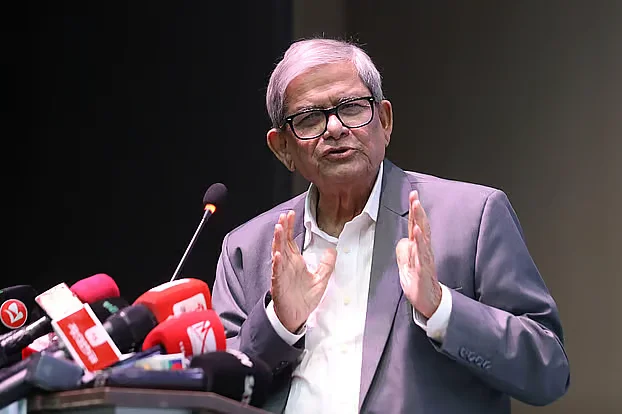
BNP Secretary General Mirza Fakhrul Islam Alamgir File photo
Prothom Alo : There is a lot of debate surrounding the issue of reforms, and political parties are blaming each other. Yet it was the BNP that first proposed a 27-point reform agenda, which was later expanded to 31 points. However, there seems to be disagreement on some constitutional reform issues, particularly regarding the balance of power. Why is that?
Mirza Fakhrul Islam Alamgir: The disagreements are mainly about proposals coming from the commission and from other parties. Apart from a few issues, we’ve reached consensus on most points. But there are some matters we believe are not practical or feasible. For example, there’s an ongoing objection about holding direct elections for women's seats. If a female candidate has to cover three constituencies, that seems impossible to us.
Another issue is the election to the upper house (second chamber), which some want to be based on proportional representation (PR). We believe that, based on our experience, it should follow the previous system. These matters can be resolved through dialogue.
Prothom Alo : In this context, some parties are saying they will not participate in elections without full reforms. The BNP has said it will go forward with reforms where consensus exists for now, and that key constitutional reforms will be undertaken by the elected government later. However, some argue that the mass uprising wasn’t just for an election or a change of power. How do you view this?
Mirza Fakhrul Islam Alamgir: There is a mistaken narrative being pushed — that the movement was solely about changing power or that the BNP moved just for that purpose. But we were the first to speak about changing the structure of the state. So how can anyone accuse us of being unwilling to pursue change?
Some individuals and a few media outlets — very few, actually — simply don’t like the BNP, and the reason is purely political. BNP is a fully nationalist and liberal democratic party. We believe in the power of the people and their mandate. A parliament elected by the people should govern the country, pass laws, and amend the Constitution. Reforms should come through parliament. Now, if someone tries to forcefully impose things outside of this process, it won’t be acceptable to the public.
Prothom Alo : Your 31-point agenda includes a promise to form a national government. But after the change in power on 5 August, leaders of the anti-discrimination student movement proposed forming a national government led by Professor Muhammad Yunus, with BNP as part of it. Why didn’t the BNP agree?
Mirza Fakhrul Islam Alamgir: After 5 August, either on that very day or the day after, we did not meet any of the leaders from the anti-discrimination student movement. We never received such a proposal. It did not come from the students; it may have come from other quarters. But the students themselves did not make such a proposal for forming a national government.
Prothom Alo : Then why didn’t the BNP accept the proposal that came from other quarters?
Mirza Fakhrul Islam Alamgir: Based on our experience, in a situation where decisions need to be made every moment, forming a national government wouldn't have worked. I still believe such a government wouldn’t have lasted even seven days. Everyone would have had their own agenda. It wouldn’t have held together.
Prothom Alo : You’ve said that the murder of scrap trader Lal Chand (Sohag) in Old Dhaka is being used by certain quarters as a pretext to disrupt the election environment. Why do you think that?
Mirza Fakhrul Islam Alamgir: I think that because if you closely observe the situation across the country, you’ll notice that killings have suddenly increased. We’ve received reports that certain groups are trying to disrupt or delay the election — they don’t want it to take place. Why are people forgetting that the ousted fascist Hasina is currently in India, sitting silently? She’s doing everything she can to create instability in Bangladesh.
Dr. Yunus knows this very well, and so do the intelligence agencies. There are plans for a major incident. They are trying to ruin the political situation in Bangladesh. That’s why we all must proceed with caution.
What happened in Mitford was absolutely horrific. But think about it — is this the first time such an incident has happened? Now BNP is being accused. But the victim was also connected to BNP. The party only acknowledges those who are active members. In past incidents like this, we have taken swift disciplinary action.
I say this because it looks like a deliberate setup — a plot to create a situation that would disrupt the election and prevent the return of a democratic environment.
Prothom Alo : So far, your party has taken organisational action against nearly 7,000 leaders and workers. Even so, why can’t the party control its criminally inclined members?
Mirza Fakhrul Islam Alamgir: Let me clarify — is everyone in BNP? Criminals and extortionists are a separate group. They join parties when it suits them. From the beginning, there’s been a trend of people trying to exploit the shelter of the ruling party to commit wrongdoing. But we are not in government — we only have the possibility of going into government. These things should be under state control — this is the failure of the government, not ours. We are not in power.
We are clearly saying: whoever is found to be involved in wrongdoing, take action against them. We support it.
To be continued...............
"I'm worried over rise of right-wing forces in politics"
One year has passed since the fall of the autocratic Sheikh Hasina government through a student-people's mass uprising. Since then, various political developments have been unfolding in the country. In this context, BNP Secretary General Mirza Fakhrul Islam Alamgir spoke to Prothom Alo about the July mass uprising and related events before and after it. The interview was conducted by Prothom Alo special correspondent Selim Zahid.
Prothom Alo : Prothom Alo: How are you doing?
Mirza Fakhrul Islam Alamgir: Physically, I’m not doing very well. Mentally, I’m distressed by the current political situation in the country.
Prothom Alo : You were abroad for quite some time for medical treatment and have now returned. There has been a lot of discussion and debate around reform and elections. Some people are saying that you are not as visible in your previous role as you had been over the past several years.
Mirza Fakhrul Islam Alamgir: That’s not true. As you know, I was abroad for quite some time after 5 August. Later, I also visited my daughter and stayed there for a while. After returning, I went to London and stayed there for a considerable time. Then, upon coming back, I developed an eye condition, which kept me sidelined. That’s the reason — there’s no other cause.
Besides, the BNP is a large party. Within the party, responsibilities are divided. For example, you may not be seeing me involved directly in the reform discussions. But I did attend the first meeting of the National Consensus Commission on reform. After that, although I may not have been present in subsequent committee meetings formed under our reform commission, those committees were created by our party. Members are speaking and working as per the guidance of the party’s Standing Committee.
Prothom Alo : Around this time last year, the student movement had taken over the streets. On 5 August, the autocratic government fell. What has the BNP learned from the July mass uprising?
Mirza Fakhrul Islam Alamgir: For the BNP, this lesson is not new. People of this region have been fighting against ruling classes since the Mughal and British eras. And for the past 15–16 years, we have been leading the movement against fascists.
Let me say something I’ve repeated many times — in public rallies too — that without the active involvement of the youth, this movement cannot succeed. I’m sure you remember. Later, when the quota reform movement began and students stepped forward, some people asked why we didn’t join then. We didn’t directly join the quota movement for valid reasons — because students could have questioned why we were getting involved. That’s happened before. So instead, we supported them. We instructed our student wing, the Chhatra Dal, to take part in the movement — and they did. That gave it momentum. At that time, we were in communication with student leaders, and even our party chairman (Tarique Rahman) was in touch.
Later, when the movement shifted toward anti-government protests, we were in constant communication. All our top leaders had been arrested. Only Abbas Bhai (Mirza Abbas) and I were still outside. I held daily press conferences at our Gulshan office and consistently said that we must be part of this movement. Every day, the leaders who remained active took part in protests. We were leading the movement against the Awami League.
BNP Secretary General Mirza Fakhrul Islam Alamgir File photo
Prothom Alo : You’ve spoken of the BNP’s long struggle against the Awami League, and you also emphasised the youth’s role. But now, as we mark one year since the mass uprising, we’re seeing serious divisions among the parties that took part in it. Why is that?
Mirza Fakhrul Islam Alamgir: There are reasons for this. We are a political party with long-standing experience — in movements, in elections, and in governance. We have responsibilities when it comes to forming a government and running the country. As you know, the reform proposal — who brought it forward? It was we. In 2016, we declared our “Vision 2030.” These experience-based ideas we bring forward — the new parties are struggling to accept them.
And those who are speaking the loudest — many are older political parties — are also attacking the BNP. I think this is a tactic. They believe that by criticising the BNP, they can secure a spot in Parliament as the main opposition. When elections approach, this sort of positioning happens. Now that the government is neutral — and I have to say that — they have started speaking against BNP. I don’t see this as a major problem. If we continue talking through the National Consensus Commission, these issues will be resolved — the reform matters will be settled. All of this can be worked out within a month.
Prothom Alo : Do you think this division is making it easier for the ousted authoritarian Awami League to return?
Mirza Fakhrul Islam Alamgir: Absolutely not. I believe common sense and goodwill will prevail among everyone. This division won’t reach a point of no return, nor will it create a path for the return of the fascist Awami League. But yes, everyone must remain vigilant, and all sides have to play their part to ensure that we don’t get to that point.
BNP Secretary General Mirza Fakhrul Islam Alamgir File photo
Prothom Alo : There is a lot of debate surrounding the issue of reforms, and political parties are blaming each other. Yet it was the BNP that first proposed a 27-point reform agenda, which was later expanded to 31 points. However, there seems to be disagreement on some constitutional reform issues, particularly regarding the balance of power. Why is that?
Mirza Fakhrul Islam Alamgir: The disagreements are mainly about proposals coming from the commission and from other parties. Apart from a few issues, we’ve reached consensus on most points. But there are some matters we believe are not practical or feasible. For example, there’s an ongoing objection about holding direct elections for women's seats. If a female candidate has to cover three constituencies, that seems impossible to us.
Another issue is the election to the upper house (second chamber), which some want to be based on proportional representation (PR). We believe that, based on our experience, it should follow the previous system. These matters can be resolved through dialogue.
Prothom Alo : In this context, some parties are saying they will not participate in elections without full reforms. The BNP has said it will go forward with reforms where consensus exists for now, and that key constitutional reforms will be undertaken by the elected government later. However, some argue that the mass uprising wasn’t just for an election or a change of power. How do you view this?
Mirza Fakhrul Islam Alamgir: There is a mistaken narrative being pushed — that the movement was solely about changing power or that the BNP moved just for that purpose. But we were the first to speak about changing the structure of the state. So how can anyone accuse us of being unwilling to pursue change?
Some individuals and a few media outlets — very few, actually — simply don’t like the BNP, and the reason is purely political. BNP is a fully nationalist and liberal democratic party. We believe in the power of the people and their mandate. A parliament elected by the people should govern the country, pass laws, and amend the Constitution. Reforms should come through parliament. Now, if someone tries to forcefully impose things outside of this process, it won’t be acceptable to the public.
Prothom Alo : Your 31-point agenda includes a promise to form a national government. But after the change in power on 5 August, leaders of the anti-discrimination student movement proposed forming a national government led by Professor Muhammad Yunus, with BNP as part of it. Why didn’t the BNP agree?
Mirza Fakhrul Islam Alamgir: After 5 August, either on that very day or the day after, we did not meet any of the leaders from the anti-discrimination student movement. We never received such a proposal. It did not come from the students; it may have come from other quarters. But the students themselves did not make such a proposal for forming a national government.
Prothom Alo : Then why didn’t the BNP accept the proposal that came from other quarters?
Mirza Fakhrul Islam Alamgir: Based on our experience, in a situation where decisions need to be made every moment, forming a national government wouldn't have worked. I still believe such a government wouldn’t have lasted even seven days. Everyone would have had their own agenda. It wouldn’t have held together.
Prothom Alo : You’ve said that the murder of scrap trader Lal Chand (Sohag) in Old Dhaka is being used by certain quarters as a pretext to disrupt the election environment. Why do you think that?
Mirza Fakhrul Islam Alamgir: I think that because if you closely observe the situation across the country, you’ll notice that killings have suddenly increased. We’ve received reports that certain groups are trying to disrupt or delay the election — they don’t want it to take place. Why are people forgetting that the ousted fascist Hasina is currently in India, sitting silently? She’s doing everything she can to create instability in Bangladesh.
Dr. Yunus knows this very well, and so do the intelligence agencies. There are plans for a major incident. They are trying to ruin the political situation in Bangladesh. That’s why we all must proceed with caution.
What happened in Mitford was absolutely horrific. But think about it — is this the first time such an incident has happened? Now BNP is being accused. But the victim was also connected to BNP. The party only acknowledges those who are active members. In past incidents like this, we have taken swift disciplinary action.
I say this because it looks like a deliberate setup — a plot to create a situation that would disrupt the election and prevent the return of a democratic environment.
Prothom Alo : So far, your party has taken organisational action against nearly 7,000 leaders and workers. Even so, why can’t the party control its criminally inclined members?
Mirza Fakhrul Islam Alamgir: Let me clarify — is everyone in BNP? Criminals and extortionists are a separate group. They join parties when it suits them. From the beginning, there’s been a trend of people trying to exploit the shelter of the ruling party to commit wrongdoing. But we are not in government — we only have the possibility of going into government. These things should be under state control — this is the failure of the government, not ours. We are not in power.
We are clearly saying: whoever is found to be involved in wrongdoing, take action against them. We support it.
To be continued...............