| Global Defense, OSINT & Geopolitics Wire

[🇧🇩] Monitoring the political activities of BNP

[🇧🇩] Monitoring the political activities of BNP
467
23K
More threads by Saif

G Bangladesh Defense

BNP MP Ferdousi Ahmed Misti resigns, seat declared vacant

Staff Correspondent
Dhaka

1790897238734.webp

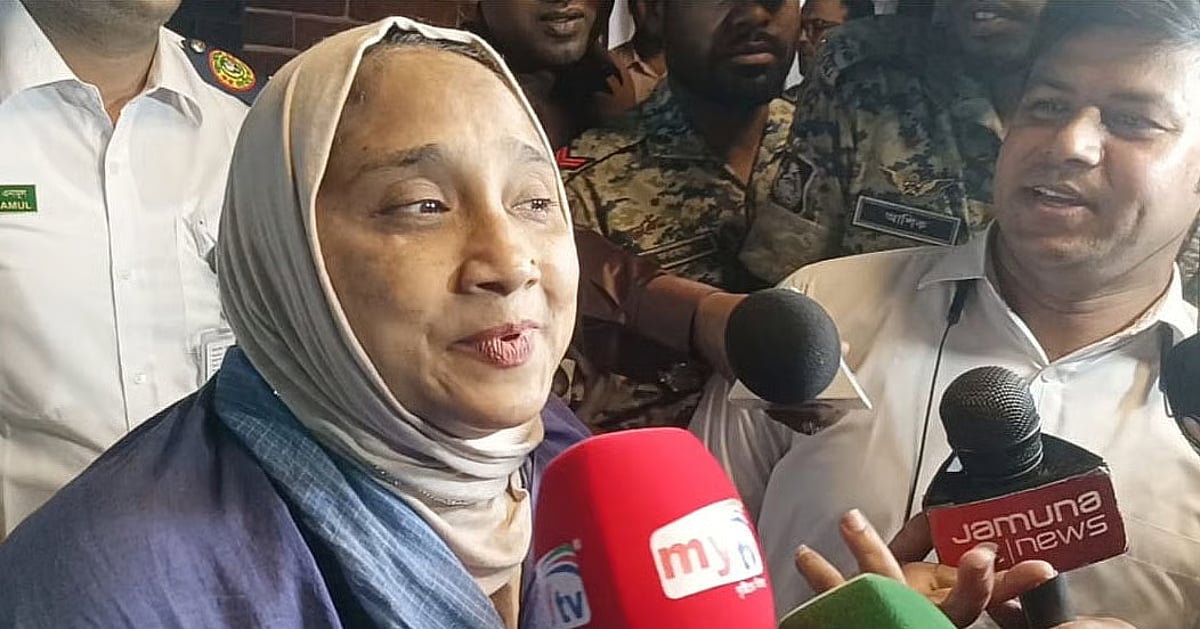
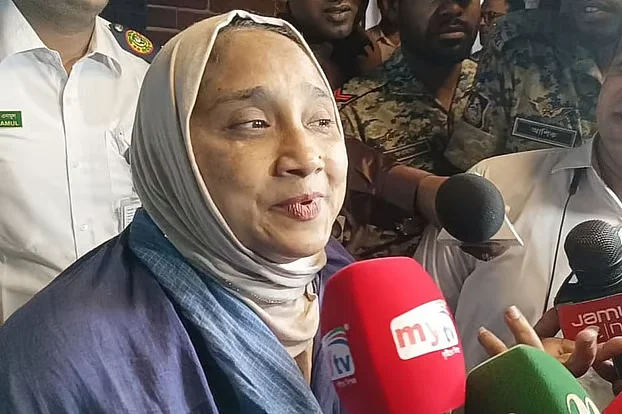
BNP MP Ferdousi Ahmed Misti Prothom Alo

Ferdousi Ahmed Mishti, a BNP lawmaker elected to a reserved seat for women, has resigned from Parliament.

She met Speaker Hafiz Uddin Ahmed at around 1:45pm today and submitted her resignation. The Parliament Secretariat has already issued a gazette notification declaring her seat vacant.

Ferdousi Ahmed Mishti was elected as a reserved-seat lawmaker on a BNP nomination. There are 50 reserved seats for women in Parliament. Under the Constitution, these seats are distributed among political parties in proportion to the number of directly elected members they have in Parliament. This time, 36 women were elected to reserved seats on BNP nominations. The gazette notification for the reserved-seat lawmakers was published on 30 April, and they took oath on 3 May. Ferdousi Ahmed Mishti has therefore resigned as an MP after serving for about five months.

A senior source at the Prime Minister’s Office said Prime Minister and BNP Chairman Tarique Rahman instructed Ferdousi to resign on Wednesday night. She was also told that stricter action would be taken against her if she did not resign as soon as possible.

Ferdousi met Speaker Hafiz Uddin Ahmed at around 1:45pm today. It was then reported that she had resigned.

However, after leaving the meeting with the Speaker, Ferdousi told reporters, “The Speaker called me, and I met him.” Asked about her resignation, she said, “Let there be an investigation.” When asked whether she had submitted her resignation letter, she replied, “Whatever decision the BNP takes will be followed.”

The Speaker’s office later said Hafiz Uddin Ahmed would speak to reporters in the afternoon.

According to sources in the BNP and the government, the government is also taking a tough stance over the Radda incident. The Prime Minister has been gathering information about the incident for the past two days, including who was involved in the attack and vandalism, their political affiliations and who was behind the incident. Sources familiar with the matter said information had also emerged about the involvement of several people known to be close to Ferdousi Ahmed.

A source at the BNP policymaking level told Prothom Alo that the party’s top leadership is taking the Radda incident seriously. The government is embarrassed by allegations involving party leaders and activists in the destruction and looting of a healthcare facility and an alleged attempt to grab its land. After information emerged about the involvement of people known to be close to Ferdousi Ahmed, her role and political responsibility have also come under discussion. In such circumstances, a tough decision could also be taken regarding the lawmaker based on the findings of the investigation.

Names of people close to the MP

Prothom Alo’s investigation found information about the involvement of several people associated with local BNP politics in the attack and vandalism at the Radda healthcare centre. Among them are former member of the Dhaka North City BNP, Mohammad Hanif Mia, and former member secretary of the Dhaka North unit of Jubo Dal, Mostafa Jaglul Pasha. Sources familiar with the matter said they are known locally as people close to Ferdousi Ahmed.

More than 200 masked people armed with locally made weapons looted and then demolished the Radda MCH-FP Centre in Mirpur, Dhaka, on 25 September 2026.

People associated with local BNP politics were also reportedly involved in the activities of the “Sammona Dokandar Samabaya Samity Limited”, which came under discussion after the Radda Centre was demolished.

Ferdousi Ahmed was the president of the association in 2006, when she was a commissioner representing Ward No. 8 of Shah Ali police station. At the time, she signed as the association’s president an application submitted to the Housing and Public Works authorities seeking allocation of the land where the Radda Centre was located in the name of the association.​
 

BNP goes hard on unruly party members
Staff Correspondent . Dhaka 02 October, 2026, 01:01

1790898068751.webp


The ruling Bangladesh Nationalist Party has taken a hardline against its leaders and activists accused of criminal activities amid growing public criticism over a series of incidents, including the attack on RADDA MCH-FP Centre at Mirpur in the city and allegations of land grabbing and extortion across the country.

The party has already dissolved several committees of its main organisation and affiliated bodies.

A BNP reserved-seat lawmaker has also resigned as a Member of Parliament on the prime minister’s directive after allegations of her involvement in the Mirpur attack emerged.

The Dhaka Metropolitan North BNP, Jatiyatabadi Juba Dal and Dhaka Metropolitan West Chhatra Dal committees have already been dissolved, while 14 leaders and activists of the BNP, Juba Dal, Chhatra Dal, Swechchhasebak Dal and Sramik Dal have been expelled from the organisations.

The party said it would not take responsibility for any misconduct by the expelled individuals and instructed its leaders and activists not to maintain organisational ties with them.

BNP senior leaders said the party was implementing its chairman Tarique Rahman’s directive to take actions against anyone involved in criminal or unethical activities, irrespective of political affiliations.

They said the party had not only taken organisational action but had also filed cases against some of its members and handed them over to law enforcement agencies.

They said that further organisational and legal actions against those involved in criminal activities would become visible within a couple of days.

Meanwhile, BNP reserved-seat lawmaker Ferdousi Ahmed Mishti resigned as an MP on Thursday following a directive from the prime minister over allegations of her involvement in the attack and demolition of the health facility in the city.

A senior official at the prime minister’s office said Tarique Rahman, also BNP chairman, on Wednesday night had instructed Ferdousi to resign and warned of tougher party action if she failed to do so promptly.

The development came a week after an overnight attack on the nearly 50-year-old RADDA MCH-FP Centre at Mirpur, on September 25.

The attackers demolished the facility and, after occupying the property, put up a signboard reading ‘Somomona Dokandar Samity Ltd’ in front of the premises.

Home minister Salahuddin Ahmed said on Wednesday that an investigation was under way against a local lawmaker over the demolition.

Juba Dal leaders, speaking to New Age on condition of anonymity, said allegations had emerged against several members of the party over extortion, land grabbing and attempts to control cable television and internet businesses.

They said reports prepared by law enforcement agencies had also contained allegations against several committee members.

According to a Dhaka Metropolitan Police list, 1,530 people have been identified as allegedly involved in extortion and land and property grabbing across the capital.

Of them, 278 were identified as alleged patrons, including 230 current or former BNP leaders and activists or members of its affiliated organisations.

At least 350 of the remaining 1,252 people identified as active at the field level were also linked to the BNP or its affiliated bodies, according to the list.

Prime minister’s office spokesperson Mahdi Amin on Wednesday said the government was working to restore law and order and ensure the arrest of offenders without delay.

He said the government would take action under the law against anyone attempting to create instability, adding that investigations and arrests were being pursued as quickly as possible.

Earlier, the BNP lawmakers raised growing concerns over the security situation at a parliamentary party meeting on June 6.

The meeting, chaired by prime minister Tarique Rahman at the Jatiya Sangsad, discussed deteriorating law and order and increasing violent crimes.​
 

A lesson in accountability
Abdul Hamid Mahbub 03 October, 2026, 00:00


1790986978934.webp


IN POLITICS, gaining power is important, but understanding where the limits of that power lie and how a party and the state respond when allegations of abuse of power arise is even more important. The reported decision to ask Ferdousi Ahmed Misty, a Bangladesh Nationalist Party reserved seat lawmaker, to resign over the attack, looting and vandalism at Radda Mother and Child Health and Family Planning Centre in Mirpur therefore deserves particular attention. Prime minister and BNP chair Tarique Rahman reportedly instructed her to step down. As expected, Ferdousi Ahmed Misty met the speaker and submitted her resignation. It took effect immediately. The reserved parliamentary seat she occupied is now vacant.

The incident at the Radda MCHFP Centre was not an ordinary case of vandalism. Reports citing eyewitnesses and people familiar with the incident said that more than two hundred masked individuals attacked the facility on the night of September 25. After taking security personnel hostage, the attackers reportedly damaged parts of the health centre. Medicines, medical equipment, computers, generators and other items were looted. One permanent building and three semi-permanent structures were also demolished. According to the case documents, the amount of damage was estimated at more than Tk 10 million.

More importantly, the Radda MCHFP Centre had reportedly been providing basic health care, maternal care and family planning services to poor and vulnerable women and children for nearly five decades. The institution also operated vaccination programmes under a government partnership. Therefore, an attack and destruction involving a healthcare facility cannot be viewed merely as a dispute over land or property. It also concerns the rights of ordinary people to access essential healthcare services.

Ferdousi Ahmed Misty has been accused of having links to the incident. She has denied any involvement in the attack and vandalism and has said that the police should investigate the matter and take legal action. In other words, an allegation and proof cannot be treated as the same thing. Who planned the attack, who was present at the scene, who provided money, manpower or equipment and whether anyone gave instructions for the incident are questions that should be determined through a proper investigation.

Yet one point is clear from a political and ethical perspective. A party affiliation cannot be allowed to become a reason to stop or weaken an investigation into serious allegations. If a leader, activist or elected representative of a ruling party faces serious allegations, allowing the legal process to proceed independently of political identity and taking appropriate action within the party when necessary, is an important part of political accountability. The resignation of the lawmaker can therefore be viewed in the broader context of accountability in politics.

It is also worth noting that home minister Salahuddin Ahmed said after the incident that action would be taken if an investigation established the involvement of any member of parliament and that no one would be given special protection. At the same time, the officer in charge of Shah Ali police station was withdrawn over alleged negligence of duty and departmental action was said to be under consideration. Police also said that several people had been arrested on suspicion of involvement in the incident and that legal proceedings were under way.

There is an important lesson here. It is not possible for a prime minister at the highest level of government to personally monitor every incident in every locality or the actions of every individual. What a leader can do, however, is establish a policy and an institutional framework. The principle should be simple: holding a party position must not place anyone above the law. When allegations of abuse of power arise, there should be an investigation. If the allegations are substantiated, action should follow. Neither the political identity of the complainant nor that of the accused should become a substitute for due process.

This is where the greatest potential in the Radda episode lies. If a political party genuinely wants to hold its leaders and activists accountable, taking action in one high profile case will not be enough. There needs to be an effective organisational mechanism to examine serious allegations against party officeholders at every level, from local to national. This could take the form of an independent internal monitoring cell. Its role, however, should not be to determine guilt. Its responsibility should be to receive complaints, conduct an initial review of the available information, collect relevant documents and refer the matter to the appropriate authorities. If evidence is found, both party disciplinary measures and legal action could follow. Such a system would also allow a party to identify weaknesses within its own organisational structure.

In Bangladesh, political identity often increases an individual’s social and administrative influence. When that influence is used as a tool for personal gain rather than to protect the public interest, the damage extends beyond an individual or an institution. It damages the reputation of the political party as a whole. More importantly, it can undermine public trust in the state. If people begin to believe that criminal acts will go unpunished because someone carries the identity of a ruling party, the very foundation of the rule of law becomes weaker.

The Radda incident, therefore, became a test of organisational accountability for the BNP as well. On the one hand, a lawmaker faced serious allegations. On the other, she denied involvement. Ultimately, following scrutiny at the highest level of the party leadership, she was unable to retain her parliamentary position. What happens next will be determined by the investigation and the legal process. Much will depend on whether the party leadership also takes a firm position on the political responsibility arising from the allegations. If it does, it could establish an important principle for the future. The message should be clear: a party position is not a shield from accountability and holding public office is not a licence to exercise personal influence. The same standard should apply to every other political parties and organisations.

Ultimately, the investigation will determine what happened at Radda, who planned the incident, who carried out the attack and what role each person played. A political decision and criminal liability are not the same. But the incident has created an opportunity for a political party to strengthen a culture of accountability within its own ranks. In that sense, the BNP has taken a step towards accountability. The real test now is whether political affiliation will provide no protection when allegations are substantiated and whether the same principle will be applied

to party officeholders across the country. If that happens, it could mark the beginning of an important organisational change in Bangladesh’s political culture. In the end, people remember what political parties do more than what they say. If that conduct means holding even one’s own people accountable when power is abused, its significance will extend far beyond a single incident.

Abdul Hamid Mahbub is a journalist and children’s writer.​
 

BNP steps up activities amid opposition programmes

Selim Zahid


1791069409640.webp

BNP logo File photo

Ruling Bangladesh Nationalist Party (BNP) is stepping up its political and organisational activities amid a series of programmes by opposition parties led by Jamaat-e-Islami and activities by the Awami League, whose activities have been banned in the country.

According to party sources, organisational instructions have been issued to prepare counter-programmes at the field level. The party has already begun holding what it calls “undeclared” programmes in Dhaka and elsewhere.

BNP leaders, however, say they are not organising the programmes because of any pressure, but to counter what they describe as “propaganda” by the opposition and activities of the Awami League.

Speaking to several senior BNP leaders, Prothom Alo learned that sudden fuel price hikes amid economic difficulties and other pressures have created unease within the party. Jamaat-e-Islami, the National Citizen Party (NCP) and several other opposition parties have already been carrying out various programmes. The fuel price hike has added a new issue to their programmes.

The recent activities of the Awami League have also concerned BNP policymakers. BNP leaders have accused the Awami League of involvement in incidents of violence and arson targeting buses and trains in Dhaka and elsewhere. According to party sources, these developments have caused concern within the BNP.

Several senior government officials and ministers told Prothom Alo on condition of anonymity that the government’s image is declining with each passing day. In this situation, they said, Prime Minister Tarique Rahman’s personal image is currently the government’s only asset.

‘Undeclared’ programmes and organisational preparations

Party sources said the protest marches and rallies that the BNP has been holding in Dhaka and different parts of the country in recent days are primarily counter-programmes to those of the opposition parties and part of the party’s effort to demonstrate its political position against Awami League activities. Instructions have also been issued to step up organisational activities at the district and metropolitan levels.

The BNP held a virtual meeting with leaders from the Chattogram division last Friday. BNP Standing Committee member and the prime minister’s political adviser Nazrul Islam Khan, Acting Secretary General Ruhul Kabir Rizvi and Special Secretary Belayet Mridha attended the meeting.

A meeting with leaders from the Dhaka division is expected to be held within a few days. Party sources said Prime Minister and BNP Chairman Tarique Rahman may attend the meeting.

The nature of the BNP’s organisational activities indicates that the party is attaching importance not only to the government’s administrative work but also to remaining politically active on the ground.

The 11-party alliance led by Jamaat held long marches from Dhaka to Chattogram on 5 September and from Dhaka to Rangpur on 19 September.

The programmes were held with demands including resolving the fuel and electricity crisis, controlling commodity prices, improving law and order, and ending corruption and extortion.

Alliance coordinator AHM Hamidur Rahman Azad said at the programmes that the government was feeling pressure because of these activities.

Meanwhile, fuel prices were increased on 21 September, by Tk 20 per litre. Jamaat, the NCP, Khelafat Majlis and Islami Andolan Bangladesh, among several other parties, held programmes in protest.

They said people were already under pressure from rising commodity prices and that higher fuel prices would further increase transportation, agricultural, industrial and everyday consumer costs.

The government says the cost of fuel and transportation in the international market has risen because of the war in the Middle East. As prices are higher in several neighbouring countries, there is also a risk of cheaper fuel being smuggled out of the country.

State Minister for Energy Aninda Islam said that if prices had not been increased, the government would have faced a subsidy or loss burden of around Tk 400 billion a year on diesel alone and around Tk 500 billion on all petroleum products.

Speaking about this, Mohammad Hatem, president of the Bangladesh Knitwear Manufacturers and Exporters Association (BKMEA), told Prothom Alo that given the rate at which fuel prices have risen in the global market, the government had little alternative but to raise prices.

However, he said the increase had been too high. In particular, a smaller increase in diesel prices would have reduced pressure on ordinary people and industries. He stressed the need for prompt price adjustments when global prices fall.

BNP says there is ‘no pressure’

BNP Acting Secretary General Ruhul Kabir Rizvi has said at several meetings and rallies that the government is not responsible for the increase in fuel prices.

He argued that the fuel crisis had emerged because of the war in the Middle East and the situation in the international market.

According to him, even after the price increase, the government will incur a loss of around Tk 70 per litre of diesel.

Regarding the BNP’s political programmes, Ruhul Kabir Rizvi told Prothom Alo that the party was not holding programmes because of any pressure.

He said opposition parties were holding one programme after another and spreading propaganda to mislead people. “This confusion must be dispelled,” he said.

He also alleged that the Awami League was deliberately carrying out acts of violence and arson with the aim of creating instability. According to him, the BNP is holding political programmes to counter what he called the opposition’s misinformation and to confront “fascist forces”.

AHM Hamidur Rahman Azad, central assistant secretary general of Jamaat-e-Islami, however, told Prothom Alo that the fuel crisis is an issue for both the government and the opposition.

He said opposition parties were holding programmes out of a sense of responsibility to help resolve the problem, not to put pressure on anyone. Sending a message to the government to remain accountable and alert is also a form of cooperation, he said.

Overall, amid a series of programmes by opposition parties and activities by the Awami League, the BNP is also increasing its political and organisational presence on the ground.

The party’s leaders, however, do not want this to be described as a response to pressure from the opposition. They say they are stepping up their programmes and organisational preparations to counter what they describe as “propaganda” by opposition parties, respond to Awami League activities and present their own political position to the public.​
 

BNP tightens discipline, moves to strengthen organisation

BNP Standing Committee Member Selima Rahman said the party had adopted a zero-tolerance policy towards wrongdoing.


1791072331186.webp

File photo

Tanvir HasanTanvir Hasan

The BNP has adopted a tougher organisational approach to enforcing party discipline and strengthening its structure, with recent actions targeting allegations of misconduct and irregularities. At the same time, efforts are underway to revitalise key units in Dhaka and expand activities at the grassroots level.

In recent weeks, the party has signalled a zero-tolerance stance through the expulsion of leaders and activists, the dissolution of committees and an order for a lawmaker to resign. It has also begun reorganising key organisational units in Dhaka, expanding grassroots activities and prioritising clean reputations, organisational experience and public engagement in leadership selection.

BNP Standing Committee member Selima Rahman said the party had adopted a zero-tolerance policy towards wrongdoing.

“We have a zero-tolerance policy against any wrongdoing. The prime minister is also taking a strict stance, and I think this is the right policy,” she said.

She said BNP leaders and activists had faced repression and persecution for a long time, and some may have developed an attitude after the change of power that “the Awami League did it, so I will do it too”.

“Such behaviour is not acceptable,” she said.

“Party discipline will be maintained at any cost. At the same time, when allegations are raised, they are being verified and organisational action is being taken accordingly,” Selima Rahman said.

The central leadership's position has also been reflected in several recent incidents.

Reserved women's seat lawmaker Ferdousi Ahmed Misty was instructed by the prime minister to resign following allegations of an attack, vandalism and looting at the Radda MCH-FP Centre in Mirpur. She has denied the allegations and called for an investigation to clarify the matter.

Earlier, three key organisational committees in Dhaka were dissolved, including the 51-member convening committee of Dhaka North BNP, Dhaka North Jubo Dal and Dhaka West Chhatra Dal.

During the same period, 14 leaders and activists of the BNP and its affiliated and associate organisations were expelled over allegations of violating party discipline and engaging in unethical activities deemed unacceptable by the party.

However, not all the committee dissolutions were directly linked to the Radda centre incident, and the relevant notices did not mention the incident.

No specific reason was given for dissolving the Dhaka North BNP committee, although the party said a new committee would be formed. Jubo Dal and Chhatra Dal, meanwhile, said their respective committees had been dissolved because their terms had expired.

Warning against using party identity for personal gain

Party sources said the central leadership had issued strict warnings against using the BNP's identity for personal gain.

District and metropolitan leaders have been instructed to monitor the activities of party leaders and activists in their respective areas and promptly inform the central leadership if anyone is found using the party's identity to exert influence, engaging in extortion, occupying property, seeking personal benefits or taking the law into their own hands.

BNP leaders said keeping the party organisation active had become increasingly important alongside running the government.

Having returned to power after a long period in opposition, the central leadership has stepped up scrutiny of grassroots leaders and activists, as well as the effectiveness of local organisational units.

Sources said a joint meeting held at the BNP's central office in September decided to increase political and organisational activities across the country.

Local units were instructed to keep party offices active, hold regular organisational meetings and programmes, strengthen communication among leaders at the thana and ward levels, and maintain a visible organisational presence in their respective areas.

The meeting also instructed party leaders to inform law enforcement agencies if they noticed suspicious activities or attempts to create disorder.

BNP begins process to form Dhaka metropolitan committees

The BNP has also begun the process of selecting new leadership for Dhaka North and Dhaka South, with public acceptability and the ability to maintain effective communication with leaders and activists at the ward and thana levels among the key considerations.

The focus on the Dhaka organisation stems not only from the capital's central role in political programmes but also from the upcoming local government elections.

The north and south metropolitan units are key structures for coordinating party organisations at the ward and thana levels. Ahead of the elections, the party needs to keep its grassroots network active around potential mayoral and councillor candidates.

According to party sources, a clean image alone will not be sufficient for the new leadership. Long-standing political and organisational experience, standing by the party during difficult times, maintaining communication with grassroots leaders and activists, and the ability to mobilise the organisation when necessary are also being considered.

Discussions are therefore underway on forming the new leadership by combining experienced organisers with relatively younger leaders.

At the same time, the BNP is emphasising the need to reduce internal divisions at the grassroots level.

Party Chairman Tarique Rahman has previously stressed the importance of reaching a consensus on fielding a single candidate in each area ahead of the local government elections. Maintaining organisational unity at the ward, thana and local levels has therefore become an important consideration for the central leadership.

However, discussions are also underway on ensuring that efforts to enforce organisational discipline do not alienate leaders and activists who have remained active on the ground for years.

A senior BNP leader said: “There is no alternative to leaders with clean images if we want to restore the party's organisational tradition, strengthen Dhaka-centric politics, prepare for the upcoming local government elections and maintain political stability.”​