Bangladesh Defense

Saif
Senior Member
- Joined
- Jan 24, 2024
- Messages
- 22,367
- Likes
- 9,875
- Nation

- Axis Group


The case for a National Security Council that is truly fit for purpose
In its election manifesto, BNP mentioned plans to establish a National Security Council alongside formulating a new national security strategy (page 21, under “Defence System”).
The case for a National Security Council that is truly fit for purpose
20 April 2026, 13:00 PM
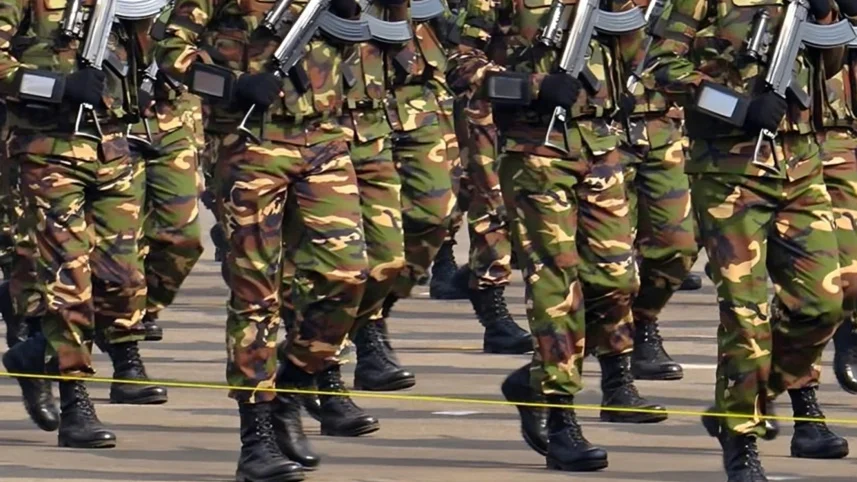
'A reformed structure should include a national security council chaired by the prime minister, supported by a permanent national security council secretariat led by a security adviser.' File photo: STAR
In its election manifesto, BNP mentioned plans to establish a National Security Council alongside formulating a new national security strategy (page 21, under “Defence System”). Tarique Rahman, the party chairperson and now prime minister of Bangladesh, reiterated the plan while addressing retired officers of Bangladesh Armed Forces on February 7, 2026, where he said if BNP assumed office, the government would engage former and serving army officers to set the groundwork for an effective National Security Council. As I was attending the address that day, I thought this emphasis on structural security reform was noteworthy.
Bangladesh’s security environment has gone through some major changes in the last few decades. Cross-border militant networks, cyber threats, digital financial vulnerabilities, maritime competition in the Bay of Bengal, geopolitical rivalry in the region, violent extremism, radicalisation, and transnational crime now intersect in ways that blur the line between internal and external security. Domestic stability may now be influenced by foreign clandestine activities and digital campaigns. Maritime security affects economic resilience, and regional tensions can quickly generate internal consequences. Managing such complexity requires a structured, permanent system that synthesises intelligence, aligns defence policy with national strategy, and anticipates risk before it escalates.
Bangladesh currently relies on several coordination mechanisms. The National Committee for Security Affairs (NCSA)—established in 2019 after the cabinet approved the National Defence Policy 2018—is headed by the prime minister and includes senior ministers, the service chiefs, intelligence heads, and top civil servants. The NCSA is the highest policy-making authority on national security in Bangladesh. Then there is the National Committee for Intelligence Coordination (NCIC), established in 2009, that focuses on intelligence sharing among key security agencies. The National Security Affairs Cell under the Cabinet Division, formed in 2019, provides administrative support, although it does not have the authority or resources to act as a strategic nerve center.
These mechanisms represent steps towards coordination. However, they remain committee-based rather than system-based. The NCSA is large and consultative, but it does not operate through a permanent strategic secretariat with defined analytical divisions. The intelligence coordination structure improves information sharing, but it does not institutionalise unified national assessment or long-term planning. This results in fragmentation. Bangladesh has capable intelligence institutions such as the Directorate General of Forces Intelligence (DGFI), National Security Intelligence (NSI), Special Branch (SB), Criminal Investigation Department (CID), Border Guard Bangladesh (BGB), and the Coast Guard, etc. Yet responsibilities are dispersed, and there is no single professional authority tasked with synthesising assessments from different security agencies into consolidated national advice.
This model can create confusion over who defines national security priorities, who harmonises internal and external intelligence, and who ensures that defence modernisation aligns with broader strategic objectives. Large committees are effective for consultation but are not substitutes for continuous analytical work supported by dedicated professional staff. Hence, the absence of a national security adviser’s (NSA) role can be considered a weakness, as without an NSA-led secretariat, coordination remains dependent on leadership bandwidth rather than institutional design, and security governance becomes reactive rather than anticipatory.
However, reform does not mean diminishing existing agencies. On the contrary, it can strengthen them. For example, the DGFI can continue to provide defence and external intelligence. NSI may remain central to internal security intelligence and counterterrorism. And law enforcement and border agencies may retain operational mandates. An effective national security council secretariat would not replace these institutions. It would integrate their outputs, identify intelligence gaps, harmonise reporting cycles, and ensure that national leadership receives unified assessments rather than fragmented briefings.
India undertook similar structural reforms and institutionalised a secretariat led by the national security adviser beneath the political leadership. The innovation here was not simply the creation of a council but the establishment of a permanent analytical engine with defined verticals for strategic planning, intelligence synthesis, and defence coordination. Bangladesh can adopt a similar strategy with its own constitutional framework. Most importantly, national security must be nonpartisan, as security threats do not distinguish between governments. An effective National Security Council must be institutional, accountable, and continuity-focused.
A reformed structure should include a national security council chaired by the prime minister, supported by a permanent national security council secretariat led by a security adviser. Beneath that office, defined directorates for strategic planning, intelligence coordination, defence affairs, foreign policy integration, cybersecurity, maritime security, and crisis response would provide analytical depth and structured oversight. Staffing should blend experienced civil servants with former military officers, former intelligence professionals, and former foreign service officials.
Bangladesh stands at a point where incremental adjustments are no longer sufficient. Our growing geopolitical and economic profile demands a mature and disciplined security architecture. Establishing a structured, accountable, and non-partisan security council system would not be a political victory for any party. Instead, it would be an institutional investment in the long-term stability and resilience of the state.
Brig General (Retd) Md Manzur Qader is a security and intelligence analyst, and executive director of Rohingya Advocacy Centre.
20 April 2026, 13:00 PM
'A reformed structure should include a national security council chaired by the prime minister, supported by a permanent national security council secretariat led by a security adviser.' File photo: STAR
In its election manifesto, BNP mentioned plans to establish a National Security Council alongside formulating a new national security strategy (page 21, under “Defence System”). Tarique Rahman, the party chairperson and now prime minister of Bangladesh, reiterated the plan while addressing retired officers of Bangladesh Armed Forces on February 7, 2026, where he said if BNP assumed office, the government would engage former and serving army officers to set the groundwork for an effective National Security Council. As I was attending the address that day, I thought this emphasis on structural security reform was noteworthy.
Bangladesh’s security environment has gone through some major changes in the last few decades. Cross-border militant networks, cyber threats, digital financial vulnerabilities, maritime competition in the Bay of Bengal, geopolitical rivalry in the region, violent extremism, radicalisation, and transnational crime now intersect in ways that blur the line between internal and external security. Domestic stability may now be influenced by foreign clandestine activities and digital campaigns. Maritime security affects economic resilience, and regional tensions can quickly generate internal consequences. Managing such complexity requires a structured, permanent system that synthesises intelligence, aligns defence policy with national strategy, and anticipates risk before it escalates.
Bangladesh currently relies on several coordination mechanisms. The National Committee for Security Affairs (NCSA)—established in 2019 after the cabinet approved the National Defence Policy 2018—is headed by the prime minister and includes senior ministers, the service chiefs, intelligence heads, and top civil servants. The NCSA is the highest policy-making authority on national security in Bangladesh. Then there is the National Committee for Intelligence Coordination (NCIC), established in 2009, that focuses on intelligence sharing among key security agencies. The National Security Affairs Cell under the Cabinet Division, formed in 2019, provides administrative support, although it does not have the authority or resources to act as a strategic nerve center.
These mechanisms represent steps towards coordination. However, they remain committee-based rather than system-based. The NCSA is large and consultative, but it does not operate through a permanent strategic secretariat with defined analytical divisions. The intelligence coordination structure improves information sharing, but it does not institutionalise unified national assessment or long-term planning. This results in fragmentation. Bangladesh has capable intelligence institutions such as the Directorate General of Forces Intelligence (DGFI), National Security Intelligence (NSI), Special Branch (SB), Criminal Investigation Department (CID), Border Guard Bangladesh (BGB), and the Coast Guard, etc. Yet responsibilities are dispersed, and there is no single professional authority tasked with synthesising assessments from different security agencies into consolidated national advice.
This model can create confusion over who defines national security priorities, who harmonises internal and external intelligence, and who ensures that defence modernisation aligns with broader strategic objectives. Large committees are effective for consultation but are not substitutes for continuous analytical work supported by dedicated professional staff. Hence, the absence of a national security adviser’s (NSA) role can be considered a weakness, as without an NSA-led secretariat, coordination remains dependent on leadership bandwidth rather than institutional design, and security governance becomes reactive rather than anticipatory.
However, reform does not mean diminishing existing agencies. On the contrary, it can strengthen them. For example, the DGFI can continue to provide defence and external intelligence. NSI may remain central to internal security intelligence and counterterrorism. And law enforcement and border agencies may retain operational mandates. An effective national security council secretariat would not replace these institutions. It would integrate their outputs, identify intelligence gaps, harmonise reporting cycles, and ensure that national leadership receives unified assessments rather than fragmented briefings.
India undertook similar structural reforms and institutionalised a secretariat led by the national security adviser beneath the political leadership. The innovation here was not simply the creation of a council but the establishment of a permanent analytical engine with defined verticals for strategic planning, intelligence synthesis, and defence coordination. Bangladesh can adopt a similar strategy with its own constitutional framework. Most importantly, national security must be nonpartisan, as security threats do not distinguish between governments. An effective National Security Council must be institutional, accountable, and continuity-focused.
A reformed structure should include a national security council chaired by the prime minister, supported by a permanent national security council secretariat led by a security adviser. Beneath that office, defined directorates for strategic planning, intelligence coordination, defence affairs, foreign policy integration, cybersecurity, maritime security, and crisis response would provide analytical depth and structured oversight. Staffing should blend experienced civil servants with former military officers, former intelligence professionals, and former foreign service officials.
Bangladesh stands at a point where incremental adjustments are no longer sufficient. Our growing geopolitical and economic profile demands a mature and disciplined security architecture. Establishing a structured, accountable, and non-partisan security council system would not be a political victory for any party. Instead, it would be an institutional investment in the long-term stability and resilience of the state.
Brig General (Retd) Md Manzur Qader is a security and intelligence analyst, and executive director of Rohingya Advocacy Centre.