Bangladesh Defense
Saif
Senior Member
- Jan 24, 2024
- 21,077
- 9,688
- Nation

- Residence
- Axis Group


100 Days of the Prime Minister: A message of responsibility, discipline and inspiration
He has initiated the Padma Barrage Project and has also made commitments regarding the Teesta Project. He is a sensitive leader who takes the concerns of common people seriously. He regularly reads the newspapers, talks to the reporters, learns the details, and takes action accordingly. He wants...
 en.prothomalo.com
100 Days of the Prime Minister: A message of responsibility, discipline and inspiration
Shahadat Shadhin
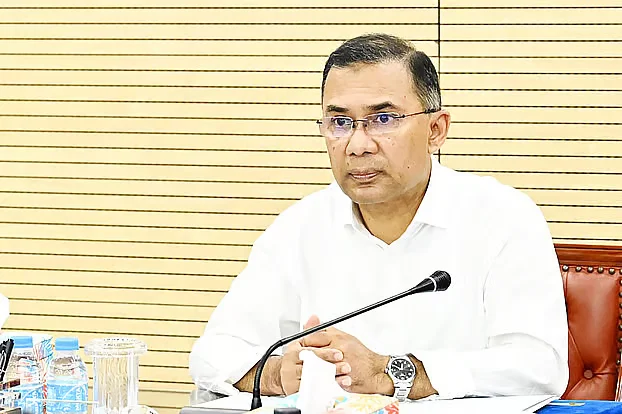
Prime Minister Tarique Rahman speaks at a meeting on easing traffic congestion in the capital
Prime Minister Tarique Rahman speaks at a meeting on easing traffic congestion in the capitalPress Wing
Bangladesh has embarked on a fresh journey after the struggle against 17 years of prolonged fascist rule, the July mass uprising, the departure of fascism at the cost of thousands of lives, the awakening of democracy in Bangladesh through the 12 February 12, and the revival of a vibrant parliament. At the helm is Prime Minister Tarique Rahman. Though he is new as prime minister, he is not new to politics. From his teenage years into youth, he traveled across the fields and villages of this country, reaching out and connecting with the people.
In his first 100 days as prime minister, Tarique Rahman has delivered and continues to deliver a message of action. He is working day and night to build a Bangladesh replete with human values. He is tirelessly working to fulfill every electoral promise. His groundbreaking initiatives, such as the Family Card and Farmer Card, are examples of that commitment. He is proving to be a visionary and compassionate leader. Initiatives like canal excavation and tree plantation are highly important in addressing climate change. In a small yet densely populated country like ours, no development can be sustainable without taking climate and the environment into account.
He has initiated the Padma Barrage Project and has also made commitments regarding the Teesta Project. He is a sensitive leader who takes the concerns of common people seriously. He regularly reads the newspapers, talks to the reporters, learns the details, and takes action accordingly. He wants to build a country that belongs to everyone.
Lee Kuan Yew inspired the entire nation to lift Singapore out of post-colonial uncertainty and poverty into economic stability. Nelson Mandela worked to build an inclusive state in post-apartheid South Africa instead of pursuing revenge. After World War II, Shigeru Yoshida led Japan’s economic recovery. Shaheed President Ziaur Rahman assumed responsibility during a critical period for the nation, laid the foundations of the country’s economy and industrial policy, united the entire nation, and created inspiration.
This is how leaders inspire nations. Tarique Rahman too works tirelessly round the clock and is also generating inspiration at home and abroad, within the government, parliament, schools and colleges, and among the youth. The prime minister is motivating young entrepreneurs. He has encouraged the disabled in innovations to boost confidence.
At an event organised for the Police Week, he said: “We all buy flats or land thinking about our children’s secure future. Let us also think about building a safe country for our children’s future.” If the country is safe, the safety of everyone’s children is ensured as well. He sees the country as one large family.
Complaints about not finding officials in government offices on time are longstanding. Since taking office, the prime minister himself has been arriving at the office at 9 am every day. This is having a positive impact across government offices throughout the country. He follows traffic laws himself, which encourages citizens to obey them as well. It is also sending a strong message to the traffic department to maintain discipline and to various branches of the government to establish order.
He is placing significant emphasis on creating employment opportunities for young people. He listens to the youth and thinks about their concerns. During a visit to Dhaka University, he sat with common students. He said, “I am sitting in front of the future of Bangladesh.” This reflects how he values young people.
Political tolerance, family values, refined cultural practices, patriotism, discipline, coordination, and dedication, are qualities we must cultivate to build the nation. Only then will the prime minister’s “I Have a Plan” vision be fully realised.
We have moved beyond a culture of fear. That is why the prime minister wants to hear everyone’s opinions and questions, not scripted ones. It is important to be a good listener while sitting in the prime minister’s chair. The prime minister has met with editors and publishers. Even before assuming office, he exchanged views with journalists. No one’s political ideology was considered a factor there.
The prime minister has emphasised restoring a culture of political tolerance. There will always be differences of opinion in politics; in fact, agreeing to disagree is essential. Unfortunately, for a long time our nation was deliberately divided on various issues. Although the mass uprising of 2024 emerged through a united national struggle, many unfortunately attempted after 5 August to pit 1971 against 2024. Here, Tarique Rahman and the Bangladesh Nationalist Party (BNP) played a responsible role.
Tarique Rahman said, “1971 was our struggle to achieve independence, while 2024 was our struggle to protect that independence.” Through this, he freed the nation from unnecessary division and futile arguments and delivered a message of national unity: there may be differences of opinion in democracy, but not division. Immediately after the election, the prime minister visited the homes of Jamaat Ameer Shafiqur Rahman and NCP Convener Nahid Islam.
A strong parliament is essential for an effective and stable democracy. The BNP government is emphasising keeping parliament vibrant and turning it into the central hub of national discussion. According to the proposal in the July Charter, BNP wanted to give the position of deputy speaker to the opposition. To address the energy crisis, an all-party committee was formed with five members each from the ruling and opposition parties. If an opposition member of parliament falls ill, the prime minister personally visits them. As part of political goodwill, he has also attended iftar gatherings hosted by the opposition.
He is reminding us of the importance of personal and family values. When the prime minister meets schoolchildren, he not only encourages them to study textbooks but also tells them to play sports, reduce mobile phone use, and read fiction too. The prime minister is encouraging a culture of reading books.
Political tolerance, family values, refined cultural practices, patriotism, discipline, coordination, and dedication, are qualities we must cultivate to build the nation. Only then will the prime minister’s “I Have a Plan” vision be fully realised.
* Shahadat Swadhin is Deputy Press Secretary to the Prime Minister
Shahadat Shadhin
Prime Minister Tarique Rahman speaks at a meeting on easing traffic congestion in the capital
Prime Minister Tarique Rahman speaks at a meeting on easing traffic congestion in the capitalPress Wing
Bangladesh has embarked on a fresh journey after the struggle against 17 years of prolonged fascist rule, the July mass uprising, the departure of fascism at the cost of thousands of lives, the awakening of democracy in Bangladesh through the 12 February 12, and the revival of a vibrant parliament. At the helm is Prime Minister Tarique Rahman. Though he is new as prime minister, he is not new to politics. From his teenage years into youth, he traveled across the fields and villages of this country, reaching out and connecting with the people.
In his first 100 days as prime minister, Tarique Rahman has delivered and continues to deliver a message of action. He is working day and night to build a Bangladesh replete with human values. He is tirelessly working to fulfill every electoral promise. His groundbreaking initiatives, such as the Family Card and Farmer Card, are examples of that commitment. He is proving to be a visionary and compassionate leader. Initiatives like canal excavation and tree plantation are highly important in addressing climate change. In a small yet densely populated country like ours, no development can be sustainable without taking climate and the environment into account.
He has initiated the Padma Barrage Project and has also made commitments regarding the Teesta Project. He is a sensitive leader who takes the concerns of common people seriously. He regularly reads the newspapers, talks to the reporters, learns the details, and takes action accordingly. He wants to build a country that belongs to everyone.
Lee Kuan Yew inspired the entire nation to lift Singapore out of post-colonial uncertainty and poverty into economic stability. Nelson Mandela worked to build an inclusive state in post-apartheid South Africa instead of pursuing revenge. After World War II, Shigeru Yoshida led Japan’s economic recovery. Shaheed President Ziaur Rahman assumed responsibility during a critical period for the nation, laid the foundations of the country’s economy and industrial policy, united the entire nation, and created inspiration.
This is how leaders inspire nations. Tarique Rahman too works tirelessly round the clock and is also generating inspiration at home and abroad, within the government, parliament, schools and colleges, and among the youth. The prime minister is motivating young entrepreneurs. He has encouraged the disabled in innovations to boost confidence.
At an event organised for the Police Week, he said: “We all buy flats or land thinking about our children’s secure future. Let us also think about building a safe country for our children’s future.” If the country is safe, the safety of everyone’s children is ensured as well. He sees the country as one large family.
Complaints about not finding officials in government offices on time are longstanding. Since taking office, the prime minister himself has been arriving at the office at 9 am every day. This is having a positive impact across government offices throughout the country. He follows traffic laws himself, which encourages citizens to obey them as well. It is also sending a strong message to the traffic department to maintain discipline and to various branches of the government to establish order.
He is placing significant emphasis on creating employment opportunities for young people. He listens to the youth and thinks about their concerns. During a visit to Dhaka University, he sat with common students. He said, “I am sitting in front of the future of Bangladesh.” This reflects how he values young people.
Political tolerance, family values, refined cultural practices, patriotism, discipline, coordination, and dedication, are qualities we must cultivate to build the nation. Only then will the prime minister’s “I Have a Plan” vision be fully realised.
We have moved beyond a culture of fear. That is why the prime minister wants to hear everyone’s opinions and questions, not scripted ones. It is important to be a good listener while sitting in the prime minister’s chair. The prime minister has met with editors and publishers. Even before assuming office, he exchanged views with journalists. No one’s political ideology was considered a factor there.
The prime minister has emphasised restoring a culture of political tolerance. There will always be differences of opinion in politics; in fact, agreeing to disagree is essential. Unfortunately, for a long time our nation was deliberately divided on various issues. Although the mass uprising of 2024 emerged through a united national struggle, many unfortunately attempted after 5 August to pit 1971 against 2024. Here, Tarique Rahman and the Bangladesh Nationalist Party (BNP) played a responsible role.
Tarique Rahman said, “1971 was our struggle to achieve independence, while 2024 was our struggle to protect that independence.” Through this, he freed the nation from unnecessary division and futile arguments and delivered a message of national unity: there may be differences of opinion in democracy, but not division. Immediately after the election, the prime minister visited the homes of Jamaat Ameer Shafiqur Rahman and NCP Convener Nahid Islam.
A strong parliament is essential for an effective and stable democracy. The BNP government is emphasising keeping parliament vibrant and turning it into the central hub of national discussion. According to the proposal in the July Charter, BNP wanted to give the position of deputy speaker to the opposition. To address the energy crisis, an all-party committee was formed with five members each from the ruling and opposition parties. If an opposition member of parliament falls ill, the prime minister personally visits them. As part of political goodwill, he has also attended iftar gatherings hosted by the opposition.
He is reminding us of the importance of personal and family values. When the prime minister meets schoolchildren, he not only encourages them to study textbooks but also tells them to play sports, reduce mobile phone use, and read fiction too. The prime minister is encouraging a culture of reading books.
Political tolerance, family values, refined cultural practices, patriotism, discipline, coordination, and dedication, are qualities we must cultivate to build the nation. Only then will the prime minister’s “I Have a Plan” vision be fully realised.
* Shahadat Swadhin is Deputy Press Secretary to the Prime Minister