Saif
Senior Member
- Joined
- Jan 24, 2024
- Messages
- 16,093
- Likes
- 8,057
- Nation

- Axis Group

Short-term profit should not drive our shipping policy
Recently, Bangladesh Shipping Corporation (BSC) has reported its highest net profit in 54 years, an achievement that has understandably generated optimism among policymakers and maritime stakeholders.
Short-term profit should not drive our shipping policy
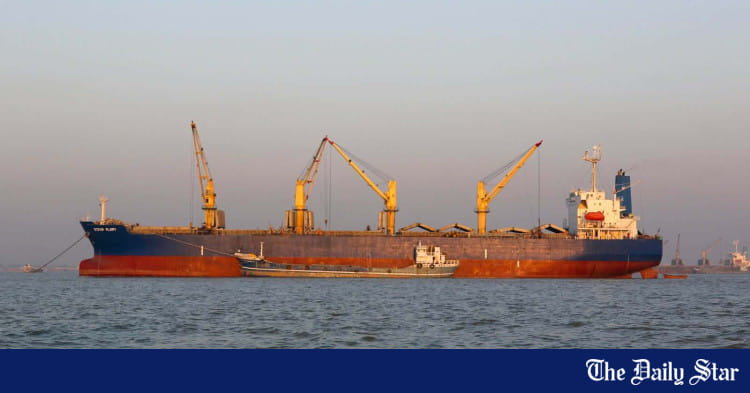
Shipping ambition must be guided by prudence, not momentum-driven commitments. FILE PHOTO: RAJIB RAIHAN
Recently, Bangladesh Shipping Corporation (BSC) has reported its highest net profit in 54 years, an achievement that has understandably generated optimism among policymakers and maritime stakeholders. After decades of operating largely at a loss, the corporation's return to profitability feels like a long-awaited vindication. Riding on this momentum, the government has signalled its intention to procure new vessels for BSC, with the stated goals of carrying more national cargo, saving foreign exchange, and creating seafaring jobs.
While these objectives are valid and important, the policy direction chosen to achieve them deserves careful scrutiny. Shipping is one of the most volatile and capital-intensive industries in the global economy. Decisions taken during a cyclical upswing can lock a country into long-term financial and operational risks long after favourable market conditions have faded.
BSC's recent profit, though welcome, must be seen in its proper context. Global freight rates surged unusually in the aftermath of the pandemic due to supply chain disruptions, port congestion, and vessel shortages. This exceptional market environment benefited shipowners worldwide, not just BSC. In Bangladesh's case, part of the reported profit also stemmed from one-off factors rather than recurring operational efficiency. A single profitable year, particularly after more than five decades of losses, does not automatically indicate a structural turnaround or long-term competitiveness.
Shipping history offers sobering lessons. Freight markets are cyclical by nature. Periods of high earnings are often followed by sharp downturns, during which revenues fall rapidly while fixed costsโloan repayments, crew wages, insurance, and maintenanceโremain unchanged. Even globally renowned shipping companies, backed by modern fleets and professional management, have gone bankrupt when market cycles turned against them. Publicly funded shipping ventures are especially vulnerable because their losses ultimately fall on taxpayers.
Over the past three decades, most developed maritime nations have drawn clear conclusions from these realities. Governments gradually stepped away from owning and operating commercial shipping lines, not due to ideological preference, but because state ownership proved ill-suited to an industry that demands speed, flexibility, and ruthless cost discipline. Former national flag carriers in Europe and Asia were privatised, merged, or allowed to be acquired by larger private operators once it became clear that emotional attachment to national ownership could not outweigh commercial logic.
Bangladesh's own maritime trajectory reinforces this global lesson. The country already has a growing private shipping sector operating dozens of ocean-going vessels without sovereign guarantees or exclusive cargo privileges. Several private groups today operate fleets far larger than BSC's, demonstrating that local entrepreneurship, when given policy stability and market access, can compete internationally. Expanding state ownership risks crowding out this private capacity rather than complementing it.
There is also a structural concern about market distortion. When government cargo or regulatory advantages are reserved for a state-owned entity, private investment incentives weaken. Such policies also do not encourage competition and efficiency, undermining the very national capacity policymakers seek to build.
One of the most frequently cited justifications for expanding BSC's fleet is the need to create jobs for Bangladeshi seafarers. This concern is genuine, but purchasing ships is neither the most efficient nor the most scalable solution. Each vessel creates a limited number of onboard positions while requiring enormous capital outlay. Meanwhile, thousands of maritime graduates struggle to secure practical sea time not because global opportunities are absent, but because structured pathways to international employment remain weak. As I have argued in a previous article, the core challenge lies in training quality, international accreditation, and placement mechanismsโnot in the number of state-owned ships.
Countries such as the Philippines became global leaders in seafarer employment without owning a large national merchant fleet. They invested instead in internationally trusted training systems and global placement networks, enabling their mariners to serve across the world's commercial fleets. Bangladesh could follow a similar path, generating foreign exchange and employment at a fraction of the cost of buying ships.
Another overlooked risk is the long-term financial burden of fleet ownership. Ships depreciate, require periodic dry-docking, and eventually must be replaced. These costs do not pause during market downturn. If freight rates decline or operational inefficiencies emerge, BSC may find itself unable to service debt without renewed government support. Bangladesh's experience with other state-owned enterprises should caution against assuming that shipping will be different.
A more sustainable vision for maritime strength lies in policy reform rather than asset accumulation. As I have argued in another article published in this daily, expanding Bangladesh's presence through an internationally competitive registry and public-private partnership model could deliver broader benefits than state ownership alone.
Many of the world's most successful maritime nations generate revenue, jobs, and influence by hosting ships under their flag rather than owning them outright. Such models allow governments to regulate standards, earn income, and promote national seafarer employment without bearing full commercial risk.
Bangladesh is also investing heavily in ports, logistics corridors, and energy infrastructure. These assets can anchor a strong maritime ecosystem if supported by the right policies. A competitive port system, efficient customs processes, access to ship finance, and skilled human capital will attract shipping activity far more reliably than a state-owned fleet operating in isolation.
None of this suggests that BSC has no role to play. The corporation can serve as a strategic participant, a benchmark for standards, or a partner in specific national interests. But expansion should be cautious, phased, and firmly grounded in commercial viability rather than short-term profitability. Any further fleet growth should be accompanied by strict governance reforms, transparent performance benchmarks, and a clear exit strategy if market conditions turn unfavourable.
Shipping ambition must be guided by prudence. Profits earned during exceptional market conditions should prompt strategic reflection, not momentum-driven commitments. Public investment decisions in shipping are not easily reversible, and mistakes can linger for decades.
Bangladesh's maritime future will be strongest if it is built on competitiveness, private sector vitality, and globally employable human capital. One profitable year is worth celebrating, yes, but it should not decide the country's shipping destiny.
Ahamedul Karim Chowdhury is adjunct faculty at Bangladesh Maritime University and former head of the Kamalapur Inland Container Depot (ICD) and the Pangaon Inland Container Terminal under Chittagong Port Authority.
Shipping ambition must be guided by prudence, not momentum-driven commitments. FILE PHOTO: RAJIB RAIHAN
Recently, Bangladesh Shipping Corporation (BSC) has reported its highest net profit in 54 years, an achievement that has understandably generated optimism among policymakers and maritime stakeholders. After decades of operating largely at a loss, the corporation's return to profitability feels like a long-awaited vindication. Riding on this momentum, the government has signalled its intention to procure new vessels for BSC, with the stated goals of carrying more national cargo, saving foreign exchange, and creating seafaring jobs.
While these objectives are valid and important, the policy direction chosen to achieve them deserves careful scrutiny. Shipping is one of the most volatile and capital-intensive industries in the global economy. Decisions taken during a cyclical upswing can lock a country into long-term financial and operational risks long after favourable market conditions have faded.
BSC's recent profit, though welcome, must be seen in its proper context. Global freight rates surged unusually in the aftermath of the pandemic due to supply chain disruptions, port congestion, and vessel shortages. This exceptional market environment benefited shipowners worldwide, not just BSC. In Bangladesh's case, part of the reported profit also stemmed from one-off factors rather than recurring operational efficiency. A single profitable year, particularly after more than five decades of losses, does not automatically indicate a structural turnaround or long-term competitiveness.
Shipping history offers sobering lessons. Freight markets are cyclical by nature. Periods of high earnings are often followed by sharp downturns, during which revenues fall rapidly while fixed costsโloan repayments, crew wages, insurance, and maintenanceโremain unchanged. Even globally renowned shipping companies, backed by modern fleets and professional management, have gone bankrupt when market cycles turned against them. Publicly funded shipping ventures are especially vulnerable because their losses ultimately fall on taxpayers.
Over the past three decades, most developed maritime nations have drawn clear conclusions from these realities. Governments gradually stepped away from owning and operating commercial shipping lines, not due to ideological preference, but because state ownership proved ill-suited to an industry that demands speed, flexibility, and ruthless cost discipline. Former national flag carriers in Europe and Asia were privatised, merged, or allowed to be acquired by larger private operators once it became clear that emotional attachment to national ownership could not outweigh commercial logic.
Bangladesh's own maritime trajectory reinforces this global lesson. The country already has a growing private shipping sector operating dozens of ocean-going vessels without sovereign guarantees or exclusive cargo privileges. Several private groups today operate fleets far larger than BSC's, demonstrating that local entrepreneurship, when given policy stability and market access, can compete internationally. Expanding state ownership risks crowding out this private capacity rather than complementing it.
There is also a structural concern about market distortion. When government cargo or regulatory advantages are reserved for a state-owned entity, private investment incentives weaken. Such policies also do not encourage competition and efficiency, undermining the very national capacity policymakers seek to build.
One of the most frequently cited justifications for expanding BSC's fleet is the need to create jobs for Bangladeshi seafarers. This concern is genuine, but purchasing ships is neither the most efficient nor the most scalable solution. Each vessel creates a limited number of onboard positions while requiring enormous capital outlay. Meanwhile, thousands of maritime graduates struggle to secure practical sea time not because global opportunities are absent, but because structured pathways to international employment remain weak. As I have argued in a previous article, the core challenge lies in training quality, international accreditation, and placement mechanismsโnot in the number of state-owned ships.
Countries such as the Philippines became global leaders in seafarer employment without owning a large national merchant fleet. They invested instead in internationally trusted training systems and global placement networks, enabling their mariners to serve across the world's commercial fleets. Bangladesh could follow a similar path, generating foreign exchange and employment at a fraction of the cost of buying ships.
Another overlooked risk is the long-term financial burden of fleet ownership. Ships depreciate, require periodic dry-docking, and eventually must be replaced. These costs do not pause during market downturn. If freight rates decline or operational inefficiencies emerge, BSC may find itself unable to service debt without renewed government support. Bangladesh's experience with other state-owned enterprises should caution against assuming that shipping will be different.
A more sustainable vision for maritime strength lies in policy reform rather than asset accumulation. As I have argued in another article published in this daily, expanding Bangladesh's presence through an internationally competitive registry and public-private partnership model could deliver broader benefits than state ownership alone.
Many of the world's most successful maritime nations generate revenue, jobs, and influence by hosting ships under their flag rather than owning them outright. Such models allow governments to regulate standards, earn income, and promote national seafarer employment without bearing full commercial risk.
Bangladesh is also investing heavily in ports, logistics corridors, and energy infrastructure. These assets can anchor a strong maritime ecosystem if supported by the right policies. A competitive port system, efficient customs processes, access to ship finance, and skilled human capital will attract shipping activity far more reliably than a state-owned fleet operating in isolation.
None of this suggests that BSC has no role to play. The corporation can serve as a strategic participant, a benchmark for standards, or a partner in specific national interests. But expansion should be cautious, phased, and firmly grounded in commercial viability rather than short-term profitability. Any further fleet growth should be accompanied by strict governance reforms, transparent performance benchmarks, and a clear exit strategy if market conditions turn unfavourable.
Shipping ambition must be guided by prudence. Profits earned during exceptional market conditions should prompt strategic reflection, not momentum-driven commitments. Public investment decisions in shipping are not easily reversible, and mistakes can linger for decades.
Bangladesh's maritime future will be strongest if it is built on competitiveness, private sector vitality, and globally employable human capital. One profitable year is worth celebrating, yes, but it should not decide the country's shipping destiny.
Ahamedul Karim Chowdhury is adjunct faculty at Bangladesh Maritime University and former head of the Kamalapur Inland Container Depot (ICD) and the Pangaon Inland Container Terminal under Chittagong Port Authority.