 Bangladesh Defense

Saif
Senior Member
- Joined
- Jan 24, 2024
- Messages
- 22,283
- Likes
- 9,869
- Nation

- Axis Group


Security beefed up to avert chaos over AL founding anniv
The government has stepped up security measures across the country by deploying army and additional police personnel to forestall any untoward incidents ahead of the 77th founding anniversary of the Awami League, the activities of which have been banned.
 www.newagebd.net
Security beefed up to avert chaos over AL founding anniv
Army, additional police deployed, army captains and upper officers given magistracy power
Staff Correspondent 23 June, 2026, 00:00
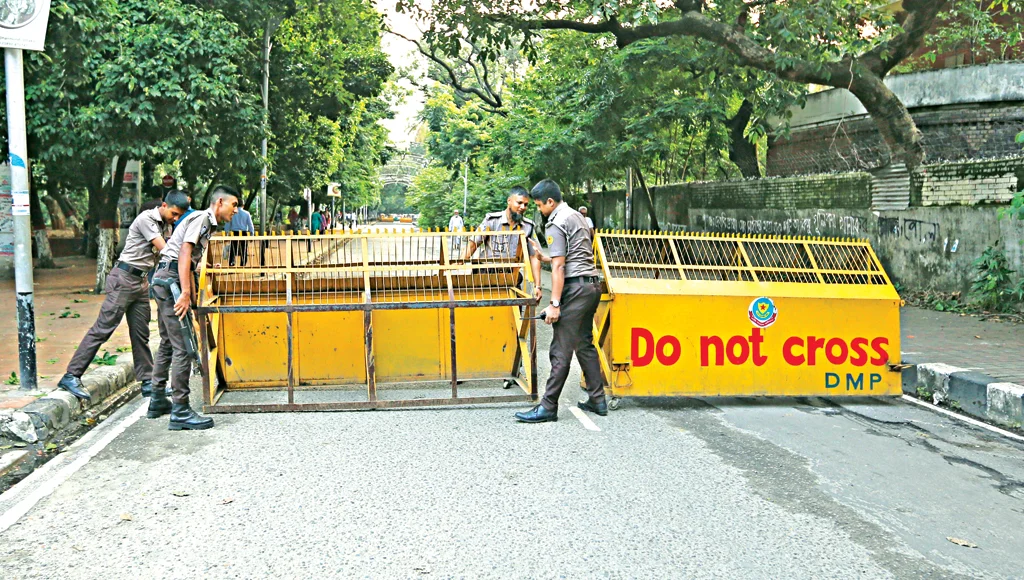
Police put barricade on the Dhanmondi Road 32 as security is beefed up centering the possible showdown of the activists of Awami League, activities of which are banned, on the occasion of its founding anniversary today. | New Age photo
The government has stepped up security measures across the country by deploying army and additional police personnel to forestall any untoward incidents ahead of the 77th founding anniversary of the Awami League, the activities of which have been banned.
The government has already deployed army personnel in six cities and districts — Dhaka, Chattogram, and Gazipur cities along with Narayanganj, Faridpur, and Gopalganj districts— in aid to civil administrations till June 30.
The deployment has been aimed at maintaining the law and order amid apprehension of sabotage, unlawful processions, showdowns and chaos in places across the country marking the AL founding anniversary, according to an official order issued by the home ministry on Monday.
The ministry’s order also apprehended the deterioration of the law and order in different places across the country and damage of people’s lives and properties.
The deterioration of law and order has been apprehended at a time when the Awami League and its associate bodies were bringing out processions in various places across the country, including Dhaka and Chattogram cities.
While talking to reporters at the secretariat on Monday, home minister Salahuddin Ahmed said that they had observed some misdeeds by the Awami League which tried to bring out processions in places.
‘We have deployed army personnel… in aid to civil power so that we can address any kind of subversive activity,’ he said, adding that the deployment of army and the Border Guard Bangladesh personnel in aid to civil power on occasions was a routine work.
He pointed out that the Army was withdrawn on June 15 after it served for more than one and a half years during the interim government.
Members of the armed forces were deployed in July 2024 during the Awami League regime when the country was witnessing a student-led movement against the discriminations in government job quotas.
They remained in the field throughout the interim government period to assist the civil administration.
The Police apprehended conflicts between the AL and the National Citizen Party and other political parties, according to the force.
The 11-party opposition alliance, led by the Bangladesh Jamaat-e-Islami, and the NCP chalked out programmes on Tuesday demanding punishment of AL ‘fascists’.
On Monday, the AL and its affiliated organisations took out flash processions at places amid police arrests.
The public administration ministry in another order on Monday gave magistracy power to officers -- captain and upward -- in the Armed Forces and such officers in deputation at the Bangladesh Coast Guard and the Border Guard Bangladesh from June 22 to June 30.
The BGB also deployed its members in five districts — Cox’s Bazar, Madaripur, Sherpur, Gazipur and Moulvibazar — from June 22 evening to June 30 following home ministry directives to maintain the country’s law and order and public security, said a BGB press release.
Meanwhile, the Dhaka Metropolitan Police will deploy over 18,000 police personnel, including officers, across Dhaka city on June 23 to maintain the law and order and ensure security.
Earlier, the police warned of possible clashes between AL leaders and activists and members of various political parties, particularly the National Citizen Party and Students Against Discrimination, across the country over the AL’s founding anniversary on June 23.
They said that necessary measures would be taken to prevent any untoward situation.
In a letter from the police headquarters dated June 18, the police also said that AL leaders and activists might become aggrieved if obstacles were placed in the way of the party’s activities.
‘We have increased the number of check-posts and patrolling across the country to prevent any untoward situation over the founding anniversary of a particular political party,’ the additional inspector general of police for crime and operations, Khondoker Rafiqul Islam, told New Age on Monday.
On Monday morning, AL leaders and activists brought out a procession in the capital’s Dhanmondi while the police detained 10 of them, Dhanmondi police station officer-in-charge Saiful Islam confirmed.
‘They started bringing out a procession at about 6:00am in front of the KFC outlet at Dhanmondi 7/A. We foiled the procession and detained 10 on the spot,’ he added.
Between Sunday and Monday, the AL and its associate bodies brought out eight processions at different places in Mymensingh district, according to videos shared on social media.
The AL in its verified official Facebook page also shared processions in various places in the country, including Narayanganj, Chandpur, Natore, Borguna, Patuakhali, and Gazipur on Monday.
Meanwhile, no official AL programme was announced neither in its official website, nor to any reporters’ group till filing this report at 8:00pm.
New Age correspondent in Barishal, quoting the Kaunia police station officer-in-charge Sanjit Chandra Nath, reported that Barishal City Corporation former panel mayor and AL Barishal city unit member Advocate Rafiqul Islam Khokon alias Mama Khokon was arrested on Monday in the city.
Leaders of Bangladesh Jatiyatabadi Chhatra Dal held a protest rally demanding the trial of the AL leaders and activists on Monday afternoon at the Central Shaheed Minar, New Age Dhaka University Correspondent reported.
On the other hand, the Jamaat-led alliance will hold a rally in front of the Bijoynagar water tank at 5:00 pm demanding trials of fascists of Awami League and their associates.
Moreover National Citizen Party, a partner of Jamaat led 11-party alliance, will also hold countrywide rallies and processions in district levels demanding trials of the fascist.
The Awami Muslim League was established on June 23, 1949 at Rose Garden in the capital’s old town and the party later emerged as the Awami League.
The party played significant roles in organising the War of Independence and the anti-autocracy movement in the’90s.
The Election Commission suspended the registration of the party on May 12, a day after the interim government issued a gazette notification, banning all activities of the party and its affiliated, associate and like-minded organisations until the completion of the trials of its leaders and activists on charge of atrocities during the student-led uprising that ended over 15 years of rule of the party on August 5, 2024.
Awami League president and the then prime minister Sheikh Hasina fled to India on the day and she has been in shelter in India ever since.
Most of the AL senior leaders are either in jail or in hiding to avoid arrests.
Army, additional police deployed, army captains and upper officers given magistracy power
Staff Correspondent 23 June, 2026, 00:00
Police put barricade on the Dhanmondi Road 32 as security is beefed up centering the possible showdown of the activists of Awami League, activities of which are banned, on the occasion of its founding anniversary today. | New Age photo
The government has stepped up security measures across the country by deploying army and additional police personnel to forestall any untoward incidents ahead of the 77th founding anniversary of the Awami League, the activities of which have been banned.
The government has already deployed army personnel in six cities and districts — Dhaka, Chattogram, and Gazipur cities along with Narayanganj, Faridpur, and Gopalganj districts— in aid to civil administrations till June 30.
The deployment has been aimed at maintaining the law and order amid apprehension of sabotage, unlawful processions, showdowns and chaos in places across the country marking the AL founding anniversary, according to an official order issued by the home ministry on Monday.
The ministry’s order also apprehended the deterioration of the law and order in different places across the country and damage of people’s lives and properties.
The deterioration of law and order has been apprehended at a time when the Awami League and its associate bodies were bringing out processions in various places across the country, including Dhaka and Chattogram cities.
While talking to reporters at the secretariat on Monday, home minister Salahuddin Ahmed said that they had observed some misdeeds by the Awami League which tried to bring out processions in places.
‘We have deployed army personnel… in aid to civil power so that we can address any kind of subversive activity,’ he said, adding that the deployment of army and the Border Guard Bangladesh personnel in aid to civil power on occasions was a routine work.
He pointed out that the Army was withdrawn on June 15 after it served for more than one and a half years during the interim government.
Members of the armed forces were deployed in July 2024 during the Awami League regime when the country was witnessing a student-led movement against the discriminations in government job quotas.
They remained in the field throughout the interim government period to assist the civil administration.
The Police apprehended conflicts between the AL and the National Citizen Party and other political parties, according to the force.
The 11-party opposition alliance, led by the Bangladesh Jamaat-e-Islami, and the NCP chalked out programmes on Tuesday demanding punishment of AL ‘fascists’.
On Monday, the AL and its affiliated organisations took out flash processions at places amid police arrests.
The public administration ministry in another order on Monday gave magistracy power to officers -- captain and upward -- in the Armed Forces and such officers in deputation at the Bangladesh Coast Guard and the Border Guard Bangladesh from June 22 to June 30.
The BGB also deployed its members in five districts — Cox’s Bazar, Madaripur, Sherpur, Gazipur and Moulvibazar — from June 22 evening to June 30 following home ministry directives to maintain the country’s law and order and public security, said a BGB press release.
Meanwhile, the Dhaka Metropolitan Police will deploy over 18,000 police personnel, including officers, across Dhaka city on June 23 to maintain the law and order and ensure security.
Earlier, the police warned of possible clashes between AL leaders and activists and members of various political parties, particularly the National Citizen Party and Students Against Discrimination, across the country over the AL’s founding anniversary on June 23.
They said that necessary measures would be taken to prevent any untoward situation.
In a letter from the police headquarters dated June 18, the police also said that AL leaders and activists might become aggrieved if obstacles were placed in the way of the party’s activities.
‘We have increased the number of check-posts and patrolling across the country to prevent any untoward situation over the founding anniversary of a particular political party,’ the additional inspector general of police for crime and operations, Khondoker Rafiqul Islam, told New Age on Monday.
On Monday morning, AL leaders and activists brought out a procession in the capital’s Dhanmondi while the police detained 10 of them, Dhanmondi police station officer-in-charge Saiful Islam confirmed.
‘They started bringing out a procession at about 6:00am in front of the KFC outlet at Dhanmondi 7/A. We foiled the procession and detained 10 on the spot,’ he added.
Between Sunday and Monday, the AL and its associate bodies brought out eight processions at different places in Mymensingh district, according to videos shared on social media.
The AL in its verified official Facebook page also shared processions in various places in the country, including Narayanganj, Chandpur, Natore, Borguna, Patuakhali, and Gazipur on Monday.
Meanwhile, no official AL programme was announced neither in its official website, nor to any reporters’ group till filing this report at 8:00pm.
New Age correspondent in Barishal, quoting the Kaunia police station officer-in-charge Sanjit Chandra Nath, reported that Barishal City Corporation former panel mayor and AL Barishal city unit member Advocate Rafiqul Islam Khokon alias Mama Khokon was arrested on Monday in the city.
Leaders of Bangladesh Jatiyatabadi Chhatra Dal held a protest rally demanding the trial of the AL leaders and activists on Monday afternoon at the Central Shaheed Minar, New Age Dhaka University Correspondent reported.
On the other hand, the Jamaat-led alliance will hold a rally in front of the Bijoynagar water tank at 5:00 pm demanding trials of fascists of Awami League and their associates.
Moreover National Citizen Party, a partner of Jamaat led 11-party alliance, will also hold countrywide rallies and processions in district levels demanding trials of the fascist.
The Awami Muslim League was established on June 23, 1949 at Rose Garden in the capital’s old town and the party later emerged as the Awami League.
The party played significant roles in organising the War of Independence and the anti-autocracy movement in the’90s.
The Election Commission suspended the registration of the party on May 12, a day after the interim government issued a gazette notification, banning all activities of the party and its affiliated, associate and like-minded organisations until the completion of the trials of its leaders and activists on charge of atrocities during the student-led uprising that ended over 15 years of rule of the party on August 5, 2024.
Awami League president and the then prime minister Sheikh Hasina fled to India on the day and she has been in shelter in India ever since.
Most of the AL senior leaders are either in jail or in hiding to avoid arrests.


