Donate ☕
201 Military Defense Forums
[🇧🇩] - Poultry Industry in Bangladesh | Page 2 | PKDefense
Home Login Forums Wars Movies Watch Videos
Serious discussion on defense, geopolitics, and global security.

[🇧🇩] Poultry Industry in Bangladesh

Reply (Scroll)
Press space to scroll through posts
G Bangladesh Defense
[🇧🇩] Poultry Industry in Bangladesh
9
622
More threads by Saif

Breaking up oligopoly in poultry industry
Atiqul Kabir Tuhin
Published :
Aug 21, 2024 21:58
Updated :
Aug 21, 2024 21:58


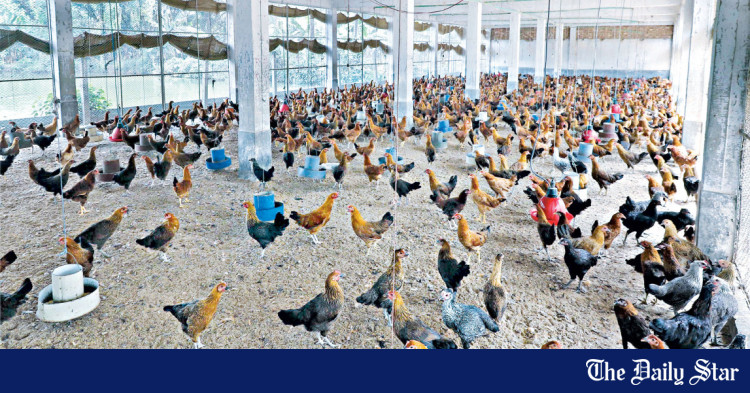
1724286839281.webp


At a time when food security is severely under threat, with low and middle-income people forced to cut one essential item after another from their diet due to skyrocketing prices, the fact that a handful of big companies are manipulating the market for exorbitant profits is nothing short of being sinful and criminal.

The commercial poultry industry is a particular case in point, which is firmly in the grip of an oligopoly, with a few large players controlling a significant portion of the market. While the involvement of big farms in poultry, livestock and agriculture sectors is no doubt essential - given their ability to significantly boost production and meet the commercial demand through the adoption of modern methods that small-scale farmers cannot afford- this concentration of market monopolies has major drawbacks. These large farms have frequently been accused of establishing market control that artificially drives up the prices of various essential products.

Recently, Bangladesh Poultry Association (BPA), a platform of marginal farmers, painted a disturbing picture of the country's poultry industry, where a few powerful corporations dominate the market at the expense of both marginal farmers and consumers. The BPA alleged that a few big companies in the sector made an additional profit of Tk 59.20 billion in the last one year through syndication in chicken and egg market.

The BPA stated that due to a syndicate of four to five corporate companies, the prices of feed and day-old chicks have become excessively high in the country, driving up the production costs of chicken and eggs. It noted that in India, the price of feed ranges from Tk 40-50 per kilogram, a day-old chick costs Tk 25-35, the production cost of an egg is Tk 5, and that of broiler chicken is Tk 76-86 per kilogram. In contrast, in Bangladesh, feed costs Tk 60-72 per kilogram, a day-old chick costs Tk 60-100, the production cost of an egg is Tk 10.29, and broiler chicken costs Tk 155-170 per kilogram.

This scenario is particularly alarming because it points to a systematic exploitation of the poultry sector, which is vital for the country's food security and rural economy. Marginal farmers are bearing the brunt of this exploitation, with many being forced to shut down their farms due to continued losses. This has also driven up retail prices, making these essential proteins unaffordable for many households, especially the poor and low-income earners

For millions of Bangladeshi families, egg and broiler chicken are often the last resort to fulfill their essential protein needs due to their relatively lower prices. Unfortunately, this alternative source of animal protein has also become a lot more expensive in the last couple of years, taking a heavy toll on poor and limited income people.

The situation is a double-edged sword. On the one hand, large-scale farms have the potential to enhance productivity, ensure food security, and contribute to economic growth by utilising advanced technology and economies of scale. On the other hand, when these farms dominate the market without adequate regulatory oversight, they can exploit their position to manipulate prices, hold consumers to ransom, prioritise profits over public welfare, and marginalise small-scale producers.

It is crucial, therefore, to strike a balance between encouraging large-scale production and ensuring fair competition. Regulatory bodies must monitor these big farms closely to prevent monopolistic practices and safeguard the interests of consumers and small farmers alike.

Additionally, the import of goods into the country is also largely dominated by a select group of companies. Currently, only certain companies are registered to import products, leading to a lack of competition in the market. This monopolistic environment restricts others from importing goods at perhaps lower prices, which in turn raises the prices.

To foster a competitive and beneficial environment, all types of companies, both small and large, should be allowed to register for importing products. It is also crucial to ensure that these companies can import and market their goods without any undue influence or obstruction. A higher number of importers will create a competitive market, stabilise supply, and ultimately reduce prices that will benefit both consumer and supplier.

According to the Bangladesh Bureau of Statistics (BBS), general inflation reached 11.66 per cent in the first month of the fiscal year 2024-25, a jump from 9.72 percent in the previous month. Worryingly, food inflation was reported at 14.10 percent in July - the highest in nearly a decade and a half.

For the impoverished people, who already spend the lion's share of their income on food just to survive, the situation has reached a critical point. A World Bank survey recently revealed that 71 per cent of people in Bangladesh are grappling with uncertainty about their ability to purchase food.

This dire state of food security is further underscored by another report from the World Food Program (WFP), which highlights that the poor are now spending 58 per cent more on food than they did just two years ago. In 2022, the monthly per capita cost of food for those living below the poverty line was Tk 1,851. This year, the average monthly per capita cost has shot up to Tk 2,923. This sharp rise in the cost of living has forced 68 per cent of the population to drastically cut back on their living expenses and protein intake risking ill health.

The newly formed interim government has an urgent responsibility to investigate unfair practices in the market, hold the manipulators accountable and make essential foods affordable. It must act decisively without delay to curb these abuses, restore fairness to the market, and protect the wellbeing of the nation.​
 
Analyze

Analyze Post

Add your ideas here:
Highlight Cite Fact Check Respond

Contract farming ensures growers’ profitability
Poultry companies bear risks & improve farm management


SULTANUL ISLAM
Published :
Mar 27, 2025 14:29
Updated :
Mar 27, 2025 15:51

1743212259654.webp


Contract broiler farming for growing broilerchicken helps marginal farmers to reduce the cost of production, benefiting both growers and consumers.

Industry insiders say many small farmers are now becoming contract farmers supported by large poultry companies and are growing broiler chickens in a cost-effective manner. By becoming contract farmers, they avoid the risk of loss in the event of disease outbreak or an unexpected fall in broiler chicken price.

In more developed countries, including the US, Brazil, China, Thailand, and Indonesia, poultry companies outsource the growing of broiler chicken to independently owned small farmers. This system is now becoming common in Bangladesh, as farmers prefer to do business with companies directly instead of buying day-old chicks and feed through dealers (middlemen).

Companies engaged in contract farming enlist farmers who own broiler growing sheds and equipment. The companies provide the contract farmers with day-old chicks, feed and medicine. The writers of this report interviewed contract farmers of Kazi Farms. They receive chicks, feed, and vaccines free of cost from Kazi Farms, and earn a variable growing charge, which rewards them for higher productivity. Company officers monitor the broilers throughout the 35-day production cycle to help the contract farmers prevent diseases.

Independent marginal farmers sometimes face losses and are forced to shut down their farms after exhausting their capital. This is one reason why the production of broiler chicken sometimes falls and why the price sometimes increases. Contract farming is preferred by farmers as it does not require them to risk their limited capital.

Zahirul Islam (35), a farmer in Golda Para village in Sreepur, Gazipur, started contract farming about two years ago after making a loss of Tk 80,000 while doing poultry business with credit from a local dealer of chicks and feed. “Now, I rear around 1,000 birds and earn profit (growing charge) amounting to Tk 20,000 to Tk 40,000 in each production cycle,” he said. He mentioned that some independent farmers sold broiler chicken for Tk 136 per kilogramme in early March and incurred losses, but he was safe because his company paid him a growing charge even though the broiler price was low. “I have 1,100 broiler chickens now, which will be ready for selling during the Eid holiday. Many farmers are expecting to sell their chickens during Eid and expect to make a windfall profit, whereas my company will have to sell broilers at the maximum price of Tk 168 per kg ,which has been fixed by the authorities,” he told this author on 21 March.

Another contract grower of the same area, Mohammad Sumon (32), lamented that he lost a total amount of Tk 250,000 when he was growing broilers with inputs provided by a dealer. “At one stage, I had to work at a garment factory to support my family. I later joined with Kazi Farms under contract farming. Now, I draw Tk 30-40 thousand as profit for each batch and the money goes to my bank account without any hassle,” he added.

Bazlul Karim (62), a former expatriate worker of Dubail in Gafargaon, Mymensingh, said he failed in layer farming. “Currently, I am rearing broiler chickens under contract farming, and I get around 40,000 as profit in each cycle. I don’t need more profit; there is a risk of losing capital if I do it on my own,” he added.

Poultry expert Sumon Ali, who provides support to contract farmers, pointed out that inexperienced and ignorant farmers often make losses. After buying inputs from dealers, they often sell broilers at a low price. “Contract farming ensures guaranteed profit and also rewards farmers who can grow heavier broiler chicken with less feed.”

Director of Kazi Farms Kazi Zahin Hasan argues that contract broiler farming benefits marginal farmers. “Independent farmers are not actually independent, they are always in debt to dealers who sell them feed and chicks. Sometimes, farmers lose their capital because of disease outbreaks or when the broiler price is low. However, our contract farmers do not lose their capital in case of disease outbreaks. Some chickens die of disease, but our contract farmers are still paid a growing charge for the chickens which survived. If the broiler price is low, Kazi Farms might make a loss, but we still pay our contract growers the growing charge. Our contract farmers are satisfied. If they are not satisfied, they are free to become independent once the broilers are sold,” he said.​
 
Analyze

Analyze Post

Add your ideas here:
Highlight Cite Fact Check Respond

Poultry association threatens to halt chicken, egg production from May
FE Online Desk
Published :
Apr 17, 2025 19:32
Updated :
Apr 17, 2025 19:56

1744934405123.webp


The Bangladesh Poultry Association (BPA), a platform of traders and farmers, has announced its decision to halt the production of broiler chickens and eggs in marginal poultry farms nationwide from May.

The decision comes as part of a protest demanding the removal of the corporate syndicates who, the BPA says, are monopolising the market and undermining small-scale farmers.

The association shared this information today (Thursday) through a press release.

In the release, BPA President Md Sumon Howlader said the strike will continue as long as the government does not take effective measures to dismantle the syndicate.

“Hundreds of farms are shutting down every day. Once a major source of employment in the country, the sector is now on the verge of collapse”, the release stated.

It alleged that due to the silence and inaction of the government and regulatory bodies, a few corporate companies are conspiring to take over the entire poultry industry.

“These corporations are not only controlling the supply of feed, chicks, and medicine but are also dominating the egg and chicken markets,” the statement read.​
 
Analyze

Analyze Post

Add your ideas here:
Highlight Cite Fact Check Respond

Protecting marginal chicken farmers
SYED FATTAHUL ALIM
Published :
May 19, 2025 00:23
Updated :
May 19, 2025 00:23

1747612984979.webp


The country's poultry sector is again in distress. But it is not due to any manmade crisis often created in the sector by the so-called profit-hungry syndicates. As in the past years, here nature is at work. A report published early last month (April) referring to the Bangladesh Meteorological Department (BMD) said that mild to moderate heatwave was sweeping across 14 districts of the country and it might continue. The affected districts include Manikganj, Faridpur, Rajshahi, Pabna, Dinajpur, Sirajganj, Tangail, Lakshmipur, Feni, Jashore and Chuadanga. Last month, Baghabari of Sirajganj experienced the temperature at 38.2 degree Celsius, which experts termed moderate. However, as in the previous year (2024), the heatwave showed no sign of respite and on the 10th of this month (May), Chuadanga recorded 42 degree Celsius. Dhaka, too, did not lag behind, because on the same day, it recorded its highest temperature at 40.1 degrees Celsius. Similarly, according to the BMD, last year, 51 out of 64 districts of the country suffered blistering heat between 40 degree Celsius and 43 degree Celsius. What was the fallout from this extreme heat particularly on the poultry sector of Bangladesh? A report said, poultry farmers in the countryside might face 30 per cent production loss. The story is more or less the same this year, too. As claimed by the Bangladesh Poultry Association (BPA) in a recently published report, during the month-long heatwave, the poultry farmers have sustained a loss of about Tk 3.0 billion. The reason, according to BPA, is death in large numbers of the chickens of broiler and layer varieties. Broilers, notably, are reared for meat, while the layers for egg. As the reports go, thousands of these birds are dying everyday due to extreme heat. The situation has been further compounded by load-shedding. The administration, on its part, appears to be either clueless, or accepted it as fait accompli. Especially, most at risk are the broiler and the Sonali varieties of poultry birds that are dying, according to reports, at a 10 per cent rate, while the mortality rate of the layers is 5.0 per cent, the report goes. The victims of the heatwave are obviously not the corporate poultry companies, but the traditional marginal farmers who cannot afford air coolers and other modern facilities to protect their chickens. Since the marginal chicken farmers lack the capital to recuperate their investment so lost, they would usually give up on chicken farming altogether and look for other ways for survival. They may even migrate to cities to make a living either by selling labour or doing odd jobs. Since, these millions of marginal chicken farmers across the country meet more than 80 per cent of the demand for cheap protein both in the form of meat and egg, it is easily imaginable what a devastating impact they would leave on the country's nutritional health as well as food security if the marginal poultry farmers go out of business in droves. In fact, the corporate sector with its 20 per cent share of meat and egg production will not be in a position to bridge the nutritional gap any time soon. There is no scope to think that heatwave is a fortuitous event. It is clearly a product of climate change.

The elaborate report on the temperatures caused by heatwaves is to stress the fact that heatwaves and the high temperatures they generate are not a passing event. The deleterious impact of this prolonged heatwaves on the country's primary source of nutrition, poultry farming, is not going to ease off in the future. It is not only the poultry sector alone, the entire livestock sector will suffer the consequences of heatwaves, moderate or extreme. The coming years may be still worse. So, we have already passed the phase of complaining about how the marginal poultry raisers are at the receiving end and how much loss they have incurred during the last one month of extreme heatwave. Even so, it would be worthwhile to have an assessment what the marginal chicken farmers have gone through during the last one month of uninterrupted heatwave. Since the poor poultry farmers have no arrangements for keeping their chicken coops cool say by using air coolers as the corporate poultry industries do, they either leave the birds to their own devices or may provide them with sufficient water to drink or sprinkle water on them. This traditional approaches to keep the animals cool no doubt work. But what can they do when the chickens begin to eat less or even stop eating? If the temperature is above 35 degree Celsius and the relative humidity is above 70 per cent, the birds are in a hazardous condition. Unlike many mammals, chickens have no sweat glands. So, under extreme heat they cool themselves mainly by panting. But that is the natural way they try to survive in the face of extreme heat. Moreover, extreme heat along with attendant high level of humidity brings with it avian infections from Clostridia, Salmonella, Coliform bacteria and so on. These conditions worsen during extreme heat. But without necessary intervention from the government both in terms of veterinary service and finance, how can these marginal poultry farmers hope to survive?

Now the challenge before the government is enormous. The government will be required to come to the aid of the millions of poultry farmers spread across the country in a big way. Since the heatwave is not a temporary issue, the government will have to adopt a long-term strategy to address the heatwave-related problems in order to save the marginal chicken farmers. In this connection, the veterinary department will be required to be updated with modern researches on how the advanced nations are coping with extreme heat so far as protecting their poultry birds are concerned. However, traditional knowledge would also be important here, since our chickens grow in the open and have higher level of immunity. The country's veterinary scientists will have to blend traditional knowledge with modern knowhow to find out the most appropriate answer to protecting chickens against extreme heat.​
 
Analyze

Analyze Post

Add your ideas here:
Highlight Cite Fact Check Respond

Poultry industry likely to shrink as prices of eggs, chickens, day-old chicks have collapsed

SULTANUL ISLAM
Published :
Jul 14, 2025 20:20
Updated :
Jul 14, 2025 20:20

1752535610417.webp


Thousands of small farmers are making losses as prices of broiler chickens and eggs have fallen. Hatcheries are also losing money as prices of day-old chicks have fallen.

Farmers in the northern region recently sold eggs at Tk 7.5 per egg, and live broiler chicken at Tk 110 per kg. These prices are far below the production cost. In the last week of June, the price of a day-old broiler chick was between Tk 8 and Tk 14. Hatcheries are also making huge losses.

As the price of broiler chicken is low, farmers are not interested in buying broiler chicks. That is why the broiler chick price has also fallen. Farmers will want to buy chicks again when the broiler price increases. So the chick price will probably recover after the broiler price recovers.

At present, the poultry companies producing day-old chicks are losing hundreds of crores of Taka. Whenever prices are high, poultry companies are accused of forming a cartel (or “syndicate”). However, if there were actually a cartel controlling production and prices, the cartel would have reduced production in order to prevent prices from falling so low. If prices are high when there is a shortage, and low when there is excess production, this clearly shows that a market is competitive.

Many farmers are uncertain whether they will be able to continue farming given the losses they have incurred in the last two months.

Jannatul Ferdousi (38), a small farmer of Alimganj Center Para of Poba, Rajshahi, told the author that at various times she lost money because of disease outbreaks, but the present low price of broiler chicken is a nightmare. Farmers have not been able to recover costs, and have become burdened with loans.

A poultry farmer and trader for 22 years, Mamunur Rashid of Kashiadanga in Rajshahi said that he has become tired of bearing losses in recent months. He said that when the broiler chicken price was high, they made profit even after purchasing chicks at Tk 8. However, now they can’t recover the cost of the chicks which they bought at between Tk 5 and 7. “I foresee a crisis in the industry in terms of supply of chicks and both eggs and meat, should this trend continue,” he expressed his views.

Zearul Islam, a young graduate who set up his layer farm of 4,200 birds in Sadhur Morh area of Godagari upazila, informed this author that he recently sold around 3,300 eggs each day at Tk 7.5 per egg, compared to the production cost of around Tk 10 per egg. “We made a profit when egg price was Tk 11 a piece. Unless the price goes up soon, many farmers will leave this business permanently,” he pointed out.

A farmer and dealer of poultry inputs in Moishal Baria in Godagari for 20 years, Abdul Jalil (44) closed down his layer farm, and still has 1,600 broiler chickens though the capacity of his farm is 7,000 chickens. He lost Tk 70,000 when selling broilers before the recent Eid (in early June). “My sales of day-old chicks have dropped from 70,000 pieces to 48,000 a month,” he said.

He also said that 35 out of the 50 farms in the area of his dealership are now closed.

Dwelling on such price trends, Rushad Faridi, an assistant professor of economics at Dhaka University, explained that prices are determined by demand and supply. Economists talk about the invisible hand of the market, which means bargaining between many buyers and many sellers.

“Had there been a syndicate in the poultry market, why would it allow a complete price collapse, which is causing loss of crores of Taka to its members? Allegations of price manipulation by syndicate are often made without any evidence and investigation,” he observed, adding that the government should play the role of a referee in promoting fair play in the market.

Mahbubur Rahman, an industry stakeholder, complained about a lack of proper understanding on the part of the authorities concerned.

He said that the poultry industry is now the major source of protein in Bangladesh. However, it sometimes faces punitive measures on the basis of unfounded allegations.

“When prices fall, causing losses to the industry, there is no reason to be happy. Consumers will later pay a higher price for poultry products, after the exit of many farmers and companies,” he cautioned.


The writer is a freelance journalist​
 
Analyze

Analyze Post

Add your ideas here:
Highlight Cite Fact Check Respond

Animal, poultry feed industry to get 20pc power rebate

bdnews24.com

Published :
Jan 26, 2026 21:48
Updated :
Jan 26, 2026 21:48

1769473907300.webp


The interim government is going to offer a 20 per cent rebate on electricity bills to reduce production costs in four sectors, including animal and poultry feed manufacturing.

The decision was announced in a media statement issued by the Ministry of Fisheries and Livestock on Monday.

The statement said the government is currently providing a 20 percent electricity rebate to 16 sectors under the power rebate policy to boost agricultural production, encourage agricultural exports and support agro-based industries.

As part of this initiative, the government has taken a policy decision to provide Tk 1 billion in subsidies for four sectors under the Ministry of Fisheries and Livestock.

The sectors covered by the subsidy are animal and poultry feed manufacturing, fish feed production, the poultry industry and the dairy processing industry.

The government said the initiative is expected to significantly reduce production costs, increase investment in the industrial sector and help the country become more self-reliant in producing safe and quality animal protein.​
 
Analyze

Analyze Post

Add your ideas here:
Highlight Cite Fact Check Respond

Members Online

⤵︎

Latest Posts