Bangladesh Defense
Saif
Senior Member
- Joined
- Jan 24, 2024
- Messages
- 21,159
- Likes
- 9,688
- Nation

- Residence
- Axis Group

Poultry industry likely to shrink as prices of eggs, chickens, day-old chicks have collapsed
Thousands of small farmers are making losses as prices of broiler chickens and eggs have fallen. Hatcheries are also losing money as prices of day-old chicks have fallen. Farmers in the northern region recently sold eggs at Tk 7.5 per egg, and live broiler chicken at Tk 110 per kg. These prices ar
Poultry industry likely to shrink as prices of eggs, chickens, day-old chicks have collapsed
SULTANUL ISLAM
Published :
Jul 14, 2025 20:20
Updated :
Jul 14, 2025 20:20

Thousands of small farmers are making losses as prices of broiler chickens and eggs have fallen. Hatcheries are also losing money as prices of day-old chicks have fallen.
Farmers in the northern region recently sold eggs at Tk 7.5 per egg, and live broiler chicken at Tk 110 per kg. These prices are far below the production cost. In the last week of June, the price of a day-old broiler chick was between Tk 8 and Tk 14. Hatcheries are also making huge losses.
As the price of broiler chicken is low, farmers are not interested in buying broiler chicks. That is why the broiler chick price has also fallen. Farmers will want to buy chicks again when the broiler price increases. So the chick price will probably recover after the broiler price recovers.
At present, the poultry companies producing day-old chicks are losing hundreds of crores of Taka. Whenever prices are high, poultry companies are accused of forming a cartel (or “syndicate”). However, if there were actually a cartel controlling production and prices, the cartel would have reduced production in order to prevent prices from falling so low. If prices are high when there is a shortage, and low when there is excess production, this clearly shows that a market is competitive.
Many farmers are uncertain whether they will be able to continue farming given the losses they have incurred in the last two months.
Jannatul Ferdousi (38), a small farmer of Alimganj Center Para of Poba, Rajshahi, told the author that at various times she lost money because of disease outbreaks, but the present low price of broiler chicken is a nightmare. Farmers have not been able to recover costs, and have become burdened with loans.
A poultry farmer and trader for 22 years, Mamunur Rashid of Kashiadanga in Rajshahi said that he has become tired of bearing losses in recent months. He said that when the broiler chicken price was high, they made profit even after purchasing chicks at Tk 8. However, now they can’t recover the cost of the chicks which they bought at between Tk 5 and 7. “I foresee a crisis in the industry in terms of supply of chicks and both eggs and meat, should this trend continue,” he expressed his views.
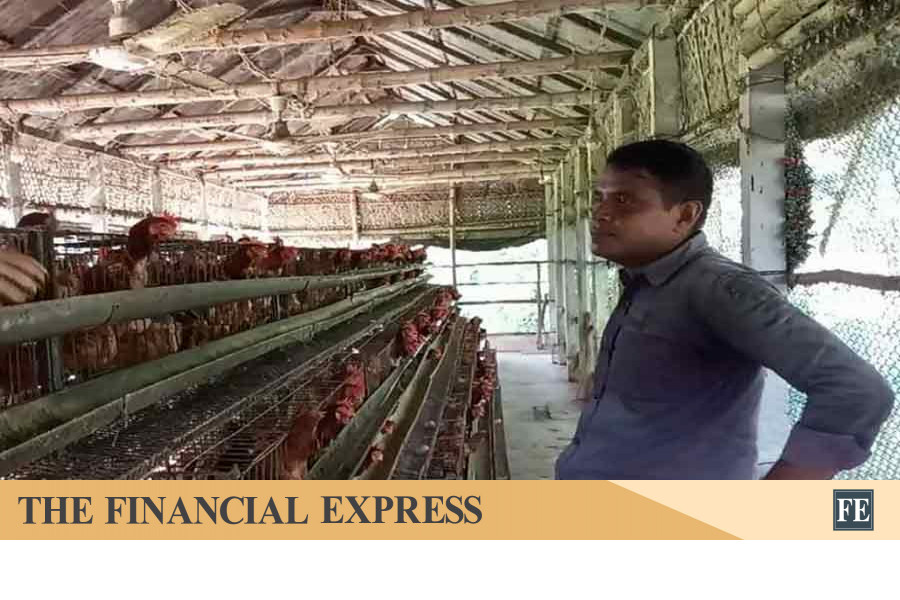
Zearul Islam, a young graduate who set up his layer farm of 4,200 birds in Sadhur Morh area of Godagari upazila, informed this author that he recently sold around 3,300 eggs each day at Tk 7.5 per egg, compared to the production cost of around Tk 10 per egg. “We made a profit when egg price was Tk 11 a piece. Unless the price goes up soon, many farmers will leave this business permanently,” he pointed out.
A farmer and dealer of poultry inputs in Moishal Baria in Godagari for 20 years, Abdul Jalil (44) closed down his layer farm, and still has 1,600 broiler chickens though the capacity of his farm is 7,000 chickens. He lost Tk 70,000 when selling broilers before the recent Eid (in early June). “My sales of day-old chicks have dropped from 70,000 pieces to 48,000 a month,” he said.
He also said that 35 out of the 50 farms in the area of his dealership are now closed.
Dwelling on such price trends, Rushad Faridi, an assistant professor of economics at Dhaka University, explained that prices are determined by demand and supply. Economists talk about the invisible hand of the market, which means bargaining between many buyers and many sellers.
“Had there been a syndicate in the poultry market, why would it allow a complete price collapse, which is causing loss of crores of Taka to its members? Allegations of price manipulation by syndicate are often made without any evidence and investigation,” he observed, adding that the government should play the role of a referee in promoting fair play in the market.
Mahbubur Rahman, an industry stakeholder, complained about a lack of proper understanding on the part of the authorities concerned.
He said that the poultry industry is now the major source of protein in Bangladesh. However, it sometimes faces punitive measures on the basis of unfounded allegations.
“When prices fall, causing losses to the industry, there is no reason to be happy. Consumers will later pay a higher price for poultry products, after the exit of many farmers and companies,” he cautioned.
The writer is a freelance journalist
SULTANUL ISLAM
Published :
Jul 14, 2025 20:20
Updated :
Jul 14, 2025 20:20
Thousands of small farmers are making losses as prices of broiler chickens and eggs have fallen. Hatcheries are also losing money as prices of day-old chicks have fallen.
Farmers in the northern region recently sold eggs at Tk 7.5 per egg, and live broiler chicken at Tk 110 per kg. These prices are far below the production cost. In the last week of June, the price of a day-old broiler chick was between Tk 8 and Tk 14. Hatcheries are also making huge losses.
As the price of broiler chicken is low, farmers are not interested in buying broiler chicks. That is why the broiler chick price has also fallen. Farmers will want to buy chicks again when the broiler price increases. So the chick price will probably recover after the broiler price recovers.
At present, the poultry companies producing day-old chicks are losing hundreds of crores of Taka. Whenever prices are high, poultry companies are accused of forming a cartel (or “syndicate”). However, if there were actually a cartel controlling production and prices, the cartel would have reduced production in order to prevent prices from falling so low. If prices are high when there is a shortage, and low when there is excess production, this clearly shows that a market is competitive.
Many farmers are uncertain whether they will be able to continue farming given the losses they have incurred in the last two months.
Jannatul Ferdousi (38), a small farmer of Alimganj Center Para of Poba, Rajshahi, told the author that at various times she lost money because of disease outbreaks, but the present low price of broiler chicken is a nightmare. Farmers have not been able to recover costs, and have become burdened with loans.
A poultry farmer and trader for 22 years, Mamunur Rashid of Kashiadanga in Rajshahi said that he has become tired of bearing losses in recent months. He said that when the broiler chicken price was high, they made profit even after purchasing chicks at Tk 8. However, now they can’t recover the cost of the chicks which they bought at between Tk 5 and 7. “I foresee a crisis in the industry in terms of supply of chicks and both eggs and meat, should this trend continue,” he expressed his views.
Zearul Islam, a young graduate who set up his layer farm of 4,200 birds in Sadhur Morh area of Godagari upazila, informed this author that he recently sold around 3,300 eggs each day at Tk 7.5 per egg, compared to the production cost of around Tk 10 per egg. “We made a profit when egg price was Tk 11 a piece. Unless the price goes up soon, many farmers will leave this business permanently,” he pointed out.
A farmer and dealer of poultry inputs in Moishal Baria in Godagari for 20 years, Abdul Jalil (44) closed down his layer farm, and still has 1,600 broiler chickens though the capacity of his farm is 7,000 chickens. He lost Tk 70,000 when selling broilers before the recent Eid (in early June). “My sales of day-old chicks have dropped from 70,000 pieces to 48,000 a month,” he said.
He also said that 35 out of the 50 farms in the area of his dealership are now closed.
Dwelling on such price trends, Rushad Faridi, an assistant professor of economics at Dhaka University, explained that prices are determined by demand and supply. Economists talk about the invisible hand of the market, which means bargaining between many buyers and many sellers.
“Had there been a syndicate in the poultry market, why would it allow a complete price collapse, which is causing loss of crores of Taka to its members? Allegations of price manipulation by syndicate are often made without any evidence and investigation,” he observed, adding that the government should play the role of a referee in promoting fair play in the market.
Mahbubur Rahman, an industry stakeholder, complained about a lack of proper understanding on the part of the authorities concerned.
He said that the poultry industry is now the major source of protein in Bangladesh. However, it sometimes faces punitive measures on the basis of unfounded allegations.
“When prices fall, causing losses to the industry, there is no reason to be happy. Consumers will later pay a higher price for poultry products, after the exit of many farmers and companies,” he cautioned.
The writer is a freelance journalist