[🇧🇩] Recovering Laundered Money and Assets of Awami League's Ministers and Oligarchs

[🇧🇩] Recovering Laundered Money and Assets of Awami League's Ministers and Oligarchs
13
339
More threads by Saif

G Bangladesh Defense

Playing the victim while sitting on loot
SYED MUHAMMED SHOWAIB
Published :
Jan 30, 2026 23:54
Updated :
Jan 30, 2026 23:54

1769819649227.webp


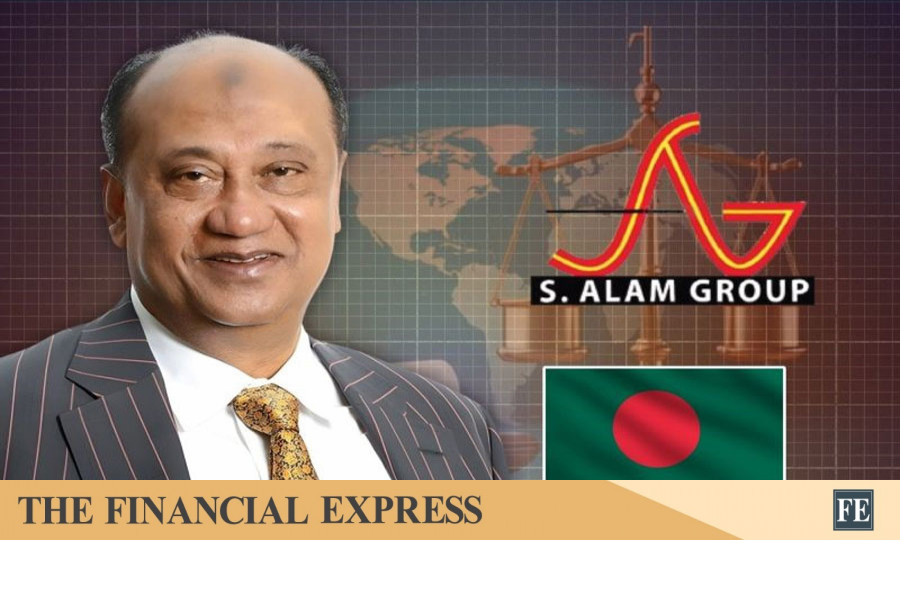
Bangladesh's push to recover stolen assets has entered a much trickier and consequential stage with business tycoon Mohammad Saiful Alam dragging the country to international arbitration under the Bangladesh-Singapore bilateral investment treaty. Having acquired Singaporean citizenship only in recent years after renouncing their Bangladeshi nationality, Alam, his wife Farzana Parveen, and sons Ashraful Alam and Asadul Alam Mahir are now casting themselves as foreign investors wronged by their former homeland. Represented by the elite firm Quinn Emanuel Urquhart & Sullivan, they seek not merely to shield vast assets but to hit Bangladesh with a massive claim for damages and costs by taking advantage of the treaty meant to encourage legitimate investment.

This legal offensive follows what is widely considered the most devastating act of financial crime in the nation's history. During the latter years of the fallen Awami League government, companies linked to the S Alam Group, with support from within the administration, seized control of nearly all Shariah-based banks by circumventing the Banking Companies Act of 1991. After consolidating power, they forced out senior management and existing boards, replaced them with loyalists and extracted trillions of taka through fraudulent loans that were later funnelled abroad. Subjecting private banks to such a methodical and carefully orchestrated loan fraud on a scale possibly unseen anywhere else, let alone in a developing nation like Bangladesh, has only magnified the damage many times over.

Arguably, this ruination of financial sector through the activities of S Alam and similar groups was a primary source of public loathing towards the previous government, a sentiment that helped lay the groundwork for the July uprising. Upon assuming office, the interim government declared the recovery of laundered assets a top priority. Eleven inter agency taskforces were formed to track down the trillions believed to have been laundered abroad by politically connected business groups. Expectations were understandably high. Yet, as the government's term comes to the end, the performance of these task forces has been largely underwhelming. This shortfall is attributed to a confluence of factors, ranging from the absence of a central reporting authority and poor inter-agency coordination to unclear mandates, budgetary constraints and limited specialised expertise. Parallel efforts to engage foreign legal firms have likewise yielded little visible progress, also hampered by budgetary constraints and the absence of a standard methodology.

While domestic agencies struggled to act in concert, Saiful Alam, the man who benefited most from the banking plunder, moved decisively on the international stage. In a move that resembles a thief sounding the alarm, he along with his wife and two sons Ashraful Alam and Asadul Alam Mahir, initiated arbitration proceedings against Bangladesh at the World Bank-affiliated ICSID invoking the Bangladesh-Singapore Bilateral Investment Treaty. Their apparent objective is to entangle the state in protracted arbitration to shield their overseas assets and potentially claim hundreds of millions in damages. Bilateral investment treaties are agreements between states designed to protect foreign investors and encourage capital inflows. In 2004, Bangladesh signed one with Singapore in the hopes of attracting investment.

The family's claim of Singaporean nationality is central to the case, as the arbitration body only hears disputes between a state and nationals of another state. As purported Singaporean investors, they allege that Bangladesh breached its obligations under the treaty with respect to their investments. However, by their own admission, Saiful Alam, Farzana Parveen and Asadul Alam Mahir became Singaporean citizens on 12 September 2023 while Ashraful Alam acquired citizenship on 29 July 2021. All four had renounced their Bangladeshi nationality on August 3, 2020.

While the claimants may have held Singaporean passports at the time they filed for arbitration, the investments in question were neither made when they were Singaporean nationals nor financed with income lawfully earned in Singapore. An investigative report published in The Daily Star on 4 August 2023, prior to their change in nationality, titled S Alam's Aladdin's lamp, detailed how Saiful Alam built a business empire in Singapore worth at least one billion dollars, including hotels and real estate without approval from Bangladesh Bank to transfer funds or invest abroad. The central question for arbitration, therefore, must be whether treaty protections extend to assets acquired with funds illicitly expatriated before the claimants became foreign citizens. To hold otherwise would be to allow a party to seek international arbitration for the protection of assets stolen from the very country they are now suing.

Saiful Alam and his cronies drained several Shariah-based banks to such an extent that many devout Muslims now fear using them. Companies linked to him also misappropriated loans from conventional banks including the state-owned Janata Bank. Loans were taken both in the names of his own companies and through others including many unwitting individuals in whose names accounts had been opened. Portions of these funds fuelled domestic operations, while the bulk flowed overseas, laundered through layered ownership structures involving proxies and shell companies to obscure the family's trail. One investigator likened the trail to footprints that suddenly vanish, leaving trackers guessing where they lead. Even attempts by the National Board of Revenue (NBR) to recover some of the remaining liquid assets through tax demands reportedly faced resistance from Islami Bank, demonstrating the significant institutional and political hurdles in the recovery process.

Now that Saiful Alam has sought redress through international arbitration, Bangladesh has little choice but to contest the case. The matter must be treated with utmost seriousness, particularly given precedents where countries such as Argentina have lost arbitration cases and been ordered to pay substantial sums. Bangladesh's strategy must rest on clearly and factually showing that the assets in question belonged to the country were acquired through illicit means before the claimants assumed Singaporean citizenships, and that their later change of nationality does not legitimise the theft or entitle them to the protections of a treaty meant for genuine foreign investors.​
 

Focus on trade-based money laundering

Shah Md Ahsan Habib
Published :
Feb 01, 2026 23:53
Updated :
Feb 01, 2026 23:53

1769993660631.webp


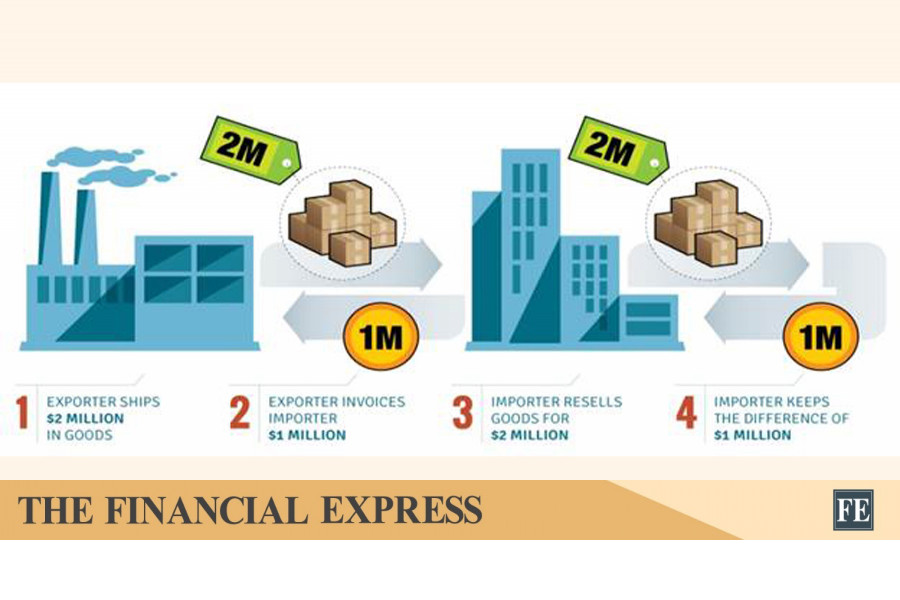
Illicit fund flows pose a significant risk to the integrity of the banking system and present persistent challenges for regulators operating under risk-based supervisory frameworks. In recent years, Bangladesh has formally moved towards implementing risk-based supervision, reflecting a broader shift away from purely compliance-driven oversight. One of the most complex manifestations of these risks is Trade-Based Money Laundering (TBML), which takes place through legitimate international trade transactions. Despite the growing effectiveness of risk-based approaches for detection, control, and oversight, TBML frameworks in many developing countries, including Bangladesh, still rely largely on compliance-based systems. Traditional compliance-driven approaches are often insufficient to identify and address TBML vulnerabilities. Risk-sensitive supervision itself is complex to implement, as it requires strong data, skilled analysis, and consistent supervisory judgment.

A recurring conceptual issue is whether TBML should be treated merely as a compliance risk for banks. The answer is yes, but only partially, and stopping there often leads to supervisory criticism. For a bank, TBML is fundamentally a financial crime, arising from the nature of its trade-related business. This risk becomes a compliance risk because banks are legally required to identify, assess, and mitigate it under applicable laws and regulations. When banks fail to do so, the consequences materialise as regulatory breaches, financial penalties, and reputational damage. In risk taxonomy terms, the root risk is money laundering. The primary risk category is compliance risk due to failure to meet regulatory obligations. Secondary spillovers may include legal risk, reputational risk, and in some cases credit or operational risk. Treating TBML as "just compliance" may help simplify internal classification for banks; however, it is hardly acceptable to regulators operating under a risk-based supervisory approach.

Risk-based supervision changes how TBML is evaluated and managed. Under this approach, supervisors are less interested in whether a bank has policies on paper and more interested in whether the bank understands its own business and risks. The central supervisory question becomes how exposed a particular bank is to TBML and whether its controls are proportionate to that exposure. This assessment begins with an evaluation of inherent TBML risk, independent of mitigating controls. Supervisors consider the size and complexity of the bank's trade finance activities, the jurisdictions involved, the nature of customers such as traders or intermediaries, the types of products offered including letters of credit, guarantees, open-account trade, and supply-chain finance, and the nature of goods traded. A bank with little or no trade activity is likely to attract limited supervisory attention, while a bank heavily engaged in cross-border trade in higher-risk corridors is examined far more closely.

After assessing inherent risk, supervisors review how effective a bank's controls are, which is often the most challenging stage for banks. Under risk-based supervision, how well controls are applied matters more than whether policies exist on paper. Supervisors look for meaningful review of trade documents, the ability to identify unusual pricing or trade patterns, proper use of trade data in AML systems, staff understanding of TBML risks, and careful investigation of alerts. Even without proven violations, weak controls raise concern because they indicate exposure to risk. Under this approach, potential weaknesses are taken seriously, not just actual failures. The supervisory response is then adjusted proportionately based on the combination of inherent risk and control effectiveness. Where TBML risk is high and controls are weak, supervisors may increase the frequency and depth of inspections. They may expand the focus on trade finance, require targeted remediation programs, or impose qualitative measures such as restrictions on certain products or trade corridors. In serious situations, supervisors may require additional capital or apply enforcement measures. These actions are typically progressive, with pressure increasing until weaknesses are addressed.

Banks often overlook that TBML is not treated the same way as general AML under risk-based supervision. Trade finance has unique features that cannot be managed through retail AML controls alone. Supervisors expect TBML risk to be assessed at the product level and supported by trade-specific controls. They also expect data-driven monitoring and clear ownership by senior management. When TBML is only briefly addressed within a general AML framework, supervisors often interpret this as a lack of genuine understanding of the bank's risk profile.

Global standard-setting bodies such as the Financial Action Task Force have repeatedly identified TBML as a major vulnerability in the financial system and have called for risk-focused supervisory responses. Supervisors increasingly emphasise the use of trade data analytics and stronger information sharing between banks and authorities as part of risk-based oversight. There is also closer cooperation among financial supervisors, customs, and tax agencies, along with thematic examinations of trade finance. These developments reinforce the principle that TBML controls must be proportionate to the nature, size, and complexity of a bank's trade activities.

Country experience shows that TBML risk varies according to economic structure and trade patterns. Countries that rely heavily on international trade often face higher TBML risk, particularly where trade processes remain manual or poorly integrated. Under risk-based supervision, authorities respond by issuing TBML-specific guidance, conducting sector-wide risk assessments, and increasing oversight of higher-risk trade finance products. In some cases, certain products are restricted until banks can demonstrate adequate controls. These approaches highlight the importance of adjusting supervisory intensity based on TBML risk rather than applying uniform rules across all banks.

Bangladesh offers a relevant example due to its heavy reliance on international trade, particularly in sectors such as garments, textiles, and commodities. The volume of imports and exports, combined with complex supply chains, has made TBML a recognised risk. Authorities have identified cases involving trade misinvoicing, over-invoicing of imports, and under-invoicing of exports, often linked not only to money laundering but also to capital flight and tax evasion. Supervisory responses have included strengthening AML/CFT regulations applicable to trade finance, issuing guidance on TBML red flags, enhancing coordination between the central bank, customs, and other agencies, and increasing scrutiny of high-risk customers and trade corridors. These measures illustrate how risk-based supervision can be adapted to national trade realities.

An emerging and increasingly logical view is that TBML should also be treated as a strategic risk rather than only an operational or compliance issue. A bank's exposure to TBML is shaped by strategic decisions such as market entry, customer targeting, product offerings, and investment in systems, data, and skilled personnel. When TBML is recognised as a strategic risk, it becomes part of enterprise-wide risk governance and attracts attention from senior management and boards. This alignment supports risk-based supervision by encouraging forward-looking risk assessments, proportionate investment in controls, clearer accountability, and more credible engagement with supervisors.

International developments and country experiences, including Bangladesh, indicate that supervisors increasingly expect trade-specific, data-driven, and strategically aligned approaches to TBML. Recognising TBML as both a compliance and strategic risk strengthens regulatory compliance and enhances long-term resilience in an increasingly complex global trade environment.


Dr. Shah Md Ahsan Habib is Professor BIBM, and Chairman, DNet.​
 

Bangladesh engages British law firm to face S Alam arbitration
United News of Bangladesh . Dhaka 03 February, 2026, 22:54

1770169085436.webp

Saiful Alam. —New Age file photo

The government on has appointed a British law firm to contest an international arbitration case filed by S Alam Group founder Saiful Alam and his family before the International Centre for Settlement of Investment Disputes.

Sources familiar with the decision said that the cabinet committee government procurement on Tuesday approved the appointment of White and Case LLP, a UK-based international law firm, to represent Bangladesh in ICSID arbitration case ARB/25/52. The firm will be paid a fee of $1,250 per hour for its legal services.

The proposal to hire an international law firm was placed before the committee by the Ministry of Law, Justice and Parliamentary Affairs, citing the complexity and high financial stakes of the case.

Talking to journalists after the meeting, finance adviser Salehuddin Ahmed said the arbitration was linked to allegations of money laundering.Daily newspaper subscription

‘S Alam has apparently filed a case in London and challenged Bangladesh at the World Bank’s ICSID, he said.

‘We need to engage an international legal firm to fight this case, as it involves a huge amount of money and has been brought before an organisation like the World Bank,’ said Salehuddin.

When asked about the identity of the firm, the adviser said that it was a British firm but did not name it at the time.

Salehuddin also said that legal action was underway against S Alam on money laundering charges.

He said, ‘When a government or a company is accused of obstructing business, ICSID arbitration is invoked. We have received the arbitration notice and must respond. This is a highly complicated legal process.’

In October 2025, lawyers representing S Alam and his family formally filed the arbitration request at ICSID in Washington, alleging that asset freezes, confiscations and punitive measures taken by the Bangladesh government on money laundering charges caused them losses worth hundreds of billions of dollars.

In their filing, the S Alam family claimed that the interim government deliberately targeted them through bank account freezes, asset seizures, ‘baseless investigations’ into their businesses and a ‘provocative media campaign,’ arguing that such actions violate international investment protection obligations.

The arbitration has been filed under the 2004 Bangladesh-Singapore Bilateral Investment Treaty. Documents show that members of the S Alam family renounced Bangladeshi citizenship in 2020 and obtained Singaporean citizenship between 2021 and 2023. They are currently residing in Singapore.

As Singapore nationals, they claim entitlement to international investment protection under the BIT, as well as protection under Bangladesh’s Foreign Private Investment (Promotion and Protection) Act 1980.

Following the August 5, 2024 mass uprising that led to the fall of the Sheikh Hasina government, an interim administration headed by Professor Muhammad Yunus initiated investigations and asset recovery efforts against major business groups and influential individuals accused of large-scale money laundering.

An economic white paper published by the interim government in December 2024 estimated total illicit capital flight at around $234 billion.

Bangladesh Bank governor Ahsan H. Mansur, who heads the asset recovery task force, alleged that the S Alam family alone siphoned off nearly $12 billion abroad.

He accused S Alam and his associates of taking control of multiple banks with the help of military intelligence and transferring funds overseas through loan and import fraud, forcing the government to bail out six banks.

S Alam Group has denied all allegations, saying the government has failed to present any credible evidence to support the claims.​
 

Bangladesh calls for global cooperation to curb illicit financial flows, recover looted assets

UNB
Published :
Feb 05, 2026 12:36
Updated :
Feb 05, 2026 12:36

1770277312171.webp


Bangladesh has sought robust international cooperation to prevent illicit financial flows and ensure the return of looted assets, emphasising that these resources are crucial for national development and public welfare.

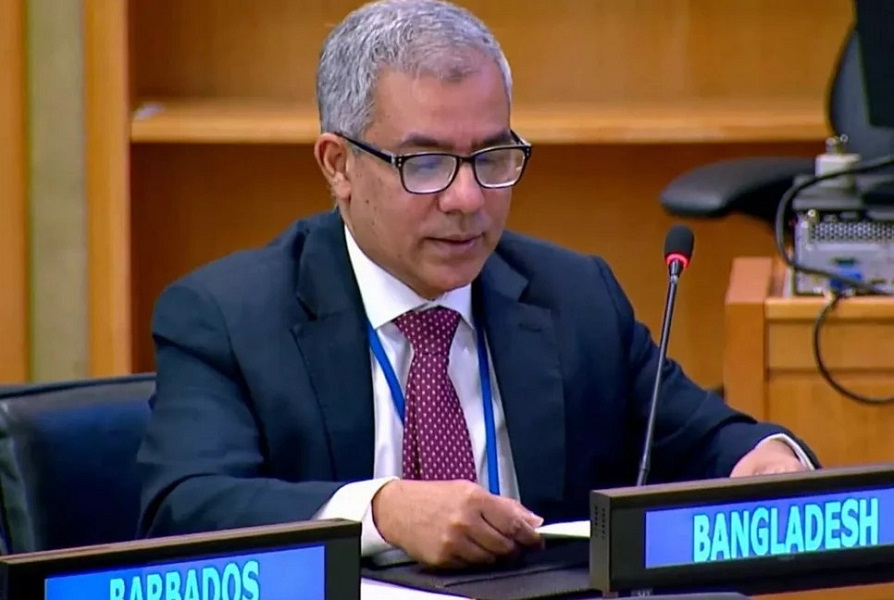
Delivering a statement at a special session on financial integrity of the United Nations Economic and Social Council (ECOSOC) at UN Headquarters in New York on Wednesday, Bangladesh's Permanent Representative to the UN Ambassador Salahuddin Noman Chowdhury said the mass uprising of July 2024 had renewed public expectations for integrity, transparency, and accountability.

He noted that so-called "mega projects" often deliver very limited benefits to ordinary people while creating opportunities for corruption and enabling the transfer of public funds to secure offshore havens.

Ambassador Chowdhury called for ensuring proper exchange of relevant information based on transparency, strengthening effective partnerships, and taking coordinated international action to recover these assets and return them to their rightful owners.

Referring to the outcomes of the Fourth International Conference on Financing for Development, held in Spain last June, as historic, he stressed that political progress must be effectively implemented so that recovered funds can be used to strengthen educational institutions, hospitals, social protection systems, and the country's internal economic capacity.​
 

$234b laundered during 2009-23
10 countries identified as destinations for siphoned-off money, MLAT deal being pursued for asset recovery

FE REPORT
Published :
Apr 02, 2026 00:24
Updated :
Apr 02, 2026 00:24

1775100900001.webp


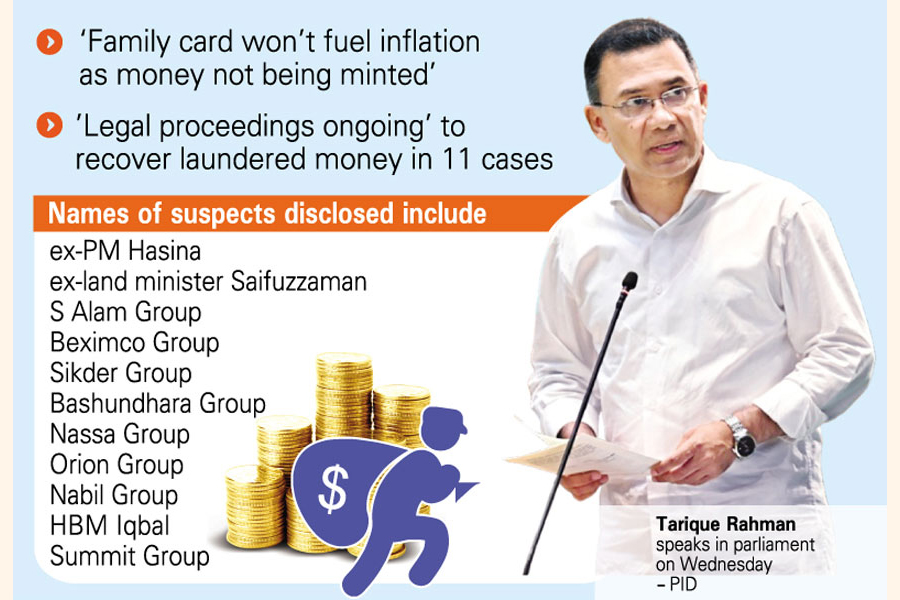
Approximately US$234 billion was illicitly transferred out of Bangladesh during 2009-2023, Prime Minister Tarique Rahman told parliament Wednesday on a question about money laundering during the Awami League rule.

He quoted from the findings laid down by the White Paper Preparation Committee formed during the interim government's period.

Thus, an average of $16 billion (about Tk 1.8 trillion) siphoned off the country every year.

The Prime Minister, who became Member of Parliament for the first time, mentioned the data while responding to the question put up during his maiden PM's question hour in the 13th Jatiya Sangsad (JS).

The prime minister said his government is giving the highest priority to recovering assets smuggled abroad as a key part of its "broader strategy to combat corruption, money laundering, and financial crimes".

According to the head of government, legal proceedings are ongoing to recover laundered money in 11 cases identified and prioritised by an inter-agency taskforce. These cases involve 11 individuals and organisations, including family members and related entities linked to former prime minister Sheikh Hasina.

Those named include Sheikh Hasina, former land minister Saifuzzaman Chowdhury, S Alam Group, Beximco Group, Sikder Group, Bashundhara Group, Nassa Group, Orion Group, Nabil Group, HBM Iqbal, and Summit Group, along with their associated family members and affiliated entities.

Responding to a question from ruling-party MP Md Abul Kalam, the prime minister added that the government's election manifesto emphasised publishing a comprehensive white paper on corruption and money laundering during the previous "fascist Awami League era" and taking legal action against those identified.

Since the laundered funds are alleged to have been transferred to multiple countries, the government is strengthening information exchange, asset identification, and mutual legal assistance with relevant countries. To this end, it is working closely with the Ministry of Foreign Affairs and other agencies to conclude Mutual Legal Assistance Treaties (MLATs).

The prime minister mentioned 10 countries initially identified as major destinations for illicit funds: the, United States, the United Kingdom, Canada, Switzerland, Australia, Thailand, the United Arab Emirates, Singapore, Malaysia, and Hong Kong. Among them, Malaysia, Hong Kong and the UAE have agreed to sign such agreements, while discussions with the remaining seven countries are ongoing.

He also presented updates on the 11 priority cases, noting that 11 joint investigation teams have been formed under the leadership of the Anti-Corruption Commission, with participation from the Criminal Investigation Department (CID), the National Board of Revenue's Central Intelligence Cell, and the Customs Intelligence and Investigation Directorate.

Tarique Rahman said as of 25 March 2026, courts had frozen assets worth Tk 704.46 billion, including Tk 571.68 billion domestically and Tk 132.78 billion abroad. A total of 141 cases have been filed, 15 of which have seen charge sheets submitted, and six cases have reached verdicts.

In response to a supplementary question from Jamaat-e-Islami MP Mujibur Rahman about repatriation of the laundered money, the prime minister said the current government being an elected one is committed to upholding the rule of law. He criticised past practices where individuals were allegedly coerced or forced into compliance.

He emphasised that the government would proceed strictly through legal means to ensure justice for all. "The law will take its own course," he said, adding that those who laundered public money would be punished under existing laws.

Responding to another question, he said: "In simple terms, this is people's money. Since we are elected by the people, we are accountable to them and to the country. Naturally, recovering this money and spending it for the benefit of the people is one of the government's key responsibilities."

To a question from NCP MP Akhtar Hossain regarding the financial impact of social-support schemes such as family card and farmer card, the prime minister said the budget allocation would be disclosed gradually and the programme would be implemented in phases, with the number of beneficiaries increasing on monthly basis.

He made it clear that the assistance is not being financed by printing money so it would not trigger inflation. Instead, the funds would be spent within the local economy, boosting economic activity, employment, and living standards for marginalised groups.

Regarding the family-card recipe, in response to a question from ruling-party MP ABM Mosharraf Hossain, the prime minister said it was launched on 10 March in 15 wards across select districts and corporations. Initially, 37,814 women-led households have received benefits, with an additional 30,000 families to be included within the current fiscal year. The annuity programme aims to cover 40 million families over the next four years.

He said issuing the card in the name of the female head of the household would ensure that support is spent on food, nutrition, healthcare, and education, while also increasing women's control over family resources and strengthening their role and dignity in decision-making within the family and society.​
 

36 agreements to trace ‘laundered’ money of 6 industrial groups

Shanaullah Sakib
Dhaka
Published: 02 Apr 2026, 19: 10

1775176399279.webp


Efforts have begun to trace the “laundered” money and overseas assets of six major industrial groups in the country. So far, 10 banks have signed 36 non-disclosure agreements (NDAs) with multiple multinational firms. The total number of agreements will be 59, with the rest currently in process.

Banks have entered into these agreements to recover funds from six industrial groups that became defaulters after taking loans. Based on information obtained through the NDAs, the concerned banks will sign commercial agreements by 30 June to recover the money. Bangladesh Bank is coordinating the effort, according to sources from various banks.

The six groups are: S Alam Group of Mohammad Saiful Alam in Chattogram; Aramit Group of former land minister Saifuzzaman Chowdhury; Sikder Group of late Zainul Haque Sikder; Beximco Group of Salman F Rahman; Orion Group; and Nassa Group. During the Awami League’s 15-year tenure, Nazrul Islam Mazumder—chairman of Nassa Group—served continuously as chairman of the Bangladesh Association of Banks (BAB).

These groups have been accused of various offences, including bank takeover, looting, and financial irregularities. Because of them, five Islamic banks have had to be merged. Several other banks are also unable to return depositors’ money.

The total loans of the six industrial groups amount to Tk 3.35 trillion (324,501 crore). A large portion of these loans has turned into defaults, according to the concerned banks. Meanwhile, total default loans in the banking sector stood at Tk 5.57 trillion at the end of December last year, accounting for 30.60 per cent of total loans—pushing the entire sector into a crisis.

Officials involved in identifying and recovering laundered money said banks will initially focus only on those who have become defaulters and for whom credible evidence of money laundering abroad exists. No action will be taken now against those with regular loans and ongoing businesses. However, businesses that renewed loans under special facilities will come under scrutiny if even one installment defaults.

The institutions signing NDAs are mainly multinational legal and business advisory firms that also work on asset recovery. Bangladesh Bank sources said these firms will receive a portion of the recovered funds, meaning banks will not incur separate costs. Representatives of several international legal firms have already visited Dhaka and expressed interest in working on recovery.

Initiative during interim government

Following the July mass uprising, the Awami League government was ousted on 5 August, 2024. In September of that year, the interim government reconstituted an inter-agency task force to recover and manage assets laundered abroad. The task force—comprising various government and law enforcement agencies—is led by the governor of Bangladesh Bank.

Later, a “joint investigation team” was formed to probe allegations of money laundering and irregularities against the family of ousted Prime Minister Sheikh Hasina and 11 industrial groups. It is led by the Anti Corruption Commission (ACC), with members from the National Board of Revenue’s tax and customs intelligence units and the Criminal Investigation Department (CID) of police. The Bangladesh Financial Intelligence Unit (BFIU) is providing secretarial support, while the ministries of law, home affairs, and foreign affairs are assisting as needed.

The 11 groups under investigation include S Alam, Beximco, Premier, Nabil, Summit, Orion, Gemcon, Nassa, Bashundhara, Sikder, and Aramit groups. Investigations also cover the personal finances of their owners. The joint team has collected data on how much wealth these groups acquired from banks and other sources domestically and what assets they hold at home and abroad. Cases have already been filed against them by the ACC, and courts have ordered the seizure of many of their assets both domestically and internationally.

Although 11 groups were under investigation, a September 2025 meeting of the inter-agency task force shortlisted six groups for the first phase of civil proceedings based on the highest default loans and evidence of money laundering. These six groups account for 77 per cent of the total default loans among the 11 groups. Hence, the decision was taken to sign NDAs to trace their assets.

Which banks’ money was ‘laundered’

A meeting chaired by Bangladesh Bank governor Mostakur Rahman was held on 10 March, attended by managing directors of banks affected by laundering.

The meeting noted that Bangladesh is now following parallel legal processes in line with international standards—prosecuting offenders domestically while simultaneously pursuing civil actions abroad to identify and confiscate laundered assets.

It was revealed that Islami Bank was the most affected by S Alam Group. The bank’s chairman had been Saiful Alam’s son, Ahsanul Alam. Other affected banks include the five merged banks, Janata Bank, Rupali Bank, UCB, Southeast Bank, Premier Bank, Mercantile Bank, and Commerce Bank. According to Bangladesh Bank, the group’s direct and indirect loans total Tk 2.25 trillion, much of which is alleged to have been laundered.

Saiful Alam renounced Bangladeshi citizenship in 2020 with his family, but a court later declared that order invalid during the interim government period. BFIU has identified hotels and assets linked to S Alam in multiple countries. Islami Bank has been tasked with recovering these assets and will sign 10 NDAs—three already completed.

Islami Bank Managing Director Mohammad Omar Faruk Khan said, “We have already signed agreements with several multinational firms to trace assets of S Alam Group abroad.”

He expressed hope of recovering part of nearly Tk 700 billion in loans.

United Commercial Bank (UCB) was most affected by Saifuzzaman Chowdhury, whose wife Rukmila Zaman chaired the bank. Other affected banks include Islami Bank, First Security Islami Bank, Social Islami Bank, IFIC Bank, Al-Arafah Islami Bank, NRB Commercial Bank, Bank Asia, and SBAC Bank. UCB, Al-Arafah, and Islami Bank have been assigned recovery responsibilities. UCB has signed six NDAs with a multinational firm.

According to Bangladesh Bank, Aramit Group’s loans amount total Tk 170 billion, nearly all defaulted. Saifuzzaman Chowdhury’s assets in the UK were seized in 2025 by the National Crime Agency. Saifuzzaman’s brother Anisuzzaman Chowdhury and sister-in-law Imrana Zaman Chowdhury have already transferred ownership of three properties in London worth about GBP 30 million (Tk 4.9 billion).

Janata Bank was most affected by Beximco Group, owned by former prime minister’s adviser Salman F Rahman. Beximco took around Tk 250 billion from Janata Bank. Almost entire amount was defaulted. Moreover, IFIC Bank, National Bank, Sonali Bank, Rupali Bank, Agrani Bank, AB Bank, UCB, Padma Bank, Dutch-Bangla Bank, BASIC Bank, and five merged banks were also victim of Beximco Group. Altogether, Beximco’s loans amount to Tk 530.4 billion, major portion of which is defaulted.

Janata and National Bank are leading recovery, signing 11 NDAs—nine already completed.

Asked, Janata Bank managing director Mujibur Rahman told Prothom Alo, “We have already completed all procedures subject to approval from the board of directors. Bangladesh Bank has given fresh instructions to move the process forward. We hope that through this, it will be possible to recover a portion of Beximco’s defaulted loans.”

National Bank has been the most affected by the Sikder Group. The bank remained under the control of the Sikder family for one and a half decades. In addition, the five merged banks, AB Bank, Janata Bank, IFIC Bank, Agrani Bank, and Premier Bank have also suffered losses. The Sikder family has multiple companies and substantial investments in the United States, United Arab Emirates, Thailand, the United Kingdom, Singapore, and Switzerland. IFIC and Agrani Bank have been assigned responsibility for recovering laundered funds. All nine NDAs have been completed by these two banks.

The total loans of the Sikder Group amount to Tk 102.33 billion. According to the concerned banks, almost all of these loans have become defaulted.

The five merged banks have been affected due to the Nassa Group. The group’s chairman, Nazrul Islam Mazumder, himself was the chairman of EXIM Bank. Other affected banks include National Bank, IFIC Bank, Al-Arafah Islami Bank, UCB, Southeast Bank, Bank Asia, Pubali Bank, and Standard Bank. National Bank, IFIC Bank, and Al-Arafah Islami Bank have been assigned responsibility for recovering laundered funds. These banks will sign 12 NDAs to trace the group’s assets, of which eight have already been completed.

The total loans of the Nassa Group amount to Tk 92.14 billion. According to bank sources, almost all of these loans have become defaulted.

When asked, IFIC Bank chairman Mehmood Hossain told Prothom Alo, “In line with Bangladesh Bank’s advice, we have signed agreements for information. Commercial agreements will follow. We are hopeful that a portion of the defaulted loans can be recovered through this.”

Social Islami Bank, Islami Bank, Janata Bank, Agrani Bank, Rupali Bank, AB Bank, UCB, Al-Arafah Islami Bank, Mercantile Bank, Premier Bank, Sonali Bank, and Meghna Bank have been affected due to the Orion Group. Agrani Bank and UCB have been assigned responsibility for recovery.

These two banks will sign 10 NDAs to trace laundered assets, of which one has been completed.

A progress report prepared in mid-2025 on the investigation of 11 groups stated that the total loans of Orion and its related entities amount to Tk 100 billion.

The same report mentioned that Bashundhara Group’s loans are about Tk 350 billion, Nabil Group’s Tk 94.05 billion, Gemcon Group’s Tk 21.13 billion, and Summit Group’s Tk 13.35 billion. The report did not specify the loan amount of Premier Group.

Emails were sent to the six industrial groups to obtain their statements regarding the investigation and agreements to trace funds.

Representatives of some institutions were also contacted by phone. However, no responses were received. Some of the group leaders are in prison, while others are fugitives abroad.

Among the remaining five industrial groups, statements from two were obtained. In a written statement to Prothom Alo, Summit authorities said they firmly assert that neither the company nor its shareholders have ever been involved in any illegal business activities or irregularities, whether in Bangladesh or internationally. No authority in Bangladesh has formally informed them of inclusion in any such list. They have always had full confidence that any review or investigation would prove that allegations of money laundering or financial irregularities against Summit Group have no basis.

Nabil Group chairman Aminul Islam told Prothom Alo, “All loans taken by our company from banks are regular. My business is running well. I am obligated to repay all loans.”

‘Recovering money not impossible’

Experts believe that bringing back money laundered abroad is difficult but not impossible. Transparency International Bangladesh (TIB) Executive Director Iftekharuzzaman told Prothom Alo that efforts must continue following proper procedures. It will have to be proven in the courts of the countries where the money was laundered. Overall, the process is lengthy, but recovering laundered money is not impossible.

There is also a discussion within the government about the possibility of reaching settlements with the accused. On that issue, Iftekharuzzaman said that allowing reduced sentences as part of “plea bargaining” (a negotiated legal process) could be acceptable to recover laundered funds. However, it must follow international best practices, ensure equal standards for all, and adhere to specific legal procedures. Otherwise, banks involved in laundering could, in reality, collude with offenders and provide them another layer of protection. In return, the state would gain nothing, and the offenders could even emerge as “heroes.”​
 

Latest Posts

Back