[🇮🇷] Protests in Iran

[🇮🇷] Protests in Iran
109
4K
More threads by Saif

G   Iranian Defense

Saif

Senior Member
Joined
Jan 24, 2024
Messages
22,172
Likes
9,869
Nation

Axis Group

Defiant Khamenei insists 'won't back down' in face of Iran protests
AFP Paris
Published: 09 Jan 2026, 17: 26

1768007176471.webp


A handout picture provided by the office of Iran's Supreme Leader Ayatollah Ali Khamenei shows him addressing a meeting with local champions and medalists of sports and world science awards in Tehran on 20 October, 2025. AFP

Iran's supreme leader Ayatollah Ali Khamenei on Friday insisted that the Islamic republic would "not back down" in the face of protests after the biggest rallies yet in an almost two week movement sparked by anger over the rising cost of living.

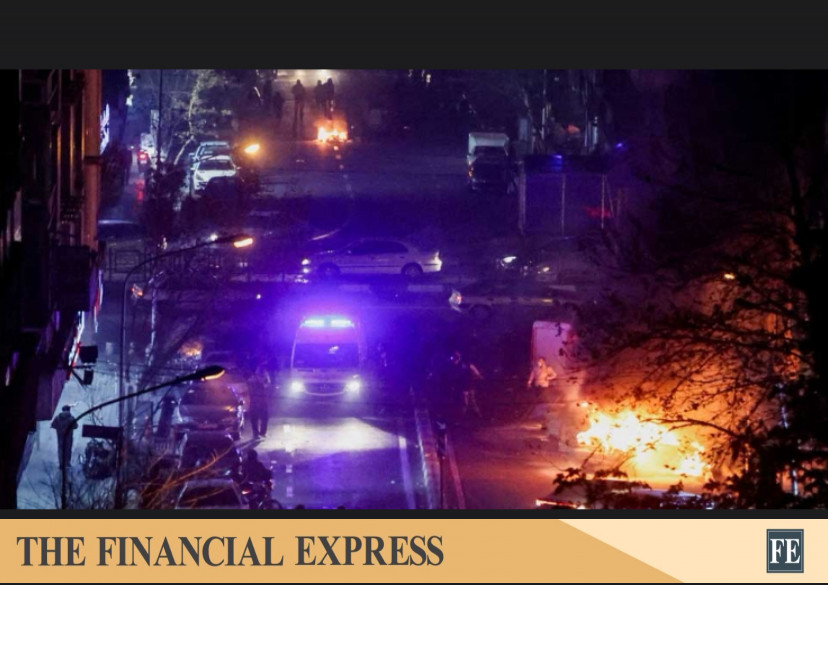
Chanting slogans including "death to the dictator" and setting fire to official buildings, crowds of people opposed to the clerical establishment marched through major cities late Thursday.

Internet monitor Netblocks said authorities had imposed a total connectivity blackout late Thursday and added early Friday that the country has "now been offline for 12 hours... in an attempt to suppress sweeping protests".

The demonstrations represent one of the biggest challenges yet to the Islamic republic in its over four-and-a half decades of existence, with protesters openly calling for an end to its theocratic rule.


But Khamenei struck a defiant tone in his first comments on the protests that have been escalating since 3 January, calling the demonstrators "vandals" and "saboteurs", in a speech broadcast on state TV.

Khamenei said US President Donald Trump's hands "are stained with the blood of more than a thousand Iranians", in apparent reference to Israel's June war against the Islamic republic which the US supported and joined with strikes of its own.

He predicted the "arrogant" US leader would be "overthrown" like the imperial dynasty that ruled Iran up to the 1979 revolution.

"Last night in Tehran, a bunch of vandals came and destroyed a building that belongs to them to please the US president," he said in an address to supporters, as men and women in the audience chanted the mantra of "death to America".

"Everyone knows the Islamic republic came to power with the blood of hundreds of thousands of honourable people, it will not back down in the face of saboteurs," he added.

Trump said late Thursday that "enthusiasm to overturn that regime is incredible" and warned that if the Iranian authorities responded by killing protesters, "we're going to hit them very hard. We're ready to do it."

'Even larger'

AFP has verified videos showing crowds of people, as well as vehicles honking in support, filling a part of the vast Ayatollah Kashani Boulevard late on Thursday.

The crowd could be heard chanting "death to the dictator" in reference to Khamenei, 86, who has ruled the Islamic republic since 1989.

Other videos showed significant protests in other cities, including Tabriz in the north and the holy city of Mashhad in the east, as well as the Kurdish-populated west of the country, including the regional hub Kermanshah.

Several videos showed protesters setting fire to the entrance to the regional branch of state television in the central city of Isfahan. It was not immediately possible to verify the images.

Flames were also seen in the governor's building in Shazand, the capital of Markazi province in central Iran, after protesters gathered outside, other videos showed.

The protests late Thursday were the biggest in Iran since 2022-2023 rallies nationwide sparked by the death in custody of Mahsa Amini, who had been arrested for allegedly violating the Islamic republic's strict dress code.

Rights groups have accused authorities of firing on protesters in the current demonstrations, killing dozens. However, the latest videos from Tehran did not show intervention by security forces.

The son of the shah of Iran ousted by the 1979 Islamic Revolution, US-based Reza Pahlavi, who had called for major protests Thursday, urged a new show of force in the streets on Friday.

Pahlavi, in a new video message early Friday, said Thursday's rallies showed how "a massive crowd forces the repressive forces to retreat".

He called for bigger protests Friday "to make the crowd even larger so that the regime's repressive power becomes even weaker".​
 
Iran authorities signal intensified crackdown as unrest grows

REUTERS
Published :
Jan 11, 2026 11:17
Updated :
Jan 11, 2026 11:17

1768113092286.webp

Iran's authorities indicated on Saturday they could intensify their crackdown on the biggest anti-government demonstrations in years, with the Revolutionary Guards blaming unrest on terrorists and vowing to safeguard the governing system.

US President Donald Trump, who has repeatedly threatened to intervene in recent days, posted on social media on Saturday: "Iran is looking at FREEDOM, perhaps like never before. The USA stands ready to help!!!"

There were fresh reports of violence across Iran, although an internet blackout made it difficult to assess the full extent of unrest.

After nightfall on Saturday, new videos posted online purported to show fresh protests in a number of neighbourhoods in the capital Tehran and several cities, including Rasht in the north, Tabriz in the northwest and Shiraz and Kerman in the south. Reuters could not immediately verify the latest videos.

The exiled son of Iran's last shah, who has emerged as a prominent voice in the fragmented opposition, made his strongest call yet for the protests to broaden into a revolt to topple the clerical rulers.

State media said a municipal building was set on fire in Karaj, west of Tehran, and blamed "rioters". State TV broadcast footage of funerals of members of the security forces it said were killed in protests in the cities of Shiraz, Qom and Hamedan.

Footage posted on Friday on social media showed large crowds gathered in Tehran and fires lit in the street. In one video verified by Reuters showing a nighttime protest in Tehran's Saadatabad district, a man is heard saying the crowd had taken over the area.

"The crowd is coming. 'Death to the dictator', 'Death to Khamenei'," he said, referring to Supreme Leader Ayatollah Ali Khamenei.

Protests have spread across Iran since December 28, beginning in response to soaring inflation, and quickly turning political with protesters demanding an end to clerical rule. Authorities accuse the US and Israel of fomenting unrest.

A senior US intelligence official described the situation as an "endurance game". The opposition was trying to keep up pressure until key government figures either flee or switch sides, while the authorities were trying to sow enough fear to clear the streets without giving the United States justification to intervene, the official said.

Iranian rights group HRANA says at least 50 protesters and 15 security personnel have been killed, and some 2,300 arrested.

ARMY SAYS 'TERRORIST GROUPS' SEEK TO UNDERMINE SECURITY

A witness in western Iran reached by phone said the Revolutionary Guards (IRGC) were deployed and opening fire in the area from which the witness was speaking, declining to be identified for safety.

The semi-official Tasnim news agency reported the arrest of 100 "armed rioters" in the town of Baharestan near Tehran.

In a statement broadcast by state TV, the IRGC - an elite force which has suppressed previous bouts of unrest - accused "terrorists" of targeting military and law enforcement bases over the past two nights. It said several citizens and security personnel had been killed and public and private property set on fire.

Safeguarding the achievements of the Islamic revolution and maintaining security was a "red line", it added.

The regular military also issued a statement saying it would "protect and safeguard national interests, the country’s strategic infrastructure, and public property".

PAHLAVI SAYS GOAL IS TO PREPARE TO 'SEIZE CITY CENTRES'

In a video posted on X, US-based Reza Pahlavi, 65, whose father was toppled as Iran's shah in the 1979 revolution, said the Islamic Republic would be brought "to its knees". He called for people to seize the centres of their towns, and said he was preparing to return soon to Iran.

"Our goal is no longer merely to come into the streets; the goal is to prepare to seize city centres and hold them," he said.

A doctor in northwestern Iran said that since Friday, large numbers of injured protesters had been brought to hospitals. Some were badly beaten, suffering head injuries and broken legs and arms, as well as deep cuts.

At least 20 people in one hospital had been shot with live ammunition, five of whom later died.

Trump said on Thursday he was not inclined to meet Pahlavi, a sign that he was waiting to see how the crisis plays out before backing an opposition leader.

Iran's rulers have weathered repeated bouts of unrest, including student protests in 1999, over a disputed election in 2009, against economic hardships in 2019, and in 2022 over the death in custody of a woman accused of violating dress codes.

Trump, who joined Israel to strike Iran's nuclear sites last summer, has included Iran in lists of places in which he could intervene since sending forces to seize the president of Venezuela a week ago. On Friday, in a warning to Iran's leaders, he said: "You better not start shooting because we'll start shooting too."

Some protesters on the streets have shouted slogans in support of Pahlavi, such as "Long live the shah", although most chants have called for an end to rule by the clerics or demanded action to fix the economy.

On Friday, Khamenei accused protesters of acting on behalf of Trump, saying rioters were attacking public properties and warning that Tehran would not tolerate people acting as "mercenaries for foreigners".​
 
Deaths from Iran protests reach more than 500

Rights group says
By Reuters, Dubai/Jerusalem
​
1768179795983.webp

​
Smoke rises as protesters gather amid evolving anti-government unrest at Vakilabad highway in Mashhad, Razavi Khorasan province, Iran, released on January 10, 2026, in this screen grab obtained from a social media video. Photo: SOCIAL MEDIA/via REUTERS Purchase Licensing Rights

Unrest in Iran has killed more than 500 people, a rights group said on Sunday, as Tehran threatened to target US military bases if President Donald Trump carries out threats to intervene on behalf of protesters.


With the Islamic Republic's clerical establishment facing the biggest demonstrations since 2022, Trump has repeatedly threatened to intervene if force is used on protesters.


According to its latest figures - from activists inside and outside Iran - US-based rights group HRANA said it had verified the deaths of 490 protesters and 48 security personnel, with more than 10,600 people arrested in two weeks of unrest.

Iran has not given an official toll and Reuters was unable to independently verify the tolls.


Trump was to be briefed by his officials on Tuesday on options over Iran including military strikes, using secret cyber weapons, widening sanctions and providing online help to anti-government sources, the Wall Street Journal said on Sunday.

Iranian Parliament Speaker Mohammad Baqer Qalibaf warned Washington against "a miscalculation".

"Let us be clear: in the case of an attack on Iran, the occupied territories (Israel) as well as all US bases and ships will be our legitimate target," said Qalibaf, a former commander in Iran's elite Revolutionary Guards.


Authorities Intensify Crackdown

The protests began on December 28 in response to soaring prices, before turning against the clerical rulers who have governed since the 1979 Islamic Revolution.


Iranian authorities accuse the US and Israel of fomenting trouble and called for a nationwide rally on Monday to condemn "terrorist actions led by the United States and Israel" in Iran, state media reported.

The flow of information from Iran has been hampered by an internet blackout since Thursday.

Footage posted on social media on Saturday from Tehran showed large crowds marching along a street at night, clapping and chanting. The crowd "has no end nor beginning," a man is heard saying.

In footage from the northeastern city of Mashhad, smoke can be seen billowing into the night sky from fires in the street, masked protesters, and a road strewn with debris, another video posted on Saturday showed. Explosions could be heard.​
 
Turkey cautions against foreign intervention in Iran
REUTERS
Published :
Jan 12, 2026 22:10
Updated :
Jan 12, 2026 22:10

1768265010369.webp


Turkey said on Monday that any foreign intervention in neighbouring Iran would lead to greater crises in the country and the region, and it called for US and Iranian negotiations to resolve existing problems.

Iran is facing its biggest demonstrations since 2022 and US President Donald Trump has threatened to get involved if force is used against protesters.

NATO member Turkey does not wish to see chaos in Iran despite “certain problems within Iranian society and government”, Omer Celik, spokesperson for Turkey’s ruling AK Party, said.

“As Iranian President (Masoud) Pezeshkian has stated, these problems must be resolved through the internal dynamics of Iranian society and the national will of Iran,” Celik told a press conference after a meeting of the ruling party.

“We believe that foreign intervention will lead to even worse consequences, and that intervention provoked by Israel in particular will lead to even greater crises.”

Israeli Prime Minister Benjamin Netanyahu said on Saturday that Israel was closely monitoring the protests in Iran, adding: “We all hope that the Persian nation will soon be freed from the yoke of tyranny.”

Trump and Turkish President Tayyip Erdogan have close personal ties.

Turkish Foreign Minister Hakan Fidan has said the protests, which evolved from complaints over dire economic hardships to defiant calls for the fall of the deeply entrenched clerical establishment, send a very strong message to Tehran.

“These demonstrations, stemming from genuine reasons and structural problems, are also being manipulated from abroad by Iran’s rivals,” Fidan told Turkish state broadcaster TRT on Friday.

“What we’re trying to do... is to support an agreement with Iran that benefits both sides, primarily the Americans, because the stability of the region depends on it.”

US-based rights group HRANA said it had verified the deaths of 544 people and the arrests of 10,681 people since the protests began on Dec 28.

Reuters was unable to independently verify the tallies.​
 
Trump says US military studying 'very strong options' for Iran
AFP Washington, United States,
Published: 12 Jan 2026, 10: 02

1768267348910.webp


US President Donald Trump waves as he walks to board Marine One at Joint Base Andrews in Maryland on 11 January, 2026. AFP

US President Donald Trump said Sunday he was considering potential military action against Iran, amid mounting reports of deadly crackdowns against the country's mass anti-government protests.

"They're starting to, it looks like," Trump said, when asked by reporters aboard Air Force One if Iran had crossed his previously stated red line of protesters being killed.

"We're looking at it very seriously. The military is looking at it, and we're looking at some very strong options. We'll make a determination," he said.​
 
Trump urges Iranians to keep protesting, says 'help is on its way'

REUTERS
Published :
Jan 13, 2026 22:56
Updated :
Jan 13, 2026 23:31

1768350726874.webp

Cars burn in a street during a protest over the collapse of the currency's value, in Tehran, Iran, Jan 8, 2026. Stringer/WANA (West Asia News Agency) via REUTERS

US President Donald Trump urged Iranians on Tuesday to keep protesting and said help was on the way, without giving details, as Iran's clerical establishment pressed its crackdown against the biggest demonstrations in years.

"Iranian Patriots, KEEP PROTESTING - TAKE OVER YOUR INSTITUTIONS!!!... HELP IS ON ITS WAY," Trump said in a post on Truth Social, adding he had canceled all meetings with Iranian officials until the "senseless killing" of protesters stopped.

The unrest, sparked by dire economic conditions, has posed the biggest internal challenge to Iran's clerical rulers for at least three years and has come at a time of intensifying international pressure after Israeli and US strikes last year.

An Iranian official said earlier on Tuesday that about 2,000 people had been killed in the protests, the first time authorities have acknowledged the high death toll from an intense crackdown on two weeks of nationwide unrest.

The Iranian official, speaking to Reuters, said that people he called terrorists were behind the deaths of both protesters and security personnel. The official, who declined to be named, did not give a breakdown of who had been killed.

On Monday evening, Trump announced 25% import tariffs on products from any country doing business with Iran - a major oil exporter. Trump has also said more military action is among options he is weighing to punish Iran over the crackdown, saying earlier this month "we are locked and loaded".

Tehran has not yet responded publicly to Trump's announcement of the tariffs, but it was swiftly criticised by China. Iran, already under heavy U.S. sanctions, exports much of its oil to China, with Turkey, Iraq, the United Arab Emirates and India among its other top trading partners.​
 
Iran official says 2,000 people have been killed in unrest

Reuters Dubai, UAE
Updated: 13 Jan 2026, 17: 58

1768352262515.webp

Iranian demonstrators gather in a street during a protest over the collapse of the currency's value, in Tehran, Iran, 8 January, 2026. Reuters

About 2,000 people including security personnel have been killed in protests in Iran, an Iranian official said on Tuesday, the first time authorities have acknowledged the high death toll from an intense crackdown on two weeks of nationwide unrest.

The Iranian official, speaking to Reuters, said that what he called terrorists were behind the deaths of both protesters and security personnel. The official did not give a breakdown of who had been killed.

The unrest, sparked by dire economic conditions, has been the biggest internal challenge to Iranian authorities for at least three years and comes amid intensifying international pressure after Israeli and U.S. strikes last year.


Iran's clerical authorities, in power since a 1979 Islamic Revolution, have tried to take a dual approach to the demonstrations, calling protests over economic problems legitimate while enforcing a harsh security crackdown. They have accused the U.S. and Israel of fomenting unrest and said unnamed people they call terrorists have hijacked the protests.

A rights group had previously identified hundreds of people killed and said that thousands had been arrested.

Communications restrictions including an internet blackout over recent days have hampered the flow of information.

Videos of nighttime clashes between demonstrators and security forces over the past week, including several that were verified by Reuters, have shown violent confrontations with gunfire and burning cars and buildings.​


I'm an optimist. And my faith is strong.

I believe in blood faith and soil.

And I believe we will return to Iran one day.

A Zoroastrian Iran.
 

If we see vidz on youtube of Iran and Pakistan, there is a significant difference in poverty levels between the two countries. Iranis are eating kabab/ tikkay boti/ salads......whilst our ghareeb are eating samosay/ chaat/ saag parathay and daal chawal. Despite Irans currency being 'trash'.......everybody is decetly clothed, well fed and healthy living in reasonably clean cities with good infrastructure.
For us however in Pakistan, its just total third world bhai.......no need to say more than this.
@Vsdoc
 
Iran warns of retaliation if Trump strikes, US withdraws some troops from regional bases

REUTERS
Published :
Jan 14, 2026 21:18
Updated :
Jan 14, 2026 21:18

1768437594634.webp

The United States is withdrawing some personnel from bases in the Middle East, a US official said on Wednesday, after a senior Iranian official said Tehran had warned neighbours it would hit American bases if Washington strikes.

With Iran's leadership trying to put down the worst domestic unrest the Islamic Republic has ever faced, Tehran is seeking to deter US President Donald Trump's repeated threats to intervene on behalf of anti-government protesters.

A US official, speaking on condition of anonymity, said the United States was withdrawing some personnel from key bases in the region as a precaution given heightened regional tensions.

Three diplomats said some personnel had already been advised to leave the main US air base in the region in Qatar, although there were no immediate signs of a large-scale evacuation of troops, as took place in the hours before an Iranian missile attack last year.

Trump has repeatedly threatened to intervene in support of protesters in Iran, where thousands of people have been reported killed in a crackdown on the protests against clerical rule.

Iran and its Western foes have both described the unrest, which began two weeks ago as demonstrations against dire economic conditions and rapidly escalated in recent days, as the most violent since the 1979 Islamic Revolution that installed Iran's system of clerical rule.

An Iranian official has said more than 2,000 people have died. A rights group put the toll at more than 2,600.

Iran "had never faced this volume of destruction", Armed Forces Chief of Staff Abdolrahim Mousavi said on Wednesday, blaming foreign enemies. French Foreign Minister Jean-Noel Barrot described "the most violent repression in Iran's contemporary history".

ISRAELI ASSESSMENT SAYS TRUMP HAS DECIDED TO INTERVENE

According to an Israeli assessment, Trump has decided to intervene, although the scope and timing of this action remains unclear, an Israeli official said.

The three diplomats told Reuters that some personnel had been advised to leave the US military's Al Udeid Air Base in Qatar by Wednesday evening.

One of the diplomats described the move as a "posture change" rather than an "ordered evacuation". There was no sign of troops being moved off the base to a nearby soccer stadium and shopping mall, as took place last June in the hours before Iran targeted the base with missiles in retaliation for US airstrikes.

The US embassy in Doha had no immediate comment and Qatar's foreign ministry did not immediately respond to a request for comment.

Iranian authorities have accused the United States and Israel of fomenting the unrest, carried out by people it calls terrorists.

IRAN ASKS REGIONAL STATES TO PREVENT A US ATTACK

Trump has openly threatened to intervene in Iran for days, without giving specifics.

In an interview with CBS News on Tuesday, Trump vowed "very strong action" if Iran executes protesters. He also urged Iranians on Tuesday to keep protesting and take over institutions, declaring "help is on the way".

The senior Iranian official, speaking on condition of anonymity, said Tehran had asked US allies in the region to prevent Washington from attacking Iran.

"Tehran has told regional countries, from Saudi Arabia and UAE to Turkey, that US bases in those countries will be attacked" if the US targets Iran, the official said.

Direct contacts between Iranian Foreign Minister Abbas Araqchi and US Special Envoy Steve Witkoff had been suspended, the official added.

The United States has forces across the region including the forward headquarters of its Central Command at Al Udeid in Qatar and the headquarters of the US Navy's Fifth Fleet in Bahrain.

GOVERNMENT DOES NOT SEEM ON VERGE OF COLLAPSE, WESTERN OFFICIAL SAYS

The flow of information from inside Iran has been hampered by an internet blackout.

US-based HRANA rights group said it had so far verified the deaths of 2,403 protesters and 147 government-affiliated individuals, dwarfing tolls from previous waves of protests crushed by the authorities in 2022 and 2009.

The government's prestige was severely damaged by a 12-day Israeli bombing campaign in June - joined by the US - that followed setbacks for Iran's regional allies in Lebanon and Syria. European countries triggered the restoration of U.N. sanctions over Iran's nuclear programme, worsening an economic crisis.

The unrest on such a scale had caught the authorities off guard at a vulnerable time, but it did not appear that the government faced imminent collapse, and its security apparatus was still in control, one Western official said.

The authorities have sought to project images showing they retain public support. Iranian state TV broadcast footage of large funeral processions for people killed in the unrest in Tehran, Isfahan and Bushehr, and other cities. People waved flags and pictures of Supreme Leader Ayatollah Ali Khamenei, and held aloft signs with anti-riot slogans.

President Masoud Pezeshkian, an elected figure whose power is subordinate to that of Khamenei, told a cabinet meeting that as long as the government had popular support, "all the enemies’ efforts against the country will come to nothing".

State media reported that the head of Iran's top security body, Ali Larijani, had spoken to the foreign minister of Qatar and Araqchi had spoken to his Emirati and Turkish counterparts.

Araqchi told UAE Foreign Minister Sheikh Abdullah bin Zayed that "calm has prevailed" and Iranians were determined to defend their sovereignty and security from foreign interference.

Visiting a Tehran prison where arrested protesters are being held, Iran's chief justice said speed in judging and penalizing those "who beheaded or burned people" was critical to ensuring such events do not happen again.

HRANA reported 18,137 arrests so far.

Hengaw, an Iranian Kurdish rights group, has reported a 26-year-old man, Erfan Soltani, arrested in connection with protests in the city of Karaj, was to be executed on Wednesday. The group said on Wednesday it was not able to confirm whether the sentence had been carried out.​
 
Trump sees Iranian crackdown easing, Tehran denies man to be executed

REUTERS
Published :
Jan 15, 2026 20:37
Updated :
Jan 15, 2026 20:37

1768523798049.webp

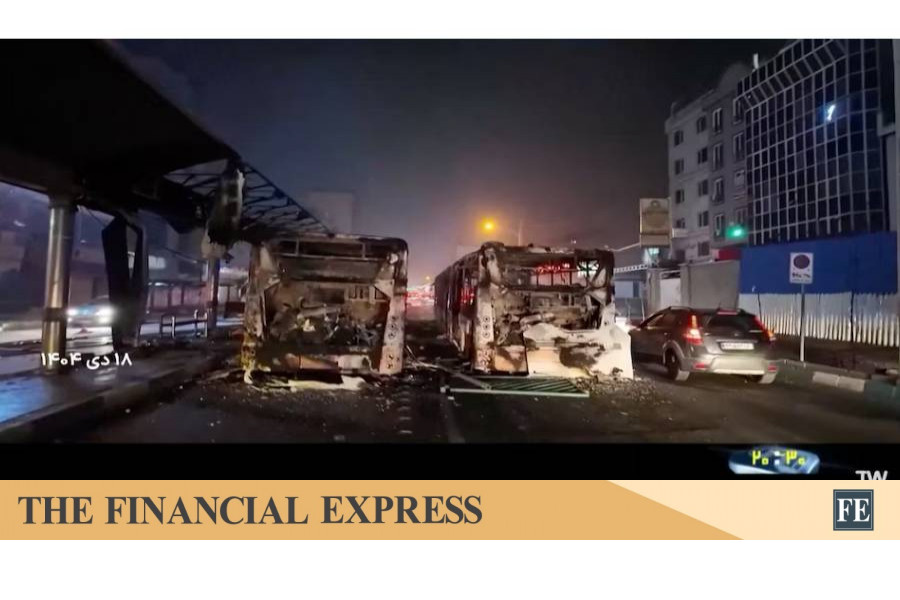
Burnt vehicles lie on the road following unrest sparked by dire economic conditions, in a place given as Tehran, Iran, January 10, 2026, in this screengrab from Iran's state media broadcast footage. Photo : IRIB via WANA(West Asia News Agency)


U.S. President Donald Trump said he had been told that killings in Iran’s crackdown on protests were easing and that he believed there was no current plan for large-scale executions, adopting a wait‑and‑see posture after earlier threatening intervention.

After Iran’s foreign minister said Iran had “no plan” to hang people, Iranian state media on Thursday reported that a 26-year-old man arrested during protests in the city of Karaj would not be given the death sentence.

Rights organisation Hengaw, which reported earlier this week that Erfan Soltani was due to be executed on Wednesday, said a previously communicated order for his execution had been postponed, citing his relatives.

In a social media post on Thursday, Trump responded to a news report that an Iranian protester was no longer being sentenced to death, writing: “This is good news. Hopefully, it will continue!”

Iranian state media said that while Soltani was being charged with colluding against “internal security and propaganda activities against the regime”, the death penalty does not apply to such charges.

Trump’s comments on Wednesday led oil prices to retreat from multi-month highs and gold eased from a record peak on Thursday. Trump has repeatedly threatened to intervene on behalf of protesters in Iran, where the clerical establishment has cracked down hard on nationwide unrest since December 28.

PROTESTS APPEAR TO ABATE

People inside the country, reached by Reuters on Wednesday and Thursday, said the protests appear to have abated since Monday. Information flows have been hampered by an internet blackout for a week.

Iranian President Masoud Pezeshkian said on Thursday the government was trying to address some of the economic problems that first spurred the protests, saying it intended to tackle issues of corruption and foreign exchange rates and that this would improve purchasing power for poorer people.

Tensions had escalated on Wednesday, with Iran saying it had warned neighbours it would hit American bases in the region in the event of U.S. strikes, and a U.S. official saying the United States was withdrawing some personnel from bases in the region.

Trump, speaking at the White House, said he has been told that killings in the crackdown were subsiding. Asked who told him that the killings had stopped, Trump described them as “very important sources on the other side.”

The president did not rule out potential U.S. military action, saying “we are going to watch what the process is” before noting that his administration had received a “very good statement” from Iran.

Paul Salem, a senior fellow at the Middle East Institute think-tank, said that while Trump has appeared to back away from action against Iran, he remained unpredictable.

The Iranian government is at “a strategic dead end, but I don’t think they are at immediate risk of state collapse or regime change,” he added.

In separate comments to Reuters, Trump expressed uncertainty over whether Reza Pahlavi, the son of the late shah of Iran and a prominent figure in Iran’s fractured opposition, would be able to muster support within Iran to eventually take over.

Trump told Reuters it is possible the government in Tehran could fall due to the protests but that in truth “any regime can fail.”

Turkey, one of several states in the region where the U.S. has forces, expressed opposition to the use of violence against Iran, with Foreign Minister Hakan Fidan saying at a press conference in Istanbul that the priority is to avoid destabilisation.

Saudi Foreign Minister Prince Faisal bin Farhan held a phone call with Iranian Foreign Minister Abbas Araghchi on Thursday and discussed ways to support security and stability in the region, Saudi state media reported.

The security warning level at the U.S. Al Udeid air base in Qatar has been lowered after a heightened alert triggered on Wednesday, three sources briefed on the situation told Reuters on Thursday. U.S. aircraft that were moved out of Al Udeid are gradually returning to the base, one of the sources added.

Iran launched missiles at Al Udeid last year in response to U.S. airstrikes on its nuclear installations during the 12-day war between Tehran and Israel.

G7 CONDEMNS REPRESSION

The U.S.-based HRANA rights group says it has so far verified the deaths of 2,435 protesters and 153 government-affiliated individuals in the unrest that started with protests over soaring prices before turning into one of the biggest challenges to the clerical establishment since the 1979 Islamic Revolution.

The death toll has dwarfed that of previous bouts of unrest crushed by the Iranian authorities, such as the 2022 “Woman, Life, Freedom” protests and unrest sparked by a disputed election in 2009.

Iran and its Western foes have both described the unrest as the most violent since the 1979 Islamic Revolution.

Iranian authorities said the demonstrations turned from legitimate protest at economic grievances into unrest fomented by its foreign enemies, accusing people it described as terrorists of attacking the security forces and public property.

The intelligence ministry urged people on Thursday to report any suspicious activities, state media reported.

The Group of Seven countries condemned what they described as the Iranian authorities’ brutal repression of the Iranian people, saying they were prepared to impose additional restrictive measures on Iran if it continues to crack down.​
 
Iran vows to defend itself

Saudi, Qatar, Oman convince Trump to ‘give Iran a chance’


Agence France-Presse . Paris, France 16 January, 2026, 00:29

Iran vowed on Thursday to defend itself against any foreign threat, after US president Donald Trump said he would ‘watch it and see’ about military action over the crackdown on protesters.

Saudi Arabia, Qatar and Oman led efforts to talk Trump out of an attack on Iran, a senior Saudi official said on Thursday, with another Gulf official confirming the discussions.


The Gulf trio ‘led a long, frantic, diplomatic last-minute effort to convince Trump to give Iran a chance to show good intention’, the Saudi official said.

Some personnel were moved out of a major US military base in Qatar on Wednesday, and staff at US missions in Saudi Arabia and Kuwait were warned to exercise caution as fears mounted of a US attack over Iran’s crackdown on protesters.

The United States has repeatedly warned it could intervene against a deadly Iranian government crackdown on protests, while Tehran has said it would retaliate with strikes on US military and shipping targets.

Iran’s judiciary said a protester who the United States and rights groups feared faced imminent execution would not be sentenced to death, after Trump had warned of strikes should people arrested for demonstrating be killed.

The protests were sparked by economic grievances but evolved rapidly into a nationwide movement that has constituted the greatest threat to the Islamic republic since its inception in 1979.

Rights groups say the crackdown by authorities, who exercise zero tolerance for dissent, has left at least 3,428 people dead. They also accuse the country’s theocratic leaders of using an internet blackout to cover up the brutality of their crackdown.

In telephone talks on Thursday, Iranian foreign minister Abbas Araghchi told Saudi Arabian counterpart Faisal bin Farhan of the importance of ‘global condemnation of foreign interference in the internal affairs of regional countries’.

The developments came hours ahead of a UN Security Council meeting on Iran later on Thursday, which was requested by the US.

In an announcement at the White House, Trump said he had now received assurances from ‘very important sources on the other side’ that executions would not go ahead.


‘They’ve said the killing has stopped and the executions won’t take place — there were supposed to be a lot of executions today and that the executions won’t take place — and we’re going to find out,’ Trump said.

Asked by an AFP reporter in the Oval Office if US military action was now off the table, Trump replied: ‘We’re going to watch it and see what the process is.’

The comments sent oil prices plunging on Thursday, as concerns eased of a looming supply shock in energy markets. Iran makes up around three per cent of global oil production.

All eyes were on protester Erfan Soltani, 26, in prison in Karaj outside Tehran since his arrest, who is facing charges of propaganda against Iran’s Islamic system and acting against national security.

On Thursday, the Iranian judiciary said Soltani has ‘not been sentenced to death’ and if he is convicted, ‘the punishment, according to the law, will be imprisonment, as the death penalty does not exist for such charges’.

Iran’s judiciary chief had vowed fast-track trials for those arrested, and prosecutors have said some detainees will face capital charges of ‘waging war against God’.

State media reported hundreds of arrests and the detention of a foreign national for espionage, without giving details.

In an interview with US network Fox News, Iranian foreign minister Abbas Araghchi said there would be ‘no hanging today or tomorrow’, while accusing US ally Israel of orchestrating violence in Iran, without providing evidence.

Araghchi contends the protests devolved into widespread violence between January 7 and 10 because they were infiltrated by external ‘elements who had a plan to create a big number of killings in order to provoke president Trump to enter into this conflict and start a new war against Iran’.

The authorities imposed an unprecedented internet blackout on January 8, as protests exploded in size and intensity, severely hampering the demonstrators’ ability to communicate with each other and the outside world.

Iran’s minister of justice Amin Hossein Rahimi echoed Araghchi’s allegation, telling state news agencies that after January 7, ‘those weren’t protests any longer’ and anyone who was arrested on the streets then ‘was definitely a criminal’.

Araghchi said the Iranian government was ‘in full control’ and reported an atmosphere of ‘calm’ after what he called three days of ‘terrorist operation’.

Iran also struck a defiant tone about responding to any US attack, as Washington appeared to draw down staff at a base in Qatar that Tehran targeted in a strike last year.

Iran targeted the Al Udeid base in June in retaliation for US strikes on its nuclear facilities.

Ali Shamkhani, a senior adviser to Supreme Leader Ayatollah Ali Khamenei, warned Trump the strike showed ‘Iran’s will and capability to respond to any attack’.

Fears of possible US military action continued to rile the region, and Turkey on Thursday said it opposed a military operation against Iran.

G7 nations said Wednesday they were ‘deeply alarmed at the high level of reported deaths and injuries’ and warned of further sanctions if the crackdown continued.

Monitor NetBlocks said Iran’s internet blackout had lasted over 156 hours.

Despite the shutdown, new videos, with locations verified by AFP, showed bodies lined up in the Kahrizak morgue south of Tehran, wrapped in black bags as distraught relatives searched for loved ones.

The US-based Institute for the Study of War, which has monitored protest activity amid the shutdown, said it had recorded ‘zero protests’ on Wednesday.

But it added: ‘The regime is sustaining repressive measures that impose a significant cost on the regime. This suggests that the regime does not perceive that the threat from protests has subsided.’

Iran Human Rights, based in Norway, said security forces had killed at least 3,428 protesters and arrested more than 10,000.​
 

Khamenei for crackdown on ‘seditionists’ after protests
Agence France-Presse . Paris, France 18 January, 2026, 00:23

1768700280817.webp

Iran's Supreme Leader Ayatollah Ali Khamenei.

Iran’s supreme leader on Saturday said authorities ‘must break the back of the seditionists’, blaming US president Donald Trump for ‘casualties’ after a deadly crackdown on protests against the country’s clerical leadership.

Iran was rocked by weeks of demonstrations sparked by anger over economic hardship that exploded into the biggest protests against the Islamic republic in more than three years.

But demonstrations have subsided after the crackdown that rights groups say left thousands dead under an internet blackout that lasted more than a week.

Authorities have said demonstrations they condemn as ‘riots’ are under control, with state-aligned media reporting thousands of arrests and officials vowing swift punishment for those detained.

‘By God’s grace, the Iranian nation must break the back of the seditionists just as it broke the back of the sedition,’ Khamenei told supporters during an address marking a religious holiday commemorating the Prophet Mohammed’s ascension to heaven aired by state television.

‘We do not intend to lead the country to war, but we will not spare domestic criminals,’ he added, saying that ‘international criminals’ were ‘worse’ and would also not be spared punishment.

Iranian authorities have blamed the United States for fuelling a ‘terrorist operation’ that they say hijacked peaceful protests over the economy.

Trump, who backed and joined Israel’s 12-day war against Iran in June, had repeatedly threatened new military action against Tehran if protesters were killed.

Khamenei on Saturday lashed out at Trump, accusing him of being ‘guilty for the casualties, damages and accusations he has levelled against the Iranian nation’.

‘This was an American conspiracy,’ he said, adding that ‘America’s goal is to swallow Iran... the goal is to put Iran back under military, political and economic domination’.

While Washington has appeared to have stepped back, Trump has said he has not ruled out military options and made clear he was keeping a close eye on whether any protesters were executed.

Alarm has mounted over the reported death toll during the crackdown, as verifying cases remains difficult under severe internet restrictions.

Monitor Netblocks said on Saturday that internet connectivity in Iran rose ‘very’ slightly, more than 200 hours into the nationwide internet shutdown.

Rights groups have warned that the blackout has been aimed at concealing the extent of the violence during the crackdown.

Norway-based rights group Iran Human Rights says 3,428 protesters have been verified to have been killed by security forces, but warns the actual toll could be several times higher.

Other estimates place the death toll at more than 5,000 -- and possibly as high as 20,000, IHR said.

The opposition Iran International channel based outside the country has said at least 12,000 people were killed during the protests, citing senior government and security sources.​
 

Irans fucking powerful......not like those busted ass muzlims that surround it. Piece a candy ass no? Choonturr main muzlim k chatree daal kar khol dee!.....Ass-hole wide open!.....Wahabbi Eff-sola can fly right thru that ass-hole!

Bukvaas Sawdi Judea, AL-Turkiya and AL-Baqistan.......teeno chutiye!
 

Iran restores limited internet

FE ONLINE DESK

Published :
Jan 18, 2026 12:21
Updated :
Jan 18, 2026 12:21

1768783801030.webp


Some citizens in Iran have been provided with access to the Internet after several days of nationwide blackout, the semi-official Mehr news agency reported on Saturday, without giving more details.

Also on Saturday, the country restored short message service (SMS), reports Xinhua.

Iran imposed severe Internet restrictions on access to the global Internet and suspended SMS on Jan. 8, citing riots and terrorist attacks targeting civilians, security forces and public buildings.

On Monday, media cited Iran's top cyberspace authority as saying that Internet access would remain restricted until officials confirm the restoration of full security.

Protests erupted since late December in several Iranian cities over the sharp depreciation of the rial. Authorities have acknowledged the demonstrations and said they are prepared to address economic grievances, while warning against violence, vandalism, and unrest.

Initially held peacefully, the protests gradually became violent, leading to casualties and damage to public property, mosques, government buildings, and banks, especially on Jan. 8 and 9, for which Iranian authorities have blamed the United States and Israel.​
 

Iran restores limited internet

FE ONLINE DESK

Published :
Jan 18, 2026 12:21
Updated :
Jan 18, 2026 12:21

View attachment 23880

Some citizens in Iran have been provided with access to the Internet after several days of nationwide blackout, the semi-official Mehr news agency reported on Saturday, without giving more details.

Also on Saturday, the country restored short message service (SMS), reports Xinhua.

Iran imposed severe Internet restrictions on access to the global Internet and suspended SMS on Jan. 8, citing riots and terrorist attacks targeting civilians, security forces and public buildings.

On Monday, media cited Iran's top cyberspace authority as saying that Internet access would remain restricted until officials confirm the restoration of full security.

Protests erupted since late December in several Iranian cities over the sharp depreciation of the rial. Authorities have acknowledged the demonstrations and said they are prepared to address economic grievances, while warning against violence, vandalism, and unrest.

Initially held peacefully, the protests gradually became violent, leading to casualties and damage to public property, mosques, government buildings, and banks, especially on Jan. 8 and 9, for which Iranian authorities have blamed the United States and Israel.​
Iran's under a full on regime change operation, but it has prevailed despite desperate attempts at over turning the republic. If it was the three chutiye (Sawdi Judea/ AL-turkiya/ Baqistan).....regime change would've happened weeks ago!

Those three mentioned are the three twinks!......Take it up de ass no problem in da name of Islam.

Baasturrddz!
Iran is the lion of the Middle East. The USA cannot subdue Iran. Peace.
 
Defiant Khamenei insists 'won't back down' in face of Iran protests
AFP Paris
Published: 09 Jan 2026, 17: 26

View attachment 23675

A handout picture provided by the office of Iran's Supreme Leader Ayatollah Ali Khamenei shows him addressing a meeting with local champions and medalists of sports and world science awards in Tehran on 20 October, 2025. AFP

Iran's supreme leader Ayatollah Ali Khamenei on Friday insisted that the Islamic republic would "not back down" in the face of protests after the biggest rallies yet in an almost two week movement sparked by anger over the rising cost of living.

Chanting slogans including "death to the dictator" and setting fire to official buildings, crowds of people opposed to the clerical establishment marched through major cities late Thursday.

Internet monitor Netblocks said authorities had imposed a total connectivity blackout late Thursday and added early Friday that the country has "now been offline for 12 hours... in an attempt to suppress sweeping protests".

The demonstrations represent one of the biggest challenges yet to the Islamic republic in its over four-and-a half decades of existence, with protesters openly calling for an end to its theocratic rule.


But Khamenei struck a defiant tone in his first comments on the protests that have been escalating since 3 January, calling the demonstrators "vandals" and "saboteurs", in a speech broadcast on state TV.

Khamenei said US President Donald Trump's hands "are stained with the blood of more than a thousand Iranians", in apparent reference to Israel's June war against the Islamic republic which the US supported and joined with strikes of its own.

He predicted the "arrogant" US leader would be "overthrown" like the imperial dynasty that ruled Iran up to the 1979 revolution.

"Last night in Tehran, a bunch of vandals came and destroyed a building that belongs to them to please the US president," he said in an address to supporters, as men and women in the audience chanted the mantra of "death to America".

"Everyone knows the Islamic republic came to power with the blood of hundreds of thousands of honourable people, it will not back down in the face of saboteurs," he added.

Trump said late Thursday that "enthusiasm to overturn that regime is incredible" and warned that if the Iranian authorities responded by killing protesters, "we're going to hit them very hard. We're ready to do it."

'Even larger'

AFP has verified videos showing crowds of people, as well as vehicles honking in support, filling a part of the vast Ayatollah Kashani Boulevard late on Thursday.

The crowd could be heard chanting "death to the dictator" in reference to Khamenei, 86, who has ruled the Islamic republic since 1989.

Other videos showed significant protests in other cities, including Tabriz in the north and the holy city of Mashhad in the east, as well as the Kurdish-populated west of the country, including the regional hub Kermanshah.

Several videos showed protesters setting fire to the entrance to the regional branch of state television in the central city of Isfahan. It was not immediately possible to verify the images.

Flames were also seen in the governor's building in Shazand, the capital of Markazi province in central Iran, after protesters gathered outside, other videos showed.

The protests late Thursday were the biggest in Iran since 2022-2023 rallies nationwide sparked by the death in custody of Mahsa Amini, who had been arrested for allegedly violating the Islamic republic's strict dress code.

Rights groups have accused authorities of firing on protesters in the current demonstrations, killing dozens. However, the latest videos from Tehran did not show intervention by security forces.

The son of the shah of Iran ousted by the 1979 Islamic Revolution, US-based Reza Pahlavi, who had called for major protests Thursday, urged a new show of force in the streets on Friday.

Pahlavi, in a new video message early Friday, said Thursday's rallies showed how "a massive crowd forces the repressive forces to retreat".

He called for bigger protests Friday "to make the crowd even larger so that the regime's repressive power becomes even weaker".​
yesü
 

Iran’s struggles under repression and foreign intervention

By Eresh Omar Jamal

1768872034888.webp

Iranian demonstrators gather in a street during a protest over the collapse of the currency’s value, in Tehran, Iran, on January 8, 2026. PHOTO: REUTERS

As protests in Iran show signs of waning under the weight of an increasingly brutal crackdown, Iranian officials have claimed that at least 5,000 people, including around 500 security personnel, have been killed nationwide. Yet both casualty figures and arrest totals vary widely across sources, underscoring the opacity surrounding the unrest. The US-based Human Rights Activists News Agency (HRANA), the monitoring group most widely cited by news organisations worldwide, estimates that more than 24,000 people have been arrested.


However, independent verification of these claims has become even more difficult following a near-total nationwide internet shutdown imposed on January 8, which has deepened the information blackout surrounding the protests.

In the days leading up to the shutdown, journalists and media workers inside Iran reported increasing pressure from authorities, including warnings, intimidation, and summonses, to refrain from covering events. Independent journalists faced restrictions on internet access and disruptions to mobile data—measures that had already constrained their ability to contact sources, verify developments, and publish for domestic and international audiences. Once internet access was cut entirely, even the restricted flow of information stopped.

The Committee to Protect Journalists (CPJ) condemned the move as “a blatant assault on press freedom.” Its regional director for the Middle East and North Africa, Sara Qudah, remarked, “By cutting connectivity, authorities are preventing journalists from documenting events and isolating the country from international scrutiny.”

Yet verified videos and credible eyewitness accounts from Iran point to mass killings committed on an unprecedented scale, according to Amnesty International. Its secretary general, Agnes Callamard, stated, “The international community must take urgent diplomatic action to protect protesters from further massacres and confront the impunity driving the state’s campaign of bloodshed.”

Western leaders have strongly condemned the actions of the Iranian regime. US President Donald Trump has issued varying degrees of threats and has recently stated, “It’s time to look for new leadership in Iran.” But Iran’s Supreme Leader Ayatollah Ali Khamenei, in a speech on Thursday, blamed the US for the death toll and repeatedly claimed that US and Israeli agents were responsible for the unrest.

While the Iranian regime has a long history of crushing dissent independent of foreign interference, these claims may not be entirely unwarranted. For example, according to The Jerusalem Post, towards the end of December last year, the Mossad used its Farsi-language Twitter account to encourage Iranians to protest against the regime, stating that it would join them during demonstrations. The post read: “We are with you. Not only from a distance and verbally. We are with you in the field.”

Given Mossad’s deep infiltration of Iran, as demonstrated by the shocking killings of senior Iranian generals in 2025, it is not implausible that such operations continue to this day. Former CIA Director Mike Pompeo, known for his hawkish stance against Iran in particular, tweeted: “Happy New Year to every Iranian in the streets. Also, to every Mossad agent walking beside them…”

Meanwhile, Western media coverage has largely overlooked the massive rallies supporting the Iranian government, which in some cases appear to dwarf anti-regime demonstrations. This is not to suggest that the Iranian government’s violent response is justified, nor should it diminish the profound hardships and sufferings faced by the Iranian people—conditions that are widely believed to have sparked the protests on December 28.

The collapse of the Iranian rial and soaring prices initially prompted protests by shopkeepers in Tehran, before demonstrations against Iran’s clerical rulers spread nationwide. While protesters may have been mostly silenced by now, their grievances remain unresolved. And as the risk of foreign (particularly US) intervention persists, the dire economic conditions that first ignited unrest in the closing days of 2025 have only worsened.

Even so, it is widely understood that US sanctions and Western economic manoeuvring have slowly strangled Iran’s economy, one of many ways in which confrontation with Iran has advanced over the years.

Iran is surrounded by at least 45 hostile military bases on all sides. That produces an atmosphere of intense fear in which the country’s leadership perceives itself to be in a state of constant war. Historically, such conditions have often led regimes to adopt illogical methods of suppressing dissent, as seen, for example, in Britain’s imprisonment of Bertrand Russell during World War I.

The Iranian regime’s fears mean that human rights abuses within the country, which unquestionably deserve condemnation and investigation, stand little chance of resolution so long as the leadership remains convinced that invasion or total annihilation is imminent. That fear, regardless of political bias, is not without justification.

Where there are great powers at work, not just shadowy conspiracies and intelligence agencies, but enormous cultural, industrial, and corporate networks that interact, the push forcing governments towards a particular direction is enormous. This dynamic was most starkly illustrated during recent events in Venezuela, including the bombing of its capital and the abduction of its former president and his wife.

Following those events, the US president openly claimed that his country now controlled 55 percent of the world’s oil, with analysts noting that the move significantly strengthened Washington’s strategic advantage over China.

The same logic applies to Iran. Should the US succeed in achieving regime change in Iran, a goal it has pursued for decades, it would deal a significant blow to both Russia and China. It would halt China’s access to Iranian oil and, at the very least, derail China’s Belt and Road Initiative, of which Iran is one of the most important pieces. It would also help Israel achieve one of its most vehemently pursued strategic objectives.

While recent troop movements and betting market signals suggested that the US might strike Iran by the end of January, Trump’s focus on Greenland has arguably pushed Iran down the priority list. However, some analysts argue that another push against Iran is not a matter of “if” but “when.”

In any case, for the people of Iran, the most likely outlook seems to remain “lose-lose.” Whether they can achieve freedom, economic stability, and safety without the intervention of foreign “saviours,” or without being caught up in “underhanded geopolitical machinations,” remains uncertain. For now, however, it appears unlikely.

Eresh Omar Jamal is a Bangladeshi analyst currently based in Canada. Views expressed are the author’s own.​
 

Iran warns protesters who joined 'riots' to surrender

AFP France
Updated: 20 Jan 2026, 22: 15

1768956598410.webp

Iran's Supreme Leader Ayatollah Ali Khamenei Reuters

Iran's top police officer issued an ultimatum on Monday to protesters who joined what authorities have deemed "riots", saying they must hand themselves in within three days or face the full force of the law.

But the government also pledged to tackle economic hardships that sparked the demonstrations, which were met with a crackdown that rights groups say has left thousands dead.

The protests constituted the biggest challenge to the Iranian leadership in years, with the full scale of the violence yet to emerge amid an internet blackout.

National police chief Ahmad-Reza Radan on Monday urged young people "deceived" into joining the "riots" to turn themselves in and receive lighter punishment.

Those "who became unwittingly involved in the riots are considered to be deceived individuals, not enemy soldiers" and "will be treated with leniency", he told state television.

Officials have said the demonstrations were peaceful before descending into chaos fuelled by Iran's arch-foes the United States and Israel in an effort to destabilise the nation.


The heads of the country's executive, legislative and judicial branches on Monday all pledged to work "around the clock" in "resolving livelihood and economic problems", according to a joint statement published by state television.

But they would also "decisively punish" the instigators of "terrorist incidents", said the statement from President Masoud Pezeshkian, parliament speaker Mohammad Bagher Ghalibaf and judiciary chief Gholamhossein Mohseni Ejei.

The scale of the crackdown has emerged piecemeal as Iran remains under an unprecedented internet shutdown that is now in its 11th day.

Despite difficulty accessing information, the Iran Human Rights NGO says it has verified that 3,428 protesters were killed by security forces.

The NGO's director Mahmood Amiry-Moghaddam on Monday warned the death toll could be higher by many thousands.

"Information received from eyewitnesses, families and other citizens, together with other available evidence, indicates that the number of protesters killed may exceed even the highest media estimates," he said in a statement.

"There is no doubt that the Islamic republic has committed one of the largest mass killings of protesters in our time."

'New test'

Alarm has grown over the possibility that authorities will use capital punishment against protesters.

The United Nations on Monday warned the country was using executions as "a tool of state intimidation".

Iran -- the world's most prolific executioner after China, according to rights groups -- reportedly executed 1,500 people last year, UN rights chief Volker Turk said in a statement.

Security officials cited by Iran's Tasnim news agency said late last week that around 3,000 people have been arrested in connection with the demonstrations, but rights groups say the number could be as high as 20,000.

Supreme leader Ayatollah Ali Khamenei said on Saturday that authorities "must break the back of the seditionists".

Internet access would "gradually" return to normal this week, Hossein Afshin, Iran's vice president for science, technology and the knowledge economy, said Monday on state television, after limited access briefly returned the day before.

Pezeshkian criticised the internet restrictions, urging "better governance" of cyberspace.

Images from the capital Tehran showed buildings and billboards destroyed during the rallies.

In Iran's second-largest city of Mashhad, damage to public infrastructure exceeded $15 million, Mayor Mohammadreza Qalandar Sharif told state television.

Outside Iran, President Recep Tayyip Erdogan of neighbouring Turkey, in his first comments on the protests, described the unrest as a "new test" for Tehran, pledging Turkey would "stand against any initiative" that would drag the region into chaos.

"We believe that, with a... policy prioritising dialogue and diplomacy, our Iranian brothers will, God willing, get through this trap-filled period," he said in a televised speech.​
 

Trump, Tehran vow war in response to assassination threats

AFP Washington, United States
Published: 21 Jan 2026, 11: 40

1769044519052.webp

US president Donald Trump AFP

President Donald Trump on Tuesday reiterated a warning that Iran would be wiped "off the face of this earth" if Tehran ever succeeded in assassinating the US leader.

In a heated exchange of threats, Iran and the United States both threatened broadscale wars if the leaders of either country are assassinated.

"I have very firm instructions. Anything happens, they're going to wipe them off the face of this earth," Trump said in a News Nation interview that aired Tuesday, in response to a question on Iran's threats on the 79-year-old's life.

Earlier Tuesday, in response to any threats facing Ayatollah Ali Khamenei, Iranian General Abolfazl Shekarchi was quoted as saying Trump already knew Tehran would not hold back if the tables were turned.

"Trump knows that if a hand of aggression is extended toward our leader, we will not only sever that hand, and this is not a mere slogan," Shekarchi was quoted as telling Iranian state media.

"But we will set their world on fire and leave them no safe haven in the region."

Trump issued a similar warning to Iran a year ago, shortly after returning to the White House, when he told reporters "if they do it, they get obliterated."

Iran is still reeling from violence unleashed during some of the biggest anti-government protests since the Islamic revolution in 1979.

Human rights groups are working to confirm the number of people killed during the protests, with the Human Rights Activists News Agency reporting more than 4,000 confirmed deaths.

The Norway-based Iran Human Rights NGO has said verification of deaths in the crackdown remains severely hampered due to the communication restrictions, but noted on Monday that available information "indicates that the number of protesters killed may exceed even the highest media estimates", which reach 20,000.

Iranians began holding mass demonstrations to call for relief from economic woes in December, when the country's currency hit a new low under the leadership of the 86-year-old ayatollah, who has resisted democratic reform for decades.

Many in Iran's global diaspora, including exiled Nobel Peace Prize winner Shirin Ebadi, have called for US intervention against the ruling apparatus in Tehran.

Ebadi urged "highly targeted actions" against Iran's supreme leader and commanders of his Islamic Revolutionary Guard Corps.​
 

Iran says ‘finger on trigger’ as Trump claims Tehran wants talks

UNB
Published :
Jan 23, 2026 13:11
Updated :
Jan 23, 2026 13:11

1769215869432.webp


Iran's powerful Revolutionary Guard has warned the United States that its forces remain on high alert, even as President Donald Trump said Tehran appears willing to enter negotiations.

In a statement aired by state television on Thursday, Revolutionary Guard commander Gen Mohammad Pakpour said his forces have their "finger on the trigger," cautioning both Washington and Israel against what he described as potential miscalculations.

He urged the US and Israel to draw lessons from past conflicts, including what he called the "12-day imposed war," and said the Guard stood fully prepared to carry out any orders from Iran's supreme leader, Ayatollah Ali Khamenei.

Despite the sharp rhetoric, signs of immediate US military action appeared to ease this week. Speaking at the World Economic Forum in Davos, Trump said the United States had struck Iranian uranium enrichment facilities last year to prevent Tehran from developing a nuclear weapon.

"We can't let that happen," Trump said, adding that Iran "does want to talk," and that the US would engage in discussions.

At the same time, Iran's military leadership issued further warnings. Gen Ali Abdollahi Aliabadi, head of Iran's joint command headquarters, said any US attack would make "all US interests, bases and centres of influence" legitimate targets.

Earlier this week, Trump had warned Iran's leaders that the United States would respond decisively if there were any attempt on his life, linking such a scenario to potential retaliation over actions targeting Khamenei.

The heightened tensions come as Iran's leadership deals with the fallout from nationwide protests that erupted in late December. Authorities have since suppressed the unrest through a forceful crackdown, alongside a sweeping internet blackout described by monitoring group NetBlocks as a "national kill-switch," now in its second week.

On Wednesday, Iranian officials released their first official casualty figures from the protests, saying 3,117 people were killed.​
 

UAE bars use of its airspace for military action against Iran

REUTERS
Published :
Jan 27, 2026 00:15
Updated :
Jan 27, 2026 00:15

1769474058345.webp


The United Arab Emirates will not let its airspace, territory or territorial waters be used for any hostile military actions against Iran, the UAE foreign ministry said on Monday, reaffirming its commitment to neutrality and regional stability.

Uncertainty over the possibility of military action in Iran has lingered after US President Donald Trump said last week that an "armada" was heading towards the country but that he hoped he would not have to use it.

Trump's warnings to Tehran were against killing protesters or restarting its nuclear programme.

Iran has been embroiled in protests which rights groups say left thousands of people, including bystanders, killed. The rights groups describe the unrest as the biggest crackdown since Shi'ite Muslim clerics took power in the 1979 revolution.​
 
Back
Top