Bangladesh Defense
Saif
Senior Member
- Jan 24, 2024
- 20,267
- 9,549
- Nation

- Residence
- Axis Group

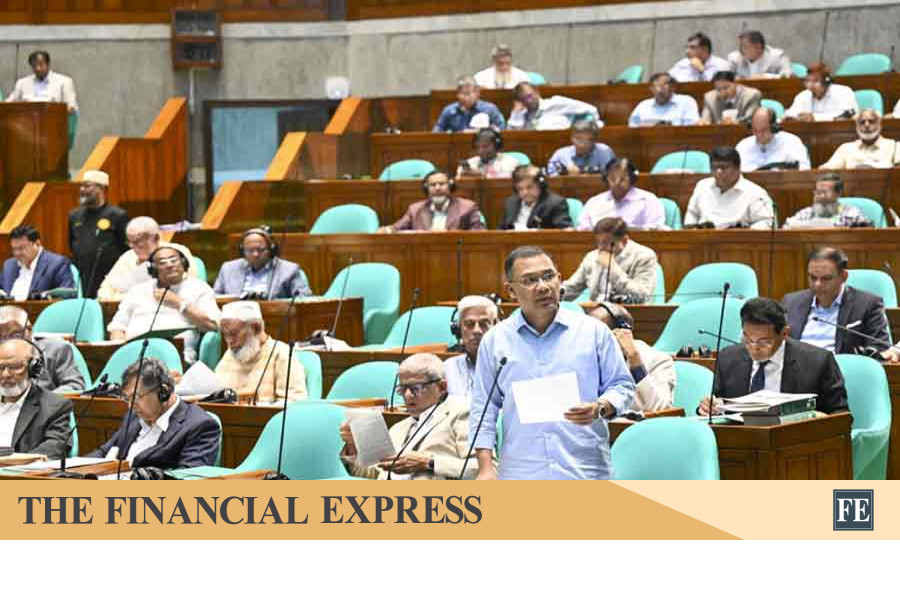
Processing deals with 10 countries to recover siphoned funds: PM
Prime Minister Tarique Rahman says a coordinated international push has been launched to recover funds siphoned out of Bangladesh during the Awami League era. Speaking in parliament on Wednesday, he identified 10 countries where processes for information exchange, asset tracing, and legal cooperat
Processing deals with 10 countries to recover siphoned funds: PM
bdnews24.com
Published :
Apr 22, 2026 19:27
Updated :
Apr 22, 2026 19:27

Prime Minister Tarique Rahman says a coordinated international push has been launched to recover funds siphoned out of Bangladesh during the Awami League era.
Speaking in parliament on Wednesday, he identified 10 countries where processes for information exchange, asset tracing, and legal cooperation have been initiated.
Tarique disclosed the move during Prime Minister's Questions (PMQs), responding to a query from Munshiganj-3 MP Md Quamruzzaman.
The 10 countries identified are the United States, the United Kingdom, Canada, Switzerland, Australia, Thailand, the United Arab Emirates, Singapore, Malaysia, and Hong Kong-China.
Of these, Malaysia, Hong Kong, and the United Arab Emirates have agreed to sign agreements, the prime minister said.
Quoting findings from a white paper committee formed by the interim government, he said: “Between 2009 and 2023, an estimated $234 billion was illicitly transferred out of Bangladesh -- an average of $16 billion annually.
“As these funds were moved across multiple jurisdictions, efforts are under way to strengthen information exchange, asset identification, and mutual legal assistance with the relevant countries.”
He added that the foreign ministry is working closely with all relevant agencies to finalise Mutual Legal Assistance Treaties and facilitate formal requests.
In a written statement, Tarique said an inter-agency task force headed by the Bangladesh Bank governor has been formed.
Under its direction, 11 joint investigation teams -- led by the Anti-Corruption Commission and involving the police’s Criminal Investigation Department, the National Board of Revenue’s Central Intelligence Cell, and the Customs Intelligence unit -- are probing priority cases.
Progress cited in parliament includes:
By Mar 25 this year, assets worth approximately Tk 571.68 billion (movable and immovable) have been seized and frozen through court orders.
Following court directives, assets worth around Tk 132.78 billion have been frozen abroad. In total, about Tk 704.46 billion in assets have been restrained domestically and overseas.
So far, 141 cases have been filed over laundered funds, with chargesheets submitted in 15 cases and six cases resulting in verdicts.
The government says recovery of assets siphoned abroad is a top priority under its broader drive against corruption, money laundering and financial crimes.
To speed up recovery efforts, the Stolen Asset Recovery Division has been formed under the Bangladesh Financial Intelligence Unit on Feb 22 this year.
The prime minister said the government remains committed to publishing a full white paper on past corruption and prosecuting those identified.
The session, chaired by Speaker Hafiz Uddin Ahmad, began at 3pm with the prime minister’s question hour.
bdnews24.com
Published :
Apr 22, 2026 19:27
Updated :
Apr 22, 2026 19:27
Prime Minister Tarique Rahman says a coordinated international push has been launched to recover funds siphoned out of Bangladesh during the Awami League era.
Speaking in parliament on Wednesday, he identified 10 countries where processes for information exchange, asset tracing, and legal cooperation have been initiated.
Tarique disclosed the move during Prime Minister's Questions (PMQs), responding to a query from Munshiganj-3 MP Md Quamruzzaman.
The 10 countries identified are the United States, the United Kingdom, Canada, Switzerland, Australia, Thailand, the United Arab Emirates, Singapore, Malaysia, and Hong Kong-China.
Of these, Malaysia, Hong Kong, and the United Arab Emirates have agreed to sign agreements, the prime minister said.
Quoting findings from a white paper committee formed by the interim government, he said: “Between 2009 and 2023, an estimated $234 billion was illicitly transferred out of Bangladesh -- an average of $16 billion annually.
“As these funds were moved across multiple jurisdictions, efforts are under way to strengthen information exchange, asset identification, and mutual legal assistance with the relevant countries.”
He added that the foreign ministry is working closely with all relevant agencies to finalise Mutual Legal Assistance Treaties and facilitate formal requests.
In a written statement, Tarique said an inter-agency task force headed by the Bangladesh Bank governor has been formed.
Under its direction, 11 joint investigation teams -- led by the Anti-Corruption Commission and involving the police’s Criminal Investigation Department, the National Board of Revenue’s Central Intelligence Cell, and the Customs Intelligence unit -- are probing priority cases.
Progress cited in parliament includes:
By Mar 25 this year, assets worth approximately Tk 571.68 billion (movable and immovable) have been seized and frozen through court orders.
Following court directives, assets worth around Tk 132.78 billion have been frozen abroad. In total, about Tk 704.46 billion in assets have been restrained domestically and overseas.
So far, 141 cases have been filed over laundered funds, with chargesheets submitted in 15 cases and six cases resulting in verdicts.
The government says recovery of assets siphoned abroad is a top priority under its broader drive against corruption, money laundering and financial crimes.
To speed up recovery efforts, the Stolen Asset Recovery Division has been formed under the Bangladesh Financial Intelligence Unit on Feb 22 this year.
The prime minister said the government remains committed to publishing a full white paper on past corruption and prosecuting those identified.
The session, chaired by Speaker Hafiz Uddin Ahmad, began at 3pm with the prime minister’s question hour.