[🇧🇩] Recovering Laundered Money and Assets of Awami League's Ministers and Oligarchs

[🇧🇩] Recovering Laundered Money and Assets of Awami League's Ministers and Oligarchs
18
429
More threads by Saif

G Bangladesh Defense

Processing deals with 10 countries to recover siphoned funds: PM

bdnews24.com
Published :
Apr 22, 2026 19:27
Updated :
Apr 22, 2026 19:27

1776902448954.webp


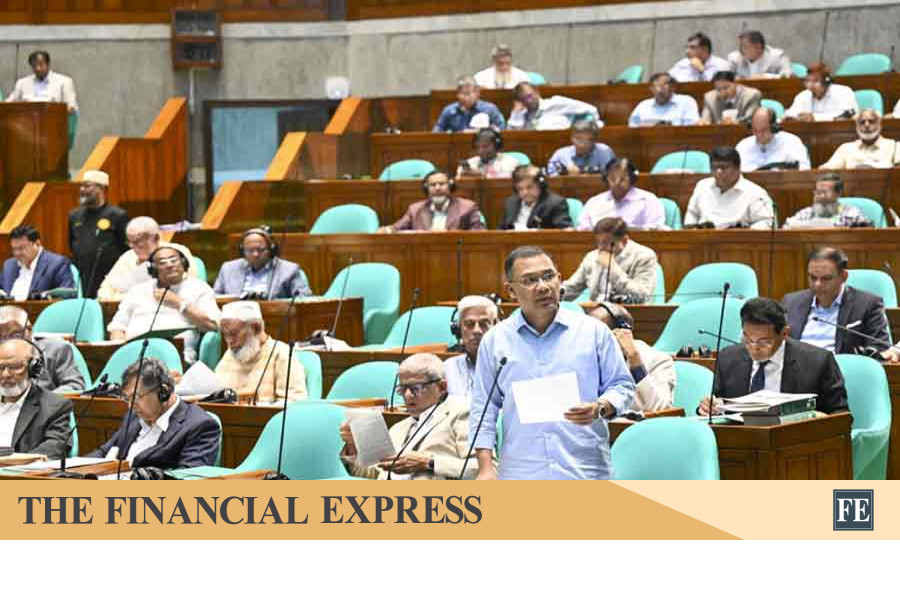
Prime Minister Tarique Rahman says a coordinated international push has been launched to recover funds siphoned out of Bangladesh during the Awami League era.

Speaking in parliament on Wednesday, he identified 10 countries where processes for information exchange, asset tracing, and legal cooperation have been initiated.

Tarique disclosed the move during Prime Minister's Questions (PMQs), responding to a query from Munshiganj-3 MP Md Quamruzzaman.

The 10 countries identified are the United States, the United Kingdom, Canada, Switzerland, Australia, Thailand, the United Arab Emirates, Singapore, Malaysia, and Hong Kong-China.

Of these, Malaysia, Hong Kong, and the United Arab Emirates have agreed to sign agreements, the prime minister said.

Quoting findings from a white paper committee formed by the interim government, he said: “Between 2009 and 2023, an estimated $234 billion was illicitly transferred out of Bangladesh -- an average of $16 billion annually.

“As these funds were moved across multiple jurisdictions, efforts are under way to strengthen information exchange, asset identification, and mutual legal assistance with the relevant countries.”

He added that the foreign ministry is working closely with all relevant agencies to finalise Mutual Legal Assistance Treaties and facilitate formal requests.

In a written statement, Tarique said an inter-agency task force headed by the Bangladesh Bank governor has been formed.

Under its direction, 11 joint investigation teams -- led by the Anti-Corruption Commission and involving the police’s Criminal Investigation Department, the National Board of Revenue’s Central Intelligence Cell, and the Customs Intelligence unit -- are probing priority cases.

Progress cited in parliament includes:

By Mar 25 this year, assets worth approximately Tk 571.68 billion (movable and immovable) have been seized and frozen through court orders.

Following court directives, assets worth around Tk 132.78 billion have been frozen abroad. In total, about Tk 704.46 billion in assets have been restrained domestically and overseas.

So far, 141 cases have been filed over laundered funds, with chargesheets submitted in 15 cases and six cases resulting in verdicts.

The government says recovery of assets siphoned abroad is a top priority under its broader drive against corruption, money laundering and financial crimes.

To speed up recovery efforts, the Stolen Asset Recovery Division has been formed under the Bangladesh Financial Intelligence Unit on Feb 22 this year.

The prime minister said the government remains committed to publishing a full white paper on past corruption and prosecuting those identified.

The session, chaired by Speaker Hafiz Uddin Ahmad, began at 3pm with the prime minister’s question hour.​
 

UK freezes Bangladesh's £250m siphoned-off wealth

British envoy reveals, pledges recovery help

FE Report

Published :
Apr 29, 2026 00:42
Updated :
Apr 29, 2026 00:42

1777420210679.webp


The United Kingdom has frozen over 250-million-pound worth of Bangladesh's siphoned-off wealth, in a breakthrough in Dhaka's asset-recovery drive.

British High Commissioner in Bangladesh Sarah Kooke broke the news Tuesday in Dhaka and underscored London's commitment to tackling illicit finance and supporting Dhaka's efforts to recover stolen wealth.

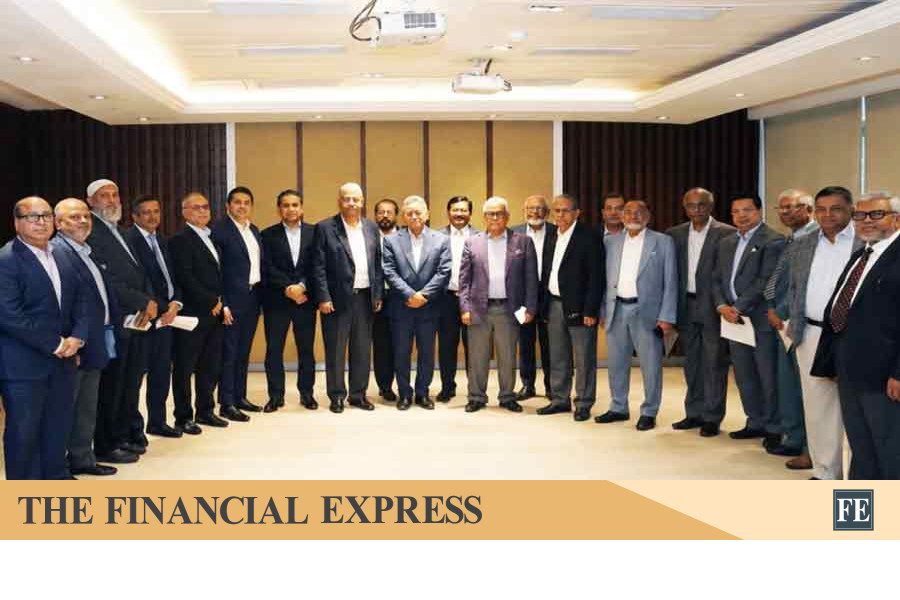
Speaking at an event organised by the Diplomatic Correspondents Association of Bangladesh (DCAB) in Dhaka, Cooke said the move reflected the UK's determination to uphold the rule of law and protect the integrity of the global financial system.

She adds that London would host an international summit on illicit finance later this year to strengthen cooperation and coordinate recovery efforts.

The remarks came as Cooke set out a broad vision for a deepening UK-Bangladesh relationship, describing it as increasingly "strategic and future-oriented" in response to both Bangladesh's rapid transformation and shifting global dynamics.

"I see a partnership that has grown deeper and wider," says the British envoy, pointing to expanding cooperation across trade, climate policy, security and governance.

"Today, the bilateral and the global partnership cannot be separated."

Responding to a question whether allowing Awami League in politics would help national healing, she said: "The events of July 2024 remain very fresh in many people's memories. So what we welcome is very much the government's commitment to their manifesto to a truth and healing commission, because that will be an important step towards justice, accountability and also truth seeking for abuses committed under the former regime.

"So, of course, that would be an important process to take forward the national healing that you described."

About the fate of the MoU signed between the UK and Bangladesh on purchase of the Airbus, she says: "That was a government-to- government agreement, and it's really framed to help improve or strengthen the partnership between the United Kingdom and Bangladesh on aviation.

She mentions Bangladesh's ambition to be a regional aviation hub and that they believe that the UK can help support those aspirations and those ambitions.

"So, of course, we are working to take forward that agreement, it's a government-to-government agreement."

She expresses her inability to comment on commercial negotiations that are going on at the moment, but they are very committed to supporting the ambitions for Bangladesh to become a regional aviation hub.

Cooke mentions that the UK had worked closely with Bangladesh during its recent political transition following the July 2024 uprising, including support for electoral preparations and institutional reforms.

She describes February's general election as a "significant democratic milestone" and says Britain is looking to work with the government led by Prime Minister Tarique Rahman on shared priorities.

Economic ties remain central to the partnership. The UK is one of the largest investors in Bangladesh, with cooperation spanning sectors from finance and education to energy and manufacturing.

Cooke highlights continued preferential market access for Bangladeshi exports under the UK's Developing Countries Trading Scheme, even as Dhaka prepares to graduate from least-developed-country status.

She also points to technical assistance aimed at strengthening trade policy, improving regulatory compliance and modernising customs systems, including collaboration between Bangladesh authorities and HM Revenue and Customs, as well as financial-sector cooperation with the Bank of England.

British International Investment is expected to channel £450 million into Bangladesh between 2022 and 2026, targeting job creation and private-sector development, while UK Export Finance has up to £2.0 billion available to support major infrastructure and energy projects.

Alongside economic engagement, Cooke places strong emphasis on climate cooperation, describing it as a "central pillar" of the relationship. UK-backed initiatives include flood-forecasting systems, climate resilience programmes and efforts to mobilise large-scale climate finance, particularly for vulnerable regions such as the Sundarbans.

Security and defence cooperation is also expanding, including a recent agreement to transfer a former Royal Navy survey vessel to Bangladesh to strengthen maritime capabilities in the Bay of Bengal.

Cooke says the move would support navigation safety, marine- resource management and scientific research.

On regional challenges, she reaffirms the UK's support for Bangladesh in hosting Rohingya refugees.

She also highlights joint efforts to tackle irregular migration and visa fraud, warning against exploitation by "unscrupulous agents".

Framing the partnership within a volatile global context, Cooke points to the economic ripple effects of conflicts in the Middle East and the war in Ukraine, arguing that global instability is increasingly shaping domestic realities in countries such as Bangladesh.

"The relationship between the United Kingdom and Bangladesh is deep, broad and forward-looking," she told the reporters, adding that the UK aims to remain a "predictable, long-term partner" as Bangladesh continues its economic and political transition.​
 

Stolen-asset recovery: Bangladesh has the machinery, but not the vehicle

Fahim Chowdhury

Published :
May 07, 2026 00:45
Updated :
May 07, 2026 00:48

1778111331888.webp


As of 25 March 2026, courts in Bangladesh had ordered the freezing or attachment of assets totaling Tk 70,446 crore - Tk 57,168 crore inside the country, Tk 13,278 crore abroad. The figures were reported by the Prime Minister to the Jatiya Sangsad on April 22. Six days later, the United Kingdom's High Commissioner confirmed that £250 million in UK-held assets linked to Bangladeshi individuals had been frozen since June 2025, and that London will host an Illicit Finance Summit on June 23-24 with the Finance Minister invited.

These are large numbers, and they are preliminary. Cross-border asset-recovery cases of this scale typically take five to twenty years to work through foreign courts, civil litigation, and mutual legal assistance treaties. The political and budgetary cycle in Dhaka runs on much shorter timescales, and the gap between the two is the question the current architecture has not yet addressed.

The recovery side of that architecture is largely built. The inter-agency Taskforce, chaired by the Bangladesh Bank Governor, was restructured in September 2024. A dedicated Stolen Asset Recovery Division was established under the Bangladesh Financial Intelligence Unit on February 22, 2026. Ten affected banks have signed thirty-six non-disclosure agreements with international asset-recovery firms - Omni Bridgeway, Kroll, Baker McKenzie, DLA Piper, and others.

What does not yet exist is the institution that holds what comes back. The proceeds will arrive in two distinct streams. Civil recoveries against defaulter groups will return loan principal to affected commercial banks; criminal recoveries through the Anti-Corruption Commission will return funds to the state. The governance question I want to raise applies most directly to the second.

For state-bound recoveries, the precedent that travels best comes from European banking-resolution practice. I worked on the recapitalisations of National Bank of Greece, Alpha Bank, and Eurobank during the eurozone crisis, and saw the Hellenic Financial Stability Fund up-close. The HFSF was constituted as a private legal entity with administrative and financial autonomy from the state, governed by a board with international financial-sector representation. It held large stakes in the four systemic Greek banks for a defined period before disposing of them in stages. Its mandate ended on a statutory sunset date of December 22, 2025. The capital-flow analogy is not exact - the HFSF was funded by external bailout loans, while Bangladesh's recovered assets will flow in the opposite direction - but the governance lesson holds. Disposal proceeds went through the vehicle, not the budget. The board was insulated from the day's politics. The sunset clause meant the vehicle could not become permanent bureaucracy.

I saw a similar pattern in NLB Slovenia, where I worked in 2018: the European Commission's binding state-aid commitments - disposal deadlines, an independent monitoring trustee, fall-back commitments if the timetable slipped - gave the Slovenian Sovereign Holding the credibility to attract international capital and the discipline to resist domestic political reabsorption.

Bangladesh's available external anchors are different. There is no European Commission to negotiate with, no Eurogroup to give consent. The available counterparts are the World Bank and UNODC's Stolen Asset Recovery Initiative, IMF conditionalities under the existing Extended Fund Facility, and the cooperation framework that the United Kingdom's June Summit will attempt to formalise. None is as binding as a Eurogroup. But a vehicle that voluntarily accepted a structured combination of these would carry more credibility than one accountable only to the budget cycle. And given that the World Bank estimates banking-system recapitalisation will require resources equivalent to at least 10 per cent of GDP, ring-fenced state-bound recoveries are the most natural source of recap funding available.

The case for resolving this question now, rather than after the first tranche of recovered assets arrives, is straightforward. The most common failure mode in cross-border recovery is not failed recovery. It is the absorption of recovered proceeds into the ordinary fiscal account, where they finance whatever the government of the day prioritises rather than the institutional repair the recovery was meant to fund.

Four design principles are worth weighing as a vehicle is conceived. First, administrative and financial autonomy from the ordinary budget. Second, an independent board with international financial-sector representation, appointed against published criteria. Third, a statutory sunset clause with a defined closure date. Fourth, an external accountability gateway with ex-ante consent rights over material disposal decisions, designed so that no single domestic political authority can unwind it.

Whatever vehicle the Finance Ministry might ultimately consider, those four principles are what stand between a recovery that becomes a one-off fiscal windfall and one that becomes the foundation of a banking system depositors can rely on.

Fahim Chowdhury is an investment banker who has raised over $200bn and executed 500+ capital markets transactions in 30+ markets. He is currently Managing Director at RetailBook and was previously at Citi.​
 

Latest Posts

Back
Top Bottom