Donate ☕
201 Military Defense Forums
[🇧🇩] - Reforms carried out by the interim/future Govts. | Page 10 | PKDefense
Home Post Alerts Inbox Watch Videos

[🇧🇩] Reforms carried out by the interim/future Govts.

Reply (Scroll)
Press space to scroll through posts
G Bangladesh Defense
[🇧🇩] Reforms carried out by the interim/future Govts.
203
5K
More threads by Saif


From vision to action: Prof Yunus’s reform agenda for Bangladesh

1726443204190.webp

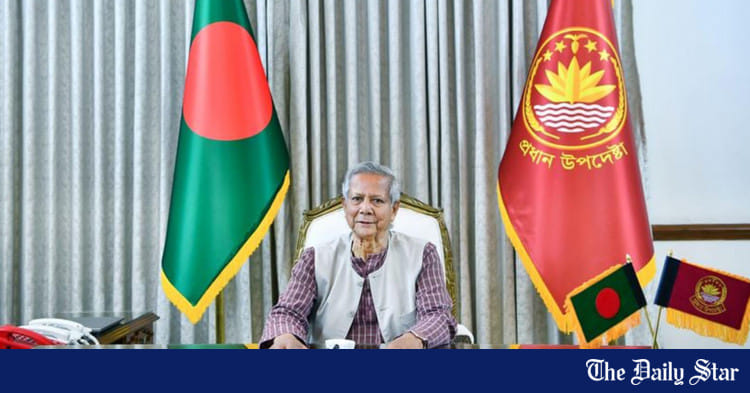
Prof Muhammad Yunus, chief adviser of the interim government, delivers an address to the nation on September 11, 2024. PHOTO: PID

Prof Muhammad Yunus's transition from Nobel laureate to reformist chief adviser continues to capture the nation's attention. In his August 25 speech, Yunus outlined an ambitious vision for a "new Bangladesh" centred on unity, transparency, and democratic renewal. While his message resonated with many, it also left citizens asking: "Can he turn words into action?" Fast forward to September 11, and Yunus seems determined to answer that question. His latest address laid out specific reforms, marking the beginning of a long journey toward real change.

Diplomacy and governance today go far beyond traditional bureaucratic processes, and Prof Yunus stands at the forefront of this shift. Through Grameen Bank, he demonstrated how NGOs can drive powerful social and economic change where governments often struggle. This blend of engineering diplomacy—using pragmatic, principled solutions paired with negotiation—is a skill Yunus and the IG can now bring to create a new Bangladesh.

However, running a government, unlike an NGO, is a different challenge. It requires navigating political complexities, balancing competing interests, and making compromises that NGOs can often avoid. While his outsider perspective and grassroots experience offer fresh ideas, Yunus and the IG must be cautious not to fall into the political traps that can derail even the most well-intentioned leaders.

Politics requires balancing various factions, managing entrenched bureaucracies and interest groups, and dealing with opposition parties. The IG must ensure that reforms are not seen as bypassing democratic processes or alienating key political actors. The IG's ability to lead will depend on their skill in coalition-building and maintaining legitimacy in the eyes of both political elites and the public. Members of the IG need to be cautious about becoming entangled in the very political games they seek to transcend—where loyalty, political capital, and power dynamics can overshadow the principled pragmatism they aspire to attain. For the IG, the key lies in harnessing the strengths of modern engineering diplomacy while staying grounded in the political realities of governance. They must strike a delicate balance between being innovative reformers and astute politicians, ensuring that the vision of a new Bangladesh can survive the political process without being compromised by it.

In his August 25 speech, Prof Yunus's metaphor of the nation as a family resonated widely. The idea was simple yet powerful: Bangladesh must come together as one to heal from years of corruption and mismanagement. However, as the days passed, some began to wonder if this metaphor oversimplified the challenges that lay ahead. Calls for unity, while necessary, are not enough to address the deep structural flaws embedded in the country's political and economic systems.

In his September 11 speech, Prof Yunus pivoted from this metaphorical language to concrete steps. He announced the formation of six commissions aimed at addressing fundamental sectors—electoral system, police, judiciary, anti-corruption, public administration, and constitutional reform. This shift from a unifying metaphor to specific structural reforms is crucial. It signals a move from aspirational rhetoric to actionable governance.

In my previous article, I noted that the public had received Yunus's initial speech with optimism, but also caution. Many were asking, "Can he deliver?" This scepticism was not unwarranted, especially in a country where promises of reform have often been marred by inefficiency and corruption. Yunus responded directly to this scepticism in his September 11 speech by providing a clear roadmap for his reforms. The six commissions represent a pragmatic approach to institutional reform, offering a structured and transparent process for addressing corruption, inefficiency, and structural flaws. The commissions are not just symbolic gestures—they are tasked with delivering results within three months, after which consultations with political parties, students, and civil society will take place.

While Prof Yunus's move toward structured reform is promising, significant challenges remain. The timeline for the commissions—just three months—raises concerns about whether there will be enough time for thorough analysis and genuine consultation. The success of these efforts hinges on the cooperation of entrenched political and bureaucratic forces, many of whom have thrived in the current system.

A critical issue is the lack of representation from ordinary citizens. Despite the student-public-led uprising that ousted the previous regime, decision-making remains concentrated among the educated elites and privileged classes, with limited input from the broader public. To avoid past regime failures, the IG must include all relevant stakeholders. This means going beyond the elites to include voices from four key groups: the knowledge community, the political community, the resource community, and most importantly, the affected community.

As I discussed in an earlier piece, genuine reform would require a collective effort of all stakeholder groups. The affected community, in particular—those directly impacted by decisions—cannot be sidelined. Their involvement is crucial for creating reforms that are not only theoretically sound but also practical and just. If the IG fails to include these diverse voices, there's a real risk of falling into the same elitist traps the uprising sought to dismantle. Prof Yunus has signalled the need for inclusivity, reflecting the ideals that emerged from the student-public uprising, but translating this vision into reality will be the true test. Rebuilding trust in the nation's institutions is possible, but only if the reforms produce tangible results that reflect the input of all four stakeholder communities.

Over the past month, the IG has made several key decisions shaping Bangladesh's future. While some decisions may have sparked debate, there is widespread support for most of the IG's initiatives. However, one decision that has raised serious concerns is the appointment of Tajul Islam as chief prosecutor of the International Crimes Tribunal (ICT). Many view this choice as highly problematic, given his past association with the defence of Jamaat-e-Islami leaders convicted in controversial trials at the ICT. Critics argue that this appointment signals a potential return to politicised justice rather than a commitment to fair and independent trials, undermining the very goals of reform the IG aims to achieve. If the IG is to maintain the public's trust and avoid the pitfalls of past regimes, it must ensure appointments reflect the principles of impartiality, accountability, and fairness.

Earlier, I likened this journey to the metaphorical road from Tetulia to Teknaf—a long path toward democratic and institutional reform. The September speech has laid the groundwork, with the commissions as the vehicles to move forward. However, the real challenge isn't just starting the journey; it's staying the course. The IG has set Bangladesh on the right path, but success will depend on sustained public engagement, transparency, and a commitment to long-term change.

Prof Yunus's September 11 speech marks a critical step in turning vision into reality. The challenges ahead are immense, but the potential for meaningful reform is unprecedented. Now, the IG must fulfil its promises, ensuring that the journey from Tetulia to Teknaf becomes a genuine transformation for the people of Bangladesh. This transformation must balance nyay (ideal justice) and niti (procedural justice). While nyay sets the values, niti ensures practical execution. As we move forward, autonomy, inclusivity, accountability, and justice should guide our government toward a more just and equitable future.

Shafiqul Islam is director of Water Diplomacy, and professor of civil and environmental engineering and water diplomacy at the Fletcher School of Law and Diplomacy at Tufts University, US.​
 
Analyze

Analyze Post

Add your ideas here:
Highlight Cite Fact Check Respond

World Bank to lend additional $2bn to Bangladesh for critical reforms​

The extra lending would raise the amount of soft loans and grants to about $3 billion in FY25
https://www.dhakatribune.com/358712

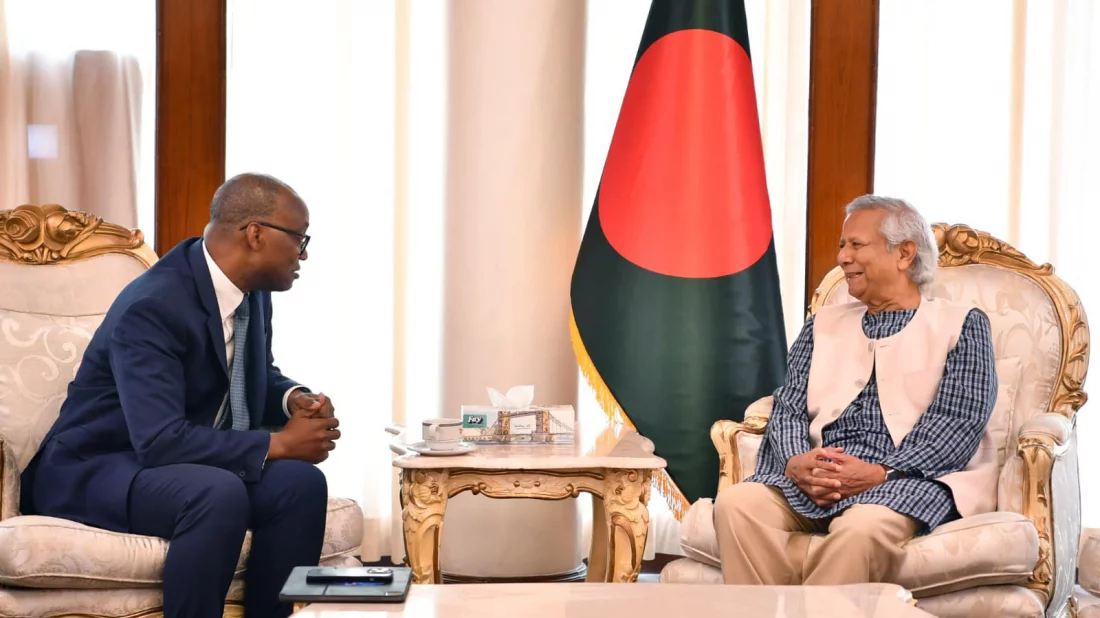
World Bank Country Director Abdoulaye Seck speaks about the new assistance with Chief Adviser Prof Muhammad Yunus at the State Guest House Jamuna in Dhaka on Tuesday, September 17, 2024. Photo: Courtesy
World Bank Country Director Abdoulaye Seck speaks about the new assistance with Chief Adviser Prof Muhammad Yunus at the State Guest House Jamuna in Dhaka on Tuesday, September 17, 2024.
Photo: Courtesy
Tribune DeskTribune Desk
Published : 17 Sep 2024, 04:03 PM
Updated : 17 Sep 2024, 04:03 PM

The World Bank is committed to increasing lending to Bangladesh in this fiscal year to help the reform agenda of the interim government.

World Bank Country Director Abdoulaye Seck spoke about the new assistance on Tuesday when he met Chief Adviser Prof Muhammad Yunus at the State Guest House Jamuna in Dhaka.

Seck said that the World Bank could mobilize about $2 billion in new financing during the ongoing fiscal year to support critical reforms, flood response, better air quality and health.

"We would like to support you as fast as possible and as much as possible," Seck said, adding that the bank would support the critical financial needs of the country.

He said that in addition to the new commitments, the multilateral lender would repurpose about an extra one billion dollars from its existing programs in consultation with the government in response to the calls for support by the chief adviser to all development partners of Bangladesh.

Seck said the extra lending would raise the amount of soft loans and grants the World Bank would be giving to Bangladesh this fiscal year to about $3 billion once the funds from the existing projects are repurposed.

The World Bank country chief said the completion of the reforms would be "critically important" for Bangladesh and its young people, including the two million people who are joining the job market every year.

The chief adviser has told the World Bank country head that the bank must have flexibility to fund Bangladesh's reforms and help restart a new journey after 15 years of "extreme misgovernance."

"Out of these ashes, we have to build new structures. We need a big push, and we have to focus on the dreams of the students," he said.

“I will suggest, help us. Be a part of our team,” said the chief adviser.

Prof Yunus asked the World Bank to lend its technical support to recover billions of dollars of stolen assets siphoned off from Bangladesh by corrupt individuals during Sheikh Hasina's 15-year-long dictatorship.

"You have the tech to bring back stolen assets," Yunus said, adding Bangladesh would also need the bank's expertise to build "a zero-corruption Bangladesh".

The World Bank country chief has agreed to help Bangladesh bring back the stolen money. "We are happy to help you," Seck said.

He said the bank would also like to help Bangladesh with data transparency, data integrity, digitalization of tax collection, and financial sector reforms.

Prof Yunus said Bangladesh cannot afford to lose this once in a lifetime opportunity to fix its institutions and undertake major reforms.

"Once we lose it, it will never come back," he said.

Seck offered condolences for the martyrs of the July-August student-led uprising.

He said he was impressed by the graffiti and murals painted by young people on Dhaka's walls. "In 30 years of my career, I've never seen it anywhere," he said.

"We need to empower them," Seck said.

Source: https://www.dhakatribune.com/358712
 
Analyze

Analyze Post

Add your ideas here:
Highlight Cite Fact Check Respond
  • Love (+3)
Reactions: Saif
 
Analyze

Analyze Post

Add your ideas here:
Highlight Cite Fact Check Respond
  • Love (+3)
Reactions: Saif

American trade platforms demand reforms to protect labour rights

1726703450831.webp

American trade platforms recommended that the government of Bangladesh swiftly adopt a transparent and regular annual minimum wage review mechanism for the garment, footwear, and travel goods industries. Photo: Star/file

The American Apparel & Footwear Association (AAFA) and Fair Labor Association (FLA) have urged the interim government of Bangladesh to take critical and long-lasting steps towards reforms for furthering worker rights of international standards.

The AAFA is an American trade association representing apparel, footwear and other sewn products companies, and their suppliers, who together have an annual turnover of $470 billion.

The FLA is an international network of companies, universities, and civil society organisations collaborating to promote human rights at work.

The two platforms in a letter sent to Professor Muhammad Yunus, chief adviser to the interim government, on Tuesday urged for resolving three important issues relating to labour rights in Bangladesh.

The first was for the immediate release of those who remain under arrest from the Fall 2023 protests over the minimum wage and withdrawal of all criminal charges against them.

"We further urge the interim government to end the threat of arrest for thousands more workers related to the Fall 2023 minimum wage protests by immediately cancelling the 'First Information Reports' related to those workers," according to the letter.

Steve Lamar, president and chief executive officer (CEO) of AAFA, and Jeff Vockrodt, president and CEO of FLA, also called upon the government to drop and resolve criminal charges brought against labour organisers.

They include Babul Akhter, general secretary of the Bangladesh Garments and Industrial Workers Federation, and Jewel Miya, a labour organiser with Bangladesh Independent Garment Workers Union Federation, who were both arrested in 2023 for advocating for higher wages.

Secondly, they recommended that the government this year swiftly adopt a transparent and regular annual minimum wage review mechanism for the garment, footwear, and travel goods industries.

This should involve all stakeholders – employers, the government, and workers (independent unions, worker groups/representatives), they said.

In contrast to the current five-year review, this new mechanism will enable the government to better respond to current economic circumstances without imposing sudden, huge burdens on the industry or workers, they added.

Moreover, it will promote short and long-term health and stability of the Bangladeshi garment, footwear, and travel goods industry, said the duo.

"We also encourage the government to consider giving guidance to employers to pay missed wages to workers for the four days missed during the declared holiday," they said.

Thirdly, the AAFA and the FLA urged to promote harmonious industrial relations and prevent future unrest.

"We urge the interim government to quickly restart tripartite discussions on the Bangladesh labour act and bring the law into line with international labour standards," they said.

Those reforms should simplify the process for the creation and registration of independent trade unions, including a significant reduction of the registration threshold, they said.

"We also urge the government to increase penalties for unfair labour practices and extend full labour rights to workers in the export processing zones (EPZ)," they said.

"We believe improving worker rights goes hand in glove with promoting a successful Bangladesh garment, footwear, and travel goods industry now and in the years to come," the letter also said.

The trade bodies appreciated Yunus's comments both in support of the garment, footwear, and travel goods industry, and in support of the workers who are the backbone of that industry.

His comment that Bangladesh should reform local labour laws to align with the ILO standards is very welcome, they said.

They said as Yunus was shepherding Bangladesh through this transition and into a new era, they look forward to working closely with him to ensure that both the protection of workers' rights and growth of the industry are paramount.

The leaders also said they fully recognise the important place that Bangladesh holds as the third-largest supplier of garments to the US as well as a fast-growing supplier of footwear and travel goods.

The favourable trade partnerships and spirit of collaboration that underpin these markets has brought shared prosperity and economic growth, the letter also said.​
 
Analyze

Analyze Post

Add your ideas here:
Highlight Cite Fact Check Respond
  • Like (+1)
Reactions: Bilal9

Reforming civil bureaucracy
Mir Mostafizur Rahaman
Published :
Sep 18, 2024 22:03
Updated :
Sep 18, 2024 22:03

1726707300181.webp


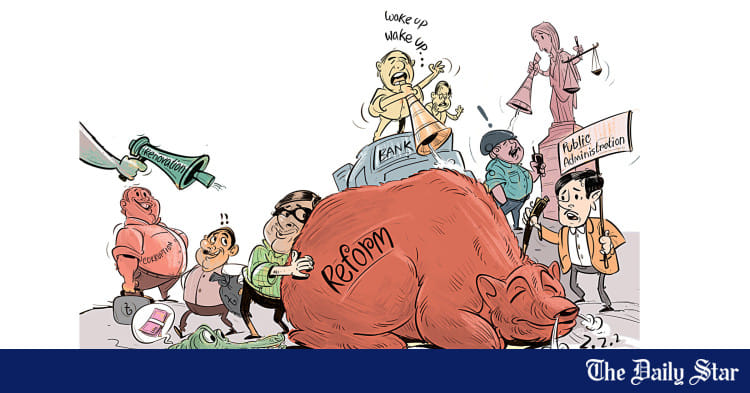
The formation of six reform commissions by the present interim government, including one for public administration, is a step in the right direction. In fact, it was long overdue. However, scepticism is there about the success of these efforts, given the bureaucracy's historical resistance to change. Bangladesh, which inherited its bureaucratic system from British colonial rule, has long struggled with a civil service that is often seen as an impediment to both development and democratic governance. The current political environment presents a rare opportunity to dismantle this archaic system and introduce a more accountable, modern bureaucracy.

Since gaining independence 53 years ago, Bangladesh has established at least 16 commissions and committees aimed at creating a merit-based and service-oriented civil administration. Despite these efforts, the majority of the recommendations have been ignored. This pattern of inaction underscores a deep-seated issue: the bureaucracy's reluctance to reform itself. Civil servants, especially those in higher positions, often perceive reforms as a threat to their status, privileges, and prospects for promotion. Consequently, these entrenched interests have successfully obstructed meaningful change. Furthermore, successive governments have shown little inclination towards building a strong and effective civil service, often preferring to maintain the status quo for their own political ends.

Political patronage has exacerbated the problem, leading to the promotion of favoured individuals over those with proven skills and merit. This practice has resulted in a civil service that is often staffed by individuals more loyal to political benefactors than to the principles of good governance. Such favouritism not only demoralizes competent officers but also stifles innovation and accountability within the bureaucracy. As a result, the civil service has become a barrier to development rather than an enabler of progress.

Amid this bleak landscape, the current political scenario offers a glimmer of hope. There is a growing consensus across the political spectrum that the current bureaucratic system is outdated and in dire need of reform. The emergence of a bipartisan political will to address these issues could pave the way for the establishment of a modern, transparent, and accountable bureaucracy. However, for reforms to succeed, they must go beyond superficial changes and address the fundamental flaws within the system.

Previous attempts at reform have had limited impact. While some measures, such as increasing salaries, enacting the Civil Service Act of 2018, and extending the retirement age from 57 to 59 years, have been implemented, they have done little to change the underlying culture of the civil service. These efforts have focused more on placating civil servants rather than transforming the system into one that prioritizes efficiency, merit, and public service.

First and foremost, a merit-based recruitment and promotion system must be established. This would ensure that positions within the civil service are filled by individuals with the necessary skills, knowledge, and dedication to public service. Such a system would also motivate civil servants to improve their performance, knowing that promotions and career advancements are based on merit rather than political connections.

Secondly, there must be a zero-tolerance policy towards corruption within the civil service. This requires not just strong anti-corruption laws but also the establishment of independent oversight bodies with the authority to investigate and act on allegations of misconduct. Without addressing the pervasive corruption within the bureaucracy, any reform efforts are likely to be undermined.

Additionally, there is a need for a cultural shift within the civil service. The focus must move from merely following procedures to achieving results. Civil servants should be trained and encouraged to adopt a service-oriented mindset, where the primary objective is to serve the public effectively and efficiently.

While the road to reforming Bangladesh's civil bureaucracy is fraught with challenges, it is not an impossible task. The current political climate, marked by a renewed interest in governance reforms, provides a window of opportunity to initiate change. However, this will require strong political will, a clear vision for a modern civil service, and the courage to confront entrenched interests.

In conclusion, the success of these reform commissions will depend on their ability to break free from the shackles of past failures and implement measures that address the core issues of merit, accountability, and corruption within the civil service. Only then can Bangladesh hope to have a bureaucracy that serves as a catalyst for development rather than an impediment.​
 
Analyze

Analyze Post

Add your ideas here:
Highlight Cite Fact Check Respond
  • Like (+1)
Reactions: Bilal9

Members Online

No members online now.
⤵︎

Latest Posts

Latest Posts