[🇧🇩] Save the Rivers/Forests/Hills-----Save the Environment

[🇧🇩] Save the Rivers/Forests/Hills-----Save the Environment
564
17K
More threads by Saif

G Bangladesh Defense

Economics of biodiversity

1779065045473.webp

New Age

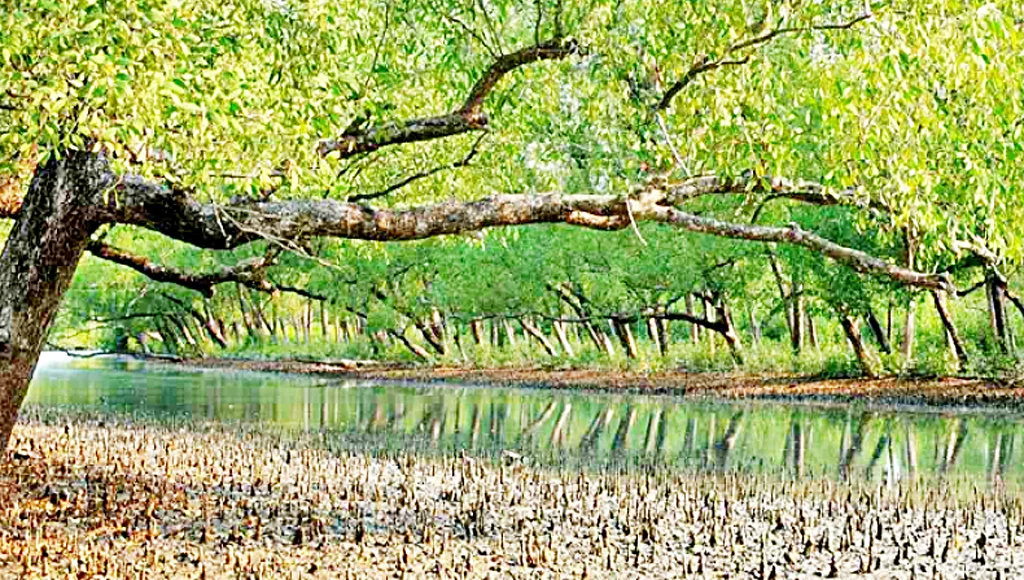
BANGLADESH seldom frames biodiversity in economic terms, yet its rivers, wetlands, forests and coastal ecosystems sustain livelihoods on a vast scale every day. From the Sundarbans shielding coastal districts against cyclones to the haor basins supporting fisheries and agriculture, biodiversity is not simply an environmental concern; it is a foundational pillar of the national economy. As climate shocks intensify and urban expansion accelerates, a difficult reality is becoming clearer: ecosystem degradation is also economic loss, with direct consequences for food security, employment, public health and long-term resilience.

The country’s natural wealth remains significant despite sustained ecological pressure. Bangladesh contains the world’s largest mangrove forest, extensive wetland systems, rich marine habitats and a wide diversity of fish, bird and wildlife species. According to the Food and Agriculture Organization’s forest assessments, forests and tree cover account for around 17.5 per cent of national land area. Wetlands, meanwhile, underpin fisheries, agriculture, inland transport and water regulation across much of the country. Yet these contributions remain largely absent from conventional economic accounting, where natural systems are often valued only after degradation or conversion to commercial land use.Health & Wellness

The Sundarbans illustrates this gap between ecological value and economic recognition. Beyond its biodiversity significance, it supports fisheries, honey collection, timber-based livelihoods under regulated systems and a growing tourism sector, while also sustaining coastal economies across southern Bangladesh. International assessments indicate that the forest plays a critical protective role for approximately 4.5 million coastal residents by reducing the impact of cyclones, storm surges and coastal erosion. Recent cyclone events have reinforced how intact ecosystems can reduce disaster severity by weakening storm forces before landfall. Substituting these functions with engineered infrastructure alone would require substantial public investment, particularly for a climate-vulnerable economy already facing rising adaptation costs.Bangladeshi Culture Course

The fisheries sector further demonstrates how deeply biodiversity is embedded in economic life. Inland rivers, wetlands and floodplains remain central to national fish production and rural livelihoods. According to the Department of Fisheries, Bangladesh produced more than 3.57 million metric tons of inland fish in 2023–24, with over 12 million people directly or indirectly dependent on fisheries and aquatic ecosystems. Fish also accounts for roughly 35 per cent of national animal protein intake. The degradation of rivers, wetlands and breeding grounds therefore represents not only an environmental concern, but also a direct threat to nutrition, employment stability and rural economic security.

Recent global studies have strengthened the economic argument for conservation. Ecosystem valuation research suggests that Bangladesh’s ecosystem services generate between US$7.5 billion and US$10 billion annually through fisheries, flood regulation, agricultural support, tourism and climate resilience functions. Nature-based solutions, including mangrove restoration and wetland conservation, are increasingly recognised as cost-effective investments within international climate finance frameworks. Environmental economics literature also indicates that every dollar invested in ecosystem-based disaster risk reduction can save between four and seven dollars in post-disaster recovery costs. For Bangladesh, where climate-related disasters impose recurring fiscal pressure, biodiversity is increasingly best understood as economic infrastructure rather than a peripheral conservation issue.

Despite this, biodiversity loss continues at an alarming pace. Wetlands are shrinking under urban expansion and land conversion, rivers are heavily polluted by untreated industrial discharge and forest ecosystems face ongoing encroachment. Environmental monitoring indicates that more than 70 rivers around Dhaka are under severe pollution stress linked to industrial and municipal waste. These ecological pressures already carry measurable economic consequences. Declining fish stocks reduce rural incomes, soil degradation undermines agricultural productivity and the loss of natural floodplains exacerbates urban flooding and waterlogging. These costs rarely appear in national accounts, yet they are borne daily by communities dependent on natural systems.

At the policy level, however, there are early signs of a shift in how natural resources are understood. The Bangladesh Bureau of Statistics has begun advancing ecosystem accounting under the United Nations’ System of Environmental-Economic Accounting framework, which seeks to integrate the value of forests, wetlands and ecosystem services into national planning. This represents an important conceptual transition: moving away from the assumption that economic growth and environmental protection are inherently in conflict. Instead, biodiversity is increasingly being recognised as a form of natural capital—an asset base that generates long-term economic returns while strengthening climate resilience.

Alongside this shift, new economic opportunities linked to biodiversity are emerging. Ecotourism in the Sundarbans and hill districts, sustainable fisheries development, blue economy initiatives and carbon financing mechanisms are gradually gaining policy attention. International climate finance is also increasingly directed towards mangrove restoration, wetland conservation and nature-based adaptation projects in highly vulnerable countries such as Bangladesh. Global economic assessments suggest that more than half of global GDP is moderately or highly dependent on ecosystem services, underscoring the scale of economic exposure to environmental decline. For Bangladesh, where agriculture, fisheries and climate-sensitive livelihoods remain dominant, biodiversity loss is therefore not only an environmental challenge but a macroeconomic risk.

Ultimately, the economics of biodiversity compels a rethinking of development itself. A forest is not merely timber, a wetland is not vacant land awaiting conversion and a river is not simply a drainage channel for industrial waste. These systems generate employment, stabilise agriculture, reduce disaster losses and support social and economic continuity across the country. When their value is ignored, economic growth may appear to advance in the short term, but it does so by eroding the very foundations on which long-term prosperity depends. Bangladesh’s future resilience will rest not only on industrial expansion, infrastructure development and export growth, but also on whether its natural systems are preserved, restored and integrated into economic planning as essential national assets.

Dr Makhan Lal Dutta is an irrigation engineer and CEO of Harvesting Knowledge Consultancy.​
 

River to be defined in law: Can encroachment be prevented?

Mostafa Yousuf
Published: 20 May 2026, 12: 49

1779330805172.webp

The faded Jadukata River in Sunamganj during the dry seasonProthom Alo file photo

The government formed the National River Conservation Commission a decade ago to protect the country’s rivers. Although the commission was established following a directive from the High Court, there was no determination of what kind of watercourse would be considered a river. For the first time, the proposed National River Conservation Commission (Amendment) Act will include a definition of a river.

According to the draft law, any watercourse originating from mountains, lakes, glaciers, streams, or any other reservoir or water source and flowing throughout the year or at any time of the year between two banks before joining seas, oceans, lakes, or other water bodies will be defined as a river.

River experts said this definition will make it easier to identify many canals in the country as rivers. It will also help prevent the tendency of government agencies to classify rivers as canals in order to facilitate projects under the pretext of canal excavation.

Tuhin Wadud, a teacher in the Bangla Department at Begum Rokeya University, Rangpur, and a river researcher, told Prothom Alo, “The definition was necessary. We have a list of rivers where 1,415 rivers have been identified. We are calling them rivers based on certain criteria, and now there will be a legal basis for that.”

Tuhin Wadud further said that in many districts, deputy commissioners and upazila executive officers lease river land to private individuals. In official documents, they classify those as canals. Due to this definition, such waterways will now also be included as rivers.

Commission to get investigation and inquiry powers

In 2009, the High Court directed the government to establish a “River Conservation Commission” to stop river encroachment and pollution. The government enacted the National River Conservation Commission Act in 2013. Under that law, the National River Conservation Commission was formed the following year on 5 August 2014.

1779330872275.webp

Waste discharged from sewerage line pollutes the Buriganga River in Dhaka. Prothom Alo file photo

Under the third chapter of the existing law concerning the commission’s functions, it was only granted the authority to make recommendations. These included recommendations for freeing rivers from encroachment and preventing reoccupation, recommendations regarding the eviction of illegal structures on riverbanks, and recommendations for reducing river water pollution—amounting to a total of 13 issues on which the commission could advise the government.

In the proposed law, the National River Conservation Commission seeks authority to take action against river polluters and encroachers. According to Section 15 of the draft law, the commission or its representatives will have the authority to inspect, inquire into, and investigate encroachment, pollution, and activities harming navigability in all rivers, canals, and coastal river areas across the country.

At the same time, the commission or its representatives will have access to all facilities and locations under government, private offices, agencies, and institutions. Furthermore, the draft law provides the commission with authority to issue notices to and interrogate any public or private individual or institution.

Obligations for institutions

Under the existing law, although the National River Conservation Commission could make recommendations, government and private institutions had no obligation to comply with them. The new draft law stipulates that government, private, autonomous institutions, and individuals must implement the commission’s recommendations within a reasonable timeframe. If implementation is not possible, they must explain the reasonable grounds to the commission.

Maksumul Hakim Chowdhury, Chairman of the National River Conservation Commission and Senior Secretary to the government, told Prothom Alo, “After the inter-ministerial meeting, we uploaded the draft law to the website to gather opinions from river researchers, activists, and the general public. We received opinions from various organisations and experts until 17 April. Those are now being reviewed.”

He added that the draft law would next go to the Cabinet Division. “After receiving clearance from the Cabinet Division, it will go to the Ministry of Law. From there, it will be submitted to Parliament as a bill. Everything remains in the draft law as we had prepared it.”

Maksumul Hakim Chowdhury further said, “The previous law had weaknesses. Through the draft law, we want to overcome those shortcomings. That is why the initiative to amend the law has been undertaken.”

1779330930036.webp

Water flow is blocked and many parts are occupied in Neelkumar River at Dasiar Chhara in Phulbari upazila of Kurigram district.Tuhin Wadud

Power to file cases included

The draft law states that the National River Conservation Commission will be able to file cases against accused individuals if they damage navigability, encroach upon, or pollute rivers, canals, and seas. In addition, aggrieved citizens will be able to submit complaints to the commission seeking remedies regarding rivers, canals, and coastal sea areas. The commission will have the authority to resolve such complaints.

The draft law also states that the National River Conservation Commission will be able to take effective measures to remove illegal structures from rivers, canals, and coastal areas, prevent reoccupation, and restore navigability.

Offences to be non-bailable

Under the amended National River Conservation Commission law, activities that result in encroachment, pollution, or damage to the navigability of rivers, canals, and coastal sea areas will be treated as non-bailable and cognisable offences. Investigations, trials, and appeals regarding such offences will follow the Code of Criminal Procedure. At the same time, trials may also be conducted through mobile courts.

The draft law states that, if necessary, the government may establish river courts in any district for the trial of offences under this law. Until river courts are established, such offences will be tried in existing competent courts.

The draft law further states that government agencies must obtain a mandatory no-objection certificate from the National River Conservation Commission before implementing any project on rivers, canals, or coastal sea areas. If the environment, ecosystem, and biodiversity of rivers and canals become critically endangered, the commission will have the authority under the proposed law to declare any river or canal a “critical area.”

Call for proper enforcement of the law

Sharif Jamil, member secretary of the environmental organisation Dhoritry Rokkhay Amra (DHORA) (We for Protecting the Earth) told Prothom Alo that empowering the River Commission should benefit rivers. However, whether this will actually happen in practice depends on the proper enforcement of the law.

Referring to the existing State Acquisition and Tenancy Act, 1950, Sharif Jamil said that necessary measures for river protection can already be taken under current law. However, if river boundaries are not accurately identified during the eviction of illegal structures, rivers cannot be protected. The provisions included in the proposed law deserve praise, but without political goodwill, their implementation will not be possible.​
 

Plastic fishing gear jeopardising biodiversity in Sunamganj haors

Our Corrspondent

Published :
May 21, 2026 08:14
Updated :
May 21, 2026 08:14

1779419706829.webp


Local fishermen use plastic fishing nets illegally to catch fish in Sunamganj haors, pushing their ecology and biodiversity into threats-FE photo

The unabated use of plastic fishing gear- including nets, ropes and traps- to catch fish is widely threatening the ecology and biodiversity in the haors of Sunamganj district, pointing finger at the clear indifference among the authorities regarding doing the needful in this matter.

The natural environment of the haor areas of Sunamganj largely depends on the amount of rainfall in Cherrapunji in the bordering Indian state of Meghalaya. Due to the high level of early rains this season, the local rivers have already filled with water from the mountain streams and new water has started entering the haors.

Every year, with this new water entering the haors through the rivers, different species of fish come.

Local fishermen across the haors go down with plastic fishing gear, including nets, ropes and traps, to catch that fish. Criticisms arise widely as soon as the use of the fish catching devices that are very much injurious to the environment of the haors comes to the public notice.

The administration is also not speared of the blame for not taking any steps to stop the preparation, storage and sale of these fishing tools.

In the same way, fishing is going on freely by using plastic nets (special fishing equipment) everywhere in the Tanguar haor.

However, no one has any clue where this plastic fishing net is coming from or who is selling it.

This year, heavy rainfall in Cherrapunji has led to an increase in the water level of the Jadukata and Patlai rivers, causing water to enter the haors in advance.

Taking advantage of this, local fishermen have resorted to fishing freely with plastic nets. These nets can catch various types of small fish or fry, including shrimp, and are increasingly being used.

In addition, many fishermen are taking advantage of this opportunity because the administration is not taking any action to stop the use of this harmful device.

Environment activists said that if the use of plastic nets cannot be stopped, the environment and biodiversity of Tanguar Haor and other haors will be further threatened.

It is important to raise awareness among haor residents to prevent their use and ensure proper implementation of the law.

It was found that environmentally destructive plastic pots were being transported by fishermen from the district town to the Tahirpur Upazila headquarters by mini pickups or auto-rickshaws and to the Tanguar Haor by boat.

Fishermen in Tanguar, Shani, Mahalia, Matian, Banuar, Samsar and Eralia Kona haors of Tahirpur, in the villages of Pathabuka, Sulemanpur, Lamagaon, Manikkhila, Ramsinghpur, Joypur Golabari, Mandiata, Indrapur, Binodpur, Paniakhali, Terghar, Kalagaon, Nawabpur, Jamalpur, Shibrampur, Betagara, Rupnagar, Bakatla, Ichamari, Rajendpur, Rangchi, Amanipur, Nishinta Banshikunda, Sanua, Kauhani, Khidirpur, and Hatpatan of the upazila were seen using these pots to catch fish.

These plastic pots are tied in rows with thread and placed underwater with flour bait or snails. In the morning, these pots are lifted and shrimp and small fish are taken out. When the pots are damaged, they are thrown back into the haor water.

Social activist Khasrul Alam, a resident of Golabari village in Tanguar Haor bank, said that since the pots are plastic, they are non-biodegradable. Throwing these pots into the water harms the aquatic animals and fish of the haor.

In addition, small fish get stuck in them. This threatens the reproduction of fish. Lutfur Mia of Lamagaon village said that round pots are made of bamboo sticks and wire wrapped in plastic.

Some 10-12 years ago, shrimp were caught only with bamboo pots. But the demand for plastic pots has increased due to their low cost and repeated use.

Tourist Ataur Rahman from Moulvibazar said that this haor could be destroyed due to plastic pots. Therefore, the administration should take action in this regard while there is still time.

Tahirpur Upazila Nirbahi Officer Md. Mehedi Hasan Manik said, "We have carried out four drives in Tanguar Haor recently and have removed and burned more than a thousand plastic teapots (Kiranmala teapots) from the haor. We do not have all the information about where they are sold or made in Tahirpur upazila sadar. They probably bring them from the neighboring Bishwambharpur upazila. The drive to stop fishing with plastic teapots will continue."​
 

500 mother trees survive in dying forest

Mostafa Yusuf
Dhaka
Published: 22 May 2026, 08: 38

1779420178372.webp


A forest is seen from Chowdhurypara in Hnila, Teknaf. Prothom Alo file photo

Mother trees are disappearing from the natural forests of Cox’s Bazar. These trees were also the source of seeds from which forests expanded. But under pressure from indiscriminate logging, encroachment, and unplanned development, those forests are now dying.

A survey conducted to determine the number of mother trees in the forest areas of Cox’s Bazar Sadar, Ukyhia, Ramu, and Teknaf upazilas found that only 500 mother trees now survive in forest areas under the jurisdiction of the Cox’s Bazar South Forest Division.

Researchers said that the decline of mother trees means forests are becoming orphaned. As a result, the forest’s flora and fauna, as well as biodiversity, face threats, and the forest ecosystem becomes imbalanced.

With support from the Food and Agriculture Organization of the United Nations (FAO), non-government organisation Center for Natural Resource Studies (CNRS) conducted the survey on mother trees.

The total forest area under the Cox’s Bazar South Forest Division is 44,174 hectares. Field-level data were collected in 2024 regarding the assessment and conservation of threatened or endangered mother trees for sustainable afforestation and ecosystem restoration. In December last year, CNRS prepared the research report based on the survey data and information.

Mother trees are also known as “forest seed trees.” The research report also mentions several characteristics of mother trees. For example, a mother tree must possess superior genetic traits, a good physical structure, and the capacity to produce abundant seeds so that the new trees born from it become robust. Such trees must be healthy and mature.

The health and vitality of mother trees are also crucial. In order to transfer disease resistance to future trees, mother trees must therefore be free from disease and pests.

The study was supervised by Professor Mohammad Kamal Hossain of the Institute of Forestry and Environmental Sciences at the University of Chittagong. He told Prothom Alo that a mother tree acts as a centre of gravity for the forest. Seeds spread throughout the forest from mother trees, allowing the forest to expand. Various plants grow, and the forest becomes safer for wildlife.

Professor Mohammad Kamal Hossain has been researching the forests of Cox’s Bazar for nearly four decades. Regarding mother trees, he said that there should be at least 8 to 10 mother trees per hectare in a natural forest. In the forests of the Cox’s Bazar South Forest Division, 500 mother trees of 20 species have been identified. These important ancient trees survive at the foothills, homesteads, and paddy fields.

Noting that the health of some of these trees is not good, the veteran professor said that no survey on mother trees had been conducted before. Awareness must be raised to protect the surviving mother trees. Seeds should be collected from them, saplings raised, and afforestation carried out.

Professor Mohammad Kamal Hossain said that these century-old ancient trees are very tall, have straight trunks, and high market value. For this reason, timber traffickers target them. As a result, these trees are disappearing from our forests.

The survey found the tallest mother tree—85.6 meters (281 feet)—in the Khuniapalong area of Dhoapalong Union in Ramu upazila. The shortest tree measured 5.2 meters.

The 20 species of mother trees identified are: Keli Kadam, Bailam, Deowa, Uriyam, Lal Batna, Mashjut, Chikrashi, Kasturi, Jadachua, Dalia Garjan, Sidha Jarul, Dhali Batna, Rakton, Lokkhi Aam, Bashpati, Nali Jam, Civit, Shaila, Shogan, and Bao Patta trees. Among these, Keli Kadam was found the most, with 88 trees. The second-highest number was 74, found for Nali Jam and Deowa trees. The third-highest number was 66, found for Mashjut trees.

The project manager of the research was Rafiqul Islam of the Center for Natural Resource Studies (CNRS). He told Prothom Alo that after conducting research for five months, they arrived at this number of mother trees. The highest number of mother trees was found in Ukhia upazila, while the second-highest number was found in the Teknaf region.

Why mother trees are declining

According to the research report, several natural and human-induced causes are behind the decline of mother trees or native forest tree species in the Cox’s Bazar region. The excessive extraction of timber and other forest resources, along with indiscriminate tree felling, has caused native tree species to disappear at a significant rate. Weak natural regeneration is another reason for the decline in mother trees.

Unplanned development has also shrunk forest land and the natural habitats of trees. Local people are gradually cutting down forest trees and converting the land into vegetable and fruit gardens, which is another reason for the decline in mother trees.

The research report does not specifically mention how many mother trees existed previously in the forests of Cox’s Bazar. However, it provides an idea of the past and present situation of mother trees.

The report states that forest species from which seeds could once be easily collected from mother trees in the Cox’s Bazar South Forest Division are now threatened or endangered in that region. Officials of the Bangladesh Forest Research Institute said that several species are now rare in the region, and collecting seeds from them is becoming increasingly difficult.

Local nursery owners also shared their field-level experiences. They said that the number of mother trees in the forest is gradually declining.

For example, the report mentions the Bailam tree. Although once found abundantly in Cox’s Bazar, the Bailam tree is now on the verge of extinction. Only a very small number of mature mother trees remain in the forest. The survey identified only 11 Bailam trees.

The International Union for Conservation of Nature (IUCN) has identified four species in Cox’s Bazar forests—Dhali Garjan, Uri Aam, Lana Achar, and Ora—as low-risk tree species, meaning they are supposed to be found in nature. However, the survey found that the number of surviving trees of these species in Cox’s Bazar forests is now extremely rare. Researchers say that mother trees play a major role in protecting forest biodiversity.

Against this backdrop, International Day for Biological Diversity is being observed today. The theme of this year’s United Nations-declared day is “Acting locally for global impact.” The day is being observed worldwide with the goal of restoring environmental and forest biodiversity through local initiatives.​
 

Swimming Tiger in the Beri Canal

MA Aziz
Published: 20 May 2026, 14: 31

1779421237673.webp


A tiger crossing the Beri canal in the Sundarbans. Photo taken on 6 May Courtesy of the author

A light drizzle was falling. Earlier in the morning, the sun had shone brightly. At this time of year, the rain-washed greenery makes the Sundarbans appear even more enchanting.

Amid the vast stretches of forest, the branches of gewa and passur trees, covered with crimson-red and yellow leaves, paint the mangrove forest in vibrant colours.

Rows of upward-reaching nipa palms (golpata) sway together along the canal banks, creating a gentle rhythmic melody in the breeze.

Deep within the dense stands of sundari trees, groups of wild animals roam freely. During this season, the Sundarbans seems to awaken from its slumber.

On 5 May, I travelled to the Sundarbans to participate in a wildlife survey conducted by the International Union for Conservation of Nature with funding from the French Government.

On the first day, after completing survey work in the Harbaria forest area, we reached the Tambulbunia Forest Camp in the afternoon. Around the camp, we set traps in different types of habitats to assess the presence of small mammals.

By the time we had measured and recorded the animals caught in the traps the following morning, it was nearly 10:00 am. Afterwards, wild ducks, began its journey along the Beri Canal.

Gradually, dark clouds gathered overhead, and soon a fine drizzle began to fall.

We were travelling along the Beri Canal on the morning tide after departing from the Tambulbunia Forest Office.

Seated in the lounge on the upper deck of the vessel, we were engaged in light conversations about various research topics. About an hour had passed since our departure from the Tambulbunia Forest Camp.

Jenarul Dhali, a honey collector from Kalabagi in Khulna, sat on the front deck with a gamcha wrapped around his neck, chewing betel leaf. Several local researchers were also nearby. Suddenly, Jenarul Dhali shouted, “There, a tiger, a tiger; there goes the tiger!” At once, we rushed out of the room in alarm and excitement.

At around 11:45 am, we had crossed nearly half of the Beri Canal. The canal contains several bends and is quite narrow, so the vessel had to move slowly.

The light rain made the surrounding environment particularly enjoyable. The dense forest on both sides and the rows of nipa palms lining the canal banks made every moment even more delightful.

It was at that very moment that the appearance of the tiger caught us completely off guard.

My camera was close at hand. I hurried out of the room and raised the camera to my eye, looking through the viewfinder, only to see darkness.

I could not see the tiger at all. In my haste, I had forgotten to remove the lens cap from the camera. After all, it was a tiger.

The sudden appearance of such an animal creates a powerful emotional jolt in the human mind. In moments like these, remaining calm becomes difficult. The same happened to us. Such moments are exceedingly rare in the Sundarbans.

When a tiger appears in the Sundarbans, people usually get a good opportunity to photograph it. If a tiger is spotted along the banks of rivers or canals, it generally shows little immediate reaction at first.

However, when people move closer or disturb it, the tiger gradually retreats deeper into the forest. A somewhat different situation arises when a tiger swims across a river or canal.

At such times, the animal usually swims swiftly and disappears quickly into the depths of the forest. Occasionally, after reaching the bank, the tiger pauses and looks back, allowing a brief moment for observation.

By the time we rushed out onto the front deck of the vessel after hearing Jenarul’s shout, the tiger had already crossed nearly two-thirds of the canal.

About 300 metres ahead of our vessel, it was swimming from the left bank of the canal towards the right. Only its head remained above the water, while the rest of its body stayed submerged.

At times, faint dark stripes became visible. Every few moments, the tiger glanced towards us while continuing forward at remarkable speed.

Within half a minute, it disappeared into the dense rows of nipa palms and vanished deep into the forest.

The moment felt dreamlike. In the excitement of trying to photograph the tiger, we barely had the chance to observe it properly.

The tigers of the Sundarbans are highly skilled swimmers. They cross both small and large rivers and canals with ease. The Beri Canal is comparatively narrow, averaging around 50 to 60 metres in width.

Tigers in the Sundarbans regularly cross such waterways. In searching for prey and patrolling their territories, the tigers of the Sundarbans must become proficient swimmers.

Alongside teaching cubs the techniques of hunting, the harsh environment of mudflats, mangrove roots and the tidal rivers and canals of the Sundarbans naturally shapes them into exceptionally capable swimmers.

* MA Aziz, Professor, Department of Zoology, Jahangirnagar University​
 

Latest Posts

Back