[🇧🇩] Save the Rivers/Forests/Hills-----Save the Environment

[🇧🇩] Save the Rivers/Forests/Hills-----Save the Environment
580
19K
More threads by Saif

G Bangladesh Defense

Why build roads through a reserved forest?
Find alternative routes that doesn't wreck Baitarani forest


1782001022944.webp

VISUAL: STAR

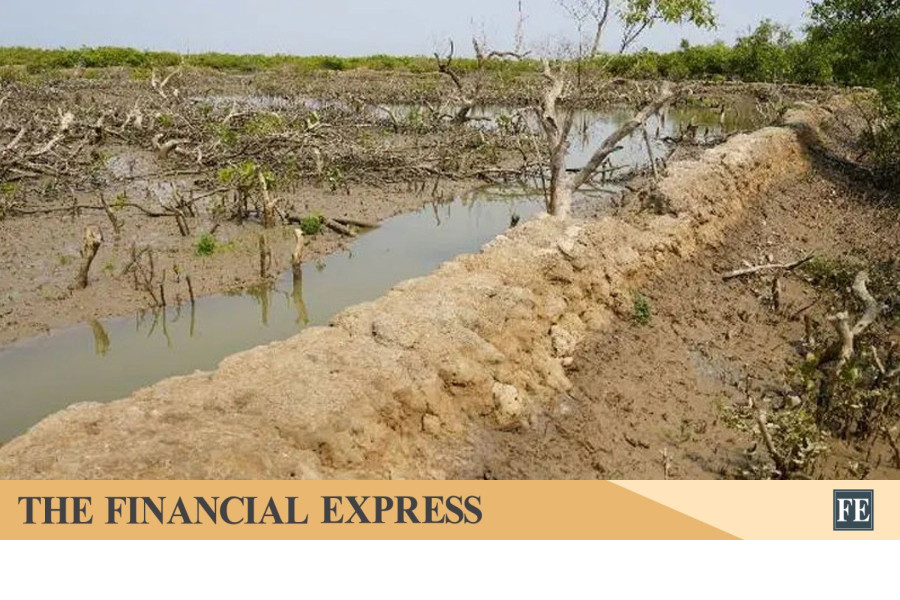
A recent report on road construction through the Baitarani Reserved Forest in Chattogram’s Satkania upazila is deeply unsettling. The two roads are being built under the Local Government Engineering Department’s (LGED) IRIDP-3 project costing Tk 1.5 crore. If open to use, they would increase human movement in the forest, raising the risk of land encroachment, illegal tree felling, smuggling of forest resources, and perhaps most alarmingly, endangering the wildlife that depends on this habitat. The Forest Department’s intervention has temporarily suspended the construction work. However, we don’t understand why a project like this was approved in the first place. The work, which began around eight months ago and has been suspended for the past three months, has already resulted in several hillocks being cut, increasing the risk of landslides during the monsoon.


The LGED authorities cite the involvement of a local MP in expediting road work to better address the needs of the local population. However, the area reportedly has only a handful of houses, which raises the question as to whose interests the project is intended to serve. As the roads are being justified in the name of public interest, we urge the authorities to clearly explain how many people would stand to benefit from the construction, and why the alternative routes cannot meet the existing demand. Given that our forests are often treated as expendable for extractive projects despite protective laws, the authorities must exercise greater caution. We have observed this trend before. In Chattogram’s Tulatoli, for instance, we saw as many as 5,000 trees illegally felled in a five-acre mangrove forest to make room for a ship-breaking yard, without even considering the impact of removing these life-saving trees.

We routinely witness the normalisation of forest encroachments facilitated by influential locals, and sometimes even government projects contribute to the erosion of forest diversity. Our decreasing forestland has also contributed to rising human-wildlife conflict in many parts of the country. Therefore, any project that may compromise the integrity of forest ecosystems must be vetted with the utmost care, as forests serve as natural buffers against environmental hazards and extreme weather events, to which Bangladesh is becoming increasingly vulnerable.

We understand the importance of critical infrastructure in remote areas as we often see them bearing the brunt of insufficient transportation, education and healthcare services. However, a narrow view of development does more harm than good. We, therefore, urge the relevant authorities to re-evaluate the need for roads through the Baitarani Reserved Forest and to explore alternatives.​
 

The cost of conservation in the Sundarbans

Md Raihan Raju

Every year, the Sundarbans is closed to Bonojibis during June, July, and August, a period that coincides with the breeding season of fish and other aquatic species. According to forest officials, the ban is intended to preserve biodiversity and maintain the ecological balance of the Sundarbans by ensuring the undisturbed reproduction and regeneration of aquatic species. The closure also allows the forest to recover from the intensive human activity of the honey-harvesting and fishing seasons, when large numbers of Bonojibis enter the forest and place significant pressure on its resources. In addition, the restricted period supports the natural regeneration of trees and other vegetation, contributing to broader ecological restoration. While this period is commonly described as a time of regeneration for the mangrove ecosystem, Bonojibis challenge this narrative, arguing that it facilitates the activities of “bon-kheko” rather than effectively conserving aquatic species, which ultimately brings immense suffering to the Bonojibis.

1782001438416.webp

A Bonojibi settlement on the edge of the Sundarbans waterways. For many families, the June-to-August forest closure brings severe financial hardship, while relief assistance often falls short of meeting household needs. Photo: Raihan Raju

The livelihood impact of the seasonal forest ban

The seasonal ban has a significant impact on livelihoods in the districts of Khulna, Satkhira, and Bagerhat, especially for Bonojibis who have no alternative livelihood options or are unable to take up seasonal work. There is no survey on how many people actually depend on the forest; however, some NGOs working with Bonojibis estimate that approximately 15–17 lakh people are directly or indirectly dependent on the Sundarbans for their livelihoods. Among them, around 5–7 lakh people rely directly on the forest and its waterways for their daily survival, while the rest are involved in various forms of trade and commerce. As a result, the ban affects a large population whose income depends on the resources of the Sundarbans.

How do the Bonojibis survive during the forest closure? To compensate fishers from the Sundarbans region, the government provides occasional relief, mainly in the form of rice. However, many fishers note that this assistance is insufficient, and irregular distribution often excludes those who are most in need. A fisherman from Mathurapur village said, “In our village, around 200 people from 80 families are actively engaged in fishing, but many do not have jele cards (fishing cards). Fishing cards have been issued in the names of about 100 individuals. As a result, the rice meant for 100 fishers is divided among 200 recipients, reducing the amount each person receives. Instead of the expected share, many fishers receive only around 30–40 kilograms of rice. Now tell me, can a family survive on 30–40 kilograms of rice for three months?”

Only a few Bonojibis are able to save enough income before the ban to sustain themselves during these three months. Many are forced to temporarily change professions, often migrating to cities for manual labour, although this shift is difficult for those accustomed to forest-based livelihoods.

Under such circumstances, some individuals turn to illegal activities such as theft, poaching, and the use of poison for fishing, practices that, according to local accounts, sometimes continue with the tacit approval of local authorities.

According to local fishers, the expense of accessing the forest during the closure period has risen sharply. A fishing trip that once cost around 5,000 taka, for instance, now requires nearly 10,000 taka because of additional bribes and other unofficial payments. With only 30 kilograms of relief rice to support a household, many fishers say they have little choice but to risk their lives or bear these additional expenses in order to continue fishing and sustain their families.

Forest enclosure as a debt trap

The most significant long-term impact of the ban is the cycle of debt. Many families take loans from microcredit organisations or local NGOs to survive the three-month closure, using the money for basic necessities, which later creates heavy interest burdens. Another common locally established credit system is dadon, an advance payment given by local traders or boat owners, often called mahajon. Fishers take this money during periods of forest closure and, in return, are often bound to work for them during the following months to repay the debt at a higher interest rate. As a result, each three-month closure leads to nearly six months of financial strain, as workers struggle to repay loans while managing household expenses, often trapping them in a continuous cycle of indebtedness.

An elderly Bonojibi from Munshiganj in Satkhira, who has depended on the forest for more than four decades, criticised government-led conservation measures during the breeding season. “In the name of protecting the forest,” he said, “the government has taken the jungle away from those of us who have lived off its resources for generations and handed it over to the bon-kheko.”

Another fisher from Mathurapur echoed the sentiment. “Have you ever seen a fisherman enter the forest with weapons to kill a tiger?” he asked. “We go to the jungle with a dinga and fishing nets (jal-dhorar o dinga). Do we kill tigers or use poison for fishing? Why has the jungle been taken away from us?”

1782001490714.webp

Traditional fishing boats (dingas) remain moored along the riverbanks during the three-month seasonal closure of the Sundarbans. While the ban is intended to support ecological regeneration, it leaves thousands of Bonojibis without their primary source of income. Photo: Md Raihan Raju

The remarks illustrate how Bonojibis distinguish themselves from those they describe as bon-kheko, literally “forest-eating people”, whom they accuse of exploiting and destroying the forest for profit. According to the elderly Bonojibi, the real threats to the Sundarbans often operate during the very period when ordinary forest-dependent communities are barred from entering.

“If you enter the jungle during the breeding season, you can easily see what is happening,” he said. “The bon-kheko set traps to catch deer, place poisoned bait to kill tigers for the illegal trade in their body parts, and use poison for fishing to maximise profits. The forest is now open to them because they can afford to pay high bribes. There is little surveillance during this period. The forest is closed to us, but not to the bon-kheko.”

Md Raihan Raju teaches at BRAC University.​
 

Early warning systems to significantly reduce disaster losses: state minister for water resources

FE ONLINE REPORT

Published :
Jun 22, 2026 20:17
Updated :
Jun 22, 2026 20:18

1782171797440.webp


Experts, policymakers, development practitioners and disaster management specialists on Monday stressed the need for strengthening early warning systems and disaster risk financing mechanisms to reduce losses from natural disasters and enhance community resilience in Bangladesh.

They made the observations at a multi-stakeholder consultation workshop on “Early Warning Systems and Disaster Risk Financing” organized by Practical Action at a hotel in Dhaka on June 22.

State Minister for Water Resources Forhad Hossain Azad, attended the event as the chief guest. Special guests included Director General of the Department of Disaster Management Razwanur Rahman, Additional Director General of the Bangladesh Water Development Board Md Ruhul Amin, and Executive Director of COAST Foundation Rezaul Karim Chowdhury.

Ishrat Shabnam, Country Director of Practical Action Bangladesh delkivered ther welcome address.

Forhad Hossain Azad said access to reliable early warning data remains limited in many areas. He stressed the importance of delivering warning messages in simple Bangla so rural communities can easily understand and act upon them.

He said timely warning could minimize disaster-induced losses.

A project brief was presented by Palash Sarker, Project Manager, and Tamanna Rahman, Thematic Lead for Climate Resilience at Practical Action Bangladesh.

During the workshop, Practical Action introduced a new project titled “Strengthening Human-Centered Innovation for Early Warning Systems and Disaster Risk Financing (SHIELD)” in Feni district.

The initiative expands the organisation’s previous work in Khulna, Satkhira and Faridpur districts. The project will be implemented by COAST Foundation and is funded by the Swiss Re Foundation with co-financing from the Z Zurich Foundation.

Ishrat Shabnam said the project would address climate risks in Feni through the use of artificial intelligence and machine learning technologies for early warning dissemination.

It will also promote impact-based forecasting and disaster risk financing with technical support from the Institute of Water and Flood Management (IWFM) of BUET.

Razwanur Rahman said Bangladesh is advancing efforts under the United Nations’ “Early Warning for All” initiative, which aims to ensure universal access to life-saving warning systems by 2027.

Rakesh Supkar, Asia Regional Head of Impact and Operations at Practical Action, said effective early warning messages can help people take timely action and reduce disaster risks. He noted that disasters not only claim lives but also destroy livelihoods, making community preparedness essential.

Rezaul Karim Chowdhury said disaster response should go beyond relief distribution and focus on long-term recovery and food security.

He expressed hope that the SHIELD project would help communities build resilience through innovation, early warnings and disaster risk financing.​
 

PM urges global leaders to turn climate pledges into action

BSS
Dalian, China
Published: 23 Jun 2026, 22: 42

1782277248338.webp

Prime Minister Tarique Rahman spoke at a session titled "Climate Leadership in a Shifting Global Landscape" at the WEF's 17th Annual Meeting held in Dalian, China. BSS

Prime Minister Tarique Rahman today, Tuesday called upon the leaders around the world to deliver on their commitments for the millions whose lives are at stake due to climate change.

"It is time to turn climate pledges into actions, and commitments into results, so that the world can embrace the future with confidence. We hope COP31 will rise to this challenge, and Bangladesh stands ready to play its part," he said.

The prime minister said this in his opening remarks at a session titled "Climate Leadership in a Shifting Global Landscape" at the World Economic Forum's (WEF) 17th Annual Meeting of the New Champions here at Dalian International Conference Center.

He underscored that COP31, the upcoming 31st session of the United Nations Climate Change Conference to be held in Turkey in November next, should reaffirm the goals and spirit of the United Nations Framework Convention on Climate Change (UNFCCC) and the Paris Agreement.

In this regard, he said, the WEF provides a valuable platform to foster dialogue, build consensus, and encourage collective action.

Tarique Rahman said Bangladesh believes that climate action is not a cost. "We see this as a much-needed investment for prosperity, stability, and shared future. Together we all here can build a future that is greener, safer, more sustainable, and more just," he added.

Noting that climate resilience cannot be built by any country alone, the Prime Minister said it requires partnership, technology, finance, and shared commitment.

"As we look ahead to COP31 and COP32, we wish to emphasise three priorities," he said.

"First, the Loss and Damage Fund must move from promise to delivery, with accessible and predictable support for victim nations. Second, climate finance must become more accessible, concessional, and responsive to the needs of vulnerable countries. It should also accelerate technology transfer and private-sector investment. In this regard, we need greater mobilisation and operationalisation of the Green Climate Fund (GCF)," said Tarique Rahman.

As the third priority, he said adaptation must stand alongside mitigation. For countries like Bangladesh, adaptation is not a policy option, it is a necessity, he added.

As pointed out by UNCTAD, the New Collective Quantified Goal (NCQG) of USD 300 billion falls short in meeting the mitigation and adaptation requirements for the developing countries, the prime minister said.

1782277291063.webp

Prime Minister Tarique Rahman spoke at a session titled "Climate Leadership in a Shifting Global Landscape" at the WEF's 17th Annual Meeting held in Dalian, China. BSS

"We are here today, not only as a frontline state in climate crisis, but also as a nation with aspirations to provide global solutions. We refuse to be defined by our struggle, rather we choose to be defined by our resilience," he said.

"As outlined in our election manifesto, Bangladesh government is committed to becoming a leading climate-resilient nation," he added.

The Prime Minister said environmental protection, sustainable development, and green growth are now at the heart of Bangladesh's nation-building strategy.

"Personally, this is also a cause I deeply care about and push for. It is about protecting lives, livelihoods, and future generations," he said.

Referring to government initiatives to address climate change, he said, "We aim to dig around 20,000 kilometers of rivers and canals over the next 5 years to restore water flow, reduce flood risks, and revive wetlands. We are advancing the initiative of Padma Barrage on our principal river to ensure water security, support agriculture, and address climate shocks. We are also modernising the Teesta Barrage in the northern part of Bangladesh through a comprehensive master plan."

"We have committed to planting and maintaining 250 million trees over the next 5 years," he said.

Through a nationwide movement involving schools, communities, and young people, such as the "one student, one tree programme" - Bangladesh will expand forest coverage, restore biodiversity, create green jobs, and reduce temperature, he added.

Tarique Rahman said his government is protecting forests, wetlands, wildlife habitats, and vulnerable coastal ecosystems.

"We are investing in rainwater reservoirs in rural areas and introducing greener building standards," he said.

At the same time, the government has set a target to generate at least 20percent of Bangladesh's electricity from renewable sources by 2030, through solar, wind, waste-to-energy, and other solutions, he mentioned.

"We also encourage green industries such as jute products and eco-friendly transports, including electric vehicles," he said.

The Prime Minister said a national carbon market will be developed to unlock green investment and carbon-credit opportunities.

Tarique Rahman said Bangladesh is also planning to transform waste into resources through integrated waste management, recycling, organic fertilizer production, and circular economy initiatives.

"We have already made great strides in ensuring green manufacturing. Now we can proudly say that among the top 100 LEED-certified factories in the world, 69 are from Bangladesh," he said.​
 

Carbon dioxide, global warming and the rising risks for Bangladesh

Shahiduzzaman

1782604427017.webp

Global warmingPixabay.com

Carbon Dioxide (CO₂) is a naturally occurring gas that plays a vital role in sustaining life on Earth. Plants absorb carbon dioxide during photosynthesis and use sunlight to produce food and oxygen, while humans and animals inhale oxygen and release carbon dioxide through respiration. This natural balance between oxygen and carbon dioxide has maintained ecological stability for millions of years and remains essential for life and environmental sustainability.

However, carbon dioxide has become one of the leading causes of global warming because of excessive emissions caused by human activities. Industrialisation, urbanisation, deforestation, and the widespread use of fossil fuels such as coal, oil, and natural gas have sharply increased carbon emissions worldwide. Factories, vehicles, power plants, brick kilns, and unplanned urban expansion continuously release huge amounts of CO₂ into the atmosphere. These emissions trap heat and gradually increase global temperatures, contributing to climate change and environmental degradation.

Before the Industrial Revolution, atmospheric carbon dioxide levels were around 280 parts per million (ppm). Today, global carbon dioxide concentrations have exceeded 420 ppm, a level that scientists consider alarming. Environmental experts suggest that around 350 ppm would be safer to maintain climate stability. In Bangladesh, carbon emissions have risen significantly over the past three decades because of rapid industrial growth, increasing transportation, urban population pressure, and rising energy demand. Major cities including Dhaka, Chattogram, Gazipur, and Narayanganj are experiencing worsening air pollution and increased carbon emissions from industries and traffic congestion.

Although Bangladesh contributes only a very small share of global greenhouse gas emissions, it is among the countries most vulnerable to climate change. The country’s low-lying geography, high population density, poverty, and heavy dependence on agriculture make it highly exposed to environmental disasters linked to global warming. Rising carbon dioxide emissions worldwide are contributing to sea-level rise, irregular rainfall, floods, stronger cyclones, droughts, salinity intrusion, and river erosion across Bangladesh.

One of the most serious threats facing Bangladesh is rising sea levels caused by melting glaciers and polar ice due to increasing global temperatures. Coastal districts such as Khulna, Satkhira, Barguna, Bhola, Patuakhali, and Cox’s Bazar are already suffering from tidal surges, saline water intrusion, and coastal erosion. Agricultural land is gradually becoming infertile because saltwater is entering rivers and croplands, reducing crop production and threatening food security.

Scientists warn that if global warming continues at the present rate, large areas of Bangladesh’s coastal belt could become uninhabitable, forcing millions of people to migrate inland.

Global warming is also having severe impacts on public health in Bangladesh. Rising temperatures and growing pollution levels are contributing to heat-related illnesses, dehydration, asthma, bronchitis, allergies, respiratory infections, cardiovascular diseases, and skin disorders. Climate change is also increasing the spread of mosquito-borne diseases such as dengue and malaria, while floods and waterlogging contribute to waterborne diseases including diarrhea, cholera, and typhoid.

Women, children, and elderly people are particularly vulnerable to climate-related health risks. Pregnant women often face increased complications during extreme heat waves and natural disasters. Children frequently suffer from malnutrition, respiratory illnesses, diarrhoea, and skin diseases after floods and cyclones because of contaminated water and poor sanitation. Elderly people are also highly vulnerable to heat stress and pollution-related diseases.

Why should vulnerable countries like Bangladesh suffer for pollution largely created by industrialized nations? How long can the world continue depending on fossil fuels while environmental destruction intensifies?

Animals and biodiversity are equally affected by rising carbon dioxide levels and climate change. Livestock and poultry suffer from heat stress, disease outbreaks, and shortages of food and water. Fish populations are declining because warmer water temperatures and pollution are disrupting aquatic ecosystems and breeding patterns. Forests and wetlands are also being damaged by climate-related disasters, threatening wildlife habitats and biodiversity. The Sundarbans, the world’s largest mangrove forest and a UNESCO World Heritage Site, is under increasing threat from salinity, sea-level rise, and cyclones.

Climate change is also severely affecting agriculture and food security in Bangladesh. Agriculture remains one of the country’s major economic sectors, but unpredictable weather patterns are reducing crop yields. Droughts, floods, salinity, and irregular rainfall are damaging rice fields, vegetable farms, wheat cultivation, and fruit production. Fishermen are also facing declining catches because climate change affects fish breeding and aquatic ecosystems. These environmental changes threaten the livelihoods of millions of farming and fishing families throughout the country.

In addition to environmental and health impacts, global warming is creating major social and economic challenges. Climate-induced migration is increasing rapidly as people lose homes, land, and livelihoods in disaster-prone areas. Many displaced families move to overcrowded cities such as Dhaka in search of employment and shelter. This migration places additional pressure on housing, transportation, sanitation, healthcare, education, and urban services.

Bangladesh also faces significant economic losses due to climate-related disasters. Every year, floods, cyclones, river erosion, salinity, and crop damage cause billions of dollars in losses. Agricultural decline, shrinking fisheries, rising healthcare costs, and the displacement of people are placing enormous pressure on the national economy. Experts warn that climate change could seriously affect Bangladesh’s long-term economic growth if immediate action is not taken.

The growing crisis of carbon dioxide emissions raises important global questions. Why should vulnerable countries like Bangladesh suffer for pollution largely created by industrialized nations? How long can the world continue depending on fossil fuels while environmental destruction intensifies? What responsibilities do developed countries have toward nations facing the harshest impacts of climate change?

To address these challenges, stronger international cooperation is essential. Developed countries, which are the largest emitters of greenhouse gases, must significantly reduce carbon emissions and invest more in renewable energy sources such as solar, wind, and hydropower. International climate agreements, including the Paris Climate Agreement, emphasize collective action to limit global warming and support climate-vulnerable countries.

The Government of Bangladesh has already introduced several programmes and strategies to address climate change and reduce environmental risks. The country adopted the Bangladesh Climate Change Strategy and Action Plan (BCCSAP) and established the Bangladesh Climate Change Trust Fund to support climate adaptation initiatives. The government is promoting renewable energy projects, solar home systems, climate-smart agriculture, green industries, and energy-efficient technologies.

Bangladesh has also strengthened disaster preparedness by constructing cyclone shelters, improving flood forecasting systems, and developing coastal embankments. Reforestation and mangrove plantation programmes are being expanded, particularly around the Sundarbans and coastal areas. These initiatives help absorb carbon dioxide, protect biodiversity, and reduce the impact of storms and cyclones.

International organisations including the United Nations, the World Bank, and the Intergovernmental Panel on Climate Change (IPCC) have advised Bangladesh to strengthen climate resilience strategies further. Experts recommend increasing investment in renewable energy, sustainable urban planning, public transportation, and environmentally friendly technologies. Public awareness is equally important. People can reduce energy waste, conserve water, recycle waste, avoid plastic pollution, and plant more trees to help reduce carbon emissions and protect the environment.

Rising levels of CO₂ are accelerating global warming and causing severe environmental, health, social, and economic impacts in Bangladesh. Floods, cyclones, salinity, disease outbreaks, food insecurity, biodiversity loss, and displacement are already affecting millions of people across the country.

Addressing this crisis requires collective action from governments, industries, international organisations, and ordinary citizens. Bangladesh, despite contributing very little to global pollution, must continue strengthening its climate resilience while demanding stronger global commitments to reduce carbon emissions and strengthen support vulnerable nations. The future safety of humanity and the environment depends on the actions taken today.

* The author is the Editor of and CEO of News Network​
 

Latest Posts

Back