[🇧🇩] Save the Rivers/Forests/Hills-----Save the Environment

Afghanistan Albania Algeria Andorra Angola Antigua Austria Azerbaijan Bahamas Bahrain Bangladesh Barbados Canada China Egypt Finland Germany India Iran Israel Japan Lebanon North Macedonia Pakistan Palestine Qatar Russia Syria Turkey Ukraine United Kingdom United States Yemen
[🇧🇩] Save the Rivers/Forests/Hills-----Save the Environment
590
19K
More threads by Saif

G Bangladesh Defense

Bangladesh accedes to 3 international maritime conventions

UNB

Published :
Jul 06, 2026 23:30
Updated :
Jul 06, 2026 23:30
1783389367986.webp


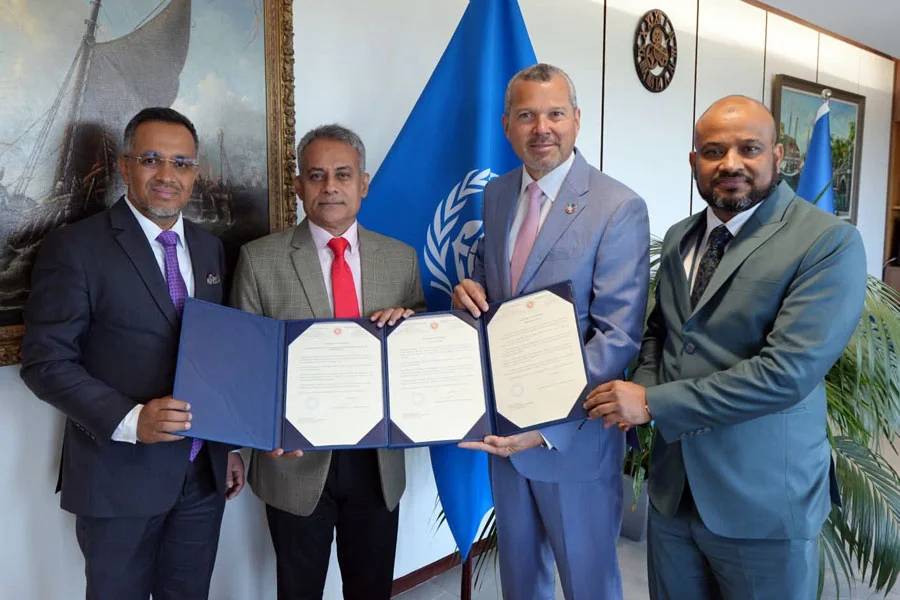
Bangladesh has marked a significant milestone in strengthening maritime governance and environmental protection by acceding to three key international maritime liability conventions, reinforcing its commitment to safe shipping, sustainable maritime trade, and the protection of coastal communities and the marine environment.

The Three Conventions acceded by Bangladesh are International Convention on Civil Liability for Oil Pollution Damage (CLC), 1969 as amended by the 1992 Protocol, International Convention on Civil Liability for Bunker Oil Pollution Damage, 2001 (Bunker Convention) and Nairobi International Convention on the Removal of Wrecks, 2007 (Wreck Removal Convention)

Road Transport and Bridges, Railways and Shipping Minister Shaikh Rabiul Alam on Monday formally handed over the instruments of accession to Secretary-General of the International Maritime Organization (IMO) Arsenio Dominguez at IMO Headquarters in London.

The Minister was accompanied by Dr. M. Nazrul Islam, Acting High Commissioner of Bangladesh to the UK, and Commodore Md Shafiul Bari, Director General of the Department of Shipping, Bangladesh.

This landmark achievement aligns Bangladesh with internationally accepted maritime standards, enhances protection against marine pollution and shipwreck-related risks, and further establishes the country as a responsible and trusted maritime nation, said the Bangladesh High Commission in London.​
 

Climate change loss in Bangladesh

Shahiduzzaman

Published :
Jul 05, 2026 00:23
Updated :
Jul 05, 2026 00:23

1783640952884.webp


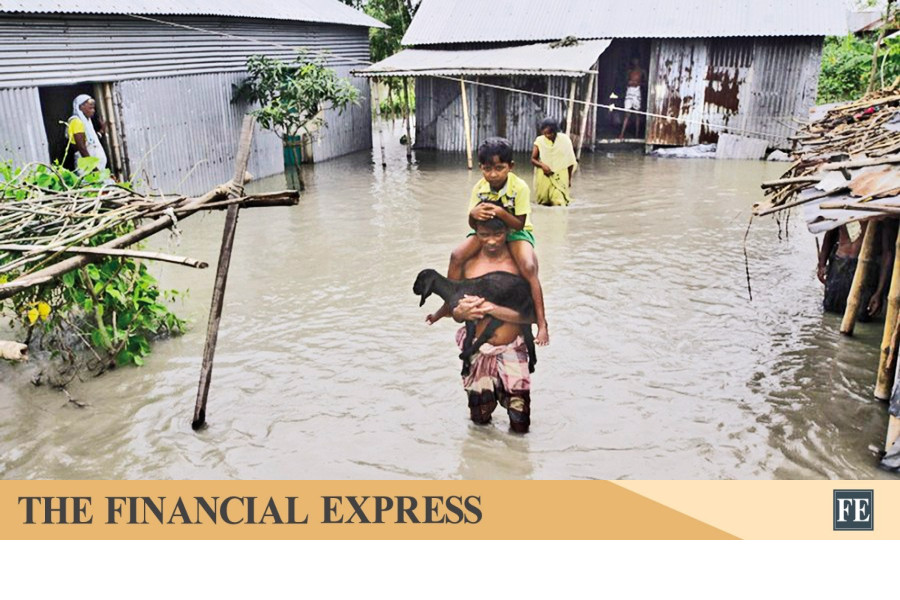
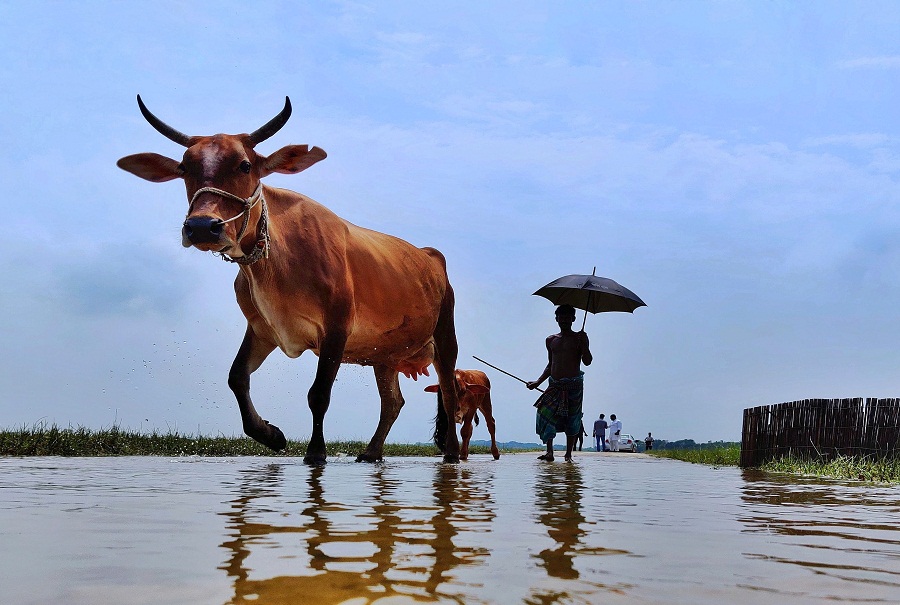
Bangladesh is widely considered one of the most climate vulnerable countries in the world. Its low lying deltaic geography, high population density, and heavy dependence on natural resources make it exceptionally exposed to climate related risks. Rising sea levels, erratic rainfall, floods, cyclones, and increasing temperatures are no longer future threats but present realities, already affecting millions of people and causing substantial economic damage.

According to assessments by the Intergovernmental Panel on Climate Change and the World Bank, Bangladesh remains among the countries most at risk. The World Bank estimates that climate change is currently costing the country approximately $3 to $4 billion each year, and without effective interventions, these losses could intensify, reducing national GDP by as much as 9 per cent by 2050.

The agriculture sector is among the most severely affected. Frequent floods, prolonged droughts, and increasing salinity intrusion continue to damage crops and reduce productivity. According to the Food and Agriculture Organisation, major crop yields in Bangladesh could decline by 10 to 30 per cent by mid-century. Farmers often lose entire harvests due to sudden flooding or irregular weather patterns, resulting in annual losses exceeding $1 billion. This not only threatens food security but also deepens rural poverty and economic instability.

Conditions are even more critical in coastal regions. Sea level rise and salinity intrusion are contaminating freshwater sources and rendering agricultural land less productive. The World Bank warns that up to 17 per cent of Bangladesh's land could be submerged by 2050, potentially displacing more than 20 million people. At the same time, fisheries in the Bay of Bengal are under increasing stress, with declining fish stocks affecting both livelihoods and nutrition for coastal communities.

Infrastructure loss is another major concern. Each year, floods and cyclones damage homes, roads, schools, and healthcare facilities, with estimated annual losses of around $1 billion, according to the World Bank. In urban centres such as Dhaka, climate induced migration is placing additional pressure on housing, water supply, sanitation, and public services, creating new layers of vulnerability.

Climate change is also intensifying public health risks. The World Health Organisation reports that rising temperatures and flooding are contributing to the spread of waterborne diseases, malnutrition, and heat related illnesses. Vulnerable populations, particularly children and the elderly, face the greatest risks.

Among all affected groups, women and children bear the heaviest burden. According to the United Nations Development Programme and UN Women, women constitute nearly 50 to 60 per cent of the most climate vulnerable population in Bangladesh. Their suffering is often less visible but deeply profound.

In many rural and coastal communities, women are responsible for collecting water, preparing food, and caring for families. As freshwater sources become scarce due to salinity and drought, women are forced to travel long distances, sometimes several kilometres, to collect safe water. This not only increases physical hardship but also exposes them to health risks and safety concerns.

During natural disasters such as floods and cyclones, women often face barriers in accessing shelters. Social norms, lack of privacy, and inadequate sanitation facilities discourage many from seeking refuge. As a result, women's mortality rates during disasters can be disproportionately high.

Economic vulnerability is another serious issue. When livelihoods are disrupted due to crop failure or environmental stress, women often have limited access to alternative income opportunities. This can lead to increased dependency, food insecurity, and negative coping mechanisms, including early marriage of daughters. Reports from UN agencies suggest that climate stress is contributing to rising rates of child marriage in vulnerable areas.

Children are equally affected in multiple ways. Climate disasters disrupt education, as schools are damaged or repurposed as shelters. Many children are forced to drop out due to displacement or financial hardship. Food insecurity leads to malnutrition, affecting both physical growth and cognitive development.

Health risks for children are particularly severe. Contaminated water sources lead to diarrheal diseases, while stagnant water contributes to the spread of dengue and other vector borne diseases. According to estimates from WHO and UNICEF, water related diseases cause tens of thousands of deaths annually in Bangladesh, with children under five being the most affected.

Climate induced migration is becoming an increasingly urgent challenge. The World Bank projects that Bangladesh could have more than 13 million internal climate migrants by 2050. Many migrate to cities like Dhaka and Chattogram in search of work and survival. However, most end up in overcrowded informal settlements with poor living conditions, limited access to basic services, and insecure employment, creating new urban vulnerabilities.

A critical dimension of the climate crisis is the issue of responsibility. Bangladesh contributes less than 0.5 per cent of global greenhouse gas emissions, according to the United Nations Framework Convention on Climate Change. Despite this minimal contribution, it faces some of the most severe impacts.

Global evidence, including findings from the IPCC, shows that developed countries and major economies are primarily responsible for climate change. Nations such as the United States, China, members of the European Union, India, and Russia account for the majority of global emissions, driven by decades of industrialisation and fossil fuel use.

Despite these challenges, Bangladesh has demonstrated strong commitment to adaptation. The government has implemented national climate strategies, invested in cyclone shelters, and strengthened early warning systems. According to the UNDP, these efforts have significantly reduced disaster related deaths and established Bangladesh as a global example in resilience.

However, adaptation requires substantial financial resources. The World Bank estimates that Bangladesh will need $5 to $6 billion annually by 2030 to effectively address climate risks. While support from international partners such as the Green Climate Fund and the Asian Development Bank has been important, current funding levels remain insufficient.

Another key challenge is the gap in expertise. While Bangladesh has strong experience in disaster management and community based adaptation, it still lacks sufficient capacity in advanced climate technology, research, and large-scale planning.

To address these challenges, Bangladesh must invest more strategically in education, research, and innovation. Developing a skilled workforce in climate science, environmental engineering, and sustainable development is essential. Universities and research institutions need stronger support to produce knowledge that informs policy and practice. Partnerships with global institutions, supported by the World Bank and UNDP, can facilitate knowledge exchange and technology transfer.

Institutional strengthening is equally important. Improved governance, coordination, and accountability will enhance the effectiveness of climate initiatives. Government agencies must be equipped with the skills and resources needed to plan and implement climate actions efficiently.

Engaging the private sector can also play a transformative role. Investment in renewable energy, climate resilient infrastructure, sustainable agriculture, and water management can drive innovation and economic growth. Policy incentives and public private partnerships can attract both domestic and international investors.

At the same time, civic engagement and public ownership must be ensured. Communities should be actively involved in decision making processes to ensure that solutions are relevant and sustainable. Public awareness, community based adaptation, and participatory governance can strengthen trust and accountability.

Climate change in Bangladesh is not just an environmental challenge. It is a crisis of survival, development, and justice. While the country is losing billions of dollars each year, the human cost is even greater, particularly for women and children who face the harshest impacts.

Bangladesh's experience highlights a fundamental global injustice. Those who contribute the least to climate change are suffering the most. Addressing this imbalance requires urgent global action, increased climate finance, and a shared commitment to protect the most vulnerable.

Only through combined national efforts and strong international responsibility can Bangladesh move toward a more resilient, equitable, and sustainable future.

Shahiduzzaman is a freelance writer​
 

Bangladesh should enter carbon markets on its own terms

Farah Kabir

1783728342217.webp

Bangladesh's Sundarbans, coastal mangroves, rivers, wetlands, and agricultural landscapes are its greatest assets when the carbon market is considered. FILE PHOTO: TAMANNA KHAN

The government’s recent announcement that it intends to pursue opportunities in carbon markets signals a new phase in Bangladesh’s engagement with global climate finance. It deserves close attention, because the decisions made now will shape how the country’s forests, wetlands, coastal ecosystems, and other natural assets contribute to national development for decades to come.

Carbon markets are growing rapidly as governments and businesses look for ways to reduce greenhouse gas emissions while financing climate action. For Bangladesh, the markets offer opportunities. Well-designed projects could attract investment for mangrove restoration, renewable energy, climate-smart agriculture, sustainable land management, and other initiatives that strengthen resilience while supporting economic growth. They could also encourage technology transfer, create green jobs, and improve the country’s capacity to measure, verify and manage emissions.

These opportunities should be welcomed. But they should not be mistaken for a silver bullet.

International experience offers an important lesson in this regard. The success or failure of carbon markets depends on governance, not just the market itself. Countries that have built transparent institutions, credible monitoring systems, and fair benefit-sharing arrangements have generally delivered stronger environmental and development outcomes. But where governance has been weak, projects have fuelled land disputes, concentrated benefits in too few hands, raised doubts about environmental integrity, and eroded public trust.

The message for Bangladesh, therefore, is neither to embrace carbon markets uncritically nor to reject them out of caution. It is to approach them with strategic foresight, careful planning and robust governance.

Bangladesh’s greatest asset is not simply the carbon stored in its forests or wetlands. It is the wider value of its natural capital. The Sundarbans, coastal mangroves, rivers, wetlands, and agricultural landscapes protect communities from cyclones and floods, sustain biodiversity, support food production, and provide livelihoods for millions of people. Carbon storage is one of the many benefits these ecosystems generate. Their value cannot be reduced to the price of a tradable carbon credit.

That perspective should shape Bangladesh’s negotiating position. As demand for high-quality carbon credits increases, investors, development partners and market intermediaries will seek partnerships with countries that possess significant natural assets. The country should welcome such partnerships, but on terms that strengthen national development rather than simply supplying credits to international markets. Agreements should encourage technology transfer, strengthen domestic expertise, build institutional capacity, and ensure that a fair share of the value created remains within the country. The objective should not be to maximise carbon transactions but to maximise national value.

The government should evaluate every carbon market proposal through a transparent national assessment that considers not only its financial returns but also its implications for national sovereignty, environmental integrity, food security, livelihoods, institutional capacity, and the equitable sharing of benefits. Transparency in project selection, contracting, and revenue management will be essential to maintaining public confidence and ensuring that climate finance delivers lasting national benefits. Carbon markets should complement, not replace, public investment, concessional climate finance, adaptation finance, and long-term development planning.

Another lesson from international experience deserves equal attention. Carbon credits are ultimately generated from landscapes where people live and work. Farmers, fisherfolk, forest-dependent communities and women are often the primary stewards of these ecosystems. Policies that fail to recognise their knowledge, rights and contributions risk weakening both environmental outcomes and public trust. Experience from around the world increasingly shows that meaningful participation and fair benefit-sharing are not simply matters of social justice; they are essential ingredients of effective climate governance.

This is particularly relevant for Bangladesh, where local communities have long managed natural resources under increasingly difficult climatic conditions. Their knowledge, experience and stewardship should be recognised properly, especially in project design.

Carbon markets must also not become an excuse for delaying deeper emission reductions elsewhere. They should complement, not dilute, the responsibility of high-emitting countries to reduce emissions at source and honour their commitments on climate finance, adaptation, and loss and damage. Bangladesh should continue to advocate firmly for these commitments while pursuing carbon market opportunities. It has more leverage than it may realise in this sphere.

The country is internationally recognised for its leadership on climate adaptation and possesses ecosystems of global significance. Decisions about how these national assets are valued and used should therefore remain firmly anchored in its long-term development priorities rather than the preferences of or the timelines set by external actors.

The measure of success will not be the number of carbon credits Bangladesh sells or the volume of finance it attracts. It will be whether these initiatives strengthen ecosystems, improve livelihoods, build stronger public institutions, and leave the country more resilient than before. Carbon markets should hence be viewed as one instrument within a broader national development strategy, not as a development strategy in themselves.

Farah Kabir is country director at ActionAid Bangladesh.​
 

Bangladesh just passed a law against hill-cutting. Why does it skip the Chittagong Hill Tracts?

Nur Nishat Anjum

1783902319430.webp

Two farmers tending to tobacco crops in Bandarban's Alikadam Upazila, where cultivation has been linked to growing environmental degradation. Photo: Nur Nishat Anjum

In January, the government issued the Land Use Control and Agricultural Land Protection Act, 2026, a sweeping new law criminalising hill-cutting, wetland-filling, and the removal of topsoil for brick kilns, with penalties of up to two years’ imprisonment or fines of up to Tk 2 lakh or both. The law explicitly bans tobacco cultivation on multi-crop land. It is, on paper, exactly the kind of legal instrument the country’s hill ecosystems have needed for decades. However, interestingly, none of it applies to Bandarban, Rangamati, or Khagrachhari, the three districts that make up the Chittagong Hill Tracts (CHT). The region where tobacco-driven hill-cutting and topsoil loss are arguably most severe has simply been written out of the one law which could have stopped these practices there.

This is not an oversight as much as it is a pattern. In Alikadam Upazila, where I spent several weeks in the tobacco-growing paras of Morong, College, and Palong during the 2025 curing season, the absence of regulatory reach is not simply a gap in an otherwise functioning system. And it raises a question that conventional environmental reporting tends to avoid: at what point does legally permitted ecological destruction stop being an externality and start being, in substance, a crime?

Criminologist Rob White has spent two decades arguing that the answer to this should not depend on whether an activity is technically illegal. His framework of eco-global criminology insists that environmental harm, which is structurally produced, predictable, and disproportionately borne by the powerless, deserves to be named and analysed as a crime, regardless of its legal status. Judged by that standard, the tobacco economy of Alikadam is more than an unfortunate side effect of agricultural development.

The Matamuhuri river and its tributaries are the only source of fish protein and household-use water for the Mro and Bangalee settler families who farm on its banks. During the dry winter cultivation season, farmers run diesel-powered pumps to draw river water directly onto tobacco fields; by one cultivator’s account, this means three full waterings a season, each expending 10 to 15 litres of diesel per acre. Multiplied across hundreds of farms along the valley, this is a substantial, concentrated extraction precisely when river flows are at their lowest. The water that returns to the stream carries fertiliser and pesticide residue. A schoolteacher in College Para put it simply: the fish are fewer every year. A Bangalee settler farmer was blunter still, gesturing at the stream bordering his field: in five years, there will be no water left in it because the trees that once fed it are being cut for curing fuel.

That is a hydrologically sound diagnosis. Forest cover sustains the dry-season flow of small streams; as tree cover is stripped to fuel the kilns that cure each season’s leaves, the watershed’s capacity to recharge is degraded alongside the direct pressure of irrigation pumping. Government rules nominally prohibit cultivation within a hundred feet of riverbanks and forbid extraction from reserve forests. Every farmer I interviewed described enforcement of both as effectively absent.

The forest pays in its own way, too. Curing tobacco leaves demands sustained, high-intensity heat, and the regional fuel source is wood-drawn, by multiple accounts, from both legally purchased stock and the adjacent Matamuhuri Reserve Forest itself. What was, within living memory, a mixed landscape of jhum plots, forest garden, and secondary growth has become, across an estimated 85 to 90 percent of Alikadam’s cultivable land at peak season, a single industrial crop running in regimented rows.

None of this required anyone to break the law. That is precisely White’s point, and precisely why “slow violence,” the literary scholar Rob Nixon’s term for harm that accumulates gradually and out of sight, without the single catastrophic event that triggers regulatory attention, is the right description for what is happening in the CHT’s valleys. Each season’s cutting, watering, and fertiliser application is individually unremarkable. But their cumulative trajectory year after year translates to a hill ecology being dismantled in a manner that is specific enough to have a shape but legal enough to escape scrutiny.

The new land-use law had the chance to close part of that gap. But the explicit exclusion of the three hill districts means that the law’s ban on tobacco cultivation on multi-crop land, its penalties for hill-cutting and topsoil removal, and its protections for water bodies will, for now, simply not reach Alikadam, Lama, or any other tobacco-growing upazilas in Bandarban. Environmental lawyers and officials who welcomed the ordinance elsewhere in the country have been candid that even where it does apply, enforcement will determine whether it changes anything at all. In the CHT, the question of enforcement does not even arise.

What would taking this seriously look like? At minimum, the government should publicly explain the legal and administrative rationale for excluding the CHT’s three districts from a land-protection ordinance whose stated purpose (preventing hill-cutting, topsoil loss, and the conversion of multi-crop land to tobacco) describes Alikadam’s tobacco frontier almost exactly. The parliament’s environment committee should examine whether that exclusion can be narrowed or removed. And the forest and environment department should be required to report, annually and publicly, on enforcement of the riverbank and reserve-forest protections that already exist on paper, so that “minimal and inconsistent” stops being a private observation farmers make to researchers and becomes a documented public fact.

One farmer in Alikadam, who has cultivated tobacco on leased land for years, offered me an assessment that needs no criminological vocabulary to be understood: “First is health. Second is the soil. Third is the environment,” he’d said. “Tobacco is a weapon of capital. This isn’t a crop for poor, innocent people.”

A law that exempts the region where that weapon is doing the most damage is not protecting the environment. It is choosing, deliberately, where the law’s protection will end.

Nur Nishat Anjum has an MSS in anthropology from the University of Dhaka. Her thesis examines BAT contract farming, Mro indigenous dispossession, and socio-ecological harm in Alikadam Upazila, Bandarban District, Chittagong Hill Tracts.​
 

Why Bangladesh can't fight the planetary crisis alone

1784071820155.webp


The triple planetary crisis refers to the major crises humanity currently faces on Earth—climate change, biodiversity loss, and pollution—that are intricately interconnected. With temperatures expected to rise by 2.1°C by the year 2050, the drivers of these three crises are also expected to intensify, propelled by population growth and economic expansion.

The UN has called for urgent action to address and combat these issues. Countries have been urged to limit global emissions by switching to cleaner, greener energy sources, protecting biodiversity from loss and extinction, and controlling pollution and environmental degradation through sustainable development practices.

Bangladesh has acted promptly to protect its Ecologically Critical Areas (ECAs), such as the Sundarbans and Saint Martin's Island. It has also shown climate adaptation leadership on the international stage. The country has drafted national legislation that complies with its legally binding international obligations. But this raises the question of whether this is enough to ensure sustainability, and what it means for countries like Bangladesh—especially when the nation's commitments are deeply rooted in maintaining global obligations such as the United Nations Framework Convention on Climate Change (UNFCCC), the United Nations Convention on Biological Diversity (UNCBD), and the Global Plastic Treaty.

Scientists have been warning of a planetary emergency for years, with the IPCC and organisations like the Club of Rome stressing the urgency of taking action to avoid irreversible tipping points. 'The Planetary Emergency Plan' gained significant traction in 2019, shortly after which the government of Bangladesh adopted a motion in parliament declaring a 'Planetary Emergency' to address the existential crisis posed by climate change, rising sea levels, biodiversity loss, and extreme weather events. Following this, Bangladesh adopted broader policy frameworks, such as the Bangladesh Climate Prosperity Plan 2022–2041 and the Bangladesh Delta Plan 2100, and updated its first Nationally Determined Contributions (NDCs) with an increased emissions-reduction target in 2022.

The Geneva Environment Network has been working on the issue alongside independent international and intergovernmental scientific bodies. Its member states, Bangladesh being one of them, have adopted global decisions that set agreed goals and targets alongside the Paris Agreement (2015), the Kunming-Montreal Global Biodiversity Framework (2022), and the Global Framework on Chemicals for a Planet Free of Harm from Chemicals and Waste (GFC) (2023).

Bangladesh has also been actively working to establish the Science-Policy Panel to further support the sound management of chemicals and waste and prevent pollution. A high-level delegation led by the Secretary to the Ministry of Environment, Forest and Climate Change (MoEFCC) attended UNEA-7, held in Nairobi, Kenya, in December 2025, where they emphasised that science-policy interfaces are not optional and that science-driven data is needed to confront the triple planetary crisis. The Bangladesh delegation also stressed the need for adequate financial support from developed economies. It highlighted the essential role of collective climate action in helping vulnerable nations tackle the impacts of climate change.

Aligning with global efforts to limit the Earth's average temperature rise to well below 2°C, Bangladesh further updated its Nationally Determined Contribution (NDC 3.0) in September 2025, with commitments that offer renewed hope for responding to the crisis at a national level. Despite contributing less than 0.5 per cent of global greenhouse gas emissions, Bangladesh has committed to an aggressive 26.46 per cent emission reduction in its energy sector, aiming to enhance resilience through a Just Energy Transition (JET). The plan outlines accelerating the shift to renewable energy by 2035, expanding transport electrification through Mass Rapid Transit (MRT) systems and low-cost electric vehicles, and implementing carbon-reduction policies in the waste sector to fall below business-as-usual (BAU) levels.

However, mapping out these systemic linkages on paper is vastly different from funding them. For a climate-vulnerable nation, transforming transit, energy, and waste infrastructure requires immense capital. Bangladesh's ambitious domestic goals cannot be achieved in a vacuum; they are fundamentally dependent on the international community fulfilling its financial pledges.

Internal roadblocks further complicate this financial hurdle. Bangladesh faces steep challenges in protecting its natural resources due to weak institutional coordination and governance practices, which allow undue exploitation and unsustainable development activities even in protected lands, forests, and coastal areas. Grassroots stakeholders consistently point to a stark lack of interdepartmental coordination among government agencies, which stalls the enforcement of environmental laws. Too often, influential violators exploit legal loopholes or leverage political and bureaucratic connections to walk free. When personal and political interests overshadow national and global ecological benefits, protection fails. Ensuring the rule of law, robust monitoring systems, and institutional synergy is critical to preventing mass biodiversity loss and extinction. Yet, this internal governance struggle is exactly why international partnerships must evolve beyond simple grants.

From integrating climate education and green skills into youth curricula and navigating energy trade-offs, to demanding international support to address Loss and Damage—Bangladesh's NDC 3.0 aims high. But a historic gap between well-scripted policies and actual enforcement has consistently reduced the likelihood of success. The government must demonstrate absolute accountability by ensuring good governance and strictly implementing NDC 3.0. By doing so, Bangladesh does not just protect its own backyard; it gains vital moral leverage in international negotiations, proving to global polluters that it is doing its part and setting an exemplary standard that demands matching global accountability and financial backing.

Nuzhat Fatima Purnota is employed at the Centre for Participatory Research and Development.

Md Shamsuddoha is the Chief Executive at the Centre for Participatory Research and Development.​
 

The hills this nation keeps losing
1784330015898.webp


Treating Nature as an obstacle rather than something to live with has become a peculiar habit in Bangladesh. Rivers are stripped of sand, stones are extracted indiscriminately, forests disappear and hills continue to be cut despite decades of warnings about where this leads. Each of them leaves lasting damage. Hill cutting, however, carries a consequence that arrives with the punctuality of the calendar. Every monsoon, slopes weakened by years of excavation give way after heavy rain, burying homes and taking lives that might otherwise have been spared.

Hill cutting has become so common that scarcely a year passes without fresh reports from one part of the country or another. Chattogram has long remained the epicentre, but the problem extends to Cox's Bazar, Khagrachhari, Rangamati, Bandarban, Moulvibazar, Sylhet, Tangail, Mymensingh and several other districts. Despite repeated drives by the authorities, court directives and media reports, hills continue to disappear for housing projects, brickfields and the lucrative trade in earth. In Khagrachhari alone, close to fifty hills of varying size were levelled within a single year, eight of them in just three months. Similar reports surface so regularly that they barely draw attention unless a hillside collapses or lives are lost. One of the latest tragedies occurred early this month within a Rohingya camp in Cox's Bazar where a landslide swept through a madrasa, killing several female students as they sat reciting the Quran. True, the incessant rain over the previous few days was the immediate trigger, but the process that led to the collapse had begun much earlier.

There is no mystery about why hill cutting persists. It is profitable. The earth excavated from hills is in steady demand for land development and whatnot. However, the cutting does not happen in a single operation. One section is cut today, another a few months later and yet another the following year. The process continues until a hill that had stood for generations exists only in memory. When a hill is cut and stripped of its trees whether by excavators or by workers with shovels and other tools, its ability to hold itself together is fundamentally altered. Those who profit from this trade rarely bear the environmental cost because they do not live anywhere near the slopes they hollow out. That burden falls on nearby communities, public authorities and future generations.

Hills are not the expendable mounds of earth that those who profit from cutting them would have people believe. They hold the soil together, regulate the flow of rainwater, sustain forests and provide habitats for countless species. Their importance has long been recognised, not only by environmental science but also in culture and faith. In the Quran, mountains are described as pegs, symbolising their role in giving the earth stability. That makes it all the more difficult to fathom why so many who profess to follow Islam continue to destroy the very hills whose importance their faith acknowledges. The same understanding is found among many tribal communities in the Chittagong Hill Tracts. They have long observed traditions that limit where cultivation and construction can take place while some hills are regarded as sacred as well. Yet when they oppose resorts, plantations and other commercial projects, their resistance is often recast as an ethnic conflict rather than a legitimate defence of their land and way of life. Even though they are simply trying to protect the land they know better than anyone else.

Even in this day and age, many people misunderstand what environmental protection actually means, treating it as something standing in opposition to economic growth. Preserving a hill, in their view, somehow prevents progress, though the progress in question is invariably their own. The truth runs in the opposite direction. Nature is not scenery to be admired from a distance. It is in many ways infrastructure and often better infrastructure than anything built to replace it. A hill that regulates water flow performs a task that would otherwise demand costly engineering and it performs that task for free, year after year as long as it stays intact. Around the world, governments spend billions building artificial systems to perform tasks that healthy ecosystems provide free of charge.

Look at what gets spent every monsoon season. Houses and roads damaged by landslides need rebuilding. Displaced families need compensation and rescue operations need funding almost every time heavy rainfall strikes. Much of this cost is treated as the price of natural disasters when in reality it stems from damage that could have been prevented. Destroying natural defences only to replace them later with expensive engineering projects makes little economic sense. Even then, no engineering project can match the range of services that an intact hill provides. The sad reality is that disaster management gets funded and noticed. But disaster prevention which can be achieved simply by leaving Nature alone does not.

Perhaps the most disturbing aspect of illegal hill cutting is that it rarely takes place in secrecy. Entire hills do not disappear overnight. Excavators operate for weeks, sometimes months, while hundreds of truckloads of earth move along public roads in full view of local communities. Such large-scale excavation requires machinery, labour, transport and buyers. It is impossible for it to go unnoticed. Local people are often afraid to speak out because those behind these operations are politically influential or enjoy the patronage of those who are. The fact that the activity continues despite repeated complaints suggests that environmental crimes persist not because they cannot be detected, but because they are not stopped. Whether that failure arises from indifference, political influence, corruption or institutional weakness matters less than the outcome.

What a society tolerates, year after year, says more about its priorities than anything it claims to value. A hill that took thousands of years to form can be destroyed in a matter of weeks. So long as the profits from hill cutting continue to outweigh the penalties, the same avoidable disasters will return with every monsoon and the same expressions of regret.​
 

Can Bangladesh bring back the Chakaria Sundarbans?

Philip Gain and Fahmida Rahman

1784332517115.webp

Vast shrimp farms in Rampur Mouza of the Chakaria Sundarbans. Photo: Salman Sayeed

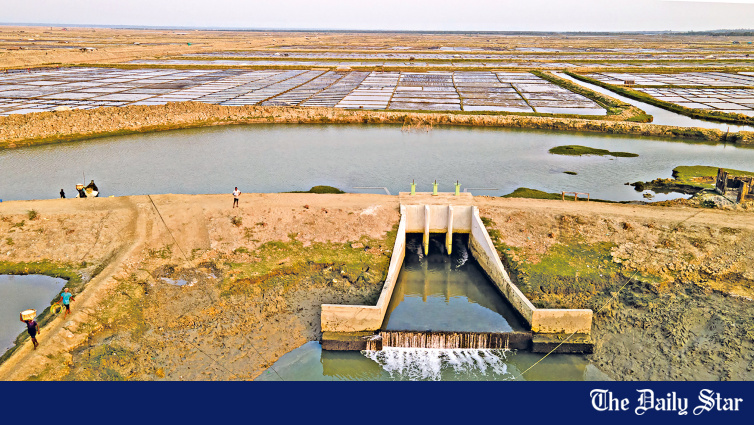
A vast, barren landscape stretches to the horizon—devoid of trees and even sufficient grass. Earthen embankments, several feet high, divide the area into countless small blocks, giving the appearance of an endless network of ponds. During high tide, the rivers and canals in this coastal region brim with water. At low tide, however, the water level drops by 10 to 12 feet. Yet the water trapped inside the embankments remains unchanged. In effect, the coast’s natural tidal flow is controlled across the vast areas crisscrossed by earthen embankments. The saline water is deliberately impounded to support the commercial cultivation of black tiger prawns.

The 21,000-acre expanse now devoted to shrimp farming was once the Chakaria Sundarbans in Cox’s Bazar district. Until the mid-1970s, it was covered with many native mangrove species. The dominant species included sundari (Heritiera fomes), gewa (Excoecaria agallocha), keora (Sonneratia apetala), hantal (Phoenix paludosa), passur (Xylocarpus mekongensis), dhundul (X. granatum), hawa (Rhizophora mollucensis), and golpata (Nypa fruticans), among others (Banglapedia 2012, 333). The forest was a thriving habitat for tigers, deer, wild boar, monkeys, and a rich diversity of wildlife. Fish and naturally occurring shrimp were also abundant in the Chakaria Sundarbans.

Today, all of that has disappeared, surviving only in memory.

During the monsoon season, the entire Chakaria Sundarbans is used for black tiger shrimp farming. In the dry season, however, the landscape transforms into a vast salt desert, with piles of harvested salt stretching as far as the eye can see. Commercial salt cultivation has been practised in and around the Chakaria Sundarbans since the 1960s and 1970s. Even earlier, large numbers of sundari trees from the forest were felled to fuel salt production.

The Chakaria Sundarbans is one of the oldest and most historically significant mangrove forests in the Indian subcontinent. At its peak, the forest covered approximately 45,000 acres. According to the Bangladesh Forest Department, during the British colonial period, 18,500 acres were gazetted as Reserved Forest and a further 2,520.45 acres as Protected Forest in the Chakaria Range in 1903. As a result, from 1903 onward, a total of 21,020.45 acres of the Chakaria Sundarbans came under the management and control of the Forest Department.


1784332565876.webp

The Matarbari coal-fired power plant seen from a salt field. Photo. Philip Gain

In 1929, 3,910.40 acres of the Chakaria forest were dereserved and handed over to 262 landless families, bringing them under a cooperative named Badarkhali Samobay Krishi o Upanibesh Samiti (Badarkhali Cooperative Farming and Colony Association), located in Badarkhali Union in Chakaria Upazila of Cox’s Bazar district. The association currently has around 1,500 members.

Although the clearing of the Chakaria Sundarbans began with human settlement, the destruction that unfolded from the late 1970s onwards was unprecedented in scale. Driven by soaring international demand for shrimp, Bangladesh aggressively expanded commercial shrimp aquaculture, triggering the wholesale conversion of mangrove forests into shrimp ponds.

Even before the World Bank and the Asian Development Bank (ADB) became involved in the area, commercial encroachment had already begun. In 1977, a local influential figure, Giasuddin, obtained a lease for 563 acres of mangrove forest for shrimp farming, duck rearing, and agro-fisheries. He cleared the mangroves within the leased area, marking the beginning of the large-scale destruction of the Chakaria Sundarbans.

Government support for shrimp expansion soon accelerated the process. According to a senior official of the Shrimp Farming Expansion Zone in Cox’s Bazar under the Department of Fisheries, “Responding to the interest of the government and the World Bank, the Ministry of Agriculture and Forests transferred 5,000 acres of land in Rampur Mouza of Chakaria Upazila to the Department of Fisheries for shrimp aquaculture development in 1978. Subsequently, in 1982, the ministry transferred another 2,000 acres, and in 1987, the Ministry of Land allocated an additional 21.76 acres.”

The initial 5,000 acres transferred to the Department of Fisheries in 1978 were leased to 39 shrimp farmers, further accelerating the conversion of mangrove forests into commercial shrimp farms.

While officials at the Shrimp Farming Expansion Zone are unwilling to disclose the identities of the shrimp farmers who obtained leases for such large plots, residents of Badarkhali, north of the Chakaria Sundarbans across the Matamuhuri River, recall that those who received the leases were wealthy and influential individuals from outside the area. They cleared the mangrove forest, built embankments, and converted the land into shrimp farms.

The leaseholders employed local residents to clear the mangrove forests for shrimp farming. Nurul Kader, a local farmer from Dakkshin Saddalia in Badarkhali Union, recalled that he was among the paid labourers hired to convert leased forest land into shrimp ponds. One of the leaseholders, he said, had been granted a 150-acre lease.

1784332615656.webp

Figures 1–2. Satellite images of the Chakaria Sundarbans in 1976 (left) and 1995 (right), illustrating the extensive destruction of the mangrove forest.

“I worked for one and a half to two years clearing trees from that leased land,” Nurul Kader said. “We felled the trees with machetes, left the timber to dry in the sun, and then poured petrol over it and set it on fire. Clearing a single plot often took as long as two years.”

Later, during the military rule of General Hussain Muhammad Ershad (1984–85), the government dismantled the large plots and launched an improved shrimp farming project on the original 5,000 acres with financial support from the International Development Association (IDA), the World Bank’s concessional lending arm. The area was subdivided into 468 plots of 10 acres each and leased to shrimp farmers.

At the same time, with financing from the Asian Development Bank (ADB), the additional 2,000 acres were divided into 11-acre plots and leased to 119 farmers. Another 48 acres were developed as a demonstration shrimp farm, while the remaining land was allocated for infrastructure and embankments, according to a senior official at the Shrimp Farming Expansion Zone.

The beneficiaries of these shrimp plots were not poor farmers as officially intended. Instead, many were politically influential individuals and institutions. Grameen Bank alone received 30 plots, covering a total of 300 acres. Its four-storey, circular building still stands in the heart of the former Chakaria Sundarbans, bearing the signboard “Grameen Matsya Foundation”—a lasting reminder of the area’s transformation from mangrove forest to commercial shrimp farms.

However, not all of the Chakaria Sundarbans was transferred to the Department of Fisheries. According to a senior official of the Cox’s Bazar North Forest Division, 7,000 acres of Forest Department land were dereserved and transferred to the Department of Fisheries through inter-ministerial decisions between 1978 and 1982. In addition, 640 acres were allocated to the Landless Farmers’ Association, while another 563.84 acres were leased for shrimp farming between 1985 and 1986.

The boundaries of these allocations were never properly demarcated, allowing encroachment to spread into adjoining forest areas. Unable to prevent the land grabs, the Forest Department watched helplessly as the Chakaria Sundarbans was gradually destroyed.

Of the 21,000 acres that once made up the Chakaria Sundarbans, 4,227 acres were under the jurisdiction of the Coastal Forest Division, where some mangrove trees—mainly keora (Sonneratia apetala)—are still found along the banks and canals. The rest of the former forest falls under the Cox’s Bazar North Forest Division but has been completely encroached upon. Virtually no natural forest vegetation remains in what was once an extensive mangrove ecosystem.

Satellite imagery analysed by the Society for Environment and Human Development (SEHD) and presented in its widely viewed documentary film, Chakaria Sundarban: A Forest without Trees, provides compelling evidence that shrimp cultivation drove the destruction of the mangrove forest—a finding the World Bank initially disputed.

Mangrove forests are among the world’s most productive and resilient ecosystems, forming a vital ecological transition between land and sea. Growing in the intertidal zones of tropical and subtropical coasts, they protect shorelines from erosion, storm surges, and wave action while stabilising coastal sediments. Their complex root systems provide breeding, nursery, and feeding habitats for fish, crustaceans, molluscs, birds, and numerous other species, supporting rich biodiversity, productive fisheries, and the livelihoods of millions of coastal people.

The towering stands of the Chakaria Sundarbans, renowned for their exceptional height, structural complexity, and remarkable diversity, were once among the finest mangrove forests in the world. Unlike many mangrove ecosystems dominated by a few stunted species, the Chakaria Sundarbans supported an unusually rich assemblage of mangrove flora, with mature trees reaching impressive heights under favourable ecological conditions. Its ecological richness made it a globally significant coastal forest, providing vital habitat for wildlife, protecting the coastline, sustaining fisheries, and storing large amounts of carbon. The loss of this extraordinary forest represents not only a national tragedy for Bangladesh but also a significant loss to the world’s natural heritage.

Across Bangladesh and other tropical coasts, every mangrove patch cleared for short-term economic gain weakens resilience to cyclones, storm surges, sea-level rise, and climate change. This was illustrated most vividly during the cyclone of 29 April 1991. A massive storm surge swept across south-eastern Bangladesh, killing an estimated 140,000–150,000 people and devastating coastal communities. The tragedy underscored the vital role of mangrove forests in reducing wave energy and the impacts of storm surges. The earlier destruction of the Chakaria Sundarbans had removed a major natural buffer along the coast, leaving nearby areas more vulnerable to the destructive force of cyclones and tidal surges.

Nurul Kader vividly remembers the deadly night of the cyclone. “After 10 pm, the embankment collapsed and floodwaters swept away my entire family. My four-year-old brother, Badal, drowned,” recollected Kader. “The water rose nearly 30 feet. Had the Chakaria Sundarbans still existed, there would have been far less loss of life and destruction. The mangrove forest would have absorbed much of the storm surge.”

Reflecting on the long-term consequences of the forest’s disappearance, he added: “Without the forest, we are far more vulnerable. We have lost our livelihoods as well. The rivers once yielded abundant fish, and we collected timber from the mangroves. Now the shrimp farms are controlled by wealthy outsiders. We cannot enter them, and catching a few fish is our only means of survival. “

Can it be brought back?

There is growing scientific and policy consensus that the mangrove forests of the Chakaria Sundarbans should be restored.

The Bangladesh Forest Department, which long ago lost control of the Chakaria Sundarbans, has consistently expressed regret over its destruction. A senior official of the Cox’s Bazar North Forest Division, who requested anonymity, maintains that the entire 21,000-acre area should be preserved as a single, contiguous forest landscape. Existing shrimp farming leases should be revoked, and the entire area should be legally designated and managed as forest land.

Decades of salt production and shrimp aquaculture have severely degraded the soil. To restore the ecosystem, the embankments should be removed or breached to re-establish the area’s natural tidal regime. Once regular tidal inundation is restored, soil salinity is expected to decline substantially within four to five years, allowing the land to gradually recover its natural ecological condition. At that stage, mangrove restoration through planting will become ecologically viable. During this recovery period, natural ecological processes will play a pivotal role in regenerating the landscape.

Thailand and the Philippines provide some of the world’s best-documented examples of restoring mangrove ecosystems that were destroyed for shrimp (prawn) aquaculture. Their experience demonstrates that successful restoration depends far less on planting trees than on restoring the natural coastal ecosystem.

Thailand lost nearly half of its mangrove forests between the mid-1970s and the early 1990s, largely because of intensive shrimp farming. Many shrimp ponds became economically unproductive within only five to ten years because of disease outbreaks, acid sulphate soils, and declining water quality, leaving thousands of hectares abandoned.

In Thailand, the embankments surrounding abandoned shrimp ponds were breached to reconnect them with natural tidal flows, allowing seawater and sediments to recreate the environmental conditions necessary for mangrove regeneration. Natural regeneration was encouraged, while native mangrove species were planted only where essential.

Through Community-Based Ecological Mangrove Restoration (CBEMR), local communities played a central role in restoring and managing these ecosystems. The result was healthier mangrove forests, greater biodiversity, stronger coastal protection, and enhanced blue carbon storage.

The Philippines likewise converted vast areas of mangrove forests into fish and shrimp ponds during the late twentieth century. Its restoration efforts combined ecological restoration with supportive government policies and active community participation, leading to the significant recovery of degraded mangrove ecosystems.

The central lesson from both Thailand and the Philippines is unmistakable: restore the ecosystem first, and then allow the mangroves to regenerate naturally wherever ecological processes can accomplish the task. Tree planting should serve as a complementary measure rather than the primary restoration strategy.

However, restoring the Chakaria Sundarbans faces formidable challenges. Several stark realities stand in the way of any meaningful restoration effort. One of the most significant is the continued international support for shrimp aquaculture, particularly from the World Bank. In response to widespread criticism of its US$26.5 million shrimp culture project, designed jointly with the UNDP and implemented in the 1980s, the World Bank reportedly excluded a shrimp component from its Fourth Fisheries Project.

However, in a dramatic policy shift, the World Bank approved the US$240 million Sustainable Coastal and Marine Fisheries Project in 2018. The project, implemented in 14 coastal districts, closed in November 2025. According to the World Bank’s May–June 2025 Implementation Support Mission, total disbursement reached 79.14%. Under this project, shrimp cluster farming was further expanded. During our field investigations, we observed major construction works, including embankments and sluice gates, in Rampur Mouza of the Chakaria Sundarbans to facilitate and intensify shrimp cultivation.

This recent investment in shrimp aquaculture suggests that the World Bank continues to prioritise an export-oriented shrimp industry that, while generating foreign exchange for Bangladesh, has well-documented environmental consequences and has played a significant role in the destruction of coastal mangrove ecosystems. Given this policy orientation, it is highly unlikely that a powerful institution such as the World Bank, which has long supported shrimp aquaculture, would encourage Bangladesh to phase out shrimp farming in Cox’s Bazar in favour of mangrove restoration.

Another major challenge is the rapid industrialisation of Maheshkhali Island. With financing from the Japan International Cooperation Agency (JICA), the government completed the 1,200 MW Matarbari Ultra Super Critical Coal-Fired Power Plant in 2023. Built on the bank of the Kohelia River near the Bay of Bengal, the project required the clearing of mangrove forests along the river.

What has largely escaped public attention is the construction of the 300-foot-wide, 9.10-km Matarbari Port Access Road (East Section), which will connect Fashiakhali on the Chattogram–Cox’s Bazar Highway with Rampur in Badarkhali. The project involves extensive construction across land, rivers, and channels in what was once dense forest. It is part of the Bangladesh government’s Matarbari Port Development Project (Roads and Highways Department component). The road is being built by a consortium of SMEC (Australia), PADECO (Japan), and DEVCON (Bangladesh).

One of the most striking developments under the caretaker government was Chief Adviser Professor Muhammad Yunus’s vision to transform the Moheshkhali–Matarbari area into a Singapore-like port and industrial hub. The proposal coincided with Japan’s interest in establishing its second special economic zone in Matarbari.

If the current government follows the path set by the previous administrations of Sheikh Hasina and Professor Muhammad Yunus, Moheshkhali and its surrounding areas, including the former Chakaria Sundarbans, are likely to be transformed into an urban and industrial hub, making the regeneration of the Chakaria Sundarbans even more difficult.

The fate of the Chakaria Sundarbans will ultimately depend not on technical feasibility but on political choices. International experience demonstrates that mangrove restoration is possible when natural tidal flows are restored, shrimp aquaculture is phased out, and local communities become true partners in ecological recovery.

Bangladesh now stands at a crossroads. Continuing to prioritise export-oriented shrimp farming and large-scale industrialisation will permanently foreclose the opportunity to recover what was once one of the country’s greatest natural assets. If the government is serious about restoring the Chakaria Sundarbans and tackling climate change, they must first restore its natural hydrology and then commit to a long-term, science-based restoration programme backed by sustained political will and financial support.

Philip Gain is a researcher and Director of the Society for Environment and Human Development (SEHD).

Fahmida Rahman is a researcher at SEHD.​
 

Latest Posts

Back