 Bangladesh Defense

Saif
Senior Member
- Joined
- Jan 24, 2024
- Messages
- 21,990
- Likes
- 9,840
- Nation

- Residence
- Axis Group

What Bangladesh must demand
Md Babul Miah
IN AUGUST 2024, floodwater rose through Feni, Noakhali and other eastern districts faster than most people could react. Families climbed onto rooftops and boats could not reach many villages for days. When the water receded, at least 74 people had died and losses exceeded Tk 14,000 crore. Bangladesh is a global example in cyclone early warning, yet this flood caught people largely unprepared.
That flood was not an isolated shock. April–May heat has become almost unbearable, hospitals fill up with heatstroke patients and schools close at short notice. In many villages of Satkhira and Khulna, tube-well water is now too salty to drink.
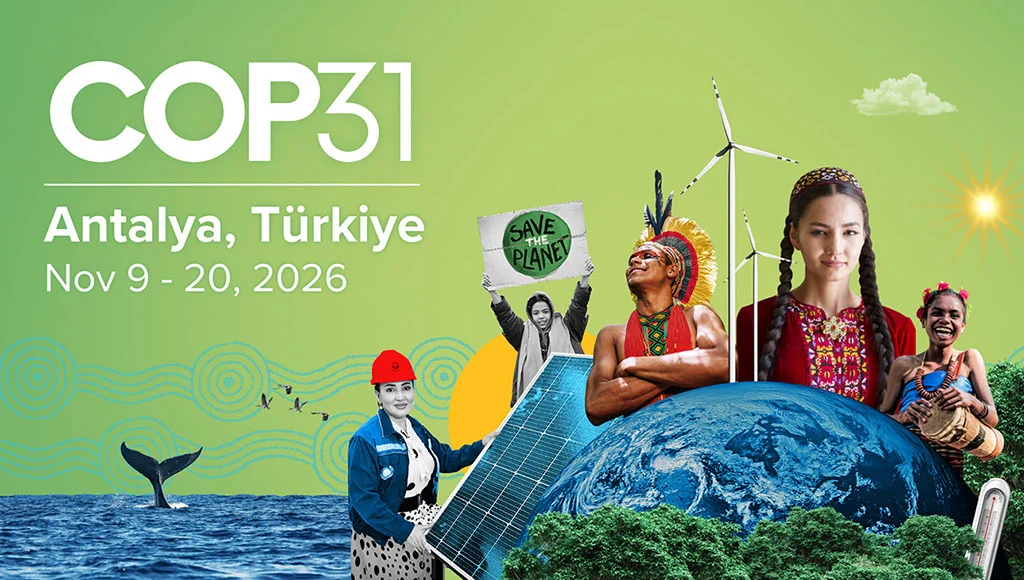
It is against this backdrop that the 31st UN Climate Change Conference opens in Antalya, Türkiye, on November 9. The environment ministry has already formed a technical committee to draft a position paper and explore joint positions with the Least Developed Countries Group, Nepal and Bhutan — a welcome step. But the real question is: what exactly should Bangladesh demand in Antalya?
This year’s conference comes at a turbulent time. After the US-Israel war on Iran broke out in early March, shipping through the Strait of Hormuz came to a near halt and Qatar suspended liquid natural gas deliveries. Around 72 per cent of our imported LNG comes from Qatar and the UAE. Within days, Bangladesh was buying spot LNG at nearly two and a half times the earlier price and the South Asian Network on Economic Modeling estimates that the shock could cut gross domestic product by up to 1.2 per cent.
The crisis is a reminder that dependence on imported fossil fuels is not just a climate risk, but an economic and national security risk too. Making rooftop solar easier for factories, government buildings and homes would advance energy security and emission cuts together.
The war is also taking a toll on climate finance. According to the Stockholm International Peace Research Institute, global military spending reached a record $2.89 trillion in 2025, rising 14 per cent in Europe alone. Meanwhile, developing countries received only $26 billion in international public adaptation finance in 2023 — less than one per cent of a single year’s military spending against needs estimated at $310–365 billion a year by 2035.
The UK has cut overseas aid to boost defence spending. At COP30, wealthy nations promised to triple adaptation finance; in June, at the UN climate talks in Bonn, several of them resisted committing to a plan to deliver it. There is never a shortage of money for weapons, yet the countries whose emissions created this crisis are dragging their feet when it comes to supporting those who suffer most.
According to the Global Climate Risk Index 2026, Bangladesh is the 13th most climate-vulnerable country in the world. But my bigger worry lies elsewhere. Our research, using multiple carbon neutrality scenarios, found that even after the world reaches carbon neutrality, the intensity of extreme rainfall in monsoon regions does not easily return to earlier levels. The risk of floods like Feni’s will stay high for a long time. The embankments, drainage systems and cities we plan today must therefore be designed for the rainfall of the future, not the past. And with high-resolution climate models and machine learning, such extreme rainfall can now be forecast much earlier than in 2024.
A key document for this preparation is the Nationally Determined Contribution 3.0, which sets an unconditional target of cutting emissions by 6.39 per cent by 2035, at an estimated cost of around $116 billion. Its costed chapter on ‘just transition’ is a strength, but the Centre for Policy Dialogue has shown that its power-sector target is weaker than in the previous NDC. Progress on the NDC and the National Adaptation Plan should also be made public every year; the moral weight of asking for money abroad depends on transparency at home.
Other gaps at home are just as clear. Ahmedabad in India reduced heat-related deaths through a heat action plan; why can’t Dhaka, Rajshahi or Chuadanga have one? The Sundarbans remain our strongest natural shield, as Cyclones Sidr and Aila proved, and deserve far more investment. And for people who lose their homes to river erosion and salinity and end up in urban slums, the 2021 national strategy on climate-induced displacement is barely visible on the ground.
At the UN General Assembly in September, prime minister Tarique Rahman spoke of climate justice, finance and adaptation support. In Antalya, these words must become concrete demands. First, a time-bound plan for tripling adaptation finance — as grants, not loans. Second, simpler access to the Fund for Responding to Loss and Damage. Third, international recognition for climate-displaced people. Fourth, support for a regional early warning system and real-time sharing of river and rainfall data with upstream countries; the 2024 floods showed how deadly the lack of such information can be. Bangladesh should also ask that the EU’s Carbon Border Adjustment Mechanism does not, as its scope expands, become a new burden on vulnerable countries’ exports. These demands will carry more weight if raised together with the LDC Group and other vulnerable nations.
For years, Bangladesh has been a familiar example of climate disaster on the global stage and we have received plenty of sympathy. But a wide gap remains between what is promised and what is delivered. To close it, we must put our own house in order and press firmly for what is rightfully ours — not as charity, but as a right.
What matters far more than who said what in Antalya is whether the next flood in Feni comes with a warning in time and whether a village in Satkhira finds drinking water a little easier to get. That is the yardstick by which COP31 should be judged.
Md Babul Miah is a PhD researcher in climate and ocean modelling at Jeonbuk National University, South Korea.
Md Babul Miah
IN AUGUST 2024, floodwater rose through Feni, Noakhali and other eastern districts faster than most people could react. Families climbed onto rooftops and boats could not reach many villages for days. When the water receded, at least 74 people had died and losses exceeded Tk 14,000 crore. Bangladesh is a global example in cyclone early warning, yet this flood caught people largely unprepared.
That flood was not an isolated shock. April–May heat has become almost unbearable, hospitals fill up with heatstroke patients and schools close at short notice. In many villages of Satkhira and Khulna, tube-well water is now too salty to drink.
It is against this backdrop that the 31st UN Climate Change Conference opens in Antalya, Türkiye, on November 9. The environment ministry has already formed a technical committee to draft a position paper and explore joint positions with the Least Developed Countries Group, Nepal and Bhutan — a welcome step. But the real question is: what exactly should Bangladesh demand in Antalya?
This year’s conference comes at a turbulent time. After the US-Israel war on Iran broke out in early March, shipping through the Strait of Hormuz came to a near halt and Qatar suspended liquid natural gas deliveries. Around 72 per cent of our imported LNG comes from Qatar and the UAE. Within days, Bangladesh was buying spot LNG at nearly two and a half times the earlier price and the South Asian Network on Economic Modeling estimates that the shock could cut gross domestic product by up to 1.2 per cent.
The crisis is a reminder that dependence on imported fossil fuels is not just a climate risk, but an economic and national security risk too. Making rooftop solar easier for factories, government buildings and homes would advance energy security and emission cuts together.
The war is also taking a toll on climate finance. According to the Stockholm International Peace Research Institute, global military spending reached a record $2.89 trillion in 2025, rising 14 per cent in Europe alone. Meanwhile, developing countries received only $26 billion in international public adaptation finance in 2023 — less than one per cent of a single year’s military spending against needs estimated at $310–365 billion a year by 2035.
The UK has cut overseas aid to boost defence spending. At COP30, wealthy nations promised to triple adaptation finance; in June, at the UN climate talks in Bonn, several of them resisted committing to a plan to deliver it. There is never a shortage of money for weapons, yet the countries whose emissions created this crisis are dragging their feet when it comes to supporting those who suffer most.
According to the Global Climate Risk Index 2026, Bangladesh is the 13th most climate-vulnerable country in the world. But my bigger worry lies elsewhere. Our research, using multiple carbon neutrality scenarios, found that even after the world reaches carbon neutrality, the intensity of extreme rainfall in monsoon regions does not easily return to earlier levels. The risk of floods like Feni’s will stay high for a long time. The embankments, drainage systems and cities we plan today must therefore be designed for the rainfall of the future, not the past. And with high-resolution climate models and machine learning, such extreme rainfall can now be forecast much earlier than in 2024.
A key document for this preparation is the Nationally Determined Contribution 3.0, which sets an unconditional target of cutting emissions by 6.39 per cent by 2035, at an estimated cost of around $116 billion. Its costed chapter on ‘just transition’ is a strength, but the Centre for Policy Dialogue has shown that its power-sector target is weaker than in the previous NDC. Progress on the NDC and the National Adaptation Plan should also be made public every year; the moral weight of asking for money abroad depends on transparency at home.
Other gaps at home are just as clear. Ahmedabad in India reduced heat-related deaths through a heat action plan; why can’t Dhaka, Rajshahi or Chuadanga have one? The Sundarbans remain our strongest natural shield, as Cyclones Sidr and Aila proved, and deserve far more investment. And for people who lose their homes to river erosion and salinity and end up in urban slums, the 2021 national strategy on climate-induced displacement is barely visible on the ground.
At the UN General Assembly in September, prime minister Tarique Rahman spoke of climate justice, finance and adaptation support. In Antalya, these words must become concrete demands. First, a time-bound plan for tripling adaptation finance — as grants, not loans. Second, simpler access to the Fund for Responding to Loss and Damage. Third, international recognition for climate-displaced people. Fourth, support for a regional early warning system and real-time sharing of river and rainfall data with upstream countries; the 2024 floods showed how deadly the lack of such information can be. Bangladesh should also ask that the EU’s Carbon Border Adjustment Mechanism does not, as its scope expands, become a new burden on vulnerable countries’ exports. These demands will carry more weight if raised together with the LDC Group and other vulnerable nations.
For years, Bangladesh has been a familiar example of climate disaster on the global stage and we have received plenty of sympathy. But a wide gap remains between what is promised and what is delivered. To close it, we must put our own house in order and press firmly for what is rightfully ours — not as charity, but as a right.
What matters far more than who said what in Antalya is whether the next flood in Feni comes with a warning in time and whether a village in Satkhira finds drinking water a little easier to get. That is the yardstick by which COP31 should be judged.
Md Babul Miah is a PhD researcher in climate and ocean modelling at Jeonbuk National University, South Korea.
